
Karnataka’s Forest, Ecology and Environment Minister Eshwar Khandre has announced the formation of a dedicated committee to reassess the total extent of deemed land across the state, marking a significant step in resolving one of Karnataka’s most contentious environmental and developmental questions. The committee, composed of senior officials, legal experts, and representatives from revenue and land management departments, has been tasked with submitting its findings within six months. The announcement has generated widespread public interest, as the categorisation of deemed directly influences conservation priorities, land ownership issues, and community livelihoods in multiple districts.
Minister Khandre stated that the committee would undertake a thorough, ground-level, science-backed review of areas currently classified as deemed forests, many of which have been the subject of disputes for decades. In several regions, residents have long claimed that lands marked as deemed forests are actually agricultural fields or wastelands used by families for generations. The government believes that a systematic reassessment is essential to clarify records, prevent legal conflicts, and ensure that genuine forest areas receive the protection they require. Environmentalists, however, caution that the review must not dilute safeguards meant to prevent further ecological degradation.
The issue of deemed forests has been a politically sensitive one, particularly as Karnataka continues to balance development needs with conservation responsibilities. The Supreme Court’s broad definition of deemed forests—based on vegetation density, ecological value, and historical usage—created ambiguity in the state’s land classification records. Over time, thousands of hectares were listed under this category, sometimes without clear documentation. This has led to stalled infrastructure projects, restrictions on land use in rural regions, and tensions between local communities and forest officials. The newly formed committee aims to address these grey areas through a transparent, data-driven process.
Officials involved in the committee say the review will rely on satellite imagery, GIS mapping, ecological assessments, and cross-verification with historical land records. The goal is not only to identify which areas qualify as deemed forests under legal and ecological criteria, but also to determine which areas have been incorrectly labeled due to outdated or incomplete documentation. The government hopes that a structured methodology will bring clarity to a long-standing administrative challenge that has affected governance, agricultural activity, and conservation efforts throughout Karnataka.

Balancing Environmental Protection with Community Concerns
The government’s decision has brought relief to thousands of villagers who have long argued that the deemed forest tag has restricted their ability to cultivate, build homes, or access basic services. In districts such as Shivamogga, Chamarajanagar, Kodagu, and Uttara Kannada, community leaders have welcomed the initiative, saying it gives residents hope that long-pending disputes may finally be resolved. Many families who rely on land for farming have been unable to obtain documents or government benefits due to its forest classification. The revised review process may restore legal clarity and offer them long-awaited security.
At the same time, environmental groups remain cautious about the potential implications of the reassessment. They argue that Karnataka’s forest cover, already under pressure from urban expansion, mining activity, and infrastructure development, requires strong legal protection. Many environmentalists fear that if the review prioritises community and developmental concerns over ecological criteria, large landscapes with significant biodiversity may lose their protected status. They argue that ecological value should not be compromised during the review, especially in regions that function as critical wildlife corridors, water catchments, or carbon sinks.
Forest department officials emphasise that the committee’s mandate includes maintaining strict adherence to ecological principles. They assert that no genuine forest area—whether recorded or unrecorded—will be removed from protection. The review aims to distinguish between true forest landscapes and lands that were inaccurately categorized as such. Authorities note that the goal is not to reduce forest cover but to eliminate confusion. In fact, the government believes that clearer classification will strengthen forest conservation by identifying areas that need urgent protection and enabling better resource allocation for monitoring and restoration.
Local governments and panchayats have also expressed interest in contributing to the process. Several panchayat heads say previous lists of deemed forests were compiled without adequate consultation with local communities, leading to misunderstandings and mistrust. Minister Khandre’s assurance that community voices will be included in the review has been well received. Officials plan to conduct field visits and public hearings in affected regions, ensuring that ecological assessments are supplemented with ground-level knowledge about historical land use and cultural landscapes.
A Step Toward Long-Term Policy Stability and Governance
For years, the lack of clarity around deemed forests has posed challenges for policymakers, administrators, and courts. The absence of a precise, scientifically validated map has resulted in contradictory reports, administrative delays, and dependence on interim judicial directions. The new committee, with its multidisciplinary expertise, is expected to create a unified database that can guide future decisions without ambiguity. Minister Khandre noted that once the report is submitted, the state will finally have a reliable framework to differentiate forest land from non-forest land, reducing future litigation.
The committee’s findings may also influence Karnataka’s long-term development strategies. Major infrastructure projects—including highways, transmission lines, and tourism corridors—have faced delays due to unclear forest boundaries. Authorities expect that streamlined records will allow for faster clearance processes while ensuring that environmental safeguards remain intact. Urban expansion plans in Bengaluru, Mysuru, and Belagavi may also be impacted, as the reassessment could redefine the availability of land for public works, housing, and industrial growth. Officials emphasise that planned development cannot proceed without legal clarity.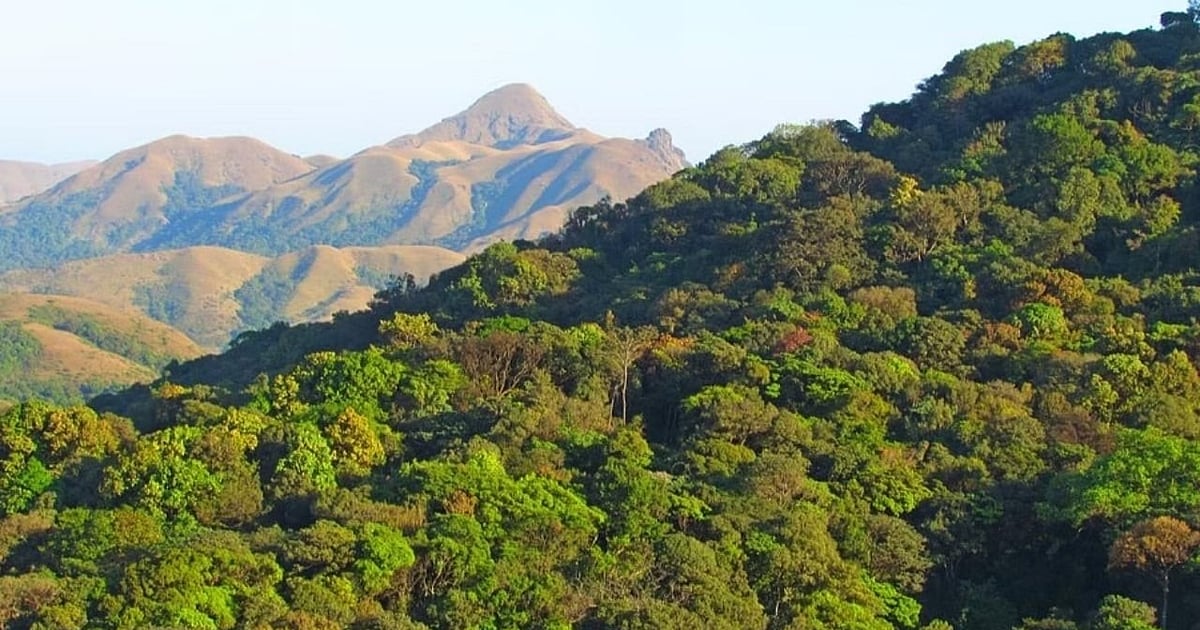
Meanwhile, the revenue department has begun coordinating with forest officers to prepare preliminary documentation for the committee’s use. This includes digitisation of old maps, locating historical survey documents, and verifying land titles. Many of these records date back decades and require significant archival work. Administrators say that while the task is complex, the outcome will create long-term stability in land governance. Clearer records will also help streamline compensation processes for people displaced by conservation projects or land reclamation activities.
The government expects that the six-month timeline will ensure both urgency and depth. Previous attempts to review the extent of deemed forests have stalled due to administrative delays and disagreements between departments. However, this time the Forest Minister has underscored the need for interdepartmental coordination and accountability. Regular review meetings will be held to track the committee’s progress, and preliminary findings may be shared with the public to maintain transparency. The decision to set a clear deadline reflects the government’s resolve to settle the issue without prolonged bureaucratic hurdles.
Many rural communities have shared stories that highlight the lived realities of the deemed forest classification. In several villages, even minor construction activities—such as building toilets, repairing houses, or installing electricity poles—require permissions that are difficult to obtain due to the land’s legal status. This has slowed development and created frustration among residents who feel they are being penalised for administrative errors made decades ago. Schools and anganwadis located in such areas also face challenges in upgrading buildings or expanding facilities due to compliance restrictions.
Social activists working in tribal regions say the reassessment must be sensitive to the concerns of forest-dependent communities. While some villages dispute their inclusion in the deemed forest category, others fear that a bureaucratic review might ignore their customary rights or overlook the importance of community-managed forest areas. Activists emphasise that tribal communities should not be forced to choose between land rights and ecological preservation. They argue that policies must recognise their traditional role as protectors of forest landscapes, particularly in biodiversity-rich zones.
Legal experts note that the review offers Karnataka a chance to align its forest governance with national-level policies and court directives. They highlight that deemed forests exist within a complex legal environment shaped by multiple Supreme Court judgments, Forest Conservation Act provisions, and state-level notifications. The committee’s work, therefore, must balance legal compliance with ground realities. Experts recommend that the report lay down clear, standardised criteria that can guide identification of deemed forests in future decades, reducing the possibility of inconsistent interpretations.
Environmental scientists involved in advisory roles say that the review has the potential to update Karnataka’s ecological datasets. Many current forest maps are outdated or fail to capture nuances such as species diversity, canopy density, and ecological corridors. Scientists hope the committee will integrate modern ecological tools such as drone surveys, biodiversity indexing, and climate-resilience mapping. A more detailed ecological profile could help the state prioritise reforestation, wildlife protection, and watershed conservation, creating a long-term environmental strategy rooted in accurate data.
The committee’s outcome may also influence Karnataka’s climate commitments. Forests play a major role in carbon sequestration, soil health, and water cycle regulation. Accurately identifying forest areas could help the government design policies aligned with national climate adaptation and mitigation goals. Environmentalists believe that strengthening forest governance systems is essential for tackling future climate challenges, including erratic rainfall, rising temperatures, and drought impacts. The reassessment therefore carries implications not only for local land rights but also for Karnataka’s broader ecological resilience.
As discussions continue, policymakers and experts agree that the reassessment represents an opportunity to rebuild public trust. For years, the lack of clarity around deemed forests has created tension between citizens and administration. A transparent, science-based process could help bridge this gap, ensuring that forest protection and human development coexist rather than clash. Minister Khandre has reiterated that the government remains committed to both ecological preservation and community welfare, and the committee’s task reflects this dual responsibility.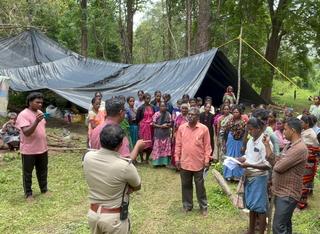
Ultimately, the six-month review will shape how Karnataka manages its natural landscapes for generations to come. The report is expected to influence legislation, judicial decisions, administrative guidelines, and developmental planning. For communities living in uncertainty and for conservationists seeking stronger safeguards, the committee’s findings may bring long-awaited clarity. As the state embarks on this crucial reassessment, stakeholders hope that the process will produce a balanced, holistic, and forward-looking framework that ensures sustainable coexistence between people and forests.
Follow: Karnataka Government
Also read: Home | Channel 6 Network – Latest News, Breaking Updates: Politics, Business, Tech & More
