
Bengaluru is witnessing heightened tension as residents of Kogilu Layout have been informed that eligibility for the allotment of government flats will now require proof of nativity. Authorities have clarified that only individuals who can demonstrate local residency and citizenship will be considered for allocation, intensifying anxiety among families who have been awaiting their homes for years. The decision comes amid widespread speculation about illegal occupants and mismanaged allotments, prompting officials to tighten verification processes to ensure transparency and fairness in housing distribution.
Local residents have expressed mixed reactions to the announcement. Some welcomed the move as a necessary step to prevent irregular allotments, while others claimed that documentation requirements are cumbersome and may unfairly disadvantage long-term residents lacking formal records. Families who have been awaiting flats for years now face the challenge of producing legal proof of their nativity, including ration cards, voter ID, Aadhaar, and other official certificates. Authorities have stressed that these steps are essential to prevent misuse of public housing schemes.
The Kogilu Layout issue has drawn attention from political parties, with the opposition accusing the government of delaying allocations and causing unnecessary stress to eligible residents. BJP leaders claimed that lax verification processes in the past have allowed ineligible individuals to occupy flats, while Congress leaders emphasised that strict scrutiny is needed to ensure justice and fair distribution. Residents caught in the middle are struggling to understand which documents are sufficient and how long the verification process will take.
Officials clarified that nativity proof is now mandatory for all applicants to prevent fraudulent claims. Verification will be carried out through local municipal records, revenue department data, and other official databases. Authorities noted that families who fail to produce the required documentation will not be considered for allotment until the process is completed. This directive has created an urgency among residents, many of whom are scrambling to obtain missing documents, including birth certificates or local residence certificates.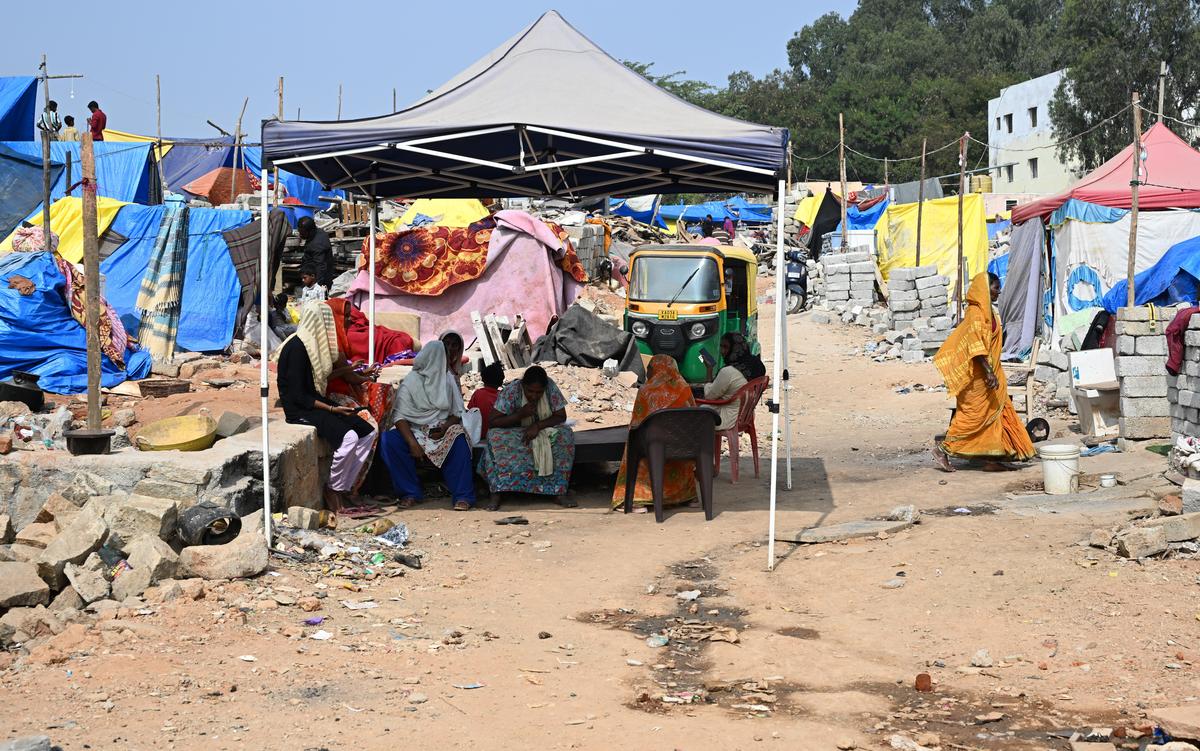
VERIFICATION PROCESS AND DOCUMENT REQUIREMENTS
Government sources explained that eligible Kogilu residents must provide multiple forms of documentation to prove nativity. Acceptable proofs include voter identification, ration cards, Aadhaar linked to local addresses, school certificates, or other government-issued documents showing continuous residence in Karnataka. Officials stressed that incomplete or unverified submissions will be rejected, as the government seeks to prevent flats from being allotted to non-residents or illegal occupants.
The revenue department will play a central role in the verification process. Teams will cross-check submitted documents with official records to ensure authenticity. Municipal authorities have been directed to assist families in obtaining required documents, and special counters will be set up in civic offices to facilitate the process. Officials emphasised that while the process is stringent, the intent is to maintain fairness and prevent misuse of limited housing resources.
Residents without sufficient documents have raised concerns about potential exclusion. Some families claimed they have lived in Kogilu for generations but lack formal certificates, as earlier documentation was either never issued or misplaced. Civic authorities have suggested temporary affidavits, backed by local ward officers, to support such cases, but residents worry about delays and procedural hurdles. Legal experts have said that the government must balance strict verification with inclusive measures to avoid depriving genuine residents.
The Kogilu housing scheme, designed to provide affordable accommodation to eligible citizens, has faced criticism in the past for delays and administrative inefficiencies. Political observers noted that unclear eligibility criteria and past mismanagement may have led to disputes over allotments. The new nativity requirement aims to bring clarity and transparency, but it has also exposed gaps in record-keeping and documentation among long-term residents, highlighting the need for systemic reforms in public housing administration.
Authorities said that the verification process would be completed in phases. Initial rounds will focus on families with pending allotments, followed by reviews of previously allotted flats to ensure compliance. Officials clarified that no allocations will be finalized until verification is complete. This phased approach, while necessary for accuracy, may prolong the waiting period for residents who have been anticipating their flats for years, creating frustration and uncertainty in the community.
POLITICAL AND SOCIAL IMPACT
The nativity requirement has sparked debate among political leaders and social activists. BJP leaders have accused the government of allowing flats to be occupied by ineligible residents in the past, arguing that stricter verification is long overdue. They have called for audits of all housing schemes in Bengaluru to identify irregularities and correct past mistakes. Congress leaders, meanwhile, have emphasised that the new verification measures demonstrate commitment to transparency and social justice, ensuring that flats reach rightful residents.
Social activists have urged the government to consider long-term residents who may lack formal documentation. Many families in Kogilu have relied on informal records, such as school certificates or municipal acknowledgments, for decades. Activists argued that strict application of nativity proof without alternative verification methods may unfairly exclude deserving beneficiaries, potentially exacerbating social and economic inequalities in urban housing.
The issue has also raised concerns among housing rights organisations, which argue that delays in allotment due to verification procedures could negatively impact families in urgent need of housing. Advocates called for temporary relief measures, including interim accommodation or priority allotment for families with verified long-term residence. They emphasised that transparency must be coupled with fairness and empathy, particularly for economically weaker sections who have waited years for government housing.
Local residents have staged peaceful protests demanding clearer guidelines and faster processing of documents. Demonstrators said that while they support the principle of verifying nativity, the government must provide adequate support for families struggling to gather proof. Some residents suggested mobile verification units or on-site document assistance centers to ease the burden and expedite the process, especially for elderly citizens and families with limited resources.
The controversy has sparked media attention across Karnataka, highlighting systemic challenges in urban housing management. Experts noted that while nativity verification is essential, the government must ensure that processes are user-friendly and inclusive. Urban planners emphasised the importance of streamlining housing allocation systems, digitising records, and providing citizens with clear, accessible information to avoid confusion and disputes.
Authorities have also indicated that verification checks will extend to supporting documents such as family lineage certificates, land records, and other government-issued proof of residence. Revenue officials will coordinate with municipal and ward offices to validate claims, while police departments may assist in cases where identity verification requires additional scrutiny. Officials emphasised that the process aims to balance rigorous checks with procedural fairness, ensuring that eligible families are not unduly penalised.
Legal experts observed that the Kogilu directive could set a precedent for future housing schemes. By requiring residents to prove nativity, the government reinforces the principle that public housing is a right reserved for citizens and long-term local residents. Experts stressed that while this protects state resources, authorities must provide mechanisms for residents who face difficulty in obtaining documents, avoiding administrative exclusion and potential legal challenges.
The decision has highlighted gaps in civic record-keeping, particularly for families who have resided in Kogilu for decades but lack formal documentation. Experts suggested that digitisation of municipal records, creation of verified citizen databases, and community-assisted verification programs could address these challenges. Authorities said that such reforms are under consideration, aimed at preventing disputes and ensuring smooth allotment processes in the future.
Residents remain anxious as deadlines for submission of nativity proofs approach. Families with missing documents are reportedly rushing to acquire certificates, affidavits, and other official papers. Some residents expressed fear of losing their allotment rights despite living in Kogilu for generations, while others welcomed the clarity that the government’s directive provides. Officials have urged patience, assuring residents that every effort will be made to accommodate genuine applicants while maintaining the integrity of the housing program.
The nativity verification process in Kogilu has also sparked a wider conversation about governance and accountability in public housing schemes. Experts emphasised that ensuring equitable distribution requires not only documentation verification but also active engagement with residents, transparent processes, and timely communication. Civic authorities have promised helplines, mobile verification teams, and dedicated counters to assist residents in submitting and validating their proofs.
Political analysts believe that the controversy could influence public opinion ahead of upcoming municipal elections. While both the BJP and Congress have positioned themselves as defenders of citizen rights, residents are focused on timely allotment and clarity in procedures. Experts note that housing issues often have significant political implications, as they directly affect citizens’ daily lives, making transparency and efficiency critical in managing public expectations./newsfirstprime/media/media_files/2026/01/03/kogilu-layout-rehabilitation-2026-01-03-13-00-05.jpg)
In conclusion, the Kogilu housing verification directive underscores the challenges of urban housing management in Bengaluru. While proving nativity ensures that flats are allotted to eligible residents, authorities must balance rigorous checks with inclusivity and support for long-term families lacking documentation. The initiative highlights the importance of clear communication, civic support, and efficient processes in public housing schemes. For the residents of Kogilu Layout, timely verification and allotment remain a pressing concern, with their hope for stable homes hanging on the successful implementation of the new guidelines.
Follow: Karnataka Government
Also read: Home | Channel 6 Network – Latest News, Breaking Updates: Politics, Business, Tech & More
