
Mysuru witnessed an overwhelming outpouring of faith as large crowds thronged Vaishnava temples across the city on the occasion of Vaikunta Ekadasi, one of the most sacred days in the Vaishnava calendar. From the early hours of the morning, devotees lined up outside temples, chanting hymns and waiting patiently for darshan, turning the city into a vibrant landscape of devotion and spiritual fervour. The festival, believed to mark the opening of the Vaikunta Dwara or the gateway to heaven, drew people from across Karnataka and neighbouring States.
Major Vaishnava shrines, including the historic Cheluvanarayana Swamy Temple, Prasanna Krishnaswamy Temple, and several neighbourhood temples, saw unprecedented footfall. Temple authorities reported that preparations had begun days in advance to manage the surge of devotees. Elaborate floral decorations, special alankaras of the presiding deities, and extended darshan hours were arranged to accommodate the crowds. The atmosphere was marked by the rhythmic recitation of Vishnu Sahasranama and Divya Prabandham, creating a deeply immersive spiritual experience.
The influx of devotees also prompted several social and charitable organisations to step forward with support services. Temporary shelters were arranged near select temples for pilgrims who had travelled overnight and needed rest. Volunteers distributed drinking water, buttermilk, and light refreshments, particularly to elderly devotees and those standing in queues for extended periods. These acts of service were widely appreciated and were seen as an extension of the spiritual ethos associated with Vaikunta Ekadasi.
Temple priests noted that the festival has increasingly become an occasion for introspection rather than mere ritual observance. Many devotees spent time in silent prayer after darshan, reflecting on personal conduct and spiritual discipline. Priests observed that conversations around the festival now often include discussions on ethical living, compassion, and social responsibility, indicating a broader understanding of devotion beyond ceremonial worship.
Educational institutions with Vaishnava traditions also marked the occasion with special programmes. Students participated in bhajan sessions, essay writing, and discussions on the philosophical significance of Vaikunta Ekadasi. Teachers said such activities help younger generations connect with cultural heritage in a meaningful way, especially in an era dominated by digital distractions and fast-paced lifestyles.
City administrators highlighted that festivals of this scale require months of planning, even if the visible arrangements are limited to a single day. Officials said lessons learned from previous years, including crowd flow analysis and peak-hour management, were applied to improve this year’s arrangements. The relatively smooth conduct of the festival, they noted, demonstrated the value of coordination between religious institutions and civic authorities.
Environmental considerations also featured subtly in this year’s celebrations. Some temples encouraged devotees to avoid plastic bags and opt for eco-friendly offerings. A few shrines used reusable plates for prasada distribution and minimised decorative waste. While these measures were modest, environmental groups viewed them as positive steps toward aligning religious practices with sustainability.
For many devotees, the journey to Mysuru itself was part of the spiritual experience. Groups travelled together by bus and train, singing devotional songs along the way. Pilgrims from rural areas described the visit as a rare opportunity to step away from daily struggles and immerse themselves in a collective expression of faith, even if only for a few hours.
Cultural historians point out that Mysuru’s Vaikunta Ekadasi celebrations reflect centuries-old traditions shaped by royal patronage and temple networks. The city’s historical association with Vaishnavism continues to influence its religious calendar, drawing devotees who view Mysuru not just as a tourist destination but as a sacred landscape.
As night fell and temples gradually closed after the final rituals, a sense of quiet satisfaction settled over the city. Streets that had echoed with chants and footsteps returned to calm, while devotees carried home memories of devotion and fulfilment. For Mysuru, Vaikunta Ekadasi was not just a festival day but a reaffirmation of faith’s enduring place in public life.
Devotees began arriving as early as 3 a.m., many observing fasting rituals and following traditional practices associated with the day. Families, elderly devotees, youth groups, and children could be seen standing together in long queues, united by faith and tradition. For many, the physical strain of waiting for hours was secondary to the belief that passing through the symbolic Vaikunta Dwara on this day brings spiritual liberation and divine blessings.
Looking ahead, temple authorities said efforts would be made to further streamline arrangements in future years as crowds continue to grow. Proposals include better use of technology for queue management, improved amenities for senior citizens, and enhanced coordination with transport agencies to ease pilgrim movement. For devotees, however, the essence of Vaikunta Ekadasi remains unchanged — a day when faith transcends inconvenience, drawing thousands together in a shared pursuit of spiritual grace and inner renewal.
Temple administrations coordinated closely with district officials to ensure smooth conduct of the festivities. Barricades were set up to regulate queues, volunteers guided devotees, and medical teams were stationed at key points. Despite the massive turnout, the overall arrangements were largely orderly, with devotees cooperating with authorities and adhering to instructions.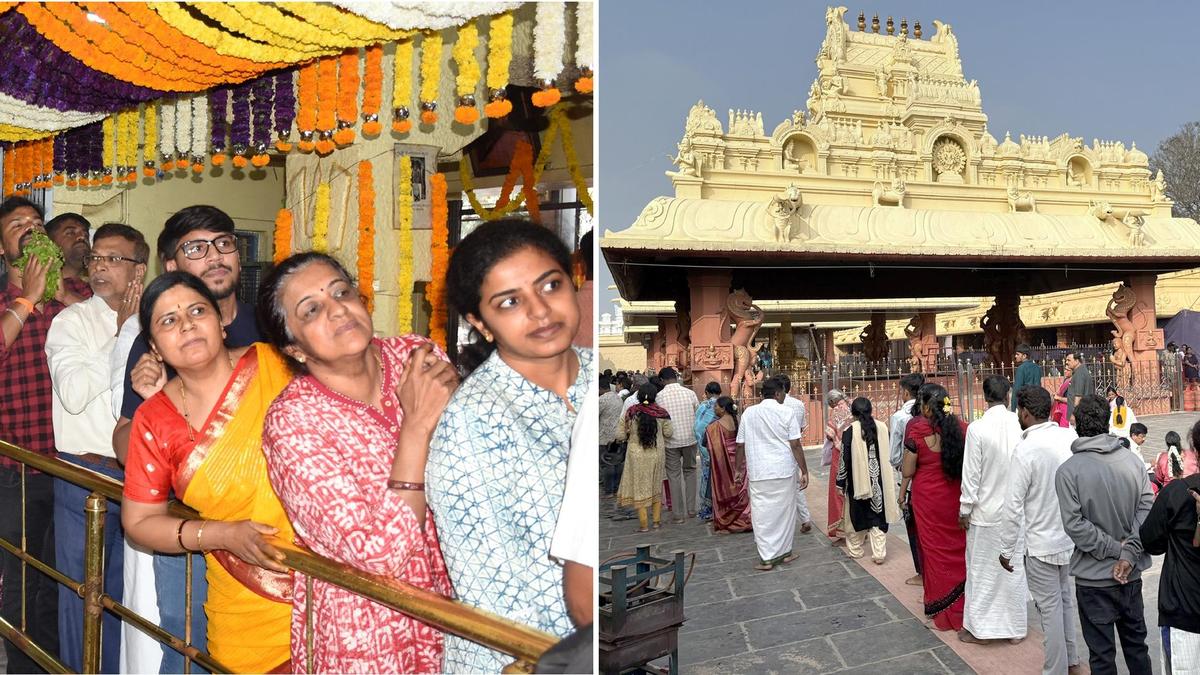
Devotion, Rituals, and the Spirit of Vaikunta Ekadasi
Vaikunta Ekadasi holds immense religious significance in Vaishnavism, commemorating the day when Lord Vishnu opened the gates of Vaikunta for devotees. In Mysuru, the occasion is marked not only by temple visits but also by elaborate rituals that begin before dawn. Priests performed special abhishekas, followed by grand alankaras using flowers, jewels, and silk garments, transforming temple sanctums into dazzling spaces of worship.
One of the central rituals observed was the Vaikunta Dwara Darshan, where a specially designated entrance within the temple is opened exclusively on this day. Devotees believe that entering through this doorway absolves them of past sins and brings spiritual upliftment. The moment the doors opened, chants of “Govinda Govinda” and “Narayana” resonated through temple corridors, reflecting the emotional intensity of the occasion.
Many devotees spoke of personal vows and prayers associated with Vaikunta Ekadasi. Some prayed for good health and prosperity, while others sought inner peace or solutions to personal struggles. Elderly devotees recalled attending the festival for decades, noting that while crowds have grown over the years, the essence of devotion has remained unchanged. Younger devotees, too, expressed a sense of connection to tradition, seeing the festival as a link between generations.
In several temples, discourses on the significance of Vaikunta Ekadasi were organised throughout the day. Scholars and priests spoke about the spiritual symbolism of the festival, emphasising values such as humility, devotion, and compassion. These talks attracted attentive audiences, many of whom remained seated for hours, listening intently despite the crowded conditions.
The festival also had a strong communal dimension. Free prasada was distributed at many temples, prepared by volunteers who worked through the night. Simple yet sacred offerings were shared among devotees, reinforcing the spirit of equality and collective worship. For many visitors, the act of eating prasada together was as meaningful as the darshan itself.
Crowd Management, Civic Coordination, and Public Response
Given the scale of attendance, crowd management emerged as a key focus for authorities. The city police deployed additional personnel around major temples to regulate traffic and ensure public safety. Traffic diversions were put in place near prominent shrines, and parking arrangements were made at designated locations to prevent congestion. Despite minor delays in some areas, traffic movement remained largely manageable throughout the day.
Health and emergency services were kept on standby, with ambulances stationed near crowded zones. A few devotees reportedly experienced fatigue due to long waiting hours, but prompt medical assistance ensured that no serious incidents occurred. Volunteers, including members of religious organisations and local youth groups, played a crucial role in guiding devotees, offering water, and assisting the elderly and children.
Temple authorities acknowledged the challenges posed by the sheer volume of devotees but expressed satisfaction with the overall conduct of the festival. They noted that coordination between civic agencies, police, and temple staff had improved compared to previous years, allowing for better crowd flow and reduced waiting times in some temples.
Residents living near major temples shared mixed experiences. While some welcomed the festive atmosphere and considered the crowds a symbol of Mysuru’s spiritual heritage, others expressed concerns about noise and temporary inconvenience. However, many acknowledged that such disruptions were part of living in a city known for its religious and cultural traditions.
Shopkeepers and street vendors near temple areas reported brisk business, selling flowers, coconuts, lamps, and religious souvenirs. For them, Vaikunta Ekadasi provided an important economic opportunity, adding a livelihood dimension to the religious celebration. At the same time, authorities kept a close watch to prevent overcharging and ensure unobstructed pathways for devotees.
As the day progressed, the crowds gradually thinned, but the sense of fulfilment among devotees remained palpable. Many described a feeling of calm and spiritual satisfaction after completing their darshan, despite the physical exertion involved. For first-time visitors, the experience was both overwhelming and deeply moving, leaving a lasting impression.
Vaikunta Ekadasi in Mysuru once again underscored the enduring power of faith to draw people together across age, class, and background. Beyond rituals and numbers, the festival reflected a collective yearning for hope, peace, and transcendence. As temples closed their doors late at night after an intense day of worship, the city settled back into routine, carrying with it the quiet afterglow of devotion and shared belief.
Follow: Karnataka Government
Also read: Home | Channel 6 Network – Latest News, Breaking Updates: Politics, Business, Tech & More
