
The Karnataka government has taken action against two private schools in Bengaluru for violating provisions of the Kannada Language Comprehensive Development Act, School Education and Literacy Minister Madhu Bangarappa informed the Legislature. The Minister’s statement came amid growing public concern over the perceived marginalisation of Kannada in educational institutions, particularly in the State capital, where private and international schools dominate the landscape. The issue has once again brought language identity, compliance with law, and the responsibilities of educational institutions into sharp focus.
Several legislators argued that the issue must be viewed in the context of generational language transmission, warning that reduced exposure to Kannada in formative years could weaken long-term linguistic continuity. Schools, they said, occupy a unique position in reinforcing everyday usage of the language, particularly in urban settings where English and other Indian languages dominate public spaces. Ensuring Kannada’s visibility within educational environments was described as essential for sustaining cultural rootedness among younger generations.
Senior bureaucrats pointed out that the Education Department is working on standard operating procedures to help schools understand compliance requirements clearly. These include templates for bilingual communication, guidelines on signage placement, and advisory notes on integrating Kannada respectfully into school culture. Officials said such measures would reduce confusion and help institutions comply without fear of punitive action.
Some members of the Council also raised concerns about the unequal burden of enforcement, questioning whether elite institutions often escape scrutiny while smaller schools face inspections. The Minister responded by stating that enforcement drives would be random and data-driven, based on complaints and compliance audits rather than institutional profile. Transparency in action, he said, would be key to maintaining public trust.
Language scholars welcomed the discussion, noting that legal enforcement alone cannot sustain a language. They stressed the importance of cultivating pride and emotional connection to Kannada through literature, cultural activities, and everyday usage. Schools that celebrate local festivals, writers, and history, they said, can create an organic relationship between students and the language beyond statutory obligations.
As the debate drew to a close, members across party lines agreed that the issue extended beyond two schools or one city. It reflected broader anxieties about cultural erosion amid rapid urbanisation and globalisation. How Karnataka navigates this challenge, they said, will determine whether Kannada thrives as a living language in public life or remains confined to symbolic gestures.
According to the Minister, the government acted following complaints and inspections that revealed non-compliance with mandatory norms related to the use of Kannada. These include the display of Kannada on signboards, communication with parents, and adherence to guidelines regarding the teaching and usage of the State’s official language. Bangarappa emphasised that the action was not punitive in spirit but corrective, aimed at ensuring respect for the law and preserving Karnataka’s linguistic heritage.
The Minister asserted that the Kannada Language Act is not intended to restrict educational freedom or impose unreasonable burdens on institutions. Instead, it seeks to ensure that Kannada, as the language of the land, receives due recognition and functional presence in public and private spaces. “This is about dignity and constitutional responsibility,” he said, adding that educational institutions play a crucial role in shaping cultural awareness among students.
The issue of Kannada usage in schools has been a recurring subject of debate in Karnataka. While the State has witnessed rapid growth in private, ICSE, CBSE, and international schools, many parents and language activists argue that this expansion has coincided with a gradual erosion of Kannada’s presence in everyday school life. Complaints range from the absence of Kannada signage to schools allegedly discouraging the use of the language within their premises.
Government officials clarified that the action against the two Bengaluru schools followed due process, including notices and opportunities for compliance. Inspections reportedly found that the institutions had failed to implement required measures despite earlier advisories. The Minister stressed that enforcement would be uniform and that no institution would be singled out arbitrarily.
Opposition members, while broadly supporting the protection of Kannada, sought clarity on the nature of action taken and the safeguards in place to prevent misuse of authority. They cautioned that enforcement should not turn into harassment of institutions or parents, particularly those who have chosen non-State syllabi for their children. The government responded by reiterating that the law applies across boards and that compliance does not interfere with academic autonomy.
Kannada, Education, and the Question of Cultural Responsibility
Language activists welcomed the government’s action, describing it as a long-overdue assertion of linguistic rights. They argue that schools are not merely centres of academic instruction but social institutions that influence how children relate to their surroundings. When Kannada is sidelined, they say, it sends a message that local language and culture are secondary, even in their own State.
Activists also pointed out that the Kannada Language Act has been in place for years, yet enforcement has often been lax. This, they claim, has emboldened some institutions to ignore statutory requirements. The recent action, they hope, will serve as a signal that compliance is not optional and that the government is serious about protecting Kannada’s public presence.
Teachers and educationists offered a more nuanced view, acknowledging the importance of Kannada while cautioning against rigid implementation. They stressed that many students in Bengaluru come from diverse linguistic backgrounds and that schools must balance inclusivity with statutory obligations. Encouraging Kannada learning through positive engagement, they said, is more effective than fear-driven compliance.
Parents expressed mixed reactions. While many welcomed the emphasis on Kannada, others worried about potential disruptions or increased administrative pressure on schools. Some parents of migrant backgrounds said they support Kannada signage and basic communication but hope that enforcement does not affect academic priorities or lead to unnecessary conflicts.
The Minister sought to allay such fears, stating that the government’s objective is not to burden parents or students. He emphasised that learning Kannada enhances integration and helps students engage meaningfully with society. “Knowing Kannada is not a disadvantage; it is an asset for anyone living in Karnataka,” he said.
The debate also touched upon the role of private education in a linguistically diverse city like Bengaluru. As the city attracts people from across India and the world, questions arise about how to preserve local identity while remaining inclusive. The government maintains that respecting Kannada does not conflict with diversity, but rather anchors it.
Enforcement, Future Action, and the Larger Language Debate
Minister Bangarappa indicated that the Education Department has been directed to conduct awareness drives alongside inspections. Schools will be given clear guidelines and reasonable timelines to ensure compliance. The focus, he said, will be on education and correction rather than punishment, unless institutions repeatedly defy the law.
Officials noted that the Kannada Language Act mandates the prominent display of Kannada on name boards, notices, and official communication. In the case of schools, this extends to interactions with parents and the community. However, the Act does not restrict the medium of instruction chosen by the institution, a point the government reiterated to counter misinformation.
Legal experts observe that language laws often sit at the intersection of identity and governance, making their enforcement particularly sensitive. Uniform application, transparency, and clear communication are essential to avoid allegations of arbitrariness. The Karnataka government’s challenge, they say, lies in balancing assertive enforcement with social harmony.
The action against the two Bengaluru schools has also reignited calls for periodic audits of compliance across sectors, including commercial establishments and corporate offices. Kannada organisations argue that schools should not be the only focus and that language laws must be implemented comprehensively to be effective and fair.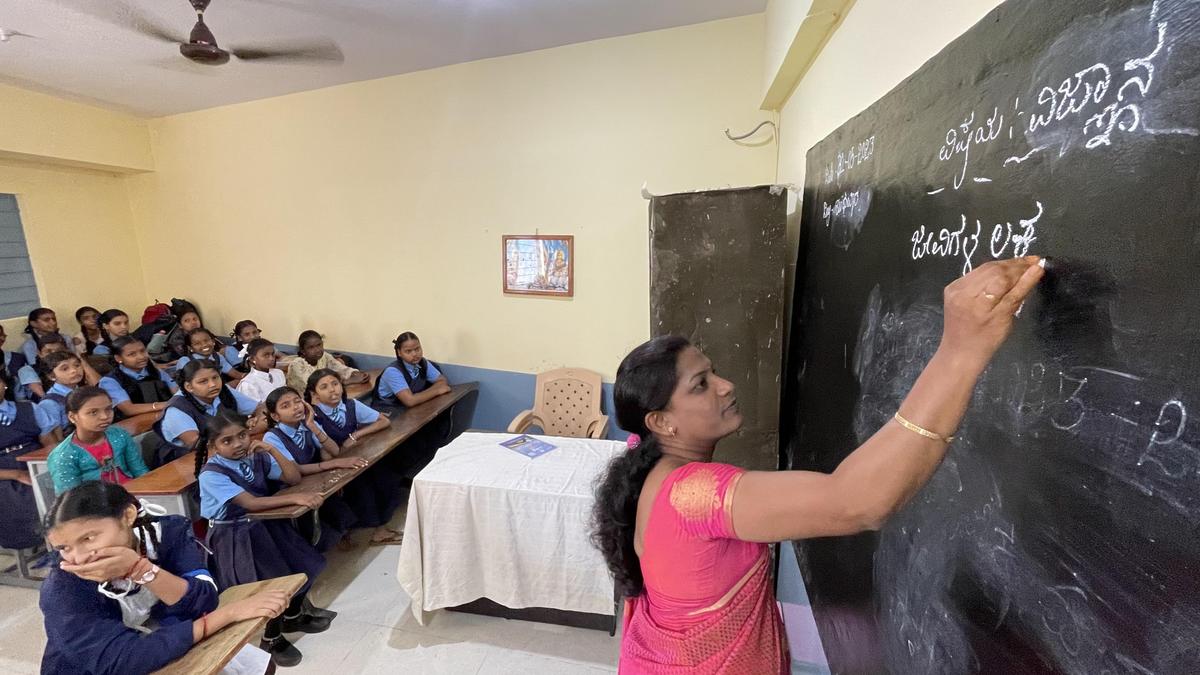
Political observers note that language remains a powerful emotional issue in Karnataka, capable of mobilising public opinion across party lines. Governments, regardless of ideology, have historically faced pressure to demonstrate commitment to Kannada. In this context, the current action is seen both as administrative enforcement and a symbolic reaffirmation of linguistic pride.
As discussions continue, the Minister reiterated that Kannada’s protection is a shared responsibility. He urged institutions, parents, and civil society to view compliance not as coercion but as respect for the State’s cultural foundation. Education, he said, should produce not only skilled professionals but socially rooted citizens.
The episode has once again underlined the evolving dynamics of language, education, and identity in Karnataka’s urban centres. As Bengaluru grows into a global city, the question of how Kannada finds its rightful place within this transformation remains central. The government’s recent action suggests a renewed resolve to ensure that growth does not come at the cost of linguistic and cultural visibility.
Whether this approach fosters cooperation or invites further debate will depend largely on how consistently and sensitively the law is enforced. For now, the government’s message is clear: Kannada is not optional in Karnataka’s public life, and educational institutions, as pillars of society, are expected to uphold both the letter and the spirit of the law.
Whether this approach fosters cooperation or invites further debate will depend largely on how consistently and sensitively the law is enforced. For now, the government’s message is clear: Kannada is not optional in Karnataka’s public life, and educational institutions, as pillars of society, are expected to uphold both the letter and the spirit of the law.
Follow: Karnataka Government
Also read: Home | Channel 6 Network – Latest News, Breaking Updates: Politics, Business, Tech & More
