
Karnataka Lokayukta Justice B.S. Patil’s sharp query on the absence of visible development in Yadgir district has triggered intense administrative unease and renewed scrutiny over the utilisation of government funds in one of the State’s most backward regions. By bluntly asking “where is the development,” the Lokayukta cut through layers of official reports and expenditure statements, laying bare a troubling disconnect between sanctioned funds and ground realities. His remarks have transformed a routine review into a moment of accountability, forcing officials to confront long-standing failures in governance and implementation.
Yadgir, carved out as a separate district with the promise of focused development, has for years remained emblematic of chronic underdevelopment. Despite repeated allocations under various schemes, the district continues to struggle with poor infrastructure, limited healthcare access, educational deficits, and persistent poverty. The Lokayukta’s intervention has brought these issues back into sharp public focus, questioning not just inefficiency but the integrity of fund utilisation.
During his observations, Justice Patil reportedly expressed dissatisfaction with explanations offered by officials, pointing out that budgetary allocations alone do not constitute development. Roads, schools, hospitals, drinking water facilities, and employment opportunities, he noted, are the true indicators of progress. The absence or inadequacy of these essentials, despite years of spending, prompted him to seek detailed explanations on how government funds were actually used.
The remarks have resonated strongly within administrative and political circles. For residents of Yadgir, the Lokayukta’s words echoed lived realities that have long been ignored. For officials, they signalled heightened scrutiny and the possibility of deeper investigations. What might have been dismissed as routine criticism has now assumed the tone of a warning, suggesting that systemic lapses could invite legal and institutional consequences.
The State government has acknowledged the observations, stating that it will furnish detailed reports on fund utilisation. However, critics argue that explanations after the fact cannot substitute for years of missed opportunities. The Lokayukta’s question has thus become a powerful indictment, challenging the credibility of development claims made over successive administrations.
As discussions intensify, the spotlight remains firmly on Yadgir, a district that has often featured in development indices for the wrong reasons. Justice Patil’s intervention has reopened an uncomfortable conversation about governance priorities, accountability, and the moral responsibility of the State toward its most marginalised regions.
YADGIR’S PERSISTENT STRUGGLE AND UNFULFILLED PROMISES
Yadgir’s development narrative has long been marked by promises that failed to translate into meaningful change. Since its formation, the district was expected to benefit from targeted planning and resource allocation. Instead, it has consistently lagged behind in key indicators such as literacy, maternal health, employment, and basic infrastructure. The Lokayukta’s remarks have forced a re-examination of why progress has remained elusive despite sustained funding.
Officials have often cited structural challenges, including drought-prone geography, social backwardness, and limited private investment. While these factors are real, critics argue they cannot fully explain the scale of stagnation. Numerous schemes aimed at rural development, housing, sanitation, and livelihoods were sanctioned for Yadgir, raising questions about implementation and monitoring.
Justice B.S. Patil’s observations suggest that the issue may lie not in policy design but in execution. Development funds, once released, require transparent utilisation, regular audits, and outcome-based assessment. The Lokayukta’s demand for explanations indicates concern that these mechanisms may have failed, allowing inefficiency or misuse to go unchecked.
Residents of Yadgir have repeatedly voiced grievances over incomplete projects and poor-quality infrastructure. Roads that deteriorate within months, schools lacking basic facilities, and healthcare centres struggling with staff shortages are common complaints. Such conditions, they argue, point to systemic neglect rather than isolated lapses.
Civil society organisations working in the district have welcomed the Lokayukta’s intervention, describing it as overdue. They note that repeated surveys and reports have highlighted gaps, yet corrective action has been minimal. The current scrutiny, they hope, will compel authorities to move beyond paperwork and address tangible outcomes.
The political dimension of Yadgir’s underdevelopment cannot be ignored. Frequent changes in leadership, shifting priorities, and limited political clout have often left the district on the margins of decision-making. The Lokayukta’s questioning cuts through these dynamics, asserting that development is a constitutional obligation, not a discretionary favour.
By demanding clarity on fund utilisation, Justice Patil has effectively reframed the discourse. The issue is no longer about constraints alone, but about responsibility and accountability in delivering development where it is needed most.
USE OF GOVERNMENT FUNDS AND QUESTIONS OF ACCOUNTABILITY
The Lokayukta’s focus on the use of government funds strikes at the core of public accountability. In seeking explanations, Justice Patil has underscored that expenditure figures mean little without demonstrable impact. His observations suggest concern that funds allocated for Yadgir may not have been translated into commensurate benefits for its residents.
Government departments typically rely on utilisation certificates and progress reports to demonstrate compliance. However, such documents often fail to capture ground realities. The Lokayukta’s intervention highlights the limitations of paperwork-based accountability, advocating for a more rigorous assessment of outcomes.
Experts point out that backward districts like Yadgir are especially vulnerable to inefficient fund usage due to weak oversight and limited administrative capacity. In such contexts, even well-intentioned schemes can falter if monitoring is lax. Justice Patil’s demand for explanations signals a push toward strengthening oversight mechanisms.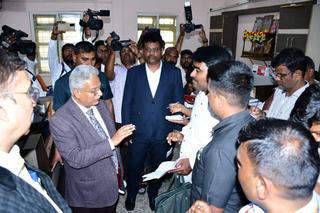
The possibility of further inquiry looms large. If discrepancies emerge between funds released and work executed, it could lead to investigations into dereliction of duty or misuse. While no specific allegations have been formally made, the tone of the Lokayukta’s remarks suggests impatience with routine justifications.
Officials, meanwhile, have sought to defend their record, citing ongoing projects and long-term plans. They argue that development is a gradual process and that recent initiatives have yet to bear fruit. However, critics counter that such explanations have been repeated for years, with little to show in terms of measurable improvement.
The public response to the Lokayukta’s remarks has been telling. Many see it as validation of long-standing grievances, while others express cautious hope that this scrutiny will lead to corrective action. For a district accustomed to being overlooked, the attention itself is significant.
Ultimately, the issue of fund utilisation goes beyond Yadgir. It raises broader questions about how development spending is monitored across the State and whether existing systems are adequate to ensure equity and effectiveness.
ADMINISTRATIVE RESPONSE AND POLITICAL IMPLICATIONS
The State government’s response to the Lokayukta’s observations will be closely watched. Providing explanations on fund utilisation is only the first step; the credibility of those explanations will depend on their transparency and verifiability. Any attempt to deflect responsibility or rely on generic statements risks further eroding trust.
Politically, the remarks have created discomfort. Opposition parties have seized upon them to criticise the government’s development claims, portraying Yadgir as evidence of misplaced priorities. Ruling party leaders, meanwhile, have emphasised ongoing efforts and future plans, seeking to contain the fallout.
Within the bureaucracy, the Lokayukta’s intervention has reportedly prompted internal reviews. Officials are reassessing project files and expenditure records, aware that inconsistencies could attract further scrutiny. This atmosphere of caution reflects the weight carried by the Lokayukta’s office in matters of administrative accountability.
Policy analysts suggest that the episode could catalyse a shift toward outcome-based governance. Linking funding to measurable results, strengthening independent audits, and involving local communities in monitoring are among the measures proposed to prevent recurrence of such situations.
For Yadgir’s elected representatives, the spotlight presents both a challenge and an opportunity. They face pressure to demonstrate tangible progress while also advocating more effectively for the district’s needs. Failure to do so could deepen perceptions of neglect and disenfranchisement.
The Lokayukta’s remarks have thus reverberated beyond a single district. They have sparked a broader debate on development equity, governance quality, and the ethical use of public funds in Karnataka.
A WAKE-UP CALL FOR BACKWARD REGIONS
Justice B.S. Patil’s pointed question serves as a wake-up call, not only for officials in Yadgir but for the State’s approach to backward regions as a whole. Development disparities persist despite decades of planning, suggesting that structural reform is urgently needed.
Experts argue that backward districts require more than standard schemes. Tailored interventions, sustained political attention, and empowered local institutions are essential to break cycles of deprivation. The Lokayukta’s intervention highlights what happens when these elements are missing.
For residents of Yadgir, the hope is that the current scrutiny will lead to lasting change rather than temporary attention. Past experiences have bred scepticism, as inquiries and inspections often fade without follow-through. The challenge lies in converting accountability into action.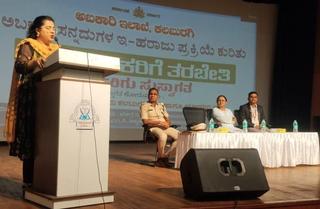
The moral dimension of the issue is equally significant. Public funds represent collective resources meant to uplift the most vulnerable. When development fails to materialise, it is not merely an administrative lapse but a breach of trust.
Justice Patil’s remarks have reminded the State of this responsibility. By questioning where development is, he has reframed governance as a moral obligation grounded in outcomes, not intentions.
As explanations are sought and reviewed, the real test will be whether the findings lead to reform. Strengthening oversight, improving implementation, and prioritising human development indicators must follow if Yadgir is to move beyond symbolic gestures.
BEYOND QUESTIONS TOWARD ACCOUNTABILITY
The Lokayukta’s intervention has opened a crucial window for introspection and reform. Asking where development has gone is only the beginning; answering that question honestly and acting on it is the harder task.
For Karnataka, the episode underscores the importance of institutions that can challenge complacency and demand accountability. The Lokayukta’s role in highlighting gaps serves as a reminder that governance must be constantly examined and corrected.
Yadgir’s future now depends on how seriously these observations are taken. If explanations lead to concrete corrective measures, the district could finally begin to realise its long-promised potential. If not, the moment will pass, leaving behind only sharper cynicism.
The residents of Yadgir have waited long for meaningful change. Justice B.S. Patil’s words have amplified their concerns at the highest level. Whether this translates into visible development will determine the lasting significance of this intervention.
In the end, the Lokayukta’s question resonates far beyond one district. It asks a fundamental question of governance itself: when funds are spent, promises made, and years pass, who answers when development fails to appear?
Follow: Karnataka Government
Also read: Home | Channel 6 Network – Latest News, Breaking Updates: Politics, Business, Tech & More
