
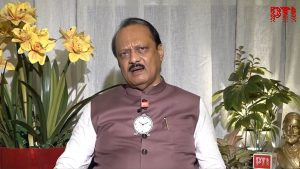
Maharashtra’s flagship welfare initiative, the Mukhyamantri Majhi Ladki Bahin Yojana, has once again become the center of political and policy debates across the state, with Deputy Chief Minister Ajit Pawar recently linking its inception to the performance of the Mahayuti government in the 2024 Lok Sabha elections. In an exclusive interview, Pawar said that the scheme was launched following “a jolt” in the general elections, a candid admission that political calculations played a role in shaping the rollout of this high-profile cash transfer programme targeted at economically vulnerable women.
The Ladki Bahin scheme provides a monthly direct cash transfer of ₹1,500 to eligible women between the ages of 21 and 65 whose families earn below a specified income threshold. The government has maintained that the scheme is aimed at empowering women financially and enabling them to participate more actively in household and community economics. However, its introduction and continued expansion have been viewed by many analysts and political opponents as part of an electoral strategy rather than purely a welfare move.
Origins of the Scheme and Political Context
Deputy CM Ajit Pawar explained that after the Mahayuti coalition of the Bharatiya Janata Party, Shiv Sena and his own Nationalist Congress Party secured only 17 out of 48 Lok Sabha seats in Maharashtra, the government reevaluated its approach to governance and voter engagement. Pawar said that the setback prompted discussions on how to regain public trust ahead of subsequent local and state elections. Drawing from similar schemes in other states, such as the Ladli Behna initiative in Madhya Pradesh under then-Chief Minister Shivraj Singh Chouhan, Maharashtra adopted a comparable model to offer regular financial support to women.
“After the Lok Sabha elections, we realised that we had received a setback and needed to reconnect with people, especially women. That is when the Ladki Bahin scheme was introduced.”
Pawar acknowledged that while welfare schemes like Ladki Bahin place strain on state finances, the government remains committed to balancing fiscal responsibilities with the socio-economic needs of its citizens. He pointed to the simultaneous progress of major infrastructure projects—including port construction, metro extensions, and the bullet train corridor—as evidence that development and welfare can proceed in tandem.
The timing of the Ladki Bahin launch in July 2024, months before the state assembly elections later that year, has been a focal point of political debate. The coalition that introduced the scheme went on to secure a landslide victory in the November 2024 elections, winning more than 230 out of 288 seats. Opposition parties and critics have argued that the financial incentive of the cash scheme influenced voter behaviour and contributed significantly to the alliance’s electoral success.
Scheme Implementation and Fiscal Footprint
Since its launch, the Ladki Bahin scheme has aimed to deliver monthly payments directly to beneficiaries’ bank accounts through Aadhaar-linked transfers. The state government reports that millions of women have received the benefit, making it one of the largest cash transfer programmes in Maharashtra’s history. However, the implementation has not been without controversy. Reports and audits have revealed significant irregularities in the beneficiary lists, with tens of lakh accounts flagged for further verification due to eligibility concerns.
A major administrative review found that over 26 lakh ineligible recipients had been temporarily removed from the scheme’s database pending stricter verification, reflecting ongoing challenges in ensuring that the benefits reach their intended targets. The review also underscored the sheer scale of the programme and its impact on the state’s budgetary allocations.
In addition, separate investigations uncovered thousands of cases in which men or government employees were incorrectly recorded as beneficiaries, leading to further scrutiny and corrective actions by authorities. The government has maintained that it will continue to refine eligibility checks and make necessary adjustments to safeguard public funds.
Political Reactions and Opposition Criticism
The revelations concerning the scheme’s origins and execution have drawn sharp reactions from opposition leaders and critics who describe Ladki Bahin as a populist measure that prioritises political gain over sustainable development. Some opposition figures argue that the scheme operates as a form of voter bribe and question its long-term viability given the significant financial burden on the state exchequer. They point to alleged misuse, administrative lapses and the diversion of funds that could otherwise address structural issues like women’s employment, health services, and education.
At the same time, many proponents of the programme stress its role in providing immediate economic relief to women in economically disadvantaged households who might otherwise struggle to meet daily expenses. They argue that direct cash transfers empower women to make independent financial decisions and contribute to improved quality of life for their families. The debate has extended to public forums, legislative sessions, and social media, reflecting the broader national conversation on welfare, governance and electoral strategies.
Chief Minister Devendra Fadnavis has also addressed the scheme in public forums, reaffirming that the government has no intention of discontinuing Ladki Bahin and framing it as a key component of the state’s pro-development agenda. Fadnavis stated that the programme would persist alongside other initiatives aimed at women’s empowerment until his tenure as Chief Minister continues, dismissing opposition claims of imminent withdrawal.
Public Perception and Social Impact
Public response to the Ladki Bahin scheme has been mixed. Beneficiaries and community leaders have publicly welcomed the financial support, noting that the monthly stipend offers a modest but meaningful contribution toward household expenses, education costs, and savings. For many women in rural and urban poor communities, the programme represents a practical step toward financial inclusion. However, critics argue that while the scheme alleviates immediate financial pressure, it does not address deeper systemic challenges such as livelihood opportunities, skill development, and long-term economic security for women.
Some civil society groups have also raised concerns about the administrative process and the need for stronger oversight mechanisms to prevent misuse of funds and ensure transparency. Calls for independent audits and tighter eligibility criteria have gained traction in certain quarters. At the same time, supporters of the government caution against politicising a programme that they view as essential for the welfare of vulnerable populations.
Conclusion: Welfare, Politics and Governance in Focus
The recent remarks by Deputy CM Ajit Pawar acknowledging that the Ladki Bahin scheme was partly shaped by the political realities of the last Lok Sabha elections have intensified public discourse around welfare policy, electoral strategy and fiscal responsibility in Maharashtra. As the state prepares for upcoming municipal, local body and future state elections, the scheme is likely to remain a central issue in political narratives and policy analyses alike.
The Ladki Bahin programme, with its substantial reach and financial implications, continues to highlight the complex interplay between social welfare objectives and political imperatives in contemporary governance. Whether it is celebrated for empowering women or critiqued as an electoral tool, its impact on Maharashtra’s socio-economic landscape will continue to be closely watched in the months and years ahead.
Read More: https://channel6network.com/mumbai-weather-update/
