
Mandya district is set to receive its first-ever 400 kV power substation, a major infrastructure milestone expected to significantly strengthen electricity transmission and support long-term economic growth in the region. The project, announced by the State government, marks a decisive step towards addressing power stability issues and meeting rising energy demand driven by agriculture, industry, and urban expansion in southern Karnataka.
Officials said the high-capacity substation will play a critical role in improving grid reliability not only for Mandya but also for neighbouring districts that depend on the same transmission network. Once operational, it is expected to reduce transmission losses, improve voltage stability, and ensure uninterrupted power supply during peak demand periods.
Mandya, often referred to as the sugar bowl of Karnataka, has seen increasing pressure on its power infrastructure in recent years. Expansion of irrigation facilities, agro-based industries, and residential areas has led to higher electricity consumption, exposing the limitations of existing substations operating at lower capacities. The proposed 400 kV facility is expected to address these gaps decisively.
Energy department officials said the substation will be integrated into the State’s high-voltage transmission network, enabling efficient power flow from generation centres to consumption hubs. This integration is expected to improve load management and reduce dependency on emergency power arrangements during periods of high demand.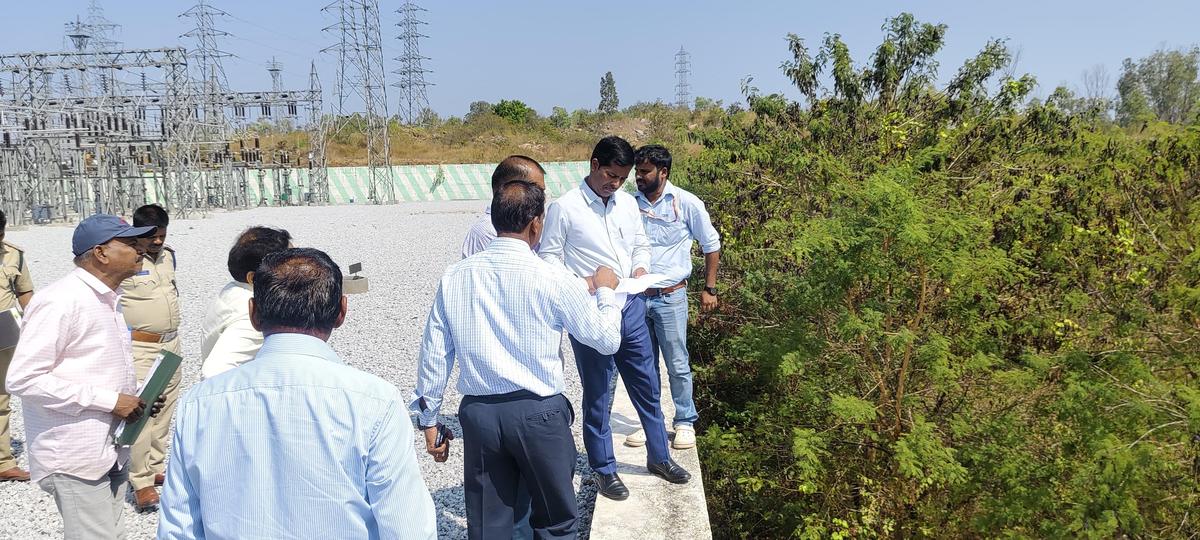
For farmers in Mandya, the announcement carries particular significance. Reliable power supply is critical for irrigation pumps, especially during dry spells. Frequent outages and voltage fluctuations have long been a concern, affecting crop cycles and productivity. The new substation is expected to bring greater predictability and stability to agricultural power supply.
The government has indicated that land identification and preliminary surveys for the project are already underway. Once these processes are completed, construction is expected to begin in phases. Officials said the project timeline would be closely monitored to ensure timely completion.
BOOST TO AGRICULTURE, INDUSTRY, AND INFRASTRUCTURE
The establishment of a 400 kV substation is expected to have wide-ranging economic implications for Mandya district. Industrial development, which has been constrained by power limitations, is likely to receive a significant boost. Officials believe the availability of high-quality power could attract new investments, particularly in food processing, manufacturing, and small-scale industries.
Industrial associations have welcomed the move, noting that inconsistent power supply has often discouraged entrepreneurs from setting up units in the district. With improved transmission capacity, Mandya could emerge as a more attractive destination for industries seeking alternatives to congested urban centres.
Infrastructure planners also point out that reliable electricity is essential for the expansion of public services. Hospitals, educational institutions, water supply systems, and digital infrastructure all depend on stable power. The new substation is expected to strengthen these services, improving overall quality of life in the district.
In rural areas, improved power quality could reduce damage to electrical equipment caused by voltage fluctuations. Farmers and small businesses often bear the cost of frequent repairs and replacements, adding to financial stress. Officials said the substation would help mitigate such issues by ensuring consistent voltage levels.
The project also aligns with Karnataka’s broader energy strategy, which focuses on strengthening transmission infrastructure to support renewable energy integration. As solar and wind capacity increases across the State, high-capacity substations are essential to manage variable generation and maintain grid stability.
Energy experts note that 400 kV substations serve as critical nodes in the power network. Their presence allows for better load distribution and reduces the risk of large-scale outages. For a district like Mandya, which lies along key transmission corridors, the substation could enhance resilience against power disruptions.
PUBLIC EXPECTATIONS AND THE ROAD AHEAD
While the announcement has generated optimism, local leaders and residents have stressed the importance of timely execution. Large power projects often face delays due to land acquisition challenges and environmental clearances. Authorities have been urged to engage with local communities early to address concerns and ensure smooth implementation.
Officials have assured that environmental and safety norms will be strictly followed. Modern substations, they said, are designed to minimise ecological impact while adhering to stringent safety standards. Measures will also be taken to ensure that nearby settlements are not adversely affected during construction and operation.
Employment generation is another anticipated benefit. The construction phase is expected to create jobs for skilled and unskilled workers, while the operational phase will require technical and maintenance staff. Local representatives have called for priority to be given to residents in employment opportunities linked to the project.
The substation is also expected to reduce pressure on existing transmission infrastructure in the region. By redistributing load more efficiently, it could enhance the overall performance of the southern Karnataka power grid.
As Mandya prepares for this landmark addition to its infrastructure, expectations remain high. For many residents, the 400 kV substation symbolises progress and long-overdue attention to the district’s needs. If implemented as planned, it could transform Mandya’s energy landscape, supporting agriculture, enabling industrial growth, and improving everyday life.
The project stands as a reminder that robust power infrastructure is foundational to development. For Mandya district, the first-ever 400 kV substation is not just an engineering achievement, but a promise of stability, opportunity, and a more resilient future.
The proposed substation is also expected to strengthen Mandya’s preparedness for future demand growth. With urbanisation accelerating and household electricity usage steadily increasing, planners believe existing infrastructure would have struggled to cope over the next decade. The 400 kV facility provides headroom for expansion, allowing authorities to plan new distribution networks without fear of overloading the system.
Officials highlighted that the project would improve coordination between transmission and distribution companies. Better load forecasting and grid management are expected once the substation becomes operational. This could lead to fewer unscheduled outages and more predictable maintenance schedules, benefiting both domestic and commercial consumers across the district.
From an administrative perspective, the project reflects a shift towards decentralising high-capacity power infrastructure. Instead of relying heavily on substations located in neighbouring districts, Mandya will now have a major transmission hub of its own. This is expected to reduce dependency and enhance local control over power distribution decisions.
The agriculture sector, which forms the backbone of Mandya’s economy, stands to gain significantly in the long run. Reliable electricity can enable the adoption of modern irrigation techniques and mechanised farming practices. Experts say this could improve efficiency, conserve water, and reduce input costs for farmers.
Educational institutions in the district are also likely to benefit from improved power reliability. Consistent electricity is essential for digital classrooms, laboratories, and research facilities. School and college administrators have noted that frequent power interruptions often disrupt academic activities, a challenge that could ease once the new substation is commissioned.
Healthcare services may see similar improvements. Hospitals and primary health centres depend heavily on uninterrupted power for diagnostics, storage of medicines, and life-support systems. While backup generators provide temporary relief, a stable grid supply enhances safety and reduces operational costs for public health facilities.
Energy planners have pointed out that the substation could support future electric mobility initiatives. As electric vehicle adoption grows, charging infrastructure will place additional demand on the grid. High-capacity substations are crucial to supporting such transitions without compromising existing supply.
As work progresses from planning to execution, residents and stakeholders remain hopeful that the project will be delivered within the promised timeframe. For Mandya, the 400 kV power substation represents not just improved electricity supply, but a foundation for sustained development, resilience, and confidence in the district’s future growth trajectory.
The power substation project is also expected to improve disaster resilience in the region. During extreme weather events such as heavy rains or heatwaves, power demand often spikes while infrastructure becomes vulnerable. A high-capacity 400 kV substation can absorb fluctuations more effectively, reducing the risk of widespread outages. Officials say this added resilience will be crucial as climate variability increasingly affects energy consumption and grid stability across Karnataka.
Experts have also highlighted the role of the substation in reducing technical losses. High-voltage transmission allows electricity to travel longer distances with minimal loss, improving overall efficiency. For the State, this translates into better utilisation of generated power and lower operational costs. Over time, such efficiency gains can support more sustainable energy pricing and reduce strain on the power sector.
The project has sparked discussions on long-term regional planning. With robust power infrastructure in place, Mandya could be better positioned to host logistics hubs, cold storage facilities, and agro-processing units. Planners believe that electricity availability often determines where investments flow, and the new substation could alter Mandya’s economic trajectory in the coming years.
Local governance bodies have been urged to align development plans with the upcoming power upgrade. Officials suggest that industrial layouts, residential expansions, and public infrastructure projects should be planned in anticipation of improved electricity capacity. Such coordinated planning could prevent unregulated growth and ensure that development remains sustainable and balanced.
Environmental considerations have also been raised during initial discussions. Authorities have assured that the substation will comply with safety and environmental norms, including adequate buffer zones and mitigation measures. Energy officials emphasised that modern substation design minimises ecological impact compared to older installations, addressing concerns of nearby communities.
Ultimately, the first-ever 400 kV substation is being seen as a turning point for Mandya district. Beyond technical specifications, it represents institutional confidence in the region’s future. As anticipation builds, the project has come to symbolise progress, reliability, and the promise that infrastructure development can meaningfully support both livelihoods and long-term regional aspirations.
Follow: Karnataka Government
Also read: Home | Channel 6 Network – Latest News, Breaking Updates: Politics, Business, Tech & More
