
Renewed attention has turned toward the growing threat to religious harmony in Mandya, a district long seen as a symbol of coexistence, cultural vibrancy, and mutual respect. Recent events, marked by tense exchanges, inflammatory rhetoric, and sporadic provocations, have prompted civil society groups and administrative officials to reassess the underlying vulnerabilities. While the region has historically maintained calm despite political or ideological differences, officials now say that the social equilibrium appears more fragile than before, warranting coordinated efforts to prevent escalation and preserve the district’s inclusive spirit.
Observers familiar with Mandya’s sociopolitical landscape point out that the recent tensions have not emerged overnight. Instead, they reflect a slow-building pattern characterised by increasing polarisation in local discourse. Community leaders emphasise that Mandya’s identity as a farming region with deep interdependencies between communities has traditionally acted as a buffer against communal hostility. However, they believe present conditions reveal a worrying shift in attitudes, where mistrust grows more quickly and misunderstandings spread more easily. Officials warn that unchecked narratives, especially on social platforms, can rapidly distort perceptions and ignite conflicts.
Local police have heightened vigilance across sensitive pockets, deploying additional personnel in areas where past friction required intervention. The administration insists that the situation remains under control but acknowledges that preemptive action is essential. District officials have begun holding peace meetings with representatives from various communities, urging them to prevent the circulation of rumours and counter misinformation. Mandya’s leaders say that preserving religious harmony is not just a law-and-order concern but a societal responsibility that must be upheld collectively through dialogue and restraint.
Deepening Social Anxiety and the Need for Constructive Intervention
Members of local organisations have noted that one of the major factors contributing to the renewed concerns is the growing visibility of groups attempting to exert influence over religious spaces and cultural practices. These activities, sometimes accompanied by provocative symbols or slogans, have triggered discomfort among residents who fear that external ideological pressures may override Mandya’s historically inclusive traditions. Social workers say that even small incidents, when amplified, can create disproportionate panic among communities unaccustomed to recurring confrontations.
Educationists in the district argue that the anxiety can also be traced to demographic shifts, economic uncertainties, and competitive local politics, which often use cultural identity as a rallying point. They observe that when livelihoods become unstable, people become more susceptible to narratives that frame ‘the other’ as responsible for hardships. Teachers and youth counsellors in Mandya are calling for increased engagement with students and the younger population, emphasising the importance of critical thinking, respect for difference, and awareness of the consequences of divisive attitudes.
Religious leaders from both major communities have issued public appeals urging peace and cooperation. They assert that shared cultural festivals, interdependent occupational networks, and long-standing neighbourhood relationships far outweigh the recent frictions. Some clerics and priests have begun organising interfaith dialogues to encourage better understanding. They believe that reaffirming shared values is essential at a time when mistrust can be fuelled by miscommunication or deliberate distortion. Multi-religious gatherings are expected to increase in the coming weeks as part of a renewed harmony campaign.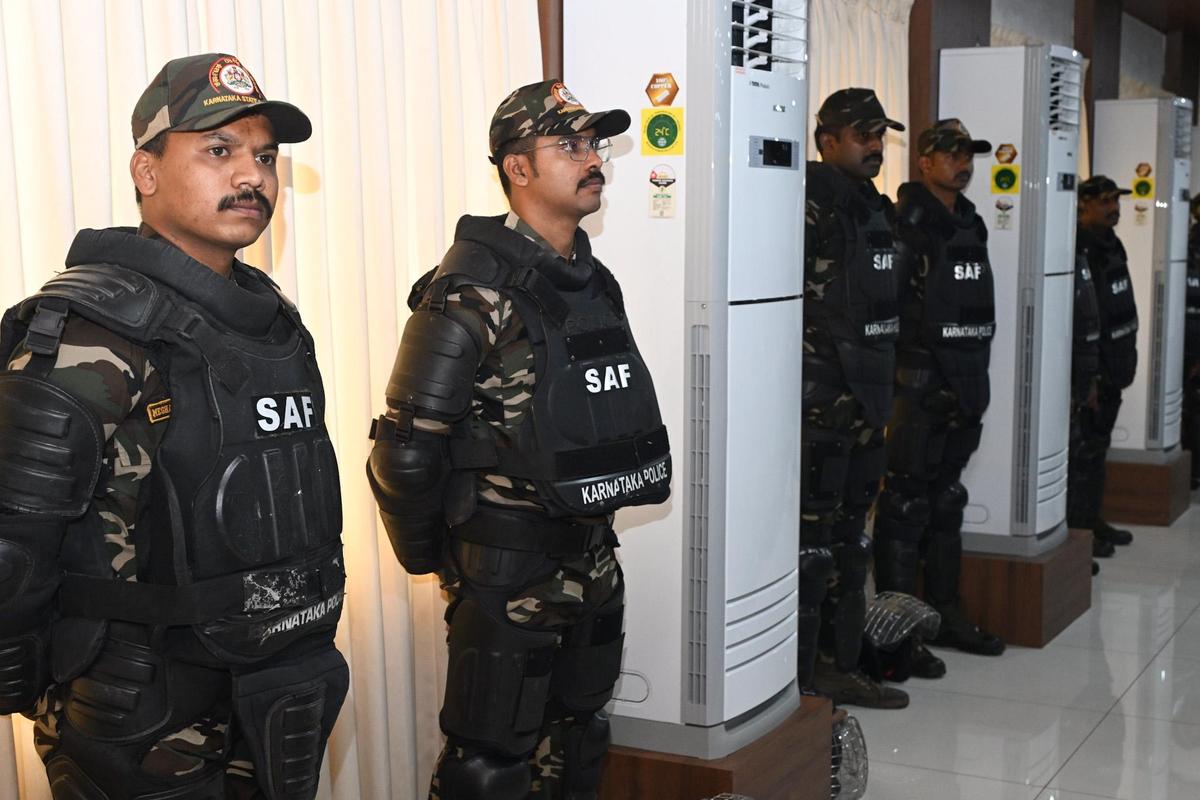
Local business owners are equally concerned about the situation. Mandya, which depends heavily on trade linked to agriculture and small industries, has always relied on stable relationships among communities for commerce to flow uninterrupted. Traders point out that even the slightest unrest impacts marketplaces, transport activities, and daily livelihood patterns. Representatives from traders’ associations have urged the government to involve them in peacebuilding efforts, arguing that economic networks that cut across religious lines form one of the strongest foundations for lasting harmony.
Observers say that one of the biggest challenges in the current climate is the speed at which misinformation spreads, often reaching thousands before authorities can respond. Officials are working with cyber teams to monitor online platforms and identify inflammatory posts. They stress that while freedom of expression must be upheld, content designed to provoke communal disharmony will not be tolerated. Authorities plan to conduct public awareness campaigns encouraging responsible digital behaviour, especially among youth who are most active on social media.
Civic Responsibility and the Path to Long-Term Stability
Women’s groups in Mandya have added an important perspective to ongoing discussions, asserting that families suffer the most during periods of communal tension. They point out that psychological stress, economic uncertainty, and the restriction of daily routines disproportionately affect women and children. Several organisations have begun hosting community workshops where women from different religions come together for dialogue, craft activities, and social support. These groups emphasise that when women participate in peacebuilding, communities become more resilient and compassionate.
Farmers’ associations have also voiced their concerns, recalling that agriculture in Mandya has historically united people across religious lines through shared labour patterns, cooperative irrigation management, and collective market activities. Farmers warn that if communal divisions intensify, it could disrupt coordination among workers and affect productivity. They advocate using Mandya’s agrarian roots as a foundation for restoring trust, noting that fields and farms have always served as spaces where harmony materialises through daily cooperation rather than rhetoric.
Opposition leaders have criticised the government for failing to address the underlying tensions earlier. They allege that the administration dismissed early warnings, allowing provocative incidents to accumulate without sufficiently strong responses. The ruling party, however, rejects these accusations, arguing that the situation has been handled with sensitivity and that political actors must refrain from capitalising on communal tensions. Officials reiterate that maintaining peace requires collective responsibility, not competitive blame.
Civic volunteers, many of whom participated in relief operations during previous crises, have stepped forward to assist in monitoring vulnerable areas and reporting issues to authorities. These groups have emphasised the importance of maintaining open communication channels, especially in neighbourhoods where misinformation tends to circulate quickly. Volunteers argue that building trust requires consistent visibility and grassroots engagement rather than sporadic interventions driven by major incidents alone.
Youth groups are also taking initiative by organising sports events, cultural programmes, and neighbourhood cleanliness drives that encourage people from different communities to participate together. Their goal is to rebuild confidence and reaffirm shared identities beyond religious labels. Young leaders hope that helping people reconnect through informal, everyday experiences will help counter the anxiety that currently overshadows social interactions. They believe small, consistent interactions often have a greater impact than grand public appeals.
Students at local colleges have formed committees to discuss how academic spaces can contribute to social calm. They argue that awareness programmes, student debates, and interdepartmental collaborations can help young minds critically examine polarisation. Faculty members support these efforts, suggesting that institutions should encourage training in media literacy and conflict resolution. They believe that educational campuses must serve as pockets of reason and dialogue in times of tension.
Officials have also reached out to transportation unions, given that buses and autorickshaws often connect diverse communities across the district. Drivers and conductors play an important role in maintaining social equilibrium, as they interact with a wide cross-section of people. Associations have pledged to discourage inflammatory conversations within public vehicles and report any planned disturbances. They acknowledge that the mobility network helps bind the district together and must therefore remain peaceful.
Local historians have pointed out that Mandya’s cultural evolution is rooted in layered influences that have blended harmoniously over centuries. They note that temples, mosques, and marketplaces have coexisted through eras of political change, shaping a distinct regional identity. Historians fear that sensationalism and shallow interpretations of religious differences can quickly erode this nuanced legacy. They urge authorities to highlight Mandya’s shared past through exhibitions, heritage walks, and cultural education campaigns.
Healthcare workers in the region observed that communal tension often triggers hidden mental health effects among residents. Doctors say that anxiety, sleep disturbances, and emotional exhaustion tend to spike during periods of uncertainty. Public health officials are developing counselling support mechanisms, especially for students preparing for exams and families already under financial strain. They stress that emotional well-being must be integrated into district-level peace strategies, as unresolved fears can make communities more reactive and vulnerable.
Non-profit organisations are planning sustained community-building programmes that include storytelling circles, history dialogue sessions, and collaborative art installations. They believe that fostering creative spaces where individuals can express themselves freely and respectfully is essential for long-term harmony. Representatives say that Mandya’s young population is particularly receptive to such initiatives and can play a pivotal role in restoring mutual trust.
Security officials clarified that while visible patrolling has increased, the primary emphasis is on maintaining normalcy rather than creating an atmosphere of fear. They emphasise that policing should be a reassuring presence and that excessive force or intrusive measures will be avoided except when absolutely necessary. According to senior officers, public cooperation, not intimidation, forms the backbone of effective peace management.
Political analysts argue that Mandya’s current moment of introspection must be viewed as an opportunity rather than a crisis. They believe that tensions, though concerning, have sparked essential conversations about the need for proactive social cohesion. Analysts stress that timely policy interventions, strong civil society engagement, and consistent communication can prevent polarisation from deepening further.
As Mandya grapples with its renewed concerns over communal harmony, the district stands at a defining juncture. The coming weeks are expected to determine whether the current tensions subside through collective effort or linger as unresolved anxieties. Civic leaders, officials, and residents alike agree on one thing: Mandya’s ethos has always thrived on unity, interdependence, and mutual respect. Restoring this equilibrium will require patience, cooperation, and a reaffirmation of shared identity. Many believe that with sustained commitment, Mandya can once again reaffirm its longstanding reputation as a district where diversity strengthens rather than divides.
Follow: Karnataka Government
Also read: Home | Channel 6 Network – Latest News, Breaking Updates: Politics, Business, Tech & More
