
A proposal by a Member of the Legislative Council to utilise temple funds for the development of villages surrounding the Male Mahadeshwara Hills has triggered an intense debate in Karnataka, bringing into focus the intersection of faith, governance and rural development. The MLC has argued that temples located in and around the M.M. Hills region generate substantial revenue and that a portion of these funds should be channelled towards improving basic infrastructure and living conditions in nearby villages that remain socially and economically backward.
The Male Mahadeshwara Hills, a prominent pilgrimage centre, attract lakhs of devotees every year. The temple administration oversees significant offerings made by devotees in the form of donations, hundi collections and special sevas. While these funds are traditionally used for temple maintenance, rituals and related charitable activities, the MLC has suggested that they could also serve as a resource for addressing chronic development deficits in surrounding habitations.
According to the MLC, villages around the hill shrine continue to struggle with poor road connectivity, lack of drinking water facilities, inadequate healthcare access and limited educational infrastructure. He has contended that despite the region’s religious importance and economic potential, local residents have seen little improvement in their quality of life over the years.
The proposal, raised during a public forum and later reiterated in political circles, has drawn mixed reactions. Supporters argue that temples have historically played a role in community welfare and that extending development support to nearby villages would be consistent with that tradition. Critics, however, warn that diverting temple funds for secular development purposes could set a problematic precedent and raise legal and ethical concerns.
Temple authorities have maintained that all financial decisions must adhere to existing laws governing religious institutions. They point out that temple funds are regulated under statutory frameworks that specify permissible uses, and any deviation would require careful legal scrutiny and approval from competent authorities.
The issue has gained political traction, with leaders across parties weighing in. While some have cautiously endorsed the idea in principle, others have accused the MLC of politicising religious institutions and attempting to tap into sensitive sentiments ahead of local development discussions.
As the debate unfolds, the proposal has reopened broader questions about the role of religious institutions in public welfare, particularly in regions where the State’s development reach remains limited.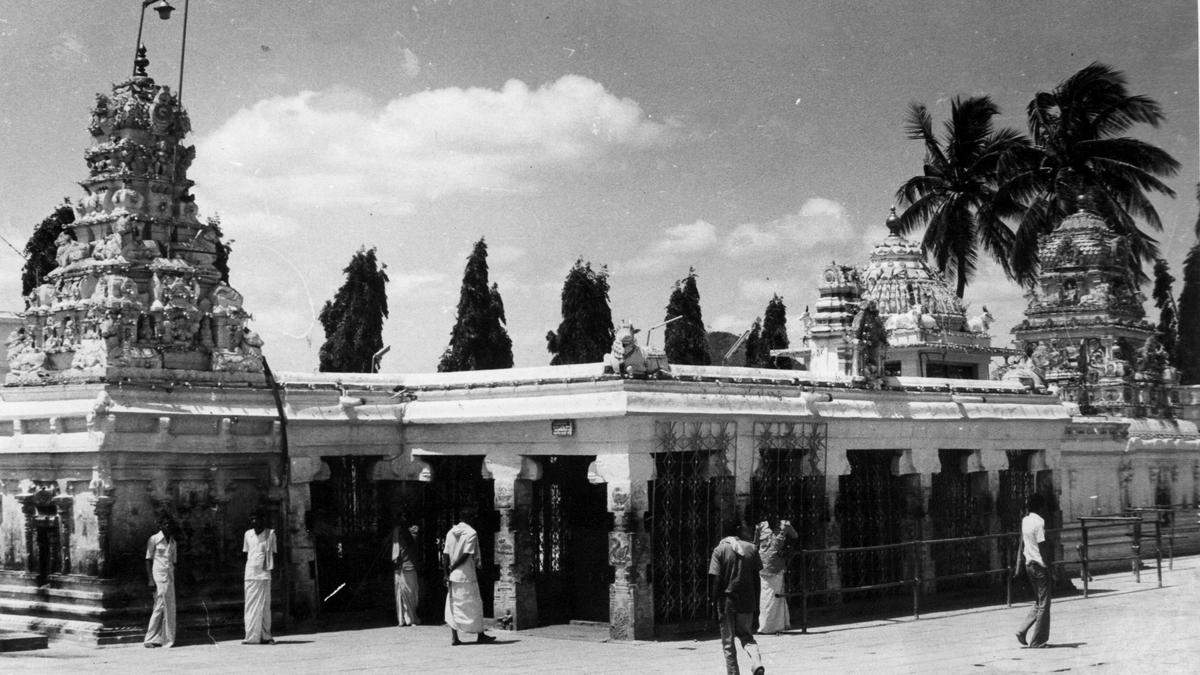
Tradition, Law and the Question of Temple Funds
Historically, temples in Karnataka and across India have served as more than places of worship. They functioned as centres of learning, art, charity and community support. Food distribution, shelter for travellers and assistance to the poor were integral to temple activities, funded through donations and land grants. Supporters of the MLC’s proposal invoke this historical role to argue that village development aligns with the spirit of temple service.
However, modern governance frameworks have formalised the management of temple finances. Temple funds are typically earmarked for specific purposes such as maintenance of the shrine, payment of staff salaries, conduct of rituals, preservation of heritage structures and charitable activities directly linked to the temple’s objectives. Any expansion of this scope raises legal questions.
Legal experts point out that using temple funds for village development would require clear justification that such expenditure qualifies as charitable activity connected to the temple’s purpose. Infrastructure projects like roads, water supply systems or housing schemes may fall outside the traditional interpretation of permissible uses, unless explicitly allowed under governing statutes or through special government orders.
Critics of the proposal argue that once temple funds are opened up for general development work, it could blur the line between religious endowments and State responsibility. They caution that governments may gradually rely on temple resources instead of allocating public funds, effectively shifting the burden of development onto religious institutions.
There are also concerns about equity. Temples in Karnataka vary widely in terms of income. Allowing affluent temples to fund village development could create disparities, while poorer temples may struggle to meet even their basic needs. Opponents argue that development should be uniformly addressed through State budgets rather than through selective use of temple wealth.
At the same time, proponents counter that the villages near M.M. Hills bear the environmental and social impact of large pilgrim inflows. Increased footfall strains local resources, generates waste and affects livelihoods. In this context, they argue, using a portion of temple revenue for local development is a form of compensatory justice.
Temple administrators have adopted a cautious stance, emphasising that any decision must balance religious obligations with social responsibility. They note that existing charitable activities, such as free meals and healthcare camps, already benefit local populations, though perhaps not at the scale required to address systemic development gaps.
Development Needs, Political Responses and the Way Forward
Villagers living around the Male Mahadeshwara Hills say the debate reflects long-standing neglect rather than sudden political interest. Residents point to poor transport facilities, limited access to secondary healthcare and inadequate school infrastructure as daily challenges. Many argue that despite the temple’s prominence, development has largely bypassed their communities.
Local leaders supporting the MLC’s proposal say that targeted use of temple funds could deliver immediate benefits, especially for basic amenities. They argue that small investments in drinking water projects, sanitation facilities or school improvements could significantly improve living conditions without severely impacting temple finances.
Opposition voices, however, have questioned the timing and intent behind the proposal. They allege that invoking temple funds risks polarising public opinion and distracting from the government’s responsibility to address rural development through transparent budgeting and planning. Some have demanded clarity on how funds would be managed and who would oversee their utilisation.
Policy analysts suggest that a middle path may be possible. Instead of direct funding of infrastructure projects, temple trusts could support development through clearly defined charitable initiatives such as scholarships for local students, healthcare outreach programmes or skill development centres. Such activities, they argue, are more likely to withstand legal scrutiny and align with the charitable mandate of religious institutions.
The State government has so far refrained from taking a definitive position, indicating that any proposal involving temple funds would be examined carefully within the existing legal framework. Officials have reiterated that religious endowments are governed by law and that decisions must be taken in consultation with authorities and legal experts.
Civil society groups have called for broader consultations, involving villagers, temple administrators, legal experts and policymakers. They argue that decisions affecting both religious institutions and rural communities should not be made unilaterally or in haste, but through inclusive dialogue that considers long-term implications.
As discussions continue, the proposal has highlighted deeper issues around rural development, governance capacity and the role of non-State actors in welfare delivery. Whether temple funds should supplement State efforts or remain strictly confined to religious purposes remains a contentious question.
For the villages near M.M. Hills, the immediate concern is not ideological but practical. Residents seek roads that remain usable during monsoons, reliable access to clean water and basic healthcare facilities. Whether these needs are met through public funds or charitable initiatives, they argue, matters less than tangible improvement on the ground.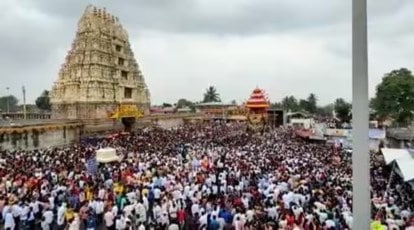
The debate sparked by the MLC’s demand has thus moved beyond a single proposal to reflect broader tensions between faith and administration. Its outcome will not only shape policy around temple funds but also signal how Karnataka navigates the delicate balance between respecting religious institutions and addressing persistent development gaps in its most marginalised regions.
Follow: Karnataka Government
Also read: Home | Channel 6 Network – Latest News, Breaking Updates: Politics, Business, Tech & More
