
The iconic Mysuru Sandal Soap, a household name that has symbolised purity, tradition, and Karnataka’s pride for over a century, is set for a grand relaunch on February 10, marking a new chapter in its storied legacy. The relaunch, led by the Karnataka Soaps and Detergents Limited (KSDL), will feature popular actor Tamannaah as the new brand ambassador, signalling an ambitious effort to reconnect the heritage product with younger consumers while retaining its emotional bond with loyal users. The move blends nostalgia with contemporary appeal, aiming to reposition the soap in a competitive and image-driven personal care market.
Industry observers say the relaunch could also influence how other State-owned enterprises approach branding and consumer engagement. For years, PSUs have been criticised for relying excessively on legacy value without investing enough in storytelling or modern outreach. Mysuru Sandal Soap’s repositioning, backed by a prominent celebrity and renewed marketing strategy, is being closely watched as a possible template for revival. If successful, it could encourage similar institutions to rethink how heritage brands are presented to a rapidly evolving consumer base.
The financial implications of the relaunch are also significant. KSDL officials hope that increased demand for Mysuru Sandal Soap will translate into improved revenues, which can then be reinvested into infrastructure, research, and workforce development. Analysts point out that even modest gains in market share could have a substantial impact, given the brand’s national and international presence. Export markets, particularly among the Indian diaspora, are being viewed as an untapped opportunity where nostalgia-driven demand remains strong.
Retailers, especially in Karnataka, have responded positively to the announcement. Several distributors expect a spike in demand following the relaunch, driven by curiosity, renewed visibility, and promotional campaigns. Shop owners say customers frequently ask for Mysuru Sandal Soap by name, even when it is unavailable, highlighting the depth of brand recall. Ensuring steady supply in the weeks following February 10 will be critical to sustaining momentum and preventing consumer disappointment.
Cultural commentators note that the soap’s revival arrives at a moment when there is renewed interest in indigenous products and regional identities. Mysuru Sandal Soap, rooted in local resources and craftsmanship, fits naturally into this broader narrative. Its story reflects not just commercial success but also historical continuity, linking modern consumers to a legacy shaped by princely patronage, public enterprise, and community trust.
There is also an emotional dimension to the relaunch that extends beyond marketing metrics. For many Kannadigas, Mysuru Sandal Soap represents a shared memory that cuts across class, geography, and generations. The decision to reinvest in the brand has been interpreted as an acknowledgment of this emotional capital. By choosing to revitalise rather than retire the soap, KSDL has reaffirmed its commitment to preserving a piece of Karnataka’s cultural fabric.
As February 10 approaches, expectations continue to build around how effectively the relaunch narrative will be sustained after the initial spotlight fades. Branding experts caution that consistency will be key—consistent messaging, consistent quality, and consistent availability. If these elements align, Mysuru Sandal Soap could emerge not just as a revived brand, but as a rare example of how tradition and modernity can coexist in India’s consumer landscape, leaving a lasting imprint well beyond the relaunch event.
/bmi/media/media_files/2025/05/23/PRPhfpM5LS0i8yKPlDJa.jpg)
For generations, Mysuru Sandal Soap has occupied a special place in Indian homes, especially in Karnataka, where it is seen not merely as a bathing product but as a cultural emblem. Manufactured using pure sandalwood oil sourced from Karnataka’s forests, the soap has long been associated with quality, authenticity, and trust. However, in recent years, increasing competition from multinational brands, changing consumer preferences, and aggressive marketing by private players posed challenges to its visibility and market share. The February 10 relaunch is being viewed as a strategic reset rather than a cosmetic makeover.
Officials at KSDL say the decision to relaunch the soap with a new brand ambassador was driven by the need to refresh its image without diluting its core identity. Tamannaah, known for her wide appeal across age groups and regions, was chosen to bridge generational gaps and expand the brand’s reach beyond its traditional base. Her association is expected to enhance recall value, particularly among urban youth and non-traditional consumers who may not have grown up using the soap but recognise its legacy.
The relaunch event is expected to showcase redesigned packaging, updated branding elements, and a renewed communication strategy that highlights both tradition and modernity. While the formulation of the soap is expected to remain rooted in its original principles, subtle refinements aimed at meeting contemporary consumer expectations have reportedly been introduced. KSDL officials emphasise that the essence of Mysuru Sandal Soap—its sandalwood purity—remains untouched, preserving the trust built over decades.
Employees and retirees of KSDL have welcomed the move, seeing it as a long-overdue effort to restore the brand’s prominence. Many within the organisation describe the soap as more than a product, calling it a symbol of Karnataka’s industrial heritage. The relaunch has stirred a sense of pride among workers who believe the renewed focus could revitalise not just the soap but the entire brand portfolio of KSDL.
The timing of the relaunch is also significant, coinciding with a renewed push by the State government to strengthen public sector undertakings through branding, innovation, and professional management. Mysuru Sandal Soap, often cited as one of India’s most recognisable PSU brands, has been identified as a flagship product capable of competing with global names if positioned effectively. The February 10 event is thus being seen as a statement of intent as much as a marketing exercise.
Heritage Meets Strategy: Reinventing a Cultural Icon
Mysuru Sandal Soap’s journey reflects the evolution of Indian consumer culture itself. Launched in 1918 under the vision of the Mysore Kingdom, the soap was initially conceived as a way to utilise surplus sandalwood oil and generate revenue for the State. Over time, it became synonymous with quality and authenticity, earning loyal customers across India and abroad. However, as the personal care industry transformed into a fast-moving, image-conscious sector, heritage alone proved insufficient to sustain market leadership.
Marketing experts note that legacy brands often face a paradox: their greatest strength—their history—can also become a limitation if not adapted to changing tastes. Younger consumers today are drawn to aspirational imagery, celebrity endorsements, and lifestyle narratives. By bringing in Tamannaah as brand ambassador, KSDL appears to be addressing this gap directly, signalling that Mysuru Sandal Soap is not just a relic of the past but a product relevant to modern lifestyles.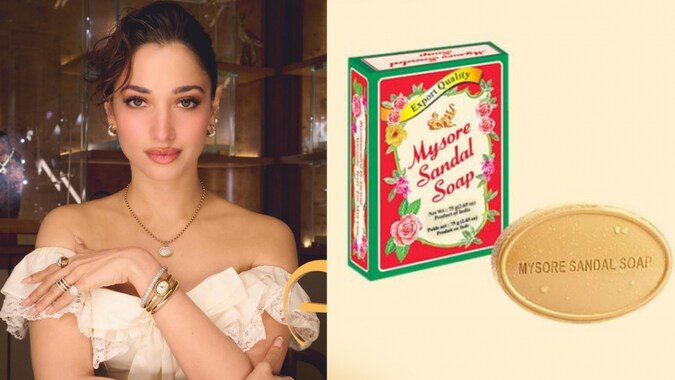
The choice of Tamannaah has been widely discussed in branding circles. Her cross-industry presence and clean public image align with the soap’s positioning around purity and trust. At the same time, her popularity among younger demographics offers an entry point into markets where Mysuru Sandal Soap may have lost visibility. Branding professionals suggest that such an endorsement, if backed by consistent messaging and product availability, could significantly boost recall and trial among new users.
Alongside celebrity association, the relaunch strategy reportedly includes a stronger digital and retail presence. KSDL is expected to focus on modern trade outlets, e-commerce platforms, and targeted promotional campaigns to ensure wider accessibility. In the past, limited availability in certain regions had affected the brand’s competitiveness. Addressing distribution challenges is seen as crucial to translating brand nostalgia into actual sales growth.
The relaunch has also sparked conversations about the sustainability and sourcing of sandalwood, a resource deeply linked to Karnataka’s ecological and cultural identity. Officials have reiterated that KSDL adheres to regulated procurement practices and supports sustainable management of sandalwood resources. In an era where consumers are increasingly conscious of environmental impact, such assurances are likely to play a role in shaping brand perception.
Within Karnataka, public response to the announcement has been overwhelmingly positive. Social media platforms have seen a wave of nostalgic reactions, with users sharing memories associated with the soap—from childhood bath routines to its distinct fragrance lingering on clothes. This emotional resonance is something few brands can claim, and KSDL appears keen to harness it as part of its broader storytelling.
Market Challenges, Public Expectations, and the Road Ahead
Despite the optimism surrounding the relaunch, challenges remain. The personal care market is intensely competitive, dominated by multinational corporations with deep advertising budgets and agile product innovation cycles. For Mysuru Sandal Soap to regain and sustain prominence, experts say it must go beyond symbolic gestures and ensure consistent quality, competitive pricing, and reliable supply chains. Celebrity endorsement can draw attention, but long-term success depends on meeting consumer expectations at every touchpoint.
Another challenge lies in balancing tradition with innovation. While loyal customers value the soap’s classic identity, newer users may seek variants, fragrances, or formats that align with contemporary preferences. KSDL’s future roadmap is expected to address this through carefully curated product extensions that do not compromise the brand’s core values. Observers note that mishandling this balance could risk alienating either segment.
The relaunch has also raised expectations about the broader revival of KSDL as a brand-driven PSU. Employees and industry watchers see Mysuru Sandal Soap as a test case for how public sector brands can reinvent themselves without losing authenticity. Success here could pave the way for renewed focus on other heritage products under the KSDL umbrella, reinforcing the role of PSUs in India’s consumer economy.
From a cultural standpoint, the soap’s revival resonates deeply with Karnataka’s identity politics and pride in local brands. At a time when calls for supporting indigenous products are gaining momentum, Mysuru Sandal Soap stands as a powerful example of homegrown excellence. The February 10 relaunch is therefore not just a commercial event but a moment of collective affirmation for a brand that has lived in the public imagination for over a century.
As the countdown to the relaunch begins, anticipation continues to build among consumers, employees, and policymakers alike. The sight of a familiar product returning with renewed confidence and contemporary flair has struck an emotional chord. Whether this emotional capital can be converted into sustained market success will become clear in the months ahead.
For now, Mysuru Sandal Soap’s relaunch represents hope—hope that a legacy brand can adapt, endure, and thrive in a rapidly changing world. With star power, strategic intent, and deep-rooted trust on its side, the iconic soap steps into its next chapter carrying the fragrance of the past and the promise of renewal.
Follow: Karnataka Government
Also read: Home | Channel 6 Network – Latest News, Breaking Updates: Politics, Business, Tech & More
