
Union Finance Minister Nirmala Sitharaman on Saturday launched ‘VijAIpatha’ laboratories in select government schools in Hosapete, marking a significant push towards integrating artificial intelligence and emerging technologies into public school education. The initiative, aimed at equipping students with future-ready skills, seeks to bridge the digital divide by bringing advanced learning tools to classrooms that have traditionally lacked access to such resources.
Looking ahead, officials said the success of VijAIpatha would be measured not merely by infrastructure creation but by learning outcomes and student confidence. Periodic assessments are expected to track how students engage with technology, apply logical reasoning and collaborate on problem-solving tasks. Education department representatives indicated that data from these assessments would guide refinements in curriculum design and teacher training. The aim, they said, is to ensure that technology use remains meaningful and inclusive, enhancing comprehension rather than becoming a symbolic addition to classrooms already burdened with syllabus pressures.
As the event concluded, the broader message resonated beyond Hosapete’s school premises. The initiative has rekindled debate on how public education can respond to rapid technological change without losing its social purpose. By placing advanced tools in the hands of students from ordinary backgrounds, VijAIpatha underscores a belief that innovation and equity need not be opposing goals. Whether the programme can sustain momentum and scale effectively will shape its legacy, but for now, it has introduced a sense of possibility rooted in access, aspiration and the quiet confidence of young learners.
The launch event, held at a government high school in Hosapete, witnessed participation from education officials, teachers, students and local representatives. Addressing the gathering, Ms. Sitharaman described the initiative as an investment in India’s demographic dividend. She said empowering students from government schools with exposure to artificial intelligence, coding and problem-solving would enable them to compete on equal footing with peers from private institutions.
‘VijAIpatha’, a play on the words “vijaya” meaning victory and “AI” referring to artificial intelligence, is envisioned as a pathway that introduces students to technology-driven learning from an early age. The labs are designed to provide hands-on experience with concepts such as basic programming, data literacy, logical reasoning and applied problem-solving, using age-appropriate tools and curricula.
Officials explained that the initiative is part of a broader effort to modernise government school education and align it with the changing demands of the global economy. By situating such labs in towns like Hosapete, the programme aims to ensure that technological advancement is not confined to metropolitan centres but reaches students in smaller cities and semi-urban regions.
The Finance Minister emphasised that technology should be seen as an enabler rather than a replacement for traditional learning. She noted that while foundational literacy and numeracy remain essential, familiarity with digital tools and emerging technologies is increasingly becoming a necessity rather than a luxury. According to her, initiatives like VijAIpatha are meant to complement classroom teaching and ignite curiosity among students.
Students present at the event interacted with demonstration models and software installed in the labs, showcasing simple AI-based applications and coding exercises. Teachers expressed optimism that such exposure would make learning more engaging and help students develop confidence in handling technology.
The launch has drawn attention not only for its focus on artificial intelligence but also for its emphasis on inclusivity. By prioritising government schools, the initiative seeks to reduce disparities in access to quality education and prepare students from diverse socio-economic backgrounds for a rapidly evolving future.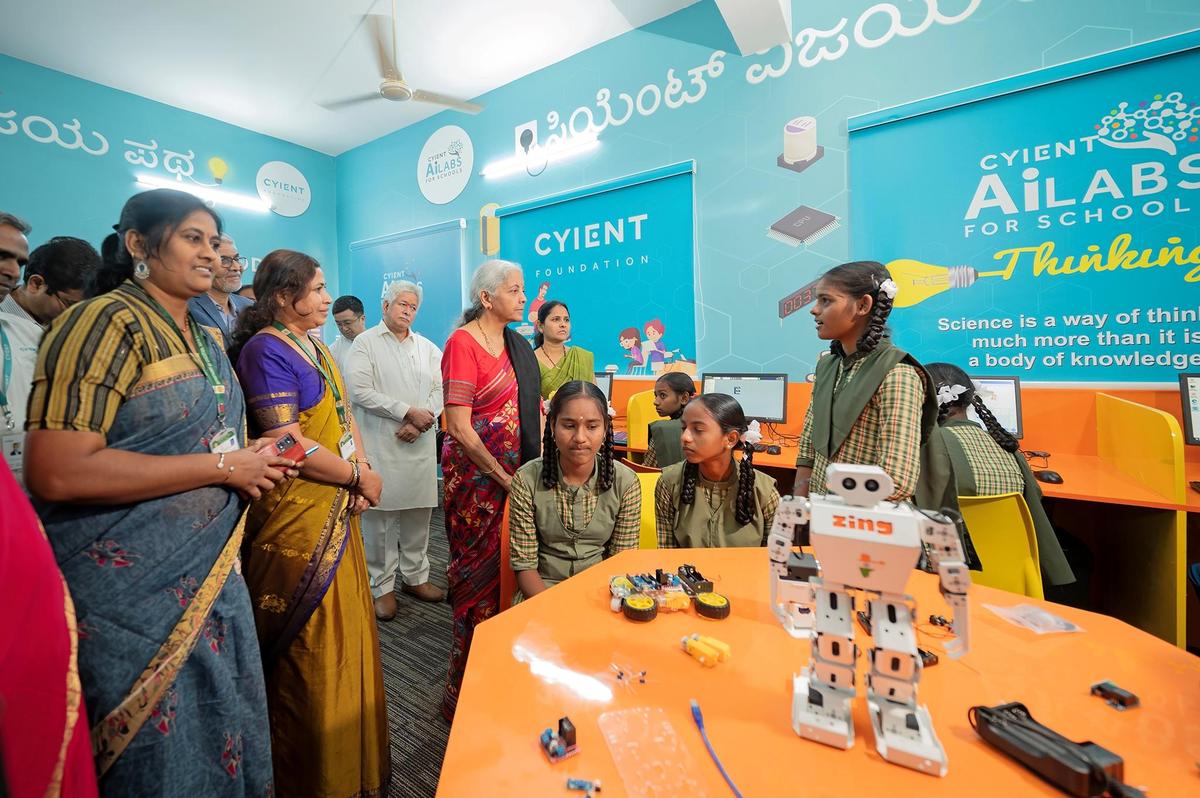
Reimagining Government School Education Through Technology
The VijAIpatha labs represent a shift in how government school education is being envisioned in India. For decades, public schools have grappled with challenges ranging from inadequate infrastructure to limited access to modern teaching aids. While policy reforms have addressed some of these issues, the integration of advanced technology has often remained uneven.
Education officials involved in the programme said the labs are designed to be simple, scalable and adaptable. Each lab is equipped with computers or tablets, interactive learning software and curated content aligned with school curricula. The focus, they said, is not on rote learning of technology but on cultivating computational thinking and problem-solving skills.
Teachers have been trained to use the labs effectively, ensuring that technology becomes an integral part of pedagogy rather than an isolated add-on. Training sessions emphasised guiding students through inquiry-based learning, encouraging them to ask questions, experiment and learn from mistakes. This approach, educators believe, can transform classrooms into more dynamic learning environments.
The choice of Hosapete for the launch is seen as symbolic. Located in a region better known for its historical and industrial significance, the town represents many parts of India where aspirations are high but opportunities are limited. By introducing AI labs in such settings, the initiative aims to demonstrate that cutting-edge education need not be restricted to elite institutions.
Ms. Sitharaman, in her address, noted that India’s education system must adapt to the realities of a technology-driven world. She pointed out that future jobs will increasingly require skills such as data analysis, logical reasoning and adaptability. Exposing students to these concepts early, she said, would help demystify technology and reduce fear or hesitation around it.
The initiative also aligns with national education priorities that stress experiential learning and interdisciplinary approaches. Rather than teaching artificial intelligence as a standalone subject, VijAIpatha integrates it with mathematics, science and language learning. For instance, students might use simple coding exercises to understand mathematical patterns or explore scientific concepts through simulations.
Parents and community members attending the launch expressed cautious optimism. Many acknowledged that government schools often struggle to keep pace with private institutions in terms of facilities. The introduction of AI labs, they felt, could change perceptions and instil greater confidence in public education.
However, some educators also stressed the importance of sustained support. Infrastructure upgrades, regular maintenance of equipment and continuous teacher training will be crucial to ensure that the labs do not fall into disuse. They cautioned that technology initiatives must be accompanied by long-term planning and monitoring.
Despite these concerns, the launch has generated enthusiasm among students, many of whom experienced hands-on interaction with digital tools for the first time. For them, the labs represent not just new equipment but a window into possibilities previously perceived as distant or unattainable.
Equity, Skills and the Promise of a Digital Future: Nirmala
A key theme of the VijAIpatha initiative is equity in education. By targeting government schools, the programme addresses a long-standing gap in access to quality technological education. Experts argue that without such interventions, the digital divide risks becoming a structural barrier that limits social mobility.
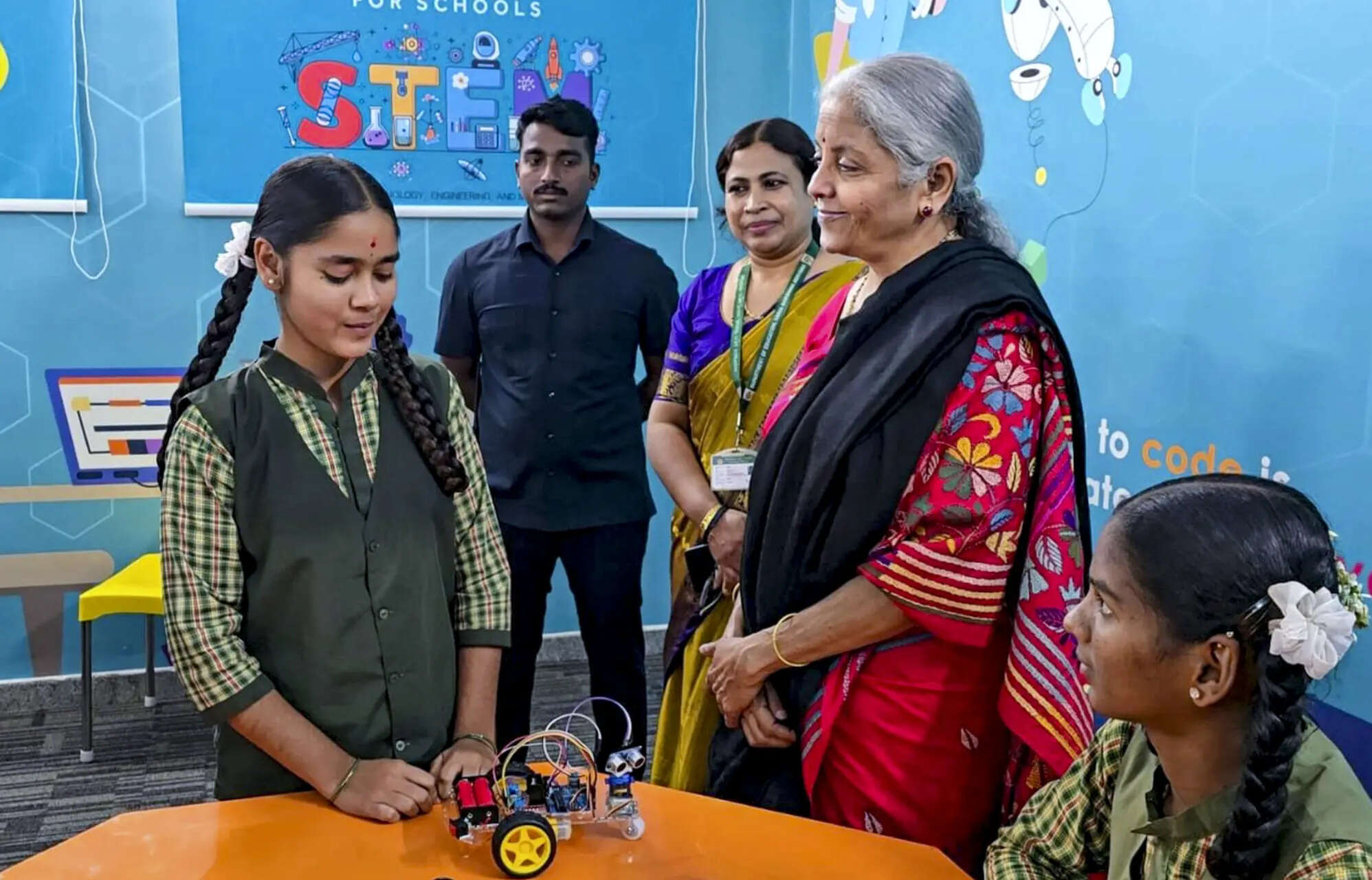
Ms. Sitharaman highlighted that talent is not confined to privileged spaces. She said that with the right tools and guidance, students from any background can excel. The responsibility of the State, she added, is to create enabling environments where potential can be nurtured regardless of socio-economic status.
The labs are expected to benefit students at multiple levels. At the foundational stage, exposure to technology can enhance engagement and curiosity. At higher levels, it can help students develop skills relevant to future academic and career paths. Even for those who may not pursue technology-related professions, familiarity with digital tools is increasingly essential across sectors.
Industry observers note that early exposure to AI and coding can also help students make informed choices later in life. Rather than being passive consumers of technology, they can become active creators and critical thinkers. This shift, they argue, is vital in a world where algorithms increasingly influence decision-making.
The initiative also places significant responsibility on teachers, who are central to its success. Recognising this, officials said professional development has been built into the programme. Teachers are encouraged to view themselves as facilitators of learning rather than mere transmitters of information. This pedagogical shift, while challenging, is seen as necessary to make education more relevant and engaging.
Local administrators have been tasked with monitoring the implementation and gathering feedback from schools. Such feedback, they said, would help refine the programme and address practical challenges. There are also plans to gradually expand VijAIpatha labs to more schools based on outcomes and resource availability.
Critics have cautioned against overemphasis on technology at the expense of basic educational needs. They argue that issues such as teacher shortages, classroom infrastructure and foundational learning gaps must also be addressed in parallel. Proponents of the initiative, however, contend that technology can be a catalyst for broader improvements if integrated thoughtfully.
The launch has also sparked conversations about the role of government in shaping the future workforce. As automation and artificial intelligence transform industries, preparing students for these changes becomes a policy imperative. Initiatives like VijAIpatha, supporters say, represent proactive steps in this direction.
For students in Hosapete, the labs have already begun to reshape their learning experience. Many spoke excitedly about experimenting with simple programs and understanding how machines can be taught to recognise patterns. Such experiences, educators believe, can boost confidence and inspire aspirations that extend beyond traditional boundaries.
As the programme moves forward, its impact will depend on sustained commitment, adaptability and inclusivity. If implemented effectively, VijAIpatha could serve as a model for integrating emerging technologies into public education systems across the country.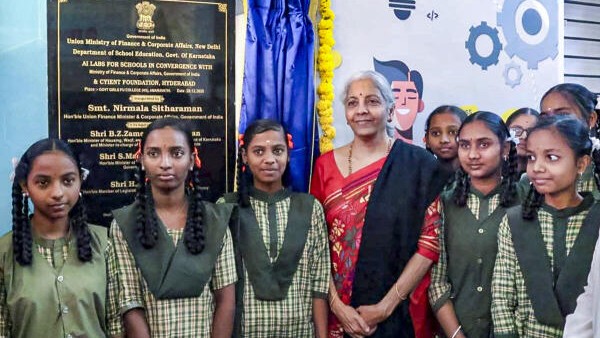
In launching the labs, Ms. Sitharaman framed the initiative as an investment in the nation’s future. She said that empowering young minds with knowledge and skills is the most sustainable form of development. For the students of Hosapete’s government schools, VijAIpatha represents a step towards that promise, blending technology with hope and opening pathways to possibilities shaped by learning rather than limitation.
Follow: Karnataka Government
Also read: Home | Channel 6 Network – Latest News, Breaking Updates: Politics, Business, Tech & More
