
Non-BJP States Allegedly Marginalised as Centre Faces Fresh Criticism
Non-BJP states are once again at the centre of political debate after Viduthalai Chiruthaigal Katchi (VCK) leader Thol Thirumavalavan accused the BJP-led Union government of weakening Parliamentary democracy and sidelining opposition-ruled states in financial allocations. Speaking in Chennai, the Chidambaram MP said the Centre was deliberately obstructing Parliament while adopting an unfair approach toward states not governed by the BJP.
Thirumavalavan claimed that Parliament, which should serve as a platform for debate and accountability, is being reduced to a space where opposition voices are routinely blocked. According to him, the ruling party shows little interest in allowing meaningful discussions and instead focuses on silencing dissenting views.
He pointed out that the Opposition has repeatedly attempted to raise issues affecting people across states, but those efforts are often disrupted. He cited recent instances where senior opposition leaders were not allowed to speak, leading to stalled proceedings. Such actions, he said, weaken democratic norms and prevent important public concerns from being discussed openly.
The VCK leader argued that quoting from books and research during debates has long been accepted practice in Parliament. Blocking speeches under procedural excuses, he added, only reflects an unwillingness to engage with opposing viewpoints.
Non-BJP States Accuse Centre of Withholding Funds
Beyond Parliament disruptions, Thirumavalavan raised serious concerns about what he described as systematic neglect of non-BJP states in fund allocation. He alleged that Tamil Nadu has been denied its rightful share of central funds despite fulfilling eligibility criteria under various schemes.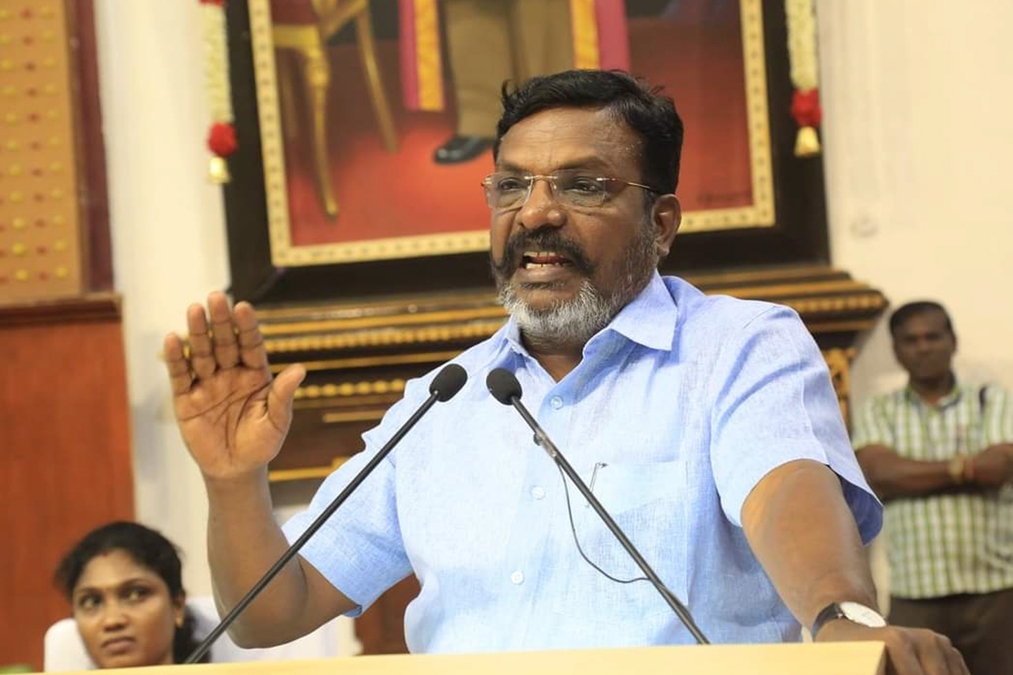
He said several dues owed to the state remain pending, affecting crucial sectors such as education and development projects. According to him, the issue is not limited to delayed disbursement but also includes reduced or zero allocations in key budget announcements.
The MP stated that Members of Parliament from Tamil Nadu, cutting across party lines, intend to collectively highlight the issue whenever Parliament functions normally. He said the state’s representatives have a responsibility to demand accountability from the Centre for the continued delay in releasing funds already approved.
Thirumavalavan further alleged that Tamil Nadu is not alone in facing this situation. He claimed that other non-BJP states such as Kerala, West Bengal, Karnataka, and Telangana are also experiencing similar treatment. According to him, budgetary decisions increasingly reflect political bias rather than developmental priorities.
He described the Centre’s approach as selective and punitive, accusing it of using financial control as a tool to pressure opposition-ruled states. This, he said, goes against the principles of cooperative federalism and weakens the trust between the Union and state governments.
Non-BJP States Raise Alarm Over Federal Balance
The VCK leader warned that continued marginalisation of non-BJP states could have long-term consequences for the federal structure of the country. He said states contribute significantly to the national economy and deserve fair treatment regardless of political alignment.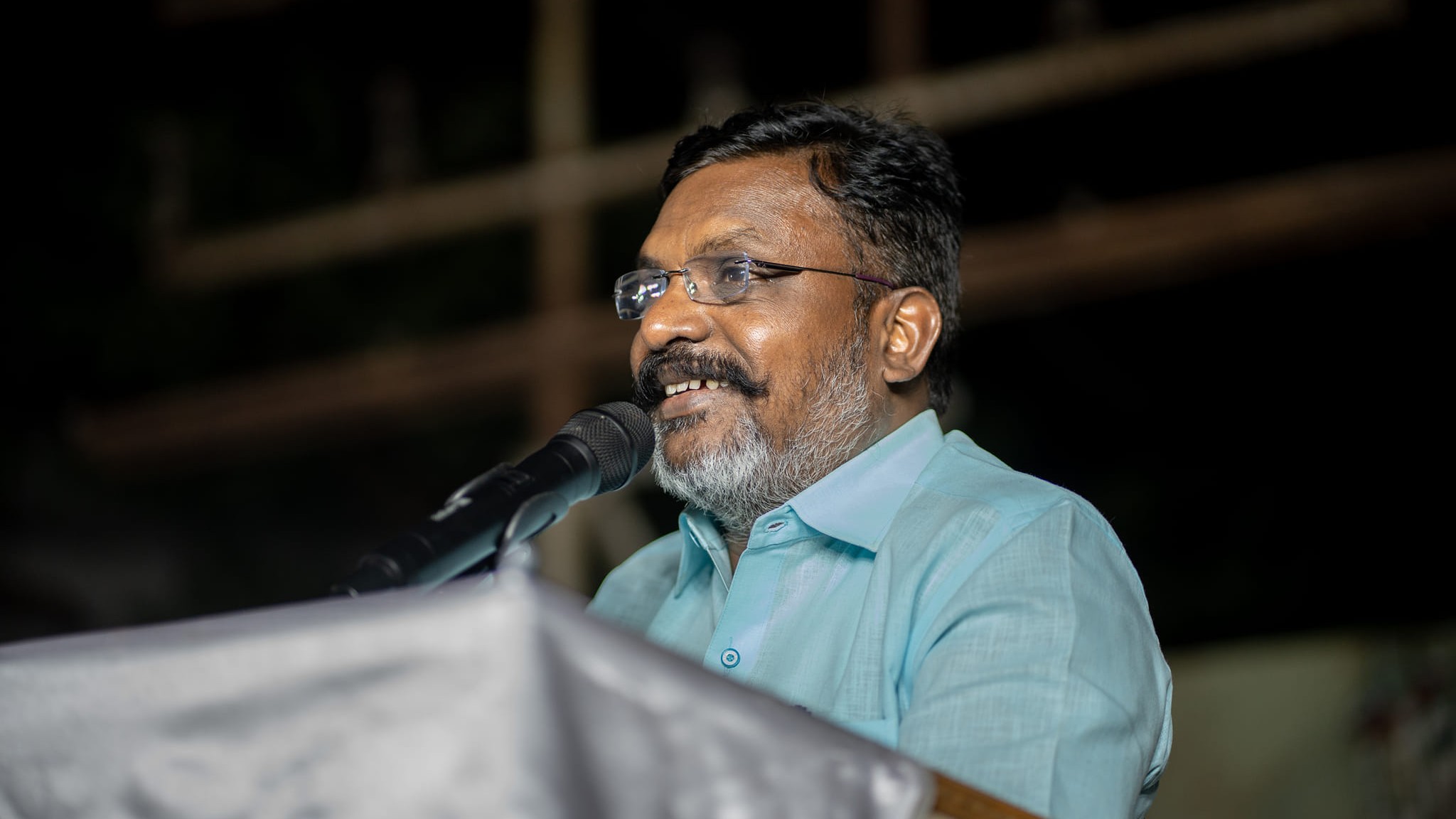
Thirumavalavan also addressed speculation surrounding the stability of the ruling alliance in Tamil Nadu. Dismissing such reports, he said the alliance remains strong and focused on addressing real issues affecting the people. He urged the media to move away from rumours and concentrate on matters such as governance, fund allocation, and democratic functioning.
On whether opposition pressure would force the Centre to reconsider its stance, he expressed uncertainty. He said the current approach of the Union government suggests that it is unwilling to change course, especially when it comes to states governed by parties outside the BJP.
He added that raising these concerns in Parliament remains necessary, even if immediate results are not guaranteed. According to him, consistent questioning and public debate are essential to safeguard democratic values and ensure transparency in governance.
Thirumavalavan concluded by stating that Parliament should serve as a space for dialogue, not domination, and that financial resources should be distributed based on need and entitlement, not political loyalty. Also Read: Tribal Dept to Team Up With Global Chess Body to Reshape Learning in Schools in 2026
Conclusion
The debate over the treatment of non-BJP states has intensified, with opposition leaders accusing the Centre of disrupting Parliament and delaying funds. As tensions continue, the issue highlights growing concerns over federal balance, democratic functioning, and fair governance across states.
