
Pandora and the Indian Artist Who Helped Build Its Visual Reality
Pandora has become one of the most recognisable fictional worlds in modern cinema, known for its glowing forests, living oceans, and detailed ecosystems. While audiences across the world admire its beauty on screen, much of the technical precision behind that realism has been shaped by an Indian visual effects professional working far from the spotlight. 
Pandora’s visual depth across all three Avatar films has been guided in part by Pavani Rao Boddapati, a Visual Effects Supervisor at Wētā FX. For more than a decade, she has played a key role in translating director James Cameron’s demanding vision into believable cinematic environments. Her journey with the Avatar franchise began in 2009, when she moved to New Zealand to work on the first film, and it has continued through each phase of Pandora’s expansion.
Her career has evolved alongside the Avatar universe itself. As the films pushed visual boundaries, so did the expectations placed on the visual effects teams. Every environment, movement, and interaction had to feel grounded, even though the world itself was entirely fictional. That balance between imagination and realism became central to the success of Pandora on screen.
Pandora and the Technical Challenge of Creating Realism
Pandora’s transformation became especially demanding with Avatar: The Way of Water. Unlike the first film, which focused heavily on forests and land-based environments, the sequel required extensive underwater realism. Nearly 3,000 visual effects shots were created for the film, with a significant portion involving water-based scenes.
Water is one of the most difficult elements to recreate convincingly in visual effects. Audiences can immediately sense when it looks artificial. Every ripple, reflection, breath, and fabric movement had to behave exactly as it would underwater. Achieving this required years of research, real-world underwater references, and new simulation techniques.
Pavani Rao Boddapati worked closely with James Cameron and his long-standing creative team to ensure this level of authenticity. Cameron is known for his attention to detail and high expectations, and collaboration on Avatar involved constant refinement. Shots were reviewed repeatedly until movement, lighting, and emotion aligned perfectly. When a sequence succeeded, feedback was minimal but meaningful. A simple acknowledgment from the director signaled that the work had met the standard.
Her role was not limited to supervising visuals alone. It involved problem-solving at scale, coordinating teams, and ensuring that artistic goals and technical execution remained aligned. As Pandora’s environments became more complex, the responsibility of maintaining consistency across films also increased.
Pandora and the Legacy of Behind-the-Scenes Creators
Pandora’s impact on cinema goes beyond box office numbers and visual spectacle. It represents a shift in how immersive worlds are created, blending technology, art, and scientific accuracy. Professionals like Pavani Rao Boddapati are central to that shift, even though their names are rarely known to the public.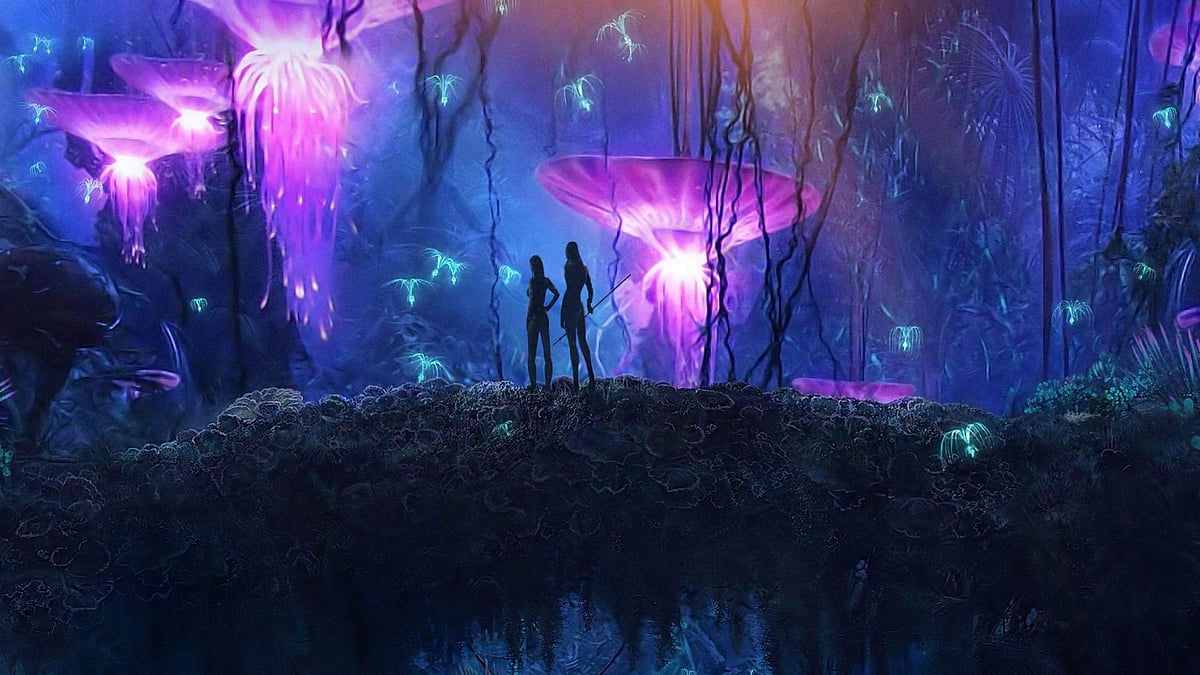
As the upcoming Avatar: Fire and Ash prepares to push visual storytelling even further, the work behind Pandora continues to evolve. Each new film expands the world’s geography, physics, and emotional depth, requiring even more precision from visual effects teams.
Her journey from India to working on one of the most ambitious film franchises ever made reflects a broader truth about modern filmmaking. Global cinema is built by talent from across the world, collaborating quietly behind the scenes to create experiences that feel seamless to audiences.
View this post on Instagram
Pandora did not become believable by chance. It was built through years of discipline, experimentation, and collaboration. The realism viewers experience on screen is the result of countless invisible decisions made by artists who understand that immersion depends on details most people never consciously notice. Also Read: Lizzo Legal Case Sees a Major Turn With Court Dismissing Key
Conclusion
Pandora stands as a cinematic achievement shaped by many hands, including Indian talent working far from public attention. Through years of dedication and technical mastery, Pavani Rao Boddapati has helped define how immersive worlds are created, proving that the most powerful storytelling often happens behind the camera.
