
The Railway Ministry’s decision to extend the Bengaluru–Kannur Express via Mangaluru up to Kozhikode has triggered strong resentment among regular patrons, who say the move ignores long-standing passenger needs and disrupts an already strained travel corridor. Frequent travellers, railway user associations, and commuter groups have criticised the proposal as ill-planned, arguing that it will dilute connectivity for Kannur-bound passengers while disproportionately benefiting a different segment of travellers. The announcement has reopened debates around route rationalisation, passenger consultation, and the prioritisation of regional travel needs over administrative convenience.
Passenger groups have also flagged safety and fatigue concerns arising from longer overnight journeys. Extending the route to Kozhikode means crew members, including drivers and onboard staff, will be on duty for extended hours. Railway unions have previously warned that longer duty cycles, especially on congested routes, increase the risk of operational lapses. Commuters argue that safety considerations should outweigh attempts at operational consolidation.
Students from Kannur studying in Bengaluru expressed particular anxiety over the change. Many rely on the express service to travel overnight and reach classes or examinations on time. They said any delay or loss of reservation priority could force them to depend on costlier alternatives or unreliable road transport, adding to both financial and mental stress.
Small traders and business travellers echoed similar concerns, noting that predictable arrival times are crucial for commerce. Several said they plan their logistics around early morning arrivals in Kannur, allowing same-day business operations. A prolonged route, they fear, could disrupt schedules and indirectly affect local economies dependent on timely movement of people and goods.
Former railway officials pointed out that route extensions often begin as temporary “experimental” measures but gradually become permanent without comprehensive evaluation. They stressed the need for periodic audits to assess whether such decisions genuinely improve connectivity or merely shift inconvenience from one passenger group to another.
Environmental observers added that prolonged halts and congestion on the coastal stretch increase fuel consumption and emissions. They argued that smoother, shorter routes are more energy-efficient, and extending services on already crowded corridors runs counter to sustainability goals the Railways has publicly committed to.
Civil society organisations in coastal Karnataka have begun informal consultations to assess collective response options. While some advocate petitions and formal representations, others are considering peaceful demonstrations to highlight the issue. Organisers say the aim is not confrontation but constructive dialogue based on passenger welfare.
Railway analysts also questioned whether infrastructure upgrades on the Mangaluru–Kozhikode section are adequate to support additional long-distance services. Without parallel investments in signalling upgrades, loop line expansion, and traffic management, they warn that congestion could worsen for all trains operating on the route.
As uncertainty lingers, passengers continue to hope that the Railway Ministry will pause implementation and reassess the proposal. Many believe that inclusive planning, grounded in regional needs and passenger feedback, is the only way to restore confidence. Until then, the proposed extension remains a symbol of frustration for those who feel their everyday realities have once again been overlooked.
For decades, the Bengaluru–Kannur Express has served as a crucial overnight link for students, government employees, traders, and families travelling between Karnataka’s capital and north Kerala. Passengers say the train’s reliability and direct routing made it a preferred option, especially for those who depended on predictable arrival times. The proposed extension to Kozhikode, critics argue, will lengthen journey duration, increase congestion on an already saturated coastal stretch, and potentially reduce punctuality, undermining the train’s original purpose.
Railway officials have defended the move by citing operational efficiency and the need to optimise rolling stock utilisation. However, passengers contend that such reasoning overlooks ground realities. They say the coastal section between Mangaluru and Kozhikode is among the busiest and slowest stretches in the Southern Railway zone, frequently affected by signal congestion, maintenance blocks, and seasonal disruptions. Adding another long-distance extension, they warn, could make delays inevitable.
Many regular commuters feel that Kannur is once again being sidelined in broader railway planning. They point out that despite its growing population, economic activity, and educational institutions, the region continues to struggle for adequate long-distance train connectivity. Instead of strengthening existing services or introducing new dedicated trains, they argue, the extension effectively reduces Kannur’s prominence as a terminal station.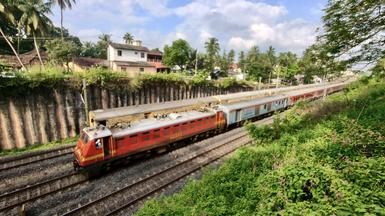
PASSENGER ANGER AND OPERATIONAL CONCERNS
Railway passenger associations in Karnataka and Kerala have jointly expressed disappointment, stating that no meaningful consultation preceded the decision. Representatives said they learned about the extension only after internal railway communications surfaced, leaving commuters feeling excluded from decisions that directly affect their daily lives. Several groups have demanded that the Railway Ministry reconsider the move or at least conduct a detailed passenger impact assessment.
The Railway Ministry’s decision to extend the Bengaluru–Kannur Express via Mangaluru up to Kozhikode has triggered strong resentment among regular patrons, who say the move ignores long-standing passenger needs and disrupts an already strained travel corridor. Frequent travellers, railway user associations, and commuter groups have criticised the proposal as ill-planned, arguing that it will dilute connectivity for Kannur-bound passengers while disproportionately benefiting a different segment of travellers. The announcement has reopened debates around route rationalisation, passenger consultation, and the prioritisation of regional travel needs over administrative convenience.
One major concern raised is the likelihood of overcrowding. The Bengaluru–Kannur Express already operates at near full capacity on most days, especially during weekends and holiday seasons. Extending the route to Kozhikode, a major urban centre with heavy rail demand, could exacerbate crowding issues, making it harder for Kannur-bound passengers to secure confirmed berths. Travellers fear that reservation quotas may gradually shift in favour of longer-distance passengers, marginalising intermediate users.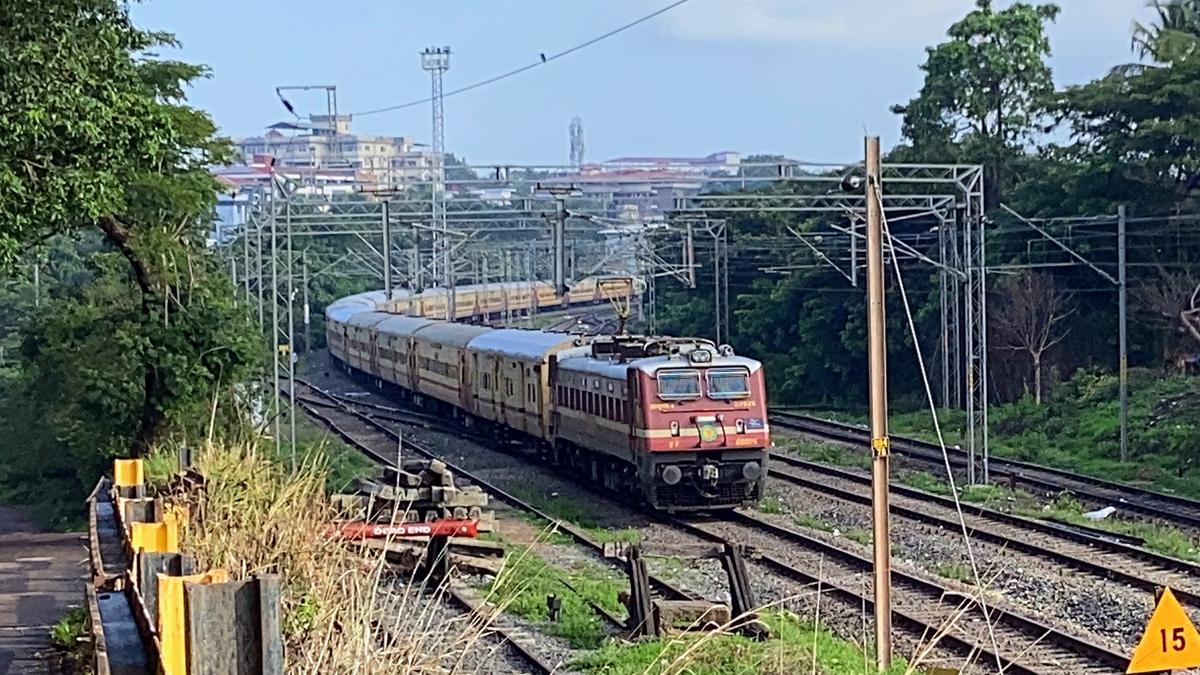
Operational experts have also questioned the logic of extending an overnight express on a congested coastal route. They note that the Mangaluru–Kozhikode section has limited scope for speed enhancement due to curvature, signalling constraints, and dense suburban traffic. Any delay on this stretch often cascades backward, affecting punctuality all the way up to Bengaluru. In such a scenario, passengers worry that the train’s arrival at Kannur could become increasingly unpredictable.
Passengers from Kannur highlighted that terminal status offers practical advantages, including better maintenance attention, cleaner coaches, and predictable turn-around times. Losing terminal status, they argue, often leads to neglect, as trains prioritise longer hauls over intermediate halts. This, they fear, could gradually degrade service quality for Kannur users.
There is also unease among travellers who rely on tight connections. Many passengers use the Bengaluru–Kannur Express to catch onward buses or local trains early in the morning. Even minor delays could disrupt entire travel plans, particularly for students attending exams, patients with hospital appointments, and professionals reporting for duty.
BROADER POLICY QUESTIONS AND REGIONAL IMPLICATIONS
Beyond immediate passenger inconvenience, the controversy has sparked a broader debate on railway policy and regional equity. Critics argue that route extensions are increasingly being used as a substitute for introducing new trains, a practice that may save resources in the short term but creates long-term inefficiencies. They say that instead of stretching existing services thinner, the Railways should invest in additional rakes and dedicated services tailored to specific corridors.
Transport policy analysts note that Kerala’s coastal belt already has multiple long-distance trains terminating at Kozhikode, while Kannur continues to face gaps in direct connectivity to major cities. From this perspective, extending the Bengaluru–Kannur Express appears redundant rather than strategic. Experts suggest that a separate Bengaluru–Kozhikode service, if justified by demand, would be a more balanced solution.
Political reactions have also begun to surface, with local leaders from Kannur and parts of coastal Karnataka raising concerns informally. While no official protest has been announced yet, sources say representations are being prepared to be submitted to the Railway Board. Observers believe that sustained public pressure could force a review, especially if the issue gains traction across party lines.
Railway officials, meanwhile, maintain that the extension is part of a larger effort to improve connectivity across the southern region. They insist that operational data supports the move and that passenger inconvenience will be minimal. However, they have not clarified whether additional coaches will be added or whether schedules will be recalibrated to account for the longer route.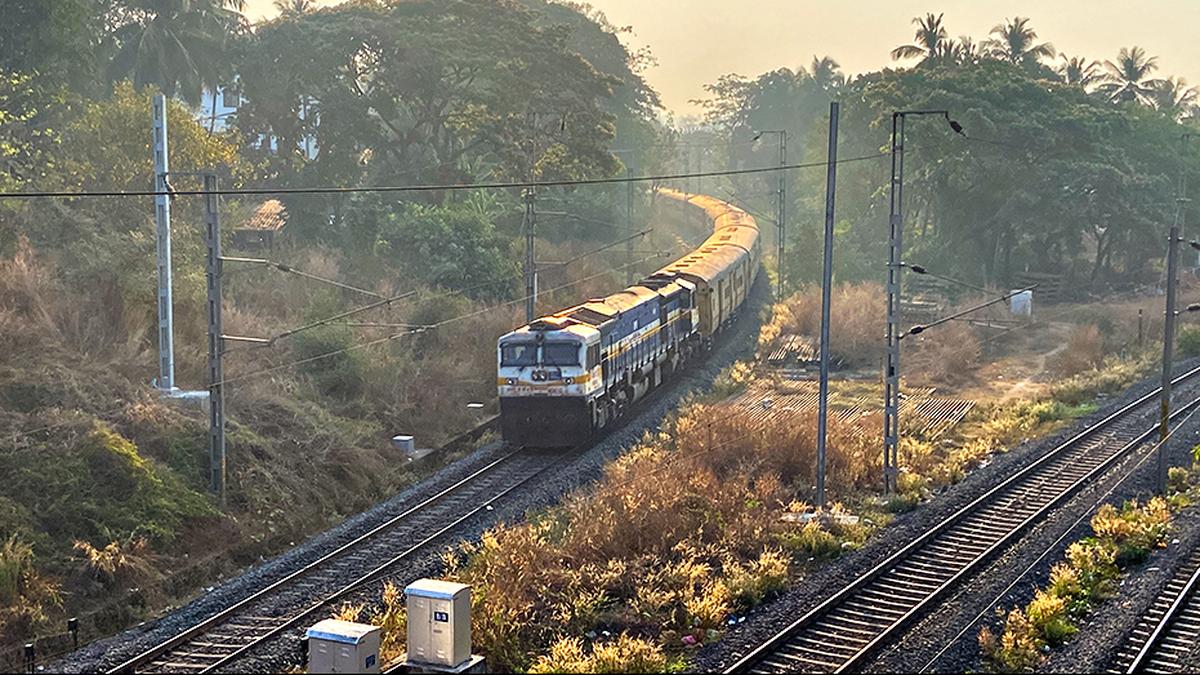
As the debate continues, passengers say the episode reflects a deeper disconnect between policymakers and end users. For many, the Bengaluru–Kannur Express is not just a train, but a dependable link woven into their personal and professional lives. Any alteration to its route, they argue, should be guided not only by spreadsheets and logistics, but by the lived experiences of those who rely on it daily. Until then, resentment over the extension is likely to persist, fuelled by the sentiment that convenience for some should not come at the cost of certainty for many.
The Railway Ministry’s decision to extend the Bengaluru–Kannur Express via Mangaluru up to Kozhikode has triggered strong resentment among regular patrons, who say the move ignores long-standing passenger needs and disrupts an already strained travel corridor. Frequent travellers, railway user associations, and commuter groups have criticised the proposal as ill-planned, arguing that it will dilute connectivity for Kannur-bound passengers while disproportionately benefiting a different segment of travellers. The announcement has reopened debates around route rationalisation, passenger consultation, and the prioritisation of regional travel needs over administrative convenience.
Follow: Karnataka Government
Also read: Home | Channel 6 Network – Latest News, Breaking Updates: Politics, Business, Tech & More
