
The rapid spread of polyester flags across markets has triggered a quiet but devastating crisis for thousands of khadi workers whose livelihoods are rooted in hand-spun tradition. Once a symbol of dignity, self-reliance, and national pride, khadi-based flag making is now being edged out by cheaper, machine-made polyester alternatives. While the fluttering tricolour continues to evoke emotion and unity, the hands that once crafted it with care and conviction are increasingly left without work, income, or recognition.
Khadi workers, many of whom belong to rural and semi-urban communities, have for decades depended on flag production as a seasonal but crucial source of earnings. For them, making the national flag was not merely a job but an act of service, closely tied to the legacy of the freedom movement. The shift towards polyester flags, driven by cost efficiency and mass production, has disrupted this ecosystem, leaving artisans struggling to survive in an unforgiving market.
The debate has also reached policy think tanks, where experts are examining the long-term consequences of allowing synthetic alternatives to dominate culturally significant products. They argue that once market preferences shift decisively, reviving traditional sectors becomes extremely difficult. In the case of khadi flags, a temporary dip in demand could quickly harden into permanent marginalisation, leaving artisans without the skills relevance or market access to recover.
Several khadi workers point out that the issue is not resistance to change, but exclusion from it. They say they are open to innovation in design, packaging, and distribution, but lack institutional support to modernise. Without access to credit, marketing platforms, or updated procurement systems, khadi producers are unable to compete with factory-driven supply chains that benefit from scale and automation.
The role of government-led mass campaigns has also come under scrutiny. Large-scale drives that promote flag distribution often prioritise volume and speed, inadvertently favouring polyester suppliers. Khadi workers argue that if such campaigns incorporated decentralised procurement models, they could generate employment across districts while still meeting demand. The absence of such planning, they say, reflects a disconnect between symbolic patriotism and ground-level economic realities.
Environmental advocates have added weight to the khadi workers’ cause by highlighting the afterlife of polyester flags. Once celebrations end, synthetic flags often end up in landfills or water bodies, contributing to long-term pollution. Khadi flags, being biodegradable, align more closely with sustainable practices. This contrast, activists argue, should be central to any serious discussion on responsible consumption of national symbols.
As conversations continue, khadi workers remain caught between hope and fatigue. Many still believe that with decisive intervention, their livelihoods can be restored and respected. Others fear that indifference will prevail, reducing khadi flag making to a historical footnote. What is at stake is not just employment, but the idea that national pride can coexist with ethical choices. The future of khadi flags will ultimately reflect how seriously society values the people behind its most cherished symbols.
The demand for polyester flags has surged in recent years, particularly during national celebrations and public campaigns. Lightweight, durable, and inexpensive, these flags are widely favoured by vendors and bulk buyers. However, this convenience comes at a steep human cost. Khadi workers argue that polyester flags, often produced in factories far removed from local economies, undermine the very spirit of self-sufficiency and ethical production that the flag is meant to represent.
Artisans across several districts describe a sharp decline in orders. Where once they worked long hours to meet festive demand, many now find themselves idle, their looms silent. Cooperative societies that supported khadi flag production report dwindling revenues and mounting debts. For women workers in particular, the loss of this income stream has compounded existing economic vulnerabilities, pushing families closer to insecurity.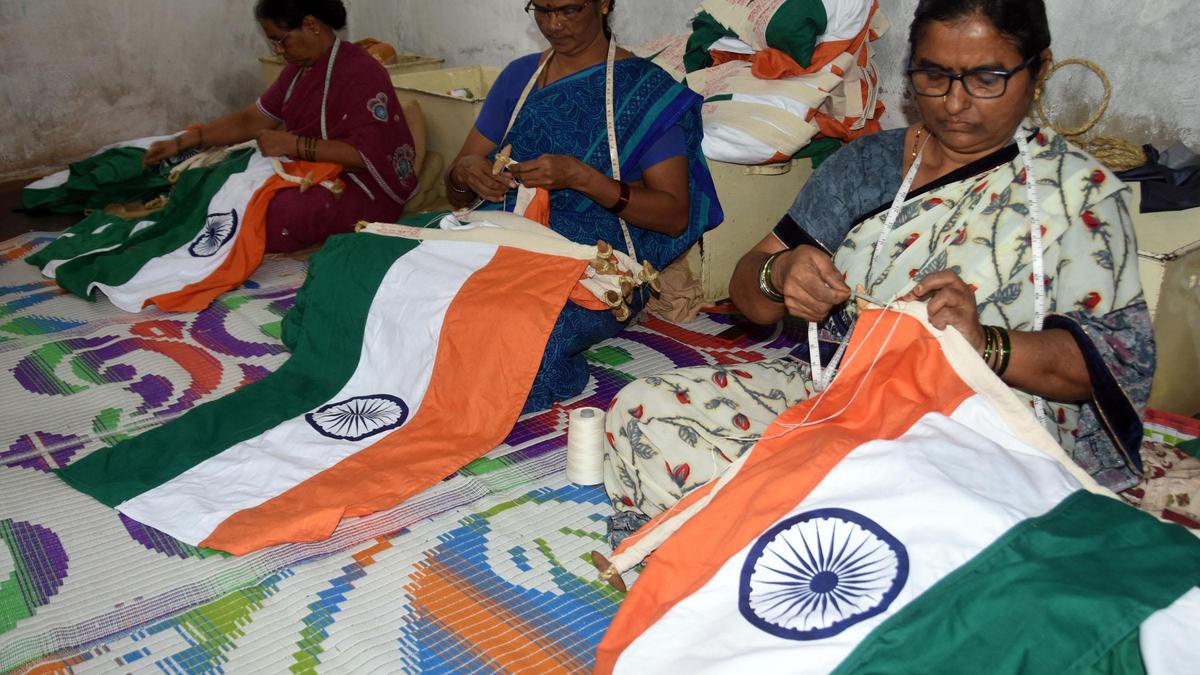
The issue has sparked concern among social activists and policymakers alike, who warn that the unchecked spread of polyester flags could permanently erode traditional livelihoods. They argue that the national flag should not become a casualty of market logic alone. As the debate intensifies, the clash between affordability and authenticity has emerged as a defining challenge, raising uncomfortable questions about the values reflected in everyday symbols of patriotism.
From Freedom Fabric to Factory Output
Khadi holds a unique place in India’s socio-political history. Championed as a symbol of resistance and self-reliance during the freedom struggle, it was envisioned as a means to empower rural communities and reduce dependence on industrial imports. Flag making using khadi fabric became an extension of this philosophy, embedding the national symbol within a broader narrative of dignity and labour.
For decades, khadi institutions trained artisans in spinning, weaving, and stitching flags according to strict specifications. The process was labour-intensive, requiring skill and patience. Each flag carried not just colour and design, but the imprint of human effort. The income generated supported households, funded education, and sustained local economies, particularly in regions with limited employment options.
The arrival of polyester flags disrupted this balance. Advances in manufacturing allowed for rapid production at a fraction of the cost. Bulk orders that once went to khadi cooperatives were diverted to factories capable of delivering thousands of flags overnight. Vendors, under pressure to maximise margins, increasingly chose cheaper alternatives, while consumers, often unaware of the difference, followed suit.
Khadi workers recount how initial assurances of protection and preference gradually faded. Despite guidelines emphasising the use of khadi for official flags, enforcement has been inconsistent. Polyester flags have flooded markets, roadside stalls, and even institutional events. For artisans, this has translated into shrinking workdays and falling wages.
The environmental dimension adds another layer to the crisis. Polyester, a synthetic fabric, contributes to microplastic pollution and does not biodegrade easily. Khadi, by contrast, is eco-friendly and sustainable. Workers and activists argue that promoting polyester flags contradicts broader commitments to environmental responsibility. Yet, these concerns often take a back seat to cost considerations.
Younger generations of khadi workers face a difficult choice. With flag-making orders drying up, many are abandoning the craft altogether in search of alternative work. This erosion of skill threatens not only livelihoods but also the continuity of a tradition passed down through generations. Once lost, such artisanal knowledge is difficult to revive.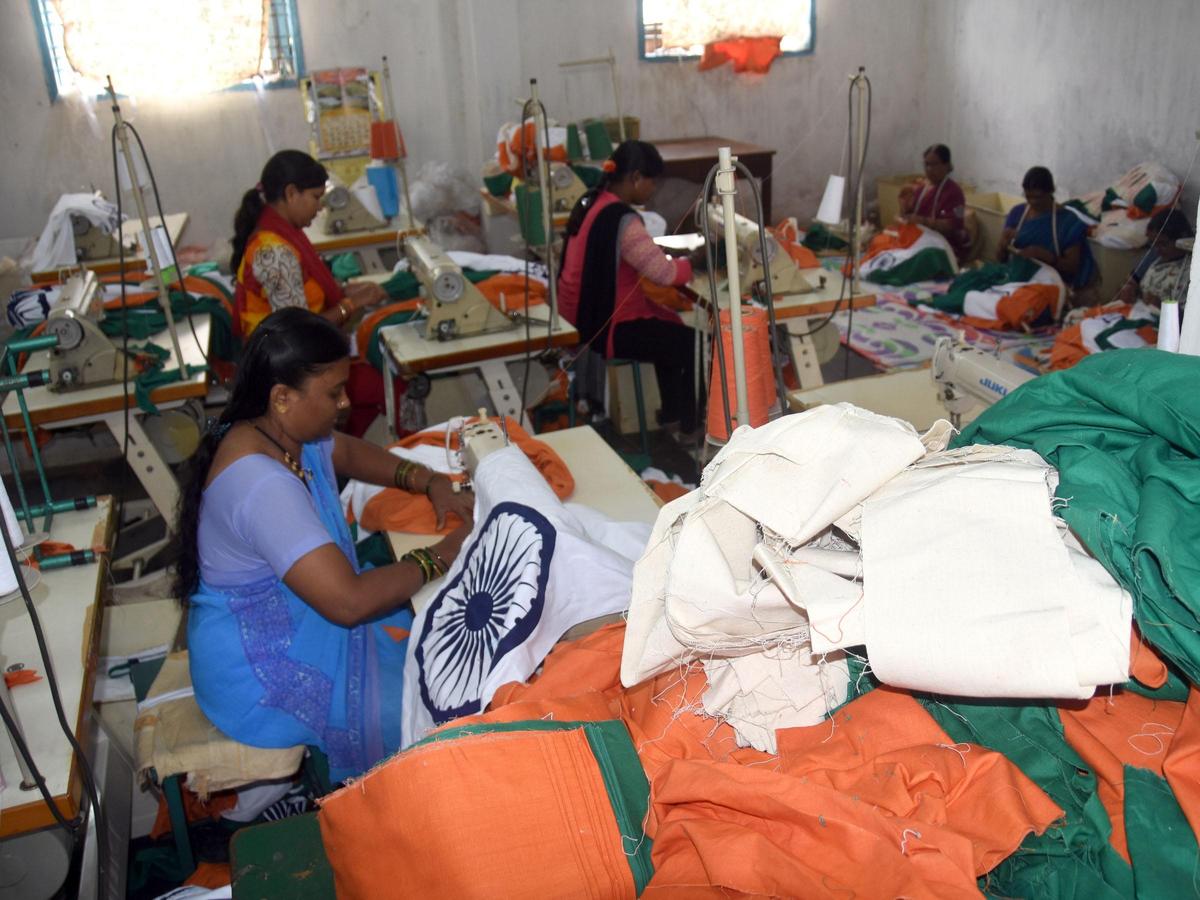
Economic Strain and Social Consequences
The decline in khadi flag production has had ripple effects across communities. Cooperative societies that once functioned as support systems are now struggling to stay afloat. Reduced orders mean lower revenues, affecting their ability to pay wages, maintain equipment, and invest in training. Some cooperatives have been forced to shut down units, leaving workers without institutional backing.
For women, who constitute a significant portion of the khadi workforce, the impact has been particularly severe. Flag stitching provided flexible employment that could be balanced with household responsibilities. The loss of this work has reduced financial independence and increased reliance on informal labour or debt. In many cases, women report taking up lower-paying, less secure jobs to make ends meet.
The psychological toll is equally significant. Workers speak of a sense of betrayal, feeling that the values they upheld are no longer respected. Crafting the national flag carried emotional meaning, reinforcing a sense of purpose and pride. Watching machine-made polyester flags replace their work has been demoralising, eroding confidence and self-worth.
Local economies have also felt the strain. Khadi production created ancillary employment, from cotton suppliers to transporters. As demand falls, these linked sectors suffer losses, compounding economic distress in already vulnerable regions. Migration to cities in search of work has increased, disrupting family structures and social cohesion.
There are also concerns about quality and dignity. Khadi workers argue that polyester flags, often produced hastily, may not adhere to proper specifications. Instances of faded colours, incorrect dimensions, and improper disposal have been reported. For artisans, this is not merely a technical issue but a matter of respect for the national symbol.
Despite these challenges, workers continue to appeal for support rather than charity. They seek fair policies that recognise the social value of their labour. Many argue that public institutions, schools, and government bodies should be mandated to procure only khadi flags, creating stable demand and setting an example for citizens.
Policy Gaps and the Fight for Protection
At the policy level, the issue exposes gaps between intent and implementation. While there have been periodic statements emphasising the importance of khadi, enforcement mechanisms remain weak. Monitoring the source of flags sold in markets is challenging, and penalties for non-compliance are rarely imposed. This regulatory laxity has allowed polyester flags to dominate.
Khadi workers’ unions and advocacy groups have called for stricter enforcement and clearer guidelines. They argue that protecting khadi livelihoods requires more than symbolic gestures. Concrete measures, such as assured procurement, price support, and market regulation, are essential to level the playing field.
Some policymakers acknowledge the problem but caution against blanket bans, citing affordability concerns. Polyester flags are cheaper, making them accessible to a wider population. Critics counter that affordability should not come at the cost of ethical production and environmental harm. They suggest subsidies or incentives to make khadi flags more competitive.
There is also a call for greater consumer awareness. Many buyers, activists argue, are unaware that polyester flags displace traditional livelihoods. Public campaigns highlighting the significance of khadi could influence purchasing choices, transforming patriotism into conscious consumption. Schools and community organisations are seen as potential platforms for such awareness.
Technology, ironically, could offer part of the solution. Improved supply chains, digital marketplaces, and better branding could help khadi cooperatives reach consumers directly, reducing costs and intermediaries. However, such initiatives require investment and training, areas where support has been uneven.
The broader question is one of values. What does the national flag represent in everyday practice? Is it merely a decorative object, or a symbol intertwined with history, labour, and sustainability? Khadi workers argue that the answer should guide policy decisions.
A Symbol at Risk of Losing Its Soul
As polyester flags continue to dominate markets, the struggle of khadi workers remains largely invisible. Yet, their plight reflects a deeper tension between speed and care, profit and purpose. The national flag, revered and celebrated, risks becoming detached from the values it was meant to embody.
For the workers who spin, weave, and stitch khadi, the issue is existential. Without intervention, many fear that flag making will cease to be a viable livelihood. The loss would not only impoverish families but also sever a living connection to the freedom movement’s ideals.
Reviving khadi flag production requires coordinated action. Policymakers must translate intent into enforcement, ensuring preference for khadi in official use. Markets need regulation to prevent unfair competition. Consumers must be encouraged to see beyond price tags and recognise the human stories behind products.
There is also a moral imperative. Supporting khadi workers is not merely about preserving tradition, but about upholding dignity of labour in a rapidly industrialising economy. It is about recognising that progress need not erase the past, and that symbols gain strength when rooted in ethical practice.
As the tricolour continues to wave across the country, the question remains whether it will also uplift the hands that make it. The polyester flag may be cheaper and faster, but the cost it imposes on livelihoods, environment, and values is far higher. Protecting khadi workers is ultimately about protecting the soul of a symbol that belongs to the nation as a whole.
Follow: Karnataka Government
Also read: Home | Channel 6 Network – Latest News, Breaking Updates: Politics, Business, Tech & More
