
The Railways have categorically stated that a No Objection Certificate (NOC) is not mandatory to open the Mahakalipadpu Road under Bridge (RuB), contradicting claims made earlier by the Mangaluru Smart City Limited (MSCL). The clarification has brought renewed attention to the prolonged delay in opening the RuB, a project that has been eagerly awaited by residents, commuters, and traders in the area. Railway officials asserted that the structure can be opened to traffic once construction is completed as per approved standards, without insisting on a separate NOC from the Railways.
The statement has intensified the ongoing debate over administrative coordination and accountability between multiple agencies involved in urban infrastructure projects. Residents have expressed frustration over conflicting claims, arguing that such contradictions have resulted in unnecessary delays and public inconvenience. The Mahakalipadpu RuB, envisioned as a critical link to ease traffic congestion, has remained closed despite substantial progress, raising questions about governance and inter-departmental communication.
According to Railway authorities, the project was sanctioned with clearly defined technical parameters and safety requirements. Once these conditions are met and certified by the executing agency, the opening of the RuB does not require any additional formal clearance from the Railways. Officials stressed that the responsibility of compliance lies with the implementing agency, not with post-construction permissions.
The clarification comes at a time when public pressure has mounted on civic bodies to ensure timely completion and commissioning of infrastructure works. Daily commuters have complained of extended travel times, traffic bottlenecks, and safety risks due to the continued closure of the RuB. Many residents believe that the lack of clarity over procedural requirements has become an excuse for inaction.
Railway officials further stated that attributing delays to the absence of an NOC creates misinformation and shifts responsibility away from the agencies tasked with execution. They urged civic authorities to address pending technical or administrative issues internally rather than citing procedural hurdles that do not exist.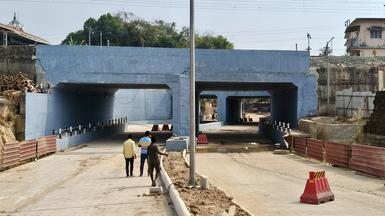
CONTRADICTING CLAIMS AND ADMINISTRATIVE CONFUSION
The controversy began after Mangaluru Smart City Limited reportedly stated that the Mahakalipadpu RuB could not be opened due to the absence of an NOC from the Railways. This claim was widely circulated, leading to public perception that the Railways were holding up the project. However, the Railways’ clarification has directly challenged this narrative, asserting that no such requirement was stipulated.
Officials familiar with the project explained that Railway infrastructure works typically involve clear delineation of responsibilities. The Railways approve the design, safety standards, and construction methodology at the planning stage. Once these are adhered to and certified, the commissioning of the structure falls within the purview of the implementing authority.
The conflicting statements have exposed gaps in coordination between central and local agencies. Urban planners noted that such communication breakdowns often result in stalled projects and erode public trust. They argued that clear documentation and transparent communication are essential to prevent blame-shifting and delays.
Residents of Mahakalipadpu and surrounding localities said they have been caught in the crossfire of bureaucratic contradictions. Traders reported losses due to reduced footfall and disrupted transport routes, while students and office-goers described daily inconvenience caused by detours and congestion.
Local activists demanded that all agencies involved place relevant correspondence and approvals in the public domain to clarify responsibilities. They argued that transparency would help residents understand the true reasons behind the delay and hold the appropriate authority accountable.
Railway officials reiterated that they have not received any pending request that would justify withholding permission to open the RuB. They emphasised that safety inspections, if required, are part of the construction compliance process and not an additional clearance stage.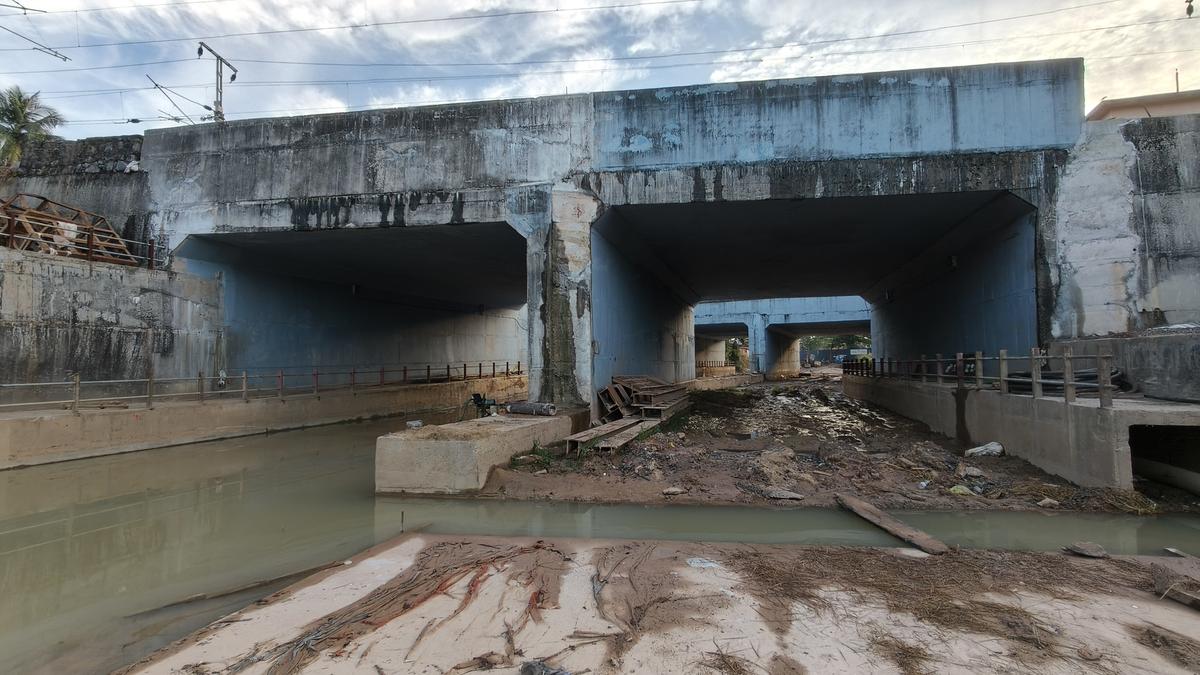
IMPACT ON TRAFFIC AND PUBLIC LIFE
The prolonged closure of the Mahakalipadpu RuB has had a tangible impact on traffic flow in the area. Commuters are forced to take longer routes, leading to increased travel time and fuel consumption. Traffic police officials noted that congestion has worsened during peak hours, putting additional strain on nearby junctions.
Pedestrians and two-wheeler riders have also raised safety concerns, citing narrow alternative roads and increased risk of accidents. Residents said the RuB was expected to significantly improve connectivity and reduce pressure on existing roads, benefits that have yet to materialise.
Public transport operators reported operational challenges due to route diversions. Bus schedules have been affected, causing delays and inconvenience to passengers. Transport experts pointed out that incomplete infrastructure projects often create cascading effects across the mobility network.
The delay has also affected emergency services, with ambulances and fire services facing longer response times due to circuitous routes. Local healthcare providers expressed concern that critical minutes could be lost during emergencies because of the closed RuB.
Business owners in the vicinity said the lack of direct access has reduced customer inflow. Many small traders rely on smooth connectivity for their livelihoods and feel that administrative indecision has directly affected their income.
Citizens’ groups have repeatedly petitioned authorities to resolve the issue urgently. They argue that public infrastructure projects must prioritise usability and timely delivery, especially when they directly affect daily life.
RESPONSIBILITIES AND PROJECT EXECUTION
Experts explained that RuB projects typically involve coordination between Railways, state agencies, and local bodies. While the Railways focus on safety and structural integrity related to rail operations, the executing agency is responsible for construction quality, approach roads, drainage, and lighting.
Authorities said efforts are underway to address remaining technical and administrative tasks. They assured the public that safety and compliance will not be compromised, even as steps are taken to avoid further delays.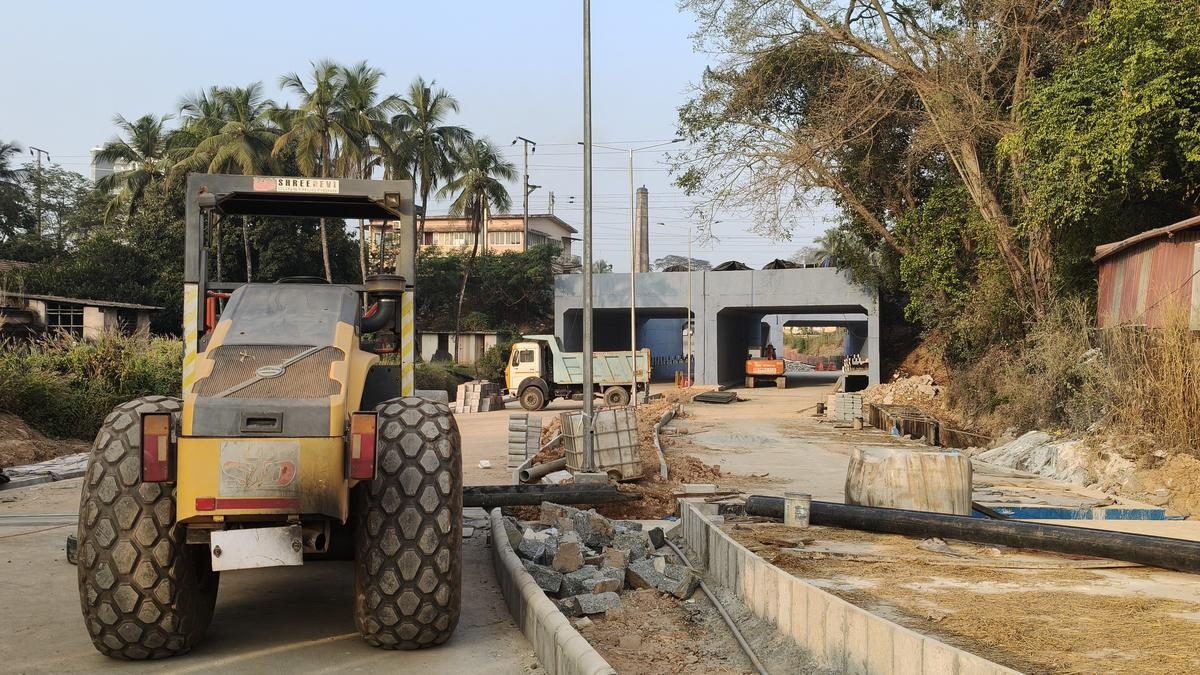
The episode has underscored the importance of accurate communication in public administration. Conflicting claims not only delay projects but also erode public trust, a cost that cities can ill afford.
For now, citizens await concrete action rather than explanations. The opening of the Mahakalipadpu RuB, they say, will be the true test of whether clarity translates into delivery.
As urban centres continue to expand, the lessons from this controversy may shape how future infrastructure projects are managed. Clear roles, transparent processes, and coordinated communication will be crucial to ensuring that development works serve the public without unnecessary delay.
In the case of the Mahakalipadpu RuB, Railway officials said their role was limited to approving the design and ensuring that railway operations are not compromised. They maintained that these conditions were already communicated at the planning stage.
Officials also pointed out that citing the Railways as a bottleneck diverts attention from unresolved issues such as finishing works, signage, or compliance certification that fall under the executing agency’s jurisdiction. They urged civic authorities to complete pending tasks instead of attributing delays to external approvals.
Urban governance experts noted that overlapping responsibilities often create confusion unless clearly defined. They stressed the need for a single nodal agency to coordinate communication and ensure accountability.
The controversy has also raised questions about project management practices under urban development schemes. Analysts suggested that clearer timelines, regular progress updates, and inter-agency review meetings could prevent such situations.
Residents called for an independent review of the project’s status to identify actual bottlenecks. They said clarity is essential to ensure that the RuB is opened without further delay.
POLITICAL AND ADMINISTRATIVE REACTIONS
The Railways’ statement has triggered political reactions, with opposition leaders accusing civic authorities of misleading the public. They demanded an explanation for why the RuB remains closed despite the Railways’ clarification.
Ruling party representatives, meanwhile, said efforts are being made to resolve all outstanding issues and open the RuB at the earliest. They acknowledged communication gaps and promised better coordination among agencies.
Administrators admitted that conflicting statements have caused confusion and said steps would be taken to streamline communication. Officials stressed that public confidence depends on clear and consistent messaging from authorities.
The issue has also been raised in local forums, with calls for accountability and timelines. Residents want assurances that the RuB will not remain a symbol of administrative inertia.
NEED FOR CLEARER GOVERNANCE MECHANISMS
Governance experts observed that the Mahakalipadpu RuB episode reflects broader challenges in urban infrastructure delivery. Multi-agency projects often suffer from diffusion of responsibility, leading to delays and public dissatisfaction.
They recommended establishing clear standard operating procedures that define approval requirements, certification processes, and commissioning protocols. Such clarity, they argued, would reduce ambiguity and prevent agencies from passing the buck.
Transparency advocates suggested that public dashboards tracking project progress and approvals could help citizens monitor infrastructure works. This would also compel agencies to resolve issues promptly.
Railway officials reiterated their willingness to cooperate with local authorities to facilitate the opening of the RuB. They stressed that inter-agency collaboration, rather than blame, is essential to deliver public infrastructure efficiently.
LOOKING AHEAD
As the debate continues, residents remain hopeful that the Railways’ clarification will accelerate the opening of the Mahakalipadpu RuB. Many see this as an opportunity for civic agencies to resolve pending issues swiftly and demonstrate accountability.
Authorities said efforts are underway to address remaining technical and administrative tasks. They assured the public that safety and compliance will not be compromised, even as steps are taken to avoid further delays.
The episode has underscored the importance of accurate communication in public administration. Conflicting claims not only delay projects but also erode public trust, a cost that cities can ill afford.
For now, citizens await concrete action rather than explanations. The opening of the Mahakalipadpu RuB, they say, will be the true test of whether clarity translates into delivery.
As urban centres continue to expand, the lessons from this controversy may shape how future infrastructure projects are managed. Clear roles, transparent processes, and coordinated communication will be crucial to ensuring that development works serve the public without unnecessary delay.
Follow: Karnataka Government
Also read: Home | Channel 6 Network – Latest News, Breaking Updates: Politics, Business, Tech & More
