
Karnataka Deputy Chief Minister D.K. Shivakumar has announced plans to make operational the initial five to six stations of the Blue Line metro corridor once construction is completed. Speaking at a public briefing, Shivakumar emphasised the state government’s commitment to enhancing urban mobility in Bengaluru and easing traffic congestion. The Blue Line, a crucial part of the Bengaluru Metro expansion, is expected to connect key residential and commercial hubs, providing faster, more reliable transportation options. Officials highlight that phased operation of stations will allow early benefits to commuters even before the entire line is completed.
The Blue Line, part of the larger Namma Metro network, has faced several delays due to land acquisition challenges, regulatory approvals, and construction bottlenecks. Despite these hurdles, the government remains committed to completing stations in a phased manner. Shivakumar indicated that early operationalisation will not only benefit daily commuters but also reduce pressure on existing road networks. The approach reflects a strategic effort to demonstrate tangible progress while keeping public expectations managed amid ongoing construction and logistical challenges across the corridor.
Officials report that once five or six stations are functional, operations will be integrated with existing lines to ensure smooth commuter transition. Coordination between signalling, ticketing, and train scheduling is being prioritised. Metro authorities have also outlined plans for temporary shuttle services between operational stations while construction continues on remaining sections. This phased approach is designed to provide immediate relief to commuters while ensuring minimal disruption to construction work. Urban planners have welcomed the strategy, noting its potential to improve daily commute efficiency for thousands of residents.
The Deputy Chief Minister stressed that operationalisation of initial stations is not merely symbolic but a step toward modernising Bengaluru’s urban transport. Shivakumar highlighted that these stations will serve areas with high passenger demand, connecting residential localities to commercial hubs and reducing reliance on private vehicles. Experts point out that such strategic planning is crucial to maximise early adoption of public transport and ensure long-term success of the metro expansion project. The government also aims to integrate feeder services, last-mile connectivity, and pedestrian-friendly access around operational stations.
Construction agencies have confirmed that significant progress has been made on elevated tracks, station platforms, and essential infrastructure. Civil works are nearing completion for the initial set of stations, and safety inspections are scheduled in the coming weeks. Metro authorities are working closely with traffic police and municipal corporations to ensure seamless integration with existing road networks. The phased opening is expected to improve commuter confidence in the project and demonstrate government efficiency, crucial for public trust ahead of future metro expansions.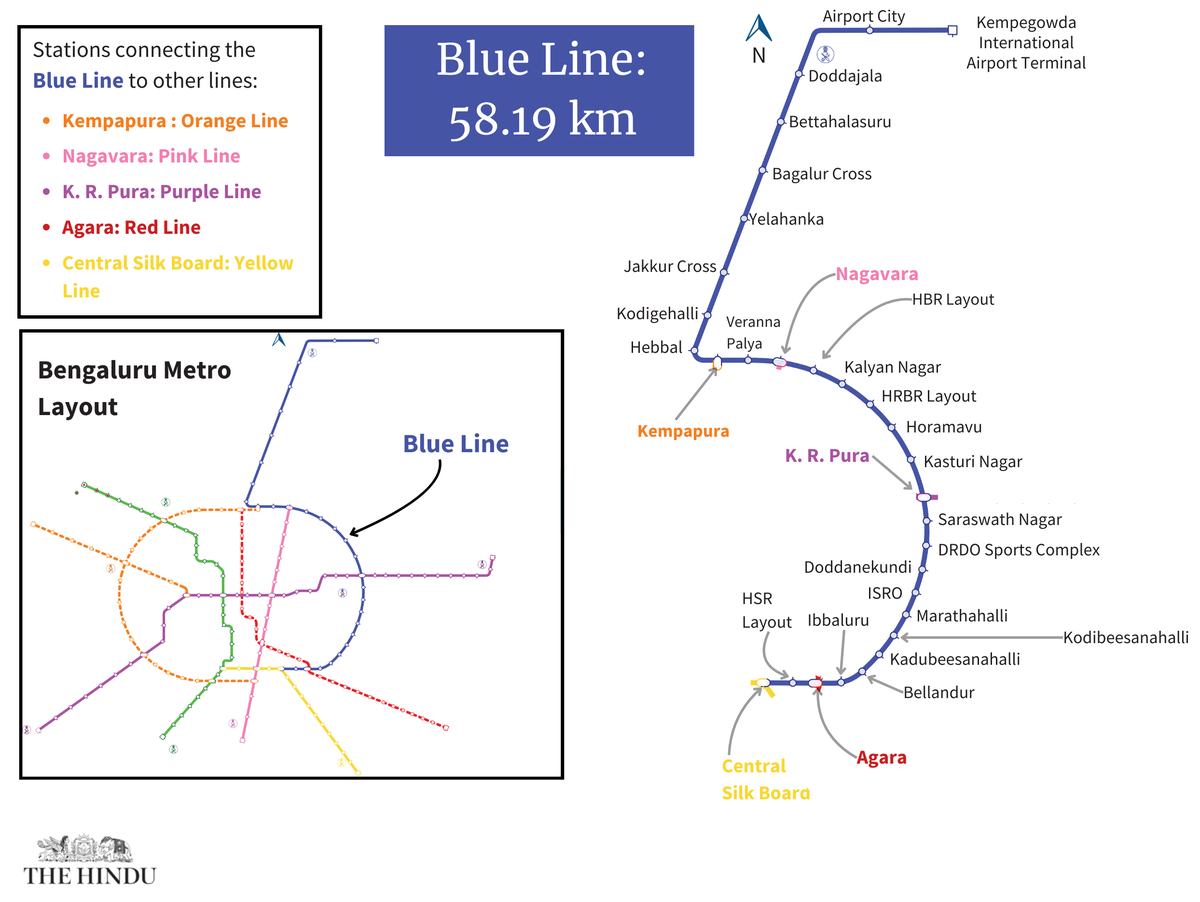
Infrastructure and Urban Mobility Impact
Experts suggest that the phased operationalisation will have immediate benefits for traffic management. Bengaluru’s road congestion, particularly in central business districts, has been a persistent challenge. Early metro services are expected to reduce private vehicle dependency, ease pressure on arterial roads, and encourage more sustainable transport patterns. Urban planners emphasise that even partial service along the Blue Line can shift commuter habits over time, creating a lasting impact on mobility and environmental outcomes. Authorities are also monitoring traffic flows to optimise integration with other transport networks.
Shivakumar highlighted that the Blue Line’s operational stations will be equipped with modern facilities, including automated ticketing, escalators, CCTV surveillance, and commuter-friendly amenities. Accessibility measures for differently-abled passengers have been prioritised to ensure inclusivity. The Deputy Chief Minister also underscored plans for clean and safe station environments, emphasising hygiene and commuter comfort. These measures are expected to encourage daily usage and set benchmarks for future metro projects across the city, ensuring that Bengaluru’s public transport infrastructure meets global standards.
Feeder services and last-mile connectivity remain central to the success of the initial phase. Plans include dedicated shuttle buses, auto-rickshaw zones, and bicycle-sharing stations near operational stops. Authorities aim to ensure that commuters can reach stations conveniently from residential and commercial areas. Public feedback mechanisms are also being established to monitor service quality and adapt operations accordingly. Officials emphasise that an integrated approach combining metro operations with supporting transport services is key to maximising commuter adoption and achieving long-term urban mobility goals.
Shivakumar’s announcement comes amid heightened public expectations for metro services. Commuters in Bengaluru have long faced challenges such as traffic jams, parking shortages, and long travel times. Early operationalisation of Blue Line stations is expected to address these issues partially, offering faster, reliable, and cost-effective travel. Urban transport experts note that such incremental operational strategies are effective in sustaining public engagement and building confidence in large infrastructure projects, while providing tangible benefits even before full project completion.
The phased operationalisation strategy has also been designed to accommodate future expansions. Once the remaining stations of the Blue Line are completed, integration with Purple, Green, and Yellow lines of Namma Metro will ensure seamless connectivity across the city. Authorities emphasise that early station operation will allow testing of operational protocols, passenger flow management, and scheduling adjustments. Lessons learned during this phase will inform the full-scale launch and enhance overall system efficiency, improving safety and commuter satisfaction.
The government has also allocated resources for enhanced maintenance and safety during phased operations. Trained personnel will manage station facilities, train services, and emergency response systems. Shivakumar assured commuters that rigorous safety protocols will be followed, including periodic inspections of tracks, signalling systems, and structural integrity. Officials highlight that a strong safety framework is essential not only for public confidence but also to ensure uninterrupted service during the initial phase of metro operations.
Public reactions to Shivakumar’s announcement have been largely positive. Commuters have welcomed the prospect of early operationalisation, expressing relief at anticipated reductions in travel time. Residents of areas near the initial stations are optimistic about improved access to commercial centres, schools, and hospitals. Social media discussions indicate widespread enthusiasm, with citizens praising government efforts to demonstrate progress despite previous project delays. Analysts note that early tangible results can significantly improve public perception and encourage continued support for urban transport initiatives.
Project Management and Future Prospects
Metro authorities emphasise that coordination between civil engineering teams, contractors, and municipal authorities remains crucial. Regular progress reviews, quality audits, and adherence to timelines are being prioritised to ensure that the initial stations are operational as announced. Lessons from previous metro projects are being applied to optimise execution, minimise delays, and manage costs effectively. Authorities assert that this methodical approach will set a precedent for phased operations of future metro corridors in Bengaluru and across Karnataka.
Budget allocation and financial management are integral to the phased operationalisation plan. The state government has allocated sufficient funds for completion of initial stations, including operational readiness, staff training, and maintenance. Shivakumar highlighted the government’s commitment to transparent financial management, ensuring that taxpayers’ resources are efficiently utilised. Analysts argue that effective budgeting for partial operation demonstrates fiscal responsibility while allowing benefits to reach citizens sooner, reinforcing public confidence in infrastructure investments.
Integration with digital services is also planned. Smart ticketing systems, real-time train tracking, and commuter apps will be rolled out at operational stations. Officials emphasise that technology adoption will improve passenger experience, reduce waiting times, and enhance operational efficiency. Shivakumar noted that these digital tools are essential to modern metro operations and align with the state’s broader vision of smart, connected urban infrastructure. The combination of physical and digital infrastructure is expected to maximise commuter convenience.
Authorities have also highlighted the importance of public awareness campaigns. Information about station locations, operational hours, ticketing options, and safety protocols will be disseminated widely to ensure smooth adoption. Metro officials plan to engage local communities, schools, and businesses near operational stations to facilitate familiarisation and encourage usage. Such outreach is considered critical to minimise initial confusion and ensure that commuters can take full advantage of the new services from day one.
Urban planners suggest that early operationalisation will provide valuable data on commuter behaviour. Passenger flow, peak-hour demand, and service utilisation will be monitored to refine schedules, optimise train frequency, and improve station design. This real-time feedback will inform adjustments for remaining stations, ensuring that full-line operations are efficient, responsive, and tailored to commuter needs. Authorities argue that learning from initial stations is essential to achieve long-term operational excellence.
Shivakumar has assured residents that construction of remaining stations will continue simultaneously, with no compromise on safety or quality. He stressed that early operation is a phased approach rather than a temporary solution. Coordination with traffic management authorities, utility providers, and municipal corporations is ongoing to ensure seamless integration of metro services into the city’s broader transport network. Officials emphasise that comprehensive planning is critical to avoid disruptions and maintain service reliability.
The phased operationalisation is also expected to stimulate economic activity around new stations. Commercial centres, retail outlets, and transport hubs near operational stops may experience increased footfall. Analysts argue that early activation of stations can catalyse neighbourhood development, boost property values, and encourage investment in surrounding areas. By aligning infrastructure deployment with economic incentives, the government aims to maximise social and economic benefits of metro expansion for the local population.
Environmental benefits are another consideration. With more commuters shifting to metro services, emissions from private vehicles are expected to decrease, improving air quality. Shivakumar highlighted that sustainable urban mobility is central to the government’s policy framework. Officials emphasise that phased operation contributes to long-term environmental goals while addressing immediate traffic challenges. Urban experts suggest that early adoption of public transport infrastructure is critical to fostering behavioural change and promoting sustainable city planning.
The initial stations are strategically selected based on high passenger demand. Residential areas, commercial hubs, and connectivity to other transport modes influenced the choice. Authorities argue that targeting high-impact areas ensures maximum utilisation and early demonstration of benefits. Feedback from these early stations will guide operational adjustments, expansion planning, and service optimisation for the remaining sections. This phased strategy is designed to balance immediate commuter needs with long-term system efficiency.
In conclusion, Deputy Chief Minister D.K. Shivakumar’s announcement regarding the operationalisation of five to six Blue Line stations represents a significant milestone for Bengaluru’s urban transport. Phased operations are expected to ease traffic congestion, improve commuter experience, and provide early economic and environmental benefits. Coordinated planning, modern facilities, digital integration, and community engagement are central to the strategy. While challenges remain, the phased approach demonstrates pragmatic governance, signalling tangible progress and optimism for Bengaluru’s metro future.
Follow: Karnataka Government
Also read: Home | Channel 6 Network – Latest News, Breaking Updates: Politics, Business, Tech & More
