
Karnataka is on the cusp of a significant political milestone as Chief Minister Siddaramaiah is set to become the longest-serving Chief Minister in the State’s history on January 7, surpassing the record held by legendary leader Devaraj Urs. The moment carries both historical weight and emotional resonance, as Siddaramaiah’s political journey has often been compared, both by supporters and critics, to that of Urs, who is widely regarded as a transformative figure in Karnataka’s socio-political landscape.
According to official records, Siddaramaiah will complete more cumulative days in office than Devaraj Urs, who served as Chief Minister between 1972 and 1977, and again from 1978 to 1980. While Urs’s tenure was marked by sweeping land reforms and social justice initiatives, Siddaramaiah’s political career has spanned decades of grassroots activism, ideological commitment, and multiple electoral victories. The impending record has sparked debate across political circles, with reactions ranging from celebration and pride among supporters to critical comparisons and cautionary notes from opponents.
Siddaramaiah’s ascent to this record is not the result of a single uninterrupted term, but rather a culmination of multiple tenures shaped by political resilience, shifting alliances, and evolving voter mandates. Observers note that his longevity reflects not just electoral success, but also his ability to adapt to Karnataka’s changing political dynamics while retaining a core support base among backward classes, minorities, and economically weaker sections.
As January 7 approaches, the political establishment, civil society, and the general public are reflecting on what this milestone signifies for Karnataka’s governance, leadership legacy, and future political discourse. For many, it is a moment of pride that underscores continuity in leadership; for others, it is an occasion to scrutinise performance, policy outcomes, and the broader impact of prolonged political power.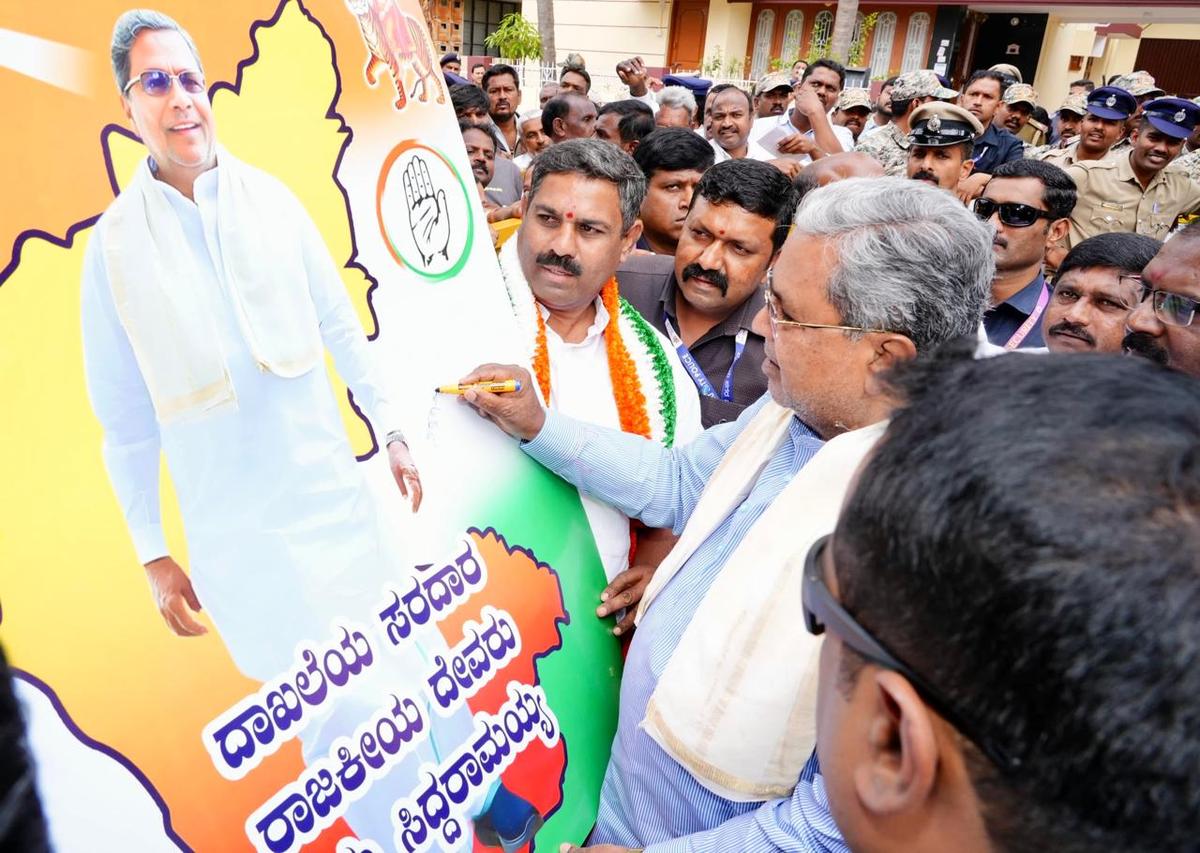
A POLITICAL JOURNEY ROOTED IN SOCIAL JUSTICE
Siddaramaiah’s political journey began far from the corridors of power he now occupies. Born into a modest family, he entered public life through student politics and grassroots movements, gradually establishing himself as a leader with a strong ideological leaning towards social justice and secularism. His early years were marked by active participation in socialist movements, which later shaped his policy priorities and political identity.
Over the decades, Siddaramaiah transitioned from being a legislator to a key political strategist and mass leader. His association with backward class movements and advocacy for social equity earned him a loyal following, particularly in rural Karnataka. Political analysts often point out that his ability to connect with ordinary citizens, articulate their grievances, and position himself as a champion of the marginalised has been central to his sustained relevance.
His first tenure as Chief Minister brought significant policy initiatives, including welfare schemes aimed at poverty alleviation, food security, and education. Programmes such as subsidised food distribution, social pensions, and educational support were rolled out with the stated objective of inclusive growth. Supporters argue that these initiatives strengthened the social safety net and improved access to basic services for millions of households.
Critics, however, have questioned the fiscal sustainability of such welfare-driven governance, arguing that excessive focus on subsidies could strain the State’s finances and divert attention from long-term structural reforms. Siddaramaiah has consistently countered these arguments, asserting that social justice and economic growth are not mutually exclusive, and that empowering the poor is a prerequisite for sustainable development.
The Chief Minister’s political resilience has been tested multiple times, including electoral defeats, internal party challenges, and shifting political alliances. Yet, he has managed to re-emerge as a central figure in Karnataka politics, culminating in his return to office with a decisive mandate. The impending record-breaking moment is thus seen as a testament to endurance as much as achievement.
THE SHADOW AND LEGACY OF DEVARAJ URS
Devaraj Urs occupies a revered place in Karnataka’s political history. His tenure is remembered for bold land reforms, empowerment of backward classes, and efforts to dismantle entrenched social hierarchies. Urs’s policies fundamentally altered the socio-economic structure of the State, earning him a reputation as a visionary leader who prioritised equity over political expediency.
Breaking Urs’s record is therefore not merely a numerical milestone but a symbolic moment laden with historical significance. Supporters of Siddaramaiah argue that surpassing Urs in terms of days served does not diminish Urs’s legacy but rather reflects the continuity of social justice-oriented leadership in Karnataka. They point out that Siddaramaiah has often acknowledged Urs as an inspiration and has publicly expressed respect for his contributions.
Political historians caution, however, that longevity alone should not be conflated with legacy. Urs’s impact is measured not just by the length of his tenure but by the transformative nature of his reforms. They argue that comparisons between the two leaders must account for differing political contexts, economic conditions, and societal challenges./newsdrum-in/media/media_files/2026/01/06/siddaramaiah-image-karnataka-2026-01-06-18-06-17.jpg)
Opposition leaders have been quick to draw such distinctions, asserting that while Siddaramaiah may surpass Urs in duration, matching his historical stature requires far-reaching reforms and long-term societal impact. They have urged the Chief Minister to focus on governance outcomes rather than symbolic milestones.
At the same time, sections of civil society see the record as an opportunity to renew discussions on social justice, governance priorities, and the evolving meaning of leadership. The milestone has sparked debates in academic forums, media discussions, and public gatherings, reflecting the enduring relevance of Urs’s legacy in contemporary Karnataka politics.
GOVERNANCE, POLICIES, AND PUBLIC PERCEPTION
Siddaramaiah’s tenure has been characterised by an emphasis on welfare schemes, secular governance, and administrative outreach. Flagship programmes targeting women, students, farmers, and the urban poor have been rolled out with the aim of reducing inequality and improving quality of life. Government data indicates increased coverage of social security schemes and higher utilisation of public services during his terms.
Supporters credit the Chief Minister with prioritising inclusivity and ensuring that development reaches the most vulnerable sections of society. They argue that his governance model has strengthened the social contract between the State and its citizens, particularly among historically marginalised communities.
Critics, however, point to challenges such as infrastructure gaps, unemployment concerns, and fiscal pressures. They argue that while welfare schemes provide immediate relief, sustained economic growth requires investment in industry, skill development, and innovation. Political opponents have also accused the government of using welfare measures as electoral tools rather than components of a comprehensive development strategy.
Public perception of Siddaramaiah remains complex and layered. Surveys and political analyses suggest that while he commands strong loyalty among certain voter segments, opinions are more divided among urban and middle-class voters. The record-breaking milestone has amplified these discussions, prompting renewed scrutiny of governance performance alongside acknowledgment of political endurance.
POLITICAL REACTIONS AND SYMBOLISM
The announcement of Siddaramaiah surpassing Devaraj Urs’s record has elicited varied reactions across the political spectrum. Leaders within the ruling party have hailed the moment as historic, describing it as a reflection of public trust and effective leadership. They have highlighted Siddaramaiah’s journey as evidence of democratic continuity and grassroots empowerment.
Opposition parties have responded with a mix of caution and critique. While some leaders acknowledged the significance of the milestone, they emphasised that historical comparisons should focus on outcomes rather than tenure length. Others accused the ruling party of attempting to politicise the record for symbolic gains.
Within the Congress party, the milestone has been portrayed as a morale booster, reinforcing Siddaramaiah’s stature as a senior statesman and mass leader. Party workers see the record as validation of their ideological commitment and organisational strength in the State.
For the general public, reactions range from pride to indifference, depending on political affiliation and personal experiences with governance. Social conversations indicate that many citizens view the milestone as noteworthy but remain more concerned with day-to-day issues such as employment, cost of living, and public services.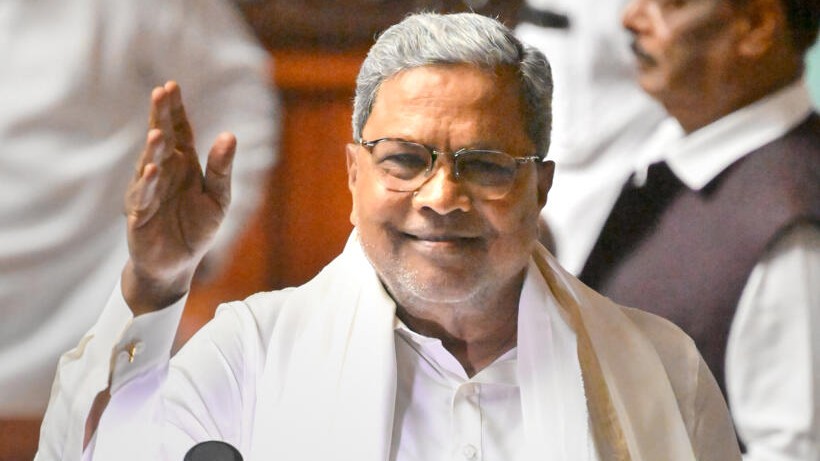
A MOMENT OF HISTORY AND THE ROAD AHEAD
As January 7 approaches, Siddaramaiah is expected to mark the occasion with restraint, in keeping with his public statements that there is no comparison between him and Devaraj Urs. He has repeatedly emphasised that records are secondary to responsibilities, and that his focus remains on governance and service delivery.
Political observers note that the milestone places additional expectations on the Chief Minister. Breaking a historic record invites closer scrutiny, heightened expectations, and intensified political competition. How Siddaramaiah navigates this phase could shape both his personal legacy and the trajectory of Karnataka politics in the coming years.
The record also serves as a reminder of the evolving nature of leadership in a democratic society. Longevity in office reflects public mandate and political skill, but lasting legacy depends on the depth and durability of policy impact. For Siddaramaiah, surpassing Urs’s record is both an achievement and a challenge — an opportunity to reinforce his commitment to social justice while addressing emerging governance demands.
In the broader historical narrative of Karnataka, January 7 will stand as a symbolic marker — a day when one leader’s journey intersected with the legacy of another. Whether this moment ultimately reshapes political discourse or remains a numerical footnote will depend on how governance unfolds in the years ahead. For now, it is a sentimental and historic moment, underscoring the enduring power of leadership, memory, and public trust in Karnataka’s democratic journey.
Follow: Karnataka Government
Also read: Home | Channel 6 Network – Latest News, Breaking Updates: Politics, Business, Tech & More
