
The political waters in Karnataka remain choppy as the state’s Chief Minister siddaramaiah and his Deputy Chief Minister prepare for a second “breakfast meeting” on December 2. The first round — held recently — had drawn intense public interest after both leaders publicly pledged unity and renewed commitment to their government, declaring they would abide by party high-command decisions. With speculation refusing to die down, party cadres, opposition observers and political analysts are watching the upcoming meeting closely, seeing it as more than a courtesy meal — but possibly a decisive session that could shape leadership arrangements ahead of future elections.
The meeting is slated to take place at the official residence of the Chief Minister, signalling a continuation of dialogue rather than confrontation. According to sources within the ruling party, both leaders will go over key points raised by the party high command — including issues of perceived factionalism, public messaging, and coordination ahead of the next Assembly session. While details are being kept under wraps, insiders suggest the agenda may also include discussions on ministerial reshuffle, power-sharing formula, and a roadmap for governance over the coming months.
For many observers, the second breakfast is an opportunity to test whether public statements of unity reflect genuine understanding, or merely a tactical suspension of hostilities for the moment. For the bureaucracy and administration, clarity in leadership and chain of command is crucial — especially as government gears up for legislative business, welfare implementation, and policy announcements targeting farmers, social sectors, and infrastructure development. A mis-step or ambiguity could create delays and dampen public trust.
In the days leading up to the meeting, party workers across districts have been expressing mixed emotions. While many believe that the leadership must remain undisturbed to maintain continuity in governance, others feel that unresolved tensions could eventually spill into organisational work at the grassroots. District-level committees have reportedly been instructed to stay neutral and avoid public statements that may hint at factional preferences. This careful messaging highlights how deeply the leadership debate has permeated different layers of the party, even as senior leaders continue to downplay internal rifts.
Public sentiment around the issue has also become increasingly vocal. Voters, particularly in urban centres, have begun questioning whether political uncertainty is affecting decision-making in key departments such as transport, urban development, and agriculture. Citizen groups argue that large infrastructure proposals and welfare schemes require clear political direction, and extended ambiguity risks slowing down their execution. The upcoming breakfast meeting is therefore being viewed not just as an internal party affair but as a moment that could influence developmental momentum across the state.
Observers note that the manner in which the meeting’s outcomes are communicated may be as important as the decisions themselves. If both leaders appear together, issue a uniform statement, and project a sense of stability, it could quell speculation and reassure government machinery. However, if their communications are separate or vague, it may intensify rumours of an unresolved power struggle. Political communication in this context becomes a strategic tool — shaping public expectation, investor confidence, and even media narratives.
Ultimately, the December 2 meeting holds significance because it may determine how the ruling party navigates the remainder of its term. With major festivals, legislative sessions, and administrative deadlines approaching, the need for cohesion is greater than ever. Whether the breakfast meeting becomes a symbol of resolution or a reminder of internal tension will depend on what unfolds behind closed doors — and how sincerely both leaders commit to steering the state forward together.
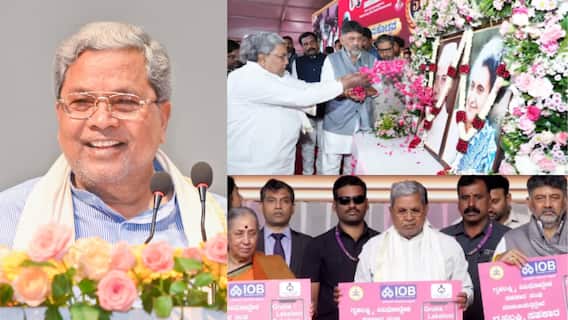
WHAT HANGS IN THE BALANCE: Leadership Clarity, Governance Stability, and Electoral Strategy
At the heart of the leadership tussle are competing political currents within the party — one leaning toward organisational strength and grassroots mobilisation, the other centered on governance experience and administrative stewardship. The first breakfast meeting appeared to bridge the divide, at least publicly. But many in the party believe that without concrete resolutions on power-sharing or defined protocol, tensions will resurface. The December 2 meeting is seen as a litmus test for whether both camps are willing to formalise a mutually acceptable arrangement and present a united front.
One of the major stakes is the upcoming Assembly session, where the government may push key welfare, budgetary, and legislation proposals. For smooth functioning, ministers, party MLAs, and bureaucrats need clarity on leadership hierarchy. The absence of that could lead to confusion over roles, policy ownership, and decision-making authority. In political terms, the meeting might shape the line-up of candidates for the next round of local and state elections — a factor that both leaders are reportedly keen to influence.
Moreover, in a state with complex caste and regional equations, the leadership issue carries broader social significance. A committee of senior party leaders, nominated by the high command, has been reportedly reviewing the balance of regional representation, caste factor, performance and public acceptability. The December 2 breakfast could mark a turning point — either consolidating current leadership or paving the way for structural recalibration within the party ahead of upcoming electoral battle.
As of now, both leaders have publicly maintained that they respect party discipline and any decision from the high command will be accepted. But insiders say that behind the scenes, both camps have prepared contingency plans, making the upcoming session critical — not just for headlines, but for realignment of power, influence, and future political direction.
POTENTIAL SCENARIOS AFTER THE MEETING
There are few possible outcomes from this second meeting, each carrying implications for governance and politics:
-
Formal reaffirmation of current leadership structure — Both leaders could issue a joint statement reiterating unity, with assurances that there will be no attempt to alter Chief Ministership before the next scheduled change. This would help restore stability and allow the government to focus on welfare and development work.
-
Agreement on power-sharing modalities — The meeting could result in a roadmap for sharing of responsibilities, ministries or portfolios between the CM and Deputy CM, outlining areas of cooperation, joint decision-making, or delegation. This could placate factional aspirations while preserving unity.
-
Commitment to rotational leadership or predefined succession calendar — Though more sensitive, there is speculation about an internal agreement for future leadership transition — which could involve a timetable indicating when the Deputy CM may assume leadership. Such an agreement would be complex but could mitigate long-term uncertainty.
-
Continued ambiguity and internal contestation — If the meeting ends without clarity, it may prolong uncertainty within the party, embolden factions, and lead to renewed rumours — potentially impacting public confidence in governance.


RESPONSES FROM WITHIN AND OUTSIDE THE PARTY
Within the ruling party, MLAs and ministers have apparently pinned hopes on the December 2 meeting delivering clarity. Some backbenchers feel a definitive outcome could end months of speculation, allowing them to concentrate on constituency work and welfare delivery without political distractions. Senior ministers have reportedly urged both leaders to present a united front, underscoring that internal stability is essential to implement guarantee schemes, social welfare programs and development projects.
Opposition leaders are, understandably, watching the proceedings warily. Some have criticized the leadership uncertainty, arguing it undermines governance and reflects poorly on the ruling party’s internal management. Others suggest that regardless of outcome, electoral rhetoric and opposition strategies may shift — capitalising on any perceived disunity or dissatisfaction. Civil society groups, meanwhile, have appealed for stability — noting that frequent leadership uncertainty can slow down policy implementation and impact development, especially in critical sectors like health, education, and infrastructure.
Political analysts argue that the upcoming breakfast meet may also serve a symbolic role — signalling to the public that the party addresses differences through dialogue rather than rebellion. In a time when public expectations are high on governance outcomes, such symbolism can help restore confidence, provided substantive decisions accompany it.
WHAT TO WATCH FOR: PUBLIC SIGNALS, GOVERNANCE ACTIONS AND FOLLOW-UP
As December 2 approaches, several indicators will help assess whether the breakfast meeting achieves its objective:
-
Joint public statement or press conference by both leaders, indicating consensus on leadership, power-sharing, or future roadmap.
-
Cabinet or portfolio reshuffle — Early or mid-term changes may signal internal balancing or reward for loyalty, especially if accompanied by redistribution of responsibilities.
-
Implementation of pending welfare/development schemes — Prompt action on stalled projects or announcements of new schemes may indicate focus shifting back to governance rather than politics.
-
Internal party reorganisation — Changes in party office-bearers, state-level committees or district-level responsibilities may reflect reshuffling of influence zones and power centers.
-
Public reaction and media framing — Media reports, editorials, public statements by supporters or opponents will reveal whether the meeting has succeeded in containing speculation or igniting new debates.
Civil society and citizen groups will also be watching — especially in constituencies where public welfare and development plans have been delayed or impacted by political uncertainty. For ordinary citizens, consolidation of leadership means smoother governance, stability in public service delivery, and clearer accountability.
CONCLUSION: A PIVOTAL MOMENT FOR Karnataka’s Political Future
The second breakfast meeting between the Chief Minister and Deputy Chief Minister on December 2 could prove to be a turning point in Karnataka’s current leadership saga. At stake is not only the personal aspirations of powerful leaders but also the stability, effectiveness, and public perception of governance. A successful meeting with a clear outcome could restore confidence among party members, civil society, and voters — enabling the administration to focus on policy implementation, welfare distribution, and development projects.
On the other hand, a non-committal or muddled outcome may prolong uncertainty, fuel speculation, and distract from governance priorities. In that scenario, both internal governance and public trust could suffer, especially at a time when citizens expect delivery on promises rather than intra-party drama.
For the people of Karnataka, this meeting — dubbed “Round Two Breakfast” — is about more than politics; it is about whether their leaders can rise above ambition and ego, prioritise governance over rivalry, and steer the state toward stability and progress.
As the date draws near, all eyes will be on the breakfast table at the CM’s residence — hopeful that the aroma of compromise will usher in a season of cooperation and clarity.
Follow: Karnataka Government
Also read: Home | Channel 6 Network – Latest News, Breaking Updates: Politics, Business, Tech & More
