
In a bid to stimulate passenger demand during the traditionally lean travel period, the Karnataka State Road Transport Corporation has announced a reduction in fares on its premium bus services. The decision, officials said, is aimed at making high-end public transport more attractive to passengers who often scale back travel plans during the off-season due to cost considerations. The move is being positioned as both a customer-friendly measure and a strategic intervention to improve seat occupancy on premium routes that witness a sharp dip outside peak holiday months.
KSRTC’s premium fleet includes services such as Airavat, Airavat Club Class, Ambari, Ambari Dream Class, and other luxury and semi-luxury buses operating on intercity and interstate routes. These services, known for better comfort, punctuality, and onboard amenities, typically see high demand during festivals, long weekends, and vacation seasons. However, during off-season months, occupancy levels drop significantly, impacting revenue despite fixed operational costs.
According to senior KSRTC officials, the fare reduction is not uniform across all routes but has been calibrated based on distance, demand patterns, and competition from private operators. The revised fares are expected to make premium buses more competitive, particularly on popular corridors connecting Bengaluru with major cities such as Mysuru, Mangaluru, Hubballi-Dharwad, Kalaburagi, and destinations in neighbouring States.
Officials said the decision was taken after reviewing passenger data and revenue trends over the past few years, which showed that marginal fare reductions often result in disproportionately higher ridership. “Empty seats generate no revenue. A slightly lower fare that attracts more passengers ultimately helps both commuters and the corporation,” a senior official said.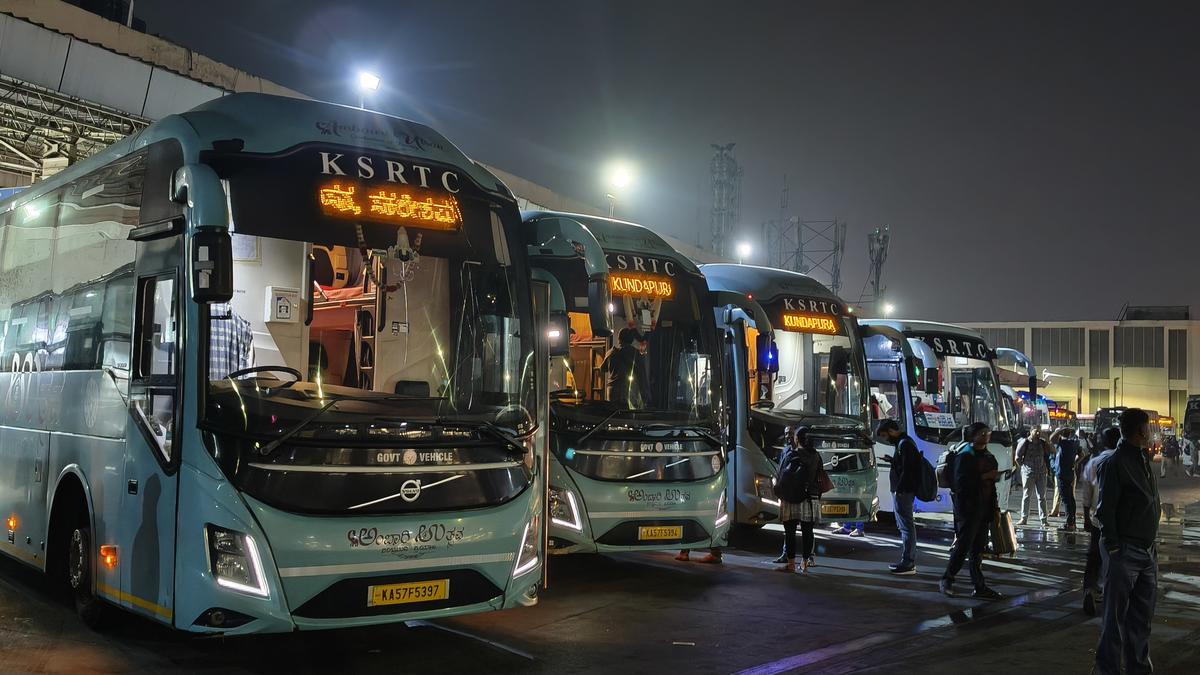
Reviving Demand During the Lean Season
The off-season period, typically spanning several weeks outside major holidays, poses a recurring challenge for state transport undertakings. While operational expenses such as fuel, maintenance, and staff salaries remain constant, passenger volumes fluctuate sharply. KSRTC officials said premium services are particularly vulnerable during this phase, as price-sensitive travellers tend to opt for ordinary or express buses, trains, or postpone travel altogether.
By cutting fares, the corporation hopes to convert occasional or hesitant travellers into regular users of premium services. Officials said the strategy is also aimed at attracting younger commuters, working professionals, and students who may otherwise consider luxury buses unaffordable except during special occasions.
Transport economists noted that the move reflects a shift from a purely cost-recovery mindset to a demand-stimulation approach. “Public transport undertakings are increasingly recognising that pricing can be a powerful tool. Lower fares during off-peak periods can help smoothen demand across the year,” an expert said.
KSRTC has also been facing stiff competition from private bus operators, many of whom aggressively discount fares during off-season months through online platforms. Officials acknowledged that aligning fares more closely with market rates was necessary to retain passengers who might otherwise migrate to private services offering comparable comfort at lower prices.
The fare cut is also expected to benefit passengers who rely on premium buses for work-related travel. Business travellers and government employees, who frequently travel between district headquarters, often prefer premium services for reliability and comfort. Reduced fares could encourage them to continue using KSRTC even during low-demand periods.
Balancing Revenue and Public Service
While fare reductions may appear to reduce per-ticket revenue, KSRTC officials stressed that the primary objective is to improve overall earnings through higher occupancy. They pointed out that premium buses involve higher capital and maintenance costs, and leaving seats unfilled during off-season months results in avoidable losses.
The corporation said it would closely monitor passenger response to the revised fares and make data-driven adjustments if required. “This is not a one-time announcement. We will study booking patterns, load factors, and revenue over the coming weeks before deciding on further steps,” an official said.
Labour unions within KSRTC have largely welcomed the move, saying higher passenger volumes could indirectly benefit staff by ensuring better utilisation of services. However, some union leaders cautioned that fare cuts should not lead to unrealistic revenue expectations being placed on crews operating premium services.
Passenger associations also reacted positively, with several commuters saying the reduced fares make premium travel more accessible. Frequent travellers said they often switch to ordinary services during off-season purely due to cost, despite preferring the comfort of luxury buses.
At the same time, some observers raised concerns about the long-term financial health of state transport undertakings. They argued that fare reductions should be accompanied by broader reforms, including route rationalisation, fuel efficiency measures, and better fleet management, to ensure sustainability./newsfirstprime/media/media_files/2026/01/05/ksrtc-buses-bengaluru-to-kerala-onam-festival-2025-08-30-10-07-26-2025-10-13-17-18-16-2025-12-20-10-35-13-2026-01-05-15-24-19.webp)
Operational Strategy and Market Competition
KSRTC officials said the fare reduction is part of a broader operational strategy to remain competitive in a rapidly changing transport market. With the expansion of highways, increased car ownership, and the growth of app-based mobility services, public bus operators are under pressure to innovate and adapt.
Premium services, once considered a niche offering, have become a crucial component of KSRTC’s brand identity and revenue model. Maintaining their relevance requires continuous adjustment to passenger expectations, pricing trends, and service quality.
The corporation has also been investing in digital booking platforms, real-time tracking, and improved customer support to enhance the travel experience. Officials said fare reductions are most effective when combined with ease of booking and reliable service delivery.
Private operators, meanwhile, are expected to respond with their own discounts, potentially intensifying competition. Transport analysts said this could benefit passengers in the short term but cautioned that a prolonged price war may strain operators already dealing with rising fuel and maintenance costs.
KSRTC officials maintained that as a public service provider, the corporation’s primary mandate is to ensure affordable and reliable transport rather than maximise profits. “Our goal is to serve passengers while remaining financially viable. Fare adjustments are a tool, not an end in themselves,” an official said.
Passenger Response and Early Indicators
Initial booking data following the announcement reportedly shows a modest uptick in reservations on select premium routes. KSRTC officials said while it is too early to draw definitive conclusions, the early response suggests that price sensitivity plays a significant role in off-season travel decisions.
Some passengers said the reduced fares have prompted them to advance travel plans that they might otherwise have postponed. Others noted that premium buses offer better value for money when fares are closer to those of ordinary services.
Tourism stakeholders also welcomed the move, saying improved affordability of premium bus travel could encourage short leisure trips even during non-peak months. Hoteliers and tour operators in destinations such as coastal Karnataka and the Western Ghats said transport costs often influence travel decisions for domestic tourists.
KSRTC has indicated that if the fare reduction proves effective, similar pricing strategies could be explored for other categories of services during off-peak periods. However, officials stressed that any such decisions would be guided by financial data and operational feasibility.
A Measured Step Toward Sustainable Mobility
The fare cut on premium services reflects a pragmatic approach by KSRTC to navigate the challenges of seasonal demand fluctuations. Rather than reducing services or allowing losses to mount, the corporation has chosen to use pricing as a lever to attract passengers and improve utilisation.
Policy analysts said such measures align with broader goals of promoting public transport usage, reducing reliance on private vehicles, and ensuring inclusive mobility. Affordable premium services can bridge the gap between ordinary buses and private transport, offering comfort without excessive cost.
At the same time, experts emphasised that fare adjustments alone cannot address all structural challenges faced by state transport undertakings. Long-term sustainability will depend on factors such as fleet modernisation, fuel efficiency, route optimisation, and supportive government policies.
For now, passengers stand to gain from lower fares and improved access to premium travel options. As KSRTC navigates the off-season, the success of this initiative will be closely watched by both commuters and policymakers, potentially shaping future strategies for public transport in Karnataka.
By choosing to prioritise passenger affordability during a slow period, KSRTC has signalled its intent to remain responsive to market realities while upholding its public service mandate. Whether the fare cuts translate into sustained gains will become clearer in the weeks ahead, but the move has already sparked renewed interest in premium bus travel across the State.
Transport planners pointed out that dynamic pricing models, where fares are adjusted based on demand cycles, are increasingly being adopted by public transport agencies worldwide. They said KSRTC’s decision mirrors this trend and could help the corporation better align supply with passenger behaviour without compromising service availability.
Officials also clarified that the fare reductions would not affect concessions extended to senior citizens, students, and other eligible categories. Existing discounts will continue to apply on the revised base fares, potentially offering even greater savings for these groups during the off-season.
Some regular commuters said the move could gradually change perceptions around premium buses, which are often viewed as aspirational rather than practical choices. By narrowing the price gap, they believe KSRTC can encourage passengers to prioritise safety and comfort over cheaper but less reliable alternatives.
As the off-season progresses, KSRTC is expected to use passenger feedback and booking data to fine-tune its pricing strategy. Authorities indicated that future decisions will be guided by occupancy levels, revenue performance, and operational sustainability, ensuring that fare adjustments remain both passenger-friendly and fiscally responsible.
Follow: Karnataka Government
Also read: Home | Channel 6 Network – Latest News, Breaking Updates: Politics, Business, Tech & More
