
Rising egg prices across Karnataka have triggered widespread concern among teachers tasked with running the midday meal scheme, forcing many to dig into their own pockets to ensure students do not miss a crucial source of nutrition. The price surge, which has disrupted procurement plans in multiple districts, has placed additional pressure on schools already operating with limited budgets. Teachers say the escalation has been so steep that even modest quantities now exceed allotted funds, compelling them to choose between cutting portions or bearing the cost themselves. Communities are increasingly alarmed by the long-term implications for children’s health.
Officials note that eggs have long been one of the most effective components of the midday meal programme, providing an affordable yet dense source of protein, particularly for children from low-income households. However, with the cost rising far beyond anticipated levels, schools are struggling to maintain regular supply without compromising quality or nutritional standards. Teachers say that while the government reimburses costs periodically, the gaps between allocation and market prices have widened drastically. As a result, interim shortages are becoming more frequent, leading to concerns about irregular nutritional intake among schoolchildren.
The situation has sparked conversations among education officials, nutrition experts, and local administrators about the need for a more dynamic pricing mechanism within the scheme. Many argue that a fixed allocation cannot sustain a programme dependent on highly volatile commodities. Teachers suggest that local bodies should be empowered to adjust procurement budgets in real-time based on prevailing market rates. Without such flexibility, even short-term inflation can disrupt children’s access to nutritious meals. The absence of a buffer mechanism has become especially evident during the current spike, leaving teachers and school management teams scrambling for solutions.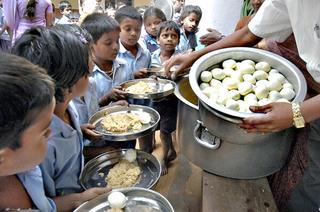
Mounting Burden on Teachers as Prices Outpace Allocations
Teachers across several districts describe a growing sense of frustration as they attempt to reconcile rising costs with non-negotiable nutritional commitments. Some recount instances where they pooled personal funds to purchase eggs in bulk, fearing that any disruption would demotivate children who rely on the meal as a key incentive to attend school. Others describe delaying payments to vendors, only to face reluctance or reduced supply due to outstanding dues. In many rural areas, teachers have taken on added administrative work to track prices and negotiate with local sellers, work that falls outside their academic responsibilities.
School cooks and helpers, too, are feeling the strain. Many say that while they understand the constraints faced by teachers, they worry about the impact of reduced quantities on children who eagerly wait for the single egg they receive each week. Some cooks have adjusted recipes or borrowed from local farms when possible, but these makeshift solutions are not sustainable. Teachers worry that any inconsistency in supply may undermine trust in the midday meal system, an essential social safety net that has contributed significantly to improving attendance, concentration, and overall nutritional standards across the state.
Administrators acknowledge that the price escalation has heightened tensions between schools and local suppliers. Vendors, especially small-scale poultry traders, argue that they cannot afford to supply eggs at outdated contract rates when market prices fluctuate rapidly. Some districts have already witnessed disruptions after vendors withdrew temporarily, unwilling to incur financial losses. Teachers warn that such breakdowns, if prolonged, could lead to uneven access to meals across different schools, creating unequal nutritional outcomes among students depending on their location.
Policy Gaps and Demand for Immediate Government Intervention
The surge in egg prices has also raised questions about the adequacy of current policy frameworks that govern midday meal procurement. Teachers and unions argue that guidelines must be updated to reflect inflation trends, seasonal variations, and regional disparities in production costs. Many say that without revision, schools will continue to face periodic crises that disproportionately affect economically vulnerable children. Education department officials, while acknowledging the pressures, have not yet outlined a comprehensive response, leaving teachers to cope with the daily challenges of balancing budgets in an unpredictable market.
Nutritionists caution that any reduction in egg availability could have significant consequences for children’s health. Eggs provide essential amino acids, vitamins, and minerals that support growth and cognitive development. Experts emphasise that for many children in rural and semi-urban areas, the midday meal egg may be the only source of high-quality protein they receive regularly. Interruptions, even short term, could affect learning outcomes, immune health, and overall wellbeing. They warn against substituting eggs with cheaper alternatives, arguing that nutritional value cannot be compromised in an already fragile food environment.
As pressure mounts, several school management committees have called for immediate financial relief and clearer government communication. Many believe the state should introduce contingency grants or emergency allowances that activate when essential food items witness sudden price spikes. Some have proposed establishing a district-level monitoring cell to track market fluctuations and recommend timely adjustments in allocation. Teachers insist that without structural reform, recurring cycles of price volatility will continue to destabilise the midday meal programme, undermining one of Karnataka’s most impactful welfare initiatives.
The price surge has also prompted discussion on the broader poultry supply chain, with traders attributing the increase to rising feed costs, transportation expenses, and seasonal drops in production. Several argue that the pressures are passed along the chain until they reach the schools and ultimately the teachers managing procurement. Some poultry farmers note that disease outbreaks and fluctuating consumer demand have also contributed to inconsistent supply. While these factors lie outside the education sector, their impact on the midday meal programme is significant, highlighting the need for cross-departmental coordination.
In many districts, parents have begun expressing concern to school authorities about the sustainability of egg distribution under current conditions. Some parents, particularly those from farming and daily-wage backgrounds, say they are unable to supplement their children’s diets at home, making the midday meal egg essential. Teachers report that parents frequently ask whether the scheme will continue uninterrupted, reflecting widespread anxiety about food security during price-sensitive periods. The trust placed in the programme by families underscores the need to maintain consistency regardless of market volatility.
School development and monitoring committees have suggested that communities could support short-term mitigation through donations or local pooling efforts. However, teachers caution that relying on community contributions can lead to uneven solutions, benefiting schools with stronger local networks while leaving others underserved. They argue that while community involvement is valuable, the responsibility for sustaining the midday meal programme must remain firmly with the state, as it is a core welfare commitment designed to reduce inequality, not amplify it.
The current crisis has reignited calls for stronger state-level negotiation with poultry suppliers. Teachers and administrators believe that the government could explore bulk procurement at negotiated rates through centralised contracts, which may offer more stability than district-level arrangements. They suggest that centralised purchases, backed by state guarantees, could incentivise suppliers to maintain consistent pricing even during market fluctuations. Some states have adopted such models successfully, reducing the financial uncertainty faced by schools and ensuring uninterrupted distribution of critical food items like eggs.
At the same time, discussions about diversifying protein sources have gained momentum. While eggs remain irreplaceable in terms of nutritional density and acceptance among children, some experts recommend introducing supplementary items such as pulses, fortified foods, or dairy-based products during periods of extreme inflation. Teachers, however, worry that replacing eggs even temporarily could disappoint students and diminish the programme’s appeal. They argue that any diversification should expand options, not substitute established components that children value and look forward to each week.
As awareness of the issue grows, civil society organisations have begun assessing the situation in rural and urban schools. Preliminary reports suggest that schools in remote regions face greater challenges due to transportation costs and fewer suppliers. In some areas, teachers have reported delays of several weeks in receiving reimbursement for purchased eggs, further complicating procurement. NGOs working in the field of child nutrition warn that if timely action is not taken, the cumulative effect of price spikes could widen nutritional disparities between districts, undoing hard-won gains achieved through years of steady programme implementation.
Meanwhile, teachers remain at the centre of the crisis, navigating bureaucratic delays, vendor negotiations, and emotional pressure from students who eagerly await their weekly egg. Many say that while they are committed to ensuring no child goes hungry, it is unfair that they bear the financial burden of systemic gaps. Without timely intervention, they fear burnout, frustration, and declining programme quality. Teachers emphasise that they should not be forced to choose between personal financial strain and a child’s essential nutrition, especially when the scheme is designed to shield children from such vulnerabilities.
Officials in the education department have indicated that discussions are underway to assess the financial implications of revising meal allocations. However, teachers say that these deliberations must translate into quick, concrete actions, as the price burden grows heavier with each passing week. They call for clarity, transparency, and urgency, arguing that delays directly impact the lives of children whose nutritional needs cannot be deferred. For now, they continue to manage the crisis with determination, even as they hope for policy solutions that match the magnitude of the challenge.
Despite the mounting difficulties, teachers assert that the midday meal programme remains indispensable, particularly for children from disadvantaged backgrounds. They recount instances where students attend school not only to learn but also to receive the guarantee of a hot meal and a protein-rich egg. The emotional responsibility teachers feel toward these children has driven them to sustain the programme even under financial strain. Yet they emphasise that compassion alone cannot uphold a state-run system that feeds millions; structural support must evolve to match changing realities.
Ultimately, the surge in egg prices has become more than just a budgeting challenge — it is a test of the state’s commitment to child welfare. Teachers, policymakers, and community members agree that protecting the nutritional integrity of the midday meal scheme must remain a top priority. The crisis exposes the vulnerabilities within current procurement frameworks and offers an opportunity to strengthen them with adaptive budgeting, improved monitoring, and better coordination across departments. As Karnataka navigates this challenge, educators hope that long-term reforms will emerge, ensuring that no child’s wellbeing is compromised due to market fluctuations.
Follow: Karnataka Government
Also read: Home | Channel 6 Network – Latest News, Breaking Updates: Politics, Business, Tech & More
