
Centre reiterates early education policy as Tamil Nadu maintains two-language stand
The National Education Policy debate resurfaced in Tamil Nadu on Wednesday after Union Education Minister Dharmendra Pradhan reiterated the Centre’s stand on early education. Speaking during his visit to Madurai, the Minister said children should be taught in their mother tongue during the initial years of schooling, as recommended under the National Education Policy 2020.
He said using the home language at the primary level helps students understand concepts more clearly and builds a strong foundation for future learning. In Tamil Nadu, he noted, this approach naturally supports the use of Tamil in classrooms during the early stages of education.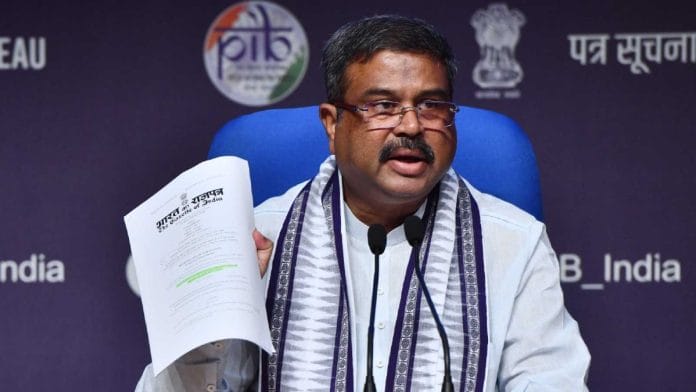
The Minister stressed that the policy is designed to strengthen regional languages rather than replace them. According to him, encouraging learning in the mother tongue does not prevent students from acquiring additional languages later. Instead, it improves comprehension and confidence in young learners.
Centre State disagreement continues over education policy
The National Education Policy has been a long-standing point of disagreement between the Union government and the DMK-led Tamil Nadu government. While the Centre maintains that the policy offers flexibility and choice, the State government has opposed it, citing concerns over the three-language formula.
Tamil Nadu has consistently followed a two-language system based on Tamil and English. State leaders argue that this model has supported social mobility, education standards, and employment opportunities for decades. They maintain that any deviation could affect linguistic identity and administrative autonomy.
To reinforce its position, the Tamil Nadu government introduced a separate State Education Policy that aligns with the two-language framework. The State has repeatedly stated that language decisions in education should remain within its jurisdiction.
The disagreement has also reached the Supreme Court. Earlier this month, the apex court directed the Tamil Nadu government to hold discussions with the Centre regarding the establishment of Jawahar Navodaya Vidyalayas in the State. The court asked the government to assess land availability for these institutions, which aim to provide quality education to students from rural backgrounds.
During the hearing, the State government argued that its education model should be respected. The Centre countered by stating that the national policy does not force any language and allows States to adapt it as per local needs. The court advised both sides to avoid turning the issue into a language dispute and focus instead on educational development.
Cultural initiatives highlighted alongside policy discussion
During his interaction with the media, the Union Minister also spoke about cultural exchange programmes that promote understanding between regions. He referred to the recently concluded fourth edition of the Kashi Tamil Sangamam and described it as a meaningful initiative that connects different parts of the country through shared heritage.
He said the programme highlighted historical links between Kashi and Rameswaram and encouraged people from across India to learn more about Tamil language and culture. According to him, such initiatives reflect unity while respecting diversity.
The event was organised under the theme “Let Us Learn Tamil” and included cultural performances, discussions, and heritage visits. The concluding ceremony was held at Rameswaram with senior dignitaries in attendance.
The Minister said similar programmes would continue in the future to strengthen cultural ties and mutual respect among linguistic communities. He added that education and culture should work together to promote harmony.
Despite the renewed appeal from the Centre, the Tamil Nadu government has maintained its position. State leaders have reiterated that education policies must reflect regional priorities and safeguard linguistic identity. Meanwhile, the Union government continues to argue that the national policy improves learning outcomes while supporting mother-tongue education. Also Read: Union Education Minister asks Tamil Nadu to implement NEP with Tamil as medium of instruction
Conclusion
The latest remarks have once again brought attention to the ongoing education policy disagreement between the Centre and Tamil Nadu. As discussions continue, balancing regional identity with national education goals remains a key challenge.
