
The Mysuru district court complex was evacuated on Tuesday following a bomb threat that sparked panic among litigants, lawyers, judicial staff, and the general public, leading to the temporary suspension of court proceedings. The threat, received through an anonymous communication, prompted swift action from the police and district administration, who treated the warning with utmost seriousness amid rising concerns over public safety in sensitive institutional spaces. Though no explosive material was immediately detected, the incident exposed vulnerabilities in security preparedness and reignited debates around judicial infrastructure safety in Karnataka.
Sudden disruption in a busy court complex
The threat surfaced during peak court hours, when hundreds of people were present across various court halls attending hearings, filing petitions, or awaiting verdicts. According to officials, an alert was received suggesting the possible presence of an explosive device within the premises. Within minutes, police authorities initiated evacuation protocols, asking everyone to leave the court complex calmly. Judges were escorted out, and ongoing proceedings were halted mid-session. For many litigants, especially those travelling from rural areas, the abrupt disruption added anxiety and confusion to an already stressful legal process.
Lawyers practicing at the Mysuru courts described scenes of urgency as police personnel guided people out through multiple exits to avoid congestion. While some panic was inevitable, authorities said the evacuation was largely orderly due to cooperation from members of the Bar Association and court staff. Several advocates later remarked that regular emergency drills were lacking, making the response dependent largely on real-time instructions from police officers.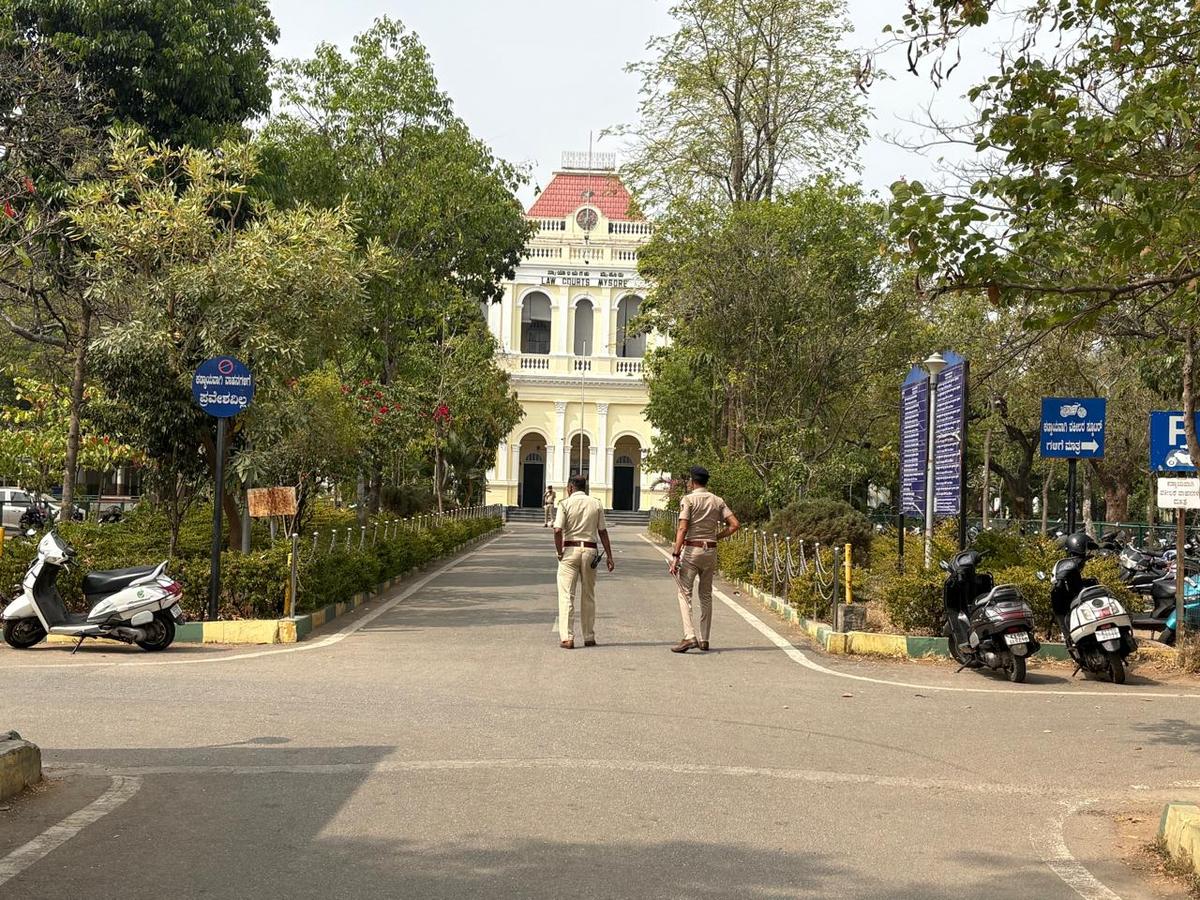
Massive security deployment and search operation
Soon after the evacuation, the entire court complex was cordoned off, and a large contingent of police personnel took charge of the area. Bomb detection and disposal squads were pressed into service, along with sniffer dogs trained to detect explosives. Fire and emergency services were placed on standby, and ambulances were stationed nearby as a precautionary measure. Entry into the premises was completely restricted, and traffic movement around the court area was diverted to prevent crowding.
The search operation lasted several hours, with teams systematically checking court halls, record rooms, corridors, parking areas, and adjacent buildings. Police officials stated that even minor objects such as unattended bags, dustbins, and storage spaces were thoroughly examined. Senior officers personally supervised the operation, underscoring the seriousness with which the administration treated the threat. By evening, preliminary assessments suggested that the threat might have been a hoax, though officials stressed that no conclusion would be drawn without a full investigation.
Judicial proceedings come to a halt
The evacuation led to the suspension of all judicial work for the day, affecting dozens of cases ranging from routine hearings to sensitive criminal trials. Many litigants expressed frustration over the postponement, as court dates are often fixed after long intervals. Advocates pointed out that such incidents, even when false, have serious consequences for the justice delivery system, including delays, additional costs, and emotional strain on those involved in prolonged legal battles.
Court authorities later announced that fresh dates would be issued for cases that could not be heard due to the evacuation. However, lawyers demanded clarity on whether special benches or extended working hours would be arranged to compensate for the lost day. The incident has once again highlighted how external security threats can directly impact the functioning of judicial institutions.
Police begin probe into origin of threat
Even as search operations continued, the police launched an investigation to trace the source of the bomb threat. Cybercrime experts were roped in to analyze the mode of communication through which the warning was received. Officials said that anonymous threats are often routed through digital platforms or untraceable phone numbers, making detection challenging but not impossible. Call detail records, internet logs, and surveillance footage from the court premises and surrounding areas are being examined as part of the probe.
Senior police officials stated that strict action would be taken if the threat is confirmed to be a hoax. Under existing laws, issuing false bomb threats is a serious offence that can attract severe punishment, including imprisonment. Authorities emphasized that such acts not only waste public resources but also create fear and disrupt essential public services.
Reactions from legal fraternity
The Mysuru Bar Association expressed concern over the incident, calling for enhanced security measures at court complexes across the State. Senior advocates noted that courts are open public spaces by nature, making them vulnerable to threats if adequate screening mechanisms are not in place. While police presence is usually visible at entry points, many court complexes lack advanced security infrastructure such as baggage scanners and metal detectors.
Some lawyers also questioned whether intelligence inputs were being adequately shared with district-level authorities. They argued that in a climate where public institutions have increasingly become targets of threats, courts must not be treated as low-risk zones. The Bar Association is expected to submit a formal memorandum to the government seeking comprehensive security audits of court premises.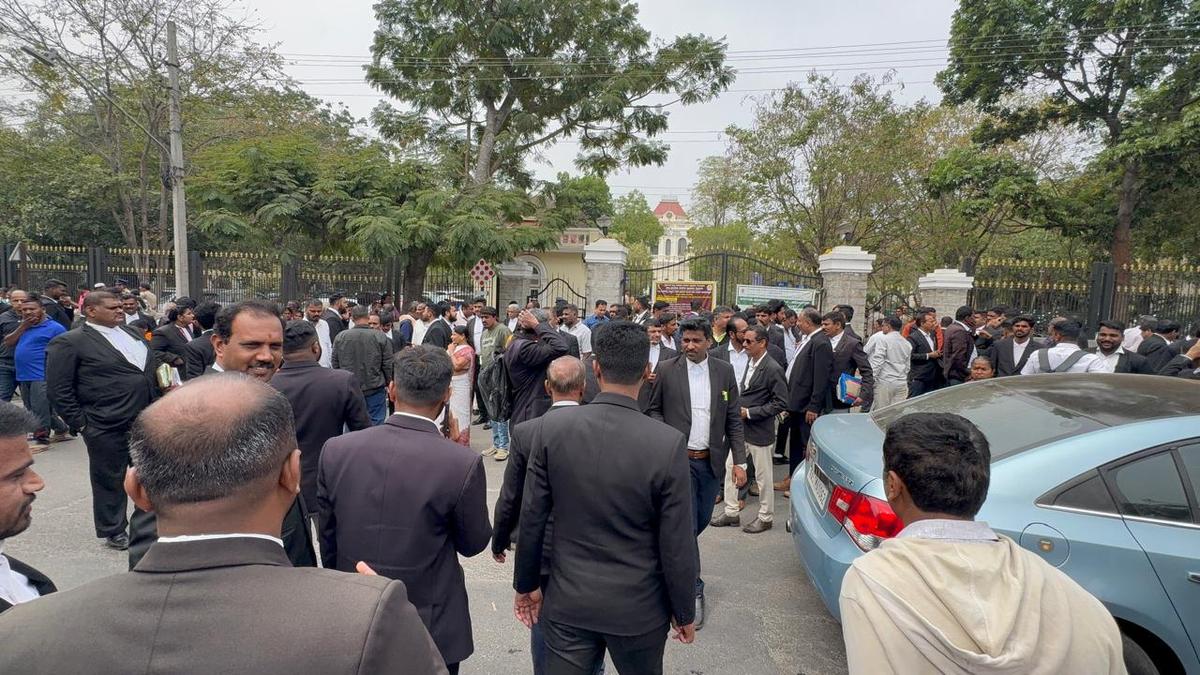
Administration assures safety measures
District administration officials assured the public that all necessary steps were being taken to ensure safety and prevent recurrence of such incidents. They stated that coordination between the judiciary, police, and civil administration would be strengthened in the coming days. Officials also hinted at the possibility of conducting mock drills and sensitisation programmes for court staff and lawyers to handle emergency situations more effectively.
The evacuation of the Mysuru court premises following a bomb threat was handled with urgency and caution, reflecting the seriousness with which authorities view potential risks to public safety. While no explosive was found, the incident disrupted judicial functioning, unsettled citizens, and highlighted gaps in security preparedness. As investigations continue, the episode has renewed calls for stronger, more systematic security measures in courts across Karnataka. Ensuring the safety of judicial spaces is not just a matter of protecting buildings, but of preserving public trust in the institutions that uphold the rule of law.
The incident has prompted discussions at the State level on standard operating procedures for bomb threats in judicial institutions. While evacuation protocols exist, officials acknowledged that response time and communication channels need improvement to minimize panic and confusion.
Impact on public confidence
Beyond the immediate disruption, the bomb threat has raised concerns about public confidence in the safety of civic institutions. For many citizens, courts represent a place of justice and order, and threats to such spaces can have a deep psychological impact. Several litigants said they felt shaken by the incident, especially elderly individuals and women who were unsure about how to react during the evacuation.
Security experts note that even hoax threats can achieve their intended goal of creating fear and uncertainty. They argue that visible preparedness and swift, transparent communication are key to reassuring the public. In this case, while authorities acted quickly, some citizens felt that clearer instructions could have reduced anxiety during the evacuation.
Broader context of institutional security
The Mysuru court bomb threat comes amid a series of similar alerts reported in different parts of the country over the past few years, targeting schools, hospitals, railway stations, and government offices. While most of these threats eventually turned out to be hoaxes, each incident has forced authorities to reassess security protocols. Experts warn that complacency is dangerous, as a single lapse could have catastrophic consequences.
Judicial complexes, in particular, face unique challenges due to the high footfall and emotionally charged nature of legal disputes. From criminal trials to property conflicts, courts often host individuals under significant stress, making security management a delicate task. Balancing openness with safety remains a persistent challenge for administrators.
Calls for long-term solutions
In the aftermath of the incident, several voices have called for long-term solutions rather than ad hoc responses. Suggestions include installing modern surveillance systems, introducing visitor passes, and deploying trained security personnel specifically for court environments. Some have also proposed the use of technology-driven solutions such as artificial intelligence-based monitoring to detect suspicious behaviour.
Legal scholars argue that while such measures may require significant investment, they are essential for safeguarding the integrity of the justice system. They also stress the need for coordination between State and central agencies, especially in intelligence gathering and threat assessment.
Investigation continues as normalcy returns
By late evening, after preliminary checks yielded no suspicious findings, authorities began preparations to reopen the court premises the following day. Police maintained a presence overnight as a precaution, and additional checks were scheduled before resumption of proceedings. Officials reiterated that the investigation into the threat would continue until its origin and intent are clearly established.
As normalcy gradually returned, the incident left behind a lingering sense of unease, serving as a reminder of the fragile balance between public access and security. For Mysuru, a city known for its cultural heritage and relative calm, the bomb threat was an unsettling episode that underscored the evolving nature of security challenges in public spaces.
Conclusion
The evacuation of the Mysuru court premises following a bomb threat was handled with urgency and caution, reflecting the seriousness with which authorities view potential risks to public safety. While no explosive was found, the incident disrupted judicial functioning, unsettled citizens, and highlighted gaps in security preparedness. As investigations continue, the episode has renewed calls for stronger, more systematic security measures in courts across Karnataka. Ensuring the safety of judicial spaces is not just a matter of protecting buildings, but of preserving public trust in the institutions that uphold the rule of law.
Follow: Karnataka Government
Also read: Home | Channel 6 Network – Latest News, Breaking Updates: Politics, Business, Tech & More
