
Mumbai, Maharashtra’s most populous and politically significant city, is once again at the forefront of civic politics as voters turn out for the first municipal elections since 2017. The Brihanmumbai Municipal Corporation election has become a high-stakes contest involving three major political forces: the Thackeray factions, the BJP-led Shiv Sena alliance and the Nationalist Congress Party. With urban governance, infrastructure and local services hanging in the balance, the civic polls have drawn considerable public attention and political energy.
The delay in holding municipal elections in Mumbai for nearly a decade stemmed from legal challenges, administrative issues and disputes over reservation and delimitation. With these hurdles now addressed, the December-January election cycle marks a return to routine democratic processes for the city’s civic administration. The contest is widely seen as a barometer of political sentiment in urban Maharashtra ahead of future state and national elections.
Historic Context and Political Stakes
The Brihanmumbai Municipal Corporation is one of the richest civic bodies in India, responsible for managing critical services such as water supply, solid waste management, public health, urban planning and transportation systems. Control of the BMC has traditionally been a symbol of political strength and influence in Maharashtra, making the 2026 polls particularly significant.
Over the years, the political dynamics in Mumbai have undergone notable shifts. The Thackeray surname once synonymous with unified Shiv Sena politics now represents different factions, adding complexity to the electoral landscape. Meanwhile, the BJP-Shiv Sena (Eknath Shinde faction) alliance has emerged as a potent force, and the Nationalist Congress Party has sought to consolidate its base in urban constituencies. Each coalition and party is aiming for a decisive performance that would bolster its standing within the state’s broader political matrix.
 Thackeray Factions Rally on Regional Identity
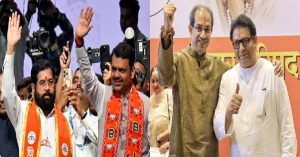 Thackeray Factions Rally on Regional Identity
For the Thackeray groups, which include leaders associated with both the Uddhav Thackeray faction and the Maharashtra Navnirman Sena led by Raj Thackeray, the election is as much about cultural identity as it is about governance. Both leaders have campaigned vigorously on issues of Marathi pride and representation, emphasising the importance of protecting local interests in a rapidly evolving metropolis.
Their combined rhetoric has focused on the perceived marginalisation of local communities, rising living costs and urban infrastructure shortcomings. By foregrounding regional identity and community concerns, the Thackeray factions aim to consolidate support among long-standing voters and those who feel left behind by broader economic shifts.
BJP-Shiv Sena Alliance Positions Itself on Governance Record
The BJP-led alliance, which includes the Eknath Shinde faction of Shiv Sena, has adopted a contrasting narrative centred on administrative performance and development outcomes. Under this banner, leaders have highlighted improvements in civic infrastructure, metro expansion, road connectivity and public service delivery as evidence of effective governance.
The alliance has sought to portray itself as capable of bringing sustained policy focus and resources to Mumbai’s complex urban challenges. With its organisational strength and deep roots in the city’s political structure, the coalition is seeking to translate its narrative of growth and governance into electoral success.
NCP Seeks Urban Footprint and Policy Relevance
The Nationalist Congress Party (NCP) is attempting to carve out a meaningful urban presence in these elections. Traditionally stronger in rural and semi-urban regions, the party has intensified its outreach in Mumbai’s wards, focusing on local development issues such as healthcare access, education support and community services.
NCP leaders have emphasised grassroots connection and responsiveness to neighbourhood concerns, aiming to attract voters who prioritise practical civic solutions over ideological considerations. The party’s performance will be closely watched as an indicator of its urban appeal and organisational reach.
Key Issues Driving Voter Decisions
Across Mumbai, several core issues are shaping voter priorities. The city’s infrastructure challenges, including drainage systems, traffic congestion and aging civic utilities, remain top of mind for many residents. Water supply reliability, waste management efficiency and affordable housing are also prominent themes in public discourse.
In addition to physical infrastructure, voters have expressed interest in enhanced transparency, accountability of elected representatives and improved citizen engagement in decision-making processes. Community safety, environmental sustainability and equitable access to public services are further factors influencing voter choices.
Security and Logistics of Election Day
With the polls underway, civic authorities have deployed significant resources to ensure a smooth election process. Security personnel have been stationed at key polling locations to maintain peace and order, while election officials oversee adherence to polling protocols and guidelines.
Measures have been taken to support voters with accessibility needs, including priority lanes, assistance at polling booths and extended support for elderly and differently-abled citizens. The goal is to facilitate broad participation and uphold the integrity of the electoral process.
Looking Ahead: What These Elections Mean for Mumbai
As votes are cast and counting approaches, the results of the Brihanmumbai Municipal Corporation election will reveal not only who governs the city but also how urban voters view competing political narratives. The performance of the Thackeray factions, the BJP-Shiv Sena alliance and the NCP will provide insights into shifting allegiances, pressing civic priorities and the evolving political climate of Maharashtra’s urban electorate.
Beyond immediate governance, the outcome may influence future electoral strategies and alignments. Parties will analyse performance ward by ward, seeking to understand where their messages resonated and where adjustments are needed. For voters, the election represents an opportunity to shape the direction of civic leadership and hold local representatives accountable for delivering on key public needs.
Ultimately, the 2026 municipal elections in Mumbai are a pivotal moment for city politics and public policy. As results unfold, the city will begin a new chapter in its longstanding journey of democratic engagement and urban governance. The elected representatives will inherit the responsibility of addressing deep-rooted urban challenges and driving inclusive growth for one of India’s most complex and dynamic cities.
Read More: https://channel6network.com/maharashtra-election-ink-tampering-allegations/
