
Karnataka Minister Shivraj Tangadagi triggered a major political controversy after stating that the Bharatiya Janata Party had “assassinated Mahatma Gandhi for the second time” by changing the name of the Mahatma Gandhi National Rural Employment Guarantee Act. His remarks, delivered at a public programme, immediately ignited intense reactions across political circles, civil society, and social media.
Tangadagi argued that removing Gandhi’s name from a flagship welfare scheme amounted to an ideological attack on the values Gandhi represented. According to him, Mahatma Gandhi symbolised rural upliftment, dignity of labour, and social justice, all of which were central to the employment guarantee programme. By altering the scheme’s name, Tangadagi claimed, the BJP was attempting to erase Gandhi’s legacy from public memory. The statement set off a sharp political debate in Karnataka, with the ruling Congress defending the minister and the opposition BJP condemning his words as inflammatory and disrespectful.
Tangadagi, who holds a key portfolio in the Karnataka government, made the remark while addressing beneficiaries and party workers, stressing the historical significance of MGNREGA in empowering rural households. He stated that the scheme was not merely a welfare programme but a living tribute to Gandhi’s philosophy of self-reliance and rural development. According to the minister, any attempt to dilute Gandhi’s association with such a programme reflected a deeper ideological discomfort with his ideas.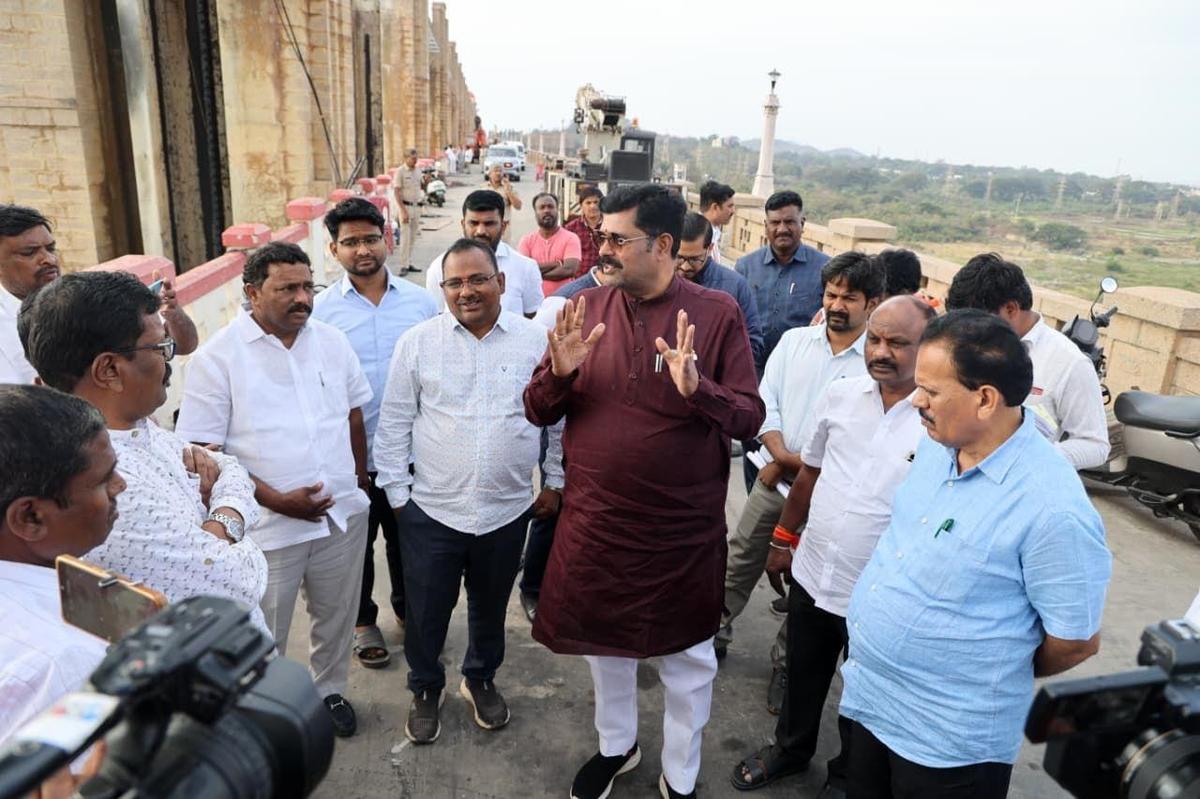
The comment drew immediate attention because of its strong wording, invoking Gandhi’s assassination, one of the most sensitive chapters in Indian history. Supporters of Tangadagi argued that his statement was metaphorical and intended to highlight the systematic sidelining of Gandhi’s ideals. Critics, however, accused him of trivialising a tragic historical event for political gain.
The BJP responded swiftly, rejecting the accusation and demanding an apology from the minister. Party leaders stated that Tangadagi’s remarks crossed the boundaries of democratic discourse and were designed to provoke outrage rather than foster constructive debate. They maintained that administrative decisions regarding scheme names should not be equated with violence or assassination. BJP leaders further argued that Gandhi’s legacy cannot be erased by changing the nomenclature of a programme, as his contribution to the nation is deeply embedded in India’s collective consciousness. The party accused the Congress of indulging in political theatrics to distract from governance issues in Karnataka. The controversy soon escalated beyond the state, drawing reactions from national leaders and commentators.
The Congress, meanwhile, stood firmly behind Tangadagi, framing his remarks as a political critique rather than a literal comparison. Senior Congress leaders said the minister was drawing attention to what they described as a pattern of diminishing the legacy of national icons associated with the freedom movement.
They argued that Gandhi’s name on the employment scheme was not symbolic alone but represented a commitment to inclusive growth and rural dignity. Removing or altering that association, they claimed, sent a troubling message about the priorities of those in power. The party accused the BJP of selectively celebrating history while undermining figures who challenged inequality and injustice. This defence further fuelled the political confrontation, setting the stage for prolonged debate.
Political Fallout and Ideological Divide
The controversy surrounding Tangadagi’s statement highlighted the deep ideological divide between the Congress and the BJP over the interpretation of India’s history and national symbols. For the Congress, Mahatma Gandhi remains the moral cornerstone of the nation, embodying values of non-violence, social harmony, and grassroots empowerment. Party leaders argued that welfare schemes bearing Gandhi’s name serve as reminders of these values and reinforce a commitment to inclusive governance. Tangadagi’s remarks, they said, must be understood within this broader ideological context. According to them, the BJP’s approach to renaming schemes reflects an attempt to reshape historical narratives to align with its political worldview.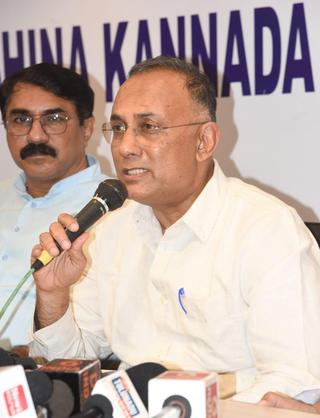
The BJP, on the other hand, accused the Congress of weaponising Gandhi’s legacy for electoral purposes. Leaders argued that the Congress often invokes Gandhi selectively while ignoring the practical challenges of implementing welfare schemes effectively. They contended that debates over names distract from the real issues of corruption, inefficiency, and fiscal burden associated with programmes like MGNREGA. BJP leaders also stressed that Gandhi belongs to the entire nation, not to any single political party. They claimed that equating administrative decisions with ideological hostility towards Gandhi was misleading and divisive. The party warned that such rhetoric could deepen political polarisation and undermine respectful discourse.
Civil society voices entered the debate, offering nuanced perspectives on the issue. Some activists and scholars agreed that names and symbols carry powerful meanings in public policy, shaping how citizens relate to the state. They argued that removing Gandhi’s name from a scheme closely aligned with his philosophy could indeed signal a shift in ideological priorities. Others cautioned against using extreme language, noting that comparisons with assassination risked diluting the gravity of historical violence. These commentators emphasised the need for balanced discussion that acknowledges both symbolic significance and administrative realities. The debate thus expanded beyond party politics into questions about memory, symbolism, and governance.
Within Karnataka, the issue assumed added significance due to the state’s political climate. The Congress government, which came to power with strong rural support, has positioned itself as a defender of welfare schemes and social justice. Tangadagi’s remarks resonated with sections of rural and marginalised communities who view MGNREGA as a lifeline. For them, Gandhi’s name symbolises trust and continuity in a programme that provides economic security. BJP leaders in the state, however, accused the Congress of stoking emotional sentiments to consolidate its vote base. They argued that governance should focus on improving implementation rather than engaging in symbolic battles.
The controversy also sparked discussions within academic and media circles about the role of language in political communication. Analysts noted that provocative statements often dominate headlines, overshadowing substantive policy debates. Tangadagi’s choice of words, while effective in drawing attention, raised questions about the responsibilities of public officials in shaping discourse. Some commentators argued that strong language is sometimes necessary to highlight perceived injustices, while others warned that it can inflame tensions and derail constructive engagement. This tension between expression and responsibility became a central theme in the broader conversation.
Gandhi’s Legacy, Welfare Politics, and Public Memory
At the heart of the controversy lies a deeper debate about Mahatma Gandhi’s place in contemporary Indian politics and public memory. Gandhi’s philosophy of village-centric development, dignity of labour, and self-sufficiency inspired several post-independence policies aimed at rural upliftment. MGNREGA, introduced as a rights-based employment scheme, was widely seen as aligning with these ideals by guaranteeing work and empowering rural citizens. Supporters of retaining Gandhi’s name argue that it reinforces the moral foundation of the programme and reminds policymakers of its original intent. For them, the name serves as a constant reference point to values that prioritise human dignity over mere economic metrics.
Critics of excessive symbolism, however, argue that outcomes matter more than names. They contend that the effectiveness of welfare schemes should be judged by transparency, reach, and impact rather than nomenclature. According to this view, invoking Gandhi’s name cannot compensate for shortcomings in implementation or accountability. Some analysts suggested that debates over renaming reflect a broader struggle over narrative control in Indian politics, where history and symbolism are often mobilised to assert ideological dominance. In this context, Tangadagi’s remarks were seen as part of a larger contest over who gets to define national legacy.
Public reaction to the controversy was mixed, reflecting India’s diverse political landscape. Supporters of the Congress praised Tangadagi for speaking boldly against what they perceived as ideological erasure. They argued that strong language was justified to defend the legacy of a leader whose principles continue to inspire millions. BJP supporters, meanwhile, criticised the minister for making what they described as irresponsible and hurtful comparisons. Social media platforms became arenas for heated exchanges, with users debating the appropriateness of the statement and the broader issue of renaming public schemes. The polarised reactions underscored how deeply intertwined history and politics remain in India.
The debate also revived discussions about the politicisation of welfare schemes. Over the years, successive governments have renamed programmes to reflect their priorities, often leading to accusations of credit appropriation. Observers noted that such practices can confuse beneficiaries and undermine continuity. In the case of MGNREGA, Gandhi’s name has been a unifying symbol across political divides, even as parties disagreed on funding and implementation. Tangadagi’s remarks highlighted fears that altering this association could weaken the scheme’s identity and dilute its rights-based character. These concerns added another layer to the ongoing discourse.
As the controversy continued, calls emerged for more measured political संवाद. Some senior leaders across parties urged restraint, emphasising that Gandhi’s legacy should unite rather than divide. They argued that disagreements over policy should be addressed through debate and evidence, not provocative analogies. At the same time, they acknowledged the emotional resonance of Gandhi’s name and the need to handle such symbols with sensitivity. The episode served as a reminder of the enduring power of historical figures in shaping contemporary politics and the responsibilities that come with invoking them.
In conclusion, Karnataka Minister Shivraj Tangadagi’s statement accusing the BJP of “assassinating Mahatma Gandhi for the second time” by changing the name of MGNREGA sparked a far-reaching political and cultural debate. While the remark drew sharp criticism for its language, it also reopened important questions about symbolism, welfare politics, and historical memory. The controversy revealed deep ideological divides over how Gandhi’s legacy should be preserved and interpreted in modern governance. As reactions continue to unfold, the episode underscores the need for thoughtful engagement with history, careful use of language, and a renewed focus on the values that welfare schemes are meant to uphold.
Follow: Karnataka Government
Also read: Home | Channel 6 Network – Latest News, Breaking Updates: Politics, Business, Tech & More
