
Thoothukudi Stone Quarry Operators Accused of Misusing Transport Permits
Thoothukudi stone quarry operations have come under renewed scrutiny after officials revealed that several quarry operators in the district are allegedly misusing digital transport permits to carry out multiple unauthorised trips. The practice, sources say, defeats the very system designed to curb illegal mining and unchecked mineral movement.
Thoothukudi district has more than 60 stone quarries and crusher units supplying rough stones, jelly stones, m-sand, p-sand, gravel, and earth to industrial and infrastructure projects across Tamil Nadu and neighbouring states. To regulate the movement of these minerals, quarry operators are required to obtain digital transport permits or e-transit passes through the Mineral Management System portal maintained by the Department of Geology and Mining.
The permits are issued after payment of seigniorage fees, district mineral foundation charges, and mineral-bearing land tax. Since March 2025, the entire process has been digitalised, with each permit carrying a fixed time limit based on the distance between the quarry and the declared destination.
Thoothukudi Stone Permit System Under Strain
According to officials familiar with the matter, several quarry operators allegedly mention destinations located 400 to 500 kilometres away, including areas in central Tamil Nadu or even Kerala, while applying for permits. This artificially extends the validity period of the permit, allowing vehicles to remain on the road for several hours.
During this extended window, the same permit is reportedly reused for multiple trips within the district itself, transporting minerals to nearby locations instead of the declared destination. This practice, sources say, makes enforcement difficult and enables large-scale movement of minerals beyond permitted limits.
The issue has gained urgency in the backdrop of a recent Madras High Court order that stayed the issuance of transit passes for transporting crushed minerals from crusher units. Despite this, activists allege that misuse of transport permits continues unchecked due to weak monitoring.
Officials admit that the current system has limitations. While permits specify the destination and time window, there is no provision to penalise quarry operators if the minerals are not actually delivered to the declared location. Once a permit is generated, enforcement depends largely on physical checks rather than real-time tracking.
This gap, activists argue, has turned digital permits into a tool for repeated violations rather than regulation.
Thoothukudi Stone Transport Monitoring Faces Technical Gaps
Another major concern flagged by officials is the lack of integration between GPS tracking devices and the permit portal. Although GPS installation has been mandated for heavy vehicles involved in mineral transport, only a limited number of vehicles have complied so far.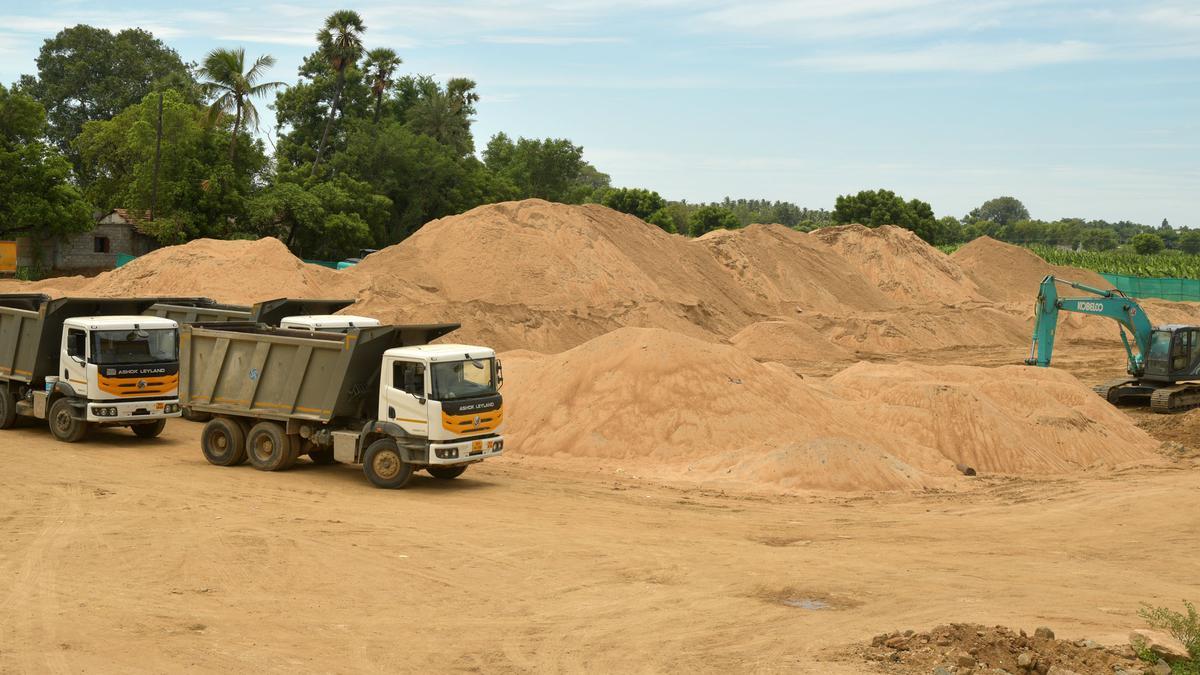
Officials confirmed that while GPS devices have been installed in 79 vehicles, none of them are currently integrated with the Mineral Management System portal. This prevents authorities from tracking whether a vehicle actually travels to the declared destination or completes only short trips within the district.
To address this, the department has issued official communications directing all quarry operators to install GPS devices and integrate them with the portal by February 28. Authorities have warned that failure to comply will result in denial of transport permits.
Meanwhile, transport operators have raised concerns about the time limits imposed by the portal. According to them, the delivery window is calculated based on average car speeds, without accounting for the realities of heavy vehicle movement, road conditions, and loading delays. Logistics owners argue that meeting such timelines is impractical and increases the risk of penalties even for compliant operators.
Officials acknowledge the issue but say the time calculations also factor in traffic congestion on specific routes. Discussions are reportedly ongoing to fine-tune the system.
Enforcement efforts have intensified on the ground. On Thursday, a joint flying squad comprising the regional transport officer and the assistant director of mines conducted inspections across multiple routes. Six heavy vehicles were seized for violations, including overloading, and penalties amounting to Rs 3.8 lakh were imposed. Also Read: Tribal Dept to Team Up With Global Chess Body to Reshape Learning in Schools in 2026
Activists maintain that these actions, while necessary, are not enough. They insist that without real-time GPS tracking linked directly to the permit system, illegal mineral transport will continue under the cover of valid-looking documents.
Conclusion
The situation surrounding Thoothukudi stone transport highlights deeper structural gaps in monitoring and enforcement. While digital permits were introduced to bring transparency, misuse of extended validity and lack of GPS integration have weakened their effectiveness. Until technology, policy, and ground-level enforcement are fully aligned, officials and residents fear that illegal quarry transport will remain a persistent challenge in the district.
