
The tiger census for 2026 has officially begun in Karnataka, marking the sixth such large-scale enumeration exercise aimed at assessing the population, distribution, and health of the State’s most iconic wildlife species. Conducted once every four years, the census is a critical component of India’s long-term tiger conservation strategy. Karnataka, which consistently ranks among the top tiger-holding States in the country, plays a pivotal role in shaping national conservation outcomes. Forest officials describe the exercise as both scientific and symbolic, reflecting years of conservation effort while guiding future policy decisions.
The current census follows earlier enumeration exercises conducted in 2006, 2010, 2014, 2018, and 2022. Over the past two decades, these periodic assessments have helped Karnataka emerge as a stronghold for tigers, supported by a network of protected areas, wildlife corridors, and sustained anti-poaching measures. Officials say the 2026 census is especially significant as it comes amid growing pressures from habitat fragmentation, climate variability, and increasing human presence near forest boundaries.
Fieldwork for the census has commenced simultaneously across multiple tiger reserves, national parks, and forest divisions. Thousands of frontline forest staff, wildlife biologists, and trained volunteers are participating in the exercise, which is expected to span several weeks. Authorities emphasised that the census is not merely a headcount, but a comprehensive evaluation of tiger habitats, prey availability, and ecological conditions that sustain the species.
At its core, the tiger census represents a balance between conservation science and ground-level forest management. Officials noted that the data collected will influence everything from funding allocation and corridor protection to conflict mitigation strategies. As Karnataka embarks on this sixth enumeration, expectations are high that the exercise will reinforce the State’s reputation as a leader in wildlife conservation while also revealing emerging challenges.
SCIENCE, SCALE, AND THE METHOD BEHIND THE COUNT
The 2026 tiger census follows a standardised national protocol designed to ensure accuracy, comparability, and scientific credibility. The exercise is being carried out in multiple phases, beginning with the collection of indirect signs such as pugmarks, scats, scrape marks, and territorial indicators. This phase helps establish tiger presence and movement patterns across forest landscapes.
Camera trapping forms the backbone of the enumeration process. Hundreds of motion-sensitive camera traps are being deployed strategically across tiger habitats, particularly along trails, water sources, and known movement corridors. Each tiger’s unique stripe pattern allows researchers to identify individuals accurately and avoid duplication. Officials said the use of advanced software has further improved the precision of identification and population estimation.
In addition to tigers, the census also records data on prey species such as deer, wild boar, and gaur. Experts explain that a healthy prey base is essential for sustaining stable tiger populations. Declines in prey density often signal deeper ecological issues, making this component of the census just as important as counting tigers themselves.
Forest department staff have undergone intensive training ahead of the exercise. From using GPS devices and data sheets to handling camera equipment and following safety protocols, personnel are expected to adhere strictly to guidelines. Authorities stressed that uniformity in data collection is crucial, as even small deviations can affect long-term trend analysis.
The scale of the operation underscores its complexity. Large forest landscapes, difficult terrain, and varying climatic conditions pose logistical challenges. Despite this, officials expressed confidence, citing experience gained from previous censuses and improved coordination between field units, researchers, and central monitoring teams.
KARNATAKA’S TIGER LANDSCAPE AND ITS NATIONAL ROLE
Karnataka’s forests form a crucial part of the larger Western and Eastern Ghats tiger landscapes. The State hosts several major tiger reserves and contiguous forest patches that allow free movement of animals across administrative boundaries. Conservationists say this connectivity is one of the key reasons Karnataka has consistently reported strong tiger numbers in previous censuses.
The State’s role goes beyond hosting tigers within protected areas. Wildlife corridors linking Karnataka with neighbouring States are vital for genetic diversity and long-term survival of the species. The census helps identify these corridors, assess their functionality, and flag areas where connectivity is under threat due to development or land-use change.
Officials pointed out that Karnataka’s success in tiger conservation is the result of sustained policy commitment, relatively stable forest cover, and community engagement initiatives. However, they cautioned against complacency. As tiger numbers increase, so does the likelihood of dispersal into non-protected areas, bringing new management challenges.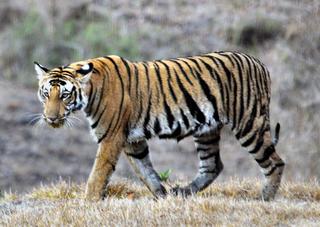
The 2026 census is expected to provide insights into how tiger populations are adapting to changing landscapes. Patterns of movement, territory expansion, and interactions with human-dominated areas will be closely analysed. Such information is crucial for planning buffer zones, strengthening corridors, and preventing conflict.
At the national level, Karnataka’s data will feed into India’s overall tiger population assessment. Given the State’s substantial contribution to the national count, even marginal changes here can significantly influence countrywide figures and conservation strategies.
COMMUNITIES, CONFLICT, AND COEXISTENCE
One of the most sensitive aspects linked to tiger conservation is human-wildlife conflict. As forests recover and tiger numbers stabilise or increase, encounters between humans and wildlife have become more frequent, particularly in fringe villages. Officials acknowledge that the census, while scientific, also brings these social dimensions into focus.
During the enumeration, field staff document signs of livestock predation, proximity of human settlements, and areas with recurring conflict. This information helps authorities design targeted interventions such as early warning systems, improved compensation mechanisms, and better livestock management practices.
Community participation has been emphasised as a cornerstone of conservation. Local residents often assist forest staff by sharing observations and alerting authorities to wildlife movement. Officials said such cooperation has improved over the years, though trust-building remains an ongoing process.
Non-governmental organisations working in the region have also been roped in to support awareness and conflict mitigation efforts during the census period. They help communicate the purpose of the exercise to communities, dispel fears, and encourage responsible behaviour near forest areas.
Experts stress that long-term success of tiger conservation depends not just on numbers, but on social acceptance. The census provides an opportunity to highlight the importance of coexistence and to address grievances before they escalate into hostility towards wildlife.
CHALLENGES, THREATS, AND EMERGING PRESSURES
Despite Karnataka’s strong conservation record, officials admit that the tiger landscape faces multiple pressures. Habitat fragmentation due to infrastructure projects, linear intrusions such as roads and power lines, and changes in land use continue to pose risks. The census is expected to capture early warning signs of such impacts.
Climate variability is another emerging concern. Altered rainfall patterns, prolonged dry spells, and forest fires affect prey availability and water sources, indirectly influencing tiger distribution. Scientists involved in the census are paying close attention to habitat quality indicators that reflect these changes.
Poaching, though significantly reduced compared to earlier decades, has not been entirely eliminated. The census period sees heightened patrolling and surveillance to deter illegal activities. Officials said that visibility of staff during the enumeration itself acts as a deterrent against wildlife crimes.
Invasive species and degradation of grasslands also affect prey populations. The census data will help identify regions where habitat restoration is urgently needed. Forest managers said such information is invaluable for prioritising interventions and allocating limited resources effectively.
Another challenge lies in managing expectations. Rising tiger numbers are often celebrated, but experts caution that numbers alone do not equate to conservation success. Carrying capacity, habitat quality, and social tolerance must all be considered to avoid ecological imbalance.
POLICY IMPACT AND THE ROAD AHEAD
The outcomes of the 2026 tiger census will have far-reaching implications for wildlife policy in Karnataka. Population trends will influence decisions on declaring new protected areas, strengthening existing reserves, and revising management plans. Funding from national and international sources is also often linked to census results.
The tiger census for 2026 has officially begun in Karnataka, marking the sixth such large-scale enumeration exercise aimed at assessing the population, distribution, and health of the State’s most iconic wildlife species. Conducted once every four years, the census is a critical component of India’s long-term tiger conservation strategy. Karnataka, which consistently ranks among the top tiger-holding States in the country, plays a pivotal role in shaping national conservation outcomes. Forest officials describe the exercise as both scientific and symbolic, reflecting years of conservation effort while guiding future policy decisions.
Officials said the data would be used to refine conservation strategies, particularly in non-protected forest divisions that serve as corridors. Such areas often receive less attention despite their critical role in maintaining landscape-level connectivity.
The census also feeds into broader biodiversity assessments. By analysing trends over multiple cycles, scientists can evaluate the effectiveness of conservation measures introduced over the years. This long-term perspective is essential for adaptive management.
Public interest in tiger conservation remains high, and officials expect the census findings to attract significant attention. They emphasised the importance of communicating results responsibly, avoiding sensationalism, and highlighting both achievements and challenges.
As Karnataka undertakes its sixth tiger census, the exercise stands as a testament to decades of conservation effort, scientific advancement, and institutional learning. Yet, it also serves as a reminder that conservation is a continuous process, requiring vigilance, adaptability, and cooperation.
In the silent forests where camera traps now watch patiently and trackers read the language of the wild, the census is more than a count. It is a moment of reflection on how far conservation has come, and how much responsibility lies ahead to ensure that the roar of the tiger continues to echo through Karnataka’s forests for generations to come.
Follow: Karnataka Government
Also read: Home | Channel 6 Network – Latest News, Breaking Updates: Politics, Business, Tech & More
