
In a grim development, a tiger was found dead in the Bhadra Tiger Reserve (BTR) in Karnataka, raising concerns among wildlife officials and conservationists. Authorities confirmed that the carcass was discovered by forest patrolling teams in the core area of the reserve, prompting immediate investigations to determine the cause of death. The incident has drawn attention to ongoing challenges in conservation, including human-wildlife conflict, poaching, and habitat pressures.
Forest department officials said that a forensic team has been deployed to examine the carcass, collect biological samples, and conduct a thorough autopsy. Preliminary assessments suggest the tiger could have died due to natural causes, but investigations are ongoing to rule out poisoning, injury, or human interference. “We are treating this case with utmost seriousness to determine the exact cause and prevent similar incidents,” said a senior wildlife officer.
Bhadra Reserve, spread across Chikkamagaluru and Shimoga districts, is home to several , elephants, leopards, and other wildlife species. The reserve plays a crucial role in Karnataka’s tiger population management and conservation efforts. Officials said they have stepped up patrolling in the surrounding areas to ensure the safety of other tigers and prevent any potential threats to wildlife in the region.
Conservationists expressed concern over the loss, highlighting that every death has broader implications for the delicate ecological balance of the reserve. “are apex predators; their loss affects prey populations and the overall ecosystem,” said a senior wildlife biologist. The incident underscores the importance of continuous monitoring, scientific management, and community participation in protecting these iconic animals.
Investigation and Wildlife Monitoring Measures
Forest department authorities have deployed specialized teams to monitor tiger movements and prevent poaching in the reserve. Camera traps, tracking collars, and patrolling schedules have been intensified to ensure no other animals are under immediate threat. Officials said that detailed records from camera traps and field observations will help in understanding the circumstances leading to the death.
Additionally, the carcass has been sent for post-mortem analysis at a designated wildlife laboratory. Samples of tissue, blood, and stomach contents are being tested for signs of disease, poisoning, or trauma. Veterinary experts stressed that such investigations are crucial not only for identifying the cause of death but also for preventing potential disease outbreaks that could affect other wildlife in the reserve.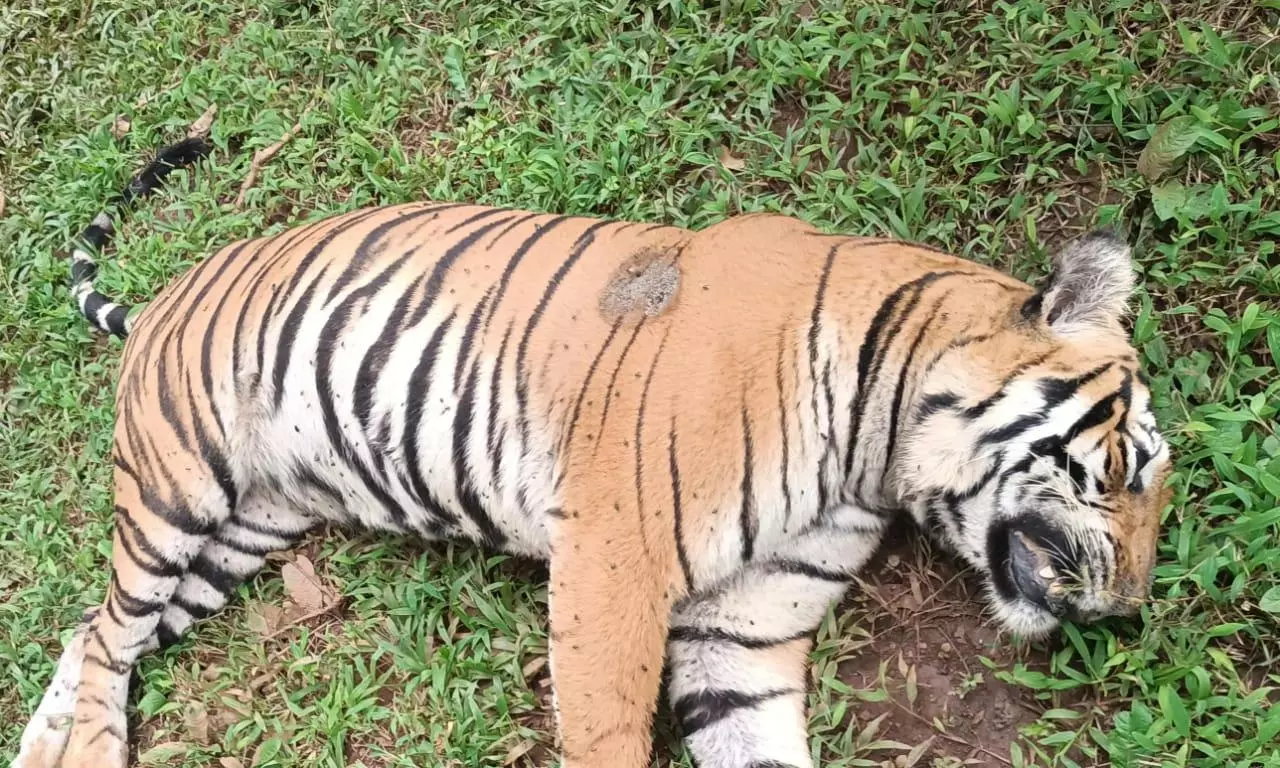
Authorities are also engaging with local communities living near the periphery of Bhadra Tiger Reserve to ensure that human-animal conflict is minimized. Villagers are being urged to report any unusual wildlife sightings or incidents immediately. Community participation is considered vital to safeguarding tigers, as locals can provide early warnings and help in implementing preventive measures.
The incident has prompted the Karnataka Forest Department to review its emergency response protocols. Rapid response teams equipped with veterinary support and patrolling vehicles have been placed on high alert to respond to any similar incidents in the future. Experts emphasised that swift action is essential to ensure the conservation of the remaining tiger population in the reserve.
Conservation Significance and Ecological Impact
Tigers are classified as apex predators, and their presence is essential for maintaining ecological balance within forest ecosystems. The death of a single tiger can disrupt the prey-predator dynamics, leading to overpopulation of certain species and subsequent ecological stress. Conservationists emphasised that Bhadra Tiger Reserve, being part of the Nilgiri Biosphere, is vital for the genetic diversity and connectivity of tiger populations in Karnataka and neighbouring states.
Experts highlighted that the population in Bhadra has been carefully monitored under Project initiatives, which aim to protect habitats, reduce poaching, and maintain breeding success. “Every individual tiger plays a role in genetic health and territorial stability. Losing even one is a setback for conservation efforts,” said a senior wildlife officer. The incident is expected to reinforce the need for intensified anti-poaching measures and habitat protection in the reserve.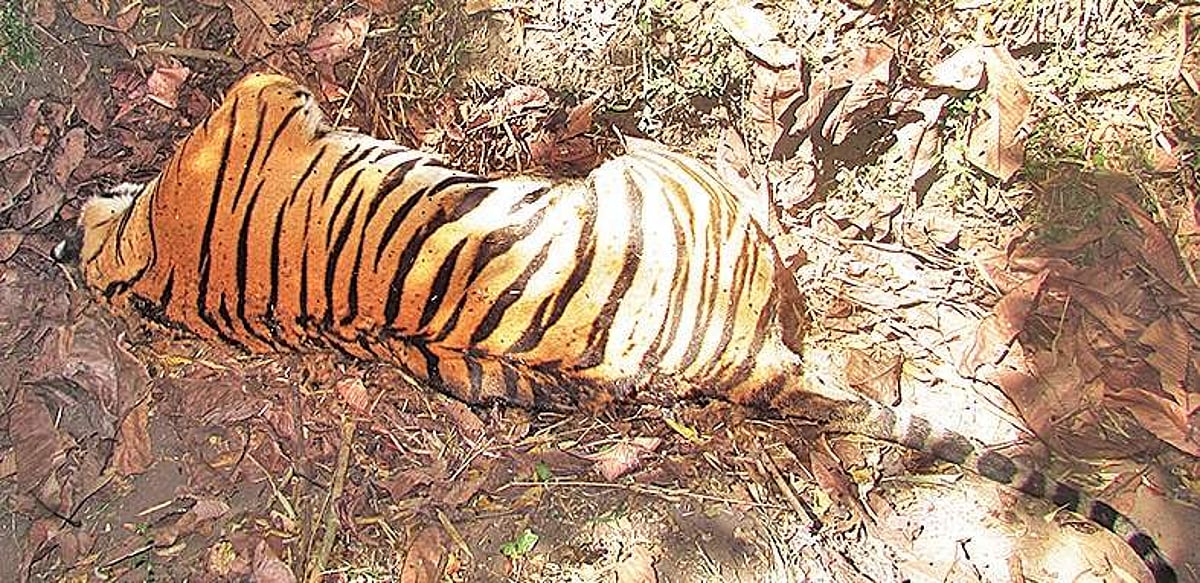
Officials have also noted that the mortality is a reminder of the challenges faced by wildlife in protected areas. Habitat encroachment, vehicular movement, and forest fragmentation continue to pose indirect threats to tiger survival. Strengthening forest corridors, preventing illegal activities, and monitoring prey populations are critical for long-term conservation goals.
The Karnataka Forest Department has assured that all measures are being taken to prevent similar incidents in the future. Authorities said that collaboration with conservation NGOs, wildlife research institutions, and local communities will be strengthened to enhance protection measures and ensure sustainable management of the population.
Community and Stakeholder Reactions
Local conservation groups have expressed deep concern over the death and urged immediate investigation. Many pointed out that incidents of tiger mortality, whether due to natural causes or human interference, underscore the fragile balance between human activities and wildlife conservation. “It is vital that every death is studied scientifically to inform conservation strategies,” said a representative of a wildlife NGO.
The incident has also raised awareness among local communities about the importance of and the need to coexist responsibly. Officials have begun awareness campaigns, educating residents about the significance of for forest ecology and the legal protections afforded to them under the Wildlife Protection Act. Villagers are being encouraged to adopt measures that reduce human-tiger conflict and report illegal activities within reserve boundaries.
Tourists and wildlife enthusiasts have expressed disappointment at the news, but many have pledged support for ongoing conservation efforts. Social media discussions have highlighted the importance of responsible tourism, stricter enforcement of forest regulations, and funding for wildlife protection initiatives. The Bhadra Tiger Reserve continues to attract visitors, but authorities emphasise that visitor activities must be regulated to prevent stress or disruption to wildlife habitats.
With investigations underway and preventive measures reinforced, forest officials remain committed to protecting the remaining tigers in Bhadra. The incident serves as a stark reminder of the continuous vigilance required in wildlife conservation and the collective responsibility of authorities, communities, and the public in preserving India’s natural heritage.
Officials have highlighted that the tiger found dead was an adult, estimated to be around six to eight years old, and had been part of the reserve’s monitoring programme under Project Tiger. Its movements had been regularly tracked using camera traps and sightings, and its territory was considered stable. Wildlife biologists noted that the sudden death, irrespective of cause, disrupts territorial hierarchies, as maintain strict boundaries to avoid conflict. The absence of a dominant adult in a particular area can lead to increased territorial disputes among younger tigers, potentially resulting in injuries, stress, or even mortality in subsequent months.
The post-mortem examination, which is being conducted at a designated wildlife laboratory, is focusing on multiple possible causes, including natural death due to age or disease, injury from intraspecies conflict, poisoning, or accidental encounters with human activity. Officials have stressed that until the laboratory reports are received, it would be premature to speculate about foul play. “Our priority is to gather accurate scientific evidence to understand the precise circumstances of this tiger’s death,” said the deputy director of Bhadra Tiger Reserve. The process involves analyzing tissue, stomach content, and blood samples, as well as examining the carcass for external injuries.
While poaching remains a concern in many reserves, Bhadra has historically recorded low instances due to strict patrolling and surveillance. However, forest authorities are cautious, noting that even a single lapse in vigilance could have fatal consequences for apex predators like tigers. Anti-poaching squads, equipped with tracking and monitoring tools, have been deployed throughout the reserve to prevent any further incidents. Forest officials emphasised that their focus is not only on immediate safety but also on long-term protection, including habitat management and community awareness.
The ecological significance of the tiger in Bhadra cannot be overstated. As an apex predator, the tiger regulates prey populations, maintains forest health, and ensures biodiversity balance. Biologists warned that a reduction in tiger numbers, even by one, can have cascading effects on prey species such as deer, wild boar, and sambar, potentially leading to overgrazing and forest degradation. Conservationists argue that monitoring individual tigers and preserving their territories is essential to maintaining the ecological equilibrium of the reserve, which is part of the larger Western Ghats biodiversity hotspot.
Community involvement has been identified as a critical component of Bhadra’s conservation strategy. Villagers in the periphery are being sensitised to the importance of reporting wildlife sightings, refraining from forest encroachment, and preventing livestock grazing in sensitive tiger habitats. Forest officials noted that effective conservation is a collaborative effort, where local populations are treated as partners rather than passive observers. Educational campaigns are being rolled out to strengthen understanding of human-wildlife coexistence and the legal implications of harming protected species.
Authorities are also reviewing existing preventive measures to mitigate risks associated with human-tiger interactions. Steps such as improving visibility on forest trails, regulating tourism, enforcing anti-littering norms, and monitoring water holes have been reinforced. These measures are designed not only to protect tigers but also to safeguard other wildlife species that share the reserve’s ecosystem. Officials highlighted that controlled eco-tourism initiatives, if managed responsibly, can contribute to conservation funding while minimising stress to animals.
The incident has reignited discussions about wildlife corridors and habitat fragmentation in Karnataka. Experts have emphasised that connecting tiger habitats through contiguous forest patches and ecological corridors is vital to maintain genetic diversity and reduce territorial stress. Bhadra Tiger Reserve, forming part of the Nilgiri Biosphere, plays a crucial role in linking tiger populations across Karnataka, Kerala, and Tamil Nadu. Losses in one reserve could impact the broader landscape, highlighting the need for integrated landscape-level conservation planning.
Finally, the Karnataka Forest Department has reiterated its commitment to transparency and timely updates regarding the investigation. Officials stated that once laboratory results are obtained, detailed information about the cause of death will be shared with the public and conservation partners. Meanwhile, forest teams continue round-the-clock monitoring, ensuring that remaining tigers are protected and that any potential threats are addressed promptly. Conservationists have urged that this unfortunate incident serves as a reminder of the fragile balance in wildlife ecosystems and the collective responsibility to protect India’s iconic tiger population for future generations.
Follow: Karnataka Government
Also read: Home | Channel 6 Network – Latest News, Breaking Updates: Politics, Business, Tech & More
