
Karnataka’s winter this year has felt sharper, longer, and more persistent than usual, leaving residents across the State reaching for sweaters earlier than expected. From misty mornings in Bengaluru to unusually cold nights in north interior districts, the chill has sparked widespread curiosity. Meteorologists now point to a rare convergence of three factors — La Niña conditions in the Pacific Ocean, the intrusion of cold and dry air masses from Siberia, and local atmospheric physics — as the drivers behind this intensified winter spell.
While Karnataka is no stranger to mild winters, the current season stands out for its consistency and geographical spread. Temperatures have dipped below long-term averages on several days, particularly during early mornings and nights. Experts say this is not the result of a single weather anomaly but a layered interaction of global and regional climatic processes that have aligned in an unusual manner.
La Niña, a climate phenomenon known for altering global weather patterns, has played a foundational role. Combined with continental airflows originating thousands of kilometres away and amplified by local land–atmosphere interactions, the result has been a winter that feels harsher than normal, even without extreme cold wave conditions.
Meteorologists caution that such winters may become more frequent as climate variability increases. Understanding the mechanisms behind this season’s chill offers insights into how distant climatic events and local geography can together influence everyday weather experiences.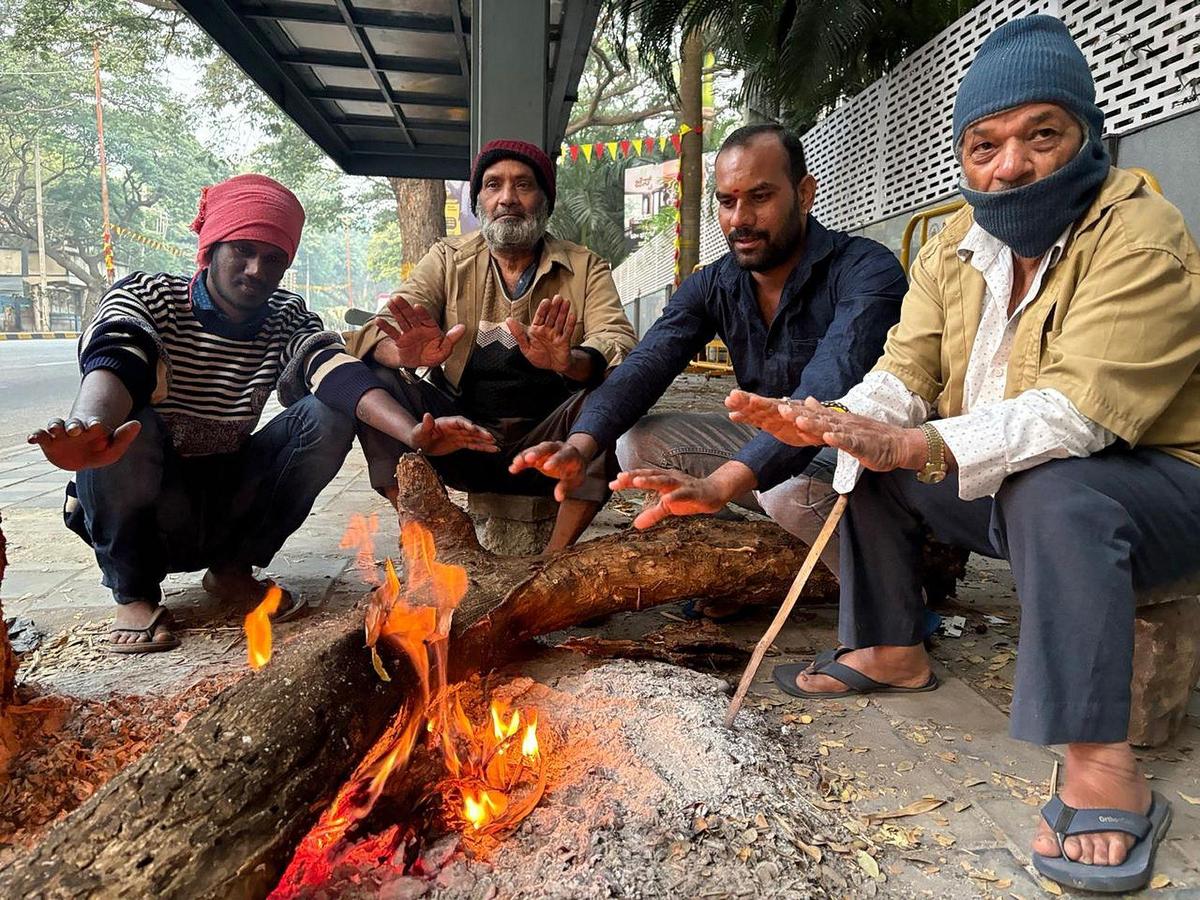
La Niña’s Long Shadow on Southern India
La Niña refers to the cooling of surface waters in the central and eastern equatorial Pacific Ocean, a phenomenon that disrupts atmospheric circulation patterns across the globe. Although it originates far from India, its influence extends deep into the subcontinent, shaping monsoon behaviour, post-monsoon rainfall, and winter temperatures.
During La Niña years, India often experiences stronger northeast monsoon winds and altered pressure gradients over the subcontinent. In southern India, including Karnataka, this can translate into clearer skies, reduced cloud cover, and lower humidity during winter months. Clear skies play a crucial role in night-time cooling, allowing heat absorbed during the day to escape rapidly after sunset.
Meteorologists explain that this enhanced radiational cooling is one of the primary reasons night temperatures have fallen noticeably. Without cloud cover to trap outgoing heat, the land surface cools faster, leading to colder mornings. This effect is particularly pronounced in urban areas that are otherwise moderated by heat retention from buildings and infrastructure.
La Niña also tends to strengthen high-pressure systems over the Indian landmass during winter. These systems promote stable atmospheric conditions, suppress cloud formation, and limit moisture availability. As a result, Karnataka has experienced a run of dry days and crisp nights, reinforcing the perception of an extended winter.
Climatologists note that while La Niña does not directly cause cold waves in southern India, it creates favourable conditions for colder-than-normal weather when combined with other factors. This year, those additional factors have been unusually strong.
Siberian Air and the Continental Cold Push
One of the more striking contributors to Karnataka’s winter chill has been the movement of cold, dry air masses originating from Siberia and Central Asia. These air masses typically affect north India more strongly, but under certain atmospheric configurations, their influence can extend southward.
This winter, a series of western disturbances and high-pressure systems over northern India helped channel cold continental air deeper into the subcontinent. As these air masses moved southward, they gradually lost some intensity but retained enough cold and dryness to affect peninsular regions.
Meteorologists say that the absence of moisture in these air currents is key. Dry air cools more efficiently than moist air, especially at night. When such air settles over regions like Karnataka, it enhances temperature drops after sunset, even if daytime temperatures remain relatively moderate.
Northern interior districts, including parts of Bidar, Kalaburagi, and Vijayapura, have felt this effect more strongly due to their distance from the moderating influence of the sea. Even Bengaluru, typically insulated by urban heat and elevation, has recorded several mornings colder than its seasonal average.
Experts stress that this does not mean Siberian cold directly “reaches” Karnataka in its original form. Instead, it is a diluted but still influential remnant of continental cold that interacts with local weather systems. Its impact becomes noticeable when local conditions allow the cold air to persist rather than dissipate quickly.
The interaction between this continental airflow and La Niña–induced atmospheric stability has been a crucial factor in sustaining the chill over multiple weeks.
Local Physics: Clear Skies, Calm Winds, and Night-Time Cooling
Beyond global and continental influences, local atmospheric physics has played a decisive role in shaping Karnataka’s winter experience. Meteorologists highlight three key elements: clear skies, calm winds, and land surface characteristics.
Clear skies, as noted earlier, allow maximum heat loss at night through radiation. Calm wind conditions prevent the mixing of warmer air from higher altitudes with cooler air near the surface. This leads to temperature inversion, where cold air gets trapped close to the ground, making early mornings particularly chilly.
Such inversions are common during winter but become more intense when skies remain cloudless for consecutive nights. In low-lying areas and open fields, cold air settles more easily, resulting in pockets of significantly lower temperatures compared to surrounding regions.
Urban areas like Bengaluru experience a modified version of this phenomenon. While concrete structures retain some heat, the reduction in vehicular emissions and industrial activity during night hours reduces additional heat input. Combined with calm winds, this allows temperatures to dip more than usual.
Local geography also matters. Elevated regions of southern Karnataka experience quicker cooling due to thinner air, while interior plateaus lack the humidity that could otherwise moderate temperature changes. The result is a widespread but uneven chill, with sharp contrasts between daytime warmth and night-time cold.
Meteorologists describe this as a classic case of “winter physics” being amplified by favourable large-scale conditions. On its own, local cooling would be mild, but in combination with La Niña and continental airflows, it has become more noticeable.
Health, Agriculture, and Daily Life Impacts
The extended winter chill has had mixed effects across sectors. Health experts report a seasonal rise in respiratory infections, joint pain complaints among the elderly, and increased cases of dry skin and dehydration. The dry air associated with the cold has exacerbated throat and nasal irritation, particularly in urban populations.
Agriculture, however, has seen both benefits and challenges. Cooler temperatures are generally favourable for rabi crops such as wheat, pulses, and certain oilseeds. Farmers report improved crop vigour in some regions due to reduced pest activity and slower evaporation of soil moisture.
At the same time, prolonged cold nights can stress horticultural crops, particularly vegetables sensitive to temperature fluctuations. Farmers in some belts have taken precautionary measures, including irrigation during late evenings, to protect crops from frost-like conditions.
Daily life has also adapted to the chill. Schools have adjusted morning assembly timings in some districts, while commuters report heavier use of winter clothing, an unusual sight in parts of Karnataka. Street vendors selling hot beverages and food have seen increased demand, reflecting subtle shifts in lifestyle patterns.
Power consumption has risen marginally due to increased use of heaters and geysers, especially in urban households. However, the dry weather has also reduced disruptions caused by rain, allowing smoother transport and construction activity.
Is This the New Normal?
Climate scientists urge caution in interpreting a single winter as a definitive trend. However, they acknowledge that increased variability is a hallmark of a changing climate. The frequency of La Niña and El Niño events, their intensity, and their interaction with regional systems are all subjects of ongoing research.
What is becoming clearer is that weather patterns are growing less predictable. Winters may alternate between unusually warm and unexpectedly cold, depending on how global and local factors align. Karnataka’s current winter serves as an example of how distant climatic events can combine with regional and local dynamics to produce noticeable changes.
Meteorologists emphasise the importance of improved forecasting and public communication. Understanding why winters feel colder helps dispel myths and enables better preparedness, especially for vulnerable populations such as the elderly, outdoor workers, and farmers.
As the season progresses, experts expect temperatures to gradually moderate, but intermittent cold mornings may persist as long as clear skies and dry conditions continue. The current chill, they say, is a reminder that even traditionally mild regions are not immune to the complex forces shaping Earth’s climate.
In the end, Karnataka’s winter has not been driven by one dramatic event but by a quiet convergence of three powerful forces. Together, La Niña, continental cold air, and local atmospheric physics have written a season that feels colder, sharper, and more memorable — a subtle but telling chapter in the State’s evolving climate story.
Climate scientists urge caution in interpreting a single winter as a definitive trend. However, they acknowledge that increased variability is a hallmark of a changing climate. The frequency of La Niña and El Niño events, their intensity, and their interaction with regional systems are all subjects of ongoing research.
What is becoming clearer is that weather patterns are growing less predictable. Winters may alternate between unusually warm and unexpectedly cold, depending on how global and local factors align. Karnataka’s current winter serves as an example of how distant climatic events can combine with regional and local dynamics to produce noticeable changes.
Follow: Karnataka Government
Also read: Home | Channel 6 Network – Latest News, Breaking Updates: Politics, Business, Tech & More
