
In a move aimed at strengthening transparency, eliminating discretionary practices, and maximising public revenue, the Vijayanagar City Municipal Council has decided to allot shops in its palike bazaars through an e-auction process. The decision marks a significant departure from earlier allotment methods that relied on manual procedures, renewals, and negotiated rents, often criticised for opacity and favouritism. Officials said the transition to a digital auction platform is intended to ensure fairness, competitive pricing, and equal opportunity for all eligible bidders.
The e-auction initiative will cover shops located in major municipal bazaars across Vijayanagar city, including commercial clusters that generate steady footfall and form the economic backbone of neighbourhood markets. The move comes amid broader efforts by the State government and urban local bodies to reform municipal asset management, improve revenue mobilisation, and restore public confidence in civic administration.
According to palike officials, the decision was taken after repeated audit observations flagged revenue loss and irregularities in shop allotments. In several cases, shops continued to be occupied for decades on outdated lease agreements, with rents far below prevailing market rates. The e-auction mechanism, they said, offers a structured and legally robust way to correct these distortions while creating a level playing field.
A push for transparency and revenue reform
Municipal authorities said the e-auction system will bring much-needed transparency to the allotment of commercial spaces owned by the palike. Under the new arrangement, details of available shops, base prices, auction schedules, eligibility criteria, and terms of lease will be published on the official platform. Interested bidders will be able to participate remotely, reducing human intervention and the scope for manipulation.
Officials emphasised that the primary objective is not merely revenue enhancement, but systemic reform. “Municipal assets belong to the public. Their allocation must be transparent, competitive, and fair. The e-auction process ensures that no individual or group receives undue advantage,” a senior palike official said.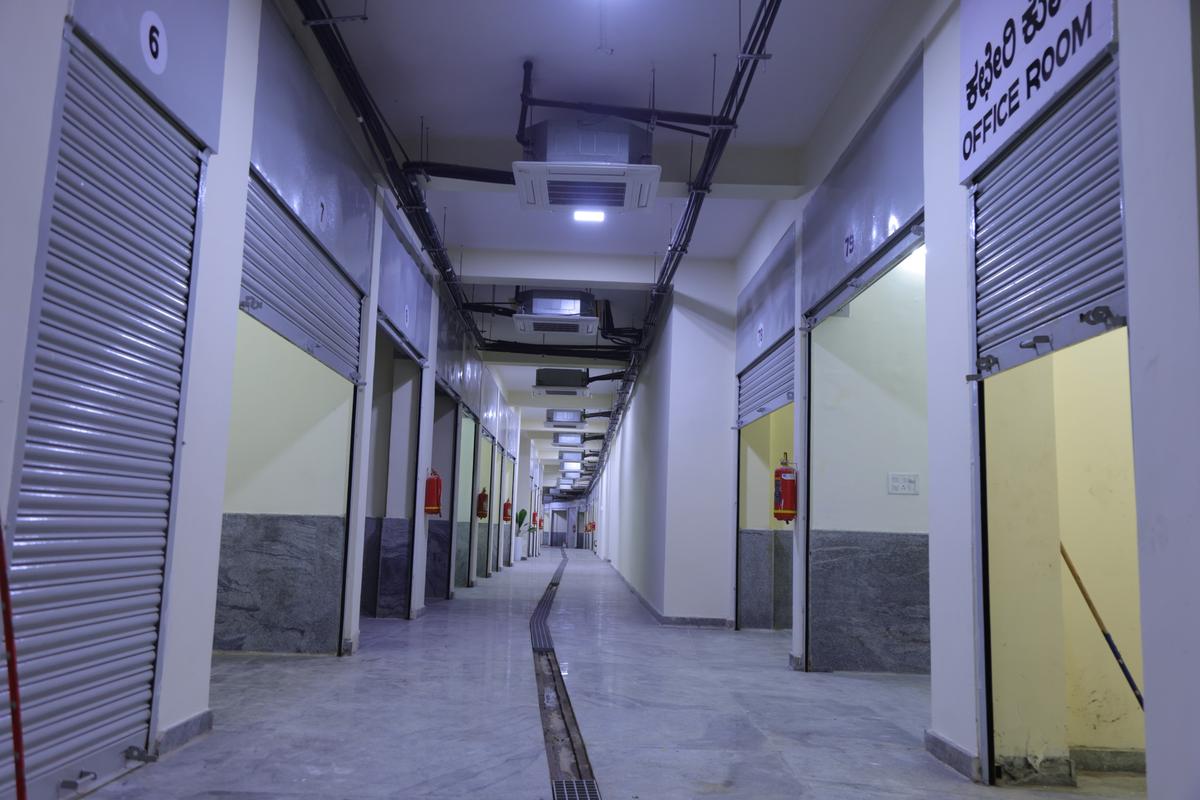
Revenue considerations, however, remain significant. Preliminary estimates suggest that shop rents could increase substantially once market-based bidding replaces fixed or negotiated rates. The additional income is expected to be channelled into civic infrastructure, sanitation, road maintenance, and public amenities, particularly in underserved wards.
Urban governance experts note that Vijayanagar’s decision aligns with a wider trend across Karnataka, where municipal bodies are being encouraged to monetise assets responsibly. E-auctioning of shops, parking spaces, and advertisement hoardings has been promoted as a way to reduce dependence on State grants and improve financial autonomy.
Impact on existing shopkeepers
The announcement has generated mixed reactions among existing shop occupants, many of whom have been operating in palike bazaars for decades. Some shopkeepers expressed concern that they may be priced out if bidding becomes highly competitive, particularly in prime locations. Others fear that the uncertainty surrounding lease renewal could disrupt their livelihoods.
Palike officials sought to address these concerns by clarifying that safeguards would be built into the process. Existing occupants, they said, would be given advance notice, adequate time to prepare, and clear information on the auction process. While no automatic renewal would be granted, officials indicated that current shopkeepers would not be barred from participating in the auction.
“There is no intention to evict anyone arbitrarily,” an official said. “But public property cannot be allotted indefinitely at nominal rents. Everyone will have an equal opportunity to bid.”
Shopkeepers’ associations have demanded that the palike introduce protective measures, such as reasonable base prices, longer lease periods, and priority consideration for long-standing occupants. They argue that sudden exposure to open bidding could favour large traders or investors over small, family-run businesses that form the social fabric of local markets.
The palike has indicated that it is open to dialogue and that stakeholder consultations will be held before finalising auction terms. Officials said the aim is to balance economic reform with social stability, ensuring that small traders are not unfairly displaced.
Digital process and legal framework
The e-auction will be conducted in accordance with municipal laws and guidelines governing public asset management. Officials said the process will be legally vetted to withstand scrutiny and avoid future disputes. Each shop will be allotted on a lease basis for a fixed term, with conditions clearly outlined in the auction document.
The digital platform will record every bid in real time, creating an auditable trail that enhances accountability. Officials believe this will significantly reduce litigation related to allotment disputes, which have historically burdened municipal administrations.
Training sessions and help desks are also being planned to assist bidders unfamiliar with online auctions. Recognising the digital divide, the palike said it would ensure that the process does not exclude participants who lack technical expertise. Physical facilitation centres may be set up to guide bidders through registration and bidding.
Legal experts note that while e-auctioning improves transparency, its success depends on clear rules and consistent enforcement. Ambiguities in lease terms or post-auction management, they warn, could undermine the credibility of the reform.
Urban planning and market renewal
Beyond revenue and transparency, officials view the e-auction as an opportunity to revitalise municipal bazaars. Many palike-owned markets suffer from poor maintenance, outdated infrastructure, and inadequate facilities. Increased revenue from market-based rents could fund upgrades such as improved sanitation, fire safety measures, better lighting, and waste management systems.
Urban planners argue that well-managed municipal markets can serve as inclusive commercial spaces that support small traders while contributing to the local economy. By reinvesting auction proceeds into market infrastructure, the palike can create a virtuous cycle of improvement and compliance.
The move is also expected to bring greater order to market functioning. Standardised leases and clear conditions can help regulate subletting, unauthorised modifications, and encroachments, which have long plagued municipal bazaars.
Political reactions and public debate
The decision has sparked political debate within the municipal council and beyond. Ruling party councillors have defended the move as a reform-oriented step aligned with good governance principles. They argue that resistance to e-auction often comes from vested interests that benefit from opaque systems.
Opposition councillors, while broadly supporting transparency, have cautioned against implementing the policy without adequate safeguards. They have urged the palike to ensure that the reform does not become a revenue-driven exercise that ignores social consequences.
Public opinion appears divided. While many citizens welcome the promise of transparency and better use of public assets, others sympathise with long-time shopkeepers facing uncertainty. Civil society groups have called for a balanced approach that combines digital reform with social sensitivity.
Looking ahead
The Vijayanagar palike is expected to roll out the e-auction in phases, beginning with select bazaars before expanding to other municipal commercial properties. Officials said timelines would be announced well in advance to allow for preparation and feedback.
If implemented effectively, the initiative could set a precedent for other urban local bodies in the region. Governance experts say the success of the model will depend on transparent communication, fair base pricing, and consistent enforcement.
As cities grapple with rising infrastructure needs and limited resources, reforms in asset management are increasingly seen as unavoidable. Vijayanagar’s decision reflects this reality, signalling a shift toward digital governance and accountable administration.
At its core, the move raises fundamental questions about how public property should be managed in a rapidly urbanising society. The e-auction of palike bazaar shops represents not just a technical change, but a redefinition of the relationship between citizens, commerce, and the State.
Whether the reform delivers on its promise of transparency and fairness will become clear in the months ahead. For now, it marks a decisive step toward opening municipal markets to competition, scrutiny, and public trust, redefining how civic resources are allocated in Vijayanagar.
Follow: Karnataka Government
Also read: Home | Channel 6 Network – Latest News, Breaking Updates: Politics, Business, Tech & More
