
Visvesvaraya Technological University (VTU) has announced decisive action against private companies that allegedly demand money from engineering students under the guise of offering paid internships, triggering widespread concern across Karnataka’s higher education sector. The move follows mounting complaints from students and parents who claim that several firms, operating in collaboration with intermediaries and placement coordinators, have been collecting fees ranging from a few thousand rupees to several lakhs, despite advertising the internships as “paid” or “industry-sponsored.”
University officials said the practice not only violates academic norms but also exploits students who are already under financial pressure. VTU, which affiliates over 200 engineering colleges across the State, has taken cognisance of the issue after representations from student bodies, faculty associations, and alumni networks. The university has termed the practice unethical, misleading, and contrary to the objectives of outcome-based education.
According to senior VTU officials, the university is preparing a comprehensive framework to regulate internships, ensure transparency, and penalise companies and institutions found complicit in such arrangements. “Internships are meant to enhance learning, not become a commercial transaction that burdens students,” a senior official said.
The development comes at a time when internships have become mandatory components of engineering curricula, making students vulnerable to coercive practices. Experts warn that unchecked commercialisation of internships could undermine the credibility of technical education and weaken industry-academia trust.
Paid Internships Turning Into a Costly Burden for Students
Over the past year, complaints regarding dubious internship offers have surged across VTU-affiliated colleges. Students allege that private companies approach colleges claiming to offer paid internships, only to later insist on “registration fees,” “training charges,” or “certification costs” from students. In many cases, students say the promised stipend is either delayed indefinitely or never paid.
Final-year engineering students said refusal to pay often results in subtle threats, including denial of internship completion certificates or adverse remarks during evaluations. “Internships are compulsory for us to graduate. When companies demand money, we feel trapped,” said a mechanical engineering student from north Karnataka. Several students added that they were forced to borrow money or use education loans to meet such demands.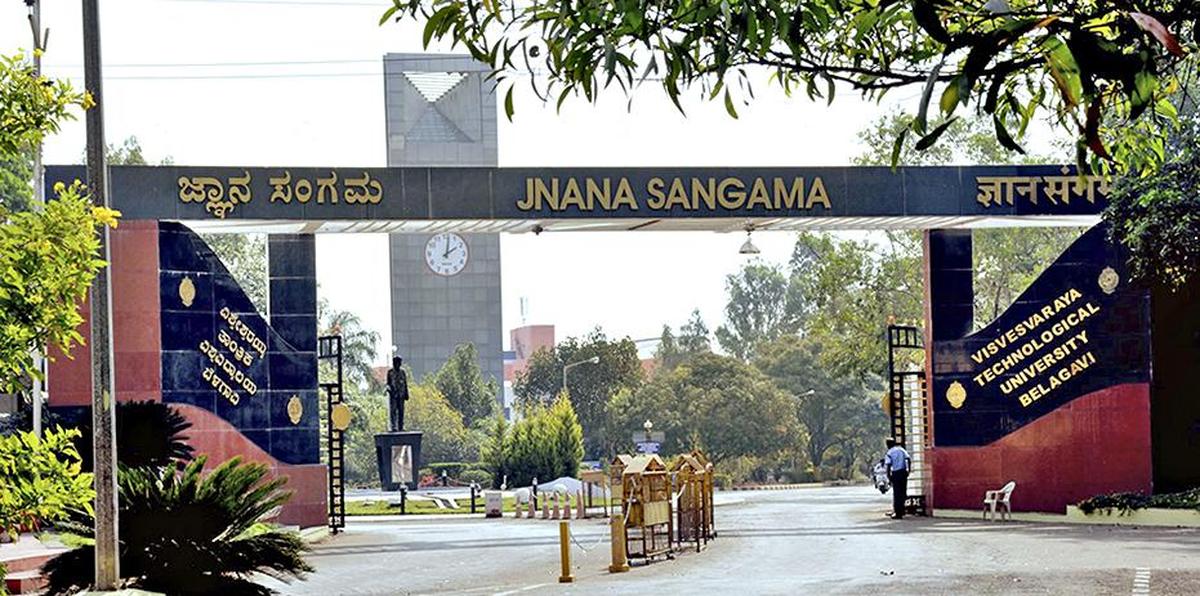
Faculty members acknowledged that the issue has been festering for years but has intensified after internships were formally integrated into the academic credit system. “Earlier, internships were optional or short-term. Now, since they carry credits, students have no choice,” said a senior professor from a Bengaluru-based engineering college.
Parents have also raised concerns, pointing out that many families already struggle to meet tuition fees and living expenses. “An internship is supposed to help students earn and learn. Instead, it has become another avenue for exploitation,” said the parent of a third-year computer science student.
University sources said that some companies misuse the term “paid internship” to attract colleges and students, while their actual business model revolves around collecting fees rather than providing meaningful work exposure.
VTU’s Proposed Crackdown and Regulatory Framework
In response, VTU has decided to initiate strict regulatory measures to curb the malpractice. University officials said a dedicated committee is being constituted to investigate complaints, scrutinise internship agreements, and recommend punitive action. The committee will include senior academicians, legal experts, and industry representatives.
One of the key proposals under consideration is the creation of a VTU-approved internship portal, where only verified companies will be allowed to offer internships. Companies will be required to disclose stipend details, duration, nature of work, and evaluation methods upfront. Any demand for money from students will lead to blacklisting, officials said.
VTU is also planning to issue a circular to all affiliated colleges, directing them to immediately stop associating with companies that charge students for internships while advertising them as paid. Colleges failing to comply may face disciplinary action, including withdrawal of affiliation for specific programmes.
“We will not tolerate a system where students are treated as customers instead of learners,” a senior VTU official said. “Any company found demanding money will be barred, and colleges supporting such practices will be held accountable.”
For thousands of engineering students across Karnataka, the move offers hope that internships will return to their original purpose, learning through real-world exposure, without financial exploitation. As one student put it, “We don’t want shortcuts or fake promises. We just want fair opportunities to learn and grow.”
Whether VTU’s action marks a turning point or remains a symbolic gesture will depend on how rigorously the university follows through. For now, the message is clear: paid internships cannot come at the cost of student dignity and trust.
The university is also exploring legal options, including filing complaints with appropriate authorities if companies are found guilty of fraud or misrepresentation. Officials said VTU is in touch with the Higher Education Department to align enforcement measures with State-level regulations.
Colleges Under Scrutiny, Accountability Emphasised
While companies are at the centre of the controversy, VTU has made it clear that colleges cannot escape responsibility. University authorities noted that some institutions actively facilitate such arrangements to boost placement statistics or maintain industry partnerships.
“There are cases where students are unofficially pressured by college coordinators to opt for certain internships,” said a VTU syndicate member. “This nexus between colleges and private firms must be dismantled.”
The university plans to mandate that all internship-related communications be routed through official channels, with written agreements accessible to students. Colleges will be required to submit periodic reports detailing internship providers, stipend payments, and student feedback.
Principals of several engineering colleges welcomed the move, saying it would help weed out unscrupulous operators. However, some expressed concern about the limited availability of genuine paid internships. “Industry participation is uneven. While top firms offer stipends, many smaller companies struggle to do so,” said a college head, adding that VTU must also work on expanding legitimate opportunities.
University officials acknowledged the challenge but insisted that financial constraints cannot justify exploitation. “If a company cannot pay, it should clearly state that the internship is unpaid. Deception is unacceptable,” an official said.
Industry Voices and the Ethics of Internship Programmes
Industry experts said the controversy highlights deeper structural issues in India’s internship ecosystem. With rising numbers of engineering graduates and limited high-quality opportunities, demand often outstrips supply, creating space for unethical practices.
“Internships should be learning-oriented, with clear outcomes and mentorship,” said an industry consultant. “Charging students for internships defeats the purpose and damages the talent pipeline.”
Several reputable companies operating in Karnataka said they support VTU’s stance and are willing to collaborate on transparent frameworks. “We invest resources in interns. We don’t charge them,” said a senior executive of an IT firm, adding that paid internships also help companies identify future talent.
Industry bodies have suggested that universities standardise internship norms and introduce minimum stipend benchmarks based on sector and duration. Such measures, they said, would bring clarity and fairness to the system.
Student Unions, Alumni Demand Systemic Reform
Student organisations across VTU-affiliated colleges have welcomed the announcement but urged the university to ensure swift implementation. They demanded a grievance redressal mechanism where students can report violations without fear of retaliation.
“Many students remain silent because they worry about their grades or certificates,” said a student union representative. “VTU must guarantee anonymity and protection.”
Alumni associations have also weighed in, calling the issue a reputational risk for Karnataka’s engineering education. “When internships become pay-to-play, the credibility of degrees suffers,” said an alumnus working in the semiconductor industry.
Several alumni offered to mentor students and help create alternative internship pathways through start-ups, research labs, and social enterprises.
Government’s Stand and Policy Implications
Officials from the Higher Education Department said they are monitoring the situation closely and support VTU’s decision. A senior official said the government has been receiving complaints from multiple universities and is considering broader guidelines applicable across institutions.
“The objective of education reforms is employability, not exploitation,” the official said, adding that the State may consider issuing advisories to prevent commercialisation of mandatory academic components.
Policy analysts said the issue also raises questions about the regulation of private training and internship providers, many of whom operate in a grey area between education and commerce. Stronger oversight, they said, is essential to protect students.
A Test Case for Student-Centric Reform
As VTU prepares to roll out its action plan, the coming months will be crucial in determining whether the measures translate into tangible relief for students. Observers note that while announcements signal intent, consistent enforcement will be key to dismantling entrenched practices.
Educationists said the crackdown could become a model for other universities grappling with similar issues. “If VTU succeeds, it will send a strong message that student welfare comes before commercial interests,” said a former vice-chancellor.
For thousands of engineering students across Karnataka, the move offers hope that internships will return to their original purpose, learning through real-world exposure, without financial exploitation. As one student put it, “We don’t want shortcuts or fake promises. We just want fair opportunities to learn and grow.”
Whether VTU’s action marks a turning point or remains a symbolic gesture will depend on how rigorously the university follows through. For now, the message is clear: paid internships cannot come at the cost of student dignity and trust.
Follow: Karnataka Government
Also read: Home | Channel 6 Network – Latest News, Breaking Updates: Politics, Business, Tech & More
