
Youth Congress leaders in Karnataka staged a fervent protest against the State Governor, intensifying political tensions in the run-up to the ongoing legislative session. Demonstrators stormed key public spaces, accusing the Governor of overstepping constitutional boundaries and undermining the democratic mandate of the elected government. In a memorandum submitted to the President of India, they urged immediate recall of the Governor, claiming his recent conduct reflects institutional bias and an erosion of federal principles. Youth Congress leaders said their protest was driven by mounting concern among citizens about the sanctity of democratic governance and constitutional propriety.
According to organisers, several hundred Youth Congress activists gathered outside the Raj Bhavan and later marched toward district administrative offices, carrying placards and shouting slogans against what they described as “undemocratic behaviour.” They alleged that the Governor’s recent actions — including reported omissions in the gubernatorial address and alleged interference in the State government’s policy narrative — amounted to a veiled attempt to override the elected executive. The youths claimed that such conduct was not only disrespectful to the electorate’s voice but also threatened democratic norms.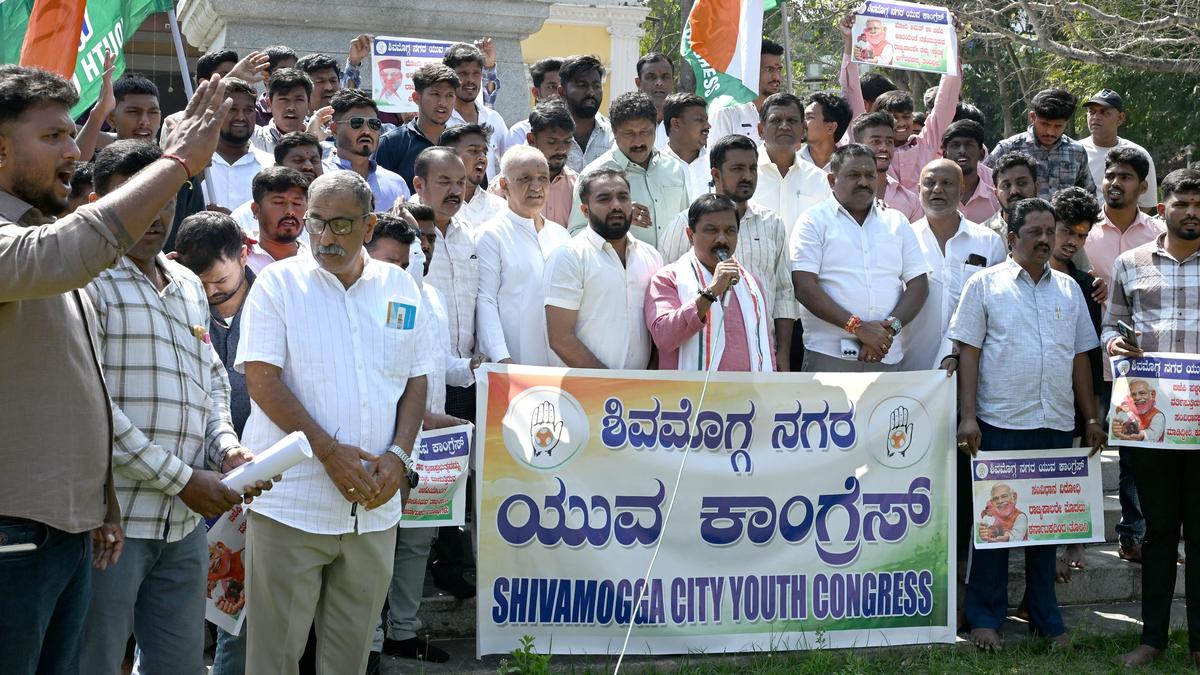
DEMANDS, MEMORANDUM AND MESSAGE TO PRESIDENT
Youth Congress leaders formally handed over a memorandum addressed to the President of India, demanding the Governor’s recall. The document accused the Governor of violating constitutional conventions, destabilising the executive’s functioning, and engaging in partisan conduct that undermines public trust. Protest leaders asserted that when a constitutional head consistently appears to conflict with the government’s executive prerogative, it erodes the spirit of cooperative federalism enshrined in the Constitution.
The memorandum cited recent flashpoints in State politics, including deviations from the draft legislative address and perceived reluctance to deliver the full text prepared by the cabinet. The Youth Congress argued that by selectively omitting portions of the speech, the Governor had crossed the bounds of ceremonial discretion and entered political commentary. They maintained that such actions have political repercussions and set a dangerous precedent where constitutional roles are blurred.
Youth Congress president in Karnataka, addressing the crowd, said, “Our democracy thrives on the principle that elected governments must be allowed to function without undue interference from constitutional authorities acting in partisan ways. We ask the President to exercise his constitutional authority and recall a Governor whose recent conduct has damaged democratic trust.”
Activists called on party leaders, legislators, and sympathetic civil society groups to amplify the protest and stand united to defend constitutional norms. They demanded that the State government take firm positions in legislative chambers and, if necessary, pursue legal remedies to uphold democratic principles. Many chanted slogans invoking India’s Constitution, emphasizing the rule of law and democratic accountability.
POLITICAL BACKLASH AND REPERCUSSIONS
Opposition parties responded predictably to the Youth Congress protest, accusing their rivals of politicising constitutional processes for electoral gain. Some opposition leaders said that protests targeting constitutional authorities undermine respect for institutions and set unhealthy political precedents. They argued that differences with the Governor should be resolved through dialogue, not street demonstrations.
Political analysts noted that the protest reflects deeper fault lines in Karnataka’s political landscape, with Youth Congress positioning itself as a vocal defender of constitutional supremacy and state autonomy. Analysts said that the agitation is also aimed at consolidating youth support ahead of forthcoming local body and Assembly elections, where narratives around federalism, governance, and institutional balance may resonate with voters.
Civil society voices offered varied perspectives, with some supporting the Youth Congress call for defending democratic norms, while others urged restraint and adherence to constitutional processes. Constitutional scholars emphasised that Governors have discretionary space in interpreting portions of speeches, but cautioned that frequent confrontation between political parties and constitutional authorities risks normalising institutional conflict. They suggested that conflict resolution through legal and legislative channels remains advisable over street protests.
Amid the demonstrations, law enforcement maintained a visible presence to prevent escalation and ensure public order. Police officials said they were monitoring the protests and facilitating peaceful expression of views, urging protestors to comply with law and avoid disruption of public services. Authorities emphasised the importance of balancing democratic rights with public safety.
WHAT LIES AHEAD
Youth Congress leaders have indicated that their agitation will continue through peaceful protests, petitions, and engagements with higher constitutional offices until action is taken. They said they will pursue all democratic avenues to urge the President to act on their memorandum. Meanwhile, State government spokespeople have refrained from publicly endorsing the protest, maintaining that constitutional roles are best navigated through institutional frameworks.
With political temperatures rising, Karnataka’s public discourse appears increasingly shaped by questions on federal balance, constitutional duties, and political accountability. Whether the Youth Congress protest will influence policy, constitutional response, or public opinion remains to be seen, but it has certainly injected momentum into debates over the Governor’s role and State-Centre relations.
The protest underscores the vibrancy of democratic engagement in the State, where youth participation, constitutional concerns, and political activism intersect. As events unfold, all eyes will be on how constitutional authorities respond, how political parties leverage the issue, and whether broader traction emerges among the electorate. Karnataka’s political landscape seems set for intensified debate on institutional respect, democratic norms, and the balance of powers between the elected executive and constitutional custodians.
The protest also drew participation from student wings and youth activists from various districts, who travelled overnight to join the demonstration in the State capital. Many said the issue went beyond party politics and touched the core of how democratic institutions function. Speakers at the gathering argued that young people must remain vigilant about constitutional values, as decisions taken at higher offices directly affect governance, welfare schemes, and social justice policies. The atmosphere remained charged but largely peaceful, with volunteers forming human chains to manage crowds and prevent any untoward incidents during the march through key administrative zones of the city.
Several protestors highlighted that Governors, while holding constitutional authority, are expected to act on the aid and advice of the Council of Ministers in most matters. Youth Congress representatives claimed that recent events have created a perception that this convention is weakening. They said such perceptions, whether fully accurate or not, can damage public confidence in institutions. Placards carried by demonstrators displayed messages about safeguarding the Constitution, protecting state rights, and preserving the spirit of federalism. Organisers repeatedly urged participants to maintain discipline and ensure that the protest remained symbolic of democratic dissent rather than confrontation with authorities on duty.
Leaders addressing the crowd connected the issue to a broader national conversation on Centre-State relations. They argued that States must have the autonomy to implement policies aligned with local needs, and constitutional authorities should facilitate rather than hinder that process. Youth Congress speakers claimed that tensions between elected governments and Governors have been reported in multiple States, making Karnataka’s situation part of a larger pattern. They urged youth to stay informed about constitutional mechanisms and engage constructively in democratic processes. According to them, informed civic participation is essential to prevent misunderstandings and ensure accountability across all levels of governance in the country.
Women leaders from the Youth Congress also took the stage, stressing that democratic institutions must be sensitive to issues affecting marginalised communities. They said any disruption in governance or delay in policy implementation could have consequences for welfare schemes related to education, health, and social security. Their speeches linked constitutional stability to everyday concerns of ordinary families, arguing that institutional harmony is not an abstract concept but something that influences livelihoods. The presence of women and students in significant numbers gave the protest a broader social character, with organisers highlighting inclusivity as a strength of the mobilisation effort across districts.
Legal observers following the developments noted that disputes involving gubernatorial conduct often fall into complex constitutional territory. Some experts believe that while Governors do possess certain discretionary powers, conventions and judicial precedents emphasise restraint and neutrality. Youth Congress leaders cited these interpretations to strengthen their case, though legal scholars also pointed out that each situation depends on specific facts. The protest, therefore, reflects not just political disagreement but differing readings of constitutional practice. Such debates, experts say, are part of a healthy democracy as long as they remain within peaceful and lawful boundaries established by the Constitution.
Police officials deployed at protest sites maintained that the gathering remained under control, with only minor traffic disruptions reported in adjoining areas. Barricades were set up to regulate movement, and protestors were allowed to submit their memorandum through designated representatives. Authorities said prior permission had been sought for the demonstration, and coordination between organisers and police helped avoid escalation. Senior officers appealed to political groups to ensure that public property was not damaged and emergency services were not obstructed. The overall law-and-order situation, according to officials, stayed stable despite the emotionally charged nature of the issue.
Political reactions continued to pour in after visuals of the protest circulated widely. Leaders from rival parties accused the Youth Congress of dramatizing constitutional matters to gain political mileage. They said disagreements with the Governor should be resolved through institutional dialogue rather than public agitation. However, Youth Congress spokespersons countered that peaceful protest is itself a constitutional right and a legitimate way to express dissent. The exchange of statements reflects the polarised political climate, where even procedural issues involving constitutional offices quickly become subjects of sharp debate and public mobilisation across platforms.
Observers say youth participation in such movements signals a growing interest among younger citizens in governance and constitutional affairs. Universities and colleges have seen increased discussions about federalism, separation of powers, and the role of constitutional authorities. Youth Congress leaders claimed their protest aimed to channel this awareness into democratic action rather than apathy. They encouraged students to read the Constitution and understand institutional roles. Whether one agrees with the protest’s demands or not, analysts note that civic engagement among youth can strengthen democratic culture when guided by peaceful expression and informed dialogue on governance.
The State government’s official response has remained measured, with ministers emphasising respect for constitutional processes. Some leaders said issues concerning gubernatorial actions are best addressed through dialogue and legal interpretation rather than confrontation. At the same time, they acknowledged that public sentiment and political expression form an integral part of democracy. This careful positioning reflects the sensitivity of the matter, as direct confrontation between elected executives and constitutional heads can have wider implications. For now, the government appears focused on continuing administrative work while allowing political discourse to take its course.
As the situation develops, attention will likely shift to how higher constitutional authorities respond to the memorandum submitted by the Youth Congress. Even if no immediate action follows, the protest has already succeeded in bringing constitutional conventions into public discussion. It highlights how political disagreements increasingly revolve around institutional roles rather than only policy differences. The coming days may see further statements, possible debates in legislative forums, and continued mobilisation by youth groups. Regardless of outcomes, the episode underlines the dynamic nature of democracy, where institutions, politics, and citizen voices constantly interact.
Follow: Karnataka Government
Also read: Home | Channel 6 Network – Latest News, Breaking Updates: Politics, Business, Tech & More
