Saturday, December 27, 2025
Home Blog Page 1242

Akal Takht Orders Akali Dal Leaders to Clean Toilets at Golden Temple as Part of Punishment

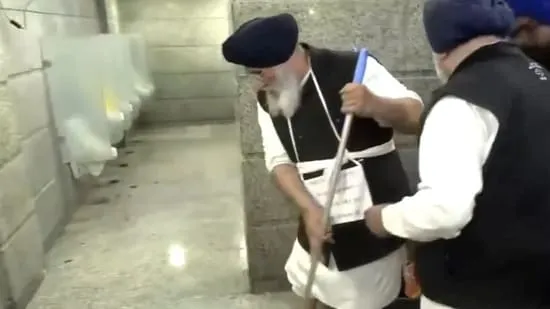
Shiromani Akali Dal (SAD) leaders, including Bikram Singh Majithia and Daljit Singh Cheema, were seen cleaning toilets at the Golden Temple in Amritsar on Tuesday, in accordance with a religious punishment issued by the Akal Takht, the supreme authority in Sikhism. This directive came after the Akal Takht held them accountable for “religious misconduct.”

The religious body imposed the punishment on several prominent Akali leaders, including former Punjab Deputy Chief Minister Sukhbir Singh Badal, for actions taken during their alliance with the Bharatiya Janata Party (BJP) between 2007 and 2017. The punishment was a result of the Akali Dal’s mistakes during this period, including controversial decisions such as pardoning Dera Sacha Sauda chief Gurmeet Ram Rahim in a 2007 blasphemy case.

Sukhbir Badal, along with senior leaders Sukhbir Singh Dhindsa, appeared at the Golden Temple, wearing “sewadar” attire as part of their penance. Both leaders, who were in wheelchairs due to health reasons, served as sewadar (volunteers) for an hour. Boards acknowledging their “misdeeds” were placed around their necks during their service. Badal had earlier admitted to his mistakes before the Akal Takht’s ruling, including his role in pardoning Ram Rahim.

In addition to the punishment, the Akal Takht ordered the Shiromani Akali Dal working committee to accept Sukhbir Badal’s resignation as party president and revoked the “Fakhar-e-Quam” (pride of community) title that had been awarded to his late father, Parkash Singh Badal, a former Punjab Chief Minister.

This action is seen as part of the Akal Takht’s efforts to ensure accountability among political leaders and maintain the integrity of Sikh religious practices.

Britney Spears Officially Becomes Legally Single on Her 43rd Birthday

On December 2, 2024, Britney Spears, the pop sensation known for her chart-topping hits, officially became legally single, coinciding with her 43rd birthday. This monumental step marks the conclusion of a lengthy divorce process with her ex-husband Sam Asghari. After over seven years together, including a brief engagement and marriage in 2022, the couple split in August 2023, citing irreconcilable differences.

The legal process for their divorce was finalized after months of negotiations, which included discussions over their prenuptial agreement. Britney, known for her turbulent personal history, including her 13-year conservatorship battle, managed to avoid paying spousal support or covering Asghari’s living expenses.

This milestone follows a period of intense public scrutiny of Britney’s life after the conservatorship ended. Spears continues to receive both support and criticism over her actions in the aftermath of regaining control of her own life, with many speculating on her emotional state and future.

The official dissolution of her marriage gives Britney a chance to rebuild her life independently as she moves forward with new personal and professional goals.

Source: Web Team, C6N

Shashi Tharoor Responds to Mamata Banerjee’s UN Peacekeeping Demand for Bangladesh

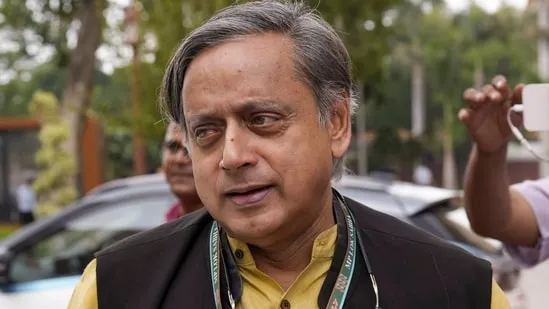
Congress MP Shashi Tharoor has expressed uncertainty over West Bengal Chief Minister Mamata Banerjee’s request for deploying UN peacekeepers in Bangladesh, stating that he is “not sure” if she fully understands the role of such forces.

Banerjee, addressing the West Bengal state assembly on Monday, had urged the Centre to approach the United Nations to send peacekeeping forces to Bangladesh, where religious minorities, particularly Hindus, have reportedly been targeted. She suggested that an international peacekeeping force could help restore normalcy in the region.

In response, Tharoor, who has worked in UN peacekeeping operations, clarified that UN peacekeepers are rarely deployed within a country unless its government explicitly requests their presence. He pointed out that peacekeepers are typically sent only when a country is in severe turmoil or collapse and has made an official request for assistance.

Tharoor added that while he agrees with Banerjee’s concern for the situation in Bangladesh, the deployment of UN forces requires formal approval and cooperation from the country’s government. His remarks came amid growing tensions in Bangladesh following reports of attacks on religious minorities and the arrest of former ISKCON priest Chinmoy Krishna Das, whose bail hearing was postponed until January 2025.

The demand for UN peacekeeping also drew criticism from Bangladesh’s interim foreign minister, Touhid Hossain, who expressed confusion over Banerjee’s statement. Despite his concerns, Hossain emphasized the importance of maintaining strong, friendly relations between India and Bangladesh.

The call for international intervention has sparked protests across India, with activists and organizations advocating for the protection of religious minorities in Bangladesh and demanding the release of Chinmoy Krishna Das.

Eknath Shinde Discharged from Thane Hospital After Health Checkup

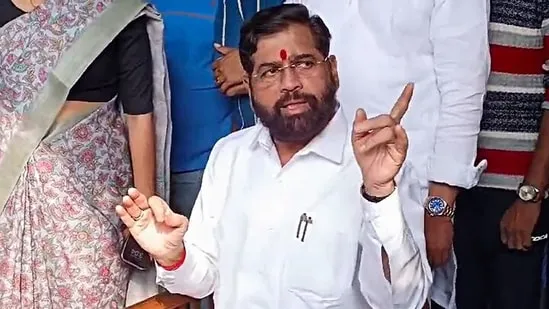
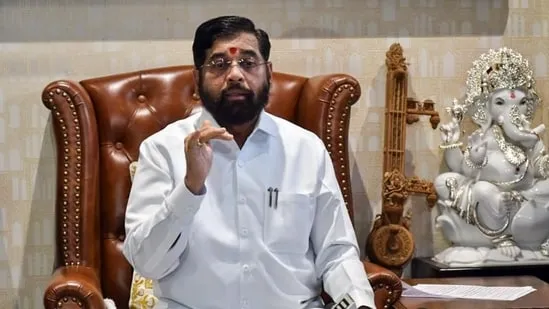
Maharashtra Caretaker Chief Minister Eknath Shinde was discharged from Thane’s Jupiter Hospital after undergoing a health checkup. Shinde, who had been experiencing a persistent throat infection and fever since last week, was rushed to the hospital following no improvement in his condition.

Doctors recommended a full examination of his health, and after receiving medical attention, Shinde was allowed to return home.

India-China Relations Improving, Border Issues Resolved: S. Jaishankar in Lok Sabha

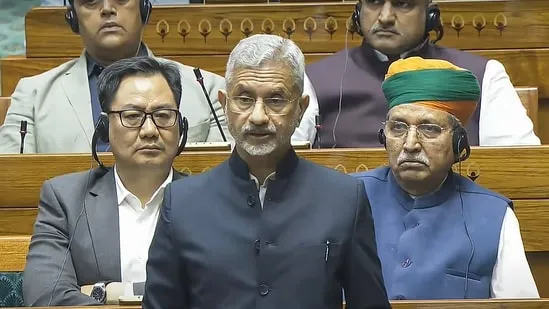
External Affairs Minister S. Jaishankar informed the Lok Sabha on Tuesday that India-China relations have seen significant improvement, particularly through recent military and diplomatic talks. He highlighted that these engagements have successfully addressed key border issues, including a patrolling agreement for areas along the Line of Actual Control (LAC).

Jaishankar acknowledged that relations between the two nations had been strained since 2020 due to disruptions in peace and tranquillity along the border caused by China’s actions. He credited India’s forces for their rapid response in countering Chinese troops despite logistical challenges and the COVID-19 pandemic.

Recent developments have set India-China ties on a positive trajectory, with ongoing diplomatic efforts aiming for a fair and mutually acceptable framework for border resolution. Jaishankar emphasized that while the disengagement phase is now complete, the focus will shift towards de-escalation and managing activities in the border areas.

“The immediate priority was ensuring disengagement from friction points, and this has been fully achieved,” said Jaishankar. He added that discussions for de-escalation, particularly concerning the amassing of troops along the LAC, will be the next step in the bilateral engagement.

The Minister also mentioned his recent meeting with Chinese Foreign Minister Wang Yi, during which both sides agreed to convene a meeting of special representatives and foreign secretary-level officials to continue discussions on border management.

Jaishankar reaffirmed India’s commitment to engaging with China through diplomatic channels to reach a fair and reasonable settlement, while upholding national security interests and focusing on long-term stability in the border regions.

Impact of Additional Duty on Steel Imports: MSME Exporters Raise Concerns

MUMBAI: In a significant development for India’s engineering MSME exporters, industry leaders have voiced concerns over the proposed imposition of an additional safeguard duty on steel imports. According to S C Ralhan, Chairman of the Hand Tool Association, the decision could severely affect the competitiveness of domestic products, thereby hampering export potential from the MSME sector.

MSME engineering exporters are already grappling with challenges such as high domestic steel prices and liquidity issues. The cost of steel has seen a steady rise due to increasing prices by domestic steel manufacturers, further squeezing the margins of small and medium enterprises (SMEs). Ralhan stated, “With the proposed 25% safeguard duty on steel imports, MSME exporters are at risk of facing higher input costs, which will make it difficult for us to compete in international markets.”

The engineering sector plays a crucial role in India’s export landscape, and the added burden of higher steel prices could result in a decline in competitiveness, potentially leading to reduced shipments. MSMEs are already struggling to maintain profitability due to volatile raw material prices, and an additional duty could be the tipping point that adversely affects their operations and global trade.

Exporters are urging the government to reconsider this proposal, emphasizing the need for policies that support the growth of MSMEs and ensure their continued participation in international trade.

Source: Web Team, C6N

Eknath Shinde Hospitalized in Thane Amid Health Concerns; Preps Underway for Maharashtra’s New Government

Maharashtra Caretaker Chief Minister Eknath Shinde was rushed to a hospital in Thane on Tuesday after his health showed no improvement. The Shiv Sena leader has been suffering from a throat infection and fever since last week, with doctors advising a thorough examination of his condition.

After his hospital visit, Shinde reassured the media about his health, stating, “badhiya hai.” The CM had previously traveled to his native village in Satara district last Friday, where he developed a high fever amidst speculation regarding his dissatisfaction with the formation of the new government.

Despite rumors suggesting that Shinde was upset over not being considered for a second term as Chief Minister, he clarified that his visit was simply to rest following a demanding election campaign. On Monday, BJP leader Girish Mahajan met with Shinde and confirmed that he was recovering well. Mahajan also emphasized that there were no tensions among the leaders of the Mahayuti alliance.

Meanwhile, preparations for the swearing-in ceremony of the new Mahayuti government are in full swing at Azad Maidan, Mumbai, with Prime Minister Narendra Modi expected to attend on December 5. Although Devendra Fadnavis is widely seen as the frontrunner for the Chief Minister’s post, the Mahayuti alliance has yet to make an official announcement. A key meeting of the state BJP legislature party is scheduled for December 4.

Speculation Grows as NCP (SP) Leaders Meet Ajit Pawar and Devendra Fadnavis Amid Defection Rumors

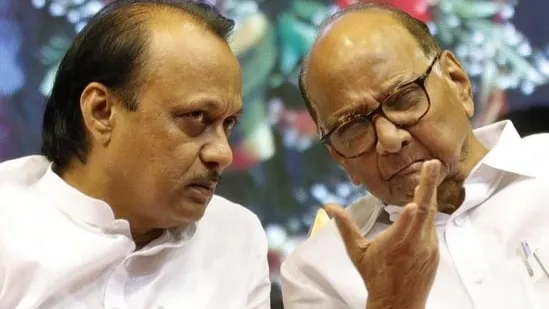
Mumbai: Following the Nationalist Congress Party (Sharad Pawar faction) securing only 10 out of 87 contested seats in the recent Maharashtra assembly elections, signs of potential defections are emerging within the party. Two former NCP (SP) MLAs, Rahul Jagtap from Shrigonda and Mansing Naik from Shirala, recently met Ajit Pawar, the leader of the rival NCP faction that is part of the ruling Mahayuti government, sparking speculation that they might join his camp.

Additionally, NCP (SP) MP Suresh Mhatre, representing Bhiwandi, held a meeting with senior Bharatiya Janata Party (BJP) leader Devendra Fadnavis, further fueling rumors about shifting allegiances. The move comes after a disappointing performance in the state assembly elections, where the NCP (SP), along with allies Congress and Shiv Sena (Uddhav faction), collectively won only 46 seats in the 288-member assembly.

During the assembly poll campaign, several leaders and MLAs had joined NCP (SP) after its strong showing in the Lok Sabha elections, where the party won eight seats. However, their hopes were dashed as the party’s performance in the state elections faltered.

Jagtap, who contested as an independent after NCP (SP) conceded Shrigonda to Shiv Sena (UBT) in a seat-sharing pact with the opposition Maha Vikas Aghadi, finished second in the race, trailing BJP’s Vikram Pachpute by over 37,000 votes. Meanwhile, Naik, a key figure who remained loyal to Sharad Pawar during the party split in 2023, lost his seat to BJP’s Satyajit Deshmukh by 22,689 votes.

Despite the meetings with Ajit Pawar and Fadnavis, the leaders have kept their intentions under wraps, adding fuel to the political speculation. NCP (SP) sources suggest that these leaders, among others, are considering joining the Ajit Pawar faction.

NCP MLA Rohit Pawar dismissed the defection claims, suggesting Mhatre’s meeting with Fadnavis might have been to discuss local issues like rising crime and women’s security. He stressed that suggesting the party’s leaders are reaching out to ruling parties could lead Maharashtra down a dangerous path.

Candidates Demand EVM Data Verification in Bhosari, Chinchwad Constituencies After Alleged Discrepancies

Pune: In a bid to address concerns over potential discrepancies in vote counting, candidates from Bhosari and Chinchwad constituencies have formally requested the verification of electronic voting machine (EVM) data following the recent assembly elections.

Ajit Gavhane, representing the NCP faction led by Sharad Pawar, contested from Bhosari, where BJP’s Mahesh Landge won by a margin of 63,765 votes. Meanwhile, Rahul Kalate of the NCP (SP) contested from Chinchwad, where BJP’s Shankar Jagtap secured a victory by 103,865 votes.

Both candidates have sought verification of the microcontrollers in the EVMs used in their respective constituencies. Kalate has applied for the verification of 25 EVMs in Chinchwad, paying ₹11.80 lakh, while Gavhane has requested verification of 10 EVMs in Bhosari, depositing ₹4.72 lakh.

Under election norms, candidates can request a re-evaluation of EVM data by submitting a fee to the district collector’s office. The re-evaluation process allows for the review of up to 5% of the EVMs in each assembly segment. The window for submitting such requests closed on November 30, following the announcement of election results on November 23.

In the assembly elections, Landge secured 56.91% of the vote share in Bhosari, with 213,624 votes, while Gavhane garnered 149,859 votes (39.92%). In Chinchwad, Jagtap won 60.51% of the votes, totaling 234,678, while Kalate received 131,458 votes (33.8%).

PM Modi Highlights the Significance of the Nyaya Sanhita in Strengthening India’s Democratic Framework

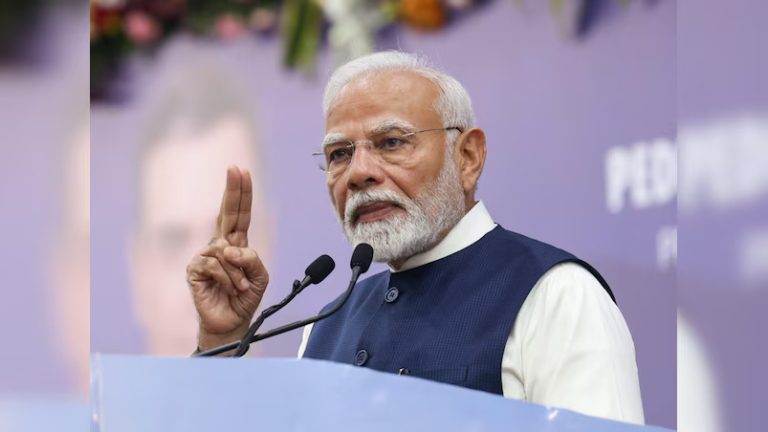
On December 3, 2024, Prime Minister Narendra Modi underscored the importance of the Bharatiya Nyaya Sanhita (Indian Justice Code) during a historic event marking its implementation. This new set of criminal laws, replacing colonial-era regulations, aims to strengthen the foundations of India’s democracy by ensuring a more inclusive and just legal framework.

In his address, PM Modi emphasized that the Nyaya Sanhita is designed to guarantee justice for all citizens, particularly those from marginalized sections of society. By focusing on reformative rather than punitive justice, the new laws prioritize fairness, equality, and human dignity. The Prime Minister affirmed that the Nyaya Sanhita aligns with the spirit of the Indian Constitution, reinforcing democratic values of justice and equality for every citizen.

PM Modi also noted the government’s efforts to make the legal system more accessible and responsive to the needs of ordinary citizens. The overhaul of the criminal laws is seen as a critical step in building a justice system that reflects the nation’s evolving democratic principles. With provisions designed to support vulnerable groups such as Dalits, tribals, and women, the Bharatiya Nyaya Sanhita symbolizes the government’s commitment to fostering a more equitable society.

The implementation of these laws is viewed as a decisive move toward ensuring that India’s legal system serves its people, rather than maintaining the legacy of British-era colonial laws. The new framework reflects the government’s vision for a “New India,” where justice and fairness are accessible to all.

Source: Web Team, C6N