Saturday, December 27, 2025
Home Blog Page 1252

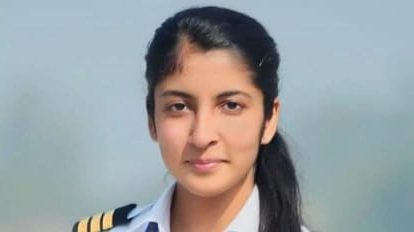
Air India Pilot’s Family Alleges Foul Play, Accuses Boyfriend of Abetting Suicide

The family of Srishti Tuli, a 25-year-old Air India pilot found dead in her Mumbai flat on Monday, has raised serious concerns over her death, which the police have initially labeled as a suicide. Speaking to the media, her family revealed that she had spoken to her mother and aunt just 15 minutes before her death, during which she appeared cheerful and in high spirits, raising questions about the circumstances leading to her tragic demise.

Srishti’s uncle, Vivek Tuli, voiced doubts about the police’s suicide theory, stating, “She cheerfully spoke to her mother and aunt, and then 15 minutes later, she was dead. What did he do to push her to the edge? We are still trying to understand what happened.” The family believes that her death was not a suicide, but rather a planned murder, with her uncle asserting that Srishti’s strength and determination as a pilot would have prevented her from taking her own life. He further accused her boyfriend, Aditya Pandit, of harassing and abusing her.

Pandit, a 27-year-old man, was arrested by the Mumbai Police for allegedly abetting Srishti’s suicide. According to the police, the couple had been in a relationship for over two years and lived together in Mumbai. Sources claim that the couple frequently fought, with Pandit taunting and belittling Srishti, even trying to control aspects of her life, including her dietary habits. The police revealed that one such incident occurred when Srishti wanted to eat non-vegetarian food, which led to an argument where Pandit publicly insulted her.

Authorities are continuing their investigation into the case, with the family and police now looking into the possibility of emotional abuse and harassment as contributing factors to her death. The case remains under scrutiny, and the investigation is ongoing.

Note: If you or someone you know is struggling, please reach out to suicide prevention helplines.
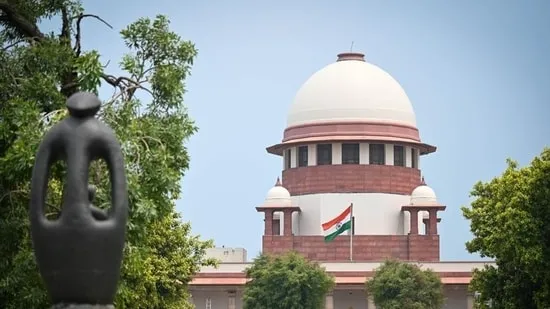
Supreme Court Slams GRAP-4 Implementation, Orders Action Against Delhi Officials for Pollution Crisis

The Supreme Court of India on Thursday sharply criticized the implementation of the GRAP-4 (Graded Response Action Plan) measures in Delhi, calling it an “abject failure.” The court’s remarks come amid rising pollution levels in the national capital and neighboring areas. While it acknowledged the ongoing pollution crisis, the court decided to keep all anti-pollution measures in place until Monday, with the exception of school restrictions.

The court further instructed the Commission for Air Quality Management (CAQM) to convene a meeting and explore the possibility of reducing the current GRAP-4 restrictions to GRAP-3 or GRAP-2 levels. It also suggested the implementation of a hybrid model, combining GRAP-4 and GRAP-3 measures, depending on the situation.

“We make it clear that all GRAP-IV measures except the modifications regarding schools will continue until Monday. In the meantime, the CAQM will assess whether a reduction to GRAP-III or GRAP-II measures is needed,” the bench stated, as reported by Hindustan Times.

The court also ordered CAQM to expedite action against top police, government, and civic officials in Delhi for their failure to implement the ban on the entry of heavy trucks into the capital, further intensifying the pollution crisis.

In addition to Delhi’s pollution concerns, the court took a serious view of reports from Punjab, where officials allegedly advised farmers to burn stubble after 4 pm to avoid satellite detection. The bench expressed doubt about the authenticity of this information but emphasized that if true, such advice was “very serious.” It directed the Punjab government to immediately instruct officers not to permit any such practices.

The case will be heard again on December 2, as the court continues to press for urgent and effective measures to tackle Delhi’s air pollution crisis.

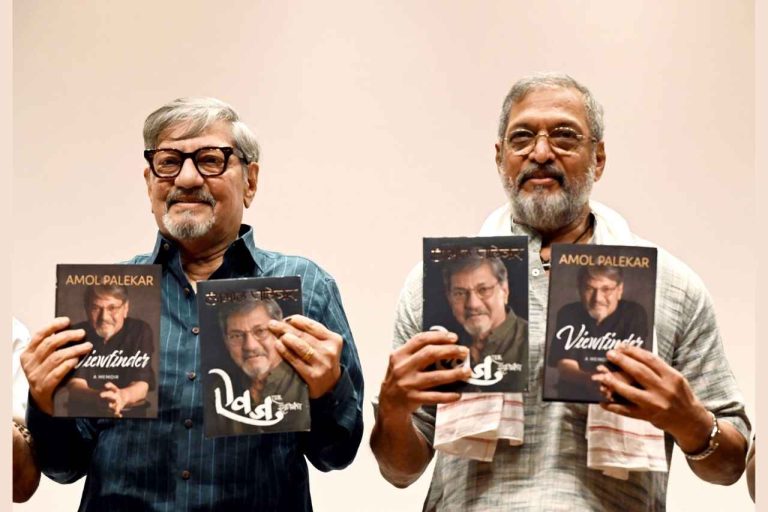
Amol Palekar: The Relatable Hero Who Revolutionized Indian Cinema

Veteran actor-director Amol Palekar, who celebrated his 80th birthday this month, reflects on a life marked by artistic defiance in his much-awaited memoir Viewfinder (English) and Aiwaz (Marathi). Published by Westland in collaboration with Madhushree Publications, the memoir explores Palekar’s evolution from a painter and theatre actor to one of Indian cinema’s most unconventional leading men.

Renowned for portraying the “common man” in films like Gol Maal, Chhoti Si Baat, and Rajnigandha, Palekar challenged the dominance of larger-than-life heroes of the 1970s and 1980s. His relatable characters resonated deeply with audiences, offering a refreshing contrast to the era’s dramatic narratives. In his book, he recounts his collaborations with cinematic legends like Basu Chatterjee and Hrishikesh Mukherjee, as well as his seamless transition to direction, where he addressed nuanced, intimate themes.

The memoir also offers readers rare insights into his journey across five languages—Hindi, Marathi, Bengali, Malayalam, and Telugu—while chronicling his contributions to theatre under Satyadev Dubey. Notably, it highlights his Oscar-nominated directorial work Paheli and his enduring efforts to bridge the gap between art-house and mainstream cinema.

With archival images, personal anecdotes, and tributes to stalwarts like Badal Sircar, Palekar’s memoir promises a nostalgic trip through the golden days of Indian cinema. Launching in Mumbai, Pune, and Delhi this month, the book will be available in stores from December 9, 2024.

Web Team C6N

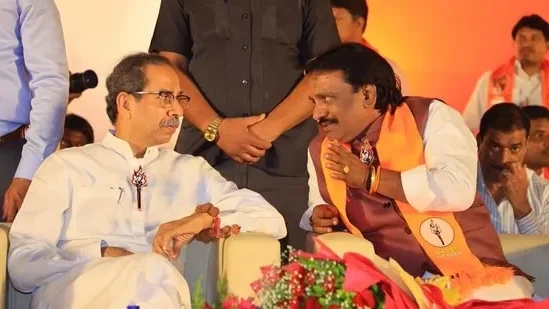
Thackeray Team Blames Congress’ ‘Attitude’ for MVA’s Loss in Maharashtra Polls

In the aftermath of the Maharashtra Assembly elections, Ambadas Danve, Leader of the Opposition in the Maharashtra Legislative Council, has criticized the Congress party’s “attitude” and overconfidence during seat-sharing negotiations, which he claims contributed to the MVA (Maha Vikas Aghadi) alliance’s dismal performance.

The BJP-led Mahayuti secured a resounding victory, winning 230 out of 288 seats, while the MVA—comprising Congress, Sharad Pawar’s Nationalist Congress Party (NCP), and Uddhav Thackeray’s Shiv Sena (UBT)—managed only 46 seats. Danve, a senior Shiv Sena (UBT) leader, said the alliance’s failure to present Uddhav Thackeray as its chief ministerial candidate hurt its prospects. He noted, “After the Lok Sabha elections, Congress became overconfident, like it did in Haryana and Jammu and Kashmir. This was evident in Maharashtra, and their attitude during the seat-sharing talks negatively impacted us,” as reported by NDTV.

The Congress, which had performed well in the 2019 Lok Sabha elections with 13 seats, bargained for a larger share of seats in the state elections. However, the party’s strategy backfired. Despite fielding candidates in 103 constituencies, it won only 16 seats. In contrast, Shiv Sena (UBT) contested 89 seats and won 20, while the NCP secured 10 out of 87 contested seats.

Danve also alluded to internal issues within Shiv Sena (UBT), hinting at dissatisfaction with its organizational structure, and emphasized the party’s future goal of contesting all 288 seats in Maharashtra. He further remarked on the BJP’s strategy, noting that the party had “many Shindes” across various states, implying that the BJP uses leaders like Eknath Shinde, who led the Shiv Sena split, and discards them when no longer needed.

As the BJP emerges as the dominant force, discussions continue about the chief minister’s position. Eknath Shinde, after days of speculation, has agreed to defer to Prime Minister Narendra Modi and BJP leadership’s decision on the role.

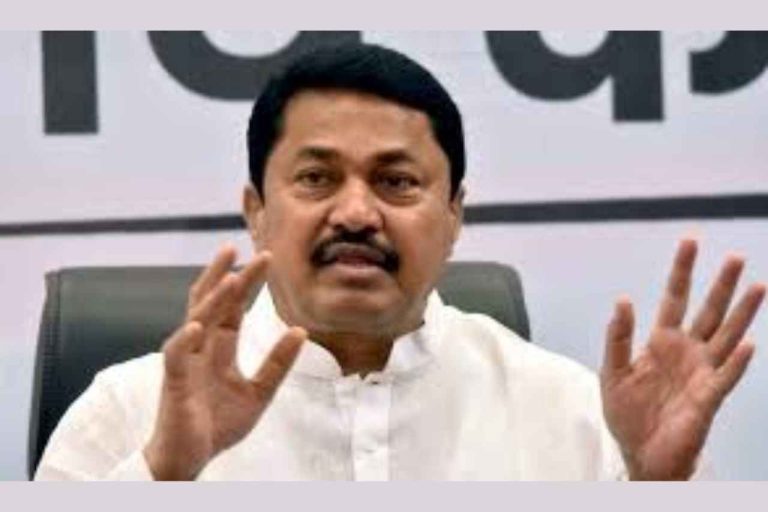
Maharashtra Elections 2024: Nana Patole Questions ECI Over 7% Voter Turnout Surge

MUMBAI: Maharashtra’s  Ex Congress president Nana Patole has called on the Election Commission of India (ECI) to address concerns over a sharp rise in voter turnout figures during the recently concluded Maharashtra Assembly elections. The results, declared on November 23, saw the BJP-led Mahayuti alliance emerge victorious, but questions about transparency in the polling process have persisted.

Patole highlighted an anomaly where voter turnout jumped from 58.22% at 5 PM on November 20 to 66.05%, rose by 7.83 percentage, by the end of the counting day at 11.30 pm. He demanded that the ECI explain how such a significant increase occurred after polling hours, calling the discrepancy a “threat to democracy” that warrants immediate clarification.

The final turnout marked the highest participation in the state since 1995, with rural areas leading the way. Karvir in Kolhapur recorded a massive turnout of 84.79%, while urban centers like Mumbai lagged at 52.07%. Analysts suggest this rural dominance proved decisive for tightly contested seats.

As the BJP-Shiv Sena coalition claimed a majority, surpassing the 145-seat threshold, the opposition Maha Vikas Aghadi (MVA) managed 46 seats. While the ruling alliance celebrated its victory, the Congress and its allies pointed to irregularities, with Patole urging the ECI to ensure trust in electoral processes.

The ECI has yet to respond to these allegations, but political observers stress the need for transparency in such high-stakes elections to uphold democratic integrity.

Web Team C6N

Kerala and Adani Ports Finalize Key Agreement to Boost Vizhinjam Seaport Development

THIRUVANANTHAPURAM: In a significant move toward operationalizing the Vizhinjam International Deepwater Port, the Kerala government and Adani Vizhinjam Port Pvt. Ltd. (AVPPL) have finalized a supplementary concession agreement. The port, expected to commence operations in December 2024, is set to redefine India’s maritime infrastructure.

Under the updated terms, the project has a new operational deadline with additional conditions for expediting future expansions. Notably, the agreement includes a revenue-sharing model granting Kerala 1% of the port’s revenue from 2034 onward. Furthermore, the state has urged Adani Ports to complete the second and third phases by 2028, ahead of the original 2045 schedule, with an additional investment of ₹10,000 crore.

The supplementary agreement also resolves arbitration disputes, a critical bottleneck in advancing the project. The operational tenure for Adani Ports has been extended until 2060 to offset delays caused by natural calamities and other disruptions. The first phase features an 800-meter container terminal and a 3,180-meter breakwater, which will later expand to accommodate growing cargo volumes.

Vizhinjam Port is poised to become a crucial hub for transshipment, reducing India’s dependency on international ports and strengthening its position in global trade. Rail and road connectivity are also expected to be completed by 2028, further boosting the port’s logistical capabilities.

Web Team C6N

Karachi’s Business Community Set to Launch New Airline to Boost Tourism and Economy

Karachi, Pakistan’s economic hub, is on the verge of launching its own private airline, tentatively named Air Karachi. This initiative mirrors the success of Air Sial, a private airline managed by the Sialkot business community, which has significantly enhanced connectivity and export logistics since its inception. Karachi’s move marks an ambitious step towards strengthening domestic air travel, improving logistics, and promoting tourism across the country.

Aiming for Greater Connectivity

The airline plans to operate domestic flights connecting Karachi with key cities such as Lahore, Islamabad, and tourist hotspots like Skardu and Gilgit. These routes are expected to capitalize on Pakistan’s emerging tourism sector, which has witnessed an upswing in activity over recent years. With similar ventures, including North Air and Alvir Airways, targeting domestic tourism, Karachi’s initiative emphasizes the region’s aviation potential.

Learning from Air Sial’s Model

Inspired by the Air Sial blueprint, which not only introduced affordable travel options but also catalyzed regional economic growth, Air Karachi seeks to replicate and scale this model. The launch is expected to inject vitality into the local economy, stimulate job creation, and establish Karachi as a pivotal aviation hub.

The project underscores a broader vision of fostering economic progress through private initiatives in Pakistan’s aviation sector. If successful, Air Karachi could become a key player in enhancing regional connectivity while driving tourism and trade.

Web Team C6N

Bangladesh High Court Rejects Petition to Ban ISKCON Activities Amid Rising Tensions

DHAKA: In a significant legal development, Bangladesh’s High Court on November 28, 2024, dismissed a petition seeking to ban the International Society for Krishna Consciousness (ISKCON) in the country. The petition, filed by a local lawyer, had accused ISKCON of engaging in activities that allegedly posed a threat to national security and stoked communal unrest.

The case comes in the wake of violent protests triggered by the arrest of Hindu leader Chinmoy Krishna Das, a former ISKCON member, on charges of sedition. Das, known for his advocacy for Hindu rights in Bangladesh, was detained after raising a flag that allegedly resembled the national flag in a controversial act. His arrest, which sparked violent clashes, resulted in the death of a lawyer, further intensifying tensions between the Hindu community and local authorities.

The High Court, while rejecting the ban, instructed the government to take adequate steps to ensure law and order amid the ongoing unrest. The court also sought a report on actions taken by authorities concerning ISKCON’s recent activities.

ISKCON has publicly condemned the arrest of Das, calling it an infringement on religious freedom and urging for peaceful coexistence. Meanwhile, India expressed deep concern over the safety of Hindus in Bangladesh and called for the protection of minority rights.

Web Team C6N

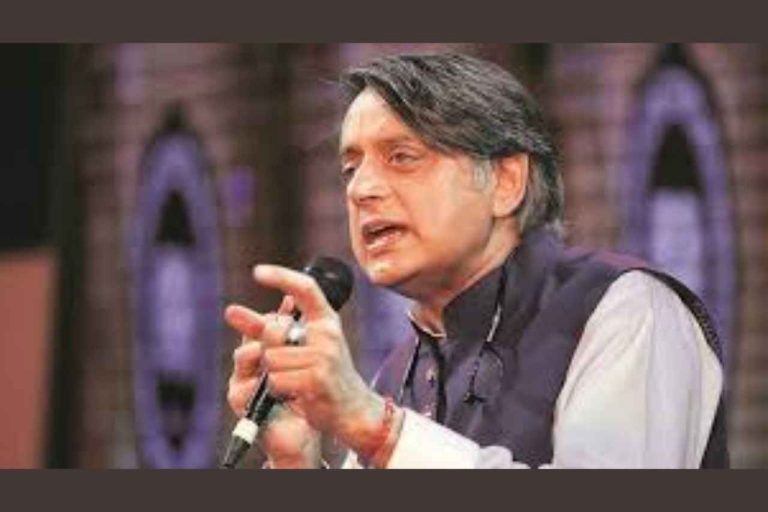
Tharoor Defends EVMs, But Raises Concerns Over Electoral Integrity in Maharashtra Polls

NEW DELHI: Congress MP Shashi Tharoor has addressed the controversy surrounding the outcome of the 2024 Maharashtra Assembly elections, defending the integrity of Electronic Voting Machines (EVMs). Following his party’s disappointing results in the state elections, Tharoor took to social media to clarify his stance, stating that while the machines themselves are not problematic, the larger ‘machinery’ of the electoral process warrants scrutiny. Tharoor emphasized that EVMs, a vast improvement over paper ballots, should not be blamed for any electoral discrepancies. However, he expressed concerns over the potential manipulation of the voting process, where entire EVMs could potentially be added to the tally, thus inflating voter turnout figures.

Tharoor called for more transparency from the Election Commission, stating that their silence on the matter is damaging to public trust. His comments come in the wake of Congress president Mallikarjun Kharge’s call for a return to paper ballots, which Tharoor disagreed with. He pointed out that reverting to paper ballots would not solve the issue, as fraudulent practices could still occur with both paper ballots and EVMs.

The controversy surrounding the Maharashtra results has intensified discussions about the fairness of the electoral process, with the ruling BJP-led Mahayuti alliance claiming a significant victory. Tharoor’s remarks underline the need for electoral reforms that address not only the technology used but also the systems that govern its use, ensuring that the election results truly reflect the will of the people.

Web Team C6N

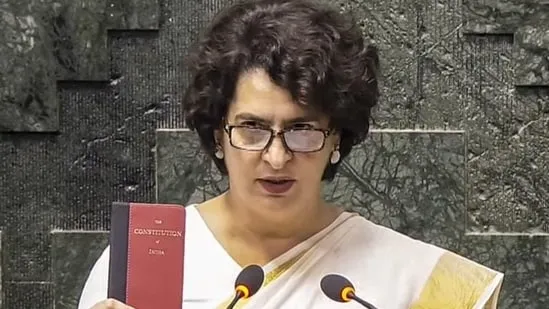
Priyanka Gandhi Makes a Cultural Statement in Parliament Debut as Wayanad MP

Priyanka Gandhi Vadra officially entered the Lok Sabha as Wayanad’s MP on November 23, 2024. Priyanka Gandhi marked her debut by donning a traditional Kerala Kasavu saree, showcasing her connection to the region’s cultural heritage. The bypoll victory was a historic moment for the Congress leader, who won with a margin of 410,931 votes, underscoring her significant electoral debut.

Rahul Gandhi vacated the seat after winning in Rae Bareli earlier this year, allowing Priyanka Gandhi to enter active politics. Her attire, the iconic white saree with a golden border, is emblematic of Kerala’s unity and tradition, often worn during festivals. Celebrated designer Anupamaa Dayal praised her look, calling it “timeless” and “sophisticated,” reflecting her authenticity and connection to local culture.

After taking her oath in Hindi, Priyanka shared her gratitude with Wayanad residents, stating on X, “Your love and trust are my inspiration to build a better future.” Her victory also strengthens the Gandhi family’s representation in Parliament, with Sonia Gandhi in the Rajya Sabha and Rahul Gandhi holding a Lok Sabha seat.

This decisive win signals Priyanka’s promising role in shaping Congress’s future, with analysts noting her ability to connect deeply with grassroots communities.