Wednesday, December 24, 2025
Home Blog Page 1274

Warner Bros. Launches Max Streaming Service in Asia with Strategic Focus on Hollywood Content

Max aims to gain market share in Asia by prioritizing blockbuster Hollywood franchises over local productions. Warner Bros. Discovery is set to launch its Max streaming service in Asia this week, using a unique strategy to carve out a niche in the highly competitive market. Unlike other streaming giants like Netflix and Disney, which have invested heavily in local content, Warner Bros. is betting on its extensive library of popular Hollywood films and TV shows to attract subscribers. Major franchises like *Harry Potter* and *Friends* are expected to play a key role in drawing viewers across the region.

JB Perrette, CEO of Warner Bros. Global Streaming, explained, “We have an advantage in coming this late because they’ve spent a lot of money trying to compete with local players who produce exceptional content. Our strategy is fundamentally different.” This approach, he suggests, allows Warner Bros. to avoid the pitfalls of overspending on local content while leveraging its globally recognized intellectual properties.

Max’s entry into Asia comes at a time when competitors are reassessing their strategies in the region. Amazon has pulled back from Southeast Asia to focus on Japan and India, while Disney has shifted its focus towards Korean dramas and Japanese anime. Netflix, for its part, has adopted a “local for local” approach, releasing original content tailored to specific markets.

Warner Bros. plans to grow its subscriber base through partnerships with regional telecom providers and streaming platforms. In markets like Japan, New Zealand, and Southeast Asia, Warner Bros. will bundle Max with local services, similar to its partnerships with Disney and Hulu in the US. However, Warner Bros. may launch a standalone Max app in the future if demand grows sufficiently. Max’s tailored strategies and global content focus aim to boost subscriptions and advertising revenue across diverse Asian markets.
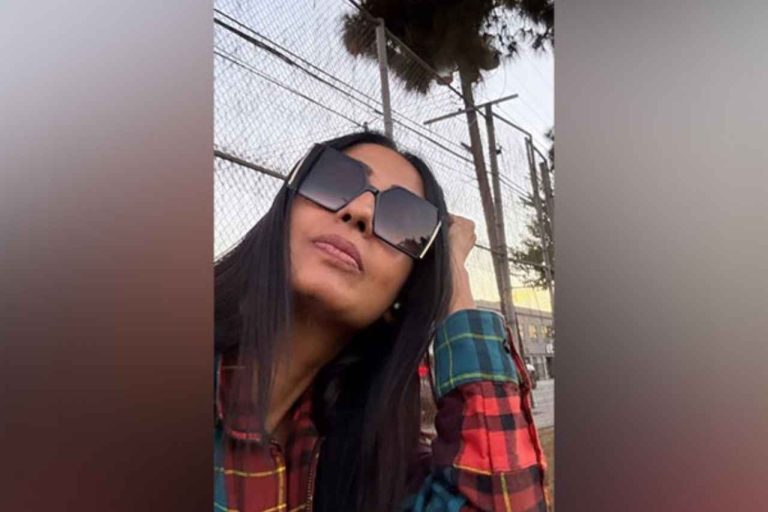
Kashmera Shah Narrowly Escapes Accident, Shares Her Gratitude

Actor Kashmera Shah recently took to Instagram to reveal a frightening accident she experienced in the USA, leaving her fans deeply concerned. The actor shared a photo of blood-soaked tissues, which highlighted the severity of the incident. However, Kashmera reassured her followers that she was safe and expressed gratitude for escaping without serious injury.

“Thank you, God, for saving me. It could have been something major, but I got away with a minor injury. I hope there won’t be any scarring. Missing my family terribly today,” Kashmera wrote in her heartfelt post.

Her husband, comedian Krushna Abhishek, who is currently in Mumbai with their twin sons, expressed relief and commented, “Thank God you are safe now.” The couple’s followers and industry friends, including actors Pooja Bhatt and Rajesh Khattar, also sent their prayers and well-wishes.

Also Read: Brad Pitt and Angelina Jolie’s Winery Legal Battle Heads to Trial, Expected to Last Until 2026

Kashmera had been in the USA, while Krushna recently returned to Mumbai with their children after a family trip. Sharing his experience of traveling solo with the twins, Krushna praised their behavior during the long flight, adding a touch of positivity amidst the worrying news.

The incident served as a reminder of the unpredictability of life, as Kashmera encouraged her followers to cherish each moment. She is now focusing on recovering and reuniting with her loved ones soon.

Fans and well-wishers continue to send messages of support, praying for her speedy recovery and safety in the days ahead.

Web Team C6N

Javed Akhtar Acquitted in Defamation Case Over RSS Remarks

MUMBAI: Veteran lyricist and poet Javed Akhtar has been acquitted in a defamation case filed against him for his alleged remarks about the Rashtriya Swayamsevak Sangh (RSS). The Mumbai Magistrate’s Court in Mulund dismissed the case after the complainant, Advocate Santosh Dubey, withdrew the charges following a settlement through mediation.

Background of the Case
The defamation suit, initiated in October 2021, was based on Akhtar’s remarks during a television interview where he allegedly compared the RSS with the Taliban. This statement sparked controversy, leading Dubey, who identifies as an RSS supporter, to accuse Akhtar of defamation under Sections 499 and 500 of the Indian Penal Code. According to Dubey, Akhtar’s comments were a deliberate attempt to defame the Nagpur-based organization.

Withdrawal and Settlement
On November 8, 2024, the complainant submitted a plea to withdraw the case, citing a resolution reached between the parties during mediation. In the plea, Dubey stated that he no longer wished to pursue legal action, paving the way for Akhtar’s acquittal. The court formally disposed of the case on this basis, bringing the legal proceedings to an end.

Implications of the Acquittal
This outcome highlights the role of alternative dispute resolution mechanisms, such as mediation, in settling contentious legal matters. It also underscores the ongoing sensitivity surrounding remarks about socio-political organizations like the RSS.

Akhtar’s lawyer welcomed the decision, expressing hope that it would bring closure to the matter. This development has once again brought to the forefront the balance between free speech and accountability in public discourse.

Web Team, C6N

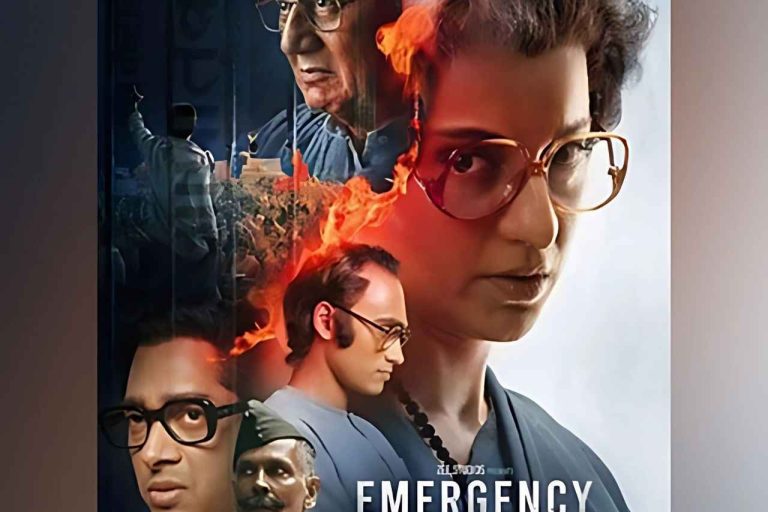
Kangana Ranaut Announces New Release Date for ‘Emergency’: January 17, 2025

Bollywood actress and filmmaker Kangana Ranaut has announced the updated release date for her much-anticipated film, ‘Emergency’. The political drama, centered around the turbulent period of the 1975 Emergency in India, will hit theaters nationwide on January 17, 2025, a week ahead of Republic Day celebrations.

Ranaut, who portrays the late Prime Minister Indira Gandhi, shared a striking poster on her social media accounts with the tagline: “The epic saga of the nation’s most powerful woman and the moment that altered India’s destiny.” She expressed excitement for audiences to experience this historical drama, which she described as her “most ambitious project to date.”

‘Emergency’ had originally been slated for release in November 2023 but faced delays due to post-production challenges and concerns over sensitive content. After complying with recommendations from the Central Board of Film Certification (CBFC), including 13 cuts, the film received a U/A certification. Among the revisions were the removal of certain scenes and dialogues, including references that could potentially offend specific communities.

Also Read: Camila Cabello Takes a Break from Social Media to Recharge and Focus on Creativity

Directed and produced by Ranaut under the Manikarnika Films banner, the movie boasts a star-studded cast featuring Anupam Kher, Shreyas Talpade, Mahima Chaudhry, Milind Soman, and the late Satish Kaushik. The film aims to depict one of the most controversial periods in Indian democracy with cinematic intensity and historical accuracy.

With its release aligning with the patriotic fervor of Republic Day, ‘Emergency’ is expected to draw significant attention for its bold portrayal of political events and Ranaut’s commanding performance. The film’s release strategy appears carefully planned to engage audiences with a story of resilience and political intrigue during a critical chapter in Indian history.

Stay tuned for more updates as the film’s release approaches.

Web Team C6N

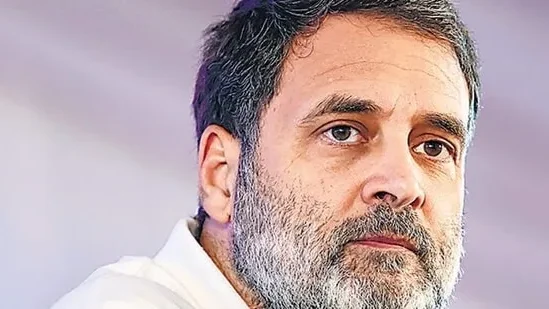
Rahul Gandhi Accuses BJP of Serving Adani’s Interests with “Ek Hai Toh Safe Hai” Slogan

Congress leader Rahul Gandhi has alleged that the Bharatiya Janata Party’s (BJP) “Ek Hai Toh Safe Hai” slogan primarily benefits billionaire industrialist Gautam Adani, particularly in the context of the controversial Dharavi redevelopment project. Gandhi, speaking at a press conference in Mumbai on November 18, claimed that the slogan is a tool designed to facilitate Adani’s acquisition of prime land worth Rs.1 lakh crore, a process he attributes to Adani’s close ties with Prime Minister Narendra Modi.

Gandhi characterized the ongoing Maharashtra Assembly elections as a battle between the rich, represented by corporate interests, and the poor, specifically those from the Dharavi slum. He alleged, “Adani Realty is receiving land worth ₹1 lakh crore, thanks to his proximity to Modi.” He further criticized the tendering process for the Dharavi redevelopment, claiming it rigged to protect Adani’s business interests over the rights of impoverished residents.

Gandhi’s statements extended beyond the Dharavi project. He accused central agencies of coercing industrialists to hand over projects to government-favored business figures. “The government overlooked the interests of the Dharavi residents to serve the industrialist.” The Congress and Maharashtra Vikas Aghadi will ensure the rightful return of land to the poor,” he stated.

Additionally, Gandhi pointed out that the government shifted several large projects initially planned for Maharashtra to other states, resulting in a loss of Rs.7 lakh crore in investments. He mentioned that the government moved an international financial services center valued at Rs.1.63 lakh crore, a Gail petrochemical project worth Rs.3,000 crore, and a Tata aircraft project valued at Rs.1.1 lakh crore.

Neither the BJP nor the Adani Group has responded to these accusations as of now. With the election campaign concluding on November 20, these remarks have intensified the political debate around the state’s future development.

Pune to Set Up Temporary Creches at Polling Stations to Boost Women Voter Turnout

In an effort to encourage more women voters to participate in the upcoming assembly elections, the Pune district administration will set up temporary creches at select polling stations. The initiative aims to provide a safe and convenient space for women with young children, allowing them to cast their votes without worry.

A total of 2,100 polling stations across the district will have these temporary creches, managed by Anganwadi workers and helpers.

The creches will provide toys, drinking water, and nutritious food to keep children engaged while their mothers vote. “Women voters can now vote without worry by leaving their babies in the care of Anganwadi workers at the polling stations,” said a senior district election official.

Despite the positive response from the administration, Anganwadi workers have raised concerns about the lack of support and compensation for their efforts during past elections. Mangala Jadhav, an Anganwadi worker, said, “We are happy to contribute to polling duties, but the administration only gives us orders without proper support. During the Lok Sabha elections, while others received food at polling stations, we did not even receive water.”

Inspecting officials didn’t bother to ask about our working conditions.”

Adding to the dissatisfaction, Anganwadi workers have yet to receive promised allowances for previous election duties.

Nilesh Datakhile, state vice-president of the Maharashtra State Anganwadi Employees Union, said Anganwadi workers lack allowances for election duties.

Monika Randhave, nodal officer for Pune’s nursery and child development project, assured adequate arrangements for Anganwadi workers’ food.

The initiative aims to increase women’s voting accessibility, though concerns over Anganwadi workers’ support highlight the need for recognition.

Maharashtra Assembly Elections 2024: Surge in Independent Candidates Could Disrupt Both Major Alliances

Maharashtra’s political landscape in the 2024 assembly elections is witnessing a surge in independent candidates, raising concerns over their potential impact on the outcome. A record 2,087 of the total 4,136 candidates across 288 constituencies are contesting independently. This surge, compared to 1,400 independent candidates in the 2019 elections, reflects growing dissatisfaction with party politics and individual aspirations for power.

Maharashtra has seen a long history of independent candidates since its first assembly elections in 1962, when 15 independents won. Over the years, independents have played a key role in government formations, often acting as kingmakers. In the 1990 elections, for instance, 12 out of 13 elected independents supported Sharad Pawar to form the government. The 1995 elections saw a record 3,196 independent candidates, with 45 winning and joining forces with the Shiv Sena-BJP alliance. More recently, in 2019, 13 independents won, including notable figures like Prakash Awade and Ravi Rana.

This year’s increase in independent candidates has sparked concerns about vote splitting, with many political analysts fearing that these candidates could hurt both the ruling Mahayuti alliance and the opposition Maha Vikas Aghadi (MVA). Some independents are expected to attract significant support in key constituencies, potentially diverting votes from major party candidates and altering the electoral dynamics.

Political analyst Abhay Deshpande observed, “In 1999, independents were pivotal in forming the government. Independents in Maharashtra’s 2024 elections could impact outcomes, especially with over 5,000 votes, challenging both major alliances. The question remains: will they act as game-changers or remain largely symbolic? The results will reveal their true impact.

Dharavi Redevelopment Looms Over Maharashtra Polls: Will It Shape the Vote?

Mumbai: As Maharashtra heads to the polls on November 20, the Dharavi assembly constituency is seeing intense campaigning with the redevelopment project emerging as the central issue. Dharavi, one of Asia’s largest slum clusters, has long struggled with inadequate housing, sanitation, and traffic congestion. But the Adani group-led Dharavi redevelopment plan has now taken center stage, stirring up emotions and shaping voting patterns.

A survey is currently underway to identify residents eligible for rehabilitation, a process that will determine whether they benefit from the redevelopment or face displacement. While eligible residents stand to gain, those deemed ineligible are raising concerns, particularly regarding relocation. This uncertainty has significantly impacted the election campaign, with candidates tapping into residents’ anxieties.

Congress Faces Growing Discontent in Dharavi

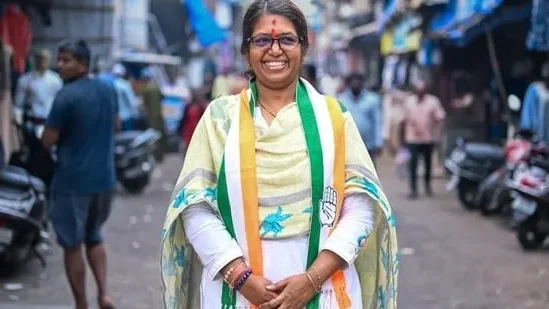
For over four decades, the Congress has dominated Dharavi politics, beginning with Eknath Gaikwad, followed by his daughter Varsha Gaikwad. However, the Congress’s reliance on a single family for representation is now under scrutiny. This election sees Varsha’s sister, Dr. Jyoti Gaikwad, contesting against Rajesh Khandare of the Eknath Shinde-led Shiv Sena.

Dr. Jyoti Gaikwad, an ayurvedic doctor, is critical of the redevelopment plan. She advocates for a sector-wise development approach, stressing that any project must take residents’ needs into account.

She remarked, “In any redevelopment project, residents must be taken into confidence,” advocating for a model that aligns with the community’s interests.

Rajesh Khandare, on the other hand, emphasized the long history of the redevelopment project and its delayed implementation. “Dharavi redevelopment is not a new concept. It was introduced in 1985 and has faced several delays,” he said, asserting that the current government’s progress marks a welcome change.

He criticizes opposition efforts to block the plan, calling it a vital step for Dharavi’s development.

Voters Divided Over Redevelopment

The redevelopment plan divides the electorate in Dharavi. Eligible residents tend to support the ruling alliance, viewing the project as a long-awaited opportunity. “For years, we’ve heard promises of a home. Now, it feels like our dreams are coming true,” said one resident who qualified for a new home.

On the other hand, many ineligible residents express dissatisfaction with the scheme. One frustrated resident said, “We’ve lived here for decades, but now they’re telling us we don’t qualify for a home,” arguing that the redevelopment should not exclude long-term residents from its benefits.

As the election day approaches, the future of Dharavi’s redevelopment remains a key issue that could swing the votes in this crucial assembly seat. Both candidates and residents are keeping a close eye on the survey results, which could significantly affect the outcome.

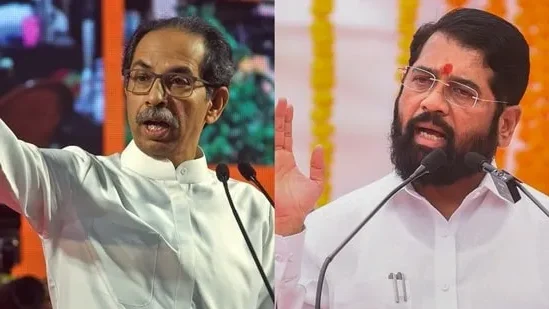
Uddhav Thackeray vs Eknath Shinde—A Test of Political Ideologies

Maharashtra’s assembly elections are shaping up to be a crucial battle of ideologies, pitting the legacy of Uddhav Thackeray’s Shiv Sena (UBT) against Eknath Shinde’s faction, which broke away from Thackeray’s original Shiv Sena in 2022. The outcome of this electoral contest will not only decide the immediate political landscape of the state but also potentially alter the power dynamics within Maharashtra’s political realm.

A Clash of Titans

Uddhav Thackeray’s alliance with the Congress and NCP after breaking ties with the BJP in 2019 marked a significant ideological shift for the Shiv Sena. This move was aimed at diversifying political alliances beyond the traditional saffron hue, leveraging a broader base of support across various communities in Maharashtra. However, the alliance has not been without its challenges. Thackeray’s critics argue that his partnership with Congress and the NCP may have led to a loss of core Shiv Sena supporters, particularly those who identify with Marathi cultural and nationalist sentiments. Uddhav himself acknowledges the difficulty of maintaining this alliance, especially in the face of increased pressure from Shinde’s faction.

Shinde leverages Anand Dighe’s legacy, regional focus, and the Ladki Bahin Yojana to attract significant support, especially from women.

The Battle for MMR and Mumbai

The Mumbai Metropolitan Region (MMR) and the city of Mumbai itself are at the heart of this electoral showdown. Both factions are fighting for dominance in a region with a high concentration of Marathi-speaking voters and key urban constituencies. Shinde’s camp targets discontent over political corruption, while Thackeray highlights his effective leadership during the Covid-19 pandemic.

Who Said What?

Eknath Shinde, supported by the Ladki Bahin Yojana’s popularity, predicts Mahayuti winning 155-160 seats, surpassing the Maha Vikas Aghadi.

Uddhav Thackeray stresses retaining Sena’s original ethos, highlighting regional pride, federalism, and the voice of Marathi Manoos.

Our role in national politics is crucial, and we will continue to advocate for the rights and identity of Maharashtra.”

The Stakes and the Outlook

The outcomes in Thane and Mumbai will likely determine the victor, with Shinde’s influence versus Thackeray’s legacy at stake.

Pravin Bardapurkar highlighted that Shinde’s BJP alignment may overshadow Thackeray’s inclusive approach if he fails to consolidate his voter base.

The campaign is about reshaping alliances, testing Thackeray’s coalition, and setting a new course for Maharashtra’s political future.

Final Word

Anil Parab, senior strategist, claims Maharashtra faces a choice: stability under Uddhav Thackeray or political volatility from Shinde’s rebellion. This election could well decide the future trajectory of Shiv Sena’s political journey and influence in Maharashtra.

BJP’s Stance on Maharashtra CM Pick: Tactical Strategy or Political Realignment?

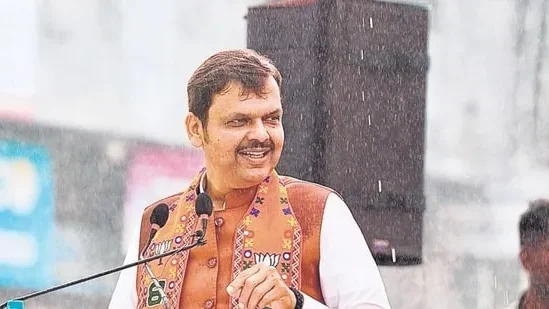
The Bharatiya Janata Party (BJP) recently tempered its stance on Devendra Fadnavis as its chief ministerial candidate for Maharashtra after Union Home Minister Amit Shah’s earlier remarks suggested his candidacy. The party announced that allies would decide the CM post in consultation after the elections, emphasizing coalition harmony. Meanwhile, Deputy CM Devendra Fadnavis continues to feature prominently in BJP’s campaign efforts.  However, the Maharashtra Vikas Aghadi (MVA) opposition, particularly Sharad Pawar’s NCP faction, has targeted him aggressively. BJP’s strategy shifts due to Maratha issues, alliance dynamics, and opposition campaigns. Bhupender Yadav’s outreach shapes electoral success. Sharad Pawar’s NCP faction has employed effective on-ground and social media campaigns, including a viral advertisement questioning BJP’s governance. In contrast, Shiv Sena’s Uddhav Thackeray has embraced symbolic gestures like donning a rudraksh, invoking his political legacy to polls, BJP’s evolving approach underscores the complexities of coalition politics, balancing internal ambitions with external narratives. Whether this strategic shift pays off will be revealed in the upcoming elections.