
Kharge Challenges Modi: Focus on Real Issues, Not False Narratives
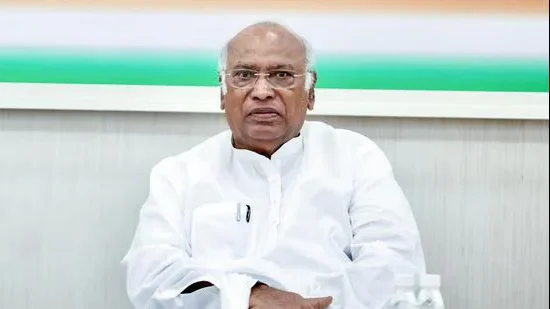
Congress President Mallikarjun Kharge urged Prime Minister Modi to focus on economic issues instead of making false claims about the opposition.
In a post on social media platform X, Kharge stated, “Fake narratives cannot substitute for real welfare. Look at the economic turmoil you’ve created by looting ordinary citizens of their last paisa! Even the festive cheer has failed to uplift India’s economy, which is grappling with low consumption, high inflation, widening inequality, reduced investment, and stagnant wages.”
Kharge’s comments reflect mounting concerns about the state of the Indian economy, as he highlighted five critical facts: rising food prices, declining demand for fast-moving consumer goods, plummeting household savings, falling automobile sales, and stagnating real wages for laborers. He pointed out that inflation-adjusted wages for India’s workforce have barely increased, citing data from the International Labour Organization (ILO).
Kharge advised Congress units to ensure election incentives are fiscally sustainable, following discussions on reviewing Karnataka’s free bus travel initiative.
As political tensions escalate, the focus remains on how both parties will navigate these economic challenges while appealing to voters in the upcoming elections. With the stakes high, the discourse surrounding economic management is expected to intensify as the political landscape evolves.
In summary, Kharge’s call to action emphasizes the need for genuine dialogue about the economy, challenging Modi to step away from rhetoric and engage with the realities affecting millions of citizens.
Election Commission Reschedules By-Elections in UP, Kerala, and Punjab to November 20
The Election Commission of India (ECI) has announced a significant change in the polling date for by-elections across 14 assembly constituencies in Uttar Pradesh, Kerala, and Punjab. Originally scheduled for November 13, 2024, the by-polls will now take place on November 20, 2024. This decision aims to accommodate various social, cultural, and religious events occurring on the initial date, which could potentially hinder voter turnout.
The commission received requests from several recognized national and state political parties, including the Bharatiya Janata Party (BJP), Indian National Congress (INC), Bahujan Samaj Party (BSP), and Rashtriya Lok Dal (RLD), along with social organizations, highlighting concerns about large-scale engagements that might inconvenience voters. The ECI recognized these concerns and stated that such events could lead to logistical challenges and a subsequent decrease in voter participation.
The by-elections involve 48 assembly constituencies and two Lok Sabha seats nationwide, with the affected states being crucial for political dynamics in the country. The change in polling date underscores the ECI’s commitment to facilitating a fair electoral process and ensuring maximum voter participation.
In addition to the by-elections, the Election Commission of India (ECI) has also been actively working on enhancing electoral participation and accessibility. Moreover, this includes initiatives such as improving the voter registration process and launching awareness campaigns to educate citizens about the voting process. Furthermore, these efforts aim to ensure that more citizens are informed and engaged in the democratic process.
As the revised date approaches, political parties are gearing up for intensified campaigning to engage voters and address any lingering concerns. The rescheduling gives parties a strategic advantage to effectively mobilize support while ensuring smooth and fair elections.
With the official announcement of the change, candidates are preparing for the upcoming polls, and they are encouraging voters to participate actively in the democratic process.
Modi Criticizes JMM-Led Coalition, Citing Infiltration and Corruption Threats in Jharkhand’s 2024 Assembly Elections

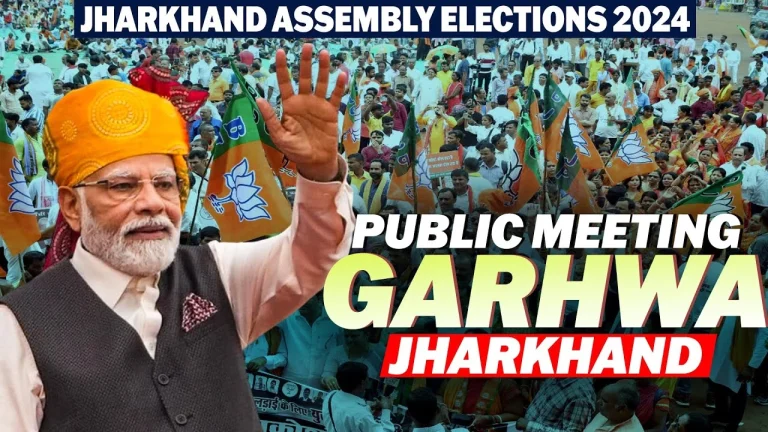
Ranchi: Prime Minister Narendra Modi recently launched a powerful critique of the Jharkhand Mukti Morcha (JMM)-led coalition government in Jharkhand, intensifying his campaign just days before the state’s assembly elections. Speaking at a rally in Garhwa, Modi labeled the coalition as “Ghuspaithiya Bandhan” (infiltrators’ alliance) and “Mafia Ka Ghulam” (mafia’s slave), alleging it supports illegal immigrants and fosters corruption. This address sets the stage for a charged election atmosphere in Jharkhand.
Infiltration: A Major Concern for Jharkhand’s Identity
Modi accused the ruling JMM-Congress-RJD alliance of encouraging Bangladeshi infiltrators to settle in Jharkhand. He warned that unchecked immigration could dilute the state’s tribal population, threatening its cultural and social fabric. “If this continues, the tribal population in Jharkhand will shrink. This coalition has become a ‘Ghuspaithiya Bandhan’ and a ‘Mafia ka Ghulam,’” Modi stated, urging voters to defend the state’s indigenous identity.
The issue of infiltration has been contentious in Jharkhand’s politics, especially among the tribal communities. Modi’s message reflects his commitment to protecting local identity and resonating with voters concerned about the impact of immigration on resources and social cohesion.
Allegations of Vote Bank Politics and Cultural Erosion
Modi also condemned the JMM-led government for its alleged appeasement policies. He claimed that the administration’s support for vote bank politics undermines cultural traditions, citing instances where schools were restricted from observing “Saraswati Vandana.” “If Saraswati Vandana is prevented in schools, you can understand the level of threat,” Modi remarked, warning that cultural values are at risk.
The Prime Minister’s remarks about the curtailment of cultural events during festivals like Durga Puja align with BJP’s broader strategy to appeal to those who prioritize cultural preservation. This criticism seeks to strengthen support among Jharkhand’s indigenous communities and others committed to regional values.
Corruption and Resource Mismanagement Under JMM-Led Coalition
In his speech, Modi alleged that the JMM-Congress-RJD coalition has transformed corruption into an “industry,” claiming that leaders misappropriate central funds intended for development. He likened corruption in Jharkhand to termites consuming resources, highlighting misuse of “thousands of crores” allocated by the Centre for public schemes.
Modi’s anti-corruption narrative is a key theme in BJP’s campaign, aiming to reassure voters that his party will prioritize economic transparency and efficient governance. Corruption and resource management remain major issues for Jharkhand voters, making this an important aspect of Modi’s message.
Key Election Dates and BJP’s Strategic Focus
With Jharkhand’s assembly elections scheduled for November 13 and 20, and results set to be announced on November 23, Modi’s speech arrives at a crucial time. This is his first visit to Jharkhand since the election announcement, underscoring the BJP’s focus on drawing attention to issues of infiltration, corruption, and cultural erosion.
The Prime Minister’s rally serves as a rallying cry for Jharkhand’s voters, asking them to consider the coalition’s policies on regional integrity and cultural preservation as they head to the polls.
Modi’s Call for Change
Modi’s sharp criticism of the JMM-led coalition aims to consolidate BJP’s position in Jharkhand by focusing on the alleged infiltration, corruption, and cultural threats under the current administration. His portrayal of the ruling alliance as both “Ghuspaithiya Bandhan” and “Mafia ka Ghulam” highlights his concerns for the region. As Jharkhand’s assembly elections approach, Modi’s call for a corruption-free government that respects local culture may resonate deeply with voters, adding momentum to BJP’s campaign.
Top 5 Business Casual Outfits for a Stylish and Professional Look

When it comes to dressing for a business casual environment, finding the right balance between comfort and professionalism is essential. Here are five outfit ideas to help you look stylish while keeping things office-appropriate:
1. Blazer with a Turtleneck and Trousers
A fitted blazer paired with a sleek turtleneck and tailored trousers makes a polished yet cozy combination for cooler months. Choose neutral shades like navy, black, or gray for a timeless look, and complete the outfit with loafers or low heels.

2. Button-Up Shirt with Chinos
A classic button-up shirt paired with chinos offers a relaxed yet refined outfit for any office setting. Opt for a soft color palette, like light blues or pastels, and accessorize with a leather belt and loafers for a polished touch.

3. Sweater Dress with Ankle Boots
For a feminine take on business casual, a sweater dress is both comfortable and sophisticated. Choose a mid-length dress in a solid color or subtle pattern, and pair it with ankle boots for a chic finish. Adding a belt can elevate the look even further.

4. Cardigan and Dress Pants Combo
A cardigan layered over a blouse or a simple top pairs nicely with dress pants for a cozy yet professional look. Stick to well-fitted cardigans in neutral tones, and add some sleek flats or mules for an easy, polished appearance.

5. Polo Shirt and Skirt
A well-fitted polo shirt tucked into a skirt, such as a knee-length pencil skirt, can be an ideal business casual choice. This look is versatile and modern, especially when styled with flats or low block heels.

Each of these outfits balances comfort with style, giving you a polished, professional appearance that aligns perfectly with a business casual dress code.
(By Ankita Singh, Web Team at C6N)
35 Years of ‘Parinda’: Anil Kapoor Reflects on a Timeless Classic
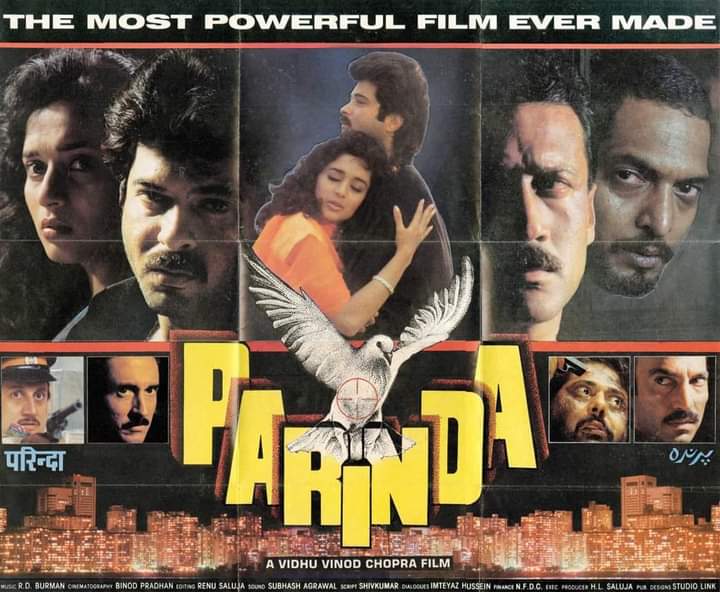
As “Parinda” celebrates its 35th anniversary, Anil Kapoor reminisces about the film’s enduring legacy and its impact on Indian cinema. Released in 1989, the movie, directed by Vidhu Vinod Chopra, remains a benchmark for storytelling and character development in Bollywood.
In a recent interview, Kapoor expressed his pride in being part of a film that challenged conventional narratives. “Parinda” not only captured the complexities of brotherhood and crime but also highlighted social issues that resonate even today. The film’s gripping storyline and powerful performances from Kapoor, Jackie Shroff, and Madhuri Dixit have solidified its place in cinematic history.
Kapoor acknowledged the film’s relevance in the current landscape of Indian cinema, stating, “Despite the passage of time, the themes explored in ‘Parinda’ continue to echo in today’s society.” The movie has inspired a new generation of filmmakers and actors, who draw from its rich storytelling techniques and emotional depth.
Also Read: Pakistani Celebrities Celebrate Diwali, Promoting Inclusivity for Minority Communities
The film’s legacy is also evident in its cultural influence, inspiring dialogues and references in contemporary cinema. Its music, composed by the legendary R.D. Burman, still resonates with audiences, further cementing its timeless appeal.
With a burgeoning interest in revisiting classic films, Kapoor hopes that “Parinda” will inspire more discussions about the narrative depth and character portrayals that are often missing in today’s fast-paced cinema. “It’s important for us to remember where we came from, and ‘Parinda’ is a significant part of that journey,” he remarked.
As “Parinda” enters a new chapter of appreciation, Anil Kapoor’s reflections serve as a reminder of the film’s profound impact and its continued relevance in the cinematic landscape.
Muskaan Dwivedi, Web Team C6N
FSSAI Enforces Stricter Antibiotic Residue Limits Amid Growing Superbug Crisis

In a decisive move to combat the rising threat of antibiotic-resistant bacteria, the Food Safety and Standards Authority of India (FSSAI) has tightened permissible antibiotic residue limits across various food categories, including meat, poultry, eggs, milk, and aquaculture. This development, reported by the Sources, aims to address the alarming prevalence of ‘superbugs’—microbes that have developed resistance to standard treatments due to the overuse of antibiotics.
The revised guidelines will come into effect on April 1, 2025, marking the first significant update to antibiotic residue limits since 2011. The FSSAI’s decision reflects increasing concerns over public health, as India is reported to have one of the highest rates of antimicrobial resistance globally. The new norms entail lowering the allowable levels of antibiotic residues and expanding the list of drugs under the FSSAI’s scrutiny.
Also Read: Afcons Infrastructure IPO Falls Short: Debuts at 8% Discount on NSE
Microbial resistance is particularly problematic for diseases such as urinary tract infections (UTIs), pneumonia, blood infections, and typhoid, which have seen a rise in antibiotic-resistant cases, according to an Indian Council of Medical Research (ICMR) report. This resistance complicates treatment options and poses a significant health risk to the population.
George Cheriyan, working president of the Consumers Protection Association (CPA), stated, “If enforced strictly, the regulations will ensure safer food products for consumers by setting stricter residue and contaminant limits across a variety of food items and help in dealing with antimicrobial resistance.”
In addition to tightening antibiotic regulations, the FSSAI has prohibited the use of antibiotics in honey production and revised acceptable chemical limits for ochratoxin A and deoxynivalenol in several grains and coffee.
As the deadline approaches, food industry stakeholders and public health advocates are urging preparations for these changes to safeguard consumer health and reduce the risk of antibiotic resistance in the community.
This initiative underscores the urgent need for stringent food safety measures in India, given the global challenge posed by antibiotic-resistant pathogens.
Afcons Infrastructure IPO Falls Short: Debuts at 8% Discount on NSE

Afcons Infrastructure Ltd made a disappointing debut on the stock exchanges on November 4, 2024, listing at ₹426 on the National Stock Exchange (NSE) and ₹430.05 on the Bombay Stock Exchange (BSE). These prices fall below the originally targeted price band of ₹440 to ₹463 per equity share, reflecting investor hesitancy.
The listing price on the NSE represents a 7.99% discount from the upper end and a 3.1% discount from the lower end of the price band. Similarly, the BSE listing marks a 7.6% discount from the upper end and a 2.31% discount from the lower end, indicating a lack of investor confidence.
Also Read: Sensex Plummets: Key Stocks Take Major Hits in Latest Market Downturn
Afcons Infrastructure, part of the Shapoorji Pallonji Group, sought to raise ₹5,430 crore through its IPO from October 25 to 29.
The IPO included both fresh shares and an offer for sale, with share allotment finalized on October 30. Employees of the company received a reservation of 596,659 shares at a ₹44 discount to the issue price. Meanwhile, retail investors were required to bid for a minimum of 32 shares, resulting in a minimum investment of between ₹14,080 and ₹14,816 based on the targeted price band. Non-Institutional Investors (NIIs) faced varying lot sizes, ranging from ₹2,00,000 to ₹10,07,488.
The IPO’s lead managers included ICICI Securities, DAM Capital, Jefferies, Nomura, Nuvama Wealth, and SBI Capital, with Link Intime as registrar.
As the market responds to this lackluster debut, analysts are closely monitoring investor sentiment and the future performance of Afcons Infrastructure.
Sensex Plummets: Key Stocks Take Major Hits in Latest Market Downturn

BSE market update: In a turbulent trading session on November 4, 2024, the Bombay Stock Exchange (BSE) faced a significant downturn, with the Sensex crashing and several major stocks recording substantial losses. The market turbulence followed disappointing news regarding key pharmaceutical and power sector companies, leading to widespread fluctuations.
Sun Pharmaceutical Industries was among the hardest hit, with its shares plunging by 3.94% to reach an intra-day low of Rs.1,785.45. This drop came after a New Jersey court issued a preliminary injunction that stalled the launch of the company’s new drug, Leqselvi (deuruxolitinib), a significant setback for the firm.
Also Read: GST Revenue Soars to Rs.1.87 Lakh Crore in October 2024
NTPC, a leading player in the power generation and distribution sector, also faced challenges. The stock fell 3.84%, trading at Rs.395.70 after fluctuating between a low of Rs.393.95 and a high of Rs.417 during the day. Over the past year, NTPC shares have fluctuated between Rs.233.50 and Rs.448.30, highlighting its recent volatility.
Reliance Industries, another heavyweight, saw its stock price decline by 3.51%, hitting ₹1,292.05—its lowest point in nine months. The sharp drop reflects ongoing selling pressure amid broader market concerns.
Adani Ports and Special Economic Zone experienced a 3.39% decline, with shares currently trading at Rs.1,346.85. This company, a major player in India’s port operations, is facing increased scrutiny as market dynamics shift.
Lastly, Power Grid Corporation of India recorded a decline of 2.81%, with its shares trading at Rs.312.85. The power sector is under significant pressure, reflecting broader economic uncertainties.
Investors are advised to stay vigilant as the market reacts to these developments. The volatility in these major stocks, therefore, underscores the importance of cautious investing in the current climate, particularly as economic conditions continue to evolve.
Key Takeaways
1. Sun Pharma: -3.94% to ₹1,785.45
2. NTPC: -3.84% to ₹395.70
3. Reliance: -3.51% to ₹1,292.05
4. Adani Ports: -3.39% to ₹1,346.85
5. Power Grid: -2.81% to ₹312.85
Speeding Car Fatally Strikes Two Morning Walkers on Bhopal-Indore Highway in Sehore

Sehore, Madhya Pradesh: A speeding car fatally struck two men and injured another as they were taking their morning walk along the Bhopal-Indore highway in Sehore district on Monday morning. The incident occurred around 8:30 a.m. near Saikdakhedi Jod, according to Kotwali police station in-charge Manoj Malviya.
The two deceased, identified as Govind, aged 50, and Mukesh, aged 45, were reportedly walking on the side of the road when the vehicle collided with them. Another person walking with them sustained injuries and is currently receiving medical treatment.
Also Read: Lahore Tops Global Pollution List with AQI of 1,900
The car involved was carrying three young men from Sagar en route to Indore. Authorities reported that the driver allegedly fell asleep at the wheel, leading to the crash. All three occupants of the vehicle sustained minor injuries. Police have launched an investigation and are questioning the car occupants regarding the incident.
Police officials underscored the tragic consequences of careless driving, emphasizing the need for caution, especially on major highways.
(By Ankita Singh, Web Team at C6N)