Saturday, January 10, 2026
Home Blog Page 1396

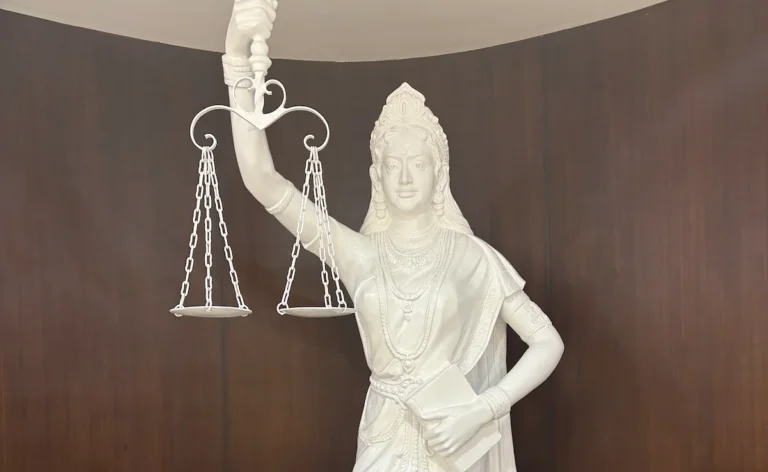
Supreme Court Unveils New Lady Justice Statue: “Law is Not Blind,” Constitution Replaces Sword

New Delhi: The Supreme Court of India recently unveiled a striking new statue of Lady Justice, departing from the traditional image of blindfolded justice. The redesigned statue, which features open eyes and replaces the sword with a copy of the Constitution, sends a clear message that in modern India, “Law is not blind.” Commissioned by Chief Justice DY Chandrachud, this symbolic change reflects a shift from colonial-era judicial representations to a more constitutionally driven vision of justice.

Traditionally, Lady Justice is portrayed as a blindfolded figure holding scales and a sword, symbolizing impartiality and the law’s power. However, this new interpretation, with its open eyes, is meant to convey that justice in India must be vigilant, not blind to inequities. The sword, typically a representation of punishment, has been replaced by the Constitution, underscoring that the judiciary derives its authority from constitutional principles rather than force or violence.

Chief Justice Chandrachud explained the reasoning behind the change: “The law is not blind, and neither should its enforcers be. The blindfolded figure was a product of colonial influence. Today, we want justice to be transparent and aware, grounded in the values enshrined in our Constitution.”

In place of the sword, the scales have been retained in the statue to emphasize the balance of justice, representing fairness and equality in the courts. The Chief Justice’s office confirmed that this shift aligns with modern Indian values and reaffirms the role of the judiciary as a defender of constitutional rights.

The new statue, prominently placed at the judges’ library in the Supreme Court, has drawn praise from legal experts for breaking away from outdated symbols and embracing a contemporary vision of justice. With this bold move, the Supreme Court reasserts its commitment to upholding the Constitution as the foundation of India’s legal system.

The Wild Robot Review: A Heartfelt Story of AI, Parenting, and Nature

0

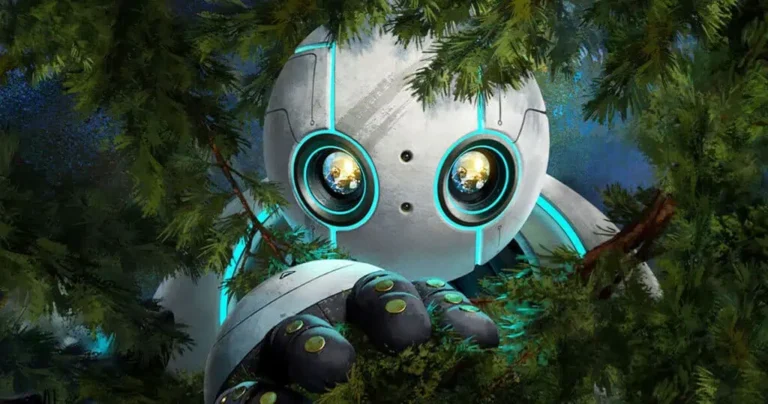
DreamWorks Animation’s latest feature, The Wild Robot, beautifully adapts Peter Brown’s beloved book into a touching and visually stunning film that resonates deeply with viewers of all ages. Following in the footsteps of The Iron Giant and Wall-E, this film explores what it means to be a parent, showing that even a robot can embody the essence of humanity.

The story centers around Roz, a service android voiced by Lupita Nyong’o, who is stranded on a remote island after a storm. Initially programmed for tasks, Roz takes on the unexpected role of a mother when she accidentally kills a goose and takes responsibility for the orphaned gosling, Brightbill. Partnering with Fink, a crafty fox (voiced by Pedro Pascal), Roz learns the complexities of raising a child—from feeding to flight training—despite having no programming for parenthood.

Visually, the film is breathtaking. DreamWorks has pushed its animation style to new heights, with a blend of photorealism and impressionistic elements that bring the island’s vibrant wildlife to life. The emotional depth of the movie, especially its treatment of life, death, and survival, sets it apart from typical children’s films. As Roz navigates the harsh realities of nature, viewers are reminded of the fragility of life and the beauty of community and sacrifice.

Critics have praised the movie’s stellar voice cast. Nyong’o’s nuanced portrayal of Roz is both robotic and deeply human, while Pascal’s comedic timing as Fink provides levity. Kit Connor, as Brightbill, brings warmth to the parent-child dynamic that anchors the story.

In terms of themes, The Wild Robot doesn’t shy away from heavier topics, including death and the survival of the fittest, but it handles these issues with care, making them approachable for both children and adults.

India’s Record Collapse: 46 All Out Against New Zealand in Bengaluru

0

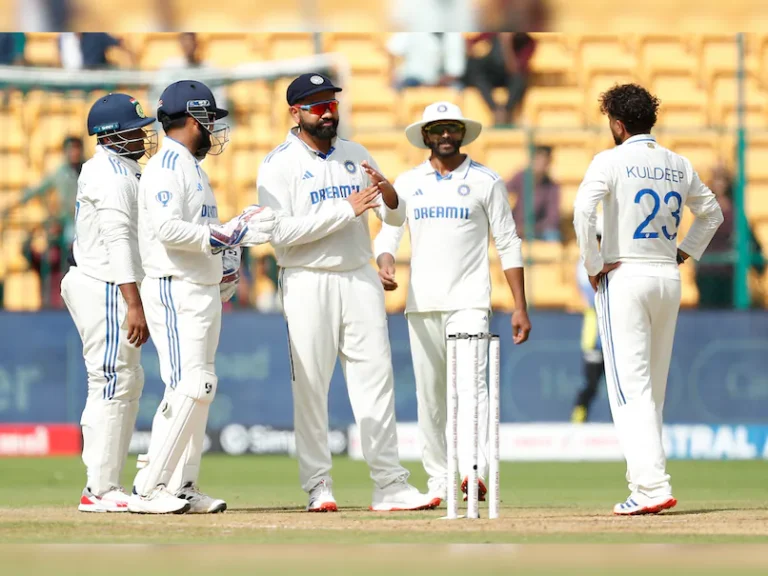
India’s batting line-up crumbled to their lowest-ever Test total at home, managing just 46 runs against New Zealand on the second day of the first Test in Bengaluru on October 17, 2024. New Zealand pacers Matt Henry (5/15) and Will O’Rourke (4/22) ran riot, capitalizing on the overcast conditions. This dismal performance eclipsed India’s previous lowest home total of 75 against West Indies in 1987.

India’s innings saw five players, including captain Virat Kohli and KL Rahul, dismissed for ducks, while only three players managed to score in double digits. Yashasvi Jaiswal was the top scorer with 13. This marks India’s third-lowest total in Test history, behind 36 against Australia (Adelaide, 2020) and 42 against England (Lord’s, 1974).

Reflecting on the collapse, Virat Kohli acknowledged, “We couldn’t adapt to the conditions fast enough.” Matt Henry, meanwhile, celebrated his 100th Test wicket, calling it “a special moment in a memorable match.”

This innings leaves India reeling, trailing New Zealand, with hopes pinned on the bowlers to avoid a series-opening defeat.

Jayant Patil Emerges as Potential CM Face Amid Sharad Pawar’s Endorsement

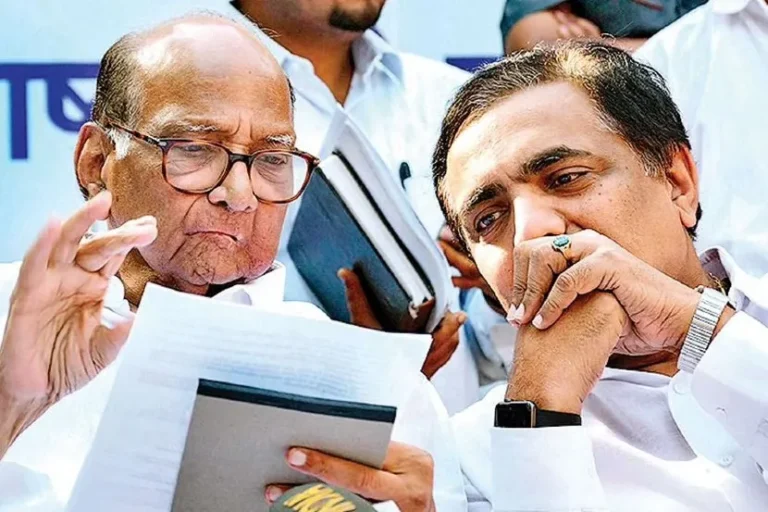
Sangli: In a significant political development, Nationalist Congress Party (Sharad Pawar faction) chief Sharad Pawar has sparked speculation by hinting at a larger role for Jayant Patil within the party, potentially positioning him as a candidate for Maharashtra’s Chief Minister. Pawar’s remarks came during the concluding rally of the NCP (SP)’s Shivswarajya Yatra in Islampur, Sangli, Patil’s home constituency.

Addressing a massive gathering, Pawar urged the crowd to rally behind Jayant Patil, expressing confidence in Patil’s leadership to “rebuild tomorrow’s Maharashtra.” His statement, “It is the wish of people like you and me that Jayant Patil should take on the responsibility,” was met with enthusiastic cheers. Although Pawar stopped short of explicitly naming Patil as the NCP’s chief ministerial candidate, his comments have fueled speculation about internal competition within the Maha Vikas Aghadi (MVA), the opposition alliance that includes the NCP, Shiv Sena (UBT), and Congress.

This implicit endorsement comes at a time when the MVA has yet to officially announce its chief ministerial candidate, despite various factions pushing their own leaders. The Shiv Sena (UBT) is advocating for Uddhav Thackeray, while Congress supporters are backing Nana Patole.

Patil, a key ally of Sharad Pawar, remained loyal to the party during the recent split following Ajit Pawar’s rebellion. Addressing the crowd, Patil downplayed the enthusiastic chants of “future CM,” humorously remarking, “One doesn’t become chief minister through slogans. It’s not that easy.” However, his growing support among the grassroots makes him a serious contender for the top post.

Pawar also took the opportunity to critique the current Mahayuti government’s policies, particularly targeting the recently launched Ladki Bahin scheme, which he argued was a short-term solution. Instead, he highlighted the NCP’s historical initiatives for women’s empowerment, including the 50% reservation for women in education and politics.

Jayant Patil echoed Pawar’s concerns, criticizing the state government’s handling of law and order, especially rising crimes against women. He also expressed concern about Maharashtra’s growing debt due to populist schemes like Ladki Bahin, promising a policy review if the MVA returns to power.

As Patil embarks on a statewide tour, the question of who will lead the MVA in the next elections has become more pressing. With Sharad Pawar’s tacit endorsement, Jayant Patil could emerge as a key player in Maharashtra’s political landscape.

Pune Man Appeals to Thief for Return of Mother’s Scooter, Offers New One in Exchange.

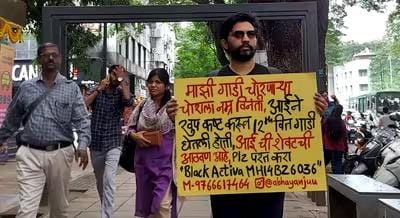
In an emotional plea, Abhay Chaugule from Pune has asked for the return of his stolen black Honda Activa scooter, the last gift from his late mother. The scooter was taken on Dussehra night from Kothrud, near the Chhatrapati Shivaji Maharaj statue. Despite filing a police report and searching the area, the vehicle has not been recovered.

Chaugule, whose mother passed away three months ago after battling cancer and father succumbed to COVID-19 two years earlier, shared the deep emotional significance of the scooter. It was purchased by his mother shortly before her death, making it a precious memento.

Turning to social media, Chaugule posted a heartfelt message in Marathi, asking anyone with information to help him locate the scooter with registration number MH14BZ6036. His post read: “Please help me find my BLACK ACTIVA MH14BZ6036. It was stolen on Dassara night. Contact me on 9766617464 or DM me on Instagram @abhayanjuu.”

In a surprising gesture, Chaugule directly addressed the thief, offering to buy them a new scooter if they returned his. He emphasized that the Activa was more than just a vehicle—it symbolized his mother’s love and hard work. His appeal struck a chord with many, as messages of support poured in online, with people hoping for the scooter’s safe return.

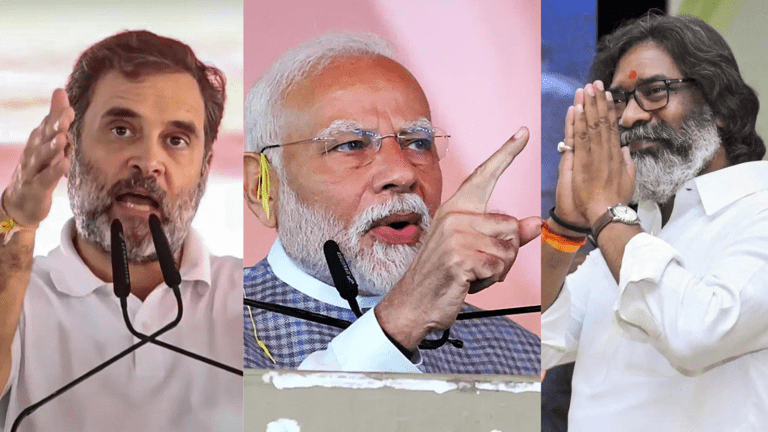
Jharkhand Elections 2024: A Crucial Battle for Governance and Growth

Ranchi: The upcoming Jharkhand Assembly Elections in 2024 will be held in two phases. The first phase of polling will be on November 13th, 2024 and the second and final phase will be held on November 20th, 2024. Counting of votes will happen on November 23rd, 2024.

The current government, led by Chief Minister Hemant Soren of the Jharkhand Mukti Morcha (JMM), is at a pivotal juncture. Soren, who heads the coalition government of the JMM, Congress, and the Rashtriya Janata Dal (RJD), has emphasized welfare programs, tribal rights, and rural development throughout his tenure. However, his government has faced scrutiny over allegations of corruption and mismanagement, particularly around issues like illegal mining and land rights violations.

On the other hand, the Bharatiya Janata Party (BJP) led by state president Babulal Marandi & opposition leader Amar Kumar Bauri aims to reclaim power, pitching itself as the party of development. The BJP has been critical of the Soren government’s handling of infrastructure and employment generation. It has promised to focus on job creation and industrial growth, particularly in sectors like mining and manufacturing, which remain key to Jharkhand’s economy.

Jharkhand is rich in mineral resources, and mining remains one of its key industries. The state is among the largest producers of coal, iron ore, and copper in India. Despite this, the state has struggled with unemployment and slow industrial growth. The Soren government’s is banking on Maiya Samman Yojana, Phool Jhano Ashirwad Abhiyan, Savitribai Phule Kishori Samridhi Yojana aimed to provide employment to women in rural areas as a major achievement. However, large-scale employment generation in the state’s urban and industrial sectors remains a challenge.

Under Soren’s leadership, there have been attempts to attract investments. The Jharkhand Industrial and Investment Promotion Policy of 2021 aimed to ease business regulations and improve infrastructure, but critics argue that tangible results have been limited.

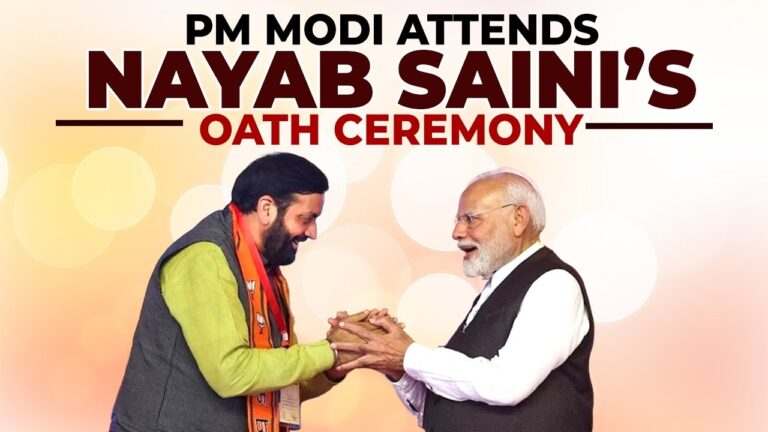
Haryana CM Oath Ceremony LIVE| Nayab Singh Saini |PM Narendra Modi |BJP |Haryana Cabinet | Panchkula

Breakthrough Nasal Drug Delivery System Offers Hope for Brain Tuberculosis Treatment

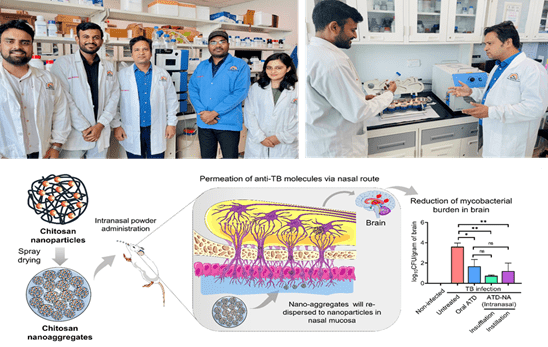
Mohali: Researchers from the Institute of Nano Science and Technology (INST), Mohali, have developed a groundbreaking method to treat Central Nervous System Tuberculosis (CNS-TB) by overcoming the blood-brain barrier (BBB), a major obstacle in delivering effective TB drugs to the brain. CNS-TB, one of the deadliest forms of tuberculosis, often leads to severe complications or death due to the difficulty of getting drugs across the BBB, which prevents most medicines from entering the brain.

The innovative solution involves using tiny particles made of chitosan, a biocompatible and biodegradable material, to deliver TB drugs like isoniazid (INH) and rifampicin (RIF) directly to the brain through the nasal route. This method bypasses the BBB by utilizing the olfactory and trigeminal nerve pathways, significantly increasing the bioavailability of the drugs at the infection site.

Led by scientists Rahul Kumar Verma and team, the approach relies on creating nano-aggregates—clusters of nanoparticles that can carry the drugs and adhere to the nasal mucosa due to chitosan’s mucoadhesive properties. These nano-aggregates prolong the drug’s presence in the nasal cavity, enhancing its absorption and effectiveness.

The treatment was tested on mice infected with TB, showing a remarkable reduction in bacterial levels in the brain—up to 1,000 times lower compared to untreated mice. The new method also reduced inflammation associated with CNS-TB, showing promise for faster recovery.

This discovery, published in the journal *Nanoscale*, is the first to demonstrate the successful delivery of TB drugs directly to the brain via the nasal route. The technology could revolutionize treatment not only for brain TB but also for other brain-related conditions such as neurodegenerative diseases, brain tumors, and epilepsy, by enabling efficient drug delivery across the BBB.

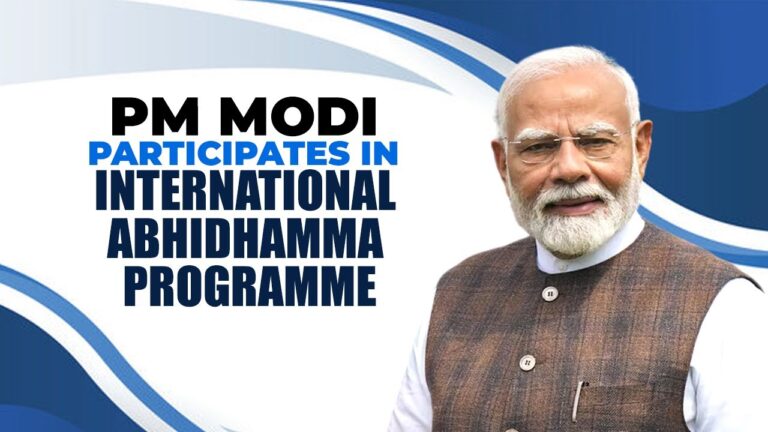
PM Modi Celebrates International Abhidhamma Divas, Highlights Pali’s Recognition as a Classical Language

New Delhi; On the occasion of International Abhidhamma Divas, Prime Minister Narendra Modi addressed a ceremony at Vigyan Bhavan in New Delhi, emphasizing the significance of Pali’s recent recognition as a classical language. The event, which marks the descent of Lord Buddha from the celestial realm after teaching Abhidhamma, was made even more special this year by the government’s decision to elevate Pali, the language in which many of Lord Buddha’s teachings were originally delivered.

PM Modi began by expressing his gratitude for being part of the celebration and shared his personal connection with Buddhism. He recalled participating in similar events, including one in Kushinagar last year, and mentioned that his birthplace, Vadnagar in Gujarat, was historically a center of Buddhism. Over the last decade, Modi has participated in various Buddhist events, such as visiting Buddha’s birthplace in Nepal, unveiling a statue in Mongolia, and participating in celebrations in Sri Lanka.

Modi expressed happiness over the recognition of Pali as a classical language, calling it a tribute to Lord Buddha’s legacy. He underscored that understanding Pali is crucial to grasping the true essence of Abhidhamma and Buddha’s teachings. Although Pali is no longer in common use, the Prime Minister emphasized the role of language as a medium to preserve culture and tradition. He highlighted his government’s efforts to revive Pali, seeing it as a shared responsibility to keep alive a language that is essential to understanding Buddhist philosophy.

Modi touched upon India’s struggle with identity, pointing out that invasions and the colonial mindset post-independence hindered the preservation of its heritage. He regretted that Pali, despite its significance, did not receive recognition until now. However, with Pali and Marathi now recognized as classical languages, Modi said the country is shedding its inferiority complex and embracing its rich past.

He also discussed the broader significance of language in nation-building. The Prime Minister highlighted the role of India’s new National Education Policy in promoting regional languages and mother tongues, which he believes strengthens the cultural fabric of the country. He expressed pride in the progress India has made in respecting its diverse languages.

Modi also highlighted the government’s dedication to preserving Buddhist heritage through projects like the Buddha circuit, which connects significant Buddhist sites across India and Nepal. These include places like Bodh Gaya, Kushinagar, and Sarnath, where development efforts are ongoing. He shared that on October 20, 2024, he would be inaugurating new projects in Varanasi’s Sarnath, further showcasing the government’s commitment to preserving Buddhist sites.

The Prime Minister stressed that the teachings of Lord Buddha are not just relevant but vital for today’s world, which is facing growing instability. He reiterated his message to the United Nations: “India has not given the world war, but Buddha,” urging global leaders to adopt Buddha’s path of peace and compassion instead of conflict. Modi emphasized that Buddha’s philosophy of compassion, humanity, and wellness can offer solutions to contemporary challenges like climate change and global unrest.

Modi concluded by aligning Buddha’s teachings with India’s goals for the future. He noted that as the country progresses, it remains rooted in its rich cultural heritage, with Buddhism providing guidance in India’s journey of development. He expressed confidence that Indian youth, under the influence of Buddhist values, will lead the world in science and technology while maintaining pride in their culture and tradition.

The event was also attended by Union Minister of Culture Gajendra Singh Shekhawat and Union Minister for Parliamentary Affairs Kiren Rijiju, among others, further underlining the significance of the occasion.

BTS’ J-Hope Returns After Military Service; Warmly Welcomed by Jin

BTS star J-Hope completed his 18-month mandatory military service at the 36th Recruit Training Battalion in Wonju, South Korea. He was greeted by fellow BTS member Jin, who had also finished his military duty earlier this year. Jin welcomed J-Hope with a bouquet of flowers, and the two shared a warm embrace, showcasing their camaraderie.

J-Hope expressed gratitude to fans, crediting their support for his well-being during the service. He highlighted the sacrifices made by soldiers and emphasized the importance of public support. Jin, ever the supportive member, even held the microphones as J-Hope addressed the press.

With J-Hope’s return, BTS continues to gradually reunite, as other members are set to complete their service next year.(Input from agencies)