Tuesday, March 3, 2026
Home Blog Page 20

Amit Shah Visits Forward BSF Posts on India–Pakistan Border, Launches Rs 250 Crore Welfare and Infrastructure Projects

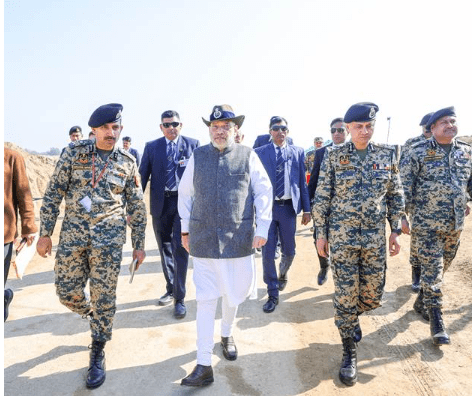
Union Home Minister and Minister of Cooperation Shri Amit Shah visited the ‘Gurnam’ and ‘Bobiya’ Border Out Posts (BOPs) along the India–Pakistan border on February 6, 2026, during the second day of his Jammu visit, reaffirming the government’s commitment to the welfare, modernization, and operational strength of the Border Security Force (BSF). During the visit, he paid tribute to fallen heroes at the ‘Ajey Prahari’ memorial, inaugurated welfare projects, and laid the foundation stone for major infrastructure initiatives aimed at strengthening border security.

Tribute to Martyrs and Inauguration of Welfare Projects

Shri Amit Shah paid floral tributes to the martyrs at the Ajey Prahari memorial and planted a sapling at BOP Bobiya, symbolising remembrance and commitment to the future. He inaugurated welfare projects worth ₹7 crore, including solar water heaters, solar power plants, and an officers’ mess, and laid the foundation stone for BSF infrastructure projects worth approximately ₹242 crore.

The event was attended by Jammu and Kashmir Lieutenant Governor Shri Manoj Sinha, the Union Home Secretary, the Director of the Intelligence Bureau, the Director General of Border Security ForceSF, and other senior officials.


BSF: An Impregnable Wall Guarding the Nation

Addressing BSF personnel, the Home Minister said that visits to BSF posts in remote and challenging regions of Kutch, Rajasthan, and Jammu & Kashmir always leave him inspired by the soldiers’ sense of duty, discipline, and unwavering commitment. He described BSF personnel as the finest example of dedication, standing guard day and night under extremely difficult conditions, and noted that the force’s glorious 60-year history has instilled a strong sense of discipline and patriotism among the people of the country.

He said that whenever the nation’s borders have faced threats of infiltration or encroachment, the BSF has stood like an impregnable wall, resolutely safeguarding India’s frontiers.

Operation Sindoor: A Golden Chapter in BSF’s History

Shri Amit Shah highlighted that the courage and gallantry displayed by the BSF in ‘Operation Sindoor’ has become a golden chapter in its six-decade history. He noted that the BSF’s Jammu and Kashmir Frontier destroyed 118 Pakistani posts and three terrorist launch pads during the operation.

He also mentioned that Sub-Inspector Mohammad Imtiaz Ahmad and Constable Deepak Chingakham, who laid down their lives in the line of duty, were awarded the Vir Chakra, and that during this period the BSF received 16 gallantry medals and several commendation certificates, a matter of immense pride for the nation.

Service Beyond Borders and During Disasters

The Home Minister said that whether deployed along the borders, in the difficult terrain of Manipur, or in Maoist-affected areas of Odisha and Chhattisgarh, the BSF has demonstrated impeccable courage everywhere. He also praised the force for its outstanding humanitarian service during natural disasters, particularly during floods in Punjab, noting that without the BSF, the challenges during the crisis would have multiplied manifold.

Focus on Technology, Modernisation, and Welfare

Shri Amit Shah подчерк (emphasised) that while courage, alertness, and dedication remain central to border security, emerging challenges are increasingly technology-driven. Therefore, advanced technological solutions must be adopted to effectively address them.

He recalled that during the BSF Raising Day celebrations, he had announced that the 61st anniversary year of the Border Security Force would be dedicated to modernisation and to the welfare of BSF personnel and their families. A dedicated team in the Ministry of Home Affairs (MHA) is continuously working on both fronts.

Under the leadership of Prime Minister Shri Narendra Modi, the government is fully committed to the welfare of security personnel. Shri Shah announced that a special welfare scheme for BSF personnel will be introduced soon and that substantial investments will be made to technologically modernise the entire border security system, improving infrastructure and equipment and reducing hardships faced by soldiers while enhancing operational efficiency.

Recognition of Women Personnel and Interaction with Troops

The Home Minister also appreciated the significant contribution of women personnel in the BSF towards border security and later had lunch with the jawans, interacting with them and acknowledging their service and sacrifice.

Conclusion

Shri Amit Shah’s visit to the forward Border Security Force posts and the launch of ₹250 crore worth of welfare and infrastructure projects underline the government’s firm resolve to strengthen border security, modernise the force, and ensure the well-being of soldiers and their families. The visit reaffirmed the central role of the BSF in safeguarding the nation and highlighted its enduring legacy of valour, sacrifice, and service.


For more real-time updates, visit Channel 6 Network.

Source: PIB
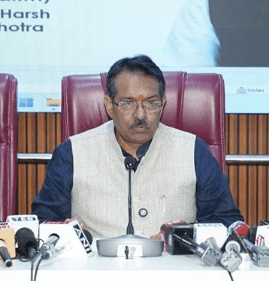
Harsh Malhotra Hails Union Budget 2026–27 as Roadmap for Viksit Bharat 2047, Emphasises Infrastructure and Inclusive Growth

Addressing the media on the Union Budget 2026–27, the Minister of State for the Ministry of Corporate Affairs and the Ministry of Road, Transport and Highways, Shri Harsh Malhotra, described the budget as a historic milestone and a clear roadmap for Viksit Bharat 2047. Presented for the first time from the newly inaugurated Kartavya Bhawan, the budget, he said, reflects the Government’s commitment to building a resilient, inclusive, and future-ready economy for 140 crore Indians.

A Budget Rooted in Vision, Stability and Reform

Shri Malhotra stated that the budget is firmly anchored in Prime Minister Shri Narendra Modi’s vision for a developed India. He lauded Finance Minister Smt. Nirmala Sitharaman for presenting her ninth consecutive Union Budget, calling it a symbol of continuity, stability, and bold reforms. According to him, the budget balances growth with welfare, ambition with prudence, and innovation with inclusivity, making it truly a “Budget for 140 crore Indians.”

He highlighted that the budget is guided by three core Kartavya (duties):

  • Enhancing productivity with competitiveness,

  • Accelerating skill development, and

  • Ensuring equitable participation across communities and sectors.

Strong Macroeconomic Foundations and Global Confidence

The Minister underscored that over the past decade, the government has tripled the overall budget size while maintaining a lower fiscal deficit, demonstrating prudent financial management alongside ambitious development goals. He pointed to a sixfold increase in capital expenditure and a threefold rise in budget size since 2014, driving infrastructure growth, job creation, and long-term productivity.

Shri Malhotra noted that India’s exports have reached USD 825 billion, defence production is rising under Aatmanirbhar Bharat, Gross NPAs have declined significantly, and FDI inflows continue to grow, reflecting strong global confidence in India’s economic fundamentals. He also highlighted reforms such as single-window approvals across 32 central departments and most states, over 300 mobile manufacturing units, and the success of Make in India, positioning India as a global manufacturing hub.


Education, Skilling and Women-Led Development

Education and skilling, he said, remain central pillars of the budget. The government has announced the development of five university townships along industrial corridors and the creation of ecosystems integrating academia with industry.

Highlighting the focus on women-led development, Shri Malhotra said the government has presented its ninth consecutive gender-focused budget, including provisions for hostels in every district to improve access to education and employment opportunities for women.

AI, Healthcare and Social Security: Building Future Readiness

The Minister stressed that Artificial Intelligence will be a key focus area to equip India’s youth with future-ready skills. Short-term modular courses will support professionals, small traders, and underemployed individuals, keeping the workforce globally competitive.

Healthcare has received a record allocation of around ₹1 lakh crore, with ₹10,000 crore earmarked for the Biopharma Shakti initiative to boost innovation and self-reliance in medical technologies. The plan to train 1,00,000 allied health professionals, set up three AIIMS-Ayurveda institutions and five integrated medical hubs, along with the continued expansion of Ayushman Bharat and PM Vaya Vandana Yojana, reflects a comprehensive and inclusive healthcare approach.

Infrastructure Push: Roads, Rail and National Security

Calling infrastructure the backbone of the budget, Shri Malhotra highlighted the allocation of approximately ₹3 lakh crore for road infrastructure and the plan for seven high-speed rail corridors. Projects such as the Delhi–Varanasi rail corridor and the redevelopment of 1,000 stations under the Amrit Bharat initiative are set to transform rail travel.

Defence has received a robust ₹7.5 lakh crore allocation, reinforcing India’s commitment to national security while strengthening indigenous manufacturing.

A landmark project, the Delhi–Mumbai Expressway, scheduled for completion by 2027, will reduce travel time from 33 hours to just 12 hours, dramatically improving logistics efficiency and economic integration, the Minister said.

Delhi Decongestion Plan and Urban Infrastructure

Shri Malhotra highlighted a ₹24,000 crore Delhi Decongestion Plan aimed at easing traffic, reducing pollution, and improving urban mobility. Key road stretches—Ashram to Badarpur, Punjabi Bagh to Tikri Border, and Mehrauli to Gurugram—now under NHAI, covering 33 km, will significantly improve traffic flow between Delhi and neighbouring regions.

He also outlined major connectivity projects, including:

  • Extension of the Delhi–Amritsar–Katra Expressway (NE-5) to UER-II,

  • Extension of UER-II (NH-344M) to the Delhi–Dehradun Expressway, and

  • Construction of a road tunnel from Dwarka Expressway to Nelson Mandela Marg, Vasant Kunj, to ease traffic movement.

Environmental Sustainability and Civic Infrastructure: Viksit Bharat 2047

Environmental sustainability, especially for Delhi, is another priority. Shri Malhotra reiterated the government’s commitment to eliminating the Bhalswa, Ghazipur, and Okhla landfills, with waste being processed under the Waste to Wealth vision. Inert waste has already been used in projects like UER-II and Dwarka Expressway.

He also mentioned a ₹380 crore water treatment plant in Chandrawal to strengthen the “Nal Se Jal” mission. Additional allocations include ₹2,700 crore for railway infrastructure in Delhi, ₹1,000 crore for pollution control, ₹15 crore for natural calamities, and ₹2 crore to support victims of the Anti-Sikh riots, reflecting a compassionate and inclusive governance approach.

Conclusion

Shri Harsh Malhotra said the government’s focus on affordable education, affordable healthcare, and affordable ease of living reaffirms its commitment to improving the quality of life for every citizen. He described the Union Budget 2026–27 as not merely a financial statement, but an architectural blueprint for a developed India.

Under the leadership of Prime Minister Shri Narendra Modi and the reform-oriented guidance of Finance Minister Smt. Nirmala Sitharaman, he said, India is moving ahead at an unprecedented pace—and the dream of Viksit Bharat 2047 is no longer distant, but decisively within reach.


For more real-time updates, visit Channel 6 Network.

Source: PIB
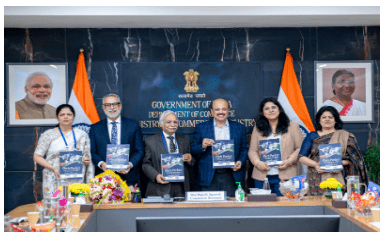
‘Pitch Perfect Australia–India’ Business Case Studies Compendium Launched at IIFT: 2026

The India–Australia Business Case Studies Compendium, titled “Pitch Perfect Australia–India: Perfect Conditions for a $100 Billion Partnership,” was launched at the Indian Institute of Foreign Trade (IIFT), Delhi Campus, marking a significant step in strengthening economic collaboration between the two countries. The event brought together policymakers, diplomats, industry leaders, and academia to deliberate on the next phase of India–Australia economic engagement.

A Practical Guide to Cross-Border Business

Jointly developed by IIFT and Newland Global Group, the compendium documents real-world business journeys of companies operating across India and Australia. It captures market-entry experiences, growth strategies, and key lessons from 30 organisations that have successfully navigated opportunities in both markets. The publication aims to serve as a practical, evidence-based resource for businesses, policymakers, and researchers.


Government and Diplomatic Endorsement

Commerce Secretary Shri Rajesh Agrawal commended IIFT for anchoring the initiative, highlighting its relevance for policy, industry, and academic stakeholders. He noted that the case studies demonstrate how the trade agreement has translated into real opportunities for businesses and added that the compendium would play an important role in strengthening the gains of the India–Australia Economic Cooperation and Trade Agreement (ECTA).

Australian High Commissioner to India, Mr. Philip Green OAM, praised the initiative and acknowledged IIFT’s role in fostering informed dialogue on bilateral trade. He emphasised that platforms bringing together academia, government, and industry are vital for the strong strategic relationship between India and Australia.

Strengthening the ECTA Framework

Joint Secretary Ms. Petal Dhillon highlighted the growing momentum in India–Australia economic relations, noting that IIFT has played an important role in generating research-driven insights and facilitating dialogue that supports the strengthening and enhanced utilisation of ECTA.

Vice Chancellor, IIFT, Prof. Rakesh Mohan Joshi, underscored the value of documenting real business journeys and transforming them into learning resources for both industry and academia. He stated that such collaborations reflect IIFT’s commitment to bridging research and practice and supporting India’s expanding footprint in global trade.

Industry Perspectives and Case Study Insights

Mr. Dipen Rughani, Founder & CEO, Newland Global Group, Australia, highlighted the importance of business-driven case studies in enabling deeper bilateral engagement. Ms. Natasha Jha Bhaskar, Executive Director, Newland Global Group, Australia, showcased success stories and key lessons from companies operating in both markets.

The session concluded with a panel discussion featuring representatives from government, trade bodies, and companies active in India and Australia, followed by networking interactions among stakeholders. Ambassador Anil Wadhwa also appreciated the compendium, calling it a meaningful step toward strengthening India–Australia economic engagement.

About IIFT and the Road Ahead

With India and Australia working to deepen economic ties, the compendium is expected to serve as a practical roadmap for identifying opportunities, addressing challenges, and showcasing successful cross-border collaborations.

Established in 1963 under the Ministry of Commerce & Industry, Government of India, the Indian Institute of Foreign Trade (IIFT) is a premier institution dedicated to capacity building in international business through education, training, research, and consultancy. Granted Deemed-to-be-University status in 2002, IIFT has played a pivotal role in developing human resources and knowledge frameworks for India’s external trade and global business engagement.

Conclusion

The launch marks a significant milestone in documenting and disseminating real-world business experiences under the India–Australia partnership. By combining policy insight, academic rigour, and industry experience, the compendium is set to become a valuable reference point for strengthening bilateral trade and investment ties in the years ahead.


For more real-time updates, visit Channel 6 Network.

Source: PIB
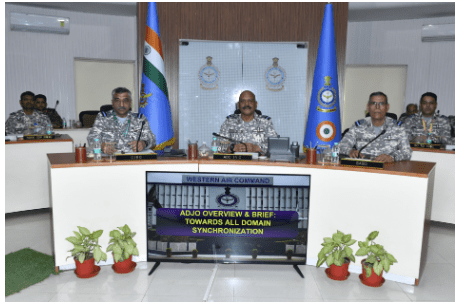
Western Air Command Hosts Strong High-Level Joint Operations Conclave Under ADJO Exercise 2026 Framework

The Headquarters Western Air Command successfully conducted a high-level Joint Operations Conclave on 05 and 06 February 2026 under the All Domain Joint Operations (ADJO) Exercise 2026 framework, marking a significant step toward strengthening joint operational capabilities of the Indian Defence Forces. The conclave focused on deepening intra-service and inter-service coordination at the operational level of warfare in an increasingly complex multi-domain security environment.

The deliberations were attended by senior officers from the Headquarters Integrated Defence Staff (IDS), Indian Army, Indian Navy, Defence Space Agency (DSA), and Defence Intelligence Agency (DIA), along with senior leadership from the Indian Air Force, reflecting a comprehensive tri-service and multi-agency approach to future warfare.

Emphasis on Jointness and All-Domain Integration

In his inaugural address, Air Marshal JS Mann, Senior Air Staff Officer, Western Air Command, underscored the paramount importance of jointness and integrated warfighting in contemporary and future conflicts. He highlighted the urgent need for an all-domain operational approach that ensures seamless integration across air, land, sea, space, and cyber domains, enabling decisive outcomes in contested and denied environments.

He further stressed the importance of enhancing interoperability among the services, promoting domain-agnostic decision-making, strengthening sensor-to-shooter linkages, and refining operational procedures to improve efficiency and effectiveness across the battlespace.


Institutionalising Joint Mechanisms and Capability Development

Addressing the conclave, Air Marshal Ashutosh Dixit, Chief of Integrated Defence Staff, highlighted the need to institutionalise joint mechanisms for integrated planning, intelligence sharing, and capability prioritisation. He emphasised the importance of coherent inter-service responses and the structured identification of capability gaps to strengthen comprehensive operational preparedness for future contingencies.

He also underscored the necessity of advancing all-domain integration to achieve synergistic effects across services and deliver unified operational outcomes. Calling for accelerated doctrinal evolution and tri-service resource alignment, Air Marshal Dixit advocated building a strong, unified operational capability and sustaining long-term strategic readiness.

Lessons from Operations and the Future of Warfare

Concluding the conclave, Air Marshal Jeetendra Mishra, Air Officer Commanding-in-Chief, Western Air Command, delivered a comprehensive address drawing critical lessons from Operation Sindoor and outlining their implications for future warfare. He highlighted the pivotal role of air power in generating decisive strategic effects, the necessity of synchronising surface manoeuvre with offensive air operations, and the strategic advantage offered by the use of stand-off weapons.

Air Marshal Mishra called for a decisive shift away from legacy attrition-based models characteristic of earlier conflicts and from conventional Effects-Based Operations frameworks, advocating instead for a more agile, adaptive, and fully integrated joint warfighting paradigm. He emphasised the imperative of identifying and bridging capability gaps, reinforcing convergence across all domains, and building a robust foundation for coordinated, effects-driven responses in the all-domain battlespace.

ADJO 2026: Building a Future-Ready Joint Force

The All Domain Joint Operations Exercise 2026 represents an important milestone in India’s defence preparedness and is expected to play a decisive role in building a truly interoperable and future-ready joint force capable of operating across the full spectrum of modern security challenges.

Conclusion

The conclave reaffirmed the Indian Defence Forces’ commitment to jointness, operational synergy, and continuous adaptation in pursuit of national security objectives. By strengthening integration across domains and services, ADJO 2026 lays the groundwork for a more cohesive, responsive, and decisive military posture in the face of evolving threats.


For more real-time updates, visit Channel 6 Network.

Source: PIB
National Conference on Naturopathy 2026 Positively Highlights Integrative Healthcare Through “Yoga Samyog”

Experts and researchers at the National Conference on Naturopathy–2026, held on 5–6 February 2026, underscored the growing importance of evidence-based integration of Yoga and Naturopathy in preventive, promotive, and rehabilitative healthcare. The two-day conference was jointly organised by the Morarji Desai National Institute of Yoga (MDNIY) and the Central Council for Research in Yoga & Naturopathy (CCRYN) under the Ministry of Ayush, Government of India, bringing together leading voices from medicine, research, and public health.

Theme Focus: “Yoga and Naturopathy for a Stronger and Healthier You”

The main theme of the conference, “Yoga and Naturopathy for a Stronger and Healthier You,” was complemented by the sub-theme “SamYog,” which aims to build a shared knowledge platform for integrating Ayush systems with modern medicine for public health interventions.

In a video message, Shri Prataprao Jadhav, Minister of State (Independent Charge), Ministry of Ayush, highlighted that improved health outcomes have been achieved through the integration of Ayush practices. He reaffirmed the Ministry’s commitment to promoting research in traditional systems of medicine and expanding public awareness.


Inaugural Session: Global Reach of Yoga and Integrative Healthcare Vision

The inaugural session was presided over by Ms. Monalisa Dash, Joint Secretary, Ministry of Ayush, who emphasised that Yoga and Naturopathy complement each other in building a sustainable healthcare model. She also expressed pride in the global success of the International Day of Yoga, now celebrated in 190 countries in 2026. Referring to “Vasudhaiva Kutumbakam” as a core Indian philosophy, she stressed the need for a holistic and integrative approach to healthcare.

Academic Deliberations: “Yog Samyog” and Scientific Research

The academic segment titled “Yog Samyog” focused on the theme “Yoga Research: Past, Present & Future,” bringing together experts to discuss scientific developments in Yoga research.

The first session, chaired by Prof. (Dr.) Kashinath Samagandi, Director, MDNIY, featured a keynote address by Dr. Vishwas Mandalik, Director, Yoga Vidya Gurukul, Nashik, on Yoga Nidra as Psychotherapy. He illustrated the therapeutic benefits of Yoga Nidra in managing conditions such as obesity, spinal disorders, and insomnia.

In the same session, Dr. Satish D. Pathak, Assistant Director of Scientific Research at Kaivalyadhama, shared findings from Yoga research, highlighting that diabetes, a rapidly rising lifestyle disorder, can be effectively managed through early diagnosis, balanced lifestyle practices, Yoga, and natural therapies.

Strengthening the Scientific Foundation of Yoga and Naturopathy

The event was also graced by Shri Amarendra Singh, Director (Yoga & Naturopathy), Ministry of Ayush, and Additional In-Charge Director, National Institute of Naturopathy (NIN), Pune. He emphasised the importance of research, education, and public outreach in strengthening the scientific credibility and wider acceptance of Yoga and Naturopathy.

The second session featured a special keynote lecture by Dr. Ramesh Bijlani, Former Professor, Department of Physiology, AIIMS, New Delhi, who spoke on impactful Yoga research for healthcare. He stressed the need for continuous, robust, and scientifically validated research to further enhance Yoga’s role in modern healthcare.

Research Presentations on Women’s Health and Lifestyle Disorders

The third session, chaired by Dr. Jagdish Prasad, included research presentations on women’s health, lifestyle disorders, advancements in Yoga therapy, and the neuro-physiological aspects of meditation and sleep, reflecting the deepening integration of Yoga with modern medical science.

Notable presenters included Dr. Sudha Prasad (Maulana Azad Medical College), Prof. Asha Gandhi (Lady Hardinge Medical College), Prof. (Dr.) Rudra Bhandari (Swami Rama Himalayan University, Dehradun), and Dr. Ravindra P. N. (NIMHANS, Bengaluru).

Valedictory Session and Key Takeaways

At the valedictory session, Prof. (Dr.) Kashinath Samagandi expressed gratitude to all participants and speakers for their contributions. The discussions across plenary sessions strongly emphasised evidence-based practices, interdisciplinary collaboration, and structured integration of Yoga and Naturopathy to strengthen healthcare delivery.

Conclusion

The National Conference on Naturopathy–2026 successfully facilitated knowledge exchange, policy dialogue, and collaborative engagement among experts and institutions. The event reaffirmed the Government of India’s vision of promoting integrative healthcare systems that combine traditional wisdom with modern science, paving the way for a healthier and more sustainable future.


For more real-time updates, visit Channel 6 Network.

Source: PIB

AIIA Hosts One-Day National Workshop on Nadi Pareeksha to Strengthen Ayurvedic Diagnostics: 2026

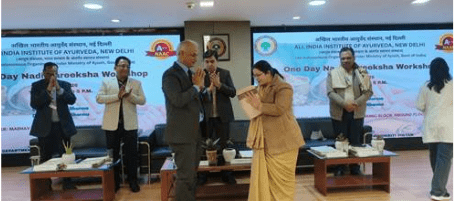
The All India Institute of Ayurveda (AIIA), New Delhi, through its Department of Roga Nidan Evam Vikriti Vigyan (RNVV), successfully organised a one-day National Workshop on Nadi Pareeksha on Thursday, February 6, 2026, at the institute premises. The workshop witnessed enthusiastic participation from faculty members and scholars representing 19 Ayurvedic colleges across Delhi-NCR and neighbouring states, including Haryana and Uttar Pradesh, reflecting strong academic interest in strengthening classical diagnostic practices.

Inaugural Session: Focus on Evidence-Based Ayurvedic Diagnosis

The inaugural ceremony was graced by Prof. (Vd.) P. K. Prajapati, Director, AIIA, in the presence of Dr. R. K. Yadav, Dean (PG), Dr. Raja Ram Mahato, Medical Superintendent (AMS), and Dr. Vivek Aggarwal, Head, Department of RNVV.

In his inaugural address, Prof. Prajapati emphasised the need to strengthen Ayurvedic diagnostic skills through practical, systematic, and evidence-based approaches. Highlighting the contemporary relevance of Nadi Pareeksha as a classical diagnostic tool, he stressed the importance of its academic reinforcement and clinical validation. In his presidential address, he also paid tribute to eminent Vaidyas who made significant contributions to the field, including Vaidya Basant Lad, Prof. R. K. Singh, and Prof. M. S. Baghel.

He further underlined the need for validation through the integration of new technologies, such as the Nadi Tarangini app and other emerging diagnostic tools, to enhance accuracy and wider clinical acceptance.


Expert Sessions: Bridging Tradition with Clinical Practice

Renowned Nadi Vaidyas Dr. Sudha Sharma and Dr. Rajiv Sharma served as guest speakers for the workshop. They shared their extensive clinical experience through practical demonstrations, hands-on training sessions, and in-depth discussions, offering participants valuable insights into both the art and science of Nadi Pareeksha.

The sessions focused on interpretative techniques and the integration of traditional Ayurvedic wisdom with modern diagnostic understanding, helping participants gain a clearer and more practical perspective on pulse diagnosis in clinical settings.

Interactive Learning and Clinical Orientation

The workshop was organised with the objective of disseminating the practical and clinical aspects of Nadi Pareeksha at both scholar and faculty levels, ensuring its effective integration into core clinical practice. Interactive sessions, live demonstrations, and case-based discussions formed a key part of the programme, providing participants with rich experiential learning and hands-on exposure.

Conclusion

The workshop reaffirmed AIIA’s commitment to excellence in Ayurveda education, capacity building, and the promotion of authentic diagnostic methodologies at the national level. By combining classical knowledge with modern tools and clinical validation, the initiative marks an important step toward strengthening evidence-based Ayurvedic diagnostics and enhancing its relevance in contemporary healthcare practice.


For more real-time updates, visit Channel 6 Network.

Source: PIB
February 6, 2026: Nifty Ends Higher on Friday as FMCG and Banking Stocks Rally; IT Remains Under Pressure

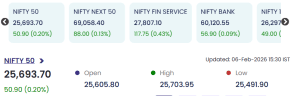
Indian equity markets closed Friday, February 6, 2026, on a positive note, with the Nifty 50 ending in the green as strong buying in FMCG and banking stocks outweighed weakness in the IT sector. After a cautious and range-bound session, the benchmark managed to hold gains into the close, reflecting selective accumulation in heavyweight stocks and improved sentiment in defensives and financials.

Also Read: February 6, 2026: Nifty Trades Marginally Lower in Late Morning as IT Stocks Drag; ITC and Banks Support

Market Snapshot: Benchmarks Settle with Modest Gains

At the close, the Nifty 50 ended at 25,693.70, up 50.90 points or 0.20%. The index had opened at 25,605.80, moved to an intraday high of 25,703.95, and touched a low of 25,491.90, indicating a volatile but ultimately positive session.

Other key indices also finished higher:

  • February 6Nifty Next 50 rose 0.13% to 69,058.40

  • Nifty Financial Services gained 0.43% to 27,807.10

  • Nifty Bank added 0.09% to 60,120.55

The broader market tone improved in the second half of the session, supported by buying in select heavyweight counters.


Top Gainers: ITC, Kotak Bank and HUL Lead the Rally

Several frontline stocks delivered strong gains and provided crucial support to the benchmarks:

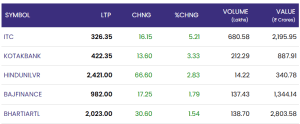
  • ITC surged 5.21% to ₹326.35, emerging as the top gainer on heavy volumes, reflecting strong buying interest in FMCG stocks.

  • Kotak Mahindra Bank climbed 3.33% to ₹422.35, supporting the banking index.

  • Screenshot 2026 02 06 220118Hindustan Unilever (HUL) rose 2.83% to ₹2,421.00, adding further strength to the FMCG space.
  • Bajaj Finance gained 1.79% to ₹982.00, indicating sustained interest in financial stocks.

  • Bharti Airtel advanced 1.54% to ₹2,023.00, lending support from the telecom sector.

Top Losers: IT and Insurance Stocks Weigh on the Market

Despite the positive close, select stocks remained under pressure, particularly in the IT and insurance segments:

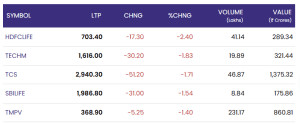
  • HDFC Life declined 2.40% to ₹703.40, leading the losers’ pack.

  • Tech Mahindra slipped 1.83% to ₹1,616.00, extending weakness in IT stocks.

  • Screenshot 2026 02 06 220127TCS fell 1.71% to ₹2,940.30, remaining under selling pressure.

  • SBI Life dropped 1.54% to ₹1,986.80, reflecting softness in insurance counters.

  • TMPV eased 1.40% to ₹368.90, rounding off the list of major laggards.

Market Sentiment and Outlook

The market’s positive close suggests a selective risk-on approach, with investors favoring FMCG and banking heavyweights while staying cautious on IT and insurance stocks. The mixed sectoral performance points to a stock-specific market rather than a broad-based rally.

Going ahead, market participants are likely to track global cues, institutional flows, and upcoming economic data, while volatility could remain elevated in the near term.

Conclusion: February 6, 2026

The Nifty 50 ended Friday’s session higher, supported by strong gains in ITC, Kotak Bank, and Hindustan Unilever, even as IT and insurance stocks lagged. The session reflected improving but selective sentiment, indicating that investors continue to focus on quality and defensives amid an evolving market environment.


For real time stock Updates, visit NSE website.

February 6, 2026: Nifty Trades Marginally Lower in Late Morning as IT Stocks Drag; ITC and Banks Support

Indian equity markets were trading on a cautious note in late morning trade on Friday, February 6, 2026, with the Nifty 50 hovering slightly below the flat line. While heavy selling pressure in IT stocks weighed on the benchmark, strength in FMCG, banking, and select financial stocks helped limit the downside. Overall, the market reflected a mixed and stock-specific trend, with investors staying selective amid uncertain cues.

Also Read: February 5, 2026: Nifty Ends Lower Despite Late Recovery; Trent and Metal Stocks Shine

Market Snapshot: Benchmarks Largely Range-Bound

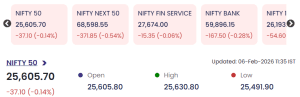
At around 11:35 IST, the Nifty 50 was trading at 25,605.70, down 37.10 points or 0.14%. The index opened almost flat at 25,605.80, moved to an intraday high of 25,630.80, and touched a low of 25,491.90, indicating a narrow but volatile trading range during the session.

Other key indices showed mild weakness:

  • February 6Nifty Next 50 declined 0.54% to 68,598.55
  • Nifty Financial Services slipped 0.06% to 27,674.00

  • Nifty Bank eased 0.28% to 59,896.15

The overall market tone suggested consolidation after recent sessions of volatility.


Top Gainers: ITC, Kotak Bank and Bharti Airtel Lead

Despite the muted benchmark performance, several frontline stocks posted strong gains:

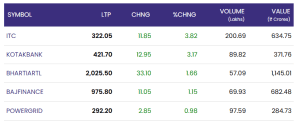
  • ITC jumped 3.82% to ₹322.05, emerging as the top gainer, supported by strong buying interest and heavy volumes.

  • Kotak Mahindra Bank rose 3.17% to ₹421.70, providing strength to the banking space.

  • Screenshot 2026 02 06 113537Bharti Airtel advanced 1.66% to ₹2,025.50, lending support to the telecom sector.
  • Bajaj Finance gained 1.15% to ₹975.80, reflecting steady interest in financial stocks.

  • Power Grid added 0.98% to ₹292.20, indicating defensive buying in the power utility space.

These gains helped cushion the broader market from sharper losses.

Top Losers: IT Stocks Under Pressure

The IT sector remained the biggest drag on the indices, with several heavyweight stocks witnessing selling pressure:

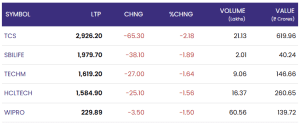
  • TCS slipped 2.18% to ₹2,926.20, leading the losers’ pack.

  • SBI Life declined 1.89% to ₹1,979.70, reflecting weakness in the insurance space.

  • Screenshot 2026 02 06 113544Tech Mahindra fell 1.64% to ₹1,619.20, extending losses in IT counters.
  • HCL Technologies dropped 1.56% to ₹1,584.90, adding to the sectoral drag.

  • Wipro eased 1.50% to ₹229.89, rounding off the list of major IT losers.

The broad-based weakness in IT stocks indicates cautious sentiment toward the sector in the current session.

Market Sentiment and Near-Term Outlook

The market’s narrow movement suggests a phase of consolidation, with investors balancing gains in defensives and financials against losses in IT and select large-cap names. The mixed sectoral performance highlights a stock-specific approach rather than a strong directional trend.

In the near term, traders are likely to stay cautious and reactive to global cues, currency movements, and institutional flows, while investors may prefer to wait for clearer triggers before making aggressive bets.

Conclusion: February 6, 2026

The Nifty 50 traded marginally lower in late morning trade, weighed down by weakness in IT stocks, even as strong gains in ITC, Kotak Bank, and Bharti Airtel provided support. The session so far reflects a cautious and selective market, with consolidation likely to continue in the absence of strong fresh triggers.


For real time stock Updates, visit NSE website.

February 5, 2026: Nifty Ends Lower Despite Late Recovery; Trent and Metal Stocks Shine

Indian equity benchmarks closed Thursday, February 5, 2026, in negative territory, though they managed to recover part of the intraday losses in the final hour of trade. The Nifty 50 settled below the 25,650 mark as cautious sentiment, profit-booking, and selective selling in heavyweight stocks kept the broader market under pressure. However, strength in select retail, healthcare, and metal stocks provided some support toward the close.

Also Read: February 5, 2026: Nifty Extends Losses at Midday as Broad-Based Selling Drags Markets Lower

Market Snapshot: Benchmarks Close in the Red

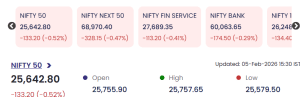
At the close, the Nifty 50 ended at 25,642.80, down 133.20 points or 0.52%. The index had opened at 25,755.90, hit an intraday high of 25,757.65, and slipped to a low of 25,579.50, before staging a modest recovery in the latter part of the session.

Other key indices also finished lower:

  • February 5Nifty Next 50 fell 0.47% to 68,970.40

  • Nifty Financial Services declined 0.41% to 27,689.35

  • Nifty Bank eased 0.29% to 60,063.65

The broader market remained mixed, reflecting stock-specific action rather than a strong directional trend.


Top Gainers: Trent Leads; Metals and Healthcare See Buying

Several stocks outperformed the broader market and closed with solid gains:

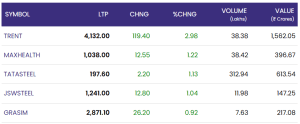
  • Trent surged 2.98% to ₹4,132.00, emerging as the top gainer on strong buying interest and healthy volumes.

  • Max Healthcare rose 1.22% to ₹1,038.00, showing continued strength in healthcare stocks.

  • Screenshot 2026 02 06 010724Tata Steel gained 1.13% to ₹197.60, supported by buying in metal counters.
  • JSW Steel advanced 1.04% to ₹1,241.00, adding to the positive momentum in the steel sector.

  • Grasim climbed 0.92% to ₹2,871.10, providing support from the diversified conglomerate space.

Top Losers: Hindalco, Telecom and FMCG Stocks Drag

On the flip side, several heavyweights witnessed notable selling pressure:

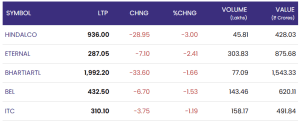
  • Hindalco dropped 3.00% to ₹936.00, leading the losers’ pack despite broader strength in some metal stocks.

  • Screenshot 2026 02 06 010746Eternal slipped 2.41% to ₹287.05, remaining under pressure throughout the session.
  • Bharti Airtel declined 1.66% to ₹1,992.20, weighing on the telecom space.

  • Bharat Electronics (BEL) fell 1.53% to ₹432.50, extending losses in defence stocks.

  • ITC eased 1.19% to ₹310.10, reflecting mild profit-booking in FMCG names.

Market Sentiment and Outlook

Although the Nifty managed to recover from its intraday lows, the overall tone of the market remained cautious. Investors appeared selective, preferring stocks with strong sectoral or company-specific triggers while trimming exposure in others. The mixed performance across sectors indicates a phase of consolidation after recent market moves.

In the near term, market direction is likely to be influenced by global cues, institutional flows, and upcoming macroeconomic data, with volatility expected to remain elevated.

Conclusion: February 5, 2026

The Nifty 50 closed lower for the day, but a late-session recovery and strong performance in stocks like Trent and select metal names helped limit the downside. The session reflected a cautious, stock-specific market, suggesting that investors may continue to adopt a selective and defensive approach in the near term.


For real time stock Updates, visit NSE website.

Tribal Dept to Team Up With Global Chess Body to Reshape Learning in Schools in 2026

0

Tribal Dept to Team Up With FIDE Panel to Introduce Chess as Learning Tool

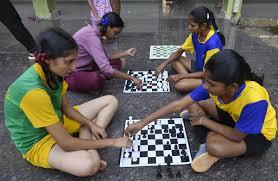
Tribal dept to team up with the education wing of the International Chess Federation to bring chess into classrooms of government-run tribal schools, marking a new approach to learning in educationally backward regions. The Tamil Nadu Tribal Welfare Department is working on a structured programme that treats chess not as a sport activity but as a classroom-based learning method aimed at improving thinking skills, focus, and problem-solving abilities among students.Tribal dept to team up with FIDE's education panel to make chess a learning  tool in schools

The initiative is being designed in collaboration with the FIDE Education Commission, which promotes chess as a learning aid in schools worldwide. Officials said the programme is intended to strengthen academic engagement and help students from tribal communities develop essential life skills through regular classroom activities.

Unlike traditional chess clubs or after-school sessions, the plan is to integrate chess directly into daily teaching methods, making it part of the school learning process rather than an optional activity.

Tribal Dept to Team Up for Teacher Training and Classroom Integration

The programme will be introduced in phases, beginning with intensive teacher training. Teachers from tribal welfare schools will be trained in using chess-based learning techniques that support classroom instruction. The focus will be on helping teachers understand how chess can improve memory, logical thinking, and decision-making skills among children.FIDE EDU

Training modules will include both online and in-person sessions. Teachers will be guided on using simple tools, activity-based lessons, and student participation methods. One of the planned methods includes interactive approaches where students physically represent chess pieces, helping them understand concepts through movement and discussion.

Officials involved in the planning said this method is especially useful for students who struggle with traditional textbook-based learning. By making lessons more interactive, the programme aims to improve student participation and classroom confidence.

The department believes this approach will also support teachers by providing a structured yet flexible teaching tool that does not require expensive infrastructure.

Tribal Dept to Team Up to Improve Learning Outcomes in Remote Areas

The programme is expected to benefit students studying in remote tribal regions, where access to modern educational tools is often limited. By introducing chess as a learning method, the department aims to bridge learning gaps and bring new teaching practices into schools that face resource challenges.

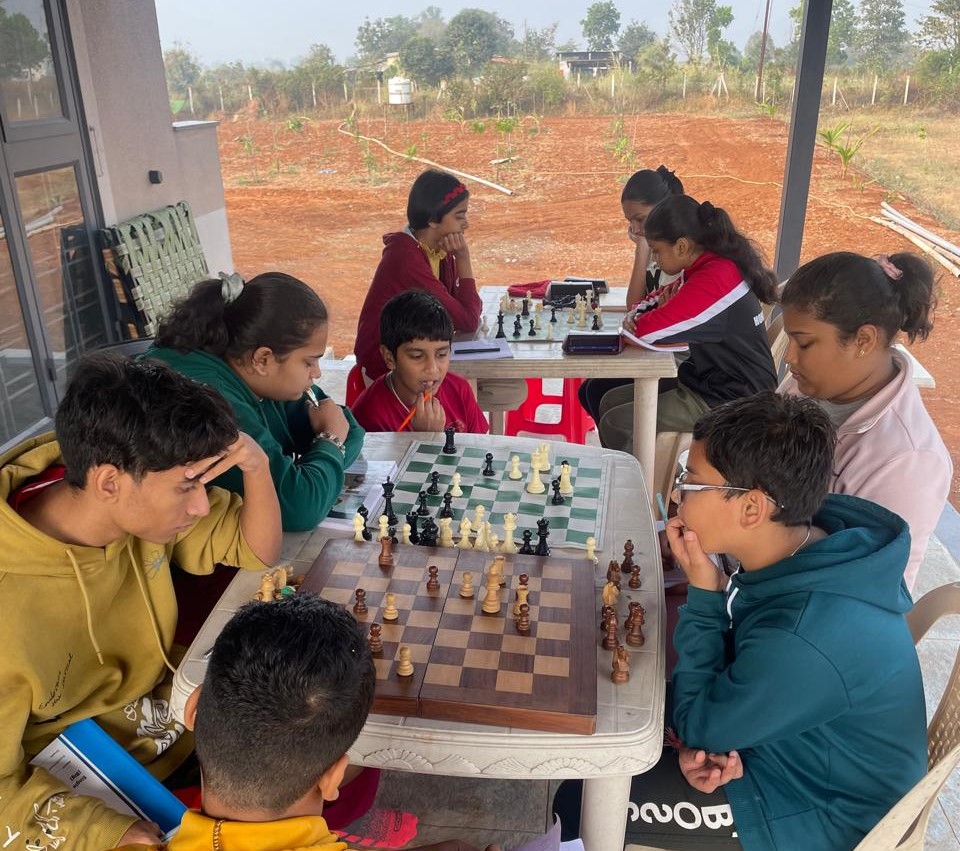
Education officials said chess has been shown to support skills such as concentration, planning, patience, and analytical thinking. These skills are seen as essential not only for academic performance but also for overall personal development.Tribal Students Play chess – All India Chess Federation

The collaboration with FIDE’s education panel will help localise the chess curriculum to suit Indian classrooms and learning conditions. Trainers associated with the programme noted that structured chess education has shown positive results in subjects like mathematics and logical reasoning when used consistently in school settings.

The department is also exploring blended learning models that combine classroom instruction with digital platforms. This would allow students to continue learning through simple online tools while teachers gradually build their expertise.

Tribal Dept to Team Up for Sustainable and Low-Cost Education Model

Officials stressed that the initiative is designed to be sustainable and affordable. Chess requires minimal equipment and can be adapted to different classroom sizes and learning levels. This makes it suitable for schools operating with limited resources.

The programme will include monitoring mechanisms to track progress and ensure the teaching methods are effective. Feedback from teachers and students will be used to refine the approach before expanding it to more schools.

Education department representatives said the goal is to create equal learning opportunities for children from marginalised communities and ensure they are not left behind in developing essential skills needed for higher education and future careers.

The initiative could eventually reach thousands of tribal students across the state, offering them exposure to innovative learning practices that are commonly available in urban schools. Also Read: New Moffusil Bus Stand Marks a Major Transport Shift in Dharmapuri in 2026

Conclusion

As the tribal dept to team up with an international education body, the move signals a shift towards practical and inclusive learning methods in government schools. By using chess as a classroom tool, the department hopes to strengthen thinking skills, improve engagement, and create a more supportive learning environment for tribal students, with long-term benefits for their academic and personal growth.