Thursday, May 7, 2026
Home Blog Page 274

ICGS Vigraha’s Indonesia Mission Strengthens Indo-Pacific Maritime Partnership: 2025

Indian Coast Guard Ship (ICGS) Vigraha is on an operational visit to Jakarta, Indonesia, from 2–5 December 2025 as part of its overseas deployment to ASEAN countries. The visit aims to deepen cooperation between the Indian Coast Guard (ICG) and the Indonesian Coast Guard agency BAKAMLA through intensive professional engagements, joint drills and people-to-people outreach.

Intensive Operational Engagements in Jakarta

During the three-day stopover, personnel from ICG and BAKAMLA are participating in professional interactions, tabletop exercises, shipboard drills and joint training sessions. These activities are designed to refine standard operating procedures and strengthen mutual understanding of each other’s capabilities, equipment and response mechanisms in real-world situations.


Focus on Maritime Safety, Security and Environment

The engagements prioritise three critical domains: Maritime Law Enforcement, Marine Pollution Response and Maritime Search and Rescue. Both India and Indonesia manage large Exclusive Economic Zones and witness dense maritime traffic, making cooperation essential for tackling illegal, unreported and unregulated fishing, piracy, trafficking, maritime accidents and environmental hazards such as oil spills. A dedicated Passage Exercise (PASSEX) at sea will further enhance operational cohesion, communication protocols and seamanship between the two services.

Building Camaraderie and a Rules-Based Order

Beyond operational drills, the visit includes courtesy calls, ship visits, yoga and sports events and exchanges at maritime training establishments to build trust and camaraderie among personnel. These interactions support India and Indonesia’s shared commitment to a Rules-Based International Order in the Indo-Pacific by translating high-level intent into practical cooperation through routine enforcement, coordinated surveillance and joint response mechanisms along strategic sea lanes.

MoU-Driven Cooperation and Long-Term Partnership

A key pillar of the relationship is the July 2020 Memorandum of Understanding between ICG and BAKAMLA, which institutionalised collaboration in law enforcement, coordinated patrols, search and rescue, pollution response, information sharing and capacity building. Since then, both sides have maintained regular high-level visits, bilateral training exchanges and coordinated operations, with Indonesian officers attending Indian training programmes and ICG ship visits enabling cross-deck learning.

Continued ASEAN Deployment and Regional Impact: ICGS

The presence of ICGS Vigraha in Jakarta signals India’s continued commitment to cooperative maritime security and capability-building with ASEAN partners. After completing its Indonesia leg, the ship will sail to Port Klang, Malaysia, continuing its deployment aimed at enhancing regional engagement, strengthening collaborative response mechanisms and contributing to peace, stability and good order at sea across the wider Indo-Pacific.

For more real-time updates, visit Channel 6 Network.

Source: PIB

3 December 2025: Nifty 50 Ends Flat With Mixed Broader Market Moves

Indian equity benchmarks ended a choppy session on 3 December 2025 with the Nifty 50 closing marginally lower, even as select mid- and small-cap counters witnessed sharp gains and steep losses. The trading pattern highlighted stock-specific action against a backdrop of subdued index-level movement.​

Also Read: 3 December 2025 (Mid-cap): Nifty 50 Slips as Broader Market Sees Stock-Specific Action

Benchmark Index Performance

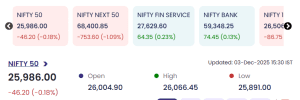
3 December 2025The Nifty 50 settled at 25,986.00, down 46.20 points or 0.18%, after oscillating between an intraday high of 26,066.45 and a low of 25,891.00. While broader indices like Nifty Next 50 remained under pressure, financial-heavy gauges such as Nifty Financial Services and Nifty Bank managed to close slightly in the green, indicating selective buying in frontline banking and financial names.​


Top Gainers: Pharma and Tech in Demand

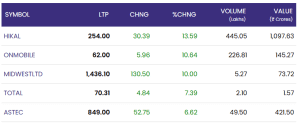
Screenshot 2025 12 03 202452On the gaining side, HIKAL surged 13.59% to ₹254 on exceptionally heavy volumes of over 445 lakh shares, generating turnover of around ₹1,097.63 crore and signalling strong institutional and retail interest. ONMOBILE climbed 10.64% to ₹62, while MIDWESTLTD advanced 10% to ₹1,436.10, supported by healthy value participation. TOTAL gained 7.39% to ₹70.31 and ASTEC rose 6.62% to ₹849, reflecting broad-based interest across pharma, technology and specialty-chemicals segments.​

Top Losers: Continued Pressure on Select Counters

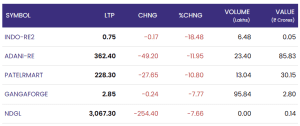
Screenshot 2025 12 03 202500Among the laggards, INDO-RE2 continued its slide, dropping 18.48% to ₹0.75 amid elevated volumes, indicating persistent selling pressure in the penny counter. ADANI-RE fell 11.95% to ₹362.40, and PATELRMART declined 10.80% to ₹228.30, both witnessing notable value erosion during the day. GANGAFORGE slipped 7.77% to ₹2.85, while NDGL corrected 7.66% to ₹3,067.30, underscoring ongoing profit booking and risk aversion in select high‑beta small and mid caps.​

Conclusion: 3 December 2025

The day’s trade showcased a cautious undertone at the index level but heightened activity in individual stocks, particularly within pharma, technology and select industrial names. With benchmarks hovering in a narrow range and sharp moves concentrated in a handful of counters, traders are likely to remain stock‑specific, focusing on volume-backed breakouts and avoiding vulnerable, momentum-driven losers.​

For real time stock Updates, visit NSE website.

3 December 2025 (Mid-cap): Nifty 50 Slips as Broader Market Sees Stock-Specific Action

Indian equities remained under pressure on 3 December 2025, with the Nifty 50 trading lower even as select mid- and small-cap stocks recorded sharp moves. Intraday data show a risk-off tone in headline indices, while pockets of sectoral strength and weakness drove stock-specific volatility.​

Also Read: December 2, 2025: Nifty 50 Extends Late Sell-off; Select Smallcaps Weakly Defy Trend

Benchmarks Extend Losses

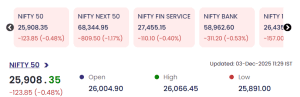
3 December 2025The Nifty 50 hovered around 25,908.35, down 123.85 points or 0.48%, signalling continued profit booking in frontline stocks. The index opened at 26,004.90, hit a high of 26,066.45 and slipped to a low of 25,891.00, with Nifty Next 50, Nifty Financial Services and Nifty Bank indices also in negative territory, confirming broad-based selling across large caps and financials.​


Strong Gainers in Focus
Screenshot 2025 12 03 112931

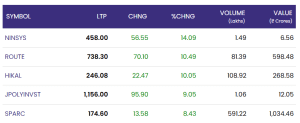
Despite the weak index trend, several mid-cap names outperformed sharply. NINSYS gained 14.09% to trade at ₹458 on moderate volumes, while ROUTE rallied 10.49% to ₹738.30, attracting robust value participation. HIKAL advanced 10.05% to ₹246.08, JPOLYINVST climbed 9.05% to ₹1,156, and SPARC added 8.43% to ₹174.60, supported by heavy trading volumes and strong turnover, indicating sustained buying interest from traders and investors.​

Sharp Declines Among Losers

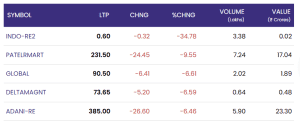
Screenshot 2025 12 03 112939On the downside, INDO-RE2 remained under intense pressure, slipping another 34.78% to ₹0.60, signalling continued weakness in the counter. PATELRMART fell 9.55% to ₹231.50, while GLOBAL, DELTAMAGNT and ADANI-RE declined between 6.46% and 6.61%, reflecting broad selling in select small-cap and real-estate-related plays. Volumes remained moderate, suggesting primarily speculative unwinding rather than large institutional exits.​

Conclusion: 3 December 2025

The session on 3 December underscored a familiar divergence between headline index performance and individual stock moves, with Nifty 50 under pressure but mid-cap and thematic names seeing sharp two-way action. Traders are likely to remain highly selective, focusing on stocks showing strong volume-backed breakouts or steep corrections amid lingering volatility in the broader market.​

For real time stock Updates, visit NSE website.

Sanchar Saathi Pre-installation: Shocking Government U-Turn After Backlash

New Delhi – The Ministry of Communications executed a dramatic policy reversal on Wednesday by withdrawing its controversial decision to mandate Sanchar Saathi pre-installation on all smartphones. This abrupt change came just days after the original order sparked widespread criticism from digital rights organizations and opposition political parties concerned about privacy and government surveillance implications.

Original Mandate and Its Rationale

The Department of Telecommunications had issued a directive on Monday, December 1, requiring mobile phone manufacturers to implement Sanchar Saathi pre-installation on all devices beginning March 2026. The government justified this requirement by citing growing concerns over handsets with duplicate or spoofed International Mobile Equipment Identity numbers posing significant threats to telecommunications security infrastructure.

The Sanchar Saathi pre-installation mandate was positioned as a proactive measure to protect citizens from cybersecurity threats and fraudulent activities that exploit vulnerabilities in mobile device identification systems. However, the policy faced immediate resistance from multiple stakeholders who questioned both its necessity and potential implications for user privacy.

Dramatic Surge in Downloads Cited

Following the announcement of mandatory Sanchar Saathi pre-installation, the government observed an unprecedented spike in voluntary app adoption. Officials reported that the application witnessed 6 lakh new registrations recorded in a single day—representing a tenfold increase in uptake compared to typical daily registration numbers.

In its official press release explaining the policy reversal, the Ministry of Communications attributed the decision to withdraw Sanchar Saathi pre-installation requirements to this “increasing acceptance” among users. “Given Sanchar Saathi’s increasing acceptance, Government has decided not to make the pre-installation mandatory for mobile manufacturers,” the statement declared.

This dramatic surge in voluntary downloads apparently convinced policymakers that compulsory Sanchar Saathi pre-installation was unnecessary since users were choosing to adopt the application without coercion.

Current App Usage and Functionality

The Sanchar Saathi application was originally launched in 2023 as a comprehensive portal enabling citizens to report suspicious phone calls and cyber fraud incidents. According to government data, the app currently has 1.4 crore registered users who collectively report approximately 2,000 fraud incidents daily.

This substantial user base and active engagement in reporting fraudulent activities demonstrate the application’s utility in combating cyber crimes. However, critics argued that these positive outcomes did not justify mandatory Sanchar Saathi pre-installation, which they characterized as government overreach into personal device management.

Privacy and Surveillance Concerns

The original Sanchar Saathi pre-installation order drew sharp criticism from digital rights advocates who raised serious concerns about potential government surveillance capabilities and infringement on fundamental user choice. Opposition parties seized on these privacy concerns, characterizing the mandatory installation as a “snooping app” that could enable unauthorized monitoring of citizens.

Congress MP Priyanka Gandhi Vadra specifically labeled the application as a surveillance tool, while other opposition leaders filed adjournment motions in Parliament demanding discussion of the Sanchar Saathi pre-installation policy. These vocal objections created significant political pressure on the government to reconsider its approach.

Digital rights organizations argued that while cybersecurity applications serve important protective functions, mandatory Sanchar Saathi pre-installation represented an inappropriate exercise of government authority that could set dangerous precedents for future technology mandates.

Government Defense of the Application

Despite withdrawing the Sanchar Saathi pre-installation requirement, the government vigorously defended the application itself in its official statement. Officials insisted the app is “secure and purely meant to help citizens from bad actors in the cyber world” with no function beyond user protection.

The Ministry emphasized that even under the original mandatory Sanchar Saathi pre-installation policy, users would have retained the ability to uninstall the application at any time. This provision was intended to address concerns that the mandate would permanently burden users with unwanted software, though critics questioned whether truly voluntary uninstallation would be possible once manufacturers embedded the app at the system level.

Implications for Digital Rights

The swift reversal of Sanchar Saathi pre-installation requirements represents a significant victory for digital rights advocates and demonstrates the power of public pressure in shaping technology policy. The episode highlights growing awareness among Indian citizens regarding privacy implications of government-mandated software and surveillance capabilities.

The controversy surrounding Sanchar Saathi pre-installation also raises broader questions about appropriate boundaries between cybersecurity imperatives and individual privacy rights in the digital age. While governments legitimately pursue measures to protect citizens from cyber threats, mandatory software installation on personal devices represents a particularly intrusive approach that many view as crossing acceptable lines.

Policy Lessons and Future Direction

The government’s experience with attempted Sanchar Saathi pre-installation provides valuable lessons about consultation and consensus-building before implementing major technology mandates. The rapid policy reversal suggests insufficient stakeholder engagement preceded the original directive, resulting in predictable opposition that could have been addressed through more deliberative policymaking processes.

Voluntary Adoption as Alternative

The dramatic increase in voluntary downloads following the Sanchar Saathi pre-installation announcement demonstrates that public awareness campaigns and clear communication about application benefits can drive adoption without coercive mandates. This organic growth in users suggests that educational outreach represents a more sustainable and less controversial approach to promoting cybersecurity tools.

The government’s ultimate decision to rely on voluntary adoption rather than mandatory Sanchar Saathi pre-installation acknowledges that respecting user autonomy while providing effective security tools represents the optimal balance between protection and privacy in democratic societies.

India Rupee Falls: Alarming Plunge Past 90 Per Dollar Mark

0

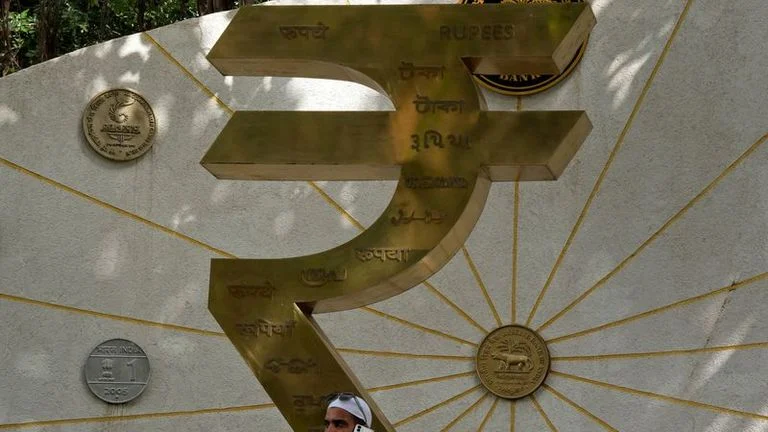
New Delhi – The Indian currency breached a psychologically significant threshold on Wednesday as the India rupee falls past the 90-per-dollar mark for the first time in history. The rupee weakened to an all-time low of 90.14 per US dollar, surpassing its previous record low of 89.9475 hit just a day earlier, marking the sixth consecutive daily decline for the beleaguered currency.

Historic Depreciation Amid Economic Divergence

The India rupee falls to unprecedented levels despite the country maintaining its position as the world’s fifth-largest economy with stronger-than-expected GDP growth. The rupee was last trading at 90.07, down 0.22 percent on the day, highlighting a stark divergence between India’s robust domestic economic fundamentals and its challenging external financial position.

This dramatic decline underscores how the India rupee falls despite positive domestic economic indicators, pressured instead by weak trade performance and deteriorating portfolio flows. The currency’s trajectory reflects the complex interplay between internal growth momentum and external financial vulnerabilities.

Worst Performing Asian Currency in 2025

The India rupee falls approximately 5 percent year-to-date, positioning it on track for its steepest annual decline since 2022. This performance has earned the rupee the unfortunate distinction of being the worst-performing Asian currency in 2025, lagging behind regional peers despite India’s superior economic growth rates.

According to Dhiraj Nim, an FX strategist and economist at ANZ, “Until there is a trade deal, this is the sort of economic adjustment that India requires.” ANZ projects that the India rupee falls could continue, with forecasts suggesting the currency may weaken to 91.30 by the end of next year, assuming current US trade tariffs remain unchanged. The bank warns this depreciation could materialize even sooner than anticipated.

Massive Foreign Investment Outflows

A primary factor explaining why the India rupee falls so dramatically involves massive foreign capital flight from the country’s financial markets. Foreign investors have withdrawn approximately $17 billion from Indian equities throughout 2025, representing a substantial loss of confidence in the market.

Beyond equity outflows, net foreign direct investment flows have remained persistently weak, failing to provide the capital account support traditionally relied upon to stabilize the currency. The India rupee falls further as external commercial borrowings have also remained soft, demonstrating how broad-based capital outflows have intensified pressure across multiple channels.

Record Trade Deficit Compounds Pressure

The capital account strain occurs simultaneously with a widening trade deficit that reached a record exceeding $40 billion in October. This surge in the trade deficit has fundamentally altered the underlying demand-supply balance for dollars in the Indian market, creating additional downward pressure as the India rupee falls against sustained dollar demand.

Sat Duhra, portfolio manager at Janus Henderson Investors in Singapore, explained the comprehensive nature of the challenge: “The weak macro picture in India makes weak currency performance inevitable. There has been a slide in so many data points recently—rising trade deficits, weakening nominal GDP growth, weak FDI and foreigners selling down domestic equities.”

Also Read: December 2, 2025: Nifty 50 Extends Late Sell-off; Select Smallcaps Weakly Defy Trend

Central Bank’s Staggered Defense Strategy

As the India rupee falls to historic lows, the Reserve Bank of India’s intervention strategy has notably shifted from its traditional aggressive defense posture. Four bankers familiar with the situation revealed that RBI intervention has been sporadic rather than sustained, allowing the currency to breach the psychologically important 90-per-dollar level.

The central bank has been intervening in short and staggered bursts in recent days rather than mounting a firm, comprehensive defense of the currency. This measured approach represents a departure from past practices where the RBI would more actively resist significant depreciation.

Strong Reserves Provide Intervention Capacity

Despite the limited intervention observed as the India rupee falls, the Reserve Bank of India maintains strong foreign exchange reserves that theoretically provide substantial capacity to stem the currency’s slide. The central bank’s reserves remain robust enough to support more aggressive intervention if policymakers determine such action is necessary.

However, the RBI appears to be carefully calibrating its response, balancing currency stability concerns against the need to preserve reserves and avoid fighting market forces that may require fundamental adjustment given India’s external account challenges.

Risk of Speculative Pressure

Anindya Banerjee, head of commodity and currency at Kotak Securities, emphasized the importance of strategic intervention even as the India rupee falls. “At this stage, it is essential for the central bank to prevent speculators from becoming too comfortable with a one-way trend, as that can trigger an unnecessary spike in USD-INR volatility,” Banerjee stated.

This warning highlights concerns that if market participants conclude the India rupee falls trajectory represents a one-directional trade with minimal risk, speculative positioning could accelerate depreciation beyond levels justified by fundamental factors.

Impact of US Trade Tariffs

The India rupee falls in part due to punitive US tariffs that have complicated India’s external trade position. These tariffs have contributed to the challenging trade balance and created uncertainty about future export performance, factors that weigh heavily on currency valuations.

Until resolution on trade policy emerges, analysts expect continued adjustment pressure as the India rupee falls to levels that better reflect the country’s external vulnerabilities despite strong domestic growth.

Outlook and Strategic Implications

As the India rupee falls continues making headlines, policymakers face difficult choices balancing currency stability, reserve preservation, and economic competitiveness. The coming months will reveal whether current depreciation represents necessary adjustment or the beginning of more serious currency instability requiring stronger policy response.


MCD By-Election Result 2025: Stunning BJP Victory in Delhi Municipal Polls

New Delhi – The Bharatiya Janata Party emerged victorious in the Municipal Corporation of Delhi by-elections, securing seven out of twelve contested wards. The MCD by-election result announced on December 3 demonstrated the BJP’s continued strength in Delhi’s municipal politics, while the Aam Aadmi Party managed to win three seats, and Congress along with the Left party secured one seat each.

Comprehensive Ward-Wise Performance Analysis

The MCD by-election result reflected a significant victory for the BJP, which successfully retained its dominance across multiple wards in the national capital. Of the twelve wards where voting was conducted on November 30, nine were previously held by the BJP, while the remaining three were controlled by the Aam Aadmi Party before the by-elections.

This MCD by-election result indicates that the BJP not only retained most of its existing wards but also managed to maintain its position as the largest party in these contested municipal seats. The party’s performance demonstrates its organizational strength at the grassroots level despite facing challenges from both AAP and Congress.

AAP’s Limited Success in Municipal Contest

The Aam Aadmi Party’s performance in the MCD by-election result showed the party securing three seats out of the twelve contested wards. This outcome represents a mixed result for AAP, which governs Delhi at the state level but has struggled to translate that success into municipal election victories.

The MCD by-election result for AAP suggests that while the party maintains a presence in municipal politics, it faces significant challenges in expanding its base beyond its core support areas. The party’s inability to capture more seats despite controlling the state government indicates the distinct nature of municipal versus state-level politics in Delhi.

Congress and Left Party Breakthrough

A notable aspect of the MCD by-election result was the victory of Congress and the Left party, with each securing one seat. This represents a positive development for both parties, which have struggled in recent Delhi elections to maintain relevance against the dominant BJP-AAP binary.

The MCD by-election result showing Congress and Left victories, even if limited to one seat each, demonstrates that smaller parties can still find pockets of support in Delhi’s diverse municipal landscape. These wins may provide momentum for these parties as they prepare for future electoral contests in the capital.

Also Read: Parliament Winter Session 2025: Big Debate on Electoral Reforms Scheduled

Significant Decline in Voter Turnout

One of the most concerning aspects of the MCD by-election result was the dramatically reduced voter participation. The vote percentage stood at just 38.51 percent, compared to 50.47 percent in the MCD elections held for 250 wards in 2022.

This substantial decline in voter turnout for the MCD by-election result raises questions about citizen engagement in municipal governance and the effectiveness of voter mobilization efforts by political parties. The lower participation rate may reflect voter fatigue, dissatisfaction with municipal services, or reduced enthusiasm for by-elections compared to general municipal polls.

Electoral Infrastructure and Counting Process

The State Election Commission established ten counting centres across strategic locations to efficiently process the MCD by-election result. These centres were set up at Kanjhawala, Pitampura, Bharat Nagar, Civil Lines, Rouse Avenue, Dwarka, Najafgarh, Gole Market, Pushp Vihar, and Mandawali.

The MCD by-election result announcement proceeded smoothly with counting conducted simultaneously at these ten locations, ensuring timely declaration of results. The State Election Commission’s statement confirmed the systematic approach taken to manage the counting process across these geographically dispersed centres.

Implications for Delhi Politics

The MCD by-election result carries significant implications for the broader political landscape in Delhi. The BJP’s strong performance reinforces its position as a formidable force in municipal governance, even as AAP controls the state government.

For the BJP, the MCD by-election result validates its focus on municipal issues and grassroots organization. The party’s ability to win seven out of twelve seats demonstrates effective campaign strategies and voter connect at the ward level.

The MCD by-election result also highlights the challenges facing AAP in converting its state-level popularity into municipal electoral success. Despite governing Delhi, the party’s limited victory suggests that municipal elections respond to different dynamics than assembly elections.

Historical Context and Comparative Analysis

When analyzing the MCD by-election result in historical context, the performance of different parties reflects evolving political alignments in Delhi. The 2022 MCD elections saw much higher voter participation at 50.47 percent, indicating that general municipal elections generate greater public interest than by-elections.

The MCD by-election result showing BJP’s continued strength in nine previously held wards demonstrates the party’s ability to retain its municipal base despite not controlling the state government. This performance suggests that municipal politics in Delhi operates on distinct parameters from state-level governance.

Future Electoral Landscape

The MCD by-election result provides important indicators for upcoming electoral contests in Delhi. With assembly elections on the horizon, all parties will analyze these results to refine their strategies and messaging.

The BJP’s success in the MCD by-election result may boost party morale and provide momentum for larger electoral battles. Conversely, AAP will need to address why its state-level governance advantage did not translate into stronger municipal performance.

Conclusion and Political Significance

The MCD by-election result ultimately demonstrates the BJP’s continued dominance in Delhi’s municipal political landscape. Winning seven of twelve contested wards represents a strong mandate for the party’s municipal governance approach. However, the significantly reduced voter turnout remains a concern that all political parties must address to strengthen democratic participation in local governance.

Western Zone Review Conference of CGCA Proudly concludes in Goa: 2025

The two-day Western Zone Review Conference of the Office of the Controller General of Communication Accounts (CGCA) concluded in Candolim, Goa, with a focus on improving efficiency and service delivery across the Western Region. Senior officials from various Communication Accounts offices attended the meet to review key functional areas and chart a roadmap for strengthening financial and regulatory functions.​

Presiding authorities and key participants

The conference was presided over virtually by Smt. Vandana Gupta, Controller General of Communication Accounts, who joined the sessions from New Delhi. On the ground, the proceedings were chaired by Shri Sanjay Kumar Bariar, Principal Controller of Communication Accounts (Pr. CCA), Western Zone, ensuring seamless coordination between the central leadership and zonal field units.​


Focus areas and performance review

Over the two days, delegates held detailed discussions on core domains such as revenue administration, pension management, Digital Bharat Nidhi, and internal audit of Directorate of Telecom field units. A comprehensive review of the functioning of all CCA offices in the Western Zone highlighted their role in serving over one lakh pensioners, disbursing nearly ₹5,000 crore annually, and collecting close to ₹6,000 crore in licence fees and spectrum usage charges as part of the Union government’s non-tax revenue.​

Appreciation for pension and revenue functions: Zone Review

Addressing the conference virtually, Smt. Sunita Chandra, Director General, Telecom, commended the CGCA and CCA offices for their vital support to field formations and telecom stakeholders, and urged continued collaboration to enhance citizen-centric services. In her concluding remarks, CGCA Smt. Vandana Gupta praised the exemplary performance of Western Zone offices in timely pension disbursement, effective grievance redressal and efficient revenue collection, while offering recommendations to strengthen accountability, transparency and operational efficiency.​

Vote of thanks and way forward

Pr. CCA Shri Sanjay Kumar Bariar expressed gratitude for the guidance and insights shared by the CGCA leadership and lauded the constructive deliberations during the conference. The event concluded with a formal vote of thanks by Dr. Satish Chandra Jha, Controller of Communication Accounts, Maharashtra & Goa, who acknowledged the leadership of Smt. Vandana Gupta and Shri Bariar and thanked all delegates for their active participation and valuable contributions towards modernising CGCA operations in the Western Region.​

For more real-time updates, visit Channel 6 Network.

Source: PIB

Scindia Clarifies: Sanchar Saathi App Is Voluntary, Citizen-Safety Focused: 2025

Union Communications Minister and Minister for Development of the Northeastern Region Jyotiraditya Scindia has clarified that the Sanchar Saathi mobile application is neither mandatory nor a surveillance tool. He underlined that the platform is designed as a citizen‑first, privacy‑respecting initiative that users can activate, deactivate or delete at any time according to their preference.

App usage is fully voluntary

Shri Scindia stressed that Sanchar Saathi functions only when a user chooses to register and grant permissions, and there is no compulsion to keep the app on a device. Users retain complete control: they may install the app to access its security features and are free to remove it whenever they wish, with no impact on basic telecom services. This clarification directly addresses concerns that recent directions to pre‑install the app might force continuous tracking of mobile users.


Citizen‑centric design and privacy focus

Positioning Sanchar Saathi as a “citizen safety tool rooted in Jan Bhaagidaari”, the Minister explained that the platform aims to empower every mobile subscriber against fraud, identity theft and device misuse. The app and portal allow users to secure their digital footprint through simple, transparent tools rather than opaque background monitoring. By keeping activation voluntary and data usage purpose‑specific, the government seeks to balance robust digital security with respect for individual privacy.

Measurable impact and fraud prevention

Scindia highlighted that Sanchar Saathi has already recorded strong usage, with over 21.5 crore portal visits and more than 1.4 crore app downloads, reflecting growing citizen trust. Using features such as connection verification, fraud reporting and device blocking, citizens themselves have helped disconnect over 1.43 crore unauthorised mobile connections, trace lakhs of lost or stolen phones and prevent hundreds of crores of rupees in potential financial fraud.

Cybersecurity and public participation at the core

A key feature of the app is the ability to report suspected fraud directly from call logs or messages, enabling vigilant users to shield more vulnerable sections of society. Framing digital security as a shared responsibility, Scindia said Sanchar Saathi strengthens India’s overall cybersecurity architecture while leaving users free to opt in or opt out at any time. According to him, the initiative demonstrates that citizen participation and transparency, not surveillance, are at the heart of the government’s approach to protecting mobile consumers.

For more real-time updates, visit Channel 6 Network.

Source: PIB

INDIA–MALDIVES STRONG JOINT MILITARY EXERCISE ‘EKUVERIN’ COMMENCES IN KERALA: 2025

The 14th edition of the India–Maldives joint military exercise ‘Ekuverin’ has begun at Thiruvananthapuram in Kerala, marking another milestone in the defence partnership between the two neighbours. The exercise, scheduled from 2 to 15 December 2025, brings together professional contingents from both sides to train for modern security challenges in the Indian Ocean Region.

Composition of the Contingents

An Indian Army contingent of 45 personnel, drawn from a battalion of the GARHWAL RIFLES, is participating in the current edition. An equal-strength contingent from the Maldives National Defence Force (MNDF) is fielded, ensuring balanced platoon-level and section-level training opportunities.


Aim and Scope of ‘Ekuverin’

The two‑week exercise focuses on enhancing interoperability and operational synergy in counter‑insurgency and counter‑terrorism operations. Troops will rehearse drills and joint missions in jungle, semi‑urban and coastal terrain, reflecting realistic conditions they may encounter in the wider Indian Ocean theatre.

Symbolism and Strategic Significance

‘Ekuverin’ means “Friends” in Dhivehi, symbolising the deep‑rooted bonds of friendship, mutual trust and military cooperation between India and the Maldives. Held alternately in both countries since 2009, the exercise is a key pillar of India’s “Neighbourhood First” policy and reinforces New Delhi’s role as a net security provider in the region.

Strengthening Regional Security

Through joint planning, tactical exchanges and best‑practice sharing, the exercise boosts the capacity of both forces to respond to common security threats, from terrorism to instability in littoral areas. It also reflects the shared commitment of India and the Maldives to peace and stability in the Indian Ocean Region, underlining their converging interests in maritime safety and regional prosperity.

For more real-time updates, visit Channel 6 Network.

Source: PIB

DRDO CONDUCTS SUCCESSFUL HIGH-SPEED TEST OF FIGHTER AIRCRAFT ESCAPE SYSTEM: 2025

The Defence Research and Development Organisation (DRDO) has achieved a major breakthrough by successfully conducting a high-speed rocket-sled test of a fighter aircraft escape system at controlled velocity in Chandigarh. The trial marks an important advance in pilot-safety technology and strengthens India’s indigenous capabilities in critical defence systems.​

DRDO’s High-Speed Rocket-Sled Trial

The test was carried out at the Rail Track Rocket Sled facility of the Terminal Ballistics Research Laboratory (TBRL), where a dual-sled system integrated with the forebody of a Light Combat Aircraft (LCA) was propelled to a precisely controlled high speed using phased firing of multiple solid-propellant rocket motors. This demanding dynamic environment allowed engineers to validate three key functions of the escape sequence: canopy severance, ejection sequencing and complete aircrew recovery.​


Elite In-House Testing Capability

The complex nature of the trial places India in a select group of countries with advanced in-house capability to test and qualify fighter escape systems under realistic conditions. Dynamic ejection tests of this kind are significantly more challenging than static methods such as net tests or zero-zero tests, because they replicate actual operational loads and are considered the true benchmark for assessing ejection seat performance and canopy severance efficiency.​

Use of Anthropomorphic Test Dummy and Instrumentation

To accurately simulate a pilot’s experience, the entire ejection sequence was executed using an instrumented Anthropomorphic Test Dummy, which recorded critical loads, moments and accelerations expected during a real emergency escape. Onboard sensors and ground-based imaging systems captured every phase of canopy fragmentation, seat firing and recovery, providing comprehensive data for further refinement of the escape system. Officials from the Indian Air Force, the Institute of Aerospace Medicine and certification agencies witnessed the trial, underscoring its importance for future operational clearances.​

Leadership Reactions and Strategic Significance

Raksha Mantri Rajnath Singh congratulated DRDO, the Indian Air Force, ADA, HAL and industry partners, describing the successful test as a significant milestone in India’s march towards self-reliance in defence technologies. He emphasized that the validated system enhances combat pilot safety and demonstrates the maturity of indigenous design and testing infrastructure. DRDO Chairman and Secretary, Department of Defence R&D, Dr Samir V Kamat also lauded the team for the achievement, noting that the data from this demonstration will support future upgrades and deployment on current and next-generation fighter platforms.​

Conclusion

The successful high-speed rocket-sled test of the fighter aircraft escape system showcases India’s growing competence in complex, mission-critical defence technologies. By proving the performance of its canopy severance and ejection systems under demanding conditions, DRDO has not only advanced pilot safety but also moved the country closer to complete self-reliance in escape-system design, testing and certification.​

For more real-time updates, visit Channel 6 Network.

Source: PIB