Sunday, December 21, 2025
Home Blog Page 29

Messi Event Chaos and Bengal Political Unity Against Organisers

Messi Event Chaos Lionel Messi’s much‑anticipated visit to Kolkata’s Salt Lake Stadium on December 13, 2025, was supposed to be a historic celebration of football. Instead, it descended into chaos, leaving thousands of fans disappointed and sparking rare political unity in Bengal. Both the Trinamool Congress (TMC) and the Bharatiya Janata Party (BJP) criticized the private organizers for mismanagement, ticketing irregularities, and poor crowd control. The incident has become a defining moment in Bengal’s political and cultural discourse, highlighting governance challenges, public trust issues, and the need for professional event management.


Messi Event Chaos: The Incident

Fans who paid between ₹4,000 and ₹41,000 for tickets were left frustrated after Messi’s blink‑and‑miss appearance.

  • Seats were uprooted, carpets rolled up, and barricades broken.
  • Police clashed with angry crowds, leading to injuries.
  • Social media erupted with memes mocking the event.

For official references:


Rare TMC‑BJP Unity

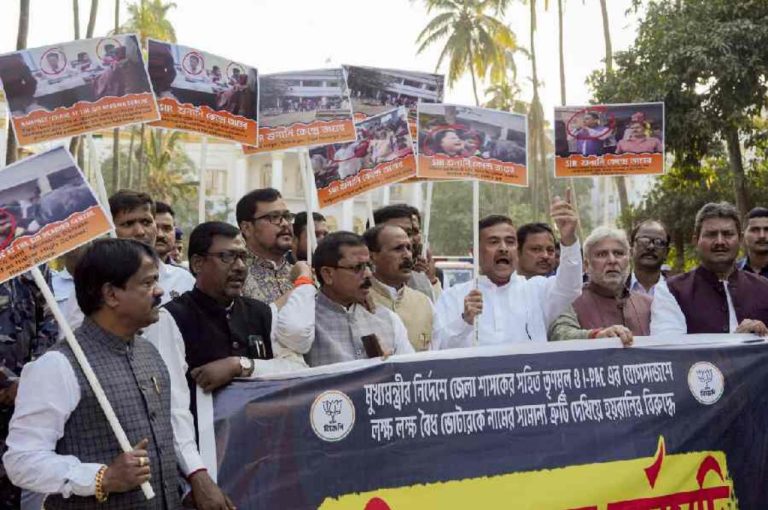
In a rare show of unity, both TMC and BJP leaders condemned the organizers:

  • TMC accused private event managers of exploiting fans and damaging Bengal’s image.
  • BJP demanded accountability and refunds for spectators.
  • Both parties agreed that the chaos was unacceptable and reflected poorly on Bengal.

Government references:


Governor’s Intervention

Governor C.V. Ananda Bose described the day as a “dark day for sports‑loving people of Kolkata.” He demanded:

  • Refunds for ticket holders.
  • Suspension of police personnel for dereliction of duty.
  • Fines for organizers.
  • A standard operating procedure for future mega events.

Human Cost of Mismanagement

The Messi event had real consequences:

  • Fans felt cheated after paying exorbitant ticket prices.
  • Families, including children, faced trauma during clashes.
  • Police personnel sustained injuries.
  • Vendors and small businesses around the stadium lost revenue due to chaos.

Political Context

The incident quickly became political:

  • Opposition parties accused TMC of turning the event into a publicity stunt.
  • BJP alleged that saffron flags and slogans were deliberately provoked.
  • Congress described the fiasco as a “new age scam.”

Technology and Transparency Issues

Questions were raised about:

  • Ticketing transparency and inflated prices.
  • Lack of digital crowd management systems.
  • Poor communication with fans about Messi’s limited appearance.

Government references:


Governance and Accountability

The spotlight fell on organizers and officials:

  • Why were fans not informed about Messi’s short stay?
  • Why was stadium security inadequate?
  • Why were dignitaries prioritized over ordinary fans?

Historical Context of Mega Events in Bengal

This was not the first time Bengal faced embarrassment during major events:

  • In 2011, chaos erupted during a cricket match at Eden Gardens.
  • In 2017, stampedes occurred during Durga Puja pandal visits.
  • In 2023, mismanagement marred a cultural festival in Kolkata.

Meme Fest and Cultural Response

Social media exploded with memes:

  • Fans joked about “₹41,000 for a wave.”
  • Memes compared Messi’s visit to a magician’s disappearing act.
  • Humor became a coping mechanism for disappointment.

Global Comparisons

Other countries have faced similar challenges:

  • In Brazil, mismanagement marred World Cup events.
  • In South Africa, crowd control failures led to stadium tragedies.
  • India must learn from global best practices in sports governance.

Broader Implications for Democracy

The incident underscores key issues:

  • Public trust: Citizens expect fairness and transparency in public events.
  • Cultural pride: Mismanagement damages Bengal’s reputation as a cultural hub.
  • Political accountability: Leaders must balance visibility with responsibility.

Conclusion

Lionel Messi’s visit to Kolkata was supposed to unite fans in celebration of football. Instead, it united political rivals in condemnation of organizers. The rare TMC‑BJP unity underscores the seriousness of the fiasco. Bengal’s reputation as a sporting hub has taken a hit, and the incident serves as a wake‑up call for governance, accountability, and professionalism in event management.

Also read: Home | Channel 6 Network – Latest News, Breaking Updates: Politics, Business, Tech & More

Trinamool Blames Organisers for Messi Event Chaos

Trinamool Blames Organisers: The much‑anticipated visit of football legend Lionel Messi to Kolkata’s Salt Lake Stadium on December 13, 2025, was marred by chaos, mismanagement, and political controversy. Thousands of fans, who paid exorbitant ticket prices, were left disappointed after barely catching a glimpse of Messi. The Trinamool Congress (TMC) blamed private organizers and alleged BJP‑backed elements for the fiasco, while Bengal Governor C.V. Ananda Bose demanded refunds for spectators and accountability from the police.

This incident has become a flashpoint in Bengal’s political and cultural discourse, raising questions about governance, transparency, and the ability to host mega sporting events.

Trinamool Blames Organisers


Trinamool Blames Organisers: The Incident

At the Salt Lake Stadium, fans clashed with police after being denied a proper view of Messi, who was surrounded by dignitaries and officials.

  • Seats were uprooted, carpets rolled up, and barricades broken.
  • Police struggled to control angry crowds.
  • The Governor described the day as a “dark day for sports‑loving people of Kolkata.”

For official references:


Trinamool’s Response

The TMC issued a statement blaming:

  • Private organizers for mismanagement.
  • BJP‑backed elements for deliberately creating disorder.
  • The event as an attempt to malign Bengal’s image.

Party spokespersons argued that saffron flags and provocative slogans were seen during the chaos, linking them to political motives.

Government references:


Governor’s Intervention

Governor C.V. Ananda Bose demanded:

  • Refunds for spectators who paid high ticket prices.
  • Suspension of police personnel for dereliction of duty.
  • Fines for organizers.
  • A standard operating procedure for future events.

Political Context

The incident quickly became political:

  • BJP leaders accused TMC of turning the event into a publicity stunt.
  • Congress described it as a “new age scam.”
  • TMC insisted that the state government only granted statutory permission and was not responsible for mismanagement.

Human Cost of Mismanagement

The Messi event had real consequences:

  • Fans who paid ₹41,000 for tickets felt cheated.
  • Families, including children, faced trauma during clashes.
  • Police personnel sustained injuries.
  • Vendors and small businesses around the stadium lost revenue due to chaos.

Technology and Transparency Issues

Questions were raised about:

  • Ticketing transparency and inflated prices.
  • Lack of digital crowd management systems.
  • Poor communication with fans about Messi’s limited appearance.

Government references:


Governance and Accountability

The spotlight fell on organizers and officials:

  • Why were fans not informed about Messi’s short stay?
  • Why was stadium security inadequate?
  • Why were dignitaries prioritized over ordinary fans?

Historical Context of Mega Events in Bengal

This was not the first time Bengal faced embarrassment during major events:

  • In 2011, chaos erupted during a cricket match at Eden Gardens.
  • In 2017, stampedes occurred during Durga Puja pandal visits.
  • In 2023, mismanagement marred a cultural festival in Kolkata.

Meme Fest and Cultural Response

Social media exploded with memes:

  • Fans joked about “₹41,000 for a wave.”
  • Memes compared Messi’s visit to a magician’s disappearing act.
  • Humor became a coping mechanism for disappointment.

Global Comparisons

Other countries have faced similar challenges:

  • In Brazil, mismanagement marred World Cup events.
  • In South Africa, crowd control failures led to stadium tragedies.
  • India must learn from global best practices in sports governance.

Broader Implications for Democracy

The incident underscores key issues:

  • Public trust: Citizens expect fairness and transparency in public events.
  • Cultural pride: Mismanagement damages Bengal’s reputation as a cultural hub.
  • Political accountability: Leaders must balance visibility with responsibility.

Conclusion

The Salt Lake Stadium chaos during Messi’s visit is more than a sporting disappointment—it is a wake‑up call for governance, accountability, and professionalism in event management. The Trinamool Congress blamed organizers and BJP‑backed elements, while the Governor demanded refunds and accountability. Fans deserved better, and Bengal’s reputation as a sporting hub has taken a hit.

Also read: Home | Channel 6 Network – Latest News, Breaking Updates: Politics, Business, Tech & More

Shri Ramesh Krishnamurthi Addresses Valedictory Ceremony of Orientation Programme for Newly Promoted APFCs at PDUNASS: 2025

New Delhi, 13 December 2025:
The three-week Orientation Programme for newly promoted Assistant Provident Fund Commissioners (APFCs) – Batch II of the Employees’ Provident Fund Organisation (EPFO) concluded on 12 December 2025 at the Pandit Deendayal Upadhyaya National Academy of Social Security (PDUNASS), New Delhi. The valedictory ceremony was graced by Shri Ramesh Krishnamurthi, Central Provident Fund Commissioner (CPFC), who addressed the officers on the occasion.


CPFC Emphasises Role of APFCs as Ambassadors of EPFO

Addressing the newly promoted officers, Shri Krishnamurthi congratulated them on successfully completing the intensive training programme. He lauded Shri Kumar Rohit, Director, PDUNASS, for conceptualising and curating a comprehensive orientation module aimed at equipping officers with the skills and competencies required for their expanded responsibilities.

Highlighting the importance of service orientation, the CPFC urged the officers to carry forward the spirit and values of EPFO.

“As you step into your new roles, remember that your responsibility is not just to implement policies, but to be ambassadors of EPFO’s mission to secure the future of our members,” he said.


Quality Training and Holistic Capacity Building Appreciated

Shri Krishnamurthi appreciated the quality of training imparted at PDUNASS and acknowledged the efforts of the faculty and administrative teams in delivering a well-structured programme. He encouraged the officers to act as facilitators of efficient, transparent, and member-centric service delivery, aligned with the expectations of EPF subscribers.


Trainees Share Learning Experience

Sharing their experiences, the trainee officers expressed gratitude to the Director and faculty of PDUNASS for providing them with valuable insights across a wide range of subjects, including:

  • Team building and leadership

  • Communication skills

  • Motivation through goal-setting

  • Personal wellbeing and financial planning

  • Provisions of the EPF & MP Act, 1952

  • Functional and domain-specific aspects of EPFO services

The participants highlighted how the programme enhanced both their professional competence and personal development.


Director PDUNASS Highlights Unique Programme Features

Welcoming the Chief Guest, Shri Kumar Rohit, Director, PDUNASS, congratulated the officers on completing the rigorous orientation programme. He noted that the course was specifically designed to empower officers as frontline Group ‘A’ leaders of EPFO.

“You have demonstrated remarkable energy, sincerity, and commitment. I am confident that you will leverage this training to drive excellence in EPFO,” he remarked.

He highlighted innovative elements of the programme such as the “Delicious Initiative” and “Book Review”, which encouraged creativity, teamwork, and informal interaction among participants. He also underscored the newly introduced module on “Compassion in Governance”, emphasising empathy, inclusiveness, and humane decision-making in public service.


Acknowledgement of Faculty and Contributors

Shri Rohit expressed appreciation for the dedicated efforts of the course leadership and faculty, including Manish Naiyer (RPFC-II), Rizwan Uddin (RPFC-I), Uttam Prakash (RPFC-I), Vijay (RPFC-I), Ravindra Babra (RPFC-I), Ankur Gupta (RPFC-I), Sanjay Rai (RPFC-I) and Harish Yadav (RPFC-I), along with external faculty members and the PDUNASS support team.

Special appreciation was also extended to Abhilash (APFC), Sunita Madhusudan, Manjunath, Vimal Thakkar, and Seema, whose performances and collaborative spirit were widely acclaimed by fellow trainee officers.


Conclusion: Valedictory Ceremony

The successful conclusion of the Orientation Programme for newly promoted APFCs marks another step in strengthening EPFO’s institutional capacity. By focusing on leadership, empathy, and service excellence, PDUNASS continues to play a pivotal role in preparing officers to meet evolving challenges and deliver secure, efficient, and citizen-centric social security services.


For more real-time updates, visit Channel 6 Network.

Source: PIB
First-Ever Investor’s Meet in Lakshadweep Proudly Unlocks Fisheries and Aquaculture Potential; ₹519 Crore Investment Envisaged

Bangaram Island, Lakshadweep, 13 December 2025:
In a landmark step towards harnessing the untapped Blue Economy potential of India’s island territories, the Department of Fisheries, Ministry of Fisheries, Animal Husbandry & Dairying (MoFAHD), Government of India, in collaboration with the U.T. Administration of Lakshadweep, successfully organised the first-ever Investors’ Meet on “Investment Opportunities in Fisheries and Aquaculture Sector of Lakshadweep Islands” at Bangaram Island.

The pioneering event witnessed participation from investors across the country, with investment proposals worth approximately ₹519 crore envisaged, marking a significant milestone for fisheries-led development in the Islands.


High-Level Participation Underscores Strategic Importance

The Investors’ Meet was graced by Union Minister Shri Rajiv Ranjan Singh, Ministry of Fisheries, Animal Husbandry & Dairying and Ministry of Panchayati Raj, along with Ministers of State Prof. S.P. Singh Baghel and Shri George Kurian, and Shri Praful Patel, Hon’ble Administrator of Lakshadweep.

Senior officials from the Government of India, UT Administration, financial institutions, research bodies, and industry associations also participated, reflecting strong institutional and investor interest.


EEZ Fishery Resources to Be Recognised as “Indian Origin”

Delivering the keynote address, Union Minister Shri Rajiv Ranjan Singh announced a transformative policy development, stating:

“Fishery resources present in India’s Exclusive Economic Zone (EEZ) will now be recognised as Indian Origin, empowering Indian fishers and opening doors to international trade.”

He highlighted that the Government has notified fishing rules for the EEZ, enabling Indian fishers to operate legally through an authorised Access Pass and export high-value products such as tuna to global markets.

The Minister also referred to the issuance of High Seas Fishing Guidelines, granting Indian-flagged vessels legal rights to operate in these waters, and urged investors to seize the vast opportunities available in Lakshadweep for high-value species with strong international demand.


Investors Flag Infrastructure and Value-Chain Needs

An interactive session allowed investors to share insights and challenges, with key concerns highlighted including:

  • Transportation of fish produce to the mainland

  • Cold storage and ice plant infrastructure

  • Chilled fish handling centres for post-harvest management

  • Value addition facilities for sashimi-grade tuna

  • Fish oil refining capacities

  • Skilled manpower requirements

  • Ornamental fish brood banks

Investors stressed the need for strategic utilisation of Lakshadweep’s EEZ resources to ensure sustainable and commercially viable growth.


Lakshadweep’s Untapped Potential Highlighted by Ministers

Prof. S.P. Singh Baghel, Minister of State, emphasised bridging the gap between Lakshadweep’s current production of 14,000 tonnes and its estimated potential of 1 lakh tonnes. He highlighted the global recognition of pole-and-line and handline tuna fishing, which aligns with clean and sustainable fishing practices.

He noted that with proper branding, certification, and modern value-chain development, Lakshadweep tuna can access premium international markets and urged exporters to leverage government schemes for sectoral growth.

Shri George Kurian, Minister of State, drew attention to emerging opportunities in seaweed farming and ornamental fisheries, citing Lakshadweep’s lagoons as ideal for cultivation and global aquarium trade prospects. He stressed the importance of deep-sea fishing, value-added seafood products, and harnessing EEZ resources to drive India’s Blue Economy.


Lakshadweep Administration Assures Full Support to Investors

Shri Praful Patel, Administrator of Lakshadweep, reaffirmed commitment to Prime Minister Shri Narendra Modi’s vision of a Blue Revolution. He invited stakeholders to share inputs for framing Lakshadweep’s first fishing policy and highlighted upcoming initiatives such as:

  • Development of Minicoy airport

  • Strengthening of cooperative societies

  • Policy support for sustainable fisheries

He assured investors of full administrative support and announced plans for a follow-up meeting in New Delhi to fast-track implementation.


Policy, Traceability and Ease of Doing Business Emphasised

Dr. Abhilaksh Likhi, Secretary, Department of Fisheries, GoI, stressed collective action to accelerate fisheries development and highlighted the need for:

  • A single-window clearance system

  • Traceability frameworks covering fish origin and tracking

  • Modernisation of fishing vessels with sustainability safeguards

  • Strengthening market linkages through value-chain development

These measures, he noted, would ensure investor confidence and responsible sectoral growth.


Infrastructure Push and Financing Support Outlined

Ms. Neetu Kumari Prasad, Joint Secretary (MF), highlighted infrastructure initiatives including fleet modernisation, cold chain strengthening, fishing harbour development, and policy support under welfare schemes. She emphasised empowering cooperatives in collaboration with NCDC through a Whole-of-Government approach.

Dr. Bijay Kumar Behera, CEO, NFDB, spoke on cage culture leasing policies, technology-driven seaweed farming, biosecurity, and financing options under FIDF and NCDC, including interest subvention benefits.

Shri Rajthilak S, Secretary (Fisheries), UT of Lakshadweep, noted that pole-and-line fishing is globally recognised as sustainable and shared updates on the development of a Maritime Lease Policy for mariculture investments.


Wide Participation Marks Historic Milestone

The Investors’ Meet brought together 22 key investors, with over 200 participants joining in hybrid mode. The event was attended by representatives from MoFPI, NCDC, MPEDA, NCEL, FSI, CIFT, CMFRI, NFDB, Invest India, EIC, and local fishermen societies.


Conclusion

The first-ever Investors’ Meet in Lakshadweep marks a decisive step in unlocking the Islands’ fisheries and aquaculture potential. With progressive policies, infrastructure focus, traceability frameworks, and strong investor interest, Lakshadweep is poised to emerge as a key hub in India’s sustainable Blue Economy, delivering growth that is inclusive, export-oriented, and environmentally responsible.


For more real-time updates, visit Channel 6 Network.

Source: PIB
GRAP-IV in Delhi: Centre Activates Highest Anti-Pollution Curbs in Delhi-NCR as Air Quality Slips to Season’s Worst: 13 December 2025

New Delhi, 13 December 2025:
The Centre on Saturday invoked the most stringent emergency anti-pollution measures (GRAP-IV) across Delhi and the National Capital Region (NCR) after air quality deteriorated to its worst level of the season, with the 24-hour average Air Quality Index (AQI) touching 431, placing it firmly in the ‘severe’ category.

The restrictions have been enforced under Stages III and IV of the Graded Response Action Plan (GRAP), with Stage IV representing the highest level of curbs aimed at preventing further deterioration of air quality.


Ban on Older Vehicles and Truck Entry in Delhi-NCR

As part of the emergency measures, authorities have imposed a complete ban on the plying of BS-III petrol and BS-IV diesel four-wheelers in Delhi as well as key NCR districts including Gurugram, Faridabad, Ghaziabad and Gautam Buddha Nagar.

The Commission for Air Quality Management in NCR and Adjoining Areas (CAQM) has also prohibited the entry of trucks into Delhi, except for:

  • Vehicles carrying essential commodities

  • Trucks running on LNG, CNG, electric power or BS-VI fuel

These restrictions are intended to immediately reduce vehicular emissions, a major contributor to deteriorating air quality.


Construction Activities Halted Across NCR

In another significant step, all construction and demolition activities have been suspended across the entire NCR, including both public and private projects. Authorities stated that dust emissions from construction sites remain a key pollution source during winter months.


Schools Shift to Hybrid Mode; Offices to Operate at 50% Capacity

Educational institutions across Delhi and adjoining NCR districts have been directed to conduct classes in hybrid mode (online or physical) for all students except those in Classes 10 and 12, ensuring minimal disruption to board examination preparation.

In Delhi, all government and private offices will function with only 50% staff on-site, in line with the Delhi government’s standing order whenever GRAP Stage III or above is enforced.

The CAQM has advised the States of Haryana, Uttar Pradesh and Rajasthan to consider similar work-from-home arrangements for employees in NCR districts under their jurisdiction.


AQI Reaches ‘Severe Plus’; Health Risks Intensify

According to the Central Pollution Control Board (CPCB), the AQI worsened further to 441 by 6 p.m., entering the ‘severe plus’ range.

The CPCB warned that air quality is likely to remain in the ‘severe’ category on Sunday, with only marginal improvement expected over the next two days.

As per CPCB classification, ‘severe’ AQI levels can affect healthy individuals and seriously impact those with existing respiratory or cardiovascular conditions, prompting authorities to urge citizens to limit outdoor exposure.


Implementation Subject to State Orders

The CAQM clarified that the restrictions will come into force once respective State governments issue formal implementation orders, ensuring coordinated enforcement across the NCR.


Conclusion: GRAP-IV

With Delhi-NCR witnessing its sharpest air quality deterioration this season, the Centre’s decision to activate GRAP Stages III and IV underscores the urgency of addressing extreme pollution levels. The emergency curbs aim to reduce immediate emission sources, protect public health, and prevent further escalation, even as authorities monitor conditions closely over the coming days.


For more real-time updates, visit Channel 6 Network.

Check Real time Aqi on AQI.in

Image source: The times of India

4th Cooperative Mela 2025 Inaugurated in Assam; Union MoS Krishan Pal Gurjar Highlights Cultural Roots of Cooperative Movement

Guwahati, Assam, 13 December 2025:
The 4th Cooperative Mela 2025, organised by the Cooperation Department, Government of Assam, under the guidance of the Ministry of Cooperation, Government of India, was inaugurated today at AEI Ground, Chandmari. The three-day event, scheduled from 13 to 15 December 2025, aims to showcase the strength, diversity, and transformative potential of the cooperative movement in Assam.

The Mela was formally inaugurated by Union Minister of State for Cooperation, Shri Krishan Pal Gurjar, in the presence of Shri Jogen Mohan, Minister for Cooperation, Government of Assam.


Cooperative Spirit Rooted in Assam’s Cultural Ethos

Addressing the gathering, Shri Krishan Pal Gurjar emphasized that Assam’s cooperative movement is deeply rooted in the state’s spiritual and cultural traditions. Paying tribute to Mahapurush Srimanta Shankaradev and Mahapurush Madhavdev, he noted that their teachings on unity, equality, and service to society form the very foundation of the cooperative ethos.

He remarked that the cooperative spirit is not new to Assam but a natural extension of its age-old values of collective welfare and social harmony.


“Sahkar Se Samriddhi” Vision Gaining Momentum

The Union Minister highlighted that under the decisive leadership of Prime Minister Shri Narendra Modi and the focused guidance of the Union Minister of Cooperation, the national vision of “Sahkar Se Samriddhi” (Prosperity through Cooperation) is steadily transforming into a vibrant reality.

He described the establishment of the Ministry of Cooperation in 2021 as a historic milestone, providing institutional strength and a clear roadmap for building a world-class cooperative ecosystem in India by 2047.


Assam Emerges as a Leader in Cooperative Reforms

Shri Gurjar praised Assam’s accelerated progress in cooperative reforms, attributing the resurgence to the leadership of Chief Minister Dr. Himanta Biswa Sarma and the sustained efforts of State Cooperation Minister Shri Jogen Mohan.

Key achievements highlighted include:

  • 100% computerisation of Primary Agricultural Credit Societies (PACS)

  • Adoption of new Model Byelaws by over 800 PACS

  • Empowerment of youth and women entrepreneurs

  • Financial inclusion of over 32 lakh cooperative members

He noted that Assam is firmly aligned with the National Cooperative Policy 2025, which envisions establishing one cooperative in every village by 2026, and called for collective efforts to build a self-reliant, cooperative-led future.


Grassroots Empowerment and Innovation on Display

Speaking at the event, Shri Jogen Mohan, Minister of Cooperation, Government of Assam, described the Cooperative Mela as a vibrant platform for grassroots empowerment. He applauded participating cooperatives for demonstrating self-reliance and innovation, particularly their ability to convert waste into valuable products using locally available materials.

He highlighted the broad social and economic impact of cooperatives across sectors, including:

  • Production of essential goods

  • Success of women-led Self-Help Groups (SHGs)

  • Youth entrepreneurship initiatives

  • Agriculture, dairy, fishery, and handloom sectors


160 Cooperative Societies Participate in the Mela

The Mela features participation from 160 cooperative societies, representing diverse sectors such as handloom, agriculture, dairy, fishery, and youth- and women-led enterprises.

The Mela provides a platform for:

  • Showcasing local products and innovations

  • Sharing cooperative success stories

  • Facilitating knowledge exchange and interaction

  • Promoting cooperation-driven development

The event will continue over the next two days with exhibitions, interactive sessions, and awareness programmes.


Conclusion

The 4th Cooperative Mela 2025 underscores growing leadership in India’s cooperative resurgence. Rooted in cultural values and supported by progressive reforms, the cooperative movement in the state is emerging as a powerful driver of inclusive growth, entrepreneurship, and community-led development, in line with the national vision of “Sahkar Se Samriddhi.”


For more real-time updates, visit Channel 6 Network.

Source: PIB

Jyotiraditya M. Scindia Inspires Gramin Dak Sevaks at GDS Sammelan in Kolhapur: 2025

Kolhapur, Maharashtra, 13 December 2025:
Union Minister of Communications and Development of North Eastern Region Shri Jyotiraditya M. Scindia addressed a large gathering of nearly 6,000 Gramin Dak Sevaks (GDS) from across Goa and the Pune Region at the Gramin Dak Sevak Sammelan held in Kolhapur today. The event celebrated the dedication, service, and transformative role of India Post’s grassroots workforce in nation-building.


“Postmen Are Bridges of Trust”: Shri Scindia

Delivering his address in fluent Marathi, Shri Scindia lauded the unwavering commitment of postal employees, describing postmen and Gramin Dak Sevaks as “bridges of trust” who deliver not only letters but also banking, insurance, and essential government services to every corner of the country.

He highlighted their critical role in connecting rural India and strengthening the delivery of public services, calling them the backbone of India Post’s outreach and reliability.


Government Reforms Empowering Postal Workforce

Recalling key welfare reforms undertaken for postal employees, the Union Minister highlighted initiatives including:

  • Admission of GDS children to Kendriya Vidyalayas

  • Enhancement of allowances and service benefits

  • Introduction of new uniforms, jackets, caps, and postman bags

  • Implementation of Project Arrow to modernise postal infrastructure

He emphasized that these reforms reflect the Government’s commitment to listening to and empowering its field workforce.


Transforming India Post into a Modern Service Powerhouse

Shri Scindia underlined India Post’s unparalleled reach, with over 1.65 lakh post offices serving nearly 6.5 lakh villages. He reiterated the vision of transforming the Department into a modern logistics and service powerhouse, driven by innovation, reliability, and strong ethical values.

Recalling Prime Minister Shri Narendra Modi’s vision of “Dakiya ab bank laya”, the Minister noted that India Post has evolved far beyond traditional mail delivery to become a trusted pillar of financial inclusion and citizen-centric services, while upholding its core ethos of “Seva Bhav” — service to the people.


Felicitation of Outstanding Gramin Dak Sevaks

A key highlight of the Sammelan was the felicitation of 10 top-performing Gramin Dak Sevaks from Maharashtra for their exceptional service. Shri Scindia personally interacted with each awardee and helped them don the new India Post jacket, cap, and postman bag — a gesture symbolising dignity, pride, and identity in public service. The moment drew enthusiastic applause from the gathering.


AI-Powered Bhashini Platform Showcased

The event also showcased the AI-powered “Bhashini” platform, developed under the Ministry of Electronics and Information Technology (MeitY). The platform demonstrated how artificial intelligence can bridge linguistic and cultural divides, reinforcing the government’s vision of an inclusive and multilingual Digital India.


Dignitaries Present at the Event

The dais was shared by several distinguished leaders, including:

  • Shri Chhatrapati Shahu Maharaj, MP, Kolhapur

  • Shri Dhananjay Mahadik, MP, Kolhapur

  • Shri Jitendra Gupta, Director General, Postal Services

  • Shri Suvendu Kumar Swain, Member (Personnel), Postal Services Board

  • Shri Amitabh Singh, Chief Postmaster General, Maharashtra Circle


A Message of Pride and Service

In his concluding remarks, Shri Scindia urged postal employees to continue serving the nation with pride, dedication, and innovation. He thanked the gathering with a heartfelt “Jai Hind”, reflecting the emotional bond between the leadership and the postal family.

He later shared his reflections in Marathi, describing his interaction with the postal community in Kolhapur as deeply personal and emotional, drawing inspiration from the land of Chhatrapati Shahu Maharaj, known for its legacy of service, harmony, and social reform.


Conclusion

The Gramin Dak Sevak Sammelan in Kolhapur reaffirmed the Government’s commitment to empowering postal workers and modernising India Post. With welfare reforms, technological innovation, and renewed focus on service delivery, Gramin Dak Sevaks continue to play a pivotal role in strengthening rural connectivity and advancing inclusive national development.


For more real-time updates, visit Channel 6 Network.

Source: PIB

Honouring 150 Years of Bombay Gymkhana: Jyotiraditya M. Scindia Unveils Commemorative Postage Stamp

Mumbai, 13 December 2025:
In a tribute to one of India’s most iconic sporting institutions, the Department of Posts issued a commemorative postage stamp marking the 150th anniversary of the Bombay Gymkhana, celebrating its rich legacy of sporting excellence and cultural contribution. The stamp was formally released at the historic Bombay Gymkhana in Mumbai by Union Minister of Communications and Development of North Eastern Region, Shri Jyotiraditya M. Scindia.

The release ceremony was attended by Shri Milind Deora, Member of Parliament (Rajya Sabha); Mr. Sanjiv Saran Mehra, President, Bombay Gymkhana; Ms. Suchita Joshi, Postmaster General, Navi Mumbai Region; along with distinguished guests and members of the Bombay Gymkhana.


A Stamp as a Messenger of Sporting Values

Addressing the gathering, Shri Jyotiraditya M. Scindia expressed hope that the commemorative stamp would serve as a “travelling messenger”, carrying stories of sporting excellence and institutional values from one hand to another as it journeys across the country.

He remarked that, much like sport, the stamp embodies inspiration and aspiration, encouraging young boys and girls to take up sports, stay active, and believe in the power of institutions to positively shape lives.


Parallels Between India Post and Bombay Gymkhana

Drawing a meaningful parallel between India Post and the Bombay Gymkhana, the Union Minister observed that both institutions are rooted in connecting people, conveying emotions, and bridging generations.

He highlighted that under the leadership of Prime Minister Shri Narendra Modi, the Department of Posts is undergoing a transformative phase — modernising legacy systems, expanding service reach, and reimagining its role to emerge as one of the world’s largest and most inclusive logistics organisations in the coming years.


Bombay Gymkhana: A 150-Year Sporting Legacy

Founded in 1875, the Bombay Gymkhana has stood as a cornerstone of India’s sporting and social heritage for over a century and a half. The institution has nurtured generations of athletes and has remained a vibrant hub for sporting excellence, cultural activity, and community engagement.

Over the decades, Bombay Gymkhana has played a vital role in fostering sportsmanship, camaraderie, and an enduring sense of collective identity.


Design and Availability of the Commemorative Stamp

The commemorative postage stamp features an artistic depiction of the iconic campus and grounds of the Bombay Gymkhana, symbolising its enduring legacy and contribution to India’s sporting landscape.

Through this special philatelic issue, the Department of Posts honours the institution’s 150-year journey and reiterates its commitment to preserving and showcasing India’s sporting milestones through postage stamps.

The stamp will be available to the public through Philatelic Bureaux across the country and can also be purchased online via www.epostoffice.gov.in.


Conclusion

The release of the commemorative postage stamp celebrating 150 years of Bombay Gymkhana stands as a fitting tribute to an institution that has shaped India’s sporting and cultural narrative. By immortalising this milestone through philately, the Department of Posts continues to preserve the nation’s heritage while inspiring future generations to value sport, community, and legacy.

Source: PIB

For more real-time updates, visit Channel 6 Network.

Lionel Messi Kolkata Visit Chaos and Meme Fest

Lionel Messi Kolkata Visit Chaos: The much‑anticipated visit of Lionel Messi to Kolkata on December 13, 2025, was billed as a once‑in‑a‑generation event. Fans waited for 14 years to see the Argentine superstar return to the Salt Lake Stadium, but what unfolded was a blink‑and‑miss cameo that left thousands disappointed. Messi appeared briefly, waved, clicked selfies with dignitaries, and left within minutes. The chaos that followed—uprooted seats, rolled carpets, clashes with police, and a flood of memes—has become a defining moment in Bengal’s sporting history.


The Incident

Messi’s visit was part of his “G.O.A.T. India Tour 2025”. Expectations were sky‑high, with tickets priced between ₹4,000 and ₹41,000. Fans hoped for a match, a training session, or at least meaningful interaction. Instead, Messi’s fleeting appearance sparked anger:

  • Fans vandalized stadium property.
  • Police struggled to control crowds.
  • Social media erupted with memes mocking the event.

For official references:


Human Cost of Mismanagement

The chaos had real consequences:

  • Fans felt cheated after paying exorbitant ticket prices.
  • Families, including children, faced trauma during clashes.
  • Police personnel sustained injuries in crowd control operations.
  • Event staff struggled to contain frustration spilling onto the ground.

Lionel Messi Kolkata Visit Chaos: Political Context

The incident quickly became political:

  • Opposition parties accused the ruling Trinamool Congress (TMC) of mismanagement.
  • The BJP alleged that the event was turned into a political spectacle.
  • The Governor demanded a report on ticket pricing and crowd control failures.

Technology and Transparency Issues

Questions were raised about:

  • Ticketing transparency and inflated prices.
  • Lack of digital crowd management tools.
  • Poor communication with fans about Messi’s limited appearance.

Government references:


Governance and Accountability

The spotlight fell on organizers and officials:

  • Why were fans not informed about Messi’s short stay?
  • Why was stadium security inadequate?
  • Why were dignitaries prioritized over ordinary fans?

Government references:


Meme Fest and Cultural Response

Within minutes, social media was flooded with memes:

  • Fans compared Messi’s visit to a magician’s disappearing act.
  • Jokes about “₹41,000 for a wave” went viral.
  • Memes became a coping mechanism for disappointment.

Historical Context of Mega Events in Bengal

This was not the first time Bengal faced embarrassment during major events:

  • In 2011, Eden Gardens faced chaos during a cricket match.
  • In 2017, stampedes occurred during Durga Puja pandal visits.
  • In 2023, mismanagement marred a cultural festival in Kolkata.

Global Comparisons

Other countries have faced similar challenges:

  • In Brazil, mismanagement marred World Cup events.
  • In South Africa, crowd control failures led to stadium tragedies.
  • India must learn from global best practices in sports governance.

Broader Implications for Democracy

The incident underscores key issues:

  • Public trust: Citizens expect fairness and transparency in public events.
  • Cultural pride: Mismanagement damages Bengal’s reputation as a cultural hub.
  • Political accountability: Leaders must balance visibility with responsibility.

Conclusion

Lionel Messi’s blink‑and‑miss visit to Kolkata is more than a sporting disappointment—it is a wake‑up call for governance, accountability, and professionalism in event management. Fans deserved better, and Bengal’s reputation as a sporting hub has taken a hit. The memes may fade, but the lessons must endure: transparency, respect for citizens, and proper planning are essential for future mega events.

Also read: Home | Channel 6 Network – Latest News, Breaking Updates: Politics, Business, Tech & More

Salt Lake Stadium Messi Chaos and Aroop Biswas

Salt Lake Stadium Messi Chaos: The much‑anticipated visit of football legend Lionel Messi to Kolkata turned into chaos at the Salt Lake Stadium, leaving fans angry and disappointed. At the center of the controversy was Aroop Biswas, Bengal’s sports minister, who was seen near Messi during the event. The incident sparked outrage, with fans clashing with police and accusing organizers of mismanagement. The spotlight quickly shifted to Biswas, raising questions about governance, accountability, and Bengal’s ability to host mega sporting events.


Salt Lake Stadium Messi Chaos: The Incident

On December 12, 2025, thousands of fans gathered at Salt Lake Stadium to catch a glimpse of Messi. However, the football icon was barely visible from the stands, surrounded by a phalanx of officials and dignitaries, including Aroop Biswas.

  • Fans vandalized stadium property.
  • Police clashed with crowds, leading to injuries.
  • Social media erupted with memes and criticism of the event’s mismanagement.

For official references:


Aroop Biswas in the Spotlight

Biswas, a trusted aide of Chief Minister Mamata Banerjee, has long been influential in Bengal’s sports and cultural circles. His presence near Messi drew sharp criticism, with many accusing him of prioritizing political visibility over fans’ experience.

  • Biswas has held portfolios in public works, youth affairs, and sports.
  • He is considered one of Mamata Banerjee’s most loyal lieutenants.
  • His rise in politics was linked to his influence in Tollywood and local clubs.

Government references:


Historical Context of Mega Events in Bengal

This was not the first time Bengal faced embarrassment during major events:

  • In 2011, chaos erupted during a cricket match at Eden Gardens.
  • In 2017, stampedes occurred during Durga Puja pandal visits.
  • In 2023, mismanagement marred a cultural festival in Kolkata.

These incidents highlight systemic weaknesses in crowd management and event planning.


Human Cost of Mismanagement

The Messi event had real consequences:

  • Fans who paid thousands of rupees for tickets felt cheated.
  • Police personnel faced injuries during clashes.
  • Families, including children, were traumatized by the chaos.

Political Context

The incident quickly became political:

  • Opposition parties accused TMC of turning the event into a political show.
  • BJP leaders demanded accountability from the sports minister.
  • Mamata Banerjee’s government faced embarrassment on the national stage.

Technology and Transparency Issues

Questions were raised about:

  • Ticketing transparency.
  • Crowd control measures.
  • Use of digital tools for event management.

Government references:


Governance and Accountability

The spotlight on Biswas reflects broader governance challenges:

  • Lack of professional event management.
  • Over‑politicization of cultural and sports events.
  • Weak accountability mechanisms in public administration.

Broader Implications for Democracy

The incident underscores key issues:

  • Public trust: Citizens expect fairness and transparency in public events.
  • Cultural pride: Mismanagement damages Bengal’s reputation as a cultural hub.
  • Political accountability: Ministers must balance visibility with responsibility.

Global Comparisons

Other countries have faced similar challenges:

  • In Brazil, mismanagement marred World Cup events.
  • In South Africa, crowd control failures led to stadium tragedies.
  • India must learn from global best practices in sports governance.

Conclusion

The Salt Lake Stadium chaos during Messi’s visit is more than a one‑day embarrassment—it is a wake‑up call for Bengal’s governance and accountability. Aroop Biswas, as sports minister, now faces scrutiny not just for his presence near Messi but for the broader failures of event management. Protecting Bengal’s ethos as a cultural and sporting hub requires transparency, professionalism, and respect for citizens.

Also read: Home | Channel 6 Network – Latest News, Breaking Updates: Politics, Business, Tech & More