Thursday, May 14, 2026
Home Blog Page 295

PCIM&H concludes national training programme to strengthen quality standards in Ayurveda, Siddha, Unani and Homoeopathy drugs: 2025

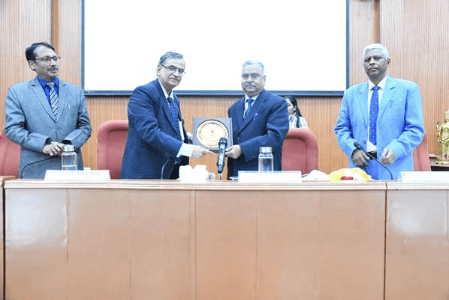
The Pharmacopoeia Commission for Indian Medicine & Homoeopathy (PCIM&H) under the Ministry of Ayush has completed a five-day National Capacity Building Training Programme aimed at upgrading quality assurance and regulatory capabilities in the Ayurveda, Siddha, Unani and Homoeopathy (ASU&H) drug sector. Held from 24–28 November 2025, the programme brought together drug enforcement officers, quality-control personnel and manufacturers from across the country.​

Training focus and technical sessions

Over the first two days, participants attended intensive sessions on NABL accreditation, quality management systems, Good Manufacturing Practices, and pharmacognostic, physico‑chemical and phytochemical evaluation techniques for herbal drugs. Subsequent modules covered shelf‑life studies, regulatory frameworks and practical approaches to quality control of ASU&H formulations.​


Industry visits and hands-on learning

The programme included field visits to leading manufacturers such as Dr. Willmar Schwabe India Pvt. Ltd. in Noida and Hamdard Laboratories in Ghaziabad, giving participants exposure to large‑scale production and quality systems. Hands‑on laboratory training in microbiological and pharmacological evaluation, along with a visit to an herbal garden, reinforced classroom learning with practical demonstrations of testing and standardisation methods.​

Participation and expert guidance

Thirty‑seven participants from regulatory bodies, research councils, pharmaceutical companies and academic institutions took part in the training, gaining first‑hand insight into emerging tools and protocols in traditional medicine quality control. The valedictory session featured senior dignitaries including Prof. (Dr.) B. L. Mehra, Chairperson of the National Commission for Indian System of Medicine, as well as experts from the Indian Pharmacopoeia Commission, FSSAI and PCIM&H, who stressed the need for rigorous, science‑based standards to enhance global acceptance of Indian systems of medicine.​

Impact on ASU&H quality ecosystem

Participants reported that the mix of theory, lab work and industry exposure significantly improved their understanding of pharmacopoeial standards, GMP requirements and regulatory expectations for ASU&H drugs. The initiative is expected to help build a more robust national quality‑assurance ecosystem for traditional medicines, supporting safer products, better compliance and stronger credibility in domestic and international markets.​

For more real-time updates, visit Channel 6 Network.

Source: PIB
FCI Pavilion at IITF‑2025 wins Bronze, showcases India’s modern foodgrain ecosystem

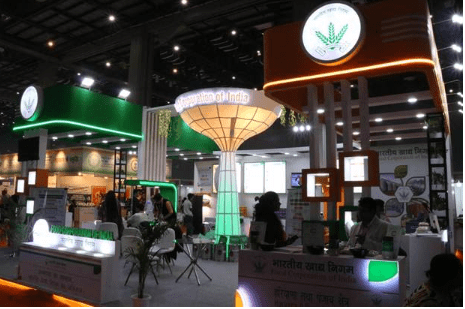
The Food Corporation of India (FCI) Pavilion at the India International Trade Fair (IITF)‑2025 has been awarded the Bronze Medal in the PSUs & PSBs category, recognising its high‑quality display, public engagement and communication on India’s evolving foodgrain management system. The pavilion, located in Hall 6 of Bharat Mandapam and open from 14–27 November, drew heavy public footfall and strong appreciation for highlighting FCI’s role in national food security.​

Theme and concept of the pavilion

Designed around the themes “किसानों का सम्मान, भारतीय खाद्य निगम का अभिमान” and “एक भारत, श्रेष्ठ भारत”, the pavilion traced India’s journey from traditional foodgrain storage to a modern, digital and transparent ecosystem. It showcased technologically advanced silos, real‑time digital monitoring, scientific stock rotation and improved hygiene and warehousing standards that together underpin a citizen‑centric food security architecture aligned with the Viksit Bharat @ 2047 vision.​


Ministerial visits and appreciation

The pavilion was visited on 18 November by Union Minister for Consumer Affairs, Food & Public Distribution and New & Renewable Energy Shri Pralhad Joshi, accompanied by senior ministry officials and FCI leadership. The Minister commended FCI for stabilising wheat and rice availability and prices, and for its sustained push on modernisation, digital monitoring and warehouse upgradation. On 23 November, Minister of State Smt. Nimuben Jayantibhai Bambhaniya also toured the pavilion, praising FCI’s efforts to strengthen national food security, promote transparency in grain movement and implement schemes such as the Open Market Sale Scheme (Small/Bulk).​

Affordable rice sale draws strong public response

A major attraction was the special retail sale of FCI rice—raw and boiled—sourced from six regions (Odisha, Chhattisgarh, Telangana, Andhra Pradesh, Punjab and Haryana) at affordable prices of ₹28.90 and ₹30.90 per kg. Varieties such as Kala Champa, Minikit and Pooja from Odisha; Sanalu (Samba Masuri) and Cotton Dora Sanalu from Telangana; and Dhruti, PR‑126 and Bondalu from Andhra Pradesh were offered at the stall. By the close of the fair, about 13 metric tonnes of rice had been sold, reflecting strong public trust in FCI’s quality standards, systematic stock rotation and hygiene‑compliant handling.​

Execution, leadership and national platform

The pavilion was curated and executed by FCI Delhi Region under the leadership of General Manager Smt. K. P. Asha, and was reviewed by senior officers including CMD Shri Ashutosh Agnihotri and joint secretaries from the Food Ministry, who praised its professional, visitor‑friendly design. FCI also expressed gratitude to India Trade Promotion Organisation (ITPO) for providing IITF‑2025 as a national platform to promote ‘Made in India’ products—from foodgrains to handloom and handicrafts—echoing the Prime Minister’s ‘Vocal for Local’ call.​

Conclusion

Through its award‑winning presence at IITF‑2025, FCI reaffirmed its commitment to transparency, efficiency and innovation in foodgrain management, encapsulated in its service motto “Food for All, Life for All”. The Bronze Medal and enthusiastic public response underscore the corporation’s central role in safeguarding India’s food security while modernising systems to meet future demands.​

For more real-time updates, visit Channel 6 Network.

Source: PIB
India, US sign Strong Rs 7,995‑crore sustainment pact for Indian Navy’s MH‑60R helicopter fleet

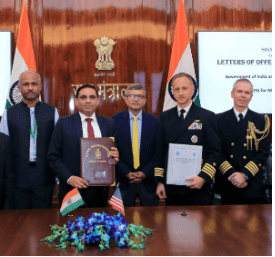
The Ministry of Defence has signed Letters of Offer and Acceptance with the United States government for a five‑year sustainment package for the Indian Navy’s fleet of MH‑60R Seahawk multi‑role helicopters, valued at approximately ₹7,995 crore. The agreement, concluded under Washington’s Foreign Military Sales framework in the presence of Defence Secretary Rajesh Kumar Singh, is aimed at keeping the high‑end anti‑submarine warfare platform at peak operational readiness over the long term.​

What the sustainment deal covers

The sustainment support is structured as a comprehensive “follow‑on support” and “follow‑on supply support” package, covering the full lifecycle needs of the MH‑60R fleet. This includes provisioning of spares, support and ground‑handling equipment, product support, training and technical assistance for Indian personnel, as well as repair and replenishment of critical components. The contract also provides for setting up intermediate‑level component repair and periodic maintenance inspection facilities within India, reducing turnaround times and dependence on overseas repair depots.​


Boost to Aatmanirbhar Bharat and domestic ecosystem

By localising key maintenance and overhaul capabilities, the deal aligns with the government’s Aatmanirbhar Bharat vision in defence. The in‑country facilities are expected to spur indigenous products and services, opening opportunities for micro, small and medium enterprises and other Indian firms to participate in the MH‑60R support value chain, from component repair to specialised technical services.​

Operational impact on the MH‑60R fleet

The MH‑60R, supplied by the US as part of a 24‑helicopter acquisition signed in 2020, is an advanced, all‑weather, ship‑borne platform optimised for anti‑submarine and anti‑surface warfare as well as surveillance and search‑and‑rescue roles. The new sustainment package is expected to significantly enhance the helicopters’ availability and maintainability, allowing them to operate effectively from dispersed coastal bases and frontline warships while delivering optimal performance across primary and secondary missions.​

Strategic significance of the agreement

Officials have underlined that this is a capability‑centred support pact rather than a fresh acquisition, coming at a time when India is modernising its naval aviation arm to counter under‑sea threats in the wider Indo‑Pacific. By locking in predictable, long‑term support and simultaneously building domestic maintenance infrastructure, the agreement deepens India–US defence cooperation and strengthens the Indian Navy’s ability to field a credible, networked anti‑submarine warfare grid in the region.​

For more real-time updates, visit Channel 6 Network.

Source: PIB
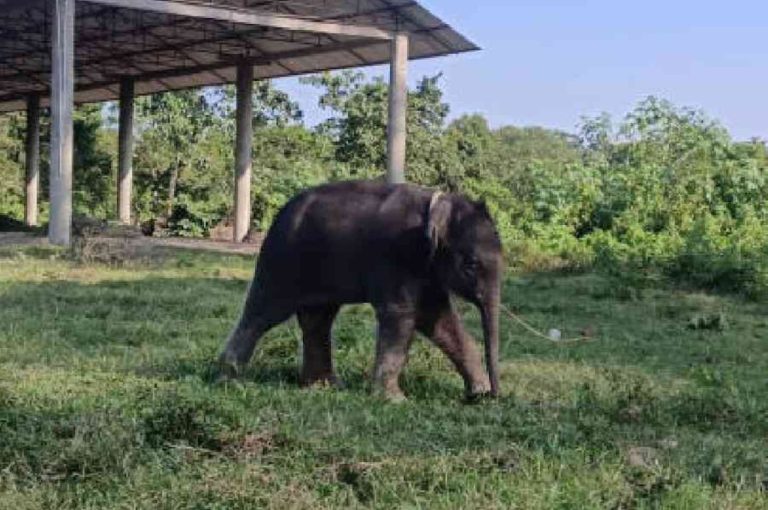
Elderly Jalpaiguri Villager Killed in Elephant Attack Nathua Forest 2025: Human‑Wildlife Conflict, Governance Challenges, Forest Department Response, and Policy Reform Needs in West Bengal

The Elderly Jalpaiguri Villager Killed in Elephant Attack Nathua Forest 2025 incident has once again highlighted the fragile coexistence between humans and wildlife in North Bengal. On November 23, 2025, 70‑year‑old Amar Bahadur Chhetri was killed after encountering a herd of elephants while grazing cattle near Nathua forest. His death underscores the growing crisis of human‑wildlife conflict in the Dooars region.


2. The Incident: How It Happened

Chhetri, along with other villagers, entered Nathua forest to graze cattle.

  • A herd of elephants appeared suddenly.
  • While others managed to flee, Chhetri could not keep pace.
  • He went missing during the chaos.
  • His body was discovered the next morning in Diana forest.

The tragedy reflects the risks faced by villagers who depend on forests for livelihood.


3. Jalpaiguri Villager Killed in Elephant Attack: Forest Department’s Response

Officials from the Nathua forest range stated:

  • Villagers had been repeatedly warned against entering restricted forest zones.
  • Grazing cattle and collecting firewood in forest areas remain prohibited.
  • Chhetri’s family will not receive compensation since the death occurred inside a forest zone.
  • Safety campaigns will be resumed through public announcements.

Their response highlights the legal and administrative complexities of compensation policies.


4. Human‑Wildlife Conflict in North Bengal

The incident is part of a larger pattern:

  • North Bengal’s tea gardens and villages border dense forests.
  • Elephants frequently stray into human settlements.
  • Crop damage, livestock loss, and human casualties are common.
  • Fear and resentment grow among communities, sometimes leading to retaliatory violence.

5. Governance Challenges

The tragedy exposes governance challenges:

  • Insufficient monitoring of elephant movements.
  • Delayed response to community complaints.
  • Limited resources for rescue operations.
  • Weak awareness campaigns about coexistence strategies.

6. Human Dimension: Voices from Villages

Villagers expressed grief and frustration:

  • Many depend on forests for grazing and firewood.
  • Restrictions create livelihood challenges.
  • Families fear for their children’s safety.

Their voices reflect the daily struggles of communities living at the edge of forests.


7. Historical Context: Elephant Encounters in Bengal

Elephant attacks are not new in Jalpaiguri:

  • Past incidents include elephants raiding crops and entering villages.
  • Forest officials regularly conduct drives to chase herds back into forests.
  • Compensation policies often exclude cases where victims entered restricted zones.

8. Conservation vs. Community Safety

The incident highlights the delicate balance between conservation and safety:

  • Elephants are protected under the Wildlife Protection Act, 1972.
  • Communities demand safety and compensation for losses.
  • Forest departments must balance ecological protection with human concerns.

9. Policy Recommendations

Experts suggest:

  • Community awareness programs on elephant behaviour.
  • Compensation schemes for livestock losses.
  • Strengthened rescue infrastructure in tea garden belts.
  • Habitat management to reduce elephant straying.
  • Collaboration with NGOs for coexistence strategies.

10. Broader Implications for Democracy and Development

The incident raises broader questions:

  • Can development be inclusive if frontline communities remain vulnerable?
  • Will conservation succeed without community trust?
  • How can governance balance ecological protection with human dignity?

11. Comparative Lessons from Other States

Other states face similar challenges:

  • Assam and Karnataka report frequent elephant‑human conflicts.
  • Kerala has experimented with community‑based monitoring.
  • Bengal’s case reflects a national challenge of balancing wildlife conservation with rural livelihoods.

12. Conclusion: A Larger Lesson from a Local Tragedy

The Elderly Jalpaiguri Villager Killed in Elephant Attack Nathua Forest 2025 is more than a local tragedy — it is a reminder of the fragile coexistence between humans and nature. While forest officials managed a swift response, the incident underscores the urgent need for policy reforms, community engagement, and sustainable coexistence strategies.


🔗 Government External Links

For further reading and official updates, here are relevant government sources:

Also read: Home | Channel 6 Network – Latest News, Breaking Updates: Politics, Business, Tech & More

Midnight Face Off Bengal CEO Office BLO Protest vs BJP Workers 2025: Electoral Roll Revision Crisis, Governance Failures, Political Fallout, and Policy Reform Needs in West Bengal

The Midnight Face‑Off Bengal CEO Office BLO Protest vs BJP Workers 2025 has become a defining moment in West Bengal’s electoral politics. On November 25, 2025, tensions escalated outside the Chief Electoral Officer’s (CEO) office in central Kolkata when BJP activists confronted protesting Booth Level Officers (BLOs). Police intervened to separate the two groups, but the incident highlighted the deepening crisis over the Special Intensive Revision (SIR) of electoral rolls.


2. The BLO Protest: Voices from the Ground

BLOs, the frontline workers of India’s electoral system, had been staging a sit‑in since the afternoon.

  • They alleged excessive workload and unmanageable pressure during the SIR process.
  • Reports of BLO deaths linked to stress had already shocked Bengal.
  • Protesters demanded relief measures, better training, and extended deadlines.

Their agitation reflects the human cost of bureaucratic rigidity.


3. BJP’s Arrival and Counter‑Slogans

Around 11 p.m., nearly 50 BJP activists led by KMC councillor Sajal Ghosh arrived at the protest site.

  • They accused the Trinamool Congress (TMC) of obstructing the SIR process.
  • They shouted slogans against TMC, framing BLO protests as politically motivated.
  • BLOs countered with their own slogans, alleging BJP collusion with the Election Commission to delete genuine voters.

The confrontation created a volatile atmosphere outside the CEO’s office.


4. Police Intervention

A large police contingent led by DC Central Indira Mukherjee positioned itself between the two groups.

  • Officers prevented escalation into physical clashes.
  • The CEO, Manoj Kumar Agarwal, remained inside the office until 11:40 p.m.
  • He was escorted home by police without commenting publicly.

The intervention underscores the fragile balance between protest rights and public order.


5. Governance Challenges Exposed

The incident highlights systemic governance failures:

  • Unrealistic deadlines imposed by the Election Commission.
  • Weak communication with BLOs.
  • Poor technology infrastructure in rural areas.
  • Delayed response to BLO grievances.

Without reforms, electoral integrity itself is at risk.


6. Political Fallout

The controversy has political consequences:

  • BJP frames itself as defender of electoral integrity.
  • TMC accuses BJP of intimidating BLOs.
  • Civil society debates governance failures in electoral processes.

The issue has become a flashpoint ahead of the 2026 Assembly elections.


7. Human Dimension: BLOs in Fear

Families of BLOs describe:

  • Sudden collapses from exhaustion.
  • Panic attacks and high blood pressure.
  • Anxiety about punitive action if targets are missed.

Their plight is deeply personal and emotional, affecting communities across Bengal.


8. Historical Context: Electoral Roll Controversies

India has witnessed similar controversies:

  • Assam’s NRC excluded millions due to documentation gaps.
  • Past revisions saw BLOs complain of underpayment and overwork.
  • Bengal’s SIR echoes these controversies, highlighting systemic flaws.

9. Broader Implications for Democracy

The incident raises fundamental questions:

  • Can elections be credible if BLOs collapse under workload?
  • Will voter rolls be accurate if frontline staff are demoralised?
  • Does democracy risk losing legitimacy if electoral processes are rushed?

10. Recommendations for Reform

Experts suggest:

  • Staggered timelines for voter roll revision.
  • Hiring additional staff to support BLOs.
  • Improved technology for faster digitisation.
  • Compensation packages for BLO families.
  • Policy reform to recognise BLOs as permanent electoral staff.

11. Comparative Lessons from Other States

Other states have faced similar controversies:

  • Assam’s NRC excluded millions despite decades of residence.
  • Rajasthan and Gujarat have experimented with staggered voter roll updates.
  • Bengal’s case reflects a national challenge of balancing electoral integrity with human dignity.

12. Conclusion: A Test of Governance and Democracy

The Midnight Face‑Off Bengal CEO Office BLO Protest vs BJP Workers 2025 is more than a street confrontation — it is a test of governance, democracy, and human dignity. Unless systemic reforms are undertaken, BLOs will remain vulnerable, and public trust in institutions will erode.

The midnight clash underscores the urgency of balancing electoral integrity with compassion for frontline workers.


🔗 Government External Links

For further reading and official updates, here are relevant government sources:

Also read: Home | Channel 6 Network – Latest News, Breaking Updates: Politics, Business, Tech & More

SUGA has officially reached a major global milestone with a record that’s turning heads in 2025

SUGA has officially marked a historic moment in his music journey

SUGA has officially crossed 3 billion Spotify streams across all his producer credits, creating a moment that stands as one of the strongest proofs of his impact in global music today. This achievement isn’t just a number; it reflects years of consistent work, careful creative choices and a steady presence as a producer who shapes songs that travel far beyond borders. His influence as part of BTS is well known, but this milestone draws attention to the side of him that many listeners follow closely the producer who crafts sounds that carry emotion and intention.BTS Agust D has achieved yet another major milestone. His acclaimed track, “Haegeum,” has officially surpassed 700 million streams on Spotify! Released as part of the D-DAY album, “Haegeum” continues to demonstrate

SUGA has officially, The number is significant because producer credits don’t often get the same spotlight as vocals or performance. Yet SUGA’s work has quietly built a strong foundation over time. Tracks he has produced, co-produced or shaped creatively continue to gain streams long after release. This shows that his music holds long-term value rather than short-lived popularity. The volume of streams also indicates that listeners across different countries and languages recognise his sound and return to it regularly. It’s rare for a producer to reach this milestone, especially someone balancing group work, individual projects and collaborations.

A quiet achievement that reflects years of work

SUGA has officially, His growth as a producer has been visible through various stages of his career. From early releases that carried a raw and personal tone to later works that show maturity and control, each project has contributed to the expanding reach of his catalog. Many artists he has partnered with have praised his sense of detail and his ability to guide a song toward the right emotional depth. This milestone reflects not only the success of those collaborations but also the trust artists place in him when they work together. His style has become recognisable steady beats, thoughtful layering and a sense of honesty in the musical structure.BTS' iconic rapper Suga drops IMAX teaser poster for 'Agust D TOUR 'D-DAY' The Movie', check out! | K-pop Movie News - Times of India

Another point that stands out in this achievement is how global the streaming numbers are. The consistent performance of his songs on Spotify across different regions shows that listeners value music that carries sincerity and intent more than trends. Although he is often seen as a rapper and performer, SUGA has officially, this milestone puts a strong focus on his behind-the-scenes contributions. It also reinforces how producers now play an essential role in shaping modern music, often carrying the responsibility of guiding a song’s emotion from start to finish. Reaching 3 billion streams through producer credits alone suggests that SUGA’s work is not just heard but remembered.BTS' Suga (as Agust D) Reveals New Album 'D-Day' Out This Month

His journey as a producer has also inspired many young creators who see him as someone who built a path through effort and clarity. He often speaks about the importance of being honest with oneself while working on music, and this mindset reflects strongly in what he produces. The milestone becomes more meaningful when viewed in this light, as it connects the value of dedication with global recognition. It shows that a producer’s work can travel quietly but still have a significant impact on how people experience music.

SUGA has officially set a new standard for producer recognitionBTS's Suga Officially Joins The South Korean Military

SUGA has officially, This achievement arrives at a time when audiences are paying more attention to the creative process behind songs. More listeners now search for who produced the track, who arranged the sound and who shaped the final feel of a song. SUGA’s producer identity has grown alongside this shift, making the milestone feel timely and well-earned. It highlights how consistent quality over several years builds a strong legacy even without constant promotion or major announcements.

SUGA has officially, As he continues to work on new music, both individually and in future group projects, this milestone serves as a reminder of how far his influence has spread. It also sets a new expectation for the kind of work he might bring forward in the years to come. His producer catalog will only grow, and with it, the possibility of reaching even greater numbers. For now, the 3 billion mark stands as a solid and meaningful indication of his global presence. Also Read: Kiara Advani and Sidharth Malhotra Welcome Baby Girl in a Heartwarming First Reveal in 2025

Conclusion:


SUGA’s achievement shows how steady work and genuine creativity can shape a strong legacy, marking a milestone that reflects both dedication and global appreciation.

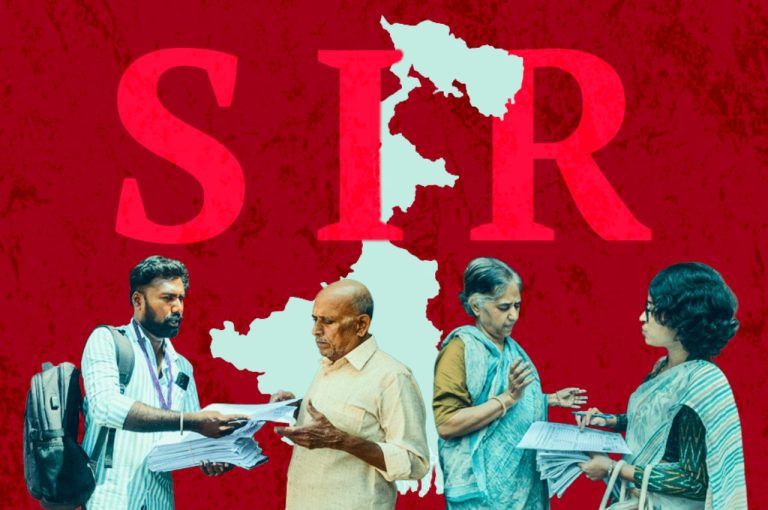
SIR Induced Reverse Migration to Bangladesh Bengal Governor Murshidabad Visit 2025: Electoral Roll Revision Controversy, Refugee Anxiety, Governance Challenges, Political Fallout, and Policy Reform Needs

The SIR Induced Reverse Migration to Bangladesh Bengal Governor Murshidabad Visit 2025 controversy has become a defining moment in West Bengal’s governance and electoral politics. On November 25, 2025, Governor C.V. Ananda Bose boarded the Hazardwari Express to Murshidabad to assess reports of “reverse migration” — illegal immigrants allegedly returning to Bangladesh after the Special Intensive Revision (SIR) of electoral rolls began. His intervention underscores the gravity of the situation, where electoral integrity, refugee rights, and governance failures intersect.


2. The Special Intensive Revision (SIR): What It Means

The SIR is a voter roll update exercise ordered by the Election Commission of India (ECI).

  • BLOs (Booth Level Officers) must verify voter identities against the 2002 electoral roll benchmark.
  • Families without proper linkage risk exclusion.
  • Aadhaar is accepted only as identity proof, not citizenship proof.
  • The process has sparked panic among refugee and migrant communities.

Governor Bose described the SIR as “crucial and important,” but acknowledged multiple interpretations of its impact.


3. Reports of Reverse Migration

Media reports suggest hundreds of illegal immigrants are attempting to return to Bangladesh.

  • Fear of exclusion from voter rolls has triggered panic.
  • Families without documents worry about deportation.
  • Rumors of mass verification drives have spread across border districts.

Governor Bose insisted on seeing the situation “with his own eyes” before forming an opinion.


4. SIR Induced Reverse Migration: Governor’s Intervention

Bose visited the Hakimpur border outpost in North 24 Parganas before traveling to Murshidabad.

  • He interacted with locals to understand ground realities.
  • He held meetings with senior Border Security Force (BSF) officials.
  • He promised to review administrative preparedness in vulnerable zones.

His train journey symbolized accessibility and direct engagement with citizens.


5. Governance Challenges Exposed

The incident highlights systemic governance failures:

  • Opaque procedures in voter roll revision.
  • Weak communication with citizens.
  • Fear and confusion among refugee families.
  • Delayed response to BLO protests and deaths linked to workload stress.

Without reforms, electoral integrity itself is at risk.


6. Political Fallout

The controversy has political consequences:

  • TMC accuses the EC of acting under BJP’s instructions.
  • BJP frames the SIR as necessary for electoral integrity.
  • Refugee communities are caught between promises and fears.

The issue has become a flashpoint ahead of the 2026 Assembly elections.


7. Human Dimension: Refugee Anxiety

Refugee families express fear:

  • Many lack documents linking them to the 2002 roll.
  • Rumors of deportation spread panic.
  • Families worry about losing voting rights and citizenship claims.

Their voices reflect the human cost of bureaucratic rigidity.


8. Historical Context: NRC and CAA

The SIR controversy echoes past debates:

  • The National Register of Citizens (NRC) in Assam excluded millions due to documentation gaps.
  • The Citizenship Amendment Act (CAA) promised relief but created confusion.
  • Bengal’s refugee communities fear similar exclusion under SIR.

9. Broader Implications for Democracy

The incident raises fundamental questions:

  • Can elections be credible if voter rolls are manipulated?
  • Will refugee families trust institutions if disenfranchised?
  • Does democracy risk losing legitimacy if electoral processes are politicised?

10. Recommendations for Reform

Experts suggest:

  • Transparency in SIR procedures.
  • Independent monitoring of voter roll revisions.
  • Community awareness campaigns to reduce panic.
  • Compensation and protection for BLOs under stress.
  • Policy reforms to safeguard refugee rights.

11. Comparative Lessons from Other States

Other states have faced similar controversies:

  • Assam’s NRC excluded millions despite decades of residence.
  • Tripura’s refugee politics shaped electoral outcomes.
  • Bengal’s case reflects a national challenge of balancing electoral integrity with refugee rights.

12. Conclusion: A Test of Governance and Democracy

The SIR Induced Reverse Migration to Bangladesh Bengal Governor Murshidabad Visit 2025 is more than a bureaucratic exercise — it is a test of governance, democracy, and human dignity. Unless systemic reforms are undertaken, refugee families will remain vulnerable, and public trust in institutions will erode.

Governor Bose’s intervention underscores the urgency of balancing electoral integrity with human dignity. His train journey to Murshidabad symbolizes accessibility, but the crisis demands systemic solutions.


🔗 Government External Links

For further reading and official updates, here are relevant government sources:

Also read: Home | Channel 6 Network – Latest News, Breaking Updates: Politics, Business, Tech & More

November 28, 2025: Nifty 50 ends flat; NEC Life, 63 Moons extend rally while MCLOUD, Yatharth and INDOUS drag

The Indian equity market closed Friday’s session, November 28, 2025 on a subdued note, with the Nifty 50 slipping marginally into the red despite stock-specific fireworks in the broader market. Gains in select mid- and small-cap counters such as NEC Life and 63 Moons Technologies were offset by profit‑booking in names like MCLOUD, Yatharth Hospital and Indo US Bio-Tech.​​

Also Read: November 28, 2025 (Opening): Nifty 50 inches higher; Adani RE, 63 Moons, Sigachi among top movers, MCLOUD and GAIL slip

Benchmarks close off highs

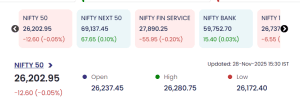
november 28The Nifty 50 settled around 26,202.95, down about 12.6 points or 0.05%, after opening near 26,237 and touching an intraday high of roughly 26,280 with a low around 26,172. Bank Nifty closed slightly positive near 59,753, while the Nifty Financial Services index ended lower, signalling sectoral churn even as frontline indices stayed range‑bound.​​
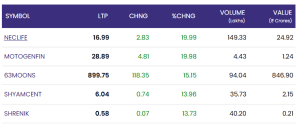


Top gainers: NEC Life, Motogen Fin, 63 Moons

Screenshot 2025 11 28 203722On the gainers’ side, NEC Life (NECLIFE), Motogen Finserv (MOTOGENFIN), 63 Moons Technologies, Shyam Century Ferrous (SHYAMCENT) and Shrenik rallied between about 13% and 20% in today’s trade. 63 Moons Technologies jumped over 15% to around ₹899.75 with traded value above ₹840 crore, indicating strong momentum and active participation from short‑term traders.​​
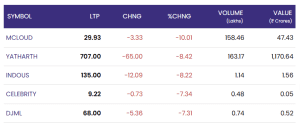
Key losers: MCLOUD, Yatharth, INDOUS

Screenshot 2025 11 28 203730Among the top losers, Magellanic Cloud (MCLOUD), Yatharth Hospital, Indo US Bio-Tech (INDOUS), Celebrity Fashions and DJML declined between roughly 7.3% and 10%. Yatharth Hospital slipped more than 8% to around ₹707 on heavy volumes exceeding 1.6 crore shares, while INDOUS extended its correction with a fall of over 8% amid profit‑taking after recent sharp gains.​​

Market undertone and outlook: November 28, 2025

Analysts note that the Nifty’s inability to sustain above the 26,250–26,300 zone points to ongoing consolidation after the recent rally, with 26,150–26,100 emerging as immediate support. Market action remains highly stock‑specific, with traders rotating between high‑beta mid‑caps and defensives, and experts advising strict risk management and selective buying rather than broad‑based accumulation at current levels.​

For real time stock Updates, visit NSE website.

Samyuktha Shan got Married in an intimate event that surprised many in 2025

Samyuktha Shan got Married as a beautiful ceremony brings quiet attention

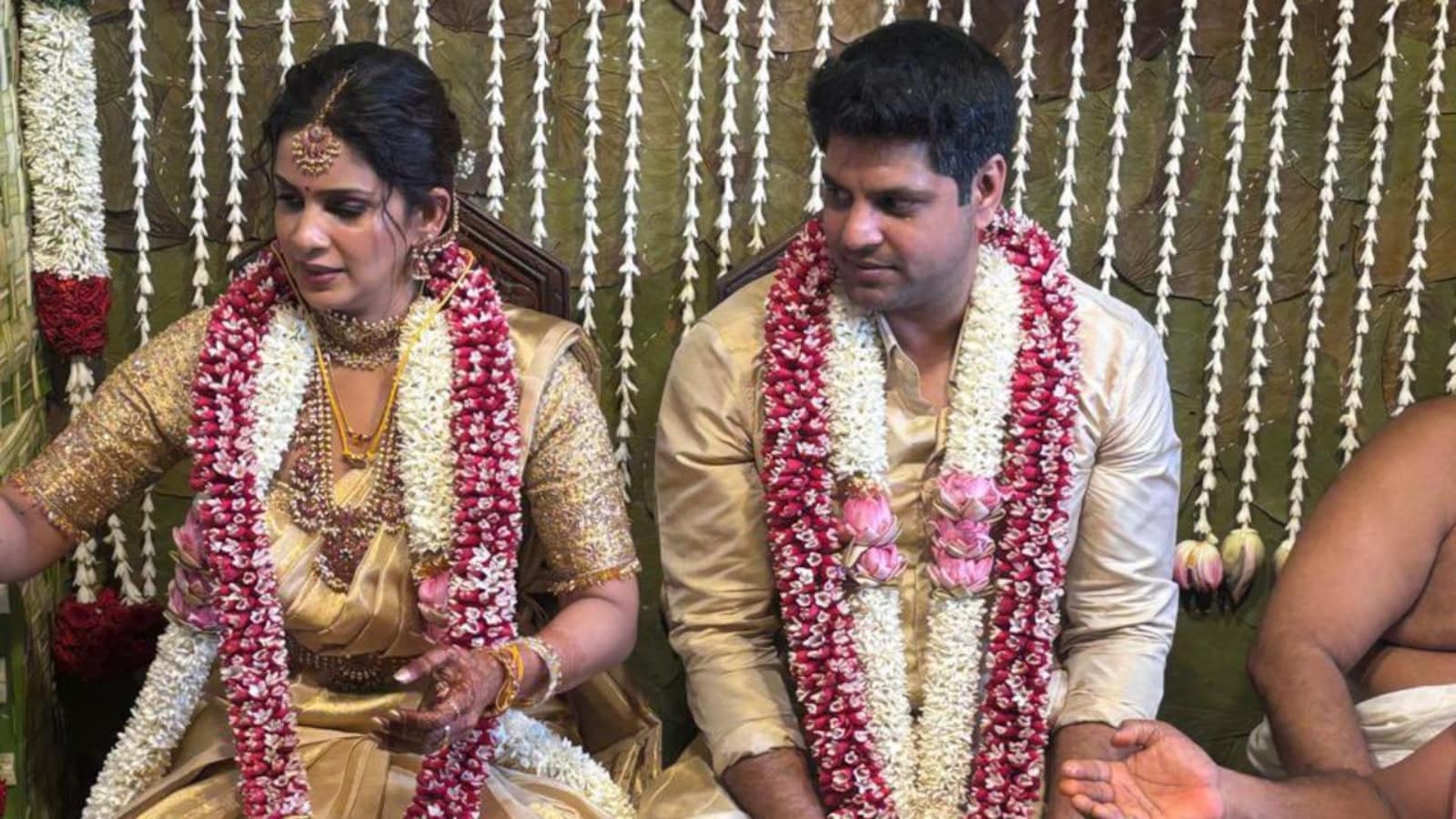
Samyuktha Shan got Married in a warm and graceful event that brought together close family and friends, marking an important moment for both Samyuktha Shan and Aniruddha Srikanth. The ceremony was held in a simple yet meaningful setting, where traditional elements were kept intact without unnecessary grandeur. The calm atmosphere and the couple’s natural presence created a sense of authenticity that stood out and captured attention as the news began to spread.Samyuktha Shan got Married

Samyuktha Shan got Married in an event filled with familiar traditions

The wedding followed a structured traditional format, with rituals carried out in the presence of close relatives. The couple chose a setting that reflected comfort and familiarity rather than spectacle. Their attire was elegant and understated, matching the overall tone of the ceremony. As the day progressed, the guests highlighted how the event felt personal, with every moment focused on the couple rather than external decoration. This approach made the wedding feel grounded and sincere, allowing the rituals to hold more significance.Actress Samyuktha Shan Weds Aniruda Srikkanth ❤️- 2nd Marriage Video | Cricketer Cheeka Son |Divorce

Inside the venue, the atmosphere remained peaceful. The couple interacted with guests without the rush usually seen in larger celebrations. Their families shared quiet joy, focusing on the rituals and the steady flow of the day. This simplicity made the event memorable, as it showed a different side of wedding celebrations where meaning is placed above display. The news began circulating soon after, especially as images from the ceremony were shared among circles already familiar with the couple.

Samyuktha Shan got Married in a way that reflects a thoughtful beginningBigg Boss Tamil fame Samyuktha marries former cricketer Kris Srikkanth's son Aniruddha in traditional ceremony: See pics

For many, the ceremony highlighted how weddings grounded in family involvement and calm moments can leave a lasting impact. The focus remained on the commitment between the couple, with their families supporting them throughout the process. Observers appreciated the balance between tradition and modesty, noting that the event carried a sense of sincerity that resonated with those who followed the news later.

As the day came to a close, the couple received wishes from people across different circles who admired the simplicity of the celebration. The warm reactions also showed how meaningful moments do not depend on grand arrangements but on the intention behind them. With this ceremony, the couple begins a new phase in their lives, supported by the quiet but heartfelt response to their marriage news.


View this post on Instagram


A post shared by SportsTiger (@sportstiger_official)

Samyuktha Shan got Married marks the start of a new chapter

The wedding has now become a point of conversation due to its balanced and genuine presentation. While the couple steps forward into married life, the ceremony stands as a reminder that thoughtful celebrations can carry more weight than elaborate ones. Also Read: Kiara Advani and Sidharth Malhotra Welcome Baby Girl in a Heartwarming First Reveal in 2025

Conclusion:
The event served as a steady and sincere beginning for the couple, showing that a wedding focused on tradition and simplicity can draw attention without relying on excess.

November 28, 2025 (Opening): Nifty 50 inches higher; Adani RE, 63 Moons, Sigachi among top movers, MCLOUD and GAIL slip

The Indian equity market traded with a mildly positive bias on Friday late morning, with the Nifty 50 hovering above the 26,200 mark, supported by selective buying in banking and index heavyweights. While the headline index showed only modest gains, individual stocks in the broader market witnessed sharp swings on both sides.​​

Also Read: 27 November 2025: Nifty 50 closes marginally higher; Adani RE, Whirlpool slump while ATL‑RE, Agritech, PRITI hit upper circuit

Benchmarks hold near day’s high

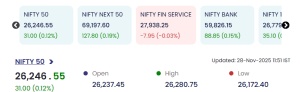
november 28The Nifty 50 was seen around 26,246.55, up about 31 points or 0.12%, after opening near 26,237 and touching an intraday high of roughly 26,280 with a low around 26,172. Bank Nifty traded firm above 59,800, adding nearly 0.15%, indicating continued strength in financials even as the Nifty Financial Services index stayed marginally negative.​​
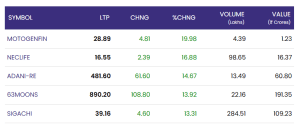


Top gainers in broader market

Screenshot 2025 11 28 115137Among notable gainers, Motogen Finserv (MOTOGENFIN), Nec Life Sciences (NECLIFE), Adani RE, 63 Moons Technologies and Sigachi Industries surged between about 13% and 20% during the session. Motogen Finserv rallied nearly 20% to around ₹28.9, while 63 Moons Technologies jumped close to 14% with strong traded value above ₹190 crore, indicating aggressive momentum participation.​​
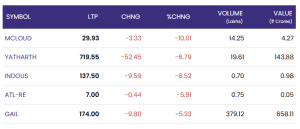
Key losers: MCLOUD, Yatharth, INDOUS, GAIL

Screenshot 2025 11 28 115142On the downside, Magellanic Cloud (MCLOUD), Yatharth Hospital, Indo US Bio-Tech (INDOUS), ATL-RE and GAIL were among the top losers, declining between roughly 5.3% and 10%. GAIL  slid over 5% to about ₹174 on heavy volumes above 3.7 crore shares, suggesting profit‑booking after its recent outperformance.​​

Market undertone and trading cues: November 28, 2025

Analysts point out that the Nifty’s ability to sustain above the 26,200 zone despite sectoral churn reflects a consolidative, stock‑specific phase rather than a broad risk‑off move. Traders are focusing on high‑beta names like Adani RE and 63 Moons Technologies for short‑term opportunities, while keeping an eye on support near 26,150–26,100 and resistance around 26,300 on the benchmark index.​

For real time stock Updates, visit NSE website.