Thursday, May 14, 2026
Home Blog Page 301

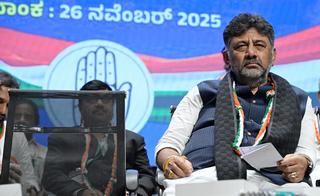
Shivakumar’s 1 Bold Cryptic Post Adds Fuel to Karnataka Leadership Fire

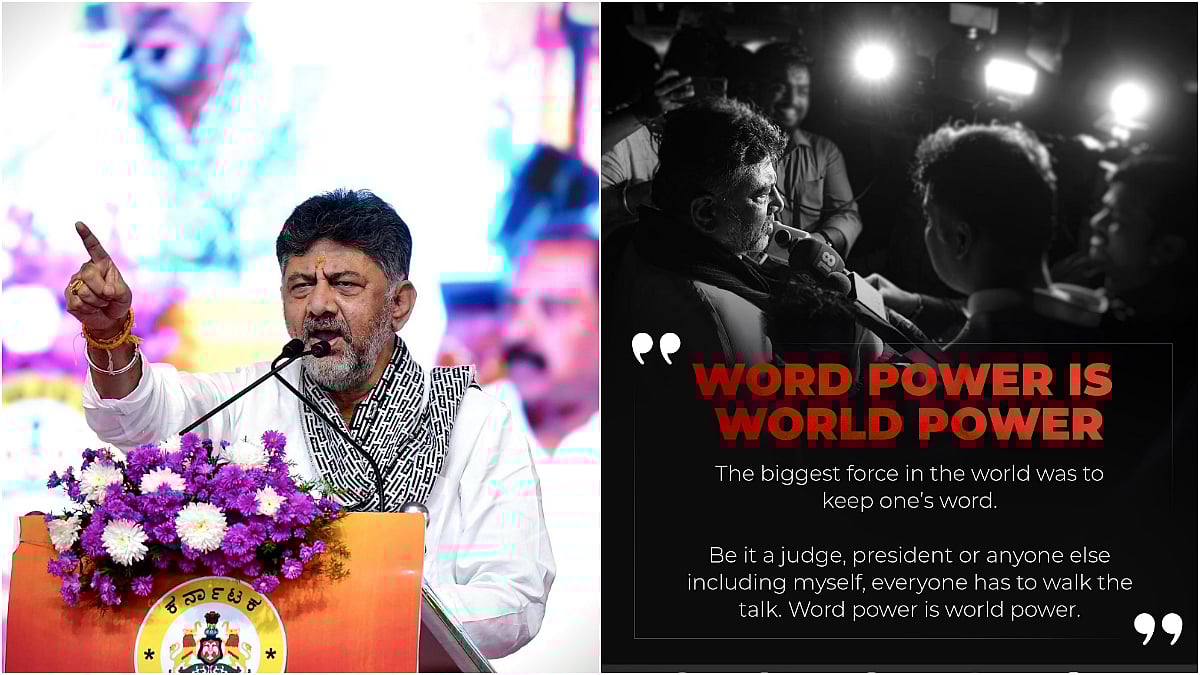
A cryptic social-media post by the Deputy Chief Minister of Karnataka, D.K. Shivakumar, declaring “Word power is world power,” has triggered fresh speculation about internal power dynamics within the state’s ruling party. Posted amid simmering tension over the future of the Chief Minister’s post, the message appears to rekindle debate over a rumored leadership transition. Political observers now view Shivakumar’s words as a pointed reminder to party insiders — and perhaps a warning that commitments must be honoured. The timing of the post, just days after the government completed half its term, suggests that the push for clarity on leadership may be intensifying.

While Shivakumar later denied having authored the post — calling it “fake” — the message remains visible on his feed, keeping the speculation alive. Several senior leaders within the party and loyalists have begun interpreting the phrase as a subtle assertion over the coveted top post, believed to be due for rotation based on an alleged agreement. With the state’s political environment already under strain from the tug-of-war, the post has stoked public interest, media scrutiny, and internal uncertainty over who will steer Karnataka’s government in the next phase.

A Veiled Message or a Direct Challenge? What Shivakumar’s Post Means

In the post, Shivakumar shared a black-and-white photograph of himself, accompanied by the quote: “Keeping one’s word is greatest strength in the world! Word power is world power. The biggest force in the world was to keep one’s word… everyone has to walk the talk.” Many interpret this as a veiled reference to a past understanding within his party about leadership rotation — an understanding that, according to his supporters, promised him the top seat after two-and-a-half years in office. That deadline has reportedly been crossed, reviving hope among his camp that the agreement will now be honoured.D.K. Shivakumar says 'Word power is world power' in cryptic post amid Karnataka  leadership tussle - The Hindu
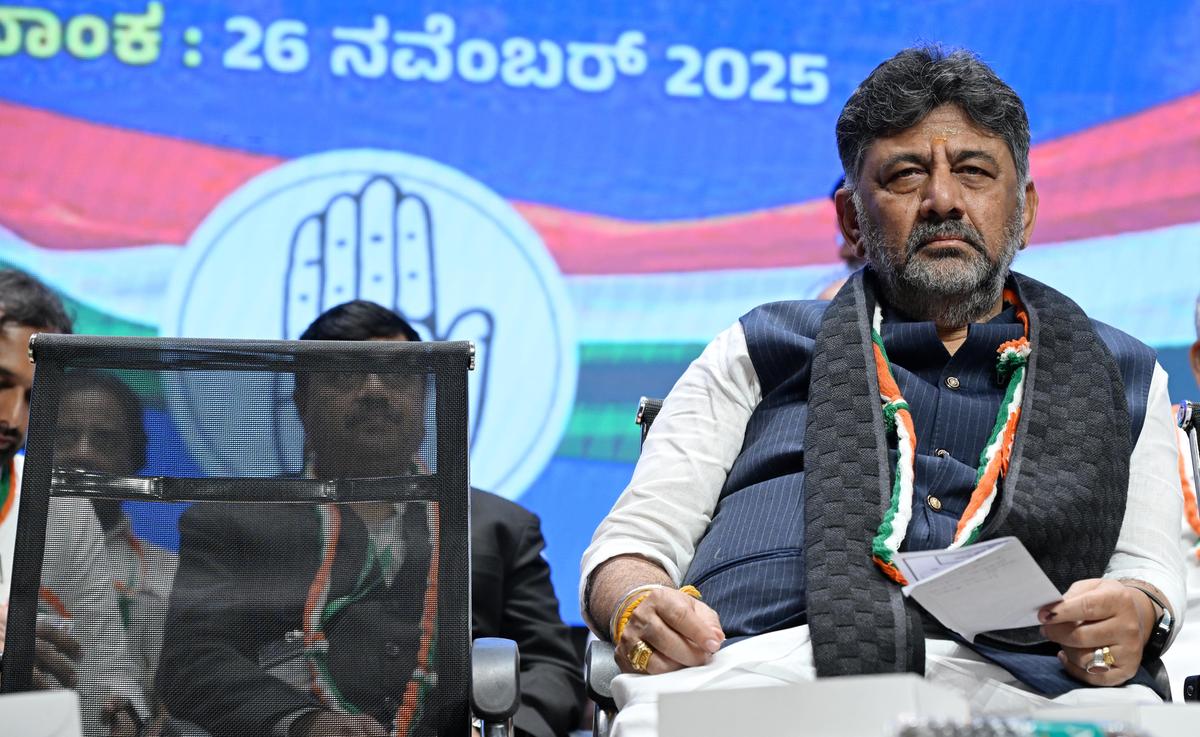
Immediately after the post, the state’s political climate became tense. Rumours swirled that Shivakumar held late-night meetings with allied ministers and faction leaders, suggesting attempts to gauge support for a possible leadership change. Some MLAs from his camp reportedly flew to Delhi to press their demand before the party high command. The message — though cryptic — is being treated as more than words; it is being seen as a strategic move to shape opinion within the party and among the public.

Importantly, even as speculation heightens, Shivakumar’s denial has added layers of ambiguity. When questioned, he reportedly said the viral post was “fake” and that he had not posted it. Nevertheless, the post continues to draw eyeballs, making it unclear whether it was a drafting error, an unauthorized edit, or a deliberate political statement. Either way, the message has done its job — it has drawn attention, provoked conversation, and forced stakeholders to respond.

Despite this public confusion, sources within the party say talks are underway to placate both camps. High-level meetings with central leadership have been reportedly scheduled to address the issue directly and prevent internal discord from turning into a full-blown crisis. The message from party insiders is that while ambition is natural, the official stance will depend on consensus — and the high command will ultimately decide the matter.

Power Struggle Unfolds: What the State’s Top Leadership Says

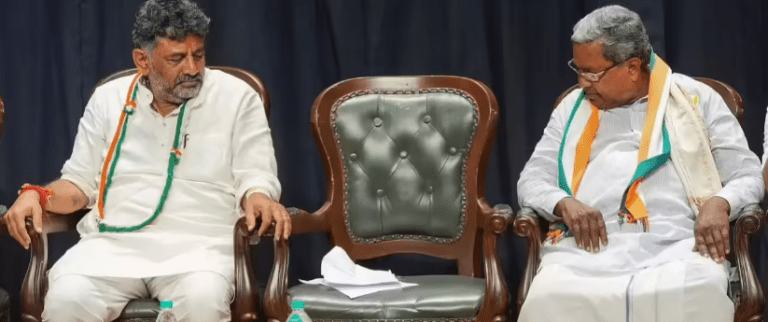
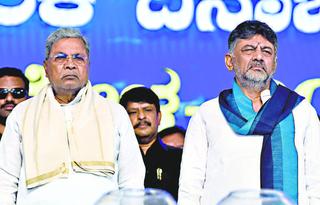
Not long after Shivakumar’s post, the state’s Chief Minister, Siddaramaiah, responded — not with anger, but with what analysts call a rhetorical counterpunch. He posted on social media that “a word is not power unless it betters the world for the people,” emphasising that his commitment is to public welfare, not political deals. He underscored that the mandate given by voters was for a full five-year term, and asserted that governance should focus on delivering public welfare rather than chair-related calculations.

Siddaramaiah pointed to implementation of social-welfare guarantee schemes and infrastructure promises fulfilled so far, arguing that governance is about delivery, not deals. With electoral prospects for the ruling party and public interest at stake, he conveyed that holding onto office is not a matter of ego but of continued administrative responsibility. His post appeared to be designed to reaffirm his legitimacy while subtly rebutting suggestions of an internal agreement involving power rotation.Word Power Is World Power': DK Shivakumar Shares Cryptic Post Amid Power  Tussle In Karnataka

The rapid exchange of cryptic verdicts between the two top leaders has sent ripples across Karnataka’s political fabric, stirring speculation, fueling media debate, and capturing public attention. While Congress top brass and state leaders call for calm and collective decision-making, grassroots activists, opposition parties and media houses treat the incident as evidence of brewing internal conflict — one that could reshape the political narrative in Karnataka for years to come.

Political Fallout: Internal Factions, Public Perception, and Opposition Gains

The fallout from the post has extended beyond party corridors into public discourse. Among local politicians, there is visible unease over the optics of disunity, especially with upcoming elections on the horizon. Some senior leaders, worried about dissent, have tried to downplay the issue, urging both sides to avoid “public spectacle.” Others — particularly those aligned with Shivakumar — view the post as a long-overdue nudge to honour past promises. This divide is prompting jockeying for position, with some leaders reportedly repositioning themselves in anticipation of possible reshuffles.

For opposition parties, this has been an opportunity to raise questions about the ruling party’s stability. They argue that such tussles distract from governance and policy delivery, pointing out delays in welfare schemes, unmet public commitments, and administrative inertia. In media commentary, some analysts warn that the power struggle could deepen rural–urban divides, regional fault lines, and caste-based politics — if not managed carefully. The public mood appears mixed: while many citizens express frustration over political infighting, some see this as the first step toward accountability and transparency within the party.

At grass-roots level, local Congress workers in several districts have reportedly expressed confusion and concern over shifting loyalties. In some regions, supporters of Shivakumar have demanded clarity and assertiveness, while workers close to Siddaramaiah have sought reassurance that governance and implementation will not be affected. The uncertainty has already disrupted party activities in a few constituencies, and morale appears fragile. For a party that won strongly two years ago, the internal rift risks eroding organizational cohesion just months before crucial electoral tests.

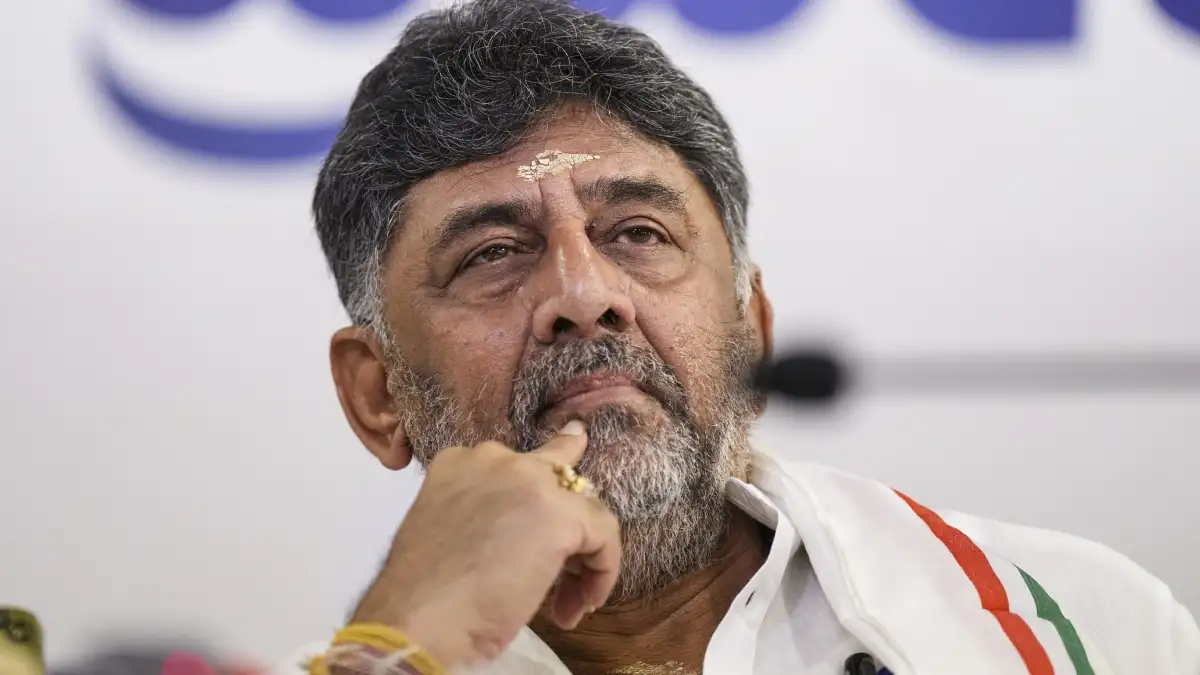
Meanwhile, the rival Bharatiya Janata Party (BJP) has seized the opportunity to highlight what it calls “Congress chaos.” Party spokespersons and media cells have amplified the narrative that Congress is consumed by internal ambition, neglecting public issues such as inflation, infrastructure neglect, and law-and-order problems. In public rallies and social media posts, the BJP has used Shivakumar’s message to question the credibility of the government and demand early polls, arguing that the people’s mandate is being undermined by internal political games.Word power is world power': DK Shivakumar's cryptic post amid Karnataka  power tussle | Karnataka News – India TV
What Happens Next — High Command, Compromise or Crisis?

As the dust settles from public exchanges, all eyes are now on the central leadership of the Congress party. Observers expect a high-profile meeting in New Delhi involving senior leaders, including national party heads, to try and defuse the tension. The objective is likely to be a negotiated settlement that preserves party unity, ensures continuation of welfare governance, and prevents electoral damage. The high command is under pressure to act fast — prolonged uncertainty could deepen factionalism, erode public confidence, and open the door for rival parties to exploit the instability.

Possible outcomes include reaffirming the current leadership till the end of the term, announcing a formal rotational agreement, or reshuffling the cabinet to accommodate both camps without compromising stability. Some suggest the party may also attempt to formalize internal power-sharing through documented agreements to avoid ambiguity later, though rivals warn this could further complicate internal dynamics by inviting more claimants. For now, party insiders stress the importance of consensus, communication, and avoiding public conflicts.

In the public sphere, politicians, analysts and citizens alike are watching closely. The post-by-post verbal sparring may soon take on more concrete dimensions — resignations, loyalty shifts, or formal public demands. Observers caution that if the dispute escalates beyond symbolic gestures, it could disrupt governance, stall schemes, and delay development initiatives at a time when the state faces economic and social challenges. The coming weeks could determine not just who leads, but how stable governance will be maintained in Karnataka.

Conclusion: When Words Become Weapons in Political Chess

D.K. Shivakumar’s terse declaration “Word power is world power” may appear simple, yet in Karnataka’s charged political context, it has transformed into a loaded statement — one that threatens to unsettle existing power structures. It underscores how in politics, language can carry weight far beyond grammar — evoking expectations, stirring anxieties, and igniting power plays. As the state’s leadership tussle unfolds under public gaze, the true impact of that one phrase may determine not just who sits at the helm, but the direction Karnataka takes in the coming years.

For now, Shivakumar’s post stands as a symbol of ambition, impatience, and demand for accountability. The contrasting response by Siddaramaiah emphasises that governance and fulfilment of public trust matter more than private deals. The Congress high command faces a critical test — to balance internal ambition, public expectations, and electoral considerations without letting “word play” overshadow real work.

Follow: Karnataka Government

Also read: Home | Channel 6 Network – Latest News, Breaking Updates: Politics, Business, Tech & More

KARNATAKA CHILD COMMISSION INTERVENES IN KOPPAL TEEN PREGNANCY CASE: 1 URGENT RIGHTS CRISIS

The shocking incident of a minor girl delivering a baby inside a government hostel washroom in Koppal district has triggered intense public outrage, leading the Karnataka State Commission for Protection of Child Rights (KSCPCR) to register a suo motu complaint. The Commission stated that the case reflects a severe breakdown in child protection mechanisms within residential hostels meant to safeguard vulnerable students. The suo motu action seeks accountability from all responsible departments and aims to ensure that systemic gaps are immediately identified and addressed. Officials emphasize that the case demands not only legal action but also institutional reform.

The Commission has formally requested detailed reports from the Department of Women and Child Development, the Social Welfare Department, and district-level hostel management authorities. According to Commission members, the lack of vigilance that allowed the teenage girl’s pregnancy to go unnoticed raises significant concerns about monitoring standards and staff responsibility. KSCPCR Chairperson also stated that suo motu intervention was necessary due to the “gravity of negligence” and the vulnerable status of the child involved. The Commission insists that such incidents must be treated as institutional failures, not isolated events.

Police investigations revealed that a youth from the same district has been booked for rape following the girl’s statement. Five hostel staff members were also named for severe negligence for failing to notice signs of distress and for not maintaining proper oversight of the children under their care. The Commission reiterated that staff in-charge of residential hostels carry a legal and moral responsibility to ensure physical, emotional, and psychological safety of all minors. According to officials, the inquiry will focus on whether the mandatory reporting procedures under the Protection of Children from Sexual Offences (POCSO) Act were followed in time.

The KSCPCR has emphasized that children staying in hostels are often from economically vulnerable or socially marginalized backgrounds, making it essential for institutions to establish regular health check-ups and counselling support. In this case, the apparent absence of any mechanism to detect changes in the girl’s physical or emotional well-being is being viewed as a major lapse. The Commission will examine whether school authorities, hostel wardens, and local child protection units fulfilled their duties, and why early intervention mechanisms failed. Officials say that the suo motu action will demand accountability at every level.

FOCUS ON SYSTEMIC FAILURES AND ACCOUNTABILITY

Investigators and child rights advocates point out that the incident reflects broader gaps in hostel management across several districts of Karnataka. Reports from earlier audits indicate that many government-run hostels face staff shortages, irregular supervision, and lack of trained counsellors who can recognize warning signs in vulnerable children. KSCPCR intends to review whether Koppal hostel authorities complied with state guidelines mandating regular documentation of students’ health, attendance, and behaviour. The Commission also plans to assess whether grievance redressal committees in schools and hostels were functional or merely existing on paper.Koppal teen pregnancy case: Karnataka Child Rights Commission registers suo  motu complaint - The Hindu

Activists argue that physical infrastructure deficiencies may have contributed to the tragedy. Hostels in rural districts often lack adequate lighting, segregated facilities, accessible complaint boxes, and secure perimeters. The Commission believes that such environments reduce the sense of safety for minors and make them more vulnerable to exploitation. In the Koppal case, questions have arisen about how a pregnant minor could continue living in the hostel without medical or psychological support. Authorities have been asked to verify whether any staff had prior knowledge but failed to report it, which itself constitutes a punishable offence under POCSO provisions.

The KSCPCR has also demanded that the district administration conduct detailed medical and psychological assessments of the minor girl. Experts emphasize that survivors of sexual violence require long-term support, beyond immediate medical care. Counselling, rehabilitation services, and family support will be essential to ensure her well-being. The Commission is also monitoring whether the child’s identity is protected as mandated by law, cautioning officials and media houses against revealing any information that may compromise her privacy. According to the Commission, the minor’s safety must remain the top priority as investigations proceed.

CALLS FOR POLICY REFORM AND STATEWIDE HOSTEL AUDIT

In response to the incident, child rights groups have urged the state government to launch a statewide audit of hostels for girls, boys, and students from backward communities. The KSCPCR’s suo motu complaint includes recommendations for immediate inspection of safety protocols, reporting mechanisms, and staff training standards. Experts note that Karnataka has thousands of residential hostels, many operating without adequate oversight. The Koppal incident, they argue, is a wake-up call to address structural deficiencies that could put countless minors at risk if unaddressed.

District officials have been instructed to suspend and interrogate the staff members booked for negligence. The Commission is reviewing whether departmental disciplinary actions are being initiated in parallel with criminal proceedings. Officials believe that accountability must extend beyond punitive measures and include reinstating trust in hostel systems. They argue that children in institutional care should never be left without consistent adult supervision, access to confidential reporting channels, and routine welfare monitoring. KSCPCR members have stressed that corrective reforms must be adopted immediately to prevent recurrence.Teen pregnancy case: Rules stipulate regular health checks, record  maintenance - The Hindu

Child protection experts have also pointed out the need for periodic staff sensitization programs. Many hostel employees lack adequate training on identifying signs of distress, behavioural changes, or trauma responses in children, which can delay intervention in cases of sexual abuse. KSCPCR is expected to push for compulsory workshops on child safeguarding, legal responsibilities, and early detection techniques. The Commission believes that strengthening human resource capacity is as important as improving infrastructural standards in ensuring child safety.

Community leaders and local representatives have expressed concern over the growing number of sexual assault cases reported from rural Karnataka. They argue that while legal frameworks such as POCSO exist, their enforcement remains weak due to lack of awareness, societal stigma, and fear of reprisal. The Commission’s swift action in the Koppal case is seen as an attempt to reinforce the message that institutions must act promptly and responsibly. Several stakeholders have urged the government to collaborate with NGOs and child rights organizations to improve support networks for vulnerable minors.

The Koppal incident has reignited debates around adolescent awareness programs in schools and hostels. Advocates argue that comprehensive educational modules on personal safety, consent, reporting mechanisms, and emotional health must be integrated into student curriculum. Many minors are unaware of their rights or fear reporting abuse due to power dynamics and lack of trust. KSCPCR plans to review whether such sessions were being conducted in Koppal and other districts as mandated. Officials believe that empowering students with knowledge is essential to building safer learning environments.Koppal teen pregnancy case: Karnataka Child Rights Commission registers suo  motu complaint - The Hindu

As the investigation continues, the KSCPCR’s suo motu complaint is expected to shape the state’s policy response to the growing concerns of institutional negligence. The Commission has assured that it will closely monitor every stage of the case and ensure that the child receives comprehensive protection and support. While the legal process will determine the punishment for the accused, the Koppal incident underscores the urgent need for systemic reform. Child rights advocates hope that this tragedy becomes a turning point in strengthening Karnataka’s institutional care framework rather than another forgotten case in the long list of preventable failures.

The case has also drawn attention to the accountability of local Child Welfare Committees (CWCs), which are mandated to oversee the safety and rehabilitation of vulnerable children. Critics argue that CWCs often respond reactively rather than proactively, intervening only after an incident has escalated. KSCPCR is likely to review whether the Koppal CWC had mechanisms in place to routinely assess the hostel environment and welfare of children. The Commission may further push for mandatory monthly audits by CWCs to ensure early detection of risk factors, thereby preventing abuse before it occurs, rather than responding only after harm is done.

Meanwhile, parents and community members are demanding greater transparency from state authorities. Several parents have questioned why hostels do not provide regular updates to guardians about children’s health, emotional well-being, and behavioural changes. Many argue that student welfare should not be exclusively monitored by hostel staff, but should involve structured parent-teacher interactions and health reporting systems. The KSCPCR is considering recommending an integrated digital health monitoring platform for hostel students, which could help track medical records, counselling needs, and emergency alerts. Such measures are being viewed as essential for bridging communication gaps.

Legal experts have emphasized that negligence in such cases must be treated with seriousness equal to the crime itself. While the primary accused faces prosecution for rape under POCSO provisions, experts insist that institutional negligence enabling the crime must also invite stringent consequences. They argue that punishment limited to dismissal or transfer of negligent staff fails to create deterrence. The Commission is expected to push for stronger legal action against those who failed to protect the minor, underscoring that child protection duties cannot be treated as optional or peripheral responsibilities.

Psychologists observing the case have stressed the need for trauma-informed care that acknowledges the emotional complexity faced by child survivors. They caution that forced silence, stigma, or insensitive handling can intensify trauma, potentially impacting long-term mental health. Such cases require not only medical support but also family counselling, reintegration assistance, and continuous therapy. The KSCPCR intervention may thus help push for a more comprehensive recovery system that treats survivors as individuals requiring empowerment, not just as subjects of legal proceedings. Ensuring dignity and sensitivity will be crucial to shaping her future.

Ultimately, the broader lesson emerging from the Koppal teen pregnancy case is that institutional structures designed to protect children cannot afford complacency. Hostels, schools, welfare departments, and local committees must operate with constant vigilance and empathy, recognizing that children in state care depend entirely on system integrity. The KSCPCR’s suo motu action signals a push toward restoring accountability and public trust. If the recommendations from this case translate into tangible improvements statewide, they may help prevent similar tragedies. For now, Karnataka watches as the case becomes both a test of justice and a call for systemic transformation.

Follow: Karnataka Government

Also read: Home | Channel 6 Network – Latest News, Breaking Updates: Politics, Business, Tech & More

BJP PLANS NO-TRUST MOTION TO CHALLENGE SIDDARAMAIAH GOVERNMENT IN BELAGAVI: 1 POWERFUL POLITICAL SHOWDOWN

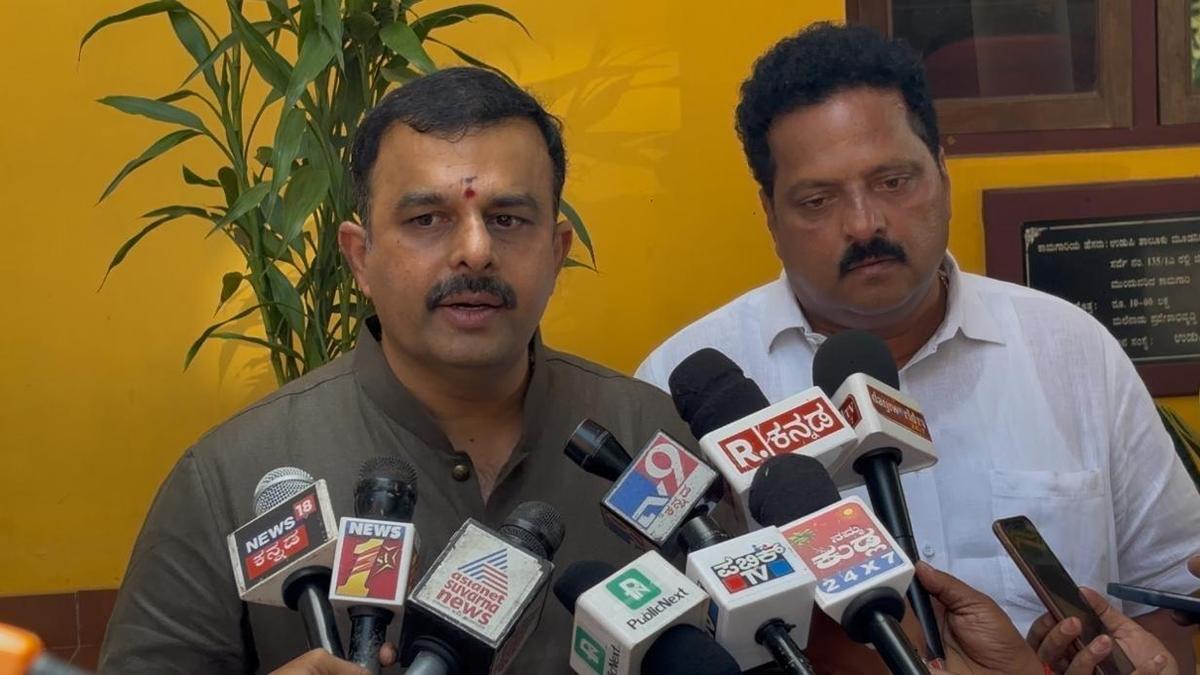
The Karnataka political landscape is preparing for a dramatic confrontation as Leader of the Opposition and senior BJP leader V. Sunil Kumar announced that the party will move a no-confidence motion against the Siddaramaiah-led Congress government during the upcoming Assembly session in Belagavi. Addressing reporters, Kumar alleged that the Congress government has “failed on every governance parameter,” including price control, irrigation support, welfare implementation, and management of law and order. This announcement sets the stage for a heated legislative battle, where the opposition aims to corner the government both politically and morally. The ruling Congress, however, has asserted that it is not threatened by the move.

Kumar accused the government of “turning its back on the common man” even after making large promises in the 2023 Assembly election campaign. The opposition leader claimed that the government’s five guarantee schemes were poorly implemented, lacked transparency, and created fiscal strain while ignoring critical sectors such as agriculture and infrastructure development. He further alleged that resources meant for essential development projects were being diverted to generate political mileage. According to him, the upcoming Belagavi session will serve as a platform to expose the government’s “inefficiencies and misplaced priorities,” forcing it to answer for its administrative choices.

He also claimed that the Siddaramaiah administration has failed to adequately respond to farmer distress, including issues related to drought relief and compensation. Karnataka has been facing deficient rainfall and crop loss across several districts, yet the state government has been accused of delayed action. Kumar asserted that farmers have been “left waiting endlessly” for relief, even though crop damage reports have been submitted by district officials. He argued that the government’s responsibility goes beyond offering assurances and must translate into timely support, failing which the agricultural sector may face irreversible damage.BJP will move no-trust motion against Siddaramaiah government in Belagavi  session: V. Sunil Kumar - The Hindu

The BJP, Kumar said, intends to hold the government accountable for “worsening law and order conditions,” citing reported incidents of violence, drug trade expansion, and alleged political interference in police functioning. According to the opposition’s narrative, the state’s policing has weakened due to administrative influence, affecting investigation quality and citizen safety. The BJP will, therefore, use the no-confidence motion to demand clarity on policing reforms, budget allocations for security upgrades, and autonomous functioning of the police department. Kumar emphasized that security concerns impact not just urban areas but also rural communities increasingly affected by theft, illegal trade, and substance abuse.

The Congress government has responded by dismissing the allegations as “politically motivated drama.” Senior ministers close to Chief Minister Siddaramaiah have publicly stated that the government is running efficiently and that the guarantees have directly benefited millions. They argue that the opposition fears the popularity of these schemes and is attempting to shift public attention from their effectiveness. Ministers have further claimed that the BJP lacks credibility to question welfare spending since it “failed to provide financial stability or relief to vulnerable citizens” during its own tenure. They insist that the Congress remains confident of defending its policies on the floor of the House.

INTENSIFYING WAR OF WORDS AHEAD OF SESSION

As the Belagavi session approaches, the rhetoric from both sides continues to escalate. Kumar has maintained that the government used “inflated statistics” to justify expenditures under its guarantee schemes, and that auditors must verify whether funds were distributed without bias. The opposition contends that while welfare initiatives have been launched with much publicity, the state is facing a rising fiscal deficit, and revenue-generating departments are being neglected. Ministers from the Congress countered by stating that the guarantees were budgeted responsibly and backed by progressive taxation and rational fund allocation. They also highlighted that social justice cannot be sidelined merely to show fiscal conservatism.

The BJP is also planning to raise concerns over the government’s handling of irrigation allocations, particularly in relation to the ongoing issues surrounding reservoir water distribution for drought-affected regions. Kumar accused the government of “playing politics over water,” claiming that no long-term strategies were being implemented for tank rehabilitation, micro-irrigation, or groundwater recharge. He alleged that farmers were being made to depend entirely on short-term relief instead of systemic agricultural planning. The Congress, meanwhile, insists that several irrigation projects have been expedited and that negotiations on inter-state river disputes are being handled diplomatically and responsibly.BJP will move no-trust motion against Siddaramaiah government in Belagavi  session: V. Sunil Kumar - The Hindu

The political rivalry has further widened with the BJP alleging that the Congress government is using guarantees as a “shield against scrutiny.” According to Kumar, any questioning of governance is met with claims that opposition leaders are anti-poor or against welfare. He maintained that while BJP is not opposing subsidies, it demands clarity on funding models, sustainability, and whether sector-specific development has been sacrificed. Congress ministers responded that opposition criticism has been contradictory and lacks alternative policy suggestions, stating that governance debates must be constructive rather than “obstructionist in tone and intent.”

BELAGAVI SESSION POISED TO BECOME CRUCIAL POLITICAL ARENA

The Belagavi session is traditionally a politically charged event, with past administrations using the platform to pass key legislation or respond to major public issues. This year, however, the session’s atmosphere is expected to be even more intense, as the no-confidence motion offers the opposition a structured opportunity to interrogate governance lapses. Political observers note that the Congress holds a comfortable majority and is not expected to lose the vote. Yet, the motion itself carries symbolic weight, allowing the BJP to frame a narrative of incompetence and administrative failure ahead of future electoral battles, including the Lok Sabha polls.

Kumar also hinted that multiple issues will be raised beyond the no-trust motion, including alleged favoritism in appointments to boards and corporations, misuse of government advertisements, and reduction of funds for rural infrastructure development. He stated that while guarantees are being used to project a pro-poor image, sectors such as public works, transport, and skill development have seen budgetary neglect. The Congress refuted these charges, asserting that development and welfare are being balanced, and that prioritizing vulnerable communities is a constitutional and moral responsibility. They challenged the BJP to present alternatives instead of merely criticizing.

The upcoming legislative debate is expected to feature extensive discussions on fiscal management, where both parties will attempt to establish themselves as more responsible stewards of the state’s economy. Economists and analysts will closely follow the proceedings to understand whether Karnataka’s welfare-heavy governance model can coexist with capital expenditure requirements and industrial competitiveness. While Congress claims that welfare generates consumer spending and boosts the economy, the BJP warns that debt growth without structural planning could impede long-term stability. The session’s financial discourse may influence wider national conversations about welfare-oriented governance.

Political experts argue that the no-confidence motion is not merely a procedural move but a strategic platform for influencing public perception. The BJP is expected to highlight its governance track record in Karnataka and compare its approach with the current administration, aiming to project itself as more development-focused. The Congress will likely emphasize its welfare outreach and argue that inclusive governance requires prioritizing citizen benefit over corporate growth. Both sides will attempt to claim moral leadership, using statistics, testimonies, and ideological framing to win public opinion beyond the Assembly hall.

The session’s conclusion will not mark the end of the political contest. Parties are preparing to intensify their public campaigns, using speeches from the Assembly as soundbites to influence voter sentiment. For the BJP, the no-trust motion serves as a rallying point to unify its cadres across districts, while the Congress aims to defend its policy legacy and counter allegations with grassroots messaging. Karnataka’s politics is thus entering a phase of heightened confrontation, where governance debates will directly shape electoral dynamics. Regardless of the outcome within the Assembly, the real battle for public perception is set to continue in villages, towns, and urban centers across the state.

Past no-confidence motions in Karnataka have often served more as public opinion battles than attempts to change the government. Historical examples show that even when the ruling party enjoys a clear majority, opposition parties use the motion to bring critical issues into the spotlight. Analysts believe that the Belagavi session will follow a similar pattern, where debate performance, data presentation, and emotional messaging will be used to influence voters ahead of upcoming elections. While the outcome is predictable, the narrative formed through the debate may shape political discourse for months.BJP will move no-confidence motion against Siddaramaiah government in Belagavi  session: Former minister V. Sunil Kumar - The Hindu

Political strategists also point out that Karnataka’s unique regional dynamics will play a role in how both sides frame their arguments. The BJP may focus heavily on areas such as coastal Karnataka, Hyderabad-Karnataka, and Mumbai-Karnataka regions, where it seeks to consolidate votes by attacking governance lapses. The Congress, meanwhile, could highlight guarantee scheme beneficiaries in rural areas, seeking to translate welfare delivery into enduring loyalty. The debate in Belagavi may thus be crafted not only for legislators but for targeted voter groups across the state.

Observers suggest that the no-confidence motion could prompt internal rifts within both parties if not strategically managed. BJP leaders must present a united front, minimizing factional disputes and projecting a cohesive alternative vision. On the other hand, Congress must ensure that its ministers offer consistent, data-backed responses to avoid mixed messaging that could weaken its defence. The performance of individual leaders during the debate may influence their political stature within respective parties, shaping leadership equations in the coming years.

Ultimately, the Belagavi session is unlikely to topple the government, but it may alter the trajectory of political conversation in Karnataka. The no-trust motion represents a symbolic challenge to Siddaramaiah’s governance model, pushing both sides to articulate their competing visions for the state. Public attention will be focused not on the vote count but on the substance of arguments, the credibility of claims, and the emotional resonance of the debate. As Karnataka watches closely, the Assembly hall in Belagavi is set to become a theatre for one of the most defining political confrontations of the year.

Follow: Karnataka Government

Also read: Home | Channel 6 Network – Latest News, Breaking Updates: Politics, Business, Tech & More

Serious Security Breach BLO Protest Kolkata 2025: Election Commission Seeks Police Report, Governance Challenges, Electoral Roll Crisis, and Policy Reform Needs in West Bengal

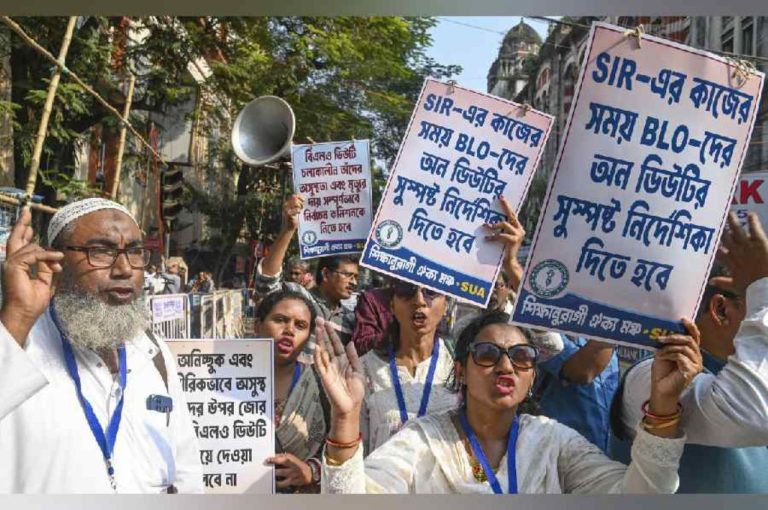
Serious Security Breach: The Serious Security Breach BLO Protest Kolkata 2025 has become a defining moment in West Bengal’s electoral history. On November 17, 2025, hundreds of Booth Level Officers (BLOs) staged a protest outside the office of Chief Electoral Officer (CEO) Manoj Agarwal in Kolkata. Their demand was simple yet urgent: relief from the excessive workload imposed by the Special Intensive Revision (SIR) of electoral rolls. The protest, which lasted nearly 30 hours, was described by the Election Commission of India (ECI) as a “serious security breach.”


2. The Protest: BLOs Demand Relief

The BLOs, responsible for house‑to‑house verification and digitisation of voter forms, complained of:

  • Unmanageable workload under the SIR.
  • Health crises due to long hours and stress.
  • Lack of support from supervisors and district officials.
  • Fear of punitive action if targets were not met.

Their protest outside the CEO’s office was unprecedented, symbolising the breaking point of democracy’s frontline workers.


3. Serious Security Breach: Election Commission’s Response

The Election Commission reacted strongly:

  • EC secretary Sujeet Kumar Mishra wrote to Kolkata Police Commissioner Manoj Kumar Verma, calling the protest a serious breach of security.
  • The EC demanded an action‑taken report within 48 hours.
  • The letter noted that security at the CEO’s office was inadequate, posing risks to officers and staff.
  • The EC directed police to ensure safety at the CEO’s office, residences of officers, and during commuting.

This response underscores the EC’s concern about both security lapses and the fragility of electoral administration.


4. Governance Challenges Exposed

The incident highlights systemic governance failures:

  • Inadequate security at sensitive electoral offices.
  • Poor communication between BLOs and higher authorities.
  • Unrealistic deadlines imposed during SIR.
  • Failure to anticipate unrest among frontline staff.

The protest was not just about workload — it was about trust, dignity, and recognition.


5. Political Context: Bengal’s Volatile Electoral Climate

West Bengal’s electoral environment has long been volatile:

  • Factionalism within ruling and opposition parties.
  • Street protests over voter roll errors.
  • Accusations of bias against electoral officers.
  • High stakes ahead of the 2026 Assembly elections.

The BLO protest adds another layer of tension, raising doubts about the smooth conduct of upcoming polls.


6. Human Dimension: BLOs in Distress

BLOs shared harrowing accounts:

  • Many reported panic attacks, chest pain, and collapses due to workload.
  • Families expressed fear for their health and safety.
  • Some BLOs admitted they were unable to sleep, working late nights to digitise hundreds of forms.

The protest was thus not just political, but deeply human, reflecting the mental and physical toll of electoral duties.


7. Historical Parallels: Protests in Electoral Administration

India has witnessed similar unrest among electoral staff:

  • In past revisions, BLOs complained of underpayment and overwork.
  • Protests in other states highlighted lack of recognition for BLOs’ contributions.
  • However, the Kolkata protest stands out for its scale and direct confrontation with the CEO’s office.

8. Security Concerns: Why the EC Called It a Breach

The EC’s description of the protest as a “serious security breach” was based on:

  • The risk posed to the CEO and senior officers.
  • The possibility of disruption of sensitive electoral processes.
  • The symbolic challenge to the authority of the Election Commission.

By demanding a police report, the EC signalled its intent to restore control and discipline.


9. Broader Implications for Democracy

The incident raises fundamental questions:

  • Can elections be credible if BLOs are collapsing under workload?
  • Will voter rolls be accurate if frontline staff are demoralised?
  • Does the EC risk losing legitimacy if protests escalate?

The health and morale of BLOs directly affect the integrity of democracy.


10. Recommendations for Reform

Experts suggest:

  • Staggered timelines for voter roll revision.
  • Hiring additional staff to support BLOs.
  • Improved technology for faster digitisation.
  • Compensation packages for BLO families.
  • Policy reform to recognise BLOs as permanent electoral staff.

11. Political Reactions

  • Trinamool Congress (TMC): Accused the EC of imposing “inhuman hurriedness.”
  • Opposition parties: Alleged that BLO protests reflected deeper governance failures.
  • Civil society groups: Called for better treatment of BLOs as democracy’s backbone.

The controversy has thus become a political flashpoint, with parties framing narratives around governance and accountability.


12. Conclusion: A Test of Governance and Democracy

The Serious Security Breach BLO Protest Kolkata 2025 is not just about workload — it is about dignity, recognition, and the survival of democracy’s frontline workers. Unless the Election Commission addresses their demands, the credibility of the 2026 Assembly elections may be at risk.

The protest is a reminder that democracy cannot function without respecting the human limits of those who safeguard it.


🔗 Government External Links

For further reading and official updates, here are relevant government sources:

Also read: Home | Channel 6 Network – Latest News, Breaking Updates: Politics, Business, Tech & More
Partha Chatterjee Assembly Return Controversy 2025: Bengal Speaker Declares He Is ‘Only a Common Member,’ Political Fallout, Governance Challenges, and Electoral Implications in West Bengal

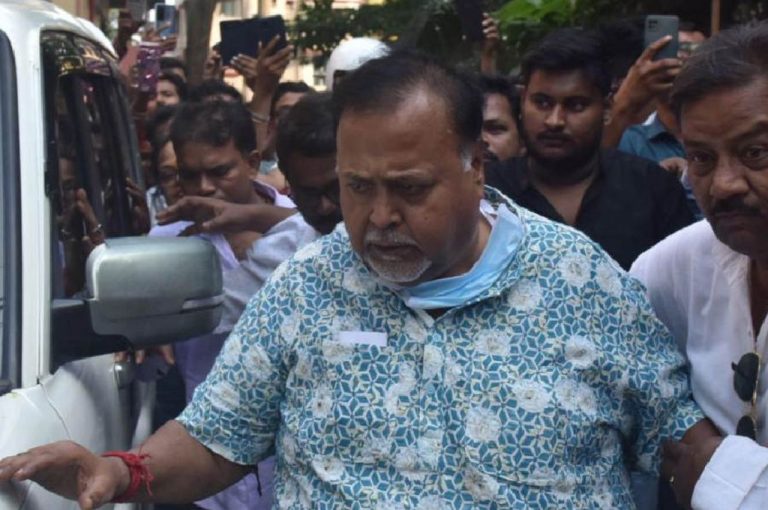
Partha Chatterjee Assembly Return: The Partha Chatterjee Assembly Return Controversy 2025 has reignited debates about corruption, governance, and political accountability in West Bengal. After spending over three years in jail following his arrest in the SSC recruitment scam, Chatterjee was released earlier this month. Speculation mounted about his possible return to the Assembly during the winter session. However, Speaker Biman Banerjee clarified that Chatterjee would be treated as “only a common member”, with no special privileges or ministerial entitlements.


2. Background: The Rise and Fall of Partha Chatterjee

Once a trusted lieutenant of Chief Minister Mamata Banerjee, Partha Chatterjee held key portfolios including education and parliamentary affairs. His career collapsed in July 2022, when the Enforcement Directorate (ED) arrested him in connection with the school recruitment scam.

  • He was stripped of party posts, suspended for six years, and removed from the cabinet.
  • His stronghold in Behala Paschim constituency weakened as allegations mounted.
  • His fall symbolised the broader crisis of corruption in Bengal’s governance.

3. The Speaker’s Statement: “Only a Common Member”

Speaker Biman Banerjee’s remarks were decisive:

  • Chatterjee will not receive an exclusive room or ministerial privileges.
  • He will be allotted only the facilities available to ordinary MLAs.
  • His suspended salary will not be restored until he formally informs the Assembly Secretariat of his return.

This statement effectively ended speculation of a grand comeback and underscored the Assembly’s stance on treating him as a regular member.


4. Partha Chatterjee Assembly Return: Chatterjee’s Release and Public Reaction

Chatterjee walked out of jail after three years, three months, and 19 days in custody. His release triggered mixed reactions:

  • Supporters in Behala Paschim reopened his MLA coordination office, hoping for his return.
  • Crowds thinned after aides advised against “unnecessary visibility.”
  • Critics argued he should apologise to voters for failing to serve during imprisonment.

The public mood reflects both lingering loyalty and deep disappointment.


5. Political Fallout: TMC’s Dilemma

For the Trinamool Congress (TMC):

  • Chatterjee remains suspended, but his presence in the Assembly could embarrass the party.
  • His stronghold in Behala Paschim may still support him, complicating electoral strategies.
  • Opposition parties are likely to exploit his return to highlight corruption.

The controversy places TMC in a delicate position, balancing loyalty, discipline, and public perception.


6. Governance Challenges

The case raises broader governance questions:

  • Integrity of institutions: How should legislatures treat members accused of corruption?
  • Public trust: Can voters trust suspended leaders to represent them?
  • Accountability: Should stricter rules govern MLAs under investigation?

The Speaker’s stance reflects an attempt to uphold institutional dignity amid political turbulence.


7. Human Dimension: Chatterjee in Seclusion

Since his release, Chatterjee has retreated into near‑complete seclusion at his Naktala residence, Vijayketan.

  • He avoids public contact, speaking only through family members’ phones.
  • Supporters are discouraged from crowding his house.
  • His isolation reflects both political caution and personal vulnerability.

8. Historical Context: Corruption and Assembly Politics

West Bengal has witnessed similar controversies:

  • Leaders accused of scams returning to public life.
  • Debates over whether suspended members should retain privileges.
  • Public anger over corruption shaping electoral outcomes.

Chatterjee’s case fits into this broader pattern of scandal‑ridden politics.


9. Electoral Implications for 2026

The controversy could influence the 2026 Assembly elections:

  • Opposition parties may use Chatterjee’s return to attack TMC’s credibility.
  • Behala Paschim voters may demand accountability.
  • TMC may face pressure to deny him a ticket, forcing him to consider an independent run.

The outcome will shape Bengal’s political landscape.


10. Recommendations for Reform

Experts suggest:

  • Clear guidelines for privileges of suspended MLAs.
  • Transparency in Assembly procedures regarding corruption cases.
  • Public accountability mechanisms for leaders under investigation.
  • Stronger ethics committees to monitor conduct of members.

11. Broader Lessons for Democracy

The Partha Chatterjee case highlights:

  • Democracy must balance representation with accountability.
  • Institutions must resist political pressure to uphold dignity.
  • Public trust depends on visible action against corruption.

12. Conclusion: A Symbol of Accountability

The Partha Chatterjee Assembly Return Controversy 2025 is not just about one leader — it is about the credibility of Bengal’s institutions. By declaring him “only a common member,” the Speaker has sent a message that no one is above the Assembly’s rules. Whether Chatterjee speaks in the winter session or remains silent, his presence will continue to symbolise the fragile balance between politics, corruption, and democracy in West Bengal.


🔗 Government External Links

For further reading and official updates, here are relevant government sources:

Also read: Home | Channel 6 Network – Latest News, Breaking Updates: Politics, Business, Tech & More
Uluberia Medical College Assault Bail Controversy 2025: Junior Doctors’ Outrage, Governance Failures, Political Links, Legal Challenges, and Policy Reform Needs in West Bengal Healthcare

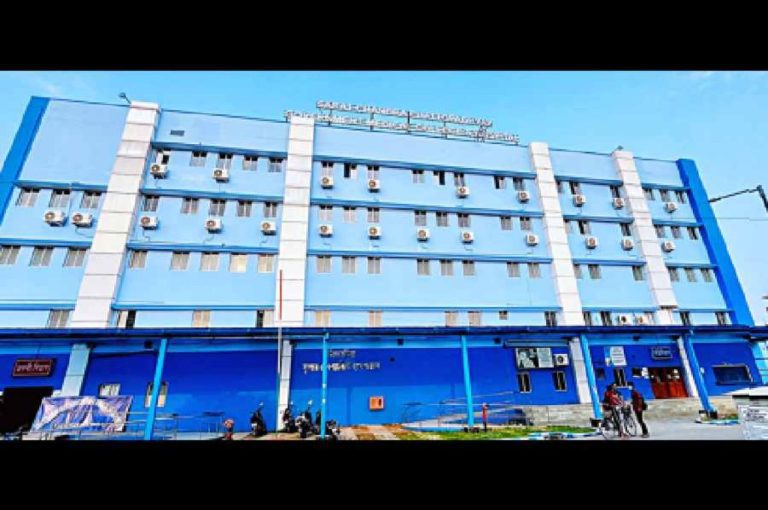
The Uluberia Medical College Assault Bail Controversy 2025 has become a defining moment in West Bengal’s healthcare and governance discourse. On November 25, 2025, three accused in the assault and rape‑threat case against a junior doctor at Sarat Chandra Chattopadhyay Medical College and Hospital, Uluberia, were granted bail. The decision triggered outrage among junior doctors, who accused the police of deliberate negligence and political shielding.


2. The Incident: Assault in the Antenatal Ward

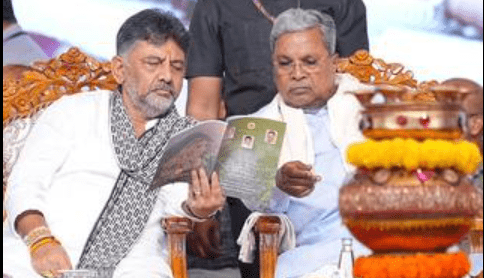
On the evening of October 20, 2025, a 28‑year‑old junior doctor was assaulted while attending to a pregnant woman in the antenatal ward.

  • A man claiming to be a home guard of Howrah rural police attacked her.
  • He twisted her arms, punched her neck, and threatened her with dire consequences if she stepped out of the campus.
  • Two other men, allegedly linked to the ruling party, joined the assault.
  • The doctor later slipped into depression and is under treatment.

The case was filed under sections of the Bharatiya Nyaya Sanhita (BNS), including insulting the modesty of a woman, causing grievous hurt to a public servant, and criminal intimidation.


3. Bail Granted: Triggering Outrage

Despite the seriousness of charges, the accused were granted bail after the police failed to file a chargesheet within the stipulated time.

  • Junior doctors argued that the investigation should have been fast‑tracked.
  • They accused police of deliberately delaying the chargesheet to benefit politically connected accused.
  • The bail has left the victim vulnerable, with doctors fearing intimidation of witnesses.

4. Doctors’ Voices: Anger and Fear

Members of the West Bengal Junior Doctors’ Front (WBJDF) expressed anger:

  • Parichay Panda (WBJDF member): “Is there any rule that the chargesheet has to be filed on the very last day? In such serious cases, it should have been fast‑tracked.”
  • Doctors warned that the bail reinforced a pattern of political shielding and administrative slackness, similar to the RG Kar rape‑murder case of 2024.

5. Police and Prosecutors’ Response

  • An officer at Uluberia police station dismissed allegations, claiming facts were “wrong.”
  • Assistant Public Prosecutor Haru Duwari admitted he was unaware of the grounds for bail.
  • Senior lawyer Jayanta Narayan Chattopadhyay criticised prosecutors for selective approaches, often staying away from proceedings when ruling party links are involved.

6. Historical Context: RG Kar Case and Pattern of Negligence

The outrage is amplified by memories of the RG Kar Medical College case (August 2024), where a postgraduate trainee was raped and murdered inside the college. Doctors argue that the Uluberia case reflects the same pattern of political shielding, weak investigations, and compromised legal procedures.


7. Uluberia Medical College Assault: Governance Challenges

The controversy highlights systemic governance failures:

  • Delayed chargesheets despite serious allegations.
  • Political interference in investigations.
  • Weak protection for doctors working in vulnerable conditions.
  • Failure of prosecutors to act decisively.

8. Human Dimension: Doctors in Fear

Junior doctors across Bengal expressed fear:

  • Many feel unsafe working night shifts.
  • Families worry about their security.
  • The victim herself has slipped into depression, symbolising the psychological toll of violence and negligence.

9. Political Implications

The case has political ramifications:

  • Opposition parties accuse the ruling party of shielding accused.
  • Doctors’ protests could escalate into a larger movement, affecting governance.
  • The controversy may influence public opinion ahead of the 2026 Assembly elections.

10. Broader Lessons for Healthcare

The Uluberia case raises fundamental questions:

  • Can doctors work safely if political shielding undermines justice?
  • Will patients suffer if doctors fear attending emergencies?
  • How can governance ensure accountability in healthcare institutions?

11. Recommendations for Reform

Experts suggest:

  • Fast‑track courts for crimes against healthcare workers.
  • Independent monitoring of investigations involving political links.
  • Stronger protection laws for doctors on duty.
  • Accountability mechanisms for prosecutors and police.
  • Mental health support for victims of workplace violence.

12. Conclusion: A Test of Justice and Governance

The Uluberia Medical College Assault Bail Controversy 2025 is more than a legal dispute — it is a test of governance, justice, and healthcare integrity in West Bengal. Unless systemic reforms are undertaken, doctors will remain vulnerable, patients will suffer, and public trust in institutions will erode.


🔗 Government External Links

For further reading and official updates, here are relevant government sources:

Also read: Home | Channel 6 Network – Latest News, Breaking Updates: Politics, Business, Tech & More
Birbhum Police AI App Samarth Launch 2025: Artificial Intelligence in Criminal Investigations, Legal Framework Integration, Governance Challenges, and Policy Reform Needs in West Bengal

Birbhum Police AI App Samarth Launch 2025: The Birbhum Police AI App Samarth Launch 2025 marks a significant milestone in India’s law enforcement history. For the first time, a district police force has rolled out an AI‑powered mobile application designed to assist investigating officers in real time. The app, named Samarth, promises to reduce the time spent on legal research and procedural queries, offering instant guidance during investigations.


2. Birbhum Police AI App Samarth Launch 2025: The Purpose of Samarth

Samarth was developed to address a recurring challenge: investigating officers often spend hours consulting manuals, legal texts, and seniors to ensure compliance with procedural law. With Samarth:

  • Officers can query the app about specific cases (e.g., cyber fraud, theft, assault).
  • The app provides step‑by‑step guidance, from filing an FIR to collecting evidence.
  • It reduces dependency on manual research, saving valuable time.

3. Legal Framework Integration

Samarth is trained on India’s new criminal law codes:

  • Bharatiya Nyaya Sanhita (BNS) – replacing the Indian Penal Code.
  • Bharatiya Sakshya Adhiniyam (BSA) – replacing the Indian Evidence Act.
  • Bharatiya Nagarik Suraksha Sanhita (BNSS) – replacing the Code of Criminal Procedure.

Additionally, it incorporates minor acts, judicial precedents, and legal references, making it a comprehensive tool for officers.


4. Development and Collaboration

The app was designed by a team led by SP Amandeep and Bolpur SDPO Rickey Agarwal, in collaboration with a Pune‑based tech organisation. Months of planning went into ensuring that the app was user‑friendly, secure, and aligned with legal frameworks.


5. Accessibility and Security

  • The app is accessible only to authorised users (investigating officers, sub‑inspectors, inspectors).
  • Officers are instructed not to enter sensitive case details like names or locations.
  • Importantly, no search data is stored, ensuring confidentiality.

6. Benefits for Investigating Officers

Samarth offers several advantages:

  • Instant guidance on procedural steps.
  • Reduced workload by cutting down research time.
  • Improved efficiency in handling complex cases.
  • Standardisation of investigative procedures across officers.

7. Caution from Senior Officers

While the app is revolutionary, senior IPS officers warn against overdependence:

  • Each case is unique and cannot be solved by fixed templates.
  • Officers must continue to rely on judgment, experience, and independent investigation.
  • AI should be seen as a support tool, not a replacement for human discretion.

8. Governance Challenges

The launch of Samarth raises important governance questions:

  • Training: Are officers adequately trained to use AI responsibly?
  • Accountability: Who is responsible if AI guidance leads to errors?
  • Integration: How will Samarth align with national policing systems?
  • Ethics: How to balance AI efficiency with human oversight?

9. Broader Implications for Indian Policing

Samarth could pave the way for similar initiatives across India:

  • AI‑driven policing apps in other districts.
  • Integration with national crime databases.
  • Use of AI for predictive policing, case analysis, and resource allocation.

However, careful regulation is needed to prevent misuse.


10. Policy Recommendations

Experts suggest:

  • National guidelines for AI use in policing.
  • Regular audits of AI outputs to ensure accuracy.
  • Training programs for officers on AI ethics and limitations.
  • Public transparency to build trust in AI‑enabled policing.

11. Human Dimension: Officers’ Relief

For many officers, Samarth is a relief. Investigations often involve long hours of paperwork and procedural checks. With AI assistance, they can focus more on fieldwork and evidence collection. One officer noted: “Samarth saves us hours of research. It is like having a legal advisor in your pocket.”


12. Conclusion: A Turning Point in Law Enforcement

The Birbhum Police AI App Samarth Launch 2025 is a turning point in Indian law enforcement. It demonstrates how technology can empower officers, streamline investigations, and modernise policing. Yet, it also highlights the need for caution, regulation, and balance between AI efficiency and human judgment.

Samarth is not just an app — it is a symbol of how artificial intelligence is reshaping governance and justice in India.


🔗 Government External Links

For further reading and official updates, here are relevant government sources:

Also read: Home | Channel 6 Network – Latest News, Breaking Updates: Politics, Business, Tech & More
Sandeshkhali BLO Threat Case 2025: TMC Worker Arrested for Allegedly Intimidating Booth Level Officer During SIR Electoral Roll Revision, Governance Challenges, Political Reactions, and Policy Reform Needs in West Bengal

Sandeshkhali BLO Threat Case 2025: The Sandeshkhali BLO Threat Case 2025 has become a flashpoint in West Bengal’s political and electoral landscape. On November 24, 2025, police arrested Jamirul Islam, a Trinamool Congress worker and close aide of former strongman Sheikh Shahjahan, for allegedly threatening a Booth Level Officer (BLO) in Boyramari village, Sandeshkhali‑I block, North 24‑Parganas. The BLO, Dipak Mahato, claimed that Islam threatened him with death and demolition of his house unless he complied with instructions during the Special Intensive Revision (SIR) of electoral rolls.

This incident highlights the fragile balance between electoral integrity and political pressure, raising questions about governance, law enforcement, and the safety of frontline electoral staff.


2. The Allegations: BLO Intimidated

According to Mahato’s complaint:

  • He was threatened after pointing out errors in voter forms submitted by three residents.
  • The residents accused him of trying to brand them as “Bangladeshi infiltrators.”
  • They complained to Islam, who allegedly confronted Mahato with threats of violence.
  • An audio clip circulated on social media purportedly captured Islam’s threats, though its authenticity remains unverified.

Mahato lodged a formal complaint with the Block Development Officer (BDO), leading to Islam’s arrest by Nazat police.


3. Political Context: Sandeshkhali’s Volatile History

Sandeshkhali has long been a politically sensitive area:

  • Known for clashes between TMC and BJP supporters.
  • Sheikh Shahjahan, once a powerful local leader, was accused of intimidation and corruption.
  • The region has witnessed repeated allegations of voter manipulation and violence.

The arrest of Islam, a close aide of Shahjahan, reflects the continuing volatility of Sandeshkhali politics.


4. Sandeshkhali BLO Threat Case 2025: BLOs Under Pressure

Booth Level Officers are the backbone of India’s electoral system. Their responsibilities include:

  • Verifying voter details during house‑to‑house enumeration.
  • Correcting errors in voter forms.
  • Ensuring accuracy of electoral rolls.

However, BLOs in Bengal report immense pressure during the SIR:

  • Threats from local political workers.
  • Accusations of bias when correcting errors.
  • Fear of violence while performing duties.

The Sandeshkhali case exemplifies the risks faced by BLOs, who are often caught between political rivalries.


5. Governance Challenges

The incident exposes systemic governance issues:

  • Weak protection mechanisms for BLOs.
  • Political interference in electoral processes.
  • Delayed response to complaints of intimidation.
  • Trust deficit between citizens and electoral staff.

Without stronger safeguards, BLOs remain vulnerable to coercion, undermining electoral integrity.


6. Political Reactions

  • TMC leaders claimed they were unaware of the incident, with district secretary Bulbul Rehman suggesting some BLOs act as “stooges of BJP.”
  • BJP leaders, including Palash Sarkar, alleged that TMC “goons” were systematically pressuring BLOs to disrupt the SIR process.
  • The controversy has thus become a political battleground, with both parties trading accusations.

7. Broader Implications for Electoral Integrity

The Sandeshkhali BLO Threat Case raises fundamental concerns:

  • Can voter rolls be updated fairly amid intimidation?
  • Will errors and omissions disenfranchise genuine voters?
  • Does the Election Commission risk losing credibility if BLOs are unsafe?

The health, morale, and independence of BLOs directly affect the integrity of elections.


8. Historical Parallels

West Bengal has a history of electoral controversies:

  • Allegations of booth capturing in past elections.
  • Violence during panchayat polls.
  • Accusations of voter roll manipulation.

The Sandeshkhali case fits into this broader pattern of politicised electoral processes.


9. Human Dimension: BLOs Speak Out

BLOs across Bengal have voiced concerns:

  • Many report panic attacks, exhaustion, and fear during SIR.
  • Families worry about their safety.
  • Some BLOs have collapsed under workload and stress.

The Sandeshkhali incident adds fear of violence to an already overwhelming workload.


10. Recommendations for Reform

Experts suggest:

  • Legal protection for BLOs against intimidation.
  • Independent monitoring of SIR processes.
  • Stronger police presence in sensitive areas.
  • Awareness campaigns to educate citizens about BLO roles.
  • Compensation schemes for BLOs harmed during duty.

11. Broader Lessons for Democracy

The Sandeshkhali case is a reminder that democracy depends not only on laws but also on the safety and dignity of those who implement them. BLOs must be empowered and protected if electoral rolls are to remain credible.


12. Conclusion: A Test of Governance

The Sandeshkhali BLO Threat Case 2025 is more than a local incident — it is a test of governance, law enforcement, and electoral integrity in West Bengal. Unless systemic reforms are undertaken, BLOs will remain vulnerable, and the credibility of the 2026 Assembly elections may be compromised.


🔗 Government External Links

For further reading and official updates, here are relevant government sources:

Also read: Home | Channel 6 Network – Latest News, Breaking Updates: Politics, Business, Tech & More
Sundarbans Tiger Encounters Survival Struggle 2025: Villagers’ Daily Battle in Rising Danger Zones, Human‑Wildlife Conflict, Governance Challenges, and Policy Reform Needs

Sundarbans Tiger Encounters Survival: The Sundarbans, a UNESCO World Heritage Site and the world’s largest mangrove forest, is home to the iconic Royal Bengal Tiger. For tourists, spotting a tiger is a thrilling adventure. For villagers living along the forest’s edge, however, tiger encounters are a daily reality fraught with fear, danger, and survival challenges. Every trip into the forest to collect honey, crabs, or firewood carries the risk of death. Yet, poverty and limited livelihood options force villagers to return again and again.


2. Recent Tragedies: Deaths in the Forest

In November 2025, two fishermen were killed in separate tiger attacks:

  • Sambhu Sardar (32) was mauled in the Chamta forest while collecting crabs.
  • Tapas Halder (52) was dragged away in the Sunderkati forest; his body was recovered the next day after searchers used crackers to scare away the tiger.

These incidents underscore the constant peril faced by villagers, where survival depends on navigating the thin line between livelihood and death.


3. Sundarbans Tiger Encounters Survival: Testimonies from Villagers

Villagers shared harrowing accounts:

  • Anadi Halder (60): A veteran crab catcher, he recalled losing friends to tiger attacks and described how tigers often refuse to leave bodies, forcing villagers to retreat in fear.
  • Balaram Jana (22): He narrated how a tiger swam silently toward his boat at night, forcing him and his father to flee. Traumatised, he migrated to Bengaluru for work but eventually returned due to lack of sustainable livelihood.

These testimonies reveal the psychological trauma villagers endure, living with the constant shadow of tiger encounters.


4. Livelihood Pressures

Despite the risks, villagers continue to enter forests because:

  • Small landholdings yield insufficient crops.
  • Crab catching and honey collection provide higher income.
  • Families depend on monthly earnings from forest trips.

For example, Anadi Halder earns around ₹20,000 a month from forest produce, compared to only ₹30,000 annually from farming. The economic disparity forces villagers to risk their lives.


5. Human‑Wildlife Conflict in the Sundarbans

The Sundarbans exemplifies India’s broader human‑wildlife conflict:

  • Tigers stray into villages, attacking livestock and sometimes humans.
  • Villagers enter tiger habitats for livelihood, increasing encounters.
  • Rising sea levels and climate change shrink tiger territory, intensifying conflict.

This cycle creates a fragile coexistence, where both humans and tigers struggle for survival.


6. Governance Challenges

The crisis highlights governance gaps:

  • Limited livelihood alternatives for villagers.
  • Inadequate compensation for families of tiger victims.
  • Weak enforcement of safety protocols in forest entry.
  • Climate change impacts not fully addressed in policy.

Without systemic reforms, villagers remain trapped in a cycle of poverty and peril.


7. Conservation vs. Community Survival

The Sundarbans is a critical conservation zone, but policies often prioritise wildlife over human needs. Villagers argue that:

  • Conservation must balance tiger protection with human safety.
  • Community‑based tourism and sustainable livelihoods should be promoted.
  • Compensation schemes must be streamlined and accessible.

Experts warn that ignoring community needs risks alienating locals, undermining conservation efforts.


8. Climate Change and Rising Danger Zones

The Sundarbans is highly vulnerable to climate change:

  • Rising sea levels erode land, pushing villagers closer to tiger habitats.
  • Salinity intrusion reduces agricultural productivity.
  • Frequent cyclones destroy homes and crops.

These factors intensify human‑wildlife conflict, making survival even harder for villagers.


9. Psychological Toll on Communities

Living under constant threat has severe psychological impacts:

  • Villagers suffer from anxiety and trauma after encounters.
  • Families mourn lost members without closure, as bodies are often unrecoverable.
  • Children grow up in fear, shaping their worldview around danger.

The crisis is not just physical but deeply emotional, affecting generations.


10. Policy Recommendations

Experts suggest:

  • Alternative livelihoods: Promote aquaculture, handicrafts, and eco‑tourism.
  • Safety measures: Provide protective gear and trained escorts for forest trips.
  • Compensation schemes: Ensure timely support for victims’ families.
  • Climate adaptation: Invest in embankments, salinity control, and disaster preparedness.
  • Community involvement: Engage locals in conservation planning.

11. Broader Implications for Democracy and Development

The Sundarbans crisis raises fundamental questions:

  • Can development be inclusive if frontline communities are left vulnerable?
  • Will conservation succeed without community trust?
  • How can governance balance ecological protection with human dignity?

The answers will shape the future of both the Sundarbans and India’s broader environmental policies.


12. Conclusion: Survival in Rising Danger Zones

The Sundarbans Tiger Encounters Survival Struggle 2025 is a stark reminder of the fragile balance between humans and nature. Villagers risk their lives daily, caught between poverty and predators. Tigers, too, struggle as habitats shrink under climate change.

Unless urgent reforms address livelihood, safety, and climate resilience, the Sundarbans will remain a zone of perpetual danger, where survival itself is a daily battle.


🔗 Government External Links

For further reading and official updates, here are relevant government sources:

Also read: Home | Channel 6 Network – Latest News, Breaking Updates: Politics, Business, Tech & More
j-hope Tour Brings New Anticipation With Fresh Stage Preview in 2025

j-hope Tour Gains Attention With New Preview Release

The j-hope Tour has taken another step forward as a new stage preview was released, drawing strong interest from fans and music followers. The short clip gives a clear idea of the direction j-hope is taking for this tour, focusing on simple but powerful production choices that reflect his personal style. The release suggests that the tour will highlight not only performance but also the atmosphere around each stage. This early glimpse has increased curiosity about how the artist plans to connect with audiences during each show. The tour is expected to maintain a steady balance between familiar elements and new ideas that match j-hope’s current artistic focus.BTS' j-Hope teases solo tour and new projects in exciting livestream

j-hope Tour Offers a More Personal Creative Approach

One of the main aspects visible from the preview is the emphasis on j-hope’s individual expression. The j-hope Tour seems structured around a calm but confident tone, allowing both music and movement to stand out without unnecessary additions. The stage setting looks organised with a clear purpose, presenting a visual environment that supports the performance rather than overpowering it.BTS' J-Hope announces his first-ever solo tour, shares update about his new  music album. Check details | Hindustan Times

This approach appears to highlight j-hope’s precision and discipline, qualities that have been central to his work for many years. The preview also shows moments where lighting, space, and rhythm work together to create steady emotional impact, indicating that the tour will rely on thoughtful design instead of overwhelming effects.

j-hope Tour Continues To Build Curiosity Through Its Preparation

The j-hope Tour preview shows the artist preparing with a focused mindset. The rehearsal footage highlights how much attention is given to detail, including timing, movement, and transitions. The tone is calm and methodical, showing the level of preparation needed to deliver a stable live performance. The rehearsal room appears minimal, placing full attention on the artist and the work being done. This practical environment supports the idea that the tour aims to present clean and structured performances. Fans who follow his progress have noted the consistency in his preparation style, which adds to the expectation surrounding the tour’s opening day.Oakland Day 1 -2..❤️‍🔥❤️ #jhope #BTS #방탄소년단  #HOPE_ON_THE_STAGE_TOUR_Oakland #HOS_TOUR_Oakland #BTSARMY

The steady release of small promotional materials has helped maintain interest in the j-hope Tour. Rather than releasing many details at once, the team behind the tour seems to be choosing a controlled approach. The short videos, photos, and stage teasers guide audience attention toward the upcoming performances without overwhelming them. This method also provides space for each promotional piece to be noticed and discussed. The clear tone used across the materials matches the artist’s overall image at this stage of his career. By keeping the content simple and consistent, the team has ensured that the tour remains at the centre of attention.

j-hope Tour Strengthens Its Presence With Steady Promotional Steps

As anticipation grows, the public is beginning to look ahead to the full tour schedule, setlist possibilities, and the overall style of the performances. While none of these details have been fully revealed, the preview gives enough information to understand the direction of the tour. The calm presentation, measured pacing, and deliberate style suggest that the performances will be built around strong execution rather than excess. The j-hope Tour appears prepared to show the artist’s growth and control, using stage design and movement that support the music in a cohesive manner.J-Hope announces HOPE ON THE STAGE Tour and teases new album - United By Pop

Another reason the tour is drawing attention is j-hope’s steady reputation for discipline. Every release from him shows commitment to preparation. This has created a sense of trust among the audience. They expect that the work put into rehearsals will reflect in the final performances. The tour’s concept seems to follow this philosophy, focusing on order, balance, and meaning. The preview also shows that the artist is aiming to present himself in a way that reflects his current artistic stage, offering performances built on skill and clarity.


View this post on Instagram


A post shared by BTS official (@bts.bighitofficial)

With each update, the j-hope Tour continues to show its direction without revealing everything at once. This controlled build-up keeps public interest consistent. The preview moves the tour one step closer to its launch, presenting a clear tone of professionalism and intention. The combination of calm visuals, steady rehearsal energy, and structured production creates a clear picture of what audiences can expect. Also Read:  Famous Toilet Girl and Her Unexpected Rise: A Story of Change and Determination

Conclusion

The j-hope Tour is shaping up to be a well-prepared and thoughtful series of performances. The new preview highlights a focus on precision, clarity, and personal expression. As anticipation continues to grow, the tour stands out for its simple, steady, and organised approach to live performance.