Saturday, May 16, 2026
Home Blog Page 359

India Emphasizes Rule of Law and Freedom of Navigation in Indo-Pacific at 12th ADMM-Plus

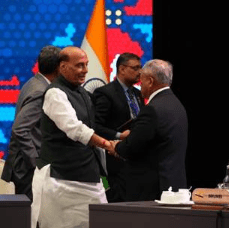
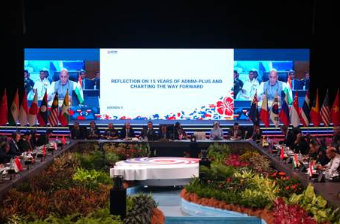
Raksha Mantri Shri Rajnath Singh addressed the 12th ASEAN Defence Ministers’ Meeting Plus (ADMM-Plus) in Kuala Lumpur, Malaysia, on November 1, 2025. He underscored that India’s commitment to the rule of law, particularly the United Nations Convention on the Law of the Sea, and advocacy for freedom of navigation and overflight in the Indo-Pacific region is not targeted against any country. Instead, it aims to safeguard the collective interests of all regional stakeholders.

Strategic Engagement Rooted in Principles: Rule of Law

Shri Rajnath Singh highlighted that India’s strategic partnership with ASEAN is founded on a shared belief that the Indo-Pacific must remain open, inclusive, and free from coercion. He noted the significance of inclusivity and sustainability as emphasized during Malaysia’s chairmanship of ASEAN in 2025. Inclusivity ensures all nations have equal roles irrespective of their size or capacities, while sustainability builds resilience to emerging threats through long-term cooperation.

India’s security vision integrates defence cooperation with economic progress, technology sharing, and human resource development, forming a holistic approach to its partnership with ASEAN.


India’s Role in ADMM-Plus and Future Directions

Describing ADMM-Plus as a core component of India’s Act East Policyand broader Indo-Pacific vision, Shri Rajnath Singh emphasized the platform’s contribution to regional peace, stability, and capacity building. With ADMM-Plus entering its 16th year, India is prepared to deepen collaboration, promote dialogue over discord, and strengthen regional mechanisms. He cited lessons learned over fifteen years where inclusive cooperation fosters legitimacy, and collective security reinforces sovereignty.

India’s engagement with ASEAN predates ADMM-Plus but this mechanism provides a structured defence forum augmenting diplomatic and economic outreach. The elevation of the ASEAN-India partnership to a Comprehensive Strategic Partnership in 2022 reflects political maturity and closer regional alignment.

As co-chair of three Expert Working Groups, including Counter-Terrorism with Malaysia for 2024-2027, India continues active participation, hosting exercises, and contributing to shared standards. Shri Rajnath Singh emphasized that India’s initiatives complement ASEAN’s strategic framework, reinforcing cooperation rather than competition.


For more real-time updates, visit Channel 6 Network.

Source: PIB

MoSPI Signs MoU with IICA to Develop Comprehensive SDG Alignment Framework for Viksit Bharat: 2025

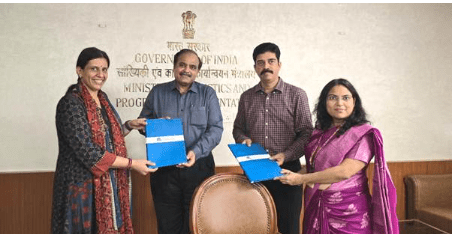
The Ministry of Statistics and Programme Implementation (MoSPI) signed a Memorandum of Understanding (MoU) with the Indian Institute of Corporate Affairs (IICA) on October 31, 2025. The collaboration aims to develop a Comprehensive Sustainable Development Goals (SDG) Alignment Framework that integrates National, State, Environmental, Social and Governance (ESG), and Corporate Social Responsibility (CSR) indicators to advance the government’s vision of Viksit Bharat.

Integrating Frameworks for Coherent Monitoring and Implementation: MoSPI-IICA

The framework intends to build on the National Indicator Framework (NIF), India’s primary mechanism for monitoring SDG progress. It will align state-level indicators with national priorities while effectively integrating ESG and CSR parameters. This harmonized approach bridges national and sub-national sustainability frameworks with corporate ESG and CSR initiatives, ensuring that sustainability efforts across the public and private sectors work cohesively towards SDG objectives.


Strengthening Policymaking and Sustainable Corporate Participation

By directing private sector reporting to correspond with national and state SDG metrics, the initiative aims to enhance evidence-based policymaking and foster wider sustainable corporate participation. The alignment ensures a coherent and inclusive monitoring system, maximizing the impact of corporate sustainability efforts towards India’s sustainable and inclusive development goals.

Leadership and Stakeholder Engagement

The initiative is guided by Shri Gyaneshwar Kumar Singh, Director General & CEO of IICA, who has played a pivotal role in driving strategic initiatives in ESG, CSR, and responsible business conduct within national development policies. The signing ceremony was attended by key officials from both MoSPI and IICA, including Sh. Kishor Baburao Surwade, Dr. Garima Dadhich, Ms. Ruchika Gupta, Sh. Shivnath Singh Jadawat, and Dr. Ziaul Haque.


For more real-time updates, visit Channel 6 Network.

Source: PIB

Raksha Mantri Proudly Meets ASEAN Defence Ministers at Informal Meeting in Kuala Lumpur: 2025

Raksha Mantri Shri Rajnath Singh held discussions with the Defence Ministers of ASEAN member countries during the second India-ASEAN Defence Ministers’ Informal Meeting in Kuala Lumpur, Malaysia, on October 31, 2025. The meeting underscored India’s significant role in maintaining peace and stability in the Indo-Pacific region, with ASEAN Defence Ministers expressing eagerness to deepen cooperation with India at the regional level.

Strategic Partnership and New Initiatives

Shri Rajnath Singh highlighted the meeting as a strategic platform to propel forward the Comprehensive Strategic Partnership between India and ASEAN, especially focusing on defence and security aspects outlined in the ASEAN-India Plan of Action for 2026–2030. Two key initiatives were announced: the ASEAN-India Initiative on Women in UN Peacekeeping Operations and the ASEAN-India Defence Think-Tank Interaction, aimed at strengthening institutional cooperation.


ASEAN’s Appreciation of India as a Responsible Superpower

The Malaysian Defence Minister, chairing the meeting, welcomed Shri Rajnath Singh and referred to India as a superpower. He noted that ASEAN would greatly benefit from enhanced collaboration with India in cyber and digital defence, defence industry, and innovation. He praised India’s success in establishing a self-reliant defence industry and advanced technological research ecosystem, highlighting the potential benefits for ASEAN member states.

The Defence Minister of the Philippines lauded India’s commitment to international law and multilateralism, particularly its adherence to the UN Convention on the Law of the Sea. He recognized India as the first responder in the Indo-Pacific region and expressed full support for the upcoming India-ASEAN Maritime Exercise and joint activities within the Philippines’ Exclusive Economic Zone.

The Cambodian Defence Minister acknowledged India’s rise and expressed gratitude for its training contributions in UN Peacekeeping Operations, Humanitarian Assistance and Disaster Relief (HADR), and Military Medicine.

Strengthening Youth and Regional Cooperation

Echoing similar sentiments, the Defence Minister of Singapore emphasized ASEAN’s confidence in India’s capabilities in maintaining regional peace. He advocated for increased joint activities, policy dialogues, and exercises, particularly involving younger generations to lay a foundation for future collaboration.

The Defence Minister of Thailand highlighted how ASEAN could benefit from India’s defence industry and technological ecosystem and championed the idea of ‘Regional self-reliance’ in defence production.

Outlook on India-ASEAN Defence Relations

The ASEAN Defence Ministers collectively welcomed these initiatives and expressed anticipation for deeper engagement with India to further the India-ASEAN strategic partnership. The informal meeting reinforced India’s pivotal role as a responsible superpower committed to peace, security, and cooperative growth in the Indo-Pacific region.


For more real-time updates, visit Channel 6 Network.

Source: PIB

Vishvajit Sahay Proudly Assumes Charge as Controller General of Defence Accounts: 2025

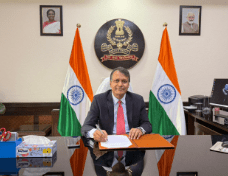
Shri Vishvajit Sahay has taken charge as the Controller General of Defence Accounts (CGDA) effective November 1, 2025, bringing with him over thirty years of experience in defence finance and public administration. An accomplished 1990-batch officer of the Indian Defence Accounts Service (IDAS), he is an alumnus of St. Stephen’s College, University of Delhi.​

Career and Key Appointments: Vishvajit Sahay

Before becoming CGDA, Shri Sahay held several pivotal positions within the Government of India including Additional Secretary and Financial Adviser, Department of Science and Technology; Joint Secretary, Department of Heavy Industry; and Finance Manager in the Defence Ministry’s Acquisition Wing. Within the Defence Accounts Department, he served as Principal Controller of Defence Accounts (Pensions), Prayagraj, Joint CGDA, and Special CGDA, contributing significantly to the department’s efficient functioning.​


International Representation

Shri Vishvajit Sahay has also represented India at prestigious international training forums, including Cambridge University in the UK and the George C. Marshall European Centre for Security Studies in Germany, contributing to India’s defence sector knowledge network.​

Conclusion

Shri Vishvajit Sahay’s appointment as CGDA is expected to further strengthen the financial management and administrative capabilities of the Defence Accounts Department, reinforcing India’s commitment to transparency and accountability in defence finance.​

For more real-time updates, visit Channel 6 Network.

Source: PIB

Maritime Information Sharing Workshop 2025 Enhances Security Cooperation Across Indian Ocean Region

The global maritime security community is set to converge in Gurugram, India, for the third edition of the Maritime Information Sharing Workshop (MISW 2025), hosted by the Information Fusion Centre – Indian Ocean Region (IFC-IOR) from November 3 to 5, 2025. Under the theme “Enhancing Real-Time Coordination and Information Sharing Across the Indian Ocean Region,” MISW 2025 promises to be a crucial platform for strengthening collaboration and safeguarding vital sea lanes.

Anchoring Regional Collaboration

MISW, launched in 2019, has evolved into a premier operational forum that brings together working-level professionals worldwide to exchange best practices, boost interoperability, and foster trust-based information sharing. Beyond dialogue, MISW catalyzes coordinated responses to maritime threats such as piracy, drug smuggling, armed robbery, and irregular human migration which disrupt global maritime commerce. The event reinforces the collective resilience of the Indian Ocean Region (IOR), supporting a stable, secure, and sustainable maritime future aligned with India’s vision of MAHASAGAR (Mutual and Holistic Advancement for Security and Growth Across Regions).


Moving from Dialogue to Action

MISW 2025 will emphasize the operational application of maritime security information and technology in countering evolving non-traditional threats. The workshop features tailored thematic sessions for regional frameworks including BIMSTEC, the Indian Ocean Rim Association (IORA), and the Djibouti Code of Conduct/Jeddah Amendment (DCoC/JA). Participants include maritime security practitioners from 30 countries alongside contributions from UNODC, ReCAAP ISC, RMIFC, Singapore’s IFC, RCoC, and leading shipping companies.

The workshop’s high point will be a realistic Table Top Exercise (TTX) hosted at IFC-IOR, simulating maritime threats such as piracy and human trafficking, fostering coordinated contingency planning among delegates to strengthen shared situational awareness and response mechanisms.

The Indian Ocean – A Critical Economic Lifeline

The IOR forms the bedrock of global commerce, facilitating the majority of the world’s oil and container traffic. It serves as an economic hub, continental bridge, and a stage for geopolitical dynamics. Maritime security is thus pivotal not only for economic stability but also for geopolitical equilibrium.

Established on December 22, 2018, IFC-IOR, currently led by Captain Sachin Kumar Singh, hosts International Liaison Officers (ILOs) from 15 countries and collaborates with 57 maritime security constructs and 25 partner nations to ensure a peaceful, stable, and prosperous Indian Ocean.

Conclusion

MISW 2025 stands as a testament to IFC-IOR’s commitment to a cohesive, transparent, and resilient information ecosystem. The workshop’s outcomes will play a defining role in shaping the future roadmap for strengthening the informational landscape in the Indian Ocean, contributing significantly to safer seas and enhanced regional cooperation.


For more real-time updates, visit Channel 6 Network.

Source: PIB

Abhishek Banerjee Urges TMC Booth-Level Officers to Shadow BLOs During Special Intensive Revision: Bengal’s Electoral Strategy to Safeguard Voter Rights

Abhishek Banerjee Urges TMC: In a decisive move to tighten grassroots election monitoring, Abhishek Banerjee, the All India Trinamool Congress (TMC) general secretary, has directed all booth-level officers (BLOs) of the party to actively “shadow” government-appointed Booth Level Officers throughout the ongoing Special Intensive Revision (SIR) of the voter list in West Bengal. The initiative, aimed at preventing voter name deletions and ensuring transparency, marks one of the most extensive grassroots operations ever planned by the party ahead of the next Assembly elections.

The directive was issued during a state-wide virtual meeting attended by district presidents, block coordinators and booth-level organisers. Banerjee emphasised that each BLO must be “accompanied, observed and assisted” by a TMC Booth-Level Agent (BLA) during door-to-door verification and list updates. The party leadership framed this as a pro-democracy measure, asserting that no eligible voter should lose their right to vote due to clerical or intentional errors in the electoral roll.

“No BLO should be allowed to function unsupervised. Every voter’s name is sacred — and we will ensure it stays on the list,” Abhishek Banerjee declared during the meeting.

(Election Commission of India – Official Information on SIR)


Massive Ground-Level Mobilisation Planned Across Bengal

Under Banerjee’s guidance, the TMC has announced an extensive grassroots programme to coincide with the SIR drive being conducted by the Election Commission of India (ECI). Between November 4 and December 4, 2025, the party will set up over 6,200 voter-assistance camps across Bengal’s urban and rural constituencies. These camps will provide free services like voter enrolment assistance, correction of details, and claims or objections filing.

Each of Bengal’s 294 Assembly constituencies will have a dedicated war-room, functioning as an information hub and grievance-redressal center. These will operate daily from 9 a.m. to 5 p.m., with trained volunteers managing data, verifying BLO visits, and relaying real-time reports to district-level coordinators.

The initiative underscores the TMC’s strategy of fusing political mobilisation with civic outreach — a move seen as both preventive and participatory.

(West Bengal CEO – Voter List Revision Details)


Abhishek Banerjee Urges TMC Booth-Level Oversight: “Shadow, Support, Safeguard”

According to the TMC’s internal framework, every BLA-1 (primary booth agent) will appoint a BLA-2, tasked with directly shadowing BLOs during fieldwork. Their roles include:

  1. Accompanying BLOs to every household during verification.
  2. Recording discrepancies and ensuring immediate correction requests are filed.
  3. Reporting daily activities to constituency war-rooms.
  4. Protecting the rights of voters whose names may be deleted without due cause.

Banerjee also announced a dedicated helpline (81426-81426) for citizens to register complaints related to voter deletion, misinformation or inaction by officials.

(National Voters’ Service Portal)


Protecting Voter Rights: “Silent Invisible Rigging” Allegations

During his address, Abhishek Banerjee accused the opposition and sections of the Election machinery of “silent invisible rigging” — referring to alleged systematic deletion of voters’ names from the rolls. He warned that if such actions continued, the TMC would mobilise one lakh citizens to protest outside the Election Commission headquarters in New Delhi.

The party’s position frames voter-roll vigilance as a constitutional duty rather than a political tactic. In Banerjee’s words, “Defending every citizen’s right to vote is the foundation of democracy. We are not interfering — we are safeguarding.”

(Constitution of India – Article 326 on Voting Rights)


Parallel Administrative Concerns

Meanwhile, the Booth Level Officers (BLOs) appointed by the Election Commission have voiced concerns about their security and the pressure of conducting door-to-door verification under high public and political attention.
State election authorities have reiterated that BLOs are public servants performing statutory duties and are expected to function independently, free from political interference.

However, Banerjee clarified that his party’s involvement is strictly “observational and supportive”, not obstructive. The TMC maintains that its volunteers will assist citizens in understanding the revision process, filling forms, and checking for discrepancies — ensuring no intimidation or disturbance occurs.

(Election Commission of India – Handbook for BLOs)


Significance in Bengal’s Political Landscape

The move reflects the increasing significance of booth-level management in Bengal’s political ecosystem. Since 2019, voter list accuracy has become a key battleground for all parties. The TMC’s strategy mirrors a broader shift in Indian politics toward data-driven election monitoring and hyperlocal voter engagement.

Political analysts view this development as a pre-election rehearsal for the 2026 Assembly polls. The SIR process provides parties with access to fresh demographic data, migration patterns, and voter-turnout behavior — crucial for campaign mapping and messaging.

(Press Information Bureau – Election Roll Revision Framework)


Potential Challenges Ahead

While the TMC’s directive highlights its commitment to electoral integrity, experts caution that the “shadowing” model could blur lines between assistance and interference if not carefully managed.
The Election Commission and state observers may need to establish clear protocols to ensure BLOs’ autonomy while allowing citizen support initiatives.

Possible issues include:

  • Overlap between official and unofficial data-collection.
  • Risk of voter intimidation or privacy breach.
  • Excessive political presence during administrative procedures.
  • Miscommunication between BLOs and party-appointed agents.

(National Election Watch – Electoral Integrity Report)


Grassroots Communication Network

The TMC’s organisational machinery plans to use WhatsApp groups, live dashboards and constituency data centers to monitor the progress of each BLO’s visit. Regular video briefings will link local observers with district-level coordinators, creating a two-way communication loop.

Party sources suggest that this decentralised monitoring model will become permanent, ensuring ongoing oversight beyond the voter-list revision phase.


Citizen Participation and Awareness Campaign

Parallel to its internal operations, the party will roll out a public awareness campaign“Amar Vote Amar Adhikar” (“My Vote, My Right”) — to educate citizens on checking their names on the electoral roll. The campaign will include posters, local cable TV scrolls, SMS reminders, and on-ground volunteers visiting remote areas.

These efforts, Banerjee stressed, are intended to “empower citizens to be co-guardians of democracy,” making the voter-roll revision process more participatory and transparent.

(Government of West Bengal – e-District Services)


Conclusion: The Next Few Months Will Shape Bengal’s Electoral Future

As West Bengal enters the SIR phase, Abhishek Banerjee’s directive to the TMC’s booth-level network signifies a new model of political vigilance — combining organisational discipline, civic outreach and data transparency. The party’s approach reflects both pre-election strategy and democratic activism, ensuring that every eligible citizen remains on the voter list.

Whether this proactive involvement enhances trust or sparks fresh debate about boundaries between governance and politics will depend on how both the Election Commission and political entities maintain balance and integrity in the coming months.


External Reference Links

Also read: Home | Channel 6 Network – Latest News, Breaking Updates: Politics, Business, Tech & More

Cyclone Montha Parting Gift: Sikkim’s First Snowfall of the Season and Heavy Rains Across North Bengal

Cyclone Montha Parting Gift: Cyclone Montha, which recently swept across the eastern part of India, left behind a mesmerizing yet turbulent aftermath. As the storm weakened and moved away, it gifted the region a rare combination of early winter snowfall in Sikkim and heavy rainfall across North Bengal, painting a vivid meteorological picture of nature’s extremes.

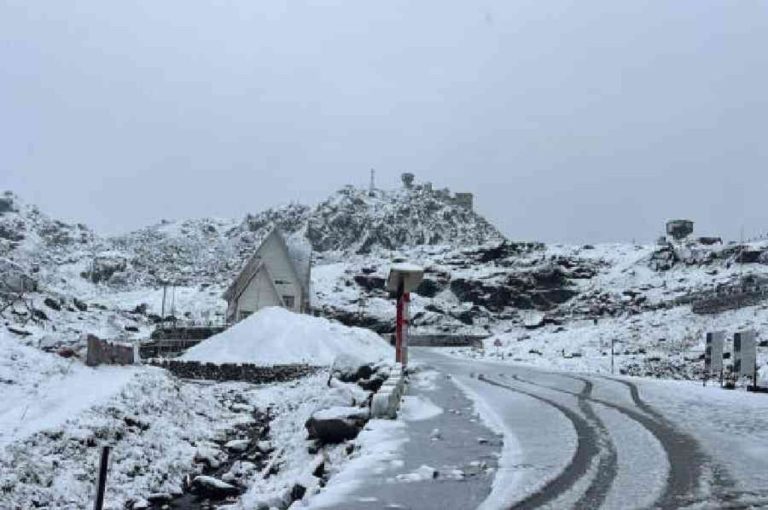
According to the India Meteorological Department (IMD), the cyclonic system that hit coastal Bengal has now weakened into a depression. However, its tail-end effects brought substantial moisture-laden winds to the Himalayan belt, resulting in the first white blanket of the season over higher altitudes of Sikkim, including Tsomgo Lake, Lachung, and Yumthang Valley.

Residents of Gangtok woke up to a breathtaking sight—snow-dusted rooftops and mist-covered pine slopes—a rare November view in recent years. Tourists, who were earlier stranded due to Montha’s downpour, described the scene as “nature’s dramatic transformation from storm to serenity.”


Rain Lashes North Bengal as Montha Moves Away

While Sikkim enjoyed its scenic snowfall, North Bengal districts like Darjeeling, Jalpaiguri, and Alipurduar witnessed heavy to moderate rain. The Teesta River basin experienced a sudden surge in water level, prompting local authorities to maintain high alert, though no major flooding has been reported so far.

According to an IMD bulletin (source), several hill areas received more than 60mm of rainfall within 24 hours. Low-lying tea estates in the foothills temporarily halted operations due to waterlogging and safety concerns.

Local farmers, however, found a silver lining — the post-cyclone showers helped revive soil moisture, which had dropped during October’s dry spell. “The rain will help the early rabi crops. It’s a blessing after Montha’s fury,” said Rabin Chettri, a tea estate worker from Jalpaiguri.


Cyclone Montha Parting Gift: Sikkim’s Tourism Sector Reawakens

Tour operators in Sikkim and North Bengal have begun promoting the snowfall as an early winter attraction. Travel agencies are offering extended stay packages around Gangtok, Lachung, and Nathula Pass, banking on the growing demand for snow tourism.

The Sikkim Tourism Department (official portal) issued an advisory urging tourists to check local weather updates before traveling to high-altitude zones. Roads between Gangtok and Nathula were temporarily closed due to slippery conditions but are expected to reopen once snowfall stabilizes.


Scientific Insights: Why Snow Came Early This Year

Climatologists from IIT Kharagpur and IMD Kolkata believe the early snowfall is linked to an unusual interaction between the retreating monsoon and the weakening cyclone. As Montha pulled in cold air from the north, it collided with moist tropical currents, triggering precipitation at freezing altitudes.

“This convergence of air masses created a perfect setup for snow formation,” explained Dr. Arun Majumdar, a senior meteorologist. “Such events, though rare, are becoming more frequent due to climate variability in the Himalayan region.”

For context, Sikkim typically records its first snow around mid-November or early December. Montha’s early influence has advanced this timeline by nearly three weeks.


Cyclone Montha’s Journey: From Bay to the Himalayas

Cyclone Montha originated over the central Bay of Bengal, intensifying rapidly before making landfall near Digha, West Bengal. Its path cut across the Gangetic plains, dumping rain over Kolkata, Howrah, and Purba Medinipur before dissipating over northern Bihar.

Though no severe damage was reported post-landfall, the system’s prolonged activity disrupted air and train services, uprooted trees, and led to localized flooding in some regions. The National Disaster Response Force (NDRF) remained stationed in coastal zones as a precautionary measure.
Read IMD’s cyclone analysis report.


Impact on Daily Life and Economy

In Darjeeling and Kalimpong, continuous drizzle and low temperatures have affected outdoor trade and transport. Vegetable supply chains from hill regions to Siliguri markets were temporarily interrupted. However, many small businesses that depend on tourism are optimistic about a strong winter season following the snowfall buzz.

Eco-resorts and homestays in Yumthang and Lachen have already reported an uptick in bookings. “People want to experience the post-cyclone snow — it’s rare and refreshing,” said Tsering Bhutia, a homestay owner.


Government Advisory and Safety Measures

The West Bengal State Disaster Management Authority (WBSDMA) (official portal) has issued a travel caution for hilly areas prone to landslides. In Sikkim, Border Roads Organisation (BRO) crews are on standby to clear snow from strategic highways connecting border zones.

The Sikkim Police have urged travelers to avoid night journeys on the Jawaharlal Nehru Road, citing black ice risks. Power departments have begun repairing damaged supply lines affected by rain and wind gusts from Montha’s remnants.


Public Reactions on Social Media

Social media platforms flooded with visuals tagged #CycloneMontha #SikkimSnowfall #NorthBengalRain, showing mesmerizing transitions from storm clouds to snowflakes. The contrast between Kolkata’s drenched streets and Sikkim’s snowfields became a trending talking point across India.

Climate activists also used the occasion to highlight the growing unpredictability of Indian weather systems.
“Montha is a reminder that climate adaptation must now include both flood and snow preparedness,” tweeted @ClimateLensIndia, an environmental monitoring account.


Looking Ahead: What Montha Means for Winter 2025

Meteorological forecasts suggest that the eastern Himalayas may experience a colder and wetter winter this year due to atmospheric changes following Montha’s passage. Early snowfall may accelerate glacial accumulation, affecting both tourism and hydroelectric operations.

The IMD has advised hill residents to brace for another cold wave by mid-November as temperatures are expected to dip below 5°C in northern Sikkim.


External References for Readers


In Summary:
Cyclone Montha, though weakened, reshaped the eastern Indian landscape in its final phase. From torrential rain across Bengal to Sikkim’s first snowfall of 2025, it highlighted nature’s dual temperament — destructive yet beautiful. As the skies clear, the region stands poised between recovery and rejuvenation, with the promise of a dazzling winter ahead.

Also read: Home | Channel 6 Network – Latest News, Breaking Updates: Politics, Business, Tech & More
Darjeeling MP Raju Bista Intensifies Demand for GTA Property Lease Transparency: A Deepening Controversy Over Public Assets and Governance in the Hills

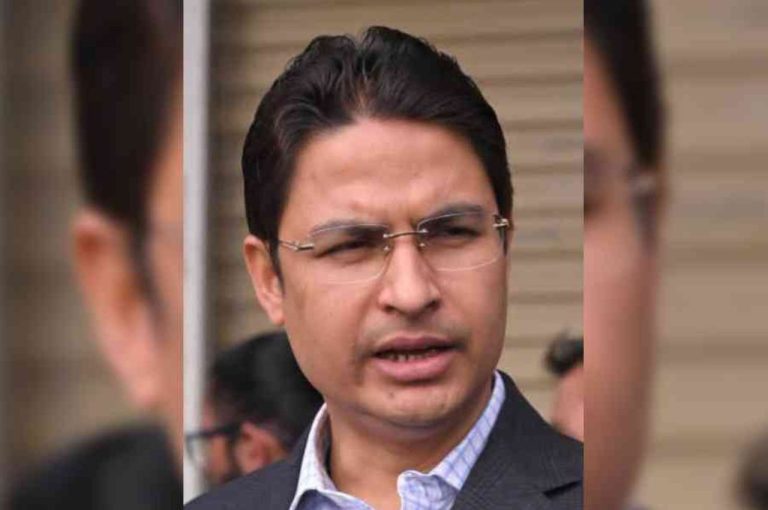
Darjeeling MP Raju Bista has reignited the debate on governance and transparency within the Gorkhaland Territorial Administration (GTA) by demanding a comprehensive disclosure of all lease details involving GTA-owned properties. His latest letter to the GTA Secretariat — focusing particularly on a 21-room property at Darjeeling More leased for ₹50 lakh per year — has exposed a broader clash between public accountability and administrative opacity in one of India’s most politically sensitive hill regions.

The MP has warned that if the GTA fails to furnish the required details promptly, he will lodge a formal complaint with the Parliamentary Privileges Committee and consider legal recourse, potentially triggering a wider inquiry into the administration’s leasing practices.


The Heart of the Dispute: Leasing of Public Property

At the center of the controversy is a GTA-owned 21-room property located at Darjeeling More, reportedly converted into a luxury facility named The Himalayan Gateway Hotel. The property has been leased for ₹50 lakh per annum for a 30-year term, a figure critics claim undervalues the asset’s market potential given its prime tourist location.

According to Bista’s correspondence, the lease deal lacks transparency and violates basic norms of public administration. He demanded that the GTA release:

  • Copies of the lease agreement,
  • Details of tender notices and advertisements,
  • Information on bidders and bid evaluation processes,
  • The criteria used for lease selection, and
  • Financial terms, including tax or maintenance obligations.

He has also sought full disclosure of all GTA-owned properties leased or handed over to private parties over the past five years, covering location, tenure, valuation, lessee identity, and approval process.


Unanswered Letters: Administrative Silence Raises Eyebrows

Raju Bista’s demand is not new. His earlier letters to the GTA Secretariat — dated 14 July 2024 (Ref. No. DARJ/GN/2454) and 16 August 2024 (Ref. No. DARJ/GN/2514) — reportedly went unanswered. The renewed push suggests that his patience has worn thin and that he now intends to pursue formal remedies under Parliamentary and legal frameworks if the GTA continues to remain silent.

The MP maintains that, as an ex-officio member of the GTA Sabha, he is entitled to full access to governance and fiscal records, and that the administration’s non-response constitutes a breach of parliamentary privilege and administrative accountability.


Why It Matters: Public Land and Public Trust

The Gorkhaland Territorial Administration, created under a tripartite agreement in 2011, was meant to ensure autonomous self-governance and economic empowerment for the Darjeeling hills. However, leasing public property to private entities without transparent bidding undermines that purpose.

Critics argue that such leases — if executed below fair market value — could represent loss of public revenue, limited local participation, and potential conflicts of interest in administrative decision-making.

In a region where land ownership, local identity, and employment opportunities are politically charged issues, the handling of GTA assets has broad social implications. Transparency in leasing decisions can determine whether locals perceive the GTA as a protector of public interest or as a closed system catering to private beneficiaries.

For context on local governance structures and transparency standards, see:


The Financial Equation: Questions Over Valuation

While GTA officials have stated that the property’s 21 rooms justify a ₹50 lakh annual lease, several industry voices in Darjeeling’s hospitality sector question the math.

  • A mid-range 20-room hotel in Darjeeling reportedly generates ₹1–1.5 crore annually in gross revenue during peak tourism seasons.
  • Given the 30-year lease term, the total outflow of ₹15 crore (₹50 lakh × 30 years) could be well below the fair market value, depending on future inflation and tourism growth.
  • Critics have suggested that such leases require revaluation every 10 years or revenue-sharing clauses to protect public interest.

The lack of competitive bidding or an open tender raises concerns about favouritism and non-compliance with financial regulations under the West Bengal Financial Rules (WBFR) governing public asset management.
(Read WBFR 2005 – Finance Department, Govt. of West Bengal)


Inside the GTA’s Leasing Strategy

According to available GTA records and insider accounts, the administration currently manages or oversees around 26 public properties earmarked for commercial leasing, including tourist lodges, wayside motels, and heritage cottages.

Some examples include:

  • Nine trekking cottages along the Maneybhanjyang–Sandakphu route, leased for ₹38.5 lakh per annum, requiring repairs worth ₹6.8 crore.
  • Multiple tourist accommodations under the GTA Tourism Department, reportedly leased under public-private partnership (PPP) models.

The GTA defends the leasing policy as a necessary move to monetize under-utilized properties, arguing that maintaining and operating them independently would be economically unsustainable. However, the opacity around bid transparency and local participation has made this justification less convincing.


Political Undertones and Administrative Tensions

The controversy has deep political roots. Since the GTA’s inception, control of hill governance has oscillated between factions loyal to different regional and national political parties.

Raju Bista, a BJP MP representing Darjeeling, has consistently accused the GTA — often aligned with the state’s ruling Trinamool Congress — of “non-transparency and mismanagement.”

His recent statements reflect growing frustration:

“Public property belongs to the people of Darjeeling. Leasing it without public knowledge or proper tendering is not governance — it’s exploitation.”

The GTA, in turn, has accused the MP of politicising administrative matters. Sources within the body suggest that the leases followed “due process” and that the MP is attempting to “score political mileage.”

However, without the publication of documents or audit reports, these claims remain unverifiable — and the public is left to speculate.


Darjeeling MP Raju Bista: Governance and Legal Dimensions

If the GTA fails to comply with the MP’s requests, the dispute could escalate into a Parliamentary Privilege case, as non-response to an elected representative’s inquiry may constitute contempt under Article 105 of the Constitution of India, which protects parliamentary rights and oversight powers.

Additionally, the matter could invite scrutiny from:

  • The Comptroller and Auditor General of India (CAG), responsible for auditing state and autonomous body accounts.
  • The West Bengal Vigilance Commission, which oversees potential irregularities in public asset management.

Relevant legal frameworks include:


Public Reaction: Transparency as a Civic Demand

In Darjeeling and Kalimpong districts, local civic groups and entrepreneurs have begun discussing the issue across social media and community platforms. Many residents support the call for full disclosure, arguing that public trust depends on visible transparency.

Local activists note that the GTA’s funds come from taxpayers and central allocations; hence, all leasing and contracting should be subject to open public scrutiny and RTI access.

Civic transparency advocates like the Darjeeling Citizens’ Forum have previously filed RTIs seeking similar details about property usage, but those applications reportedly received incomplete responses.

For more on citizen transparency tools: Central Information Commission – RTI Portal.


Economic Implications for the Hills

Beyond politics, the controversy touches on the region’s fragile economic recovery. Darjeeling’s tourism industry — disrupted by the COVID-19 pandemic and recurrent political unrest — is slowly reviving. Properly managed public-private partnerships could attract investment and improve infrastructure.

However, lack of clarity over lease terms can deter credible investors, especially if future administrations question or revoke leases signed under opaque circumstances.

Experts from the Institute for Governance, Policies and Politics (IGPP) note that “predictability and procedural transparency” are vital for long-term regional development.


The Broader Context: Land, Autonomy and Identity

In the hills, land and governance are not merely administrative concerns — they are tied to the Gorkha identity movement and the aspirations for self-determination. The GTA was intended as a step toward greater administrative control for locals, distinct from the plains-dominated state apparatus.

But when the local administrative body itself faces accusations of opacity, it undermines the autonomy project’s legitimacy.

Analysts suggest that the current dispute could set the tone for how future political narratives in Darjeeling unfold — shifting focus from the demand for statehood to the quality of local self-rule.


What Lies Ahead: Possible Outcomes

Raju Bista’s latest warning sets up multiple possible developments:

  1. GTA Disclosure: The administration might release the requested data voluntarily, restoring credibility.
  2. Parliamentary Escalation: If not, Bista could raise a breach of privilege motion in the Lok Sabha, leading to formal examination.
  3. Judicial Path: A Public Interest Litigation (PIL) or administrative review may follow if allegations of undervaluation persist.
  4. Audit Review: The CAG or state audit bodies may initiate a special audit of GTA’s property transactions.
  5. Political Fallout: With state and local elections approaching, the controversy could become a key campaign issue in the Darjeeling hills.

Expert View: Governance Must Be Seen to Be Clean

Public policy experts stress that in semi-autonomous administrative bodies like the GTA, transparency is not optional.

Dr. Ananya Roy, governance researcher at Jadavpur University, says:

“When local administrations manage assets on behalf of citizens, every rupee and every square foot must be accounted for in the public domain. The absence of transparency breeds mistrust, even when no corruption is proven.”

The GTA controversy illustrates that accountability and autonomy must go hand in hand — otherwise, autonomy risks being reduced to administrative privilege without public oversight.


Conclusion: Transparency as the Test of True Autonomy

The ongoing Raju Bista–GTA property lease controversy encapsulates the challenges of self-governance in the Darjeeling hills. At its core lies a simple principle: public property is a public trust.

If the GTA wishes to maintain its legitimacy and moral authority as the administrative face of the hills, it must demonstrate accountability by disclosing lease details and audit reports transparently.

For the MP, the issue provides a platform to assert his role as watchdog of public interest. For citizens, it serves as a reminder that democratic autonomy without transparency risks becoming an empty promise.

Whether this moment sparks administrative reform or descends into political posturing will depend on how swiftly and sincerely the GTA responds. The hills — and their people — are watching.


External Reference Links

Also read: Home | Channel 6 Network – Latest News, Breaking Updates: Politics, Business, Tech & More
Ram Charan Peddi 2026: 5 Reasons Janhvi Kapoor’s Achiyyamma First Look Has Set the Internet Ablaze

0

Ram Charan Peddi Team Unveils Janhvi Kapoor as Achiyyamma in Striking Posters

Ram Charan Peddi has become the latest sensation in Indian cinema conversations after the makers unveiled the first look of Janhvi Kapoor as Achiyyamma. The action-packed entertainer, directed by Buchi Babu Sana, features Ram Charan in the lead and is set for a worldwide release on March 27, 2026. The first-look posters have sparked a wave of excitement, giving audiences a glimpse of Janhvi in a bold and fiery new avatar that has already started trending across social media platforms.Ram Charan's Peddi: Janhvi Kapoor looks splendid & massy in the first look posters

In the newly revealed posters, Janhvi Kapoor stands tall and radiant as Achiyyamma a character that exudes confidence and strength. One of the posters shows her standing on a jeep, hands lifted with palms joined together, while another presents her with a fierce expression and a commanding stance. The film’s production team shared the visuals with a caption that read, “Our #Peddi’s love with a firebrand attitude. Presenting the gorgeous #JanhviKapoor as #Achiyyamma.” Within minutes, the announcement began to dominate entertainment headlines, with fans praising Janhvi’s transformation and Ram Charan’s dynamic pairing with her.

Ram Charan Peddi Promises a Powerful Duo and Grand Visual Experience

The filming of Ram Charan Peddi is currently taking place in Sri Lanka, where the crew is capturing major sequences amid breathtaking landscapes. The location has added to the curiosity surrounding the film, as Buchi Babu Sana, known for his visual storytelling, aims to bring both emotion and grandeur to the screen. Sources close to the project confirm that the production is progressing on schedule, with the team committed to creating a cinematic experience that matches the expectations set by Ram Charan’s previous blockbusters.Peddi: Janhvi Kapoor Transforms Into Achiyyamma In First Look From Ram Charan's Sports Action Drama!

The buzz around Ram Charan Peddi also stems from the collaboration between Ram Charan and Janhvi Kapoor a combination that fans are eager to see. While Ram Charan’s massive on-screen presence often dominates action and drama genres, Janhvi’s inclusion adds freshness and emotional depth to the story. Industry insiders describe the film as a blend of raw action, romance, and cultural vibrancy a complete entertainer with both mass appeal and strong storytelling.

Buchi Babu Sana, who rose to fame with his earlier directorial success, is said to have crafted a compelling narrative centered around intense emotions, rural roots, and heroic spirit. With Ram Charan taking the lead, expectations for high-energy sequences, emotional depth, and strong visuals are already sky-high. The director’s vision reportedly focuses on portraying Ram Charan’s character as both grounded and powerful, balancing action with heartfelt storytelling.Janhvi Kapoor's first look posters unveiled by Peddi makers

Janhvi Kapoor’s look as Achiyyamma has added a fresh layer of curiosity. Her transformation, from glamorous urban roles to a character rooted in rustic intensity, marks a new chapter in her acting career. Fans and critics have applauded her for taking on a challenging role that demands both strength and sensitivity. The posters have also drawn praise for their visual tone earthy, vivid, and authentic, reflecting the raw aesthetic that Buchi Babu Sana is known for.

Ram Charan Peddi Set for March 2026 Release with High Expectations

Ram Charan Peddi also signifies a return to large-scale cinematic storytelling after a period of limited big-screen releases. The combination of grand production design, emotional drama, and high-energy music promises to deliver a festival experience for audiences when it hits theatres in 2026. Music for the film, composed by a top-tier team, is expected to blend folk influences with modern intensity, perfectly matching the film’s setting.Janhvi Kapoor pens heartfelt birthday wish for Ram Charan, shares 'Peddi' first look posters - Telangana Today

Adding to the anticipation is the confirmed release date March 27, 2026 which strategically positions Ram Charan Peddi for a festive season opening. The timing has sparked discussions among trade analysts, who predict a massive box-office turnout due to Ram Charan’s star power and Janhvi’s growing popularity in South Indian cinema. Also Read: Yang Se Chan’s 12-Year Fight With Thyroid Cancer Revealed, A Journey of Strength and Hope

In her recent work, Janhvi Kapoor was seen in Sunny Sanskari Ki Tulsi Kumari, alongside Varun Dhawan and Rohit Saraf. The film’s release earlier this year showcased her ability to handle both lighthearted and emotional roles. With Peddi, however, Janhvi appears ready to take on a more intense and commanding part, aligning herself with a broader cinematic audience across languages.


View this post on Instagram


A post shared by Bollywood Five (@bollywoodfive)

Conclusion:
The first look of Ram Charan Peddi has already set the stage for one of 2026’s biggest releases. With Ram Charan’s commanding presence and Janhvi Kapoor’s striking transformation as Achiyyamma, the film promises to blend power, passion, and visual grandeur. All eyes now remain on March 27, 2026 the day the firebrand duo brings their story to life.

SRK Birthday 2025: Moments That Prove the King of Bollywood Still Rules Every Heart

0

SRK Birthday Celebrations Light Up Alibaug with Star-Studded Glamour

SRK birthday celebrations have begun in grand style, as Shah Rukh Khan, the beloved King of Bollywood, turns a year older on November 2. Known for his charm and unmatched charisma, the superstar continues to inspire millions across generations. The excitement around his birthday this year is nothing short of electric from heartfelt wishes by friends like Manish Malhotra to a massive celebration planned in Alibaug. Fans everywhere are flooding social media with love, turning the occasion into a festival of admiration and nostalgia.SRK's 60th Birthday Bash to Take Place at His Alibaug Villa

Fashion designer Manish Malhotra set the tone for the SRK birthday festivities by posting a warm tribute featuring unseen photos with the actor. His heartfelt caption called Shah Rukh “the most stylish and fittest” star who remains unchanged from the ’90s to now. The post instantly went viral, gathering thousands of likes and emotional comments from fans who echoed his words. For many, this birthday is not just about celebrating another year of SRK but honoring his legacy of spreading love, hope, and laughter through his timeless films.

SRK Birthday Wishes Pour in from Bollywood Icons and Fans Across India

Meanwhile, filmmaker Farah Khan and director Karan Johar, along with Navya Naveli Nanda and Vedang Raina, were spotted heading to Alibaug for the grand celebration. A video shared by Farah showed the group traveling on the RoRo ferry, teasing fans with their playful banter. In the clip, Karan Johar humorously thanked Farah for the “once-in-a-lifetime” ferry experience, while she joked about spending time with “common people.” Their cheerful energy added to the pre-birthday excitement, giving fans a glimpse into the fun-filled start to the festivities.Shah Rukh Khan's 60th Birthday Celebration Planned at His Alibaug Residence? Here's What We Have Learned

The buzz around SRK birthday has also taken over theatres nationwide. As part of a special film festival, some of Shah Rukh Khan’s most iconic movies from Dilwale Dulhania Le Jayenge to Chennai Express are being re-released for fans to relive their favorite cinematic moments. Promotional posters celebrating “decades of charm and endless emotions” have appeared across cities, making the day feel truly royal. Fans outside Mannat, his Mumbai home, are already gathering in thousands, ready to witness the midnight appearance SRK is known for every year a tradition where he waves to his sea of admirers from his balcony. Also Read: Yang Se Chan’s 12-Year Fight With Thyroid Cancer Revealed, A Journey of Strength and Hope

SRK Birthday Feels Extra Special with ‘King’ Film Buzz and Nostalgic Tributes

On social media, the SRK birthday trend has dominated global platforms. Messages from fellow actors, directors, and fans pour in, celebrating not just the man but the legend. His humility and timeless wit continue to endear him to people worldwide. In one of his own posts, SRK jokingly wrote, “…hasn’t changed much just the hair… and a little more handsome.” The comment perfectly captures his self-deprecating humor and effortless charm that audiences adore.

Shah Rukh Khan To Celebrate 60th Birthday At Alibaug Home? Here's What We Know | Bollywood - Times NowAdding to the emotional weight of SRK birthday 2024 is the buzz surrounding his upcoming film King, in which he stars alongside his daughter Suhana Khan. Fans are eagerly waiting to see the father-daughter duo on screen for the first time. Industry insiders suggest the film will showcase a new side of Shah Rukh both as a mentor and performer making it one of the most anticipated projects in Indian cinema.Shah Rukh Khan to celebrate 60th birthday in Alibaug; fans anticipate surprise update on King

As the night approaches, Alibaug is expected to shimmer with lights, laughter, and heartfelt moments shared among close friends and family. From his colleagues’ affectionate tributes to his fans’ tireless devotion, the celebration proves once again why Shah Rukh Khan remains an emotion for millions.


View this post on Instagram


A post shared by Spotboye (@spotboye_in)

The SRK birthday may be an annual affair, but each year feels more special than the last. His presence continues to unite people through love, optimism, and cinematic magic a rare gift that only he can offer.

Conclusion:


The SRK birthday celebration is not just about a superstar turning a year older. It’s about the joy, nostalgia, and inspiration he brings to everyone’s lives. As fans chant his name under the night sky, one truth remains there will never be another Shah Rukh Khan.