Tuesday, December 23, 2025
Home Blog Page 39

Kolkata Metro Green Line Extended Services Till 10 PM

Kolkata Metro Green Line Extended: The Kolkata Metro, India’s first underground rapid transit system, has announced an extension of operating hours on its Green Line, allowing trains to run until 10 PM. This decision, effective from December 2025, is a significant development for commuters, businesses, and the city’s overall urban mobility. The move reflects the growing demand for late‑evening connectivity and highlights the Metro’s role in shaping Kolkata’s future as a modern, sustainable metropolis.


Kolkata Metro Green Line Extended: The Incident

According to the official statement, the Metro will now operate 228 services from Monday to Friday, up from 226. On Saturdays, services will increase from 202 to 204, and on Sundays from 104 to 108. The last trains will depart from Salt Lake Sector V and Howrah Maidan at 9:55 PM, with an additional service from Howrah Maidan to Central Park at 10:05 PM.

For official references:


Human Cost and Benefits

The extension of services directly impacts thousands of commuters:

  • Office workers in Salt Lake’s IT hub gain safer, more reliable late‑night transport.
  • Students and professionals attending evening classes or cultural events benefit from extended hours.
  • Small businesses and restaurants near Metro stations expect increased footfall.
  • Women commuters gain safer travel options compared to road transport late at night.

Historical Context of Kolkata Metro

The Kolkata Metro began operations in 1984, making it the first metro system in India. Over the decades, it has expanded to multiple lines, including the Green Line, which connects the IT hub of Salt Lake with central Kolkata. The extension of hours is part of a broader modernization effort.

Government references:


Technology and Infrastructure

The Green Line extension reflects advances in:

  • Automated signaling systems for safe late‑night operations.
  • Energy‑efficient rolling stock to reduce carbon footprint.
  • Smart ticketing systems like QR codes and smart cards.

Government references:


Political and Administrative Context

The extension comes amid growing pressure on the Metro to meet urban demands. The Calcutta High Court recently urged authorities to resolve disputes over Metro expansion projects. The decision to extend hours is seen as a proactive step by the administration to improve public satisfaction.

Government references:


Tourism and Cultural Impact

Kolkata’s nightlife and cultural scene will benefit:

  • Tourists visiting Park Street, Esplanade, and Salt Lake can rely on Metro services late into the evening.
  • Cultural events, theatre performances, and concerts will see higher attendance.
  • The Metro itself is a heritage attraction, being India’s oldest system.

Government references:


Environmental Benefits

Extended Metro services reduce reliance on cars and buses, cutting emissions:

  • Lower air pollution in Kolkata, which struggles with high PM2.5 levels.
  • Reduced traffic congestion on major roads like EM Bypass and VIP Road.
  • Promotion of sustainable transport aligned with India’s climate goals.

Government references:


Community Perspectives

Local communities have welcomed the move:

  • Residents of Salt Lake and Howrah see it as a boost to connectivity.
  • Commuter associations have long demanded extended hours.
  • Critics argue that late‑night services must be matched with increased security and staff welfare.

Legal and Constitutional Framework

The extension aligns with the constitutional duty to provide equitable public services under Article 21 (Right to Life), which courts have interpreted to include safe and reliable transport.

Relevant government link:


Broader Implications for Democracy

The incident underscores key issues:

  • Public demand vs administrative capacity: Citizens demanded extended hours, and the Metro responded.
  • Transparency in governance: Clear communication of schedules builds trust.
  • Equity in access: Affordable transport ensures inclusivity.

Conclusion

The extension of Kolkata Metro’s Green Line services till 10 PM is more than a scheduling change—it is a symbol of modernization, inclusivity, and sustainable urban development. By balancing commuter needs, environmental goals, and cultural vibrancy, the Metro strengthens Kolkata’s identity as a city that blends heritage with progress.

Also read: Home | Channel 6 Network – Latest News, Breaking Updates: Politics, Business, Tech & More

Darjeeling Glenary Liquor Ban and Excise Irregularities

Darjeeling Glenary Liquor Ban: Darjeeling’s iconic eatery Glenary’s, a landmark for locals and tourists alike, has been hit with a three‑month liquor ban following the discovery of irregularities under the West Bengal Excise (Foreign Liquor) Rules, 1998. The ban has sparked debate about governance, compliance, and the economic impact on the hill town’s tourism industry. This essay revises and expands the incident into a broader discussion of law enforcement, hospitality regulation, and the cultural significance of Glenary’s.


Darjeeling Glenary Liquor Ban: The Incident

District officials reported multiple irregularities:

  • Liquor stored in unauthorized places.
  • Improperly maintained accounts.
  • Hosting live bands without permission.

The case was initiated on November 14, 2025, and inspections confirmed violations. As a result, Glenary’s will not be able to serve liquor for three months, affecting its Buzz resto bar and the restaurant on the top floor.

For official references:


Historical Significance of Glenary’s

Glenary’s has been run by the family of Ajoy Edwards, leader of the Indian Gorkha Janshakti Front (IGJF), for over half a century. It is not just a restaurant but a cultural institution in Darjeeling:

  • The ground floor bakery is famous for cakes and pastries.
  • The Buzz bar is a hub for nightlife.
  • The top‑floor restaurant offers panoramic views of the Himalayas.

Political Context

The liquor ban has political undertones:

  • Ajoy Edwards heads the IGJF, the main opposition in the Gorkhaland Territorial Administration (GTA).
  • The GTA is currently led by the Bharatiya Gorkha Prajatrantik Morcha (BGPM), allied with the Trinamool Congress.
  • The timing of the ban has raised suspicions of political targeting.

Human Cost

The ban affects multiple stakeholders:

  • Employees face reduced income due to loss of bar sales.
  • Musicians who performed live at Buzz lose a platform.
  • Tourists miss out on Darjeeling’s nightlife experience.
  • Local suppliers of liquor and food products face reduced demand.

Governance and Accountability

The case highlights the importance of compliance with excise rules:

  • Proper licensing for live entertainment.
  • Transparent accounting of liquor sales.
  • Safe storage of alcohol.

Government references:


Tourism and Economic Impact

Darjeeling’s economy depends heavily on tourism. Glenary’s is a magnet for visitors, and the liquor ban could:

  • Reduce tourist footfall.
  • Impact hotel and tour packages linked to nightlife.
  • Affect Darjeeling’s reputation as a cosmopolitan hill station.

Government references:


Community Perspectives

Locals are divided:

  • Some support strict enforcement of rules.
  • Others see the ban as excessive and politically motivated.
  • Many worry about the economic fallout for workers and small businesses.

Legal Framework

The West Bengal Excise Act empowers officials to suspend licenses for violations. However, critics argue that enforcement should be consistent and not selective.

Relevant government link:


Broader Implications for Democracy

The incident raises larger questions:

  • Are excise laws being applied fairly across establishments?
  • How can transparency be ensured in enforcement?
  • Should cultural institutions like Glenary’s receive special consideration?

Conclusion

The liquor ban on Glenary’s is more than a regulatory action—it is a test of governance, fairness, and the balance between law and culture. While compliance with excise rules is essential, enforcement must be transparent and free from political bias. The incident underscores the need for stronger accountability mechanisms to protect both livelihoods and democratic values.

Also read: Home | Channel 6 Network – Latest News, Breaking Updates: Politics, Business, Tech & More

Teesta River Fish Deaths and Water Poisoning Crisis

Teesta River Fish Deaths: The sudden appearance of large numbers of dead fish floating in the Teesta River near Domohoni in Jalpaiguri district has shocked residents, environmentalists, and government officials. Preliminary investigations by the state fisheries department suggest that toxic chemicals were deliberately poured into stagnant water, leading to mass fish mortality. This incident is not isolated—similar events have occurred in the past, raising urgent questions about river pollution, ecological balance, and governance failures.


Teesta River Fish Deaths: The Incident

On December 10, 2025, residents spotted thousands of dead fish near Mirichbari in Mainaguri block. Species such as rohu, boroli, aar, punti, foli, and shol were found lifeless. Officials collected water and fish samples for testing, with early reports indicating contamination by toxic oil or chemicals.

For official references:


Human Cost

The tragedy has a direct impact on local communities:

  • Fisherfolk lose livelihoods as river fish stocks collapse.
  • Residents risk health hazards if poisoned fish are consumed.
  • Daily wage workers who depend on fishing and small trade face economic insecurity.

Government references:


Historical Context

Fish poisoning in the Teesta is not new:

  • In 2011 and 2015, similar incidents occurred in the Karala River due to pesticide use.
  • In 2020, toxic chemicals were dumped near Saradapally in Jubilee Park, causing another mass fish kill.
  • In 2023 and 2025, poisoning was again reported near Saradapally.

These repeated events suggest systemic negligence and lack of accountability.


Ecological Impact

The ecological consequences are severe:

  • Loss of biodiversity as multiple species perish.
  • Disruption of food chains, affecting birds and other aquatic predators.
  • Long‑term contamination of river ecosystems.

Government references:


Governance and Accountability

Local activists allege that unscrupulous traders deliberately poison rivers to collect dead fish for sale. Officials have promised strict action, but enforcement remains weak.

Relevant government links:


Technology and Transparency

Authorities plan to use awareness camps and helplines to report illegal activities. However, questions remain:

  • Why are surveillance systems not in place?
  • Can AI‑based monitoring tools detect chemical dumping?
  • How can communities be empowered to protect rivers?

For IT governance:


Legal Framework

India’s Water (Prevention and Control of Pollution) Act, 1974 prohibits discharge of pollutants into water bodies. Yet enforcement is often lax.

Relevant government link:


Community Response

Residents collected dead fish despite warnings, highlighting the desperation of poor families. Officials urged people not to consume poisoned fish and promised awareness drives in riverine villages.


Broader Implications for Democracy

The incident reflects deeper governance challenges:

  • Weak enforcement of environmental laws.
  • Lack of accountability for polluters.
  • Failure to protect livelihoods of vulnerable communities.

Conclusion

The Teesta River fish deaths are a stark reminder of the fragility of ecosystems and the human cost of negligence. Protecting rivers requires strict enforcement of pollution laws, transparent monitoring systems, and community participation. Without urgent action, such tragedies will continue to erode both ecological balance and public trust.

Also read: Home | Channel 6 Network – Latest News, Breaking Updates: Politics, Business, Tech & More

Darjeeling Transport Dispute and 24‑Hour Deadline for Resolution

Darjeeling Transport Dispute: The tourism and transport sectors in Darjeeling and Siliguri have been thrown into turmoil after a major dispute between hill‑based operators and plains‑based taxi drivers. On December 10, 2025, representatives from 11 organizations—including drivers’ unions and tour operator groups—issued a 24‑hour ultimatum to the Darjeeling district administration to resolve the crisis. The standoff has disrupted livelihoods, created insecurity among operators, and raised questions about governance, fairness, and the future of tourism in the region.


Darjeeling Transport Dispute: The Incident

Stakeholders staged a sit‑in demonstration outside the Sub‑Divisional Officer’s (SDO) office on Hill Cart Road in Siliguri, demanding immediate intervention. Plains‑based taxi operators argued that they pay all required taxes and should be allowed to conduct sightseeing trips in Darjeeling. Hill‑based operators, however, resisted, claiming that outsiders threaten their economic survival.

The protesters warned that if the administration failed to act within 24 hours, they would surrender their permits and vehicle documents, effectively shutting down operations.

For official references:


Human Cost of the Dispute

The tussle has imposed a heavy burden on ordinary citizens:

  • Drivers from the plains face threats and insecurity, despite paying taxes.
  • Tour operators are losing business during peak tourist season.
  • Families dependent on tourism are under immense financial stress.
  • BLO‑like officials in transport management committees face pressure to mediate without adequate support.

Political Context

The dispute reflects deeper political tensions in the region:

  • Hill operators often align with local political groups that emphasize autonomy and protectionism.
  • Plains operators rely on state‑level governance and demand equal rights.
  • The district administration has been accused of failing to convene joint meetings despite repeated appeals.

Tourism and Economic Impact

Darjeeling’s economy is heavily dependent on tourism. Disruptions in transport directly affect:

  • Hotel bookings and tour packages.
  • Tea garden visits and cultural tourism.
  • Local handicraft and food industries.

Government references:


Border Security and Federal Concerns

Some stakeholders argued that border security forces like BSF and ITBP should ensure safe passage for plains drivers, especially given Darjeeling’s proximity to international borders.

Government references:


Technology and Transparency Issues

The crisis also highlights the lack of transparent systems for transport regulation:

  • No clear digital platform for permit verification.
  • Lack of GPS‑based monitoring of tourist vehicles.
  • Absence of AI‑driven dispute resolution tools that could mediate between operators.

For IT governance:


Constitutional and Legal Framework

The Constitution guarantees the right to equality and freedom of movement. Restricting plains drivers despite their compliance with tax laws raises constitutional concerns.

Relevant government link:


Broader Implications for Democracy

The incident underscores key issues:

  • Fairness in governance: All operators must be treated equally.
  • Transparency in administration: Joint meetings should be mandatory.
  • Protection of livelihoods: Tourism workers deserve security and dignity.

Conclusion

The Darjeeling transport dispute is more than a local tussle—it is a test of governance, fairness, and democratic accountability. The administration’s failure to act risks plunging the region into economic crisis and eroding public trust. Resolving the issue requires transparent dialogue, equal treatment of operators, and recognition of the human cost of bureaucratic delays.

Also read: Home | Channel 6 Network – Latest News, Breaking Updates: Politics, Business, Tech & More

Election Commission Roll Observers in Bengal Amid Erroneous Grandparent Claims

Election Commission Roll : The Election Commission of India (ECI) has been compelled to deploy special roll observers across West Bengal after lakhs of voters allegedly linked themselves to individuals from the 2002 electoral rolls as their “grandparents.” This unusual and erroneous mapping has raised alarm about the integrity of the Special Intensive Revision (SIR) process of electoral rolls ahead of the 2026 Assembly elections. The controversy underscores the challenges of maintaining clean voter lists, the human cost of bureaucratic exercises, and the political stakes of electoral governance in Bengal.


Election Commission Roll : The Incident

Reports revealed that many voters enrolled in the 2025 draft rolls claimed lineage to voters from 2002, but the age differences between supposed “grandparents” and “grandchildren” were implausibly narrow—sometimes only 20–40 years. This anomaly suggested deliberate manipulation, possibly aided by ground‑level officials.

The EC responded by appointing five special observers to monitor the process across Bengal’s divisions, signaling a lack of trust in district‑level staff.

For official references:


Human Cost of Electoral Exercises

The SIR process has imposed significant burdens:

  • Marginalized communities, including transgender citizens, reported difficulties in mapping their identities due to mismatched documents.
  • Daily wage workers and farmers lost income while standing in queues for verification.
  • Block Level Officers (BLOs) faced immense stress, with reports of burnout and even suicides linked to the pressure of the exercise.

For BLO guidelines:


Political Context

The controversy has political undertones:

  • Opposition parties accused the ruling Trinamool Congress (TMC) of manipulating voter rolls with the help of local officials.
  • The BJP alleged that agencies were assisting TMC in election‑related work.
  • TMC leaders countered that volunteers merely helped villagers fill forms, denying any organized malpractice.

Technology and Transparency Issues

The use of an AI app to identify duplicate voters has raised questions:

  • Who developed the app?
  • Was there a transparent tender process?
  • How secure is the data being processed?

For IT governance:


Border Security and Federal Concerns

Critics questioned why SIR was being conducted in Bengal, Assam, and Kerala but not in other border states like Meghalaya, Mizoram, and Nagaland. They argued that border security is the responsibility of central forces such as the BSF and ITBP, not state‑level voter verification drives.

Government references:


Constitutional and Legal Framework

The Election Commission is a constitutional body under Article 324 of the Indian Constitution, mandated to conduct free and fair elections. Erroneous voter roll linkages undermine this mandate and raise questions about the legitimacy of past and future elections.

Relevant government link:


Broader Implications for Democracy

The incident underscores key issues:

  • Integrity of electoral rolls is fundamental to democracy.
  • Transparency in technology use is essential for public trust.
  • Security of election officials must be prioritized to prevent intimidation and manipulation.

Conclusion

The deployment of roll observers in Bengal reflects the seriousness of the anomalies in voter roll mapping. The controversy highlights the need for transparent electoral processes, stronger accountability mechanisms, and humane implementation of verification drives. Democracy thrives not on bureaucratic exercises alone but on the trust of citizens in the fairness of elections.

Also read: Home | Channel 6 Network – Latest News, Breaking Updates: Politics, Business, Tech & More

Suvendu Adhikari vs Mamata Banerjee on Vote Buying Allegations

Suvendu Adhikari vs Mamata Banerjee: The political landscape of West Bengal has once again been shaken by sharp exchanges between BJP leader Suvendu Adhikari and Chief Minister Mamata Banerjee. At the center of the controversy is TMC MLA Krishna Kalyani, whose remarks about valuing women’s votes at ₹1,000 per month have been seized upon by Adhikari to accuse the ruling Trinamool Congress (TMC) of hypocrisy. This essay revises and expands the incident into a broader discussion of electoral integrity, welfare politics, and democratic accountability in Bengal.


Suvendu Adhikari vs Mamata Banerjee: The Incident

At a rally in Cooch Behar, Mamata Banerjee declared: “I don’t buy votes like the BJP. I earn them with love.” Suvendu Adhikari countered by citing Krishna Kalyani’s statement that women’s votes were worth at least ₹1,000 per month under the Lakshmir Bhandar scheme, amounting to ₹60,000 over five years. Adhikari accused Banerjee of double standards, claiming her party was effectively monetizing votes while criticizing BJP.

For official references:


Krishna Kalyani’s Role

Krishna Kalyani, a businessman‑turned‑politician, joined TMC after resigning from BJP. His remarks about calculating the monetary value of votes triggered controversy. He later claimed his words were distorted, but the damage was done—Adhikari used them to attack Mamata Banerjee’s credibility.


Welfare Politics in Bengal

The Lakshmir Bhandar scheme, which provides monthly financial support to women, has been a cornerstone of TMC’s welfare agenda. Critics argue that such schemes blur the line between welfare and vote‑buying. Supporters counter that welfare is a constitutional duty to uplift marginalized groups.

Government references:


Suvendu Adhikari’s Strategy

Adhikari, Leader of Opposition in Bengal, has consistently targeted Mamata Banerjee on issues of corruption, welfare distribution, and electoral integrity. By juxtaposing Banerjee’s statement with Kalyani’s remarks, he sought to portray TMC as hypocritical and opportunistic.


Mamata Banerjee’s Defense

Banerjee dismissed Adhikari’s allegations, insisting that welfare schemes are funded by taxpayers and designed to empower women, not buy votes. She accused BJP of weaponizing welfare politics while ignoring its own failures in governance.


Human Cost of Electoral Rhetoric

The controversy highlights the human cost of politicizing welfare:

  • Women beneficiaries feel stigmatized as their support is labeled “vote buying.”
  • BLOs and election staff face pressure during voter verification drives.
  • Citizens lose trust in democratic institutions when welfare is politicized.

For BLO guidelines:


Technology and Transparency

The use of AI apps to identify duplicate voters during the Special Intensive Revision (SIR) has raised concerns about transparency. Citizens demand clarity on how technology is deployed in electoral processes.

Government references:


Constitutional and Legal Framework

The Constitution of India mandates free and fair elections under Article 324. Welfare schemes are legitimate policy tools, but their misuse for electoral gain undermines democratic principles.

Relevant government link:


Broader Implications for Democracy

The incident underscores key issues:

  • Welfare vs vote buying: Where is the line?
  • Federal accountability: How should states balance welfare with electoral integrity?
  • Public trust: How can citizens be assured that welfare schemes are genuine?

Conclusion

The clash between Suvendu Adhikari and Mamata Banerjee over Krishna Kalyani’s remarks is more than a political spat—it is a debate over the ethics of welfare politics and the sanctity of democracy. Bengal’s political future will depend on whether welfare schemes are seen as empowerment tools or electoral strategies.

Also read: Home | Channel 6 Network – Latest News, Breaking Updates: Politics, Business, Tech & More

Gold Card Plan Signals Shift in US Approach Toward Global Talent in 2025

0

Gold Card programme reflects selective openness in immigration policy

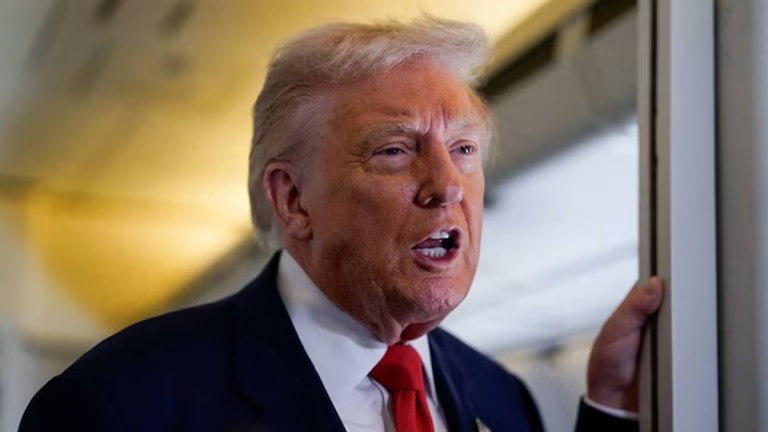
Gold Card has emerged as a new immigration pathway proposed by former US President Donald Trump, aimed at retaining high-performing foreign graduates from top American universities. The initiative is being presented as a way to prevent talented students, especially from countries like India and China, from being forced to leave the United States after completing their education.US rolls out high-stakes Golden Visa Card: Here's what professionals must  know now - The Times of India

Speaking at the launch of the programme, Trump highlighted the loss the US faces when skilled graduates are required to return to their home countries due to visa restrictions. He described such outcomes as unfortunate and avoidable, stressing that many of these individuals have the potential to make strong contributions to the American economy and workforce.

Under the Gold Card programme, selected foreign professionals would receive legal status in the US, along with a structured path toward citizenship. Unlike traditional work visas, this programme is positioned as a premium option, involving significant financial contribution while offering long-term stability to those who qualify.

The proposal is expected to have particular relevance for Indian students, who form one of the largest international student groups in the United States. For years, many Indian graduates from leading US institutions have faced uncertainty due to limited work visas, long green card waiting periods, and frequent policy changes.A $5 million Gold Card for immigrants makes economic sense - The Economic  Times

Trump acknowledged that companies often hesitate to hire international graduates because of unclear visa outcomes. According to him, the Gold Card is designed to remove this uncertainty, allowing employers to retain skilled workers without prolonged legal complications.

Gold Card stands apart from broader immigration restrictions

The introduction of the Gold Card comes at a time when immigration policies under Trump’s leadership have largely focused on tightening entry and residence rules. Measures such as stricter border enforcement, expanded deportation actions, and higher visa costs have significantly affected immigrant communities.Gold Card program: USCIS takes first step towards the launch, issuing draft  form — check key features - The Times of India

Indian professionals were among those most impacted by these changes. Increased fees for H-1B visas and tougher compliance requirements created financial and professional strain, particularly for technology and healthcare workers. Students nearing graduation also faced rising anxiety about their ability to stay and work legally in the country.

Despite this hardline environment, Trump has consistently drawn a distinction between general immigration and what he calls “exceptional talent.” The Gold Card programme reflects this distinction by targeting individuals with strong academic records, advanced skills, and high earning potential.

Supporters of the programme argue that it addresses a long-standing issue in the US education and employment system. American universities attract some of the brightest minds globally, but immigration barriers often prevent the country from benefiting fully from this talent pool.What is the U.S. Immigration “Gold Card” Program? | US Immigration Lawyers  | Green and Spiegel

Critics, however, have raised concerns that the programme favors wealthier applicants and does not address systemic delays in existing visa systems. They argue that creating a paid fast-track option may widen inequality within the immigration process.

For Indian and Chinese students, the Gold Card could significantly reduce the uncertainty that typically follows graduation. Instead of relying on temporary work permits and facing the risk of forced departure, eligible graduates may gain a clearer and more secure future in the US. Also Read: Amit Shah Lok Sabha Speech: PM Modi Hails Outstanding Electoral Debate Performance

The administration has positioned the programme as economically driven rather than humanitarian. Officials argue that retaining high-skilled workers strengthens innovation, boosts tax revenue, and helps American companies remain competitive globally.

Gold Card highlights talent-first immigration thinking

The Gold Card proposal signals a shift toward selective openness rather than broad immigration reform. It reflects an approach where talent and economic contribution are prioritized over nationality, while still maintaining tight control over overall immigration numbers.Trump launches US 'Gold Card' visa programme to attract wealthy immigrants  | Immigration News - Business Standard

While details of eligibility and implementation are still expected to evolve, the announcement itself has already sparked strong reactions across academic and professional communities. Many students see it as a sign that their skills are valued, even amid restrictive policies.

At the same time, immigration experts caution that the programme should not be viewed as a solution for all foreign students. Only a limited group is likely to qualify, and existing visa routes will continue to shape the experience of most international graduates.

Conclusion
The Gold Card programme presents a targeted effort to retain top global talent, particularly benefiting Indian and Chinese graduates. While it contrasts with broader restrictive immigration measures, it underlines a growing recognition that skilled individuals play a vital role in the future of the United States.

Enumeration Deadline Extended by Election Commission in Key States in 2026

0

Enumeration deadline adjustment allows deeper review of voter data

Enumeration deadline for the ongoing Special Intensive Revision of electoral rolls has been extended by the Election Commission of India for five States and one Union Territory. The decision affects Tamil Nadu, Gujarat, Madhya Pradesh, Chhattisgarh, Uttar Pradesh, and the Andaman and Nicobar Islands. The move comes as election officials aim to ensure accuracy in voter lists and allow political representatives enough time to review data before final publication.Telangana Election Official Confirms: Voter Data was Illegally Used by  State Government

Enumeration deadline was earlier fixed for early December, but election authorities first allowed a short extension for all participating States. Now, a further extension has been approved for select regions after requests from their Chief Electoral Officers. Officials clarified that the extension is not due to delays in data collection but to support better verification and transparency.

In Tamil Nadu and Gujarat, the enumeration deadline has been moved to December 14. Draft electoral rolls in these States will now be published on December 19. Madhya Pradesh, Chhattisgarh, and the Andaman and Nicobar Islands have been granted time until December 18, with draft voter lists scheduled for release on December 23. Uttar Pradesh has received the longest extension, with the enumeration deadline pushed to December 26 and draft rolls expected on December 31.Press Release:Press Information Bureau

Election officials stated that not all States required extra time. West Bengal, Goa, Puducherry, Lakshadweep, and Rajasthan completed the enumeration process as planned, and their draft rolls will be published on December 16. Kerala had already received an earlier extension, with its enumeration deadline set for December 18 and draft rolls to be released on December 23.

Enumeration deadline change focuses on verification, not delay

Election Commission data shows that enumeration work is nearly complete across the country. In several States, including Tamil Nadu, Gujarat, Madhya Pradesh, Chhattisgarh, and the Andaman and Nicobar Islands, all enumeration forms have already been digitised. Other States such as West Bengal, Rajasthan, Uttar Pradesh, and Kerala have crossed 99% completion.

According to senior election officials, the enumeration deadline extension was mainly granted to allow Booth Level Agents appointed by political parties to review draft electoral data. This review process helps identify any missing names, incorrect entries, or wrongful deletions before the lists are made public.Govt Has Cleared Linking Of Aadhaar & Voter Data. Past Experience Reveals  How It Can Be Manipulated | Article-14

Officials explained that draft lists were shared with Booth Level Agents only recently. As a result, Chief Electoral Officers requested additional days to complete this scrutiny. The Election Commission accepted these requests to reduce disputes and corrections later in the process.

The poll body has maintained that the revision exercise is meant to strengthen electoral accuracy, not to postpone outcomes. Officials emphasized that the final electoral rolls will still be published on schedule in February next year, ensuring readiness for upcoming elections.

The Election Commission also reiterated its appeal to eligible voters who may have missed the enumeration process. New voters and those whose names are not yet included can still apply using Form 6. Applications can be submitted through Booth Level Officers or online platforms provided by the Commission.

Election authorities believe that extending the enumeration deadline in selected regions will help build trust in the electoral process. Allowing time for verification before publication reduces errors and ensures that no eligible voter is excluded.

Enumeration deadline extension underlines focus on inclusive voting

The revision of electoral rolls is a crucial exercise ahead of major elections. The Election Commission’s decision reflects an effort to balance efficiency with fairness. While most States completed the process on time, targeted extensions were used as a corrective step rather than a sign of delay.Maharashtra's 40 Lakh New Voters: Congress Alleges Fraud, Election  Commission Denies. Here's the Data

Officials have made it clear that accuracy remains the priority. With most data already collected and digitised, the additional time is being used only for review and correction. This approach is expected to reduce objections once draft rolls are published. Also Read: Modi Netanyahu Call: Critical Discussion on Gaza Peace Plan and Strategic Partnership 

Conclusion
The enumeration deadline extension in select States highlights the Election Commission’s focus on accurate and inclusive voter lists. By allowing extra time for verification, the poll body aims to strengthen confidence in the electoral process while keeping the overall schedule on track.

Goa Nightclub Fire Case Brings Legal Trouble for Owners After Court Decision in 2025

0

Goa nightclub fire case moves forward after bail denial

Goa nightclub tragedy has taken a serious legal turn after a Delhi court refused to grant transit anticipatory bail to the owners accused in the deadly fire incident. The case relates to a nightclub fire in Goa that claimed the lives of 25 people, leaving families shattered and raising serious questions about safety standards and responsibility.Goa fire: No transit bail for Luthras as court cites serious charges -  Rediff.com

Goa nightclub fire incident shocked the country when news broke that dozens of people were trapped inside a crowded venue as flames spread rapidly. According to investigators, the fire broke out during operating hours when the club was filled beyond safe capacity. Poor safety arrangements and lack of emergency exits are now central points in the investigation.

The accused owners, Gaurav Luthra and Saurabh Luthra, had approached a Delhi court seeking transit anticipatory bail. This type of bail is usually requested when accused persons fear arrest while traveling between states. However, the court rejected their request, stating that the seriousness of the charges and conduct of the accused did not justify such relief.

Goa nightclub investigation focuses on accountability and safety lapses

Goa nightclub fire investigation has revealed several disturbing details. Police allege that the nightclub did not follow basic fire safety rules. Emergency exits were reportedly blocked or poorly marked, and fire extinguishers were either missing or not working. These failures allegedly played a major role in increasing the death toll.Goa Arpora Night Club Fire: Luthra Brothers' Bail Plea Rejected

Authorities also claimed that the owners left the country soon after learning about the deaths caused by the fire. This allegation weighed heavily during the court hearing. The prosecution argued that fleeing the country showed an intention to avoid legal responsibility, making anticipatory bail inappropriate.

The Delhi court agreed with the prosecution’s argument. It observed that granting protection at this stage could weaken the investigation and send the wrong message in a case involving loss of many lives. The court also noted that such incidents require strict handling to ensure accountability.

Goa Police have registered multiple charges against the nightclub owners, including culpable homicide not amounting to murder and violations of safety laws. Officials stated that the investigation is still ongoing and more arrests may follow if further negligence is discovered.birch by romeo lane goa news | goa club fire accident updates

The Goa nightclub fire has also put local authorities under scrutiny. Questions are being raised about how the club was allowed to operate despite alleged safety violations. Licensing processes, inspections, and enforcement mechanisms are now being examined to find out whether officials failed to act in time.

Families of the victims have welcomed the court’s decision. Many have demanded strict punishment for those responsible and stronger safety laws to prevent such tragedies in the future. They believe the denial of bail is a step toward justice, though it cannot undo their loss.

Public reaction across Goa has been intense. Protests and candlelight marches have been held to honor the victims and demand reforms. Civil society groups are calling for regular safety audits of entertainment venues and strict action against violations.

Goa nightclub case highlights urgent need for safety enforcement

The Goa nightclub fire case serves as a grim reminder of what happens when safety rules are ignored. Nightclubs and similar venues attract large crowds, and even small lapses can turn deadly. Experts say that enforcement must be strict, not only after tragedies but before they occur.After Goa Nightclub Fire, State Mandates Strict Crowd Control, Fire Safety

As the legal process continues, authorities are expected to push for extradition if the accused remain outside India. The case is likely to set an important example for how such incidents are handled in the future. Also Read: Modi Netanyahu Call: Critical Discussion on Gaza Peace Plan and Strategic Partnership

Conclusion
The Goa nightclub fire case has entered a critical phase with the court refusing bail to the accused owners. The decision reflects the seriousness of the tragedy and reinforces the need for accountability, justice, and stronger safety enforcement to prevent such loss of life again.

India’s New Labour Codes Reshape Salary Structures, Social Security and Worker Benefits: 2025

New Delhi, 12 December 2025:
The implementation of India’s four unified labour codes has ushered in far-reaching changes to salary definitions, social security contributions and employee benefits, marking one of the most comprehensive labour reforms in decades. Coming into effect on 21 November 2025, the new legal framework rationalises 29 legacy labour laws into cohesive statutes aimed at modernising workplace regulation, expanding social security coverage and enhancing labour protections across sectors.


Unified Definition of Wages Alters Salary Calculations

One of the cornerstone changes introduced under the new codes is the standardised definition of “wages.” Unlike earlier laws where different statutes used varying wage concepts, the unified approach ensures a common base for calculating key statutory benefits, including Provident Fund (PF), Employees’ State Insurance (ESI), gratuity and bonus entitlements.

Under the revised definition, more components of remuneration such as basic pay, dearness allowance and retaining allowance are factored into the wage base. This means a broader section of salary is now considered for statutory contribution calculations, potentially increasing employer and employee liabilities toward PF and other benefits. However, certain allowances — like House Rent Allowance — are excluded up to prescribed limits.


Expanded Social Security, Including Gig and Fixed-Term Workers

The new Code on Social Security broadens the reach of welfare provisions to previously excluded segments of the workforce, such as gig and platform workers. It consolidates multiple social security laws into a unified regime and introduces a more comprehensive safety net that includes PF, ESI, maternity benefits and other protections.

A notable change is in gratuity eligibility, where fixed-term employees — earlier required to complete five years to qualify — can now receive gratuity after just one year of service. This brings contract workers closer to the benefit scope historically reserved for permanent staff.


Potential Impact on Employer Responsibilities

Employers face significant adjustments as compliance under the new framework becomes more uniform. The revised wage definition means that statutory contributions to PF and gratuity may rise, affecting payroll planning and financial outlays. Workforce planning teams are closely examining how these changes interact with company benefit structures and historic practices.

The restructured labour codes also simplify administrative processes by reducing fragmentation across multiple statutes, a long-standing challenge faced by businesses operating in India’s dynamic employment landscape.


Clarity on Take-Home Pay and Compliance Questions

As businesses and employees adapt to the new regime, the Ministry of Labour & Employment has clarified certain areas to address early concerns. While the broader wage definition could increase statutory deductions, many employees — especially those covered under existing PF wage ceilings — may see little change in take-home salary for now, as transitional provisions are being phased in.

Experts note that detailed rules, to be issued by the Government, will ultimately determine the full impact on payroll structures and employee net pay. This phased implementation is designed to balance worker protection with employer flexibility.


Looking Ahead: Modernisation and Compliance Ready for 2026

With the new labour codes now operational, India’s workforce regulatory environment is transitioning toward greater clarity, uniformity and worker-centric protections. Employers, HR professionals, and legal advisors alike are preparing for incremental rule notifications expected over the coming months, which will provide further guidance on implementation timelines and compliance protocols.

The reform reflects India’s broader goal of streamlining labour laws to match global standards while integrating protections for a more diverse and gig-oriented workforce.


For more real-time updates, visit Channel 6 Network.

Source: PIB