Sunday, March 1, 2026
Home Blog Page 5

Dhupguri Market Fire 2026 – Flames Devour 10 Shops in Jalpaiguri, Community Shock, and Governance Lessons in Disaster Preparedness

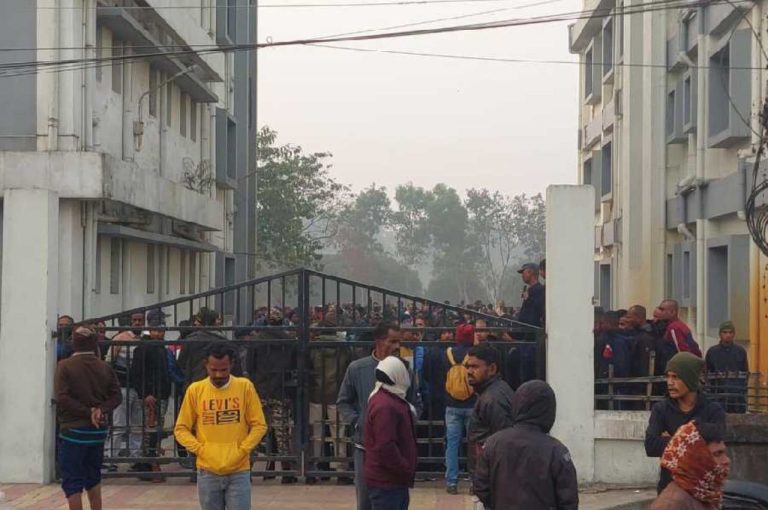
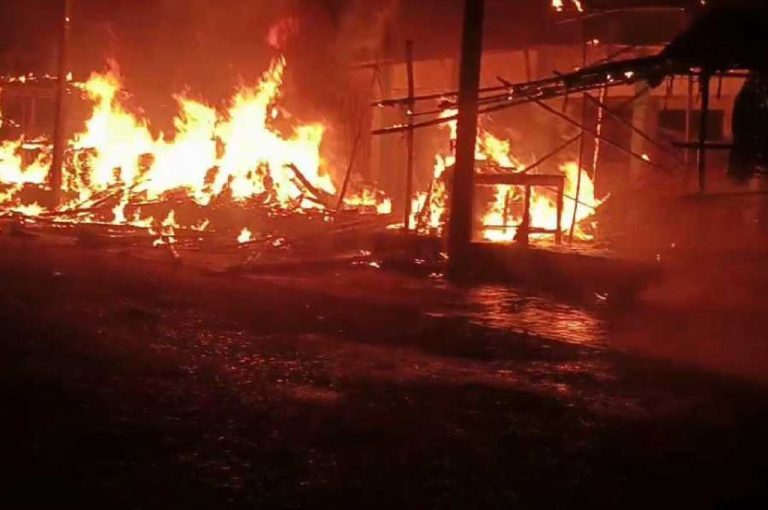
The Dhupguri market fire 2026 has left the Jalpaiguri district shaken, as nearly 10 shops were reduced to ashes in a devastating blaze. The incident, which occurred late Sunday night, highlights the vulnerabilities of local markets built with temporary structures and the challenges faced by fire services in containing such disasters.


2. Dhupguri Market Fire 2026: The Incident

  • Location: Regulated market in Dhupguri, Jalpaiguri district.
  • Date: Sunday night, February 9, 2026.
  • Shops destroyed: Around 10, including makeshift stalls selling garments.
  • Cause: Suspected electrical short circuit, though deliberate arson has not been ruled out.
  • Spread: Fires erupted at three different locations almost simultaneously.
  • Materials: Bamboo and wooden structures fueled rapid spread.

3. Firefighting Efforts

  • Initial response: One fire engine arrived quickly.
  • Reinforcement: Two more engines deployed.
  • Challenges: Scattered electrical wires made operations difficult.
  • Duration: Nearly an hour of continuous effort required to control flames.
  • Outcome: Shops destroyed, but no casualties reported.

4. Eyewitness Accounts

  • Baidya Chandra (resident): “I rushed here after hearing about the fire. Some shops have been destroyed. No one can say for sure how it started.”
  • Utpal Basak (resident): Suggested suspicion of deliberate setting, as fires broke out at three locations simultaneously.
  • Fire officer Bishwadeb Roy: Confirmed difficulties due to scattered wires and said cause yet to be ascertained.

5. Why This Case Matters

  • Community impact: Small traders lost livelihoods overnight.
  • Governance accountability: Raises questions about fire safety enforcement in regulated markets.
  • Public trust: Handling of investigation will influence confidence in local administration.
  • Economic strain: Families dependent on these shops face financial insecurity.

6. Governance Challenges

  • Infrastructure safety: Temporary bamboo and wooden stalls highly vulnerable.
  • Administrative accountability: Need for stricter fire safety audits.
  • Disaster preparedness: Fire services require better equipment and training.
  • Judicial oversight: Courts may intervene if negligence is proven.

7. Community Concerns

  • Shop owners: Demand compensation and rehabilitation.
  • Families: Fear economic hardship due to sudden loss of income.
  • Civil society groups: Call for participatory governance in disaster management.
  • Opposition voices: Warn of marginalisation if small traders are neglected.

8. Government External Links for Assistance


9. Historical Context of Market Fires in Bengal

  • 2000s: Small market fires reported in rural districts.
  • 2010s: Kolkata and Howrah markets saw major blazes due to poor wiring.
  • 2020s: Fire safety became a recurring concern amid urban expansion.
  • 2026: Current Dhupguri fire reflects continuity of challenges in disaster governance.

10. Global Comparisons

Similar market fire tragedies worldwide:

  • Nigeria: Market fires often linked to poor wiring and lack of safety audits.
  • Bangladesh: Garment markets vulnerable to electrical short circuits.
  • USA: Urban market fires rare but devastating when safety codes ignored.

India’s case mirrors these global struggles where disaster governance collides with politics, community welfare, and accountability.


11. Governance Lessons

The Dhupguri fire teaches:

  • Transparency in investigations builds credibility.
  • Community engagement ensures legitimacy of reforms.
  • Balanced vigilance strengthens governance legitimacy.
  • Judicial oversight protects fairness in disaster governance.

12. Future Outlook – Disaster Governance in India

India must move towards:

  • Digitised monitoring systems for fire safety compliance.
  • Public dashboards showing market safety audits.
  • Independent audits of disaster preparedness.
  • Educational campaigns linking fire safety with civic responsibility.

✅ Conclusion

The Dhupguri market fire 2026 is more than a local tragedy—it is a test of India’s democratic resilience and governance credibility. As flames devoured 10 shops and families lost livelihoods, ordinary citizens await clarity on whether governance will deliver transparency, fairness, and respect for community dignity. For India, the lesson is clear: democracy thrives when governance delivers inclusivity and accountability in disaster management.

Also read: Home | Channel 6 Network – Latest News, Breaking Updates: Politics, Business, Tech & More
Dhupguri Market Fire 2026 – Flames Devour 10 Shops in Jalpaiguri, Community Shock, and Governance Lessons in Disaster Preparedness

The Dhupguri market fire 2026 has left the Jalpaiguri district shaken, as nearly 10 shops were reduced to ashes in a devastating blaze. The incident, which occurred late Sunday night, highlights the vulnerabilities of local markets built with temporary structures and the challenges faced by fire services in containing such disasters.


2. Dhupguri Market Fire 2026: The Incident

  • Location: Regulated market in Dhupguri, Jalpaiguri district.
  • Date: Sunday night, February 9, 2026.
  • Shops destroyed: Around 10, including makeshift stalls selling garments.
  • Cause: Suspected electrical short circuit, though deliberate arson has not been ruled out.
  • Spread: Fires erupted at three different locations almost simultaneously.
  • Materials: Bamboo and wooden structures fueled rapid spread.

3. Dhupguri Market Fire 2026: Firefighting Efforts

  • Initial response: One fire engine arrived quickly.
  • Reinforcement: Two more engines deployed.
  • Challenges: Scattered electrical wires made operations difficult.
  • Duration: Nearly an hour of continuous effort required to control flames.
  • Outcome: Shops destroyed, but no casualties reported.

4. Eyewitness Accounts

  • Baidya Chandra (resident): “I rushed here after hearing about the fire. Some shops have been destroyed. No one can say for sure how it started.”
  • Utpal Basak (resident): Suggested suspicion of deliberate setting, as fires broke out at three locations simultaneously.
  • Fire officer Bishwadeb Roy: Confirmed difficulties due to scattered wires and said cause yet to be ascertained.

5. Why This Case Matters

  • Community impact: Small traders lost livelihoods overnight.
  • Governance accountability: Raises questions about fire safety enforcement in regulated markets.
  • Public trust: Handling of investigation will influence confidence in local administration.
  • Economic strain: Families dependent on these shops face financial insecurity.

6. Governance Challenges

  • Infrastructure safety: Temporary bamboo and wooden stalls highly vulnerable.
  • Administrative accountability: Need for stricter fire safety audits.
  • Disaster preparedness: Fire services require better equipment and training.
  • Judicial oversight: Courts may intervene if negligence is proven.

7. Community Concerns

  • Shop owners: Demand compensation and rehabilitation.
  • Families: Fear economic hardship due to sudden loss of income.
  • Civil society groups: Call for participatory governance in disaster management.
  • Opposition voices: Warn of marginalisation if small traders are neglected.

8. Government External Links for Assistance


9. Historical Context of Market Fires in Bengal

  • 2000s: Small market fires reported in rural districts.
  • 2010s: Kolkata and Howrah markets saw major blazes due to poor wiring.
  • 2020s: Fire safety became a recurring concern amid urban expansion.
  • 2026: Current Dhupguri fire reflects continuity of challenges in disaster governance.

10. Global Comparisons

Similar market fire tragedies worldwide:

  • Nigeria: Market fires often linked to poor wiring and lack of safety audits.
  • Bangladesh: Garment markets vulnerable to electrical short circuits.
  • USA: Urban market fires rare but devastating when safety codes ignored.

India’s case mirrors these global struggles where disaster governance collides with politics, community welfare, and accountability.


11. Governance Lessons

The Dhupguri fire teaches:

  • Transparency in investigations builds credibility.
  • Community engagement ensures legitimacy of reforms.
  • Balanced vigilance strengthens governance legitimacy.
  • Judicial oversight protects fairness in disaster governance.

12. Future Outlook – Disaster Governance in India

India must move towards:

  • Digitised monitoring systems for fire safety compliance.
  • Public dashboards showing market safety audits.
  • Independent audits of disaster preparedness.
  • Educational campaigns linking fire safety with civic responsibility.

✅ Conclusion

The Dhupguri market fire 2026 is more than a local tragedy—it is a test of India’s democratic resilience and governance credibility. As flames devoured 10 shops and families lost livelihoods, ordinary citizens await clarity on whether governance will deliver transparency, fairness, and respect for community dignity. For India, the lesson is clear: democracy thrives when governance delivers inclusivity and accountability in disaster management.

Also read: Home | Channel 6 Network – Latest News, Breaking Updates: Politics, Business, Tech & More
Bengal Electoral Roll Final Publication 2026 – CEO Confirms February 28 Deadline, Legal Extensions, and Governance Lessons in Voter Rights

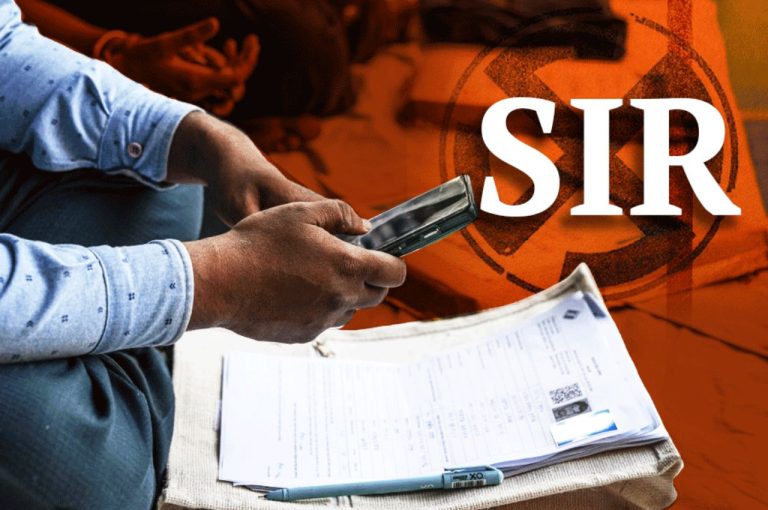
The Bengal electoral roll final publication 2026 has been officially scheduled for February 28, according to the Chief Electoral Officer (CEO) of West Bengal. Initially expected by February 14, the process was delayed after the Supreme Court granted an extension, citing the need for additional scrutiny of documents during the Special Intensive Revision (SIR).

This development underscores the intersection of electoral governance, judicial oversight, and community trust, where the timing of voter roll publication directly impacts the credibility of upcoming elections.


2. The CEO’s Announcement

  • Final rolls: Likely by February 28.
  • Scrutiny period: Not before February 21, as hearings and document checks continue.
  • Reason for delay: Supreme Court’s directive to allow more time for newly inducted officials.
  • Compliance: Election Commission adjusted schedule to align with judicial orders.

3. Bengal Electoral Roll Final Publication 2026: Why This Case Matters

  • Electoral fairness: Ensures genuine voters are not excluded.
  • Public trust: Transparency in roll revision builds credibility.
  • Governance accountability: State and EC must cooperate to avoid disenfranchisement.
  • Political sensitivity: Allegations of bias and harassment have made SIR a flashpoint.

4. Political and Social Reactions

  • TMC narrative: Framed SIR as harassment of voters, especially minorities.
  • BJP stance: Defended SIR as necessary to weed out fake voters.
  • Civil society: Expressed concern about financial and emotional strain on families.
  • Observers: Noted potential for controversy to reshape narratives on governance and elections in Bengal.

5. Governance Challenges

The electoral roll delay reflects systemic governance issues:

  • Administrative capacity: EC complained of inadequate staff from the state.
  • Federal balance: Centre–state tensions complicate electoral processes.
  • Judicial oversight: Supreme Court’s intervention highlights importance of checks.
  • Transparency: Citizens demand clarity on objections and deletions.

6. Community Concerns

  • Families: Fear harassment during verification hearings.
  • Youth: Demand transparency in democratic processes.
  • Civil society groups: Call for participatory governance in electoral reforms.
  • Opposition voices: Warn of marginalisation if voters are unfairly excluded.

7. Government External Links for Assistance


8. Historical Context of Electoral Roll Revisions in Bengal

  • 2000s: Routine revisions caused minor disruptions.
  • 2010s: Aadhaar integration sparked debates on privacy and exclusion.
  • 2020s: SIR became politically charged amid Centre–state tensions.
  • 2026: Current extension reflects continuity of challenges in electoral governance.

9. Global Comparisons

Similar voter roll controversies worldwide:

  • USA: Voter ID laws linked to disenfranchisement debates.
  • Europe: Strict regulations prevent arbitrary exclusions.
  • Africa: Electoral roll revisions often spark disputes over fairness.

India’s case mirrors these global struggles where electoral governance collides with politics, community welfare, and accountability.


10. Governance Lessons

The Bengal electoral roll extension teaches:

  • Transparency in electoral processes builds credibility.
  • Community engagement ensures legitimacy of reforms.
  • Balanced vigilance strengthens governance legitimacy.
  • Judicial oversight protects fairness in electoral governance.

11. Future Outlook – Electoral Governance in India

India must move towards:

  • Digitised monitoring systems for roll revisions.
  • Public dashboards showing progress of hearings.
  • Independent audits of electoral costs.
  • Educational campaigns linking electoral literacy with civic responsibility.

✅ Conclusion

The Bengal electoral roll final publication 2026 is more than a scheduling update—it is a test of India’s democratic resilience and governance credibility. As the Supreme Court intervenes and the EC sets February 28 as the final date, ordinary citizens await clarity on whether governance will deliver transparency, fairness, and respect for electoral dignity. For India, the lesson is clear: democracy thrives when governance delivers inclusivity and accountability in electoral management.

Also read: Home | Channel 6 Network – Latest News, Breaking Updates: Politics, Business, Tech & More
Delhi Temperature Rises AQI: Alarming Weather And Pollution Report

0

New Delhi – The national capital witnessed a concerning dual challenge on Tuesday as Delhi temperature rises AQI remains in the poor category, creating health concerns for residents. The India Meteorological Department reported warmer-than-usual weather across all monitoring stations, while air quality continued to deteriorate.

Significant Temperature Surge Across Monitoring Stations

The Delhi temperature rises AQI situation was marked by maximum temperatures remaining significantly above normal across all monitoring stations. Safdarjung, the city’s base station, recorded a maximum temperature of 28.6 degrees Celsius, representing a substantial departure of 5.2 notches above normal and nearly 2 degrees higher than Monday’s reading.

This unusual warming trend contributing to the Delhi temperature rises AQI scenario was not limited to one location but was observed across multiple monitoring stations throughout the capital. Palam reported a maximum of 26.3 degrees Celsius, while Lodhi Road touched 27.4 degrees, both registering departures of 2.7 degrees and 4.4 degrees, respectively, from normal seasonal temperatures.

Persistent Warming Trend Across Delhi

According to the India Meteorological Department’s assessment of the Delhi temperature rises AQI conditions, Ridge and Ayanagar also saw elevated daytime temperatures, settling at 26.9 degrees and 27.3 degrees Celsius, respectively. This data indicates a persistent warming trend across the region that is affecting air quality and overall environmental conditions.

The widespread nature of the temperature increase in the Delhi temperature rises AQI situation suggests a broader meteorological pattern rather than isolated micro-climatic variations, raising concerns about the implications for air quality and public health.

Night Temperature Variations

While daytime temperatures showed dramatic increases in the Delhi temperature rises AQI scenario, night temperatures displayed relatively minor variations. The minimum temperature at Safdarjung stood at 9.2 degrees Celsius on Tuesday, slightly below normal, providing some respite from the daytime warmth.

Palam and Ridge recorded milder nights at 11 degrees and 12.6 degrees Celsius, respectively, while Lodhi Road and Ayanagar reported minimum temperatures of 9.4 degrees and 9.6 degrees Celsius, respectively, according to IMD data related to the Delhi temperature rises AQI conditions.

Zero Rainfall Recorded

The Delhi temperature rises AQI situation was compounded by the complete absence of precipitation. The weather office confirmed that no rainfall was recorded in any part of the city during the 24-hour period ending 5:30 pm, with cumulative rainfall remaining at zero across all stations.

This lack of rainfall in the Delhi temperature rises AQI scenario is particularly concerning as rain typically helps cleanse the atmosphere and improve air quality by settling particulate matter and other pollutants.

Air Quality Deteriorates to Poor Category

On the pollution front, the Delhi temperature rises AQI report showed air quality remained firmly in the ‘poor’ category. The air quality index settled at 271, marking a slight rise from the 249 recorded on Monday, according to the Central Pollution Control Board.

This deterioration in the Delhi temperature rises AQI levels indicates that residents are breathing air that poses health risks, particularly for sensitive groups including children, elderly persons, and those with respiratory conditions.

Short-Term Air Quality Forecast

The outlook for the Delhi temperature rises AQI situation in the coming days remains concerning. The CPCB has indicated that the AQI is likely to remain in the ‘poor’ category from February 11 to 13, suggesting no immediate improvement in air quality conditions.

According to the Air Quality Early Warning System’s assessment of the Delhi temperature rises AQI trajectory, the outlook for the subsequent six days indicates that air quality is likely to fluctuate between ‘poor’ to ‘moderate’ categories, offering limited relief to residents.

Understanding AQI Classification System

To properly contextualize the Delhi temperature rises AQI data, it’s important to understand the CPCB’s classification system. The board classifies an AQI between 0 and 50 as ‘good’, 51 and 100 as ‘satisfactory’, 101 and 200 as ‘moderate’, 201 and 300 as ‘poor’, 301 and 400 as ‘very poor’, and 401 and 500 as ‘severe’.

With the current Delhi temperature rises AQI reading of 271, the capital falls well within the ‘poor’ category, indicating significant air pollution that requires public health advisories and potential mitigation measures.

Health Implications of Current Conditions

The combination of factors in the Delhi temperature rises AQI scenario—elevated temperatures and poor air quality—creates a challenging environment for residents. The ‘poor’ air quality category can cause breathing discomfort to people on prolonged exposure and may aggravate respiratory ailments in vulnerable populations.

Temperature-Pollution Connection

The correlation observed in the Delhi temperature rises AQI pattern is scientifically significant. Higher temperatures often contribute to increased ground-level ozone formation and can trap pollutants closer to the surface, particularly in the absence of wind or rainfall to disperse contaminants.

Regional Weather Pattern

The widespread nature of the temperature increases across all monitoring stations in the Delhi temperature rises AQI assessment suggests a regional weather pattern rather than localized phenomena. This indicates that the warming trend and associated air quality challenges may persist until there is a significant meteorological shift.

Looking Ahead

As the Delhi temperature rises AQI conditions continue to affect daily life, residents are advised to take appropriate precautions. The forecast suggests several more days of poor to moderate air quality, requiring heightened awareness about outdoor activities, particularly for vulnerable groups.

Authorities and citizens must remain vigilant as the Delhi temperature rises AQI scenario unfolds, with meteorological conditions playing a crucial role in determining when air quality improvements might occur.

Delhi Financial Corporation Winding Up: Shocking Government Orders Closure

New Delhi – The Delhi government has ordered the Delhi Financial Corporation winding up, citing its financial non-viability and public interest considerations. This decisive action marks the end of an institution that once served as a crucial lending platform for micro, small and medium enterprises in the national capital.

Official Notification of Delhi Financial Corporation Winding Up

The decision regarding the Delhi Financial Corporation winding up was notified on February 6, following approval by the Delhi cabinet last month. The closure has been formalized through a gazette notification issued under the State Financial Corporations Act, 1951, establishing the legal framework for the institution’s dissolution.

The Delhi Financial Corporation winding up represents a significant development in the capital’s financial landscape, as the DFC had been a key institution extending loans to micro, small and medium enterprises for decades.

Severe Financial Crisis Prompts Delhi Financial Corporation Winding Up

The Delhi Financial Corporation winding up became inevitable after the institution grappled with severe financial stress for a prolonged period. The acute liquidity crunch that necessitated the Delhi Financial Corporation winding up was formally flagged during a meeting of the corporation’s board in November last year.

During this critical board meeting, members were informed that DFC’s share capital had been fully eroded, with accumulated losses mounting to ₹42 crore. This devastating financial position made the Delhi Financial Corporation winding up the only viable option for the government.

Mounting Debt and Eroded Capital

The Delhi Financial Corporation winding up decision was reinforced by the corporation’s inability to service its outstanding loan obligations. Officials revealed that DFC owed ₹80 crore to the Delhi government as of September 2025, a debt that remained unpaid due to severe liquidity constraints.

According to official records that justified the Delhi Financial Corporation winding up, DFC’s entire capital base and reserves stood wiped out, while its net worth had slipped into the red by ₹15 crore. This alarming financial deterioration underlined the depth of the crisis that made the Delhi Financial Corporation winding up unavoidable.

Legal Framework for Delhi Financial Corporation Winding Up

The Delhi Financial Corporation winding up was executed under Section 45 of the State Financial Corporations Act, which stipulates that a financial corporation can be placed in liquidation only through an order of the state government. Exercising these statutory powers, Delhi Lieutenant Governor VK Saxena directed that the Delhi Financial Corporation winding up be implemented.

DFC was originally established under the State Financial Corporations Act, 1951, to function as a state financial institution. The Delhi cabinet considered a proposal last month to close the corporation after thoroughly assessing its financial position and subsequently approved the Delhi Financial Corporation winding up process.

Operational Cessation Following Delhi Financial Corporation Winding Up

According to the gazette notification by the finance department, the Delhi Financial Corporation winding up will take effect from the date of publication of the notification in the Official Gazette. From that date, all regular operations of the corporation will come to an end, including the sanction and disbursement of fresh loans.

Following the Delhi Financial Corporation winding up order, DFC will function only for activities related to its closure, such as realization and recovery of dues, settlement of liabilities, disposal or transfer of assets, and completion of statutory and administrative requirements.

Winding-Up Committee Formation

To oversee the Delhi Financial Corporation winding up process, the government has constituted a specialized winding-up committee. The committee responsible for the Delhi Financial Corporation winding up will be headed by the administrative secretary (Finance), Delhi.

The committee managing the Delhi Financial Corporation winding up includes the administrative secretaries of industries, law and services, the chairman-cum-managing director of DFC, the controller (Treasuries), a representative of the Chandigarh administration, a representative of SIDBI, and the executive director of DFC, who will serve as member secretary.

Powers and Responsibilities of Winding-Up Committee

The committee overseeing the Delhi Financial Corporation wind up has been empowered to seek assistance from any officer, authority or agency of the Delhi government and may invite special invitees as required. With the publication of the notification, all powers of DFC’s board of directors and management will stand vested in the winding-up committee.

The committee authorized to execute the Delhi Financial Corporation wind up has been given custody and control of all assets, records, securities, cash and bank balances, investments and properties of DFC. It will be responsible for recovering dues, including through settlement schemes and legal proceedings, finalizing accounts, completing audits, ensuring statutory compliance and settling all lawful claims.

Asset Disposal and Employee Protection

During the Delhi Financial Corporation wind up process, the committee will identify and dispose of movable and immovable assets in accordance with applicable rules. The order specified that no action prejudicial to employees will be taken except in accordance with law and due process, ensuring worker rights are protected during the Delhi Financial Corporation wind up.

Legal Proceedings and Final Dissolution

All legal proceedings by or against DFC will continue until the completion of the Delhi Financial Corporation winding up process. A separate notification will be issued by the lieutenant governor declaring the final dissolution of the corporation once all assets and liabilities are settled during the Delhi Financial Corporation wind up.

This comprehensive approach to the Delhi Financial Corporation wind up ensures that all stakeholders—including creditors, employees, and borrowers—are treated fairly while bringing an orderly end to an institution that could no longer sustain its operations.

North Delhi Drain Remodelling: Massive Rs.125 Crore Project Announced

0

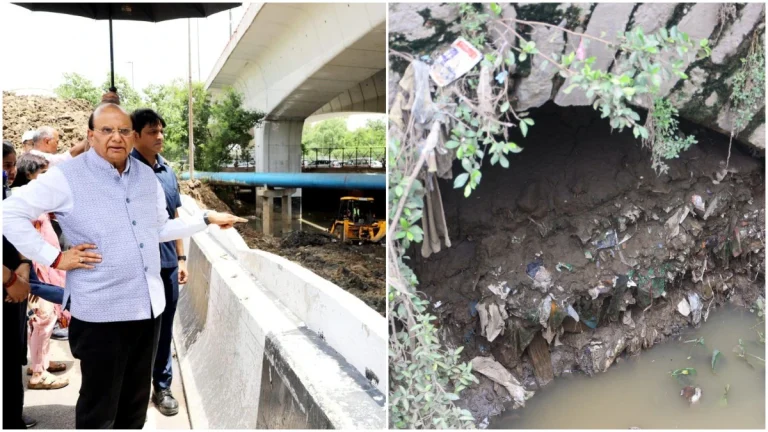
New Delhi – The Delhi government has sanctioned over ₹125 crore for the North Delhi drain remodelling project covering storm water drains across nearly 28 kilometres of major road stretches under the new drainage master plan. Water Minister Parvesh Verma announced this comprehensive initiative on Tuesday, promising a permanent solution to the waterlogging crisis that has plagued the region for years.

Comprehensive Scope of North Delhi Drain Remodelling

The North Delhi drain remodelling initiative represents a decisive intervention to address long-standing drainage issues that have caused significant disruption during monsoon seasons. According to Minister Verma, the approved works include three major projects covering key stretches along the Ring Road that frequently witness severe waterlogging during intense rainfall.

The North Delhi drain remodelling project will target critical areas including Model Town-2 Road, Model Town-3 Road, Kushal Cinema Road, and the Azadpur H-Point to Mukarba Chowk stretch along the Mall Road Extension. Together, these corridors form some of North Delhi’s most gridlocked routes, which are particularly prone to flooding during heavy downpours.

Strategic Investment Breakdown

The financial allocation for the North Delhi drain remodelling demonstrates the government’s commitment to comprehensive infrastructure improvement. Minister Verma provided detailed information about the budget distribution across different project segments, ensuring transparency in resource deployment.

For the North Delhi drain remodelling work on Model Town-2 Road, Model Town-3 Road, and Kushal Cinema Road, ₹33.11 crore has been sanctioned. An additional ₹48.13 crore has been approved specifically for the Azadpur H-Point to Mukarba Chowk stretch on the Mall Road Extension, recognizing the critical importance of this heavily trafficked route.

The Camp Chowk to Azadpur H-Point stretch, covering approximately 10.81 kilometres, has received approval for ₹44.38 crore under the North Delhi drain remodelling plan. This substantial investment reflects the scale of work required to modernize the drainage infrastructure in these problem-prone areas.

Minister’s Vision for Permanent Solutions

Water Minister Parvesh Verma emphasized that the North Delhi drain remodelling represents a planned and decisive intervention rather than temporary fixes. “This is a planned and decisive intervention. Drain remodelling in these areas is being taken up under the new drainage master plan so that residents are not forced to relive the same problems every time it rains,” he stated.

The minister’s comments about the North Delhi drain remodelling highlight the government’s shift from reactive measures to proactive infrastructure development. “When we talk about permanent solutions, we must also back them with adequate resources. This financial commitment shows that the government is not relying on temporary measures, but investing in planned improvement,” Verma added.

Addressing Chronic Waterlogging Issues

The North Delhi drain remodelling aims to improve the carrying capacity and alignment of drains along connected stretches, which often overflow during heavy rainfall, leading to significant traffic disruptions and damage to road surfaces. Officials involved in the North Delhi drain remodelling project indicated that recurrent waterlogging in these areas has also affected the movement of emergency vehicles and raised serious concerns over pedestrian safety in previous monsoon seasons.

These chronic problems have made the North Delhi drain remodelling not just an infrastructure necessity but a critical public safety intervention that will benefit thousands of commuters and residents daily.

Integrated Drainage Approach

Highlighting the need for an integrated approach to the North Delhi drain remodelling, Minister Verma stressed that drainage systems cannot be addressed in isolation. “Drainage cannot be fixed in fragments. The master plan ensures that water flow is managed logically across connected stretches, so one area does not suffer because another has been ignored,” he explained.

This holistic vision for the North Delhi drain remodelling ensures that improvements in one section don’t simply transfer problems to adjacent areas. The integrated approach considers the entire water flow pattern across the 28-kilometre network.

Accountability and Ground Results

The minister emphasized accountability in the North Delhi drain remodelling execution. “Our duty is to make sure public money delivers real relief to citizens. People should see the difference on the ground, not just in files,” Verma stated, underscoring the government’s commitment to tangible results.

The North Delhi drain remodelling will be monitored to ensure adherence to approved designs and timelines, with the minister personally overseeing the execution to guarantee quality and timely completion.

Impact on Traffic and Emergency Services

The successful implementation of the North Delhi drain remodelling will have far-reaching benefits beyond just preventing waterlogging. Improved drainage will reduce traffic disruptions during monsoons, enable smoother movement of emergency vehicles, and enhance overall road safety for both motorists and pedestrians.

The North Delhi drain remodelling targets some of the capital’s busiest corridors, meaning improvements will benefit a large population of daily commuters who have long suffered delays and hazards during rainy seasons.

New Drainage Master Plan Framework

The North Delhi drain remodelling operates within the framework of Delhi’s new drainage master plan, which takes a comprehensive, scientific approach to water management across the capital. This master plan ensures that individual projects like the North Delhi drain remodelling are coordinated and contribute to a larger vision of flood-resilient urban infrastructure.

Timeline and Execution

While specific timelines were not detailed in the announcement, the minister confirmed that execution of the North Delhi drain remodelling would be closely monitored. The substantial financial allocation suggests the government intends to complete these works efficiently to provide relief before the next monsoon season.

The ₹125 crore North Delhi drain remodelling project represents a significant step toward making the capital’s drainage infrastructure capable of handling intense rainfall and protecting citizens from the annual waterlogging crisis.

India Pakistan T20 World Cup: Explosive Reaction To Boycott U-Turn

0

New Delhi – The Indian cricket camp has offered its first reaction after Pakistan softened their stance on a potential boycott, confirming that the marquee India Pakistan T20 World Cup Group A clash will proceed as scheduled. The February 15 encounter in Colombo will be the third World Cup game for both teams and marks a significant diplomatic breakthrough in one of cricket’s most anticipated rivalries.

Team India Always Confident About Match

Speaking to the media at the Arun Jaitley Stadium in New Delhi on Tuesday, ahead of India’s second match against Namibia on February 12, assistant coach Ryan ten Doeschate revealed that the development regarding the India Pakistan T20 World Cup fixture came as no surprise to the players. He emphasized that the team had always expected the fixture to go ahead despite the uncertainty surrounding Pakistan’s initial boycott threats.

“First of all, it’s great that the game is back on. We never changed our preparation or our thinking that the game wasn’t going to happen,” ten Doeschate said regarding the India Pakistan T20 World Cup clash. “We always had the impression that something would transpire and we would play, so it doesn’t really change the way we go about things.”

Late Confirmation Received

The Indian camp received official confirmation about the India Pakistan T20 World Cup match late on Monday evening, putting to rest weeks of speculation and uncertainty. Ten Doeschate expressed the team’s enthusiasm about the fixture being reinstated, noting that it provides another opportunity to face quality opposition.

“We got confirmation late yesterday. We’d welcome another opportunity to play against a quality side, and it’s good for the team,” he added, referring to the India Pakistan T20 World Cup encounter that has captured global cricket fans’ attention.

Behind Pakistan’s U-Turn Decision

The confirmation from the Government of Pakistan came following extensive diplomatic efforts to salvage the India Pakistan T20 World Cup fixture. An ICC delegation met PCB chairman Mohsin Naqvi in Lahore, in the presence of Bangladesh Cricket Board president Aminul Islam, to discuss the situation and find a resolution.

Prime Minister Shehbaz Sharif took the final call after considering requests from several ICC member boards, including Sri Lanka, Bangladesh, and the Emirates Cricket Board. This high-level intervention demonstrates the significance of the India Pakistan T20 World Cup match not just for the two nations involved but for the entire cricketing community.

Staying Clear of Political Backdrop

Ten Doeschate reiterated that the Indian camp regarding the India Pakistan T20 World Cup fixture prefers to stay clear of the political backdrop surrounding the match, while acknowledging that the decision was positive for the sport. This measured approach reflects the team’s professional focus on cricket rather than geopolitical tensions.

“We try to stay clear of all the politics. We understand the sentiments and the history between the two countries, but for us it’s important to focus purely on the cricket,” he said about the India Pakistan T20 World Cup encounter. This statement underscores the team’s commitment to treating the match as a sporting event despite the broader context.

Preparation Remains Unchanged

A significant revelation from ten Doeschate’s comments about the India Pakistan T20 World Cup match is that Team India never altered their preparation strategy. The coaching staff and players maintained their training regimen and tactical planning with the assumption that the fixture would eventually take place, demonstrating confidence in diplomatic channels to resolve the impasse.

This consistency in preparation could prove advantageous for India when the teams finally meet in what promises to be a high-pressure India Pakistan T20 World Cup encounter watched by millions globally.

Colombo Challenge Acknowledged

Looking ahead to the India Pakistan T20 World Cup fixture, ten Doeschate acknowledged the unique challenge posed by the venue and circumstances. “Going to Colombo will be a challenge, especially with Pakistan having been there for the last couple of weeks, but our focus is on bringing our best game to that fixture next week,” he explained.

Pakistan’s extended presence in Sri Lanka could theoretically provide them with better acclimatization to conditions, but the Indian assistant coach expressed confidence in his team’s ability to adapt and perform when the India Pakistan T20 World Cup match commences on February 15.

Significance for Cricket Fans

The confirmation of the India Pakistan T20 World Cup clash brings relief to cricket fans worldwide who were disappointed at the prospect of missing one of the sport’s greatest rivalries. These encounters typically generate massive viewership and create unforgettable moments in cricket history.

The India Pakistan T20 World Cup fixture represents more than just a group stage match—it carries decades of sporting rivalry, memorable performances, and emotional significance for supporters of both nations.

Focus on Quality Opposition

Ten Doeschate’s characterization of Pakistan as “a quality side” in the context of the India Pakistan T20 World Cup match reflects mutual respect between the teams despite political tensions. This recognition of Pakistan’s cricketing abilities suggests India is taking the encounter seriously and preparing accordingly.

Looking Forward

As the India Pakistan T20 World Cup match on February 15 approaches, both teams will finalize their strategies and combinations. For India, the immediate focus remains on their February 12 match against Namibia, but the Pakistan fixture looms large on the horizon.

The successful resolution of the boycott threat ensures that the India Pakistan T20 World Cup encounter will proceed, providing fans with the cricket spectacle they have been anticipating since the tournament draw was announced.

Norway Epstein Probe: Shocking Parliamentary Inquiry Into Ministry Links

Washington D.C. – Norway’s parliamentary oversight committee unanimously agreed on Tuesday to appoint a rare external inquiry into foreign ministry links to Jeffrey Epstein, marking a significant escalation in the Norway Epstein probe that has rocked the Scandinavian nation’s political establishment. The Norway Epstein probe represents part of a deepening scandal over friendships with the late U.S. sex offender that has implicated high-ranking officials and even royalty.

Parliamentary Committee Takes Unprecedented Action

The decision to launch the Norway Epstein probe came after the Standing Committee on Scrutiny and Constitutional Affairs met to address mounting public pressure for accountability. This rare external inquiry reflects the gravity of revelations that have emerged from newly released files in the United States, which have revealed a host of connections between Epstein and politicians, royals, and the ultra-rich across Europe.

The Labour Party’s Sverre Myrli told reporters after the meeting, “If only half of what we have learned in the last few weeks is true, then this is terrible.” This statement underscores why the Norway Epstein probe has become essential in a country where public officials are expected to maintain the highest ethical standards.

Former Prime Minister Under Investigation

At the center of the Norway Epstein probe is Thorbjorn Jagland, a former prime minister and foreign minister who also served as ex-chair of the Nobel Peace Prize committee. Norway’s white-collar crimes police have opened an investigation into Jagland on suspicion of aggravated corruption, making him the most prominent figure caught up in the Norway Epstein probe.

The files central to the Norway Epstein probe show that Jagland and Epstein’s assistants made detailed plans in 2014 for Jagland, his wife, two children, and his son’s girlfriend to visit Epstein at Palm Beach and the Caribbean island that he owned. Jagland, who was then secretary general of the Council of Europe rights watchdog, has denied ever visiting Epstein’s private island.

Financial Dealings Raise Red Flags

The Norway Epstein probe has uncovered concerning financial arrangements between officials and Epstein. In an email in 2014, Jagland sought Epstein’s help in financing an apartment in Oslo, raising questions about potential conflicts of interest and improper financial relationships between a high-ranking European official and a convicted sex offender.

This financial aspect of the Norway Epstein probe has drawn particular scrutiny as investigators examine whether Epstein used financial incentives to cultivate relationships with influential political figures.

Russian Connection Revealed

The Norway Epstein probe has also revealed attempts by Epstein to leverage his relationships with Norwegian officials for diplomatic purposes. Emails from 2018 showed Epstein asking Jagland to arrange for him to meet Russian Foreign Minister Sergei Lavrov and saying he had insights to offer President Vladimir Putin. Jagland promised to bring it up with Lavrov’s assistant.

This international dimension of the Norway Epstein probe raises concerns about whether Epstein was attempting to use his connections with Norwegian officials to gain access to foreign governments and potentially influence diplomatic matters.

Ambassador and Former Minister Implicated

The Norway Epstein probe expanded on Monday when police announced that Mona Juul, who resigned on Sunday as ambassador to Jordan and Iraq, was also being investigated for corruption. Her husband, former cabinet minister Terje Roed-Larsen, is suspected of complicity, significantly broadening the scope of the Norway Epstein probe.

Roed-Larsen’s ties to Epstein came to light in 2019, before the current Norway Epstein probe intensified. He has apologized several times for the relationship and in 2020 stepped down as CEO of the New York-based International Peace Institute, a think tank.

Family Visits and Financial Benefits

The Norway Epstein probe has uncovered evidence that the files indicate Juul and Roed-Larsen made plans to visit Epstein’s private island with their two children in 2011, though it remains unclear if the visit took place. In a message in 2017, Roed-Larsen called Epstein a “thoroughly good human being,” a characterization that has drawn sharp criticism given Epstein’s criminal history.

The Norway Epstein probe is examining how in 2018 the couple received Epstein’s help in negotiating the purchase of an apartment in Oslo, which is now a subject of the police investigation. Additionally, in a will signed two days before his death by suicide in a jail cell in 2019, Epstein said he was leaving $5 million to each of the couple’s two children.

Royal Family Connection

The Norway Epstein probe has even touched the royal family. Norway’s Crown Princess Mette-Marit, wife of the heir to the throne, apologized last week to the king and queen over a friendship with Epstein between 2011 and 2014, long after his 2008 conviction for soliciting sex from a minor.

This royal connection has intensified public interest in the Norway Epstein probe and raised questions about the extent of Epstein’s infiltration into Norwegian high society and political circles.

Subjects Maintain Innocence

All three primary subjects of the Norway Epstein probe—Jagland, Juul, and Roed-Larsen—will cooperate with the respective investigations and see no merit in the accusations, their lawyers have said. However, the police’s actions and the parliamentary decision to launch an external inquiry demonstrate that these assurances have not stemmed the demand for a public inquiry.

Cultural Impact

The Norway Epstein probe has reverberated throughout Norwegian society, where officials are expected to be squeaky-clean. The scandal has shaken public confidence in the country’s political establishment and raised fundamental questions about oversight mechanisms and ethical standards for public officials.

As the Norway Epstein probe moves forward with both police investigations and the parliamentary external inquiry, Norwegians await answers about how such extensive relationships with a convicted sex offender could have been maintained by some of their most prominent public figures.

Nancy Guthrie Suspect Update: Chilling FBI Photos Reveal Armed Individual

Washington D.C. – In a major Nancy Guthrie suspect update, the FBI has published surveillance pictures depicting a possible suspect related to the investigation concerning the disappearance of Savannah Guthrie’s mother. The newly released images mark a significant breakthrough in the case that has captivated national attention since the 84-year-old woman went missing on January 31.

Surveillance Images Show Armed Individual

The latest Nancy Guthrie suspect update includes newly released images showing an armed person seemingly having interfered with the camera at Nancy’s front entrance on the morning of her disappearance. These chilling photographs represent the first visual evidence of a potential suspect in the case and were recovered through sophisticated data recovery techniques.

The surveillance footage was obtained after intensive collaborative efforts between the FBI and local law enforcement agencies. This Nancy Guthrie suspect update provides investigators with crucial evidence that could help identify the individual responsible for her disappearance.

FBI Director Announces Recovery of Lost Evidence

Providing the Nancy Guthrie suspect update, FBI head Kash Patel wrote on X that over the last eight days, the FBI and Pima County Sheriff’s Department have been working closely with private sector partners to continue recovering any images or video footage from Nancy Guthrie’s home that may have been lost, corrupted, or inaccessible due to a variety of factors, including the removal of recording devices.

In this crucial Nancy Guthrie suspect update, Patel explained that “the video was recovered from residual data located in backend systems.” This technical achievement demonstrates the sophisticated capabilities law enforcement agencies are employing to solve this high-profile missing person case.

Details of Camera Tampering

The Nancy Guthrie suspect update revealed disturbing details about the suspect’s actions. Patel continued his statement by noting, “Working with our partners – as of this morning, law enforcement has uncovered these previously inaccessible new images showing an armed individual appearing to have tampered with the camera at Nancy Guthrie’s front door the morning of her disappearance.”

Also Read: Epstein Files Europe Fallout: Shocking Government Collapses Across Continent

This tampering suggests premeditation and an attempt to conceal evidence, making this Nancy Guthrie suspect update particularly significant for the investigation. The fact that the individual was armed adds a dangerous dimension to the case and increases concerns about Nancy’s safety.

Public Assistance Requested

As part of the Nancy Guthrie suspect update, authorities are urgently seeking public assistance. FBI Director Patel added, “Anyone with information, please contact 1-800-CALL-FBI or visit http://tips.fbi.gov.” The FBI has announced a $50,000 reward for any information that could assist in this case, emphasizing the importance of public cooperation.

This substantial reward accompanying the Nancy Guthrie suspect update underscores how seriously law enforcement is taking this investigation and their determination to locate the missing woman and identify those responsible for her disappearance.

Background of Nancy Guthrie’s Disappearance

Nancy Guthrie, 84, was reportedly taken against her will from her residence in Tucson, Arizona, on January 31. Despite this latest Nancy Guthrie suspect update providing visual evidence, no suspects have been officially identified in her disappearance so far. The mother of Today co-host Savannah Guthrie has been missing for nearly two weeks, prompting an extensive search operation.

The case has drawn significant media attention given Nancy’s connection to a prominent television personality, though investigators are treating it with the same urgency and thoroughness they would apply to any missing person case.

DNA Evidence Confirms Struggle

Prior to this Nancy Guthrie suspect update, Pima County Sheriff Chris Nanos had previously verified that blood discovered on the outside porch of Nancy’s residence matches her DNA. This forensic evidence suggests that a violent struggle may have taken place at the home, adding urgency to the search efforts.

The DNA evidence combined with the latest Nancy Guthrie suspect update showing an armed individual creates a deeply concerning picture of the circumstances surrounding her disappearance.

Ransom Notes Under Investigation

Authorities continue to probe ransom notes received in connection with the case. The Nancy Guthrie suspect update comes as investigators analyze multiple ransom demands. One note was sent last week to two news organizations, while another emerged on Monday, allegedly requesting $6 million with a deadline for payment by Monday.

These ransom demands suggest a kidnapping motive, though investigators have not confirmed whether the notes are legitimate or the work of opportunists seeking to exploit the high-profile nature of the case. This aspect of the Nancy Guthrie suspect update indicates the investigation is pursuing multiple leads.

Multi-Agency Collaboration

The Nancy Guthrie suspect update highlights the extensive collaboration between federal and local authorities. The FBI and Pima County Sheriff’s Department have been working in tandem with private sector technology partners to recover critical evidence that was initially thought to be lost or destroyed.

This partnership demonstrates the resources being dedicated to solving this case and the determination of law enforcement to bring Nancy home safely and hold those responsible accountable.

Technical Recovery Achievement

A particularly noteworthy aspect of this Nancy Guthrie suspect update is the technical achievement in recovering data from backend systems. The ability to retrieve surveillance footage that had been corrupted or made inaccessible through the removal of recording devices showcases advanced forensic capabilities.

This Nancy Guthrie suspect update may encourage witnesses who believe evidence has been destroyed to come forward, knowing that law enforcement has sophisticated methods for recovering deleted or corrupted data.

Ongoing Investigation

As the investigation continues beyond this latest Nancy Guthrie suspect update, authorities remain committed to finding Nancy and bringing those responsible to justice. The release of the surveillance images represents a calculated decision to engage public assistance while the investigation proceeds through other channels.

Anyone with information related to this Nancy Guthrie suspect update or the case in general is urged to contact the FBI immediately through the provided hotline or online tip portal.

US Tariff Removal India: Major Victory As 25% Penalty Eliminated

Washington D.C. – The US tariff removal India process has officially commenced as the US Customs and Border Protection on Tuesday notified the elimination of the 25 percent additional tariffs on Indian goods. This significant development follows days after India and the United States announced a historic trade deal that promises to reshape bilateral economic relations.

Official Customs Notification on US Tariff Removal India

The US tariff removal India announcement came through an official notification from the Customs and Border Protection department, which confirmed that duties would be removed for products from India which enter for consumption or are withdrawn from warehouse on or after February 7. This marks a concrete step in implementing the trade agreement between the two nations.

Referring to a White House statement, the Customs department formalized the US tariff removal India directive, providing clarity to importers and exporters about the new tariff regime. The notification came after US President Donald Trump signed an executive order on Friday last week, officially sanctioning the US tariff removal India measure.

Background of the 25% Tariff Penalty

The US tariff removal India development effectively ends a penalty that was imposed in August 2025. The 25 percent tariff had been levied on Indian goods over the alleged purchase of Russian oil, creating significant tension in bilateral trade relations and affecting various sectors of Indian exports to the United States.

This punitive measure had placed Indian exporters at a competitive disadvantage and threatened to derail the growing economic partnership between the two democracies. The US tariff removal India action therefore represents not just an economic relief but also a diplomatic breakthrough.

Details of the Customs Department Release

The Customs and Border Protection document provided specific details about the US tariff removal India implementation. The updated guidance modifying the additional duties on imports from India stated: “Products of India entered for consumption or withdrawn from warehouse for consumption on or after 12:01 a.m. eastern time on February 7, 2026, are no longer subject to the additional ad valorem duty rate of 25 percent imposed by EO 14329.”

The notification specifically referenced the executive order titled “Addressing Threats to the United States by the Government of the Russian Federation” signed on August 6, 2025. As a result of the US tariff removal India directive, Harmonized Tariff Schedule of the United States (HTSUS) headings 9903.01.84-9903.01.89 are no longer in use as of February 7, 2026.

Reciprocal Tariffs Still in Effect

While celebrating the US tariff removal India achievement, it’s important to note that the Customs and Border Protection document clarified that reciprocal tariffs remain in place. The notification stated that “the Reciprocal Tariffs imposed by EO 14257, ‘Regulating Imports with a Reciprocal Tariff to Rectify Trade Practices That Contribute to Large and Persistent Annual United States Goods Trade Deficits,’ as amended, remain in effect for products of India that do not qualify for an exemption.”

Also Read: India Russian Oil Commitment: Shocking Claims Spark Major Trade Deal Controversy

This means that while the US tariff removal India has eliminated the additional 25% penalty, other tariff structures continue to apply to Indian goods based on reciprocal trade considerations.

Broader Trade Deal Framework

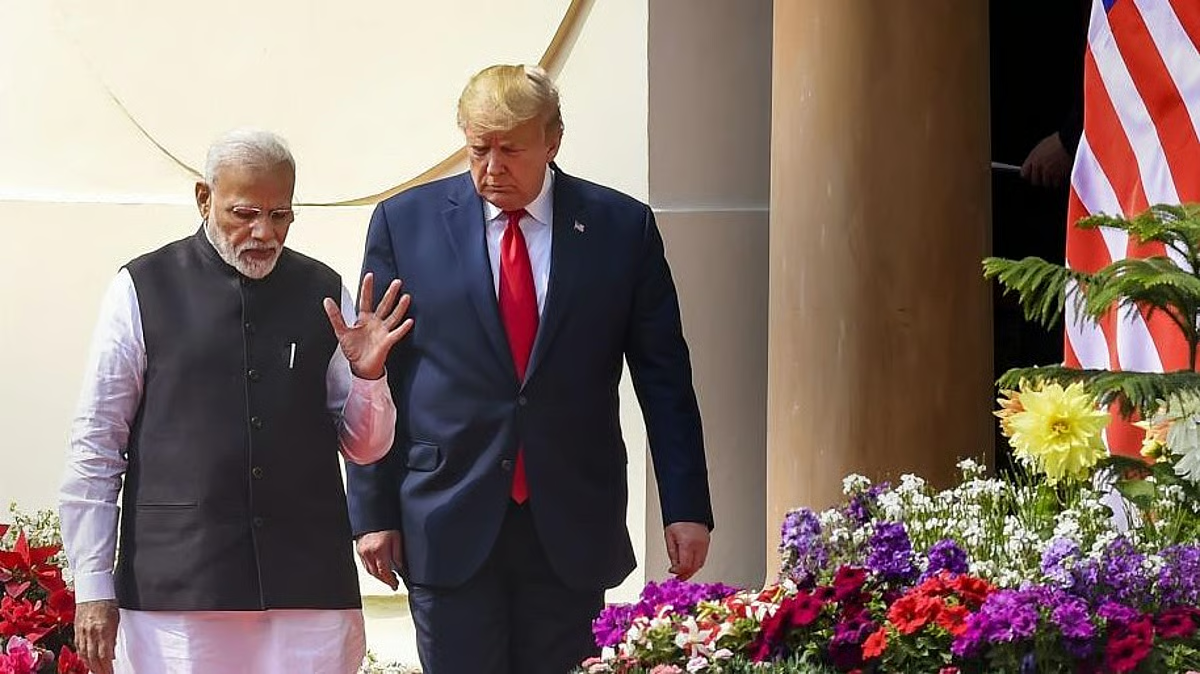
The US tariff removal India action is part of a comprehensive trade agreement announced by President Trump and Prime Minister Narendra Modi. The deal would see overall tariffs on India reduced from 50% to 18%, representing a substantial improvement in market access for Indian products.

India and the United States finalized the framework for an interim trade deal last week, which included not just the US tariff removal India component but also broader tariff reductions on both sides. Under the agreement, India will also be removing and reducing tariffs on US industrial, food and agricultural goods.

Energy and Defense Commitments

In his executive order facilitating the US tariff removal India, Trump repeated claims that India would stop purchasing Russian oil and increase energy purchases from the United States. The order further stated that India had “recently committed to a framework with the United States to expand defense cooperation over the next 10 years.”

However, while India has not officially confirmed a complete halt to Russian energy purchases, New Delhi has signaled openness to increasing energy purchases from the United States and Venezuela, suggesting a diversification strategy rather than complete abandonment of Russian supplies.

Future Implementation Timeline

While there has been no specified timeline, once the interim framework is fully implemented following the US tariff removal India measure, the United States is also expected to end reciprocal tariffs on specific Indian goods. These include medicines, gemstones and diamonds, and aircraft parts—sectors that are particularly important for Indian exports.

Significance for Indian Exporters

The US tariff removal India notification provides immediate relief to Indian businesses that have been operating under the burden of additional duties. Products entering US ports on or after February 7 can now benefit from the elimination of the 25% penalty, improving their competitiveness in the American market.

Moving Forward

The US tariff removal India represents a crucial first step in implementing the broader trade agreement between the two nations. As both countries work toward finalizing the complete interim deal and eventually a comprehensive bilateral trade agreement, this Customs notification demonstrates tangible progress in translating diplomatic announcements into concrete economic benefits.

The successful implementation of the US tariff removal India measure sets a positive precedent for future negotiations and suggests that both nations are committed to strengthening their economic partnership despite ongoing complexities around issues like energy sourcing and reciprocal market access.