New Delhi – The Trans-Yamuna Area Development Board has approved Trans-Yamuna board projects worth ₹728 crore aimed at accelerating comprehensive infrastructure upgrades across the region. The ambitious initiative, announced on Thursday, focuses on critical areas including road redevelopment, drainage systems, and monsoon preparedness.
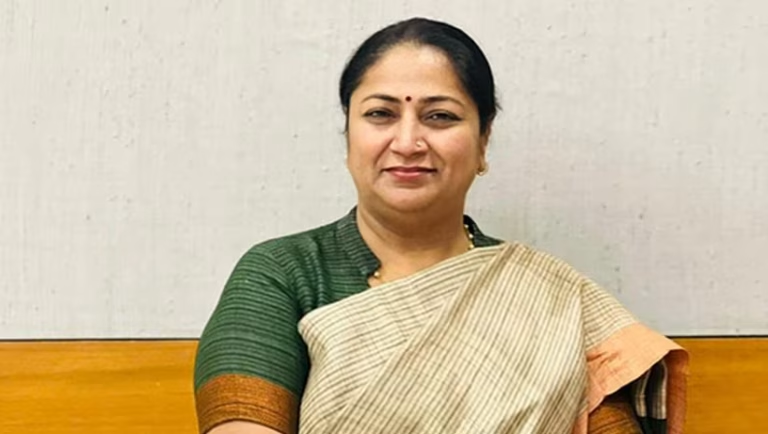
Chief Minister Rekha Gupta chaired the board meeting where these Trans-Yamuna board projects received approval. The projects represent a significant investment in the region’s infrastructure and mark a renewed commitment to addressing long-standing civic issues that have plagued the area.
Chief Minister’s Priority Directives
During the meeting, CM Gupta directed officials to prioritize the repair of damaged roads, drainage systems, and waterlogging hotspots ahead of the upcoming monsoon season. She emphasized that daily commuter safety and convenience required immediate attention, making these Trans-Yamuna board projects essential for public welfare.
The Chief Minister assured stakeholders there would be “no financial constraints” in implementing the board’s recommendations. This commitment ensures that the approved Trans-Yamuna board projects will proceed without budgetary delays or compromises on quality.
Comprehensive Scope of Approved Projects
The Trans-Yamuna board projects will be executed by the Municipal Corporation of Delhi and other government agencies. The comprehensive package includes road refurbishment works, park upgrades, and improvements to public amenities throughout the region.
These Trans-Yamuna board projects will be implemented across 16 assembly constituencies falling under the Trans-Yamuna area. The wide geographical spread ensures equitable development and addresses infrastructure deficiencies across the entire region.
Balancing Beautification with Basic Needs
Chief Minister Gupta stressed that development must balance beautification efforts with essential civic requirements. “The Delhi government’s objective is to develop the Trans-Yamuna region to such an extent that people choose to come and live here by choice,” she stated during the meeting.
She emphasized that alongside beautification initiatives, the Trans-Yamuna board projects must prioritize citizens’ basic needs such as roads, drainage systems, prevention of waterlogging, and safe mobility. This holistic approach ensures sustainable development rather than superficial improvements.
Focus Areas for Infrastructure Development
The approved Trans-Yamuna board projects place special emphasis on several critical infrastructure sectors. Road infrastructure receives top priority, with extensive refurbishment planned for damaged and deteriorated roadways that currently hamper daily commutes.
Drainage system improvements form another crucial component of the Trans-Yamuna board projects. Proper drainage infrastructure is essential for preventing waterlogging during monsoon seasons, a persistent problem that has caused significant inconvenience to residents.
Monsoon Preparedness Strategy
With the monsoon season approaching, the Trans-Yamuna board projects include specific measures to address waterlogging hotspots. These proactive interventions aim to prevent the flooding and water accumulation issues that typically plague the region during heavy rainfall.
The timing of these Trans-Yamuna board projects demonstrates strategic planning, allowing sufficient time for completion of critical drainage and road works before monsoon rains arrive. This preparation should significantly reduce monsoon-related disruptions for residents.
Critique of Previous Administration
Chief Minister Gupta accused the previous government of leaving the board “completely inactive,” which she said had halted development and caused severe public inconvenience. In contrast, she stated her administration has made the region’s development a top priority through these Trans-Yamuna board projects.
This renewed focus on the Trans-Yamuna area represents a policy shift aimed at reversing years of developmental neglect and bringing the region’s infrastructure up to modern standards.
High-Level Participation and Support
The board meeting witnessed participation from key government officials, including Delhi Cabinet Minister Kapil Mishra and board chairman Arvinder Singh Lovely. Their presence underscored the government’s commitment to the Trans-Yamuna board projects.
Minister Mishra acknowledged that the area had long been deprived of development despite its growing population and needs. The Trans-Yamuna board projects approved at this meeting address this historical developmental deficit.
Local MLA Involvement
Board chairman Arvinder Singh Lovely described the proposals submitted by local MLAs as “extremely significant” for transforming the region’s infrastructure landscape. The Trans-Yamuna board projects incorporate inputs from elected representatives who understand their constituencies’ specific requirements.
This bottom-up approach ensures that the Trans-Yamuna board projects address genuine local needs rather than imposing top-down solutions that may miss critical ground realities.
Integration with Mainstream Delhi
The Trans-Yamuna board projects include tourism-related works alongside infrastructure improvements. Special emphasis will be placed on roads, drainage, and public amenities to integrate the Trans-Yamuna region into Delhi’s mainstream developed areas.
This integration strategy aims to eliminate the developmental disparity between Trans-Yamuna areas and other parts of Delhi, creating uniform infrastructure standards across the capital.
Public Amenity Enhancements
Beyond roads and drainage, the Trans-Yamuna board projects include comprehensive public amenity works. Park upgrades and other recreational facilities will enhance residents’ quality of life while contributing to the region’s overall aesthetic appeal.
The ₹728 crore investment in Trans-Yamuna board projects represents a transformative opportunity for the region, promising improved infrastructure, better civic services, and enhanced livability for current and future residents.