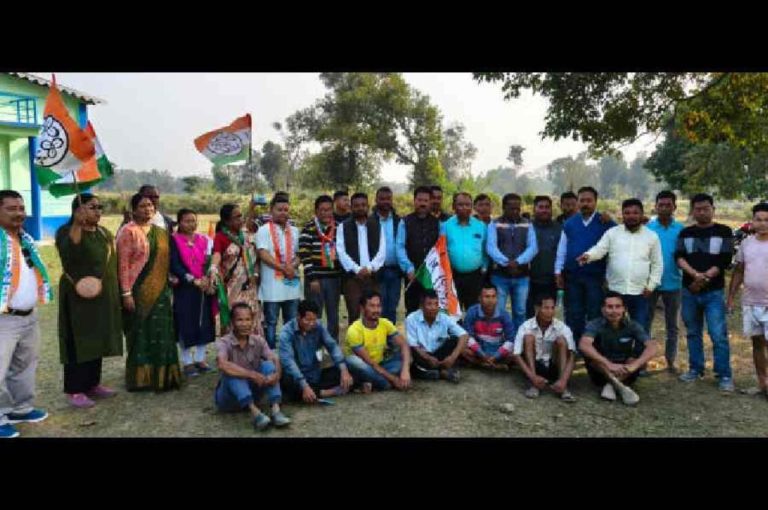
The Dooars tea garden outreach 2026 has become a central theme in Bengal’s pre‑poll political landscape. With Assembly elections approaching, the Trinamool Congress (TMC) has intensified its efforts to connect with tea garden workers in the Dooars region, a constituency that has historically played a decisive role in North Bengal politics.
This initiative underscores the intersection of labour rights, electoral strategy, and governance accountability, where the voices of tea workers—often marginalised in policy debates—become crucial in shaping democratic outcomes.
2. The Outreach Campaign
Location: Dooars region, North Bengal.
Target group: Tea garden workers and their families.
Strategy: Grassroots meetings, welfare promises, and cultural engagement.
Objective: Strengthen TMC’s presence in a region where BJP has gained ground.
Significance: Tea workers represent a large voting bloc with socio‑economic grievances.
8. Historical Context of Tea Garden Politics in Bengal
Colonial era: Tea plantations established with exploitative labour practices.
Post‑Independence: Workers struggled for unionisation and basic rights.
2000s: Closure of several gardens led to starvation deaths in Jalpaiguri and Alipurduar.
2010s–2020s: BJP gained ground in North Bengal by mobilising tea workers.
2026: TMC’s outreach reflects continuity of tea garden politics as electoral battleground.
9. Global Comparisons
Similar labour‑politics intersections worldwide:
Sri Lanka: Tea workers mobilised for wage reforms during elections.
Kenya: Plantation workers became decisive in regional politics.
Bangladesh: Garment workers influenced electoral debates on labour rights.
Dooars’ case mirrors these global struggles where labour rights collide with electoral strategy and governance accountability.
10. Governance Lessons
The Dooars outreach teaches:
Transparency in welfare promises builds credibility.
Political rivalry must not obstruct worker welfare.
Community engagement ensures legitimacy of reforms.
Judicial oversight protects fairness in labour governance.
11. Future Outlook – Tea Industry Governance in Bengal
India must move towards:
Digitised wage and PF monitoring systems accessible to workers.
Public dashboards showing compliance by tea estates.
Independent audits of plantation finances.
Educational campaigns linking labour rights with civic responsibility.
✅ Conclusion
The Dooars tea garden outreach 2026 is more than a campaign strategy—it is a test of Bengal’s democratic resilience and governance credibility. As TMC intensifies efforts to connect with tea workers, ordinary families bear the brunt of systemic neglect and exploitation. For Bengal, the lesson is clear: democracy thrives when governance delivers transparency, fairness, and respect for labour rights.
The Kilcott Tea Garden workers protest 2026 has become a defining moment in Bengal’s tea industry and labour rights movement. Located in Matiali block of Jalpaiguri district, the Kilcott Tea Estate witnessed a massive demonstration by workers demanding payment of pending fortnightly wages and arrears in provident fund contributions.
This incident underscores the intersection of labour rights, governance accountability, and economic justice, where the livelihood of thousands of tea workers depends on transparent and fair management practices.
2. The Protest
Location: Kilcott Tea Estate, Jalpaiguri district, West Bengal.
Trigger: Non‑payment of wages due on January 9, 2026.
PF arrears: Management allegedly failed to deposit provident fund contributions.
Action: Workers locked the senior manager’s bungalow and earlier sealed the factory gate.
Union role: Progressive Tea Workers Union (PTWU) led the agitation.
Demands: Immediate payment of dues and transfer of ownership to a new company.
Significance: Highlights systemic exploitation in Bengal’s tea gardens.
3. Why This Case Matters
Economic justice: Tea workers are among the lowest paid industrial labourers in India.
Social dignity: Non‑payment of wages undermines basic survival needs.
Governance accountability: State labour department must intervene to protect workers.
Political stakes: Tea garden issues often influence North Bengal’s electoral politics.
4. Political and Social Reactions
PTWU: Declared management unfit to run the garden, demanded new ownership.
Workers: Expressed anger and desperation, warning of larger movements.
Labour department: Acknowledged issue, promised talks with company.
Observers: Warned that prolonged disputes could destabilise tea industry in Jalpaiguri.
5. Governance Challenges
The Kilcott protest reflects systemic governance issues:
Labour law enforcement: Weak monitoring of wage and PF compliance.
Ownership disputes: Frequent changes in management destabilise tea estates.
Transparency gaps: Workers lack clarity on PF deposits and entitlements.
Judicial oversight: Courts may intervene if labour rights are violated.
6. Community Concerns
Families: Struggle to meet daily needs without wages.
Youth: Demand fair employment and skill development opportunities.
Civil society groups: Call for participatory governance in tea industry reforms.
Opposition voices: Warn of marginalisation of tea workers in state policies.
8. Historical Context of Tea Garden Struggles in Bengal
Colonial era: Tea plantations established with exploitative labour practices.
Post‑Independence: Workers struggled for unionisation and basic rights.
2000s: Closure of several gardens led to starvation deaths in Jalpaiguri and Alipurduar.
2010s–2020s: Repeated protests over wage arrears and PF defaults.
2026: Kilcott protest reflects continuity of systemic neglect.
9. Kilcott Tea Garden Workers Protest 2026: Global Comparisons
Similar labour struggles worldwide:
Sri Lanka: Tea workers demand fair wages amid inflation.
Kenya: Plantation workers protest against poor working conditions.
Bangladesh: Garment workers face wage arrears and PF disputes.
Kilcott’s case mirrors these global struggles where labour rights collide with corporate mismanagement and governance failures.
10. Governance Lessons
The Kilcott protest teaches:
Transparency in wage and PF deposits is essential.
Political rivalry must not obstruct worker welfare.
Community engagement ensures legitimacy of reforms.
Judicial oversight protects fairness in labour governance.
11. Future Outlook – Tea Industry Governance in Bengal
India must move towards:
Digitised wage and PF monitoring systems accessible to workers.
Public dashboards showing compliance by tea estates.
Independent audits of plantation finances.
Educational campaigns linking labour rights with civic responsibility.
✅ Conclusion
The Kilcott Tea Garden workers protest 2026 is more than a local agitation—it is a test of Bengal’s democratic resilience and governance credibility. As workers demand unpaid wages and PF arrears, ordinary families bear the brunt of systemic neglect and exploitation. For Bengal, the lesson is clear: democracy thrives when governance delivers transparency, fairness, and respect for labour rights.
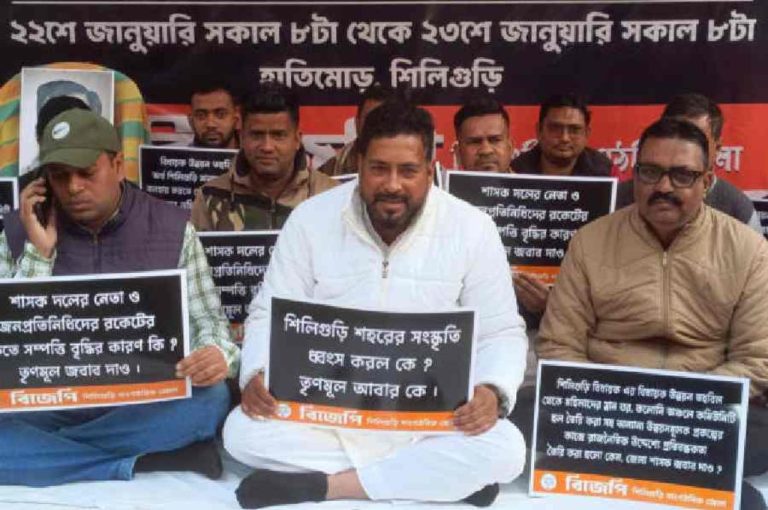
The Siliguri BEUP fund hunger strike 2026 has become a major flashpoint in Bengal’s urban governance and political rivalry. BJP MLA Shankar Ghosh launched a hunger strike in Siliguri, alleging that the state government was deliberately blocking the use of Bengal Urban Employment Programme (BEUP) funds meant for civic development and employment generation.
This incident underscores the intersection of governance, political rivalry, and citizen welfare, where disputes over funds directly affect urban infrastructure and livelihoods.
2. Siliguri BEUP Fund Hunger Strike 2026: The Protest
Location: Siliguri, North Bengal.
Event: Hunger strike by BJP MLA Shankar Ghosh.
Trigger: Alleged obstruction in BEUP fund utilisation.
Duration: Began as indefinite strike until demands are met.
Significance: Highlights tension between opposition MLAs and ruling TMC government.
3. Why This Case Matters
Urban governance: BEUP funds are crucial for employment and civic projects.
Political rivalry: BJP vs TMC clashes often spill into governance disputes.
Citizen welfare: Blocking funds affects jobs, sanitation, and infrastructure.
Democratic accountability: Raises questions about fairness in resource allocation.
4. Political Reactions
BJP: Defended Ghosh’s strike as necessary to expose government bias.
TMC: Denied allegations, accused BJP of politicising civic issues.
Civil society: Expressed concern about disruption of development projects.
Observers: Warned that fund disputes could escalate into larger political confrontations.
5. Governance Challenges
The BEUP fund controversy reflects systemic governance issues:
Resource allocation: Allegations of bias in distributing funds to opposition‑led constituencies.
Transparency gaps: Citizens lack clarity on how BEUP funds are used.
Administrative neutrality: Officials caught between political pressures.
Judicial oversight: Courts may intervene if fund blocking violates constitutional rights.
6. Community Concerns
Families: Fear loss of employment opportunities under BEUP.
Youth: Demand jobs and skill development programmes.
Civil society groups: Call for participatory governance in fund allocation.
Opposition voices: Warn of marginalisation of constituencies led by non‑TMC MLAs.
2000s: Left Front faced allegations of bias in urban fund distribution.
2011: TMC rose to power, promising fair allocation of civic resources.
2019–2021: BJP gained ground in North Bengal, intensifying rivalry.
2026: Siliguri hunger strike reflects continuity of disputes over fund utilisation.
9. Global Comparisons
Similar fund disputes worldwide:
USA: Federal vs state disputes over infrastructure funding.
UK: Local councils often allege bias in central government grants.
Africa: Opposition‑led regions face marginalisation in resource allocation.
Siliguri’s case mirrors these global struggles where resource distribution collides with political rivalry and citizen welfare.
10. Governance Lessons
The BEUP fund hunger strike teaches:
Transparency in fund allocation is essential.
Political rivalry must not obstruct citizen welfare.
Community engagement ensures legitimacy.
Judicial oversight protects fairness in governance.
11. Future Outlook – Urban Governance in Bengal
India must move towards:
Digitised dashboards showing BEUP fund allocation and utilisation.
Independent audits of civic projects.
Public‑private partnerships for sustainable urban employment.
Educational campaigns linking governance with civic responsibility.
✅ Conclusion
The Siliguri BEUP fund hunger strike 2026 is more than a local protest—it is a test of Bengal’s democratic resilience and governance credibility. As Shankar Ghosh demands fair use of BEUP funds, ordinary citizens bear the brunt of political rivalry and stalled development. For Bengal, the lesson is clear: democracy thrives when governance delivers transparency, fairness, and respect for citizen welfare.
The New Town mental health art workshop 2026 has emerged as a pioneering initiative in Bengal’s cultural and wellness landscape. Hosted at Upasana in New Town, Kolkata, the programme combined art therapy sessions with a community theatre evening, creating a safe space for dialogue, healing, and collective expression.
This event underscores the intersection of mental health, art, and community engagement, where creativity becomes a tool for resilience and social transformation.
2. The Event
Location: Upasana, New Town, Kolkata.
Organisers: Local cultural groups and mental health advocates.
Activities: Art therapy workshop, interactive theatre performances, community discussions.
Theme: Healing through creativity and collective participation.
Significance: First of its kind in New Town, blending wellness with cultural expression.
3. Why This Event Matters
Mental health awareness: Addresses stigma and promotes open dialogue.
Community building: Theatre and art foster collective empathy.
Governance relevance: Aligns with state and national mental health policies.
Cultural innovation: Reinforces Bengal’s tradition of blending art with social issues.
4. Political and Social Reactions
Local government: Welcomed initiative as part of wellness and cultural policy.
Civil society: Praised organisers for inclusivity and creativity.
Observers: Noted potential for replication in other districts.
Community voices: Participants expressed relief at finding safe spaces for dialogue.
5. New Town Mental Health Art Workshop: Governance Challenges
The New Town workshop reflects systemic governance issues:
Mental health stigma: Citizens often reluctant to seek help.
Resource gaps: Limited access to trained counsellors in semi‑urban areas.
Cultural integration: Need for more programmes blending art and wellness.
Policy oversight: Implementation of Mental Healthcare Act 2017 remains uneven.
6. Community Concerns
Families: Seek accessible counselling and safe spaces for youth.
Students: Demand stress‑relief programmes in schools and colleges.
Civil society groups: Call for participatory governance in mental health policy.
Artists: Advocate for recognition of art therapy as a formal discipline.
8. Historical Context of Art and Mental Health in Bengal
Tagore’s Santiniketan: Blended art, culture, and holistic education.
Post‑Independence: Theatre groups addressed social issues through performance.
2000s: Rise of NGOs using art therapy for trauma recovery.
2026: New Town workshop reflects continuity of Bengal’s cultural‑wellness synergy.
9. Global Comparisons
Similar initiatives worldwide:
UK: Community theatre projects addressing depression and anxiety.
USA: Art therapy integrated into schools and hospitals.
Japan: Theatre used to rebuild community resilience after natural disasters.
New Town’s case mirrors these global practices where art and culture collide with governance, wellness, and community resilience.
10. Governance Lessons
The New Town workshop teaches:
Mental health must be mainstreamed in governance.
Cultural spaces can double as wellness hubs.
Community engagement ensures legitimacy.
Transparency in funding builds credibility.
11. Future Outlook – Mental Health Governance in Bengal
India must move towards:
Digitised mental health support portals for citizens.
Public dashboards showing wellness initiatives.
Public‑private partnerships for sustainable programmes.
Educational campaigns linking creativity with civic responsibility.
✅ Conclusion
The New Town mental health art workshop 2026 is more than a cultural event—it is a living testament to Bengal’s resilience and innovation in wellness governance. As art and theatre became tools for healing, ordinary citizens found new ways to express, connect, and recover. For Bengal, the lesson is clear: democracy thrives when governance delivers compassion, fairness, and respect for both culture and mental health.
The Bengal SIR anxiety suicides 2026 controversy has shaken the state’s political and social landscape. Chief Minister Mamata Banerjee alleged that three to four people are dying by suicide every day in West Bengal due to anxiety caused by the Special Intensive Revision (SIR) of electoral rolls. Her statement highlights the human cost of bureaucratic processes, where ordinary citizens feel harassed, marginalised, and fearful of losing their democratic rights.
This incident underscores the intersection of electoral governance, mental health, and citizen dignity, where the credibility of democracy depends not only on institutional authority but also on compassion and fairness.
2. Bengal SIR Anxiety Suicides 2026: The Statement
Location: Public address in Bengal.
Speaker: Mamata Banerjee, Chief Minister of West Bengal.
Message: Claimed suicides are linked to anxiety over SIR hearings.
Context: Citizens facing wrongful notices, harassment, and fear of disenfranchisement.
Significance: Elevated electoral disputes into a broader debate about governance and human rights.
3. Why This Case Matters
Human cost: Suicide linked to bureaucratic anxiety is a grave concern.
Electoral integrity: Citizens fear wrongful deletion from voter rolls.
Public trust: Anxiety grows when institutions fail to respect citizen dignity.
Governance challenge: Authorities must balance electoral integrity with compassion.
4. Political Reactions
TMC: Framed Banerjee’s statement as defence of voter dignity.
BJP: Accused her of politicising suicides for electoral gain.
Civil society: Expressed concern about harassment and lack of transparency.
Observers: Warned that rhetoric could escalate tensions between EC and state government.
5. Governance Challenges
The SIR anxiety suicides reflect systemic governance issues:
Electoral transparency: Citizens lack trust in voter roll revision process.
Administrative neutrality: Allegations of bias against election officials persist.
Technology flaws: EC’s verification system rejected valid documents.
Public safety: Anxiety and harassment undermine democratic participation.
6. Community Concerns
Families: Fear wrongful deletion of names due to minor errors.
Students: Frustrated by rejection of school admit cards despite Supreme Court order.
Civil society groups: Demand transparency and grievance redressal mechanisms.
Opposition voices: Warn of potential misuse of relaxed verification standards.
8. Historical Context of Electoral Anxiety in Bengal
1970s–80s: Allegations of voter list manipulation during Left Front rule.
2011: TMC rose to power, promising electoral reforms.
2019–2021: BJP gained ground, raising concerns about fictitious voters.
2026: Anxiety over SIR hearings reflects continuity of disputes over voter rolls.
9. Global Comparisons
Similar electoral anxiety worldwide:
USA: Allegations of voter suppression caused stress among minority communities.
UK: Concerns about disenfranchisement under new voter ID laws.
Nigeria: Disputes over duplicate registrations and ghost voters led to unrest.
Bengal’s case mirrors these global struggles where electoral integrity collides with mental health, governance, and citizen dignity.
10. Governance Lessons
The SIR anxiety suicides teach:
Institutions must respect citizen dignity.
Transparency in electoral processes is non‑negotiable.
Mental health must be considered in governance.
Community engagement reduces panic and misinformation.
11. Future Outlook – Electoral Governance in Bengal
India must move towards:
Digitised grievance redressal portals for voter roll issues.
Periodic audits of electoral rolls by independent agencies.
Public dashboards showing deletions and additions transparently.
Educational campaigns to help citizens verify their status.
✅ Conclusion
The Bengal SIR anxiety suicides 2026 are more than a political controversy—they are a test of India’s democratic resilience and compassion. As Mamata Banerjee warns of suicides linked to voter roll anxiety, ordinary citizens bear the brunt of confusion, harassment, and fear of disenfranchisement. For Bengal, the lesson is clear: democracy thrives when governance delivers clarity, fairness, and respect for both citizens and their mental well‑being.
In a significant move toward strengthening financial inclusion, the Department of Posts (DoP), Ministry of Communications, signed an agreement with Stock Holding Services Limited (SSL) on 27 January 2026 at Dak Bhawan, New Delhi. Announced by PIB Delhi, the collaboration aims to leverage India Post’s vast network of over 1.65 lakh post offices to promote wider citizen access to regulated capital market services, particularly in rural and underserved regions.
Strategic Partnership to Deepen Financial Inclusion
The agreement seeks to combine the reach and trust of India Post with the expertise of Stock Holding Services Limited to encourage broader participation in organized and regulated financial markets. With a strong footprint in remote and semi-urban areas, India Post is uniquely positioned to bridge the gap between citizens and formal investment platforms.
MoU Signing Ceremony at Dak Bhawan
The agreement was formalized in the presence of senior officials at Dak Bhawan, New Delhi. The occasion featured:
The ceremony highlighted the government’s ongoing efforts to transform India Post into a digitally enabled, citizen-centric service delivery institution.
Digital Access to Investment Services
Under the agreement, citizens will be able to access SSL’s services through digital onboarding links and QR codes available on official platforms and at selected post office locations. These services include:
Opening of Demat and Trading Accounts
Mutual Fund Investments
Participation in Initial Public Offerings (IPOs)
Access to other permitted investment products
This model is expected to simplify entry into capital markets, especially for first-time investors.
Focus on Investor Education and Financial Literacy
A key pillar of the partnership is the promotion of financial awareness and investor education. SSL, with the support of the Department of Posts, will conduct:
Investor education programs
Financial literacy workshops
Awareness initiatives for rural and semi-urban citizens
These efforts aim to empower individuals with the knowledge needed for informed and responsible participation in financial markets.
Leadership Views on the Initiative
Smt. Vandita Kaul, Secretary (Posts), stated that the collaboration reflects a strong commitment to financial inclusion and aligns with the national vision of Viksit Bharat 2047. She emphasized that India Post’s digital transformation and extensive network will enable secure and wider participation in capital markets.
Shri Prabhat Kumar Dubey, MD & CEO, SSL, expressed his appreciation for the partnership, reaffirming SSL’s commitment to expanding access to transparent and regulated market services and strengthening investor awareness across the country.
Conclusion: DOP and Stock Holding Services Limited
The agreement between the Department of Posts and Stock Holding Services Limited marks another milestone in India Post’s evolution into a modern, digitally empowered public service institution. By promoting access to capital market services and strengthening financial literacy, the partnership is poised to contribute meaningfully to citizen empowerment, inclusive growth, and broader economic participation across India.
The Global Buddhist Summit (GBS) offered delegates an experience that went far beyond academic dialogue, immersing them in the living spirit of India’s heritage, spirituality, and national identity on Republic Day. According to a release issued by PIB Delhi on 27 January 2026, foreign monks and international delegates experienced two deeply symbolic moments — reverence before the Holy Relics of the Buddha and witnessing the Republic Day Parade — together reflecting India’s unique synthesis of spiritual wisdom and sovereign strength.
Reverence at the Holy Relics Exhibition
A major highlight of the summit was the visit of around 250 foreign monks and GBS delegates to the Qila Rai Pithora Cultural Complex, where they paid homage to the Holy Relics of Lord Buddha. The exposition had earlier been inaugurated by the Prime Minister on 3 January 2026.
Delegates spent over two hours deeply engaged with the exhibition, learning about:
The historical significance of the Piprawah relics
How the reliquaries were taken away in 1898
India’s sustained efforts to repatriate the sacred relics and reunite them with other parts of the same collection
Many delegates expressed heartfelt appreciation for India’s commitment to preserving its ancient heritage while ensuring that sacred artefacts are respectfully restored to their rightful place.
A Deeply Personal Spiritual Experience
The visit became an emotional and spiritual moment for many monks and nuns. Several delegates were seen chanting prayers before the relics, while others described the experience as rare and transformative.
“We are extremely fortunate to be blessed by the relics of the Shakyamuni and witness such a rich collection,” said a senior Sangha member. “This was the spiritual dimension of the summit we never expected, but it came as a profound gift,” another delegate shared.
The organisers had intentionally kept this visit a surprise, seeking to complement the academic and philosophical deliberations of the summit with a direct spiritual encounter.
Monks Attend Republic Day Parade
In another symbolic moment, around 60 monks from different countries attended the Republic Day Parade on 26 January 2026. Their presence amidst the display of India’s military strength, discipline, and defence capabilities created a powerful contrast and a deeply reflective atmosphere.
Observers noted that while India showcased its strategic strength and sovereignty, the presence of monks and nuns symbolised peace, compassion, and moral conscience — reinforcing the idea that enduring global solutions lie in the path of Dhamma, as often emphasized by the Prime Minister.
A Memorable Moment with the Prime Minister
One touching incident occurred after the parade when three nuns from Vietnam requested permission to remain seated as the Prime Minister walked past their enclosure. With support from the International Buddhist Confederation staff, they were able to stay back and greet him briefly.
Later, the nuns expressed immense joy at the close interaction and took photographs to preserve the memory.
“It was a once-in-a-lifetime experience,” one nun remarked.
India’s Dual Identity on Global Display
Together, the visits to the sacred relics and the Republic Day celebrations beautifully captured the dual essence of India:
A civilisation deeply rooted in spiritual wisdom and cultural continuity
A modern nation confidently asserting its democratic strength, unity, and sovereignty
The experience left a lasting impression on international delegates, reinforcing India’s image as both the land of Buddha and a resilient democratic power.
Conclusion
The journey from sacred relics to the Republic Day parade transformed the Global Buddhist Summit into more than a diplomatic or intellectual gathering — it became a living experience of India itself. By blending spirituality with national pride, India conveyed a powerful message to the world: true leadership lies in balancing compassion with conviction, heritage with progress, and peace with strength.
In a significant development for India’s aviation and technology sectors, the Jawaharlal Nehru Centre for Advanced Scientific Research (JNCASR) has entered into a partnership with a Bengaluru-based company to develop smarter cooling solutions for aviation batteries. The collaboration aims to enhance battery performance, extend lifespan, and ensure safety in next-generation electric and hybrid aircraft. With increasing demand for sustainable aviation solutions, effective thermal management of high-energy batteries has become critical. Scientists and engineers involved in the project emphasized that the tie-up represents a crucial step toward safer, more efficient energy storage systems for aviation applications.
The partnership focuses on addressing thermal management challenges associated with high-capacity lithium-ion and emerging solid-state batteries used in electric aircraft. Overheating is a primary concern, potentially reducing battery efficiency and creating safety risks. Researchers from JNCASR will provide expertise in material science and thermal engineering, while the Bengaluru company will contribute applied technology, prototyping capabilities, and industry insights. The combined effort is expected to accelerate the development of compact, lightweight, and energy-efficient cooling solutions suitable for aviation environments, where both performance and safety are critical.
The initiative is also expected to catalyze innovation in related sectors, including urban air mobility, drone logistics, and electric vertical take-off and landing (eVTOL) aircraft. By developing smarter thermal management systems, the collaboration addresses a critical bottleneck in battery-powered aviation and emerging aerial technologies. Experts note that reliable cooling solutions can enable longer flight durations, higher payload capacities, and enhanced operational safety, making electric aviation more commercially feasible. The ripple effect could be substantial, boosting research and development across multiple transportation and energy sectors.
The partnership is emphasizing sustainability and energy efficiency in its design approach. By optimizing battery temperatures, the system reduces energy loss and ensures that aircraft can achieve maximum performance without excessive power consumption. Researchers are exploring innovative materials, phase-change cooling techniques, and real-time temperature monitoring to create systems that respond dynamically to operational conditions. Such adaptive cooling strategies can minimize the risk of overheating while enhancing battery longevity, an essential factor for reducing both costs and environmental impact in aviation.
Another critical aspect of the collaboration is the safety of passengers and crew. Battery malfunctions, particularly thermal runaway, pose serious risks in aviation. By designing smarter cooling mechanisms, the initiative seeks to mitigate these risks and meet stringent international safety standards. Officials highlighted that demonstrating safe, reliable battery systems is essential not only for regulatory approvals but also for gaining public confidence in electric and hybrid aircraft. The project thus addresses both technical and societal dimensions of aviation innovation.
The research also involves integration of sensors and real-time monitoring systems to provide continuous feedback on battery health and temperature. Such smart systems can automatically adjust cooling mechanisms to prevent overheating or underperformance. Engineers believe that integrating these technologies will make batteries more reliable and predictable under variable flight conditions, from high-altitude cruising to rapid take-off and landing cycles. Real-time monitoring also facilitates predictive maintenance, further reducing operational risks and maintenance costs for airlines and operators.
Officials emphasized the importance of scalability and modularity in the cooling solutions being developed. The systems are being designed to accommodate a range of battery sizes and types, allowing adaptation across different aircraft models and operational requirements. Such flexibility is crucial for widespread adoption, as it ensures that the technology can serve multiple applications, from small drones to larger regional electric aircraft. Scalability also enhances commercial viability, making the innovation attractive to manufacturers and investors alike.
The collaboration is fostering skill development and capacity building within India’s aerospace research ecosystem. Graduate students, postdoctoral researchers, and early-career engineers are being trained in advanced thermal management, materials science, and battery technology. Workshops and hands-on projects aim to create a workforce capable of tackling emerging challenges in electric aviation. This emphasis on human capital development ensures that the country not only produces innovative technologies but also nurtures the talent necessary to sustain and expand its aerospace capabilities over the long term.
The JNCASR-Bengaluru company partnership is also exploring intellectual property and commercialization opportunities. By jointly filing patents and developing proprietary technologies, the collaboration aims to secure a competitive edge in the growing global electric aviation market. Innovations in thermal management could be licensed to aircraft manufacturers or integrated into broader energy storage solutions. Legal and commercial teams are working alongside scientists to ensure that technological breakthroughs are protected and leveraged for both domestic and international markets.
Finally, the initiative highlights the strategic importance of academia-industry collaboration in solving complex technological challenges. By combining fundamental research insights with practical industrial expertise, the partnership exemplifies how interdisciplinary approaches can accelerate innovation. Officials noted that the success of this project could inspire similar collaborations in other high-tech sectors, reinforcing India’s position as a hub for advanced aerospace and sustainable energy technologies. The Hubballi-based company and JNCASR’s combined efforts promise not only technological advancement but also economic and environmental benefits for the nation.
The initiative also underscores India’s push toward green aviation technologies. As the aviation industry explores electric and hybrid aircraft to reduce carbon emissions, ensuring optimal battery performance under varying operational conditions is essential. Smart cooling systems can help maintain stable temperatures, prevent thermal runaway, and improve overall energy efficiency. Experts highlighted that advancements in battery cooling could also contribute to the broader adoption of electric vehicles, drones, and urban air mobility solutions, positioning India at the forefront of sustainable aerospace innovation.
JNCASR researchers revealed that the project will involve advanced simulations, materials testing, and prototype validation. Innovative approaches, such as phase-change materials, microchannel cooling, and smart heat exchangers, are being explored. The collaboration aims to produce scalable solutions that can be integrated into existing and future battery systems. Industry representatives noted that the tie-up could shorten the technology readiness timeline, bridging laboratory research and practical implementation in commercial aviation applications.
INDUSTRY IMPACT AND RESEARCH SIGNIFICANCE
The collaboration is expected to strengthen India’s position in the global aviation technology landscape. By combining cutting-edge research from JNCASR with industry expertise, the initiative could help Indian companies develop competitive thermal management solutions for international markets. Aviation experts noted that as electric and hybrid aircraft proliferate, reliable battery cooling will become a key differentiator for aircraft manufacturers. Efficient thermal systems will enhance safety certifications, operational reliability, and regulatory compliance, all of which are vital for global adoption.
In addition to performance and safety improvements, the project has the potential to reduce operational costs. Smarter cooling systems can extend battery life, decrease maintenance requirements, and improve energy efficiency. By maintaining optimal operating temperatures, batteries can deliver consistent performance, supporting longer flights and more frequent charging cycles. The initiative could therefore play a critical role in making electric aviation economically viable, contributing to India’s sustainability goals and climate commitments.
The tie-up also emphasizes the importance of academia-industry partnerships in driving technological breakthroughs. JNCASR’s research expertise complements the practical implementation experience of the Bengaluru company, creating a platform for innovation that balances theoretical insight with real-world constraints. Such collaborations are increasingly recognized as essential for accelerating the development of next-generation technologies, particularly in high-stakes sectors like aviation.
Officials from both JNCASR and the company highlighted that the project will also involve knowledge-sharing programs, joint workshops, and training initiatives. Students, early-career researchers, and engineers will gain hands-on experience in battery thermal management, preparing a skilled workforce for India’s emerging electric aviation ecosystem. These efforts are expected to foster innovation, strengthen research capabilities, and encourage further collaborations between academia and industry in high-tech fields.
Experts have noted that the initiative could lead to patents and proprietary technologies, boosting India’s intellectual property portfolio in the aviation sector. Innovations developed through this partnership may be applied to electric aircraft, drones, and other battery-powered aerospace systems, enhancing global competitiveness. The focus on safer, smarter, and more efficient battery cooling aligns with broader trends in energy storage research, where performance and reliability are increasingly intertwined with environmental sustainability.
FUTURE OUTLOOK AND EXPECTED BATTERY BENEFITS
Looking ahead, the partnership aims to prototype, test, and deploy optimized battery cooling solutions in real-world aviation scenarios within the next few years. Successful implementation could enhance the safety, efficiency, and adoption of electric and hybrid aircraft in India and beyond. Industry leaders believe that this collaboration may pave the way for India to become a hub for sustainable aviation technologies, attracting investment and strengthening domestic manufacturing capabilities.
Researchers emphasized that the success of this collaboration relies on continued innovation, rigorous testing, and iterative design improvements. By integrating advanced materials, smart sensors, and real-time monitoring systems, the project seeks to set new standards for battery thermal management in aviation. The initiative represents a strategic convergence of scientific research, industry needs, and national sustainability objectives, signaling a bright future for India’s electric aviation sector.
The project has already generated interest from investors, aerospace startups, and regulatory bodies, highlighting its potential to transform the sector. Experts note that as electric aircraft become commercially viable, reliable battery cooling will be essential for operational safety and scalability. The collaboration between JNCASR and the Bengaluru company is expected to inspire similar partnerships across other critical technology areas, reinforcing India’s commitment to innovation-driven economic growth.
Finally, officials stressed that the partnership symbolizes hope and progress for India’s emerging aviation ecosystem. By addressing critical battery challenges, the initiative contributes to safer, more sustainable flight solutions and demonstrates how research and industry can work together to achieve ambitious technological goals. With continued dedication and collaboration, the project could redefine battery thermal management standards in electric aviation and help India take a leading role in the global green aerospace revolution.
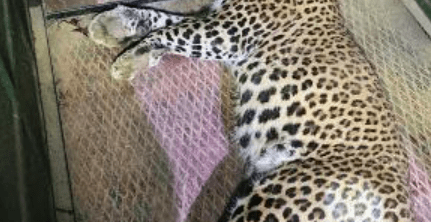
After more than a month of tense vigilance and community alertness, authorities in Hubballi successfully captured a leopard that had been on the loose, triggering fear and concern among local residents. The big cat had been spotted in several residential areas, prompting repeated warnings and safety advisories from wildlife officials. Teams from the Forest Department, local police, and animal rescue organizations worked tirelessly to track and safely contain the animal, ensuring minimal risk to humans while prioritizing the leopard’s welfare. Residents expressed relief as the months-long uncertainty and danger finally came to an end.
The leopard had been first sighted in the outskirts of Hubballi over a month ago, raising concerns about potential attacks on humans and livestock. Forest officials launched continuous monitoring, setting up cameras, traps, and patrolling squads to locate the animal. Wildlife experts noted that such operations require careful planning, as the safety of both humans and the animal must be ensured. During the vigil, teams coordinated with residents, advising them to avoid open spaces at night and secure pets and cattle. Authorities praised the cooperation of the local community in reporting sightings and following safety guidelines.
Officials revealed that the capture operation took several days of meticulous planning. After confirming the leopard’s frequent movement patterns, the team set up a secure trap with bait, ensuring that the animal could be safely immobilized without injury. Veterinary experts were on standby to administer tranquilizers and conduct a health check immediately after capture. The leopard was then transported to a secure wildlife rehabilitation centre for further observation before plans for relocation to a forested area could be finalized. Officials emphasized that the animal posed no immediate threat after capture and would eventually be released into its natural habitat.
Residents expressed a mix of relief and admiration for the authorities’ efforts. Many recalled the anxiety and fear during the month-long period when the leopard roamed near homes, markets, and schools. Parents had been especially cautious, keeping children indoors and restricting evening activities. Livestock owners reported heightened vigilance to protect their animals, and several small-scale farmers expressed gratitude toward forest officials for preventing any harm. The successful operation has restored a sense of safety and confidence in wildlife management protocols in urban areas where human-animal conflict is possible.
WILDLIFE SAFETY AND COMMUNITY ALERTNESS
The incident in Hubballi underscores the growing need for urban wildlife management strategies. Experts highlighted that expanding city boundaries and habitat encroachment often bring wild animals into closer contact with humans. Authorities stated that early detection systems, timely reporting, and coordinated action are critical to preventing tragedies while preserving wildlife. The collaboration between forest officials and local communities in Hubballi is being cited as a model for handling such urban wildlife situations. Public awareness campaigns on how to respond to wildlife sightings were key to minimizing panic and avoiding confrontations.
Officials also stressed the importance of coexistence strategies in areas where human settlements overlap with forested zones. Measures include secure livestock enclosures, awareness drives, and rapid response units trained in wildlife rescue. Forest Department officers noted that most leopard encounters in urban areas are opportunistic, often driven by habitat loss or scarcity of prey. They emphasized that proactive measures, combined with community vigilance, can significantly reduce risks to both humans and animals. The Hubballi operation demonstrated how coordinated efforts and patient monitoring can achieve safe outcomes.
The captured leopard will undergo a comprehensive health assessment before being relocated to a protected forest area outside the city. Veterinarians will monitor for injuries, stress, and any signs of disease. Relocation is preferred to ensure the animal’s survival and minimize the likelihood of returning to urban areas. Wildlife conservationists underscored that successful relocation depends on selecting appropriate habitats with sufficient prey and minimal human interference, ensuring that the leopard can reintegrate naturally.
Finally, the month-long ordeal has strengthened community trust in forest and law enforcement authorities. Residents expressed gratitude for the patience, professionalism, and diligence of the teams involved. Many highlighted that timely advisories and constant updates helped maintain calm during the crisis. The successful capture and planned relocation not only protect human life but also demonstrate how careful, coordinated action can safeguard wildlife. Hubballi’s experience is now being used as a blueprint for balancing urban development with wildlife conservation.
Authorities praised the dedication of field teams, who endured long hours in challenging conditions, often navigating dense scrub and urban obstacles to track the leopard. The month-long vigil involved round-the-clock monitoring, frequent risk assessments, and rapid mobilization whenever the animal was sighted. Officials noted that such operations require not only expertise in wildlife management but also patience and persistence, as hasty actions could endanger both the animal and people. The successful capture is being recognized as a testament to professional skill and community support.
The Hubballi leopard episode has reignited discussions on human-animal coexistence in growing cities. Experts argue for structured urban planning that considers wildlife corridors and buffer zones to reduce conflict. Residents are being advised to maintain vigilance and report future sightings promptly, reinforcing community participation in wildlife safety. Authorities have also committed to strengthening rapid response mechanisms and continuing awareness initiatives to prevent panic during similar incidents in the future.
LEOPARD CHASE
Following the capture, citizens expressed relief that no human or livestock casualties occurred during the month-long period. Many families who had restricted outdoor activities during evenings could resume normal routines. Local schools and community organizations also commended authorities for their effective communication and timely safety advisories. The success of the operation in Hubballi is being shared widely as a case study for managing urban wildlife encounters, emphasizing the importance of patience, coordination, and adherence to safety protocols.
Officials concluded that the Hubballi leopard case highlights both the challenges and solutions for managing wildlife in urban fringes. The event illustrates the balance required between human safety and animal welfare. Authorities hope that the capture and planned relocation will serve as an example of best practices, ensuring that similar situations in other districts can be handled safely. The community, in turn, has demonstrated the positive role of public cooperation in achieving successful outcomes during wildlife emergencies.
The incident has left a lasting impact on Hubballi, raising awareness about wildlife presence and the responsibilities of urban populations living near forested zones. Authorities urged continued vigilance and adherence to guidelines, emphasizing that coexistence with wildlife is possible if managed responsibly. The capture of the leopard marks the end of a tense chapter and sets the stage for improved wildlife management protocols, benefiting both humans and animals in the region.
Forest officials have announced plans to strengthen monitoring systems in urban and peri-urban areas following the Hubballi leopard capture. Motion-sensor cameras, GPS tracking, and increased patrolling in known leopard corridors are being considered to detect early movement and prevent future encounters. Officials emphasized that proactive measures can reduce both human risk and stress for the animal. By combining technology with local intelligence, forest departments aim to respond more rapidly to sightings, ensuring that residents remain safe while wild animals are guided back to their natural habitats.
Local residents are being encouraged to participate in community vigilance programs. Forest authorities highlighted that reporting unusual wildlife activity immediately can save both human lives and prevent harm to animals. Educational campaigns in schools and community centres are planned to teach families how to behave safely when encountering wild animals. Officials stressed that cooperation between citizens and authorities is essential for successful wildlife management, especially in densely populated areas where human-animal interactions are more likely.
The captured leopard will also be used as part of public awareness campaigns about wildlife conservation. Officials plan to educate residents about the importance of preserving natural habitats, respecting animal space, and avoiding behaviors that attract predators to urban areas. By highlighting both the challenges and the successful resolution of the Hubballi case, authorities hope to cultivate a culture of coexistence. Conservationists stressed that such incidents, while alarming, provide opportunities to reinforce human responsibility toward wildlife.
Veterinarians involved in the capture have underlined the importance of stress management and post-capture care. The leopard underwent a thorough health check, including vaccination, treatment for minor injuries, and observation for behavioral stress indicators. Experts noted that minimizing handling and maintaining a calm environment were critical to prevent trauma. Following relocation, ongoing monitoring will continue to ensure the animal adapts safely to its new forested habitat. Officials emphasized that the well-being of the leopard was as important as ensuring public safety.
The Hubballi case has prompted policy-level discussions on managing wildlife in urban settings. Authorities are exploring protocols for rapid containment, safer relocation techniques, and inter-department coordination. Legal frameworks regarding human-animal conflict are being reviewed to ensure accountability and proper response measures. Policymakers indicated that lessons from Hubballi would be incorporated into statewide guidelines, helping other cities develop systems for effective, safe management of urban wildlife encounters.
Finally, the month-long ordeal has strengthened community trust in forest and law enforcement authorities. Residents expressed gratitude for the patience, professionalism, and diligence of the teams involved. Many highlighted that timely advisories and constant updates helped maintain calm during the crisis. The successful capture and planned relocation not only protect human life but also demonstrate how careful, coordinated action can safeguard wildlife. Hubballi’s experience is now being used as a blueprint for balancing urban development with wildlife conservation.
The All India Institute of Ayurveda (AIIA), New Delhi, marked a significant step toward the modernization of traditional medicine by signing a landmark Memorandum of Understanding (MoU) with the Centre for Ayurveda Education, Innovation & Technology (CAYEIT). Announced on 27 January 2026 by PIB Delhi, the partnership aims to accelerate research, technology integration, and innovative education models within the Ayurvedic ecosystem.
Strategic Partnership to Strengthen Digital Ayurveda
The MoU focuses on fostering collaboration in cutting-edge research, technology transfer, and academic innovation, positioning Ayurveda within the evolving global digital health landscape. AIIA Director Prof. (Vd.) P. K. Prajapati signed the agreement on behalf of the institute, while Prof. Dr. Abhimanyu Kumar, Chairman & CEO of CAYEIT, represented the partner organization.
The alliance reflects a shared vision of blending traditional knowledge systems with emerging technologies to create evidence-based, globally relevant healthcare solutions.
MoU Ceremony at AIIA Campus
The formal signing ceremony was held at the Brihaspati Dev Triguna Auditorium, AIIA, New Delhi. The event began with a welcome address by Dr. Mahapatra Arun Kumar, Associate Professor, Department of Kaumarabhritya. This was followed by a detailed briefing on the objectives of the MoU by Shri Aviral Apurva, Chief Education & Technology Officer, CAYEIT.
The ceremony witnessed the presence of eminent academicians, including:
Prof. Rajagopala S., Dean Research & Head, Kaumarabhritya
Prof. Manjusha Rajagopala, Dean, Faculty of Ayurveda, Delhi University & Head, Shalakya
Senior faculty members and scholars of AIIA
Expert Talk Highlights Role of AI in Ayurveda
A key highlight of the event was an expert session by Prof. Abhimanyu Kumar, Former Director of AIIA, titled “Applications of Artificial Intelligence in Ayurveda.” In his address, he demonstrated how Artificial Intelligence (AI) and Machine Learning (ML) can be used to analyze classical Ayurvedic texts and clinical data for personalized Prakriti-based treatment. He also emphasized the potential of Network Pharmacology as a scientific framework to generate global evidence for Ayurvedic formulations.
Earlier, the Director of AIIA underscored that the integration of CAYEIT’s technological capabilities with AIIA’s clinical expertise would empower scholars to translate traditional research into globally impactful healthcare solutions.
Growing National and Global Engagement
With this latest collaboration, AIIA has now signed a total of 74 National MoUs and 20 International MoUs, reflecting its expanding role as a global leader in Ayurveda education, research, and innovation.
Conclusion
The MoU between AIIA and CAYEIT marks a transformative moment for Ayurveda in the digital era. By combining ancient wisdom with modern technologies such as AI, Machine Learning, and Network Pharmacology, the partnership holds the potential to redefine research, education, and global acceptance of Ayurveda. This initiative not only strengthens India’s leadership in traditional medicine but also positions Ayurveda as a future-ready healthcare system.