

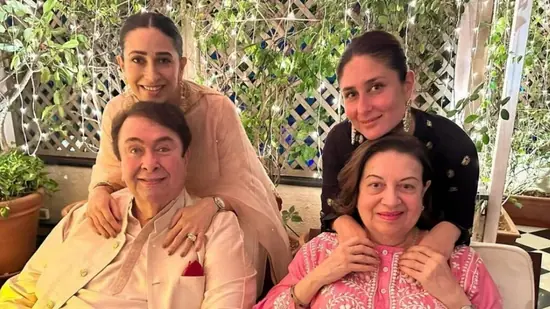
Bollywood star Kareena Kapoor has revealed an emotional chapter in her family’s life—her parents, Randhir Kapoor and Babita, have chosen to spend their old age holding hands together after years of separation. In a moving interview with Mojo Story, Kareena said this reunion feels like divine intervention, completing a full-circle moment for her and her sister Karisma.
Randhir Babita Kapoor reconcile emotionally after decades of living apart, despite never filing for divorce. The couple had separated in 1988 following personal and professional differences. Babita moved out with daughters Kareena and Karisma and raised them single-handedly. Even though the two never lived together again as a married couple, they remained legally married and maintained cordial relations.
Now, they’ve decided to live out their golden years side by side, rekindling the emotional connection that started in the early 1970s. This choice symbolizes more than reconciliation—it shows that love, even when tested, can find its way back.
Also Read : William Shatner’s 50‑Pound Weight Loss at 94: How the Star Trek Icon Transformed His Health and Lifestyle

Kareena called her parents’ decision to reunite a “divine kind of intervention.” She shared how the news brought an emotional sense of completion to her and Karisma’s lives. Despite the separation, both Randhir and Babita stayed involved in their daughters’ upbringing. Kareena praised them for always being supportive of her and Karisma’s ambitions, especially in continuing the Kapoor legacy in Indian cinema.
The Randhir Babita Kapoor reconcile moment was especially powerful because it shows how time, healing, and mutual respect can bring families back together. According to Kareena, her parents now choose to live their days hand in hand—a symbolic return to where it all began.
Randhir Kapoor and Babita first met on the sets of Kal Aaj Aur Kal and fell in love during their early film careers. They married in 1971 and soon became one of Bollywood’s most admired couples. However, challenges arose, especially as Babita stepped back from her acting career to meet traditional expectations of family life.
In 1988, Babita made the difficult choice to separate, moving out with her daughters. For decades, they lived apart yet always came together for family events and special occasions. Throughout those years, they maintained dignity and respect for each other—a foundation that likely made this late-life reunion possible.
Now, as Randhir Babita Kapoor reconcile, their story stands as a testament to love’s ability to evolve, forgive, and begin again.

Kareena acknowledged that her success—as well as Karisma’s—came with equal contributions from both parents. Randhir supported their career choices despite the norms of the time, while Babita guided them as a single mother, ensuring they had the confidence to shine in Bollywood.
She expressed deep gratitude for her mother’s sacrifices, especially as Babita set aside her own career to nurture her daughters. Randhir, meanwhile, remained a strong emotional presence. Their parents’ unified support helped Kareena and Karisma shape their own identities and further the prestigious Kapoor family legacy.
As Kareena shares this personal milestone, she also steps into a new chapter of her professional life. Celebrating 25 years in Bollywood, she announced her next film, Daayra, directed by Meghna Gulzar and starring opposite Prithviraj Sukumaran.
The film is expected to explore bold, thought-provoking themes that resonate with contemporary audiences. Kareena described working with Meghna as a dream come true and said she was drawn to the emotional depth of the story.
Her fans are equally excited about this collaboration. As Kareena continues to evolve in her career, this film could become another landmark performance in her ever-expanding portfolio.
The decision of Randhir Babita Kapoor to reconcile in their later years holds emotional weight beyond their family. It sends a message that relationships can evolve with time, and sometimes, reconciliation arrives quietly but meaningfully.
Their love story began in the limelight and later endured in silence, away from public scrutiny. Now, as they walk together once more—holding hands in old age—the story has come full circle. Their journey reminds us that love, when grounded in respect and mutual care, can find its way home again.
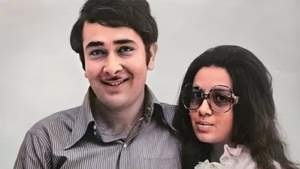
Kareena Kapoor’s heartfelt revelation about her parents has moved audiences and fans alike. As Randhir Babita Kapoor reconcile, their decision resonates deeply. It’s a story about second chances, emotional healing, and the beautiful possibility of finding companionship again—even after life’s many trials.
This chapter in the Kapoor family’s story isn’t just about reuniting. It’s about legacy, resilience, and the belief that it’s never too late to hold hands with someone you once loved.
In a development that has sent ripples across the Indian banking sector, Srikrishnan Hari Hara Sarma has resigned as Managing Director and Chief Executive Officer (CEO) of Karnataka Bank, marking the end of a transformative era for the century-old private sector lender. The announcement, made by the bank’s board on June 30, 2025, comes as a surprise to industry observers and stakeholders, given Sarma’s pivotal role in steering the bank through a period of digital innovation, regulatory adaptation, and market expansion.
Sarma, who took charge as CEO in April 2023, submitted his resignation citing personal reasons and a desire to pursue new opportunities. The board has accepted his resignation and initiated the process of identifying a successor, while Sarma has agreed to remain in his position until a suitable replacement is found to ensure a smooth transition. The sudden leadership change has triggered speculation about the bank’s future direction, ongoing digital transformation, and the challenges and opportunities that lie ahead.

During his two-year tenure, Srikrishnan Hari Hara Sarma was credited with spearheading Karnataka Bank’s ambitious digital transformation agenda. Under his leadership, the bank launched a suite of digital banking products, upgraded its core banking systems, and expanded its footprint in the fast-growing fintech ecosystem. Sarma’s vision was to position Karnataka Bank as a “next-generation digital bank” while retaining its legacy of customer-centric service.
He oversaw the rollout of the bank’s new mobile banking platform, enhanced cybersecurity protocols, and partnerships with leading fintech startups. These initiatives helped Karnataka Bank attract a younger demographic, boost transaction volumes, and improve operational efficiency. The bank also reported a steady increase in deposits, advances, and profitability during this period, with Sarma’s strategic focus on retail banking and small business lending yielding positive results.
Sarma’s tenure was not without its challenges. The Indian banking sector faced increased scrutiny from regulators, evolving compliance requirements, and heightened competition from digital-first players. Karnataka Bank, under Sarma’s guidance, strengthened its risk management framework, improved asset quality, and reduced non-performing assets (NPAs) to historic lows. His ability to balance growth with prudence won him praise from industry peers and market analysts.
Sarma also played a key role in enhancing the bank’s governance standards, fostering a culture of transparency, and investing in employee training and development. His leadership style, described as collaborative and forward-thinking, was instrumental in building a resilient organization capable of adapting to rapid changes in the financial landscape.
With Srikrishnan Hari Hara Sarma’s departure, Karnataka Bank’s board faces the critical task of selecting a new CEO who can sustain the momentum of transformation while addressing emerging challenges. The bank has constituted a search committee to identify internal and external candidates, with a focus on finding a leader who shares Sarma’s vision for digital innovation and customer-centric growth.
In the interim, the bank’s senior management team, led by Executive Director Dr. Anjali Rao, will oversee day-to-day operations and ensure continuity in key initiatives. The board has reassured stakeholders that the transition will be seamless and that the bank remains committed to its strategic objectives.
The news of Sarma’s resignation has sparked a flurry of speculation in banking circles and among investors. While the bank’s shares experienced minor volatility following the announcement, analysts believe that Karnataka Bank’s strong fundamentals and robust digital infrastructure will help it weather the leadership change. Industry experts have emphasized the importance of maintaining stability and continuity, especially as the bank prepares to launch new products and expand into untapped markets.
Srikrishnan Hari Hara Sarma’s legacy at Karnataka Bank is defined by his willingness to embrace change and drive innovation. Colleagues describe him as a visionary leader who was unafraid to challenge the status quo and experiment with new ideas. His efforts to modernize the bank’s operations, foster a culture of agility, and empower employees have left a lasting imprint on the organization.
Sarma’s focus on digital transformation has positioned Karnataka Bank as a frontrunner among mid-sized private sector banks in India. His initiatives in customer experience, risk management, and technology adoption have set new benchmarks for the industry. As he steps down, Sarma is expected to remain an influential figure in Indian banking, with many speculating about his next move—whether it will be in fintech, consulting, or another leadership role.
Tributes have poured in from across the banking community, with industry leaders, regulators, and former colleagues acknowledging Sarma’s contributions. Employees have expressed gratitude for his approachable leadership style, commitment to professional development, and ability to inspire teams during periods of uncertainty. Many credit Sarma with fostering a sense of pride and purpose within the Karnataka Bank family.
Srikrishnan Hari Hara Sarma’s resignation has prompted deep reflection within the banking industry, as many analysts recognize the pivotal role he played in guiding Karnataka Bank through a rapidly changing financial landscape. His tenure coincided with a period of unprecedented digital disruption, and his willingness to invest in cutting-edge technology set the bank on a path toward modernization. Colleagues recall how Sarma championed the integration of artificial intelligence and data analytics into the bank’s operations, resulting in more personalized customer experiences and streamlined internal processes. This forward-thinking approach not only enhanced efficiency but also positioned Karnataka Bank as a progressive institution ready to meet the demands of a new generation of customers.
Internally, Sarma’s leadership style was marked by inclusivity and empowerment. He encouraged open communication across all levels of the organization, fostering an environment where innovative ideas could flourish. Employees often describe him as approachable and receptive to feedback, qualities that helped build trust and unity during times of significant change. His regular town hall meetings and transparent decision-making processes were particularly appreciated by staff, many of whom credit him with boosting morale and instilling a sense of shared purpose.
Despite the positive strides made during his tenure, Sarma also faced notable challenges. The competitive environment in Indian banking intensified, with new entrants and digital-first players disrupting traditional models. Regulatory changes and evolving customer expectations required constant adaptation. Sarma’s ability to navigate these complexities, while maintaining Karnataka Bank’s strong financial health, is seen as a testament to his strategic acumen and resilience. However, some industry watchers note that the task of sustaining this momentum will now fall to his successor, who must continue to innovate while safeguarding the bank’s core values.
As Karnataka Bank embarks on the search for a new CEO, the institution faces both challenges and opportunities. The competitive landscape is evolving rapidly, with digital-first banks, payment platforms, and fintech startups vying for market share. The new leader will need to build on Sarma’s foundation, accelerate digital adoption, and explore partnerships that enhance the bank’s value proposition.
Amidst technological change, Karnataka Bank’s core values of trust, integrity, and customer service remain its greatest assets. The board has reiterated its commitment to these principles, emphasizing that the next phase of growth will be rooted in the bank’s rich heritage and community focus. Stakeholders are optimistic that, with the right leadership, Karnataka Bank will continue to thrive and innovate in the years ahead.
The resignation of Srikrishnan Hari Hara Sarma marks the end of a significant chapter in Karnataka Bank’s storied history. As the institution prepares for a leadership transition, it does so from a position of strength—armed with a modern digital infrastructure, a talented workforce, and a loyal customer base. The coming months will be crucial as the bank selects its next CEO, navigates market dynamics, and builds on the legacy of transformation and resilience that Sarma leaves behind.
The announcement of Sarma’s departure has also led to speculation about the future direction of Karnataka Bank’s digital strategy. Stakeholders are keenly interested in whether the next CEO will accelerate the digital transformation agenda or adopt a more measured approach. There is widespread consensus that the bank’s continued investment in technology, cybersecurity, and customer-centric solutions will be crucial for maintaining its competitive edge. The board’s commitment to finding a leader who can balance tradition with innovation will be closely watched in the coming months.
Customers and shareholders alike have expressed a mix of gratitude and concern in response to the leadership change. Many long-standing clients have lauded Sarma for upholding the bank’s reputation for trust and reliability while steering it into the digital era. At the same time, investors are monitoring the transition carefully, mindful of the potential impact on the bank’s growth trajectory and market position. The interim management team’s ability to maintain stability and reassure stakeholders will be vital until a permanent successor is appointed.
As Karnataka Bank enters this transitional phase, the legacy of Srikrishnan Hari Hara Sarma will continue to influence its culture and strategic direction. His vision of a digitally empowered, customer-focused institution has set a high bar for future leadership. The coming period will be one of both challenge and opportunity, as the bank seeks to honor its heritage while embracing the innovations needed to thrive in an increasingly dynamic financial environment.
Follow: Karnataka Bank

Bollywood fans are celebrating as Paresh Rawal, the beloved actor behind the legendary character Babu Bhaiya, officially returns to the sets of Hera Pheri 3 after months of uncertainty and a highly publicized dispute with the film’s producers. The news has electrified social media and reignited excitement for the third installment of India’s most iconic comedy franchise. Rawal’s return marks a turning point for the film, which had been mired in delays, rumors, and creative disagreements since its announcement.
Paresh Rawal’s absence from the project had left fans anxious about the fate of Hera Pheri 3. The actor, whose comic timing and unforgettable dialogues made Babu Bhaiya a household name, had initially stepped away due to disagreements over the script, remuneration, and certain creative decisions. However, after extensive negotiations and a renewed commitment from the filmmakers to honor the original spirit of the series, Rawal has confirmed his participation, much to the relief of audiences and industry insiders alike.
Paresh Rawal’s return to Hera Pheri 3 has injected new life into the project, restoring faith among fans who were concerned that the beloved franchise might lose its original charm. His portrayal of Babu Bhaiya is not just a character but a cultural icon, and his absence would have left an irreplaceable void. The reconciliation between Rawal and the producers was not merely a contractual agreement but a testament to the power of dialogue and mutual respect in the creative process. As filming resumes, the energy on set is reportedly electric, with Rawal, Akshay Kumar, and Suniel Shetty slipping effortlessly back into their legendary roles, reigniting the chemistry that made the first two films timeless classics.
The creative dispute that initially led to Rawal’s exit revolved around the direction of the script and the treatment of the characters. Rawal, known for his discerning approach to roles, was adamant that the new installment should honor the spirit and humor that endeared the franchise to millions. His insistence on script revisions and meaningful character arcs ultimately elevated the project, ensuring that Hera Pheri 3 would not be a mere cash-grab sequel but a worthy successor to its predecessors. The producers’ willingness to accommodate these concerns has set a positive example for the industry, demonstrating that commercial interests and creative integrity can coexist.
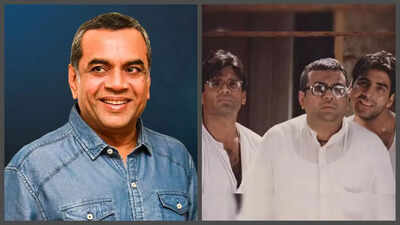
The journey to Paresh Rawal’s return was anything but smooth. Sources close to the production reveal that the dispute stemmed from disagreements over the direction of the script and the character arcs. Rawal, known for his dedication to quality storytelling, was reportedly dissatisfied with early drafts that he felt did not do justice to the legacy of Hera Pheri or its beloved trio—Babu Bhaiya, Raju (Akshay Kumar), and Shyam (Suniel Shetty).
Negotiations between Rawal and the producers grew tense, with rumors swirling about potential replacements and even the possibility of the film being shelved. Fans took to social media to express their disappointment, launching campaigns and trending hashtags demanding the original cast’s return. The outpouring of public support played a crucial role in bringing all parties back to the table.
The breakthrough came when the producers agreed to rework the script in collaboration with Rawal and the other lead actors. This creative partnership ensured that the humor, heart, and chaos that defined the first two films would be preserved. Rawal’s decision to return was also influenced by his co-stars, who stood by him and advocated for a script that would do justice to each character.
Rawal’s statement upon rejoining the film set the tone for a new chapter: “Hera Pheri is not just a film; it’s an emotion for millions. I’m thrilled to be back as Babu Bhaiya and promise fans that the madness will be bigger and better than ever.”
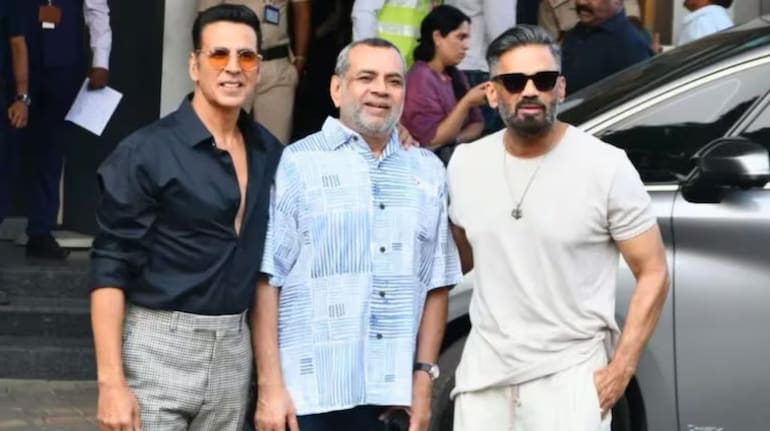
With Paresh Rawal’s return, the original trio of Akshay Kumar, Suniel Shetty, and Paresh Rawal is officially back together. This reunion has been met with immense enthusiasm, as the chemistry between the three actors is widely regarded as the heart and soul of the franchise. The makers have promised that Hera Pheri 3 will blend nostalgia with fresh humor, introducing new characters while staying true to the chaotic, slapstick style that made the first two films cult classics.
The film’s plot is being kept tightly under wraps, but insiders hint at a new set of misadventures involving mistaken identities, wild chases, and the trio’s perennial quest for quick money. The script is said to be packed with witty dialogues, hilarious misunderstandings, and the kind of situational comedy that has defined Hera Pheri since its inception.
While the core cast remains unchanged, Hera Pheri 3 will also introduce several new characters played by some of Bollywood’s rising stars and comic talents. The supporting cast is expected to add fresh energy and unexpected twists to the story, ensuring that the film appeals to both longtime fans and a new generation of viewers.
Since the release of the original Hera Pheri in 2000, the franchise has become a cornerstone of Indian pop culture. The film’s memorable lines, quirky characters, and relatable humor have made it a favorite for audiences of all ages. The sequel, Phir Hera Pheri, further cemented the series’ reputation, with fans still quoting dialogues and sharing memes decades later.
Hera Pheri’s enduring appeal lies in its unique blend of slapstick, satire, and heartwarming moments. The films have tackled themes of friendship, survival, and the pursuit of happiness, all while delivering laugh-out-loud entertainment. The return of the original cast for Hera Pheri 3 is seen as a celebration of this legacy and a testament to the franchise’s lasting impact.
The journey to Hera Pheri 3 has been shaped by the passionate support of fans. Social media platforms have been abuzz with memes, throwback videos, and trending hashtags ever since rumors of Rawal’s exit surfaced. The actor’s return has only amplified the excitement, with fans eagerly awaiting behind-the-scenes glimpses and teaser trailers.
The production team has acknowledged the role of fan campaigns in influencing their decisions, with one producer noting, “The love for Hera Pheri is unmatched. We owe it to the fans to deliver a film that lives up to their expectations.”
With the creative disputes resolved, filming for Hera Pheri 3 is now back on track. The movie is being shot at various locations across Mumbai, Goa, and Dubai, with elaborate sets recreating the familiar world of Babu Bhaiya and his friends. The production team is pulling out all the stops to ensure high production values, innovative set pieces, and visually engaging comedy sequences.
Hera Pheri 3 is slated for a grand theatrical release in early 2026, with the makers planning an extensive promotional campaign. Teaser posters, character reveals, and exclusive interviews with the cast are expected to roll out in the coming months, building anticipation for what is being billed as the comedy event of the year.
The film’s marketing strategy will leverage nostalgia, social media engagement, and interactive fan events to keep the buzz alive. Special screenings and meet-and-greet sessions with the cast are also on the cards, giving fans a chance to celebrate their favorite franchise in style.
Paresh Rawal’s return to Hera Pheri 3 after a public dispute sets a powerful precedent for the industry. It underscores the importance of creative collaboration, open dialogue, and respect for artistic integrity in filmmaking. The resolution of the dispute demonstrates that when artists and producers work together, they can overcome differences and create something truly special.
Industry insiders believe that the successful negotiation between Rawal and the producers will inspire other filmmakers to prioritize creative harmony and audience expectations. It also highlights the value of legacy actors in sustaining the appeal of long-running franchises.
The renewed momentum behind Hera Pheri 3 is expected to give a much-needed boost to the comedy genre in Bollywood, which has seen fewer big-ticket releases in recent years. The film’s success could pave the way for more ensemble comedies, sequels, and nostalgic revivals, reaffirming the genre’s place in the hearts of Indian audiences.
With Paresh Rawal’s triumphant return, Hera Pheri 3 is set to recapture the magic that made the franchise a household name. The reunion of the iconic trio, a fresh script, and the promise of uproarious comedy have positioned the film as one of the most anticipated releases of 2026. As shooting resumes and excitement builds, fans can look forward to another round of unforgettable misadventures with Babu Bhaiya, Raju, and Shyam—proving once again that when it comes to laughter, Hera Pheri is truly in a league of its own.
With the original trio back together, anticipation for Hera Pheri 3 has reached a fever pitch. Fans are eager to see how the story will evolve, what new misadventures await, and how the filmmakers will balance nostalgia with fresh comedic elements. The addition of new cast members promises to bring a contemporary flavor to the film, while the core dynamic of Babu Bhaiya, Raju, and Shyam remains the emotional anchor. The production team is reportedly sparing no expense to ensure high production values, innovative set pieces, and a script packed with the witty dialogues and slapstick humor that have become the franchise’s trademark.
The return of Hera Pheri is not just significant for fans but also for the broader landscape of Bollywood comedies. In an era where sequels often struggle to live up to the original, the makers of Hera Pheri 3 are acutely aware of the expectations riding on their shoulders. By prioritizing character-driven storytelling and respecting the legacy of the franchise, they hope to set a new benchmark for comedy sequels in Indian cinema. The film’s journey from dispute to reunion has already become a case study in the importance of collaboration and listening to both artists and audiences.
As Hera Pheri 3 moves closer to its highly anticipated release, the excitement is palpable across India. The film represents more than just another entry in a successful series; it is a celebration of the enduring power of laughter, friendship, and resilience. With Paresh Rawal’s return, the promise of uproarious comedy, and the collective goodwill of fans and filmmakers alike, Hera Pheri 3 is poised to deliver not just entertainment, but a heartfelt reminder of why some stories—and some characters—are truly timeless.
India’s defense and security establishment has been rocked by a rare and candid admission from its defense attaché to Indonesia, who confirmed that the Indian Air Force (IAF) suffered the loss of several fighter jets during the high-stakes Operation Sindoor against Pakistan on May 7, 2025. Speaking at a regional seminar in Jakarta, these remarks have triggered intense scrutiny of both the military operation and the political decisions that shaped it, igniting a fierce debate in India’s strategic and political circles.
The confirmation of IAF jet losses by India’s defense attaché to Indonesia has triggered a wave of introspection within the country’s defense and political circles. For the first time in recent memory, a senior official has publicly acknowledged the high cost of a cross-border operation, breaking with the usual practice of tight-lipped official statements and limited disclosures. This revelation has not only brought the realities of modern aerial warfare into the public domain but also highlighted the complex interplay between military strategy and political decision-making during times of crisis.
Operation Sindoor, which was launched in response to a deadly terror attack in Pahalgam, was initially conceived as a limited and precise operation targeting terror infrastructure across the border. However, the attaché’s account reveals that political directives played a decisive role in shaping the operation’s scope and tactics. The order to avoid direct engagement with Pakistani military assets and air defenses was intended to prevent escalation but inadvertently left Indian jets vulnerable during the opening phase. The losses suffered in these early hours have now become a focal point for debate about the balance between restraint and operational effectiveness.
The loss of advanced fighter jets such as the Rafale, Su-30MKI, and MiG-29 has reignited longstanding concerns about the state of India’s air fleet. While the IAF has made significant strides in modernization over the past decade, the reliance on a mix of new and legacy platforms continues to pose challenges. Maintenance issues, pilot training, and the integration of new technology are all under renewed scrutiny as the nation grapples with the implications of losing frontline aircraft in combat. The incident has also underscored the importance of robust airborne warning and control systems, as lapses in situational awareness were cited as a contributing factor to the initial setbacks.
In the aftermath of the losses, the IAF demonstrated its capacity for rapid adaptation by shifting tactics to focus on suppressing enemy air defenses. This pivot allowed Indian forces to regain the initiative, achieve air superiority, and carry out subsequent strikes with greater effectiveness and fewer casualties. The success of these later operations has been attributed to both technological superiority and the professionalism of IAF pilots and ground crews, who managed to turn the tide despite early adversity.
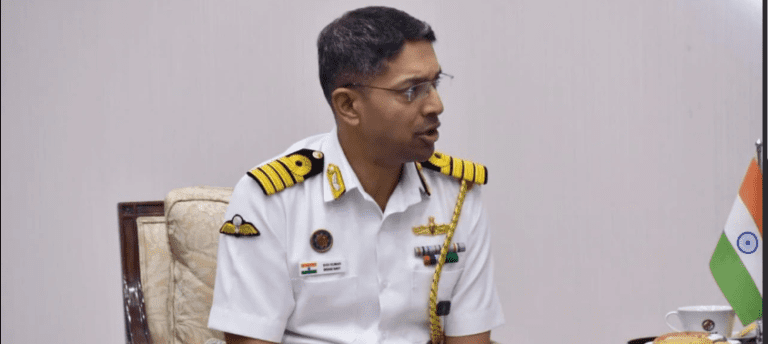
The defense attaché, a senior Navy officer serving in Indonesia, revealed that the IAF’s initial losses during the May 7 strikes were not due to technical shortcomings or pilot error, but rather stemmed from explicit political instructions. According to the attaché, the civilian leadership had directed that Indian strikes should avoid targeting Pakistani military establishments and air defense systems, focusing exclusively on terror infrastructure. This operational constraint, he asserted, left Indian jets exposed to enemy air defenses and contributed directly to the losses suffered in the opening phase of the operation.
While the exact number of Indian jets lost remains unconfirmed by the government, information presented at the seminar indicated that the IAF lost three Rafale fighter jets, one Su-30MKI, and one MiG-29 during the initial engagement. These losses were reportedly compounded by vulnerabilities exposed when Indian airborne warning and control systems (AWACS) were disconnected, further hampering situational awareness. Pakistan, for its part, claimed to have shot down six Indian jets, including three Rafales, though Indian officials have dismissed this as exaggerated.
Following the initial setbacks, the IAF swiftly altered its tactics. After the early losses, Indian forces shifted focus to suppressing and destroying enemy air defenses—a move known in military parlance as SEAD (Suppression of Enemy Air Defenses) and DEAD (Destruction of Enemy Air Defenses). This tactical pivot enabled subsequent precision strikes on Pakistani military installations and radar sites, utilizing advanced weaponry such as BrahMos missiles. By May 10, Indian forces had achieved air superiority, allowing for successful operations with minimal further losses.
Operation Sindoor, launched in retaliation for the April 22 Pahalgam terror attack that killed 26 civilians, saw the IAF conduct strikes on nine terror hubs in Pakistan and Pakistan-occupied Kashmir (PoK). The campaign, which lasted four days, resulted in significant losses for both sides. Indian sources claim that the IAF destroyed at least six Pakistani fighter jets, two surveillance aircraft, and a military transport plane, in addition to radar sites and armed drones. Pakistani air losses reportedly included six jets, two AWACS, and a transport aircraft, though these numbers have not been independently verified.
The revelations have sparked a political firestorm in India. The opposition has seized upon the defense attaché’s remarks and earlier statements by the Chief of Defence Staff—who acknowledged losses but did not specify numbers—to demand greater transparency from the government. Opposition leaders have called for a special session of Parliament to discuss Operation Sindoor, questioning why the Prime Minister has not convened an all-party meeting or publicly disclosed the full extent of the losses.
Amid mounting scrutiny, the Indian embassy in Indonesia issued a statement asserting that the defense attaché’s remarks had been “quoted out of context” and that media reports were a misrepresentation of his presentation. The embassy emphasized that the Indian armed forces operate under civilian political leadership and that Operation Sindoor was designed as a non-escalatory response targeting terrorist infrastructure, not an all-out military confrontation. The ruling party, meanwhile, has defended the government’s approach as “swift, calibrated, and lethal,” insisting that India’s response was appropriate under the circumstances.
The losses during Operation Sindoor come against a backdrop of mounting concerns about the IAF’s ageing fleet and maintenance challenges. 2025 has been a difficult year for the Air Force, with several non-combat crashes involving Jaguars, MiG-21s, Mirage 2000s, and other legacy aircraft. Experts have called for a thorough reassessment of the IAF’s maintenance protocols and accelerated modernization to ensure operational readiness and pilot safety.
Both military and civilian leaders are now under pressure to draw lessons from Operation Sindoor. Analysts argue that the initial political constraints, while intended to avoid escalation, may have inadvertently increased operational risk for frontline pilots. The subsequent tactical shift and eventual air superiority underscore the IAF’s adaptability and resilience, but also highlight the need for clear rules of engagement and robust support systems in high-stakes operations.
The political fallout from the operation has been swift and intense. Opposition leaders have seized on the attaché’s remarks to demand greater transparency and accountability from the government. Questions have been raised about the decision-making process, the adequacy of pre-mission planning, and the communication between civilian leaders and military commanders. The government, for its part, has defended its approach as measured and responsible, emphasizing the need to avoid a wider conflict while still delivering a strong response to terrorism.
Public opinion has been sharply divided, with some hailing the operation as a necessary assertion of India’s resolve and others expressing concern about the human and material costs. Social media platforms have been flooded with debates about the risks and rewards of limited military actions, the role of political oversight, and the future of India’s defense policy. The incident has also sparked renewed interest in the modernization of the armed forces and the need for sustained investment in advanced technology and pilot training.
Within the military, the episode has prompted a reassessment of operational doctrines and contingency planning. Senior officers are reportedly reviewing protocols for future cross-border missions, with an emphasis on flexibility, real-time intelligence, and the integration of unmanned systems to minimize pilot risk. The importance of clear and timely communication between political leaders and military commanders has also been highlighted as a key lesson from Operation Sindoor.
Families of the pilots and crew involved in the operation have expressed pride in their loved ones’ service but have also called for greater support and recognition for those who risk their lives in the line of duty. The sacrifices made by the IAF personnel have become a rallying point for calls to improve welfare measures, insurance coverage, and post-service benefits for military families.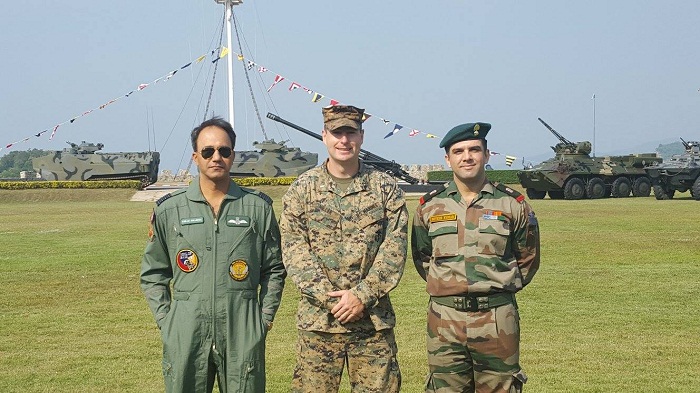
Internationally, the operation and its aftermath have been closely watched by India’s allies and adversaries alike. The willingness to acknowledge losses and adapt tactics has been seen as a sign of both transparency and resilience. At the same time, the episode has underscored the risks inherent in high-stakes military operations and the need for careful calibration of force in a volatile regional environment.
As the dust settles on the revelations from Indonesia, India faces a period of reflection and recalibration. The lessons of Operation Sindoor—about the costs of conflict, the value of adaptability, and the importance of clear leadership—are likely to shape the country’s defense posture and political discourse for years to come. The debate over transparency, accountability, and the future of India’s military strategy is far from over, ensuring that the events of May 2025 will remain a touchstone in the nation’s ongoing quest for security and stability.

India’s economic and policy community is mourning the tragic and untimely demise of renowned economist Dr. Radhika Pandey, who passed away at the age of 48 following complications after a liver transplant. Dr. Pandey, a Senior Fellow at the National Institute of Public Finance and Policy (NIPFP), was widely respected for her incisive research, policy advocacy, and mentorship of young economists. Her death on June 30, 2025, has sent shockwaves through academic, policy, and media circles, with tributes pouring in from colleagues, students, and policymakers across the nation.
Dr. Pandey had been battling chronic liver disease for several months and underwent a liver transplant surgery at a leading hospital in New Delhi last week. While the initial procedure was declared successful, post-operative complications led to her sudden deterioration and subsequent demise. The news was confirmed by her family and colleagues, who expressed deep grief and highlighted her unwavering commitment to her work even during her illness.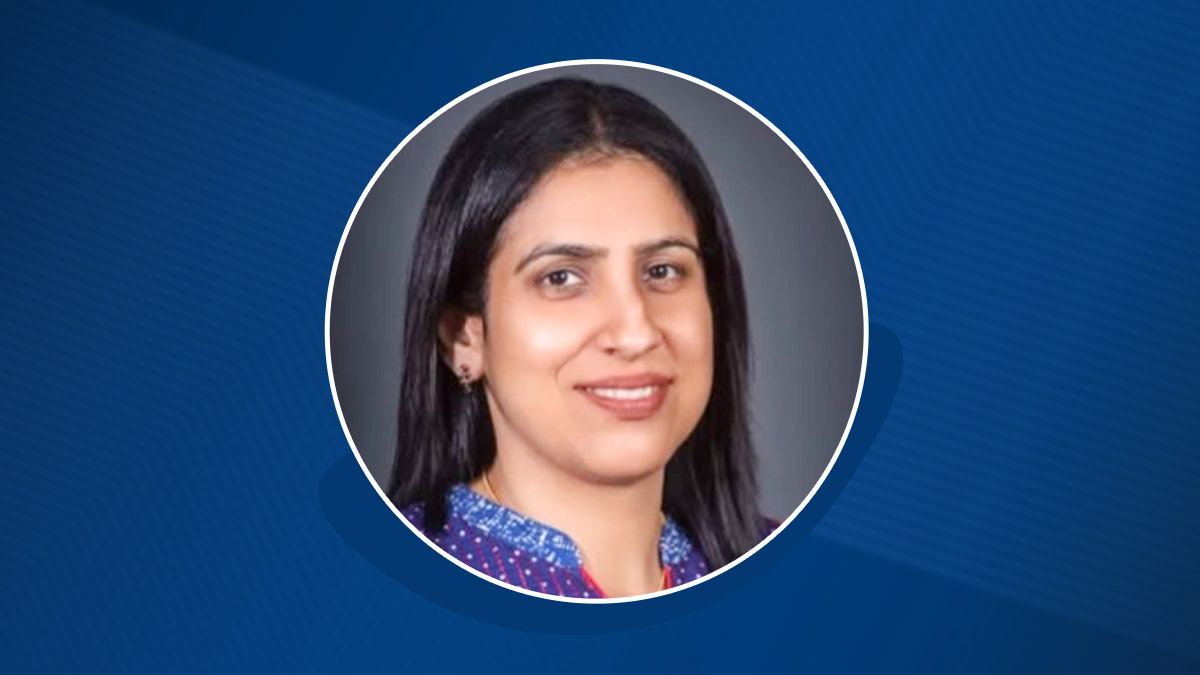
Born in 1977 in Lucknow, Radhika Pandey showed an early aptitude for economics and mathematics. She completed her undergraduate studies at Lady Shri Ram College, Delhi University, before earning her master’s and doctoral degrees in economics from Jawaharlal Nehru University (JNU). Her academic brilliance and passion for research led her to join NIPFP in 2006, where she quickly rose through the ranks to become one of the institute’s most prominent voices.
Dr. Pandey’s research interests spanned monetary policy, financial regulation, fiscal federalism, and macroeconomic stability. She was known for her rigorous empirical analysis and her ability to translate complex economic concepts into actionable policy recommendations. Over the past two decades, she authored and co-authored more than 60 research papers, policy briefs, and op-eds in leading national and international journals.
Dr. Pandey played a pivotal role in shaping several key policy debates in India. Her work on inflation targeting, the monetary policy framework, and fiscal rules was widely cited by the Reserve Bank of India (RBI) and the Ministry of Finance. She was a frequent contributor to government committees, think tanks, and expert panels, where her evidence-based approach and clear communication skills earned her respect across the political spectrum.
In addition to her research, Dr. Pandey was a passionate educator and mentor. She taught courses at NIPFP, JNU, and several other institutions, inspiring a generation of young economists to pursue careers in public policy. Her students remember her as a patient, supportive, and intellectually rigorous guide who encouraged critical thinking and ethical scholarship.
Throughout her career, Dr. Radhika Pandey was a strong advocate for evidence-based policymaking. She argued for the use of robust data and empirical research to inform decisions on monetary policy, fiscal management, and financial sector reforms. Her columns and interviews in leading newspapers and television channels made complex economic issues accessible to the wider public, helping to elevate the quality of policy debate in India.
Dr. Pandey’s research on inflation dynamics, fiscal deficit management, and the GST regime was particularly influential. She was among the first to highlight the importance of transparent fiscal rules and the need for greater coordination between central and state governments. Her work on financial inclusion and digital payments also contributed to shaping India’s fintech landscape.
Beyond macroeconomics, Dr. Pandey was a vocal advocate for gender equality and social inclusion in economic policy. She called for greater representation of women in policymaking and worked on projects aimed at improving women’s access to financial services and employment opportunities. Her research and advocacy helped bring issues of gender budgeting and social protection to the forefront of policy discussions.
The news of Dr. Pandey’s passing has elicited heartfelt tributes from across the academic and policy spectrum. NIPFP released an official statement describing her as “a pillar of intellectual integrity, compassion, and dedication.” The Reserve Bank of India, Ministry of Finance, and several leading economists expressed their condolences, recalling her invaluable contributions to India’s policy architecture.
Former students and mentees have taken to social media to share personal anecdotes, highlighting Dr. Pandey’s generosity with her time and her unwavering belief in the potential of young scholars. Many described her as a role model who broke barriers for women in economics and inspired others to pursue excellence with humility and purpose.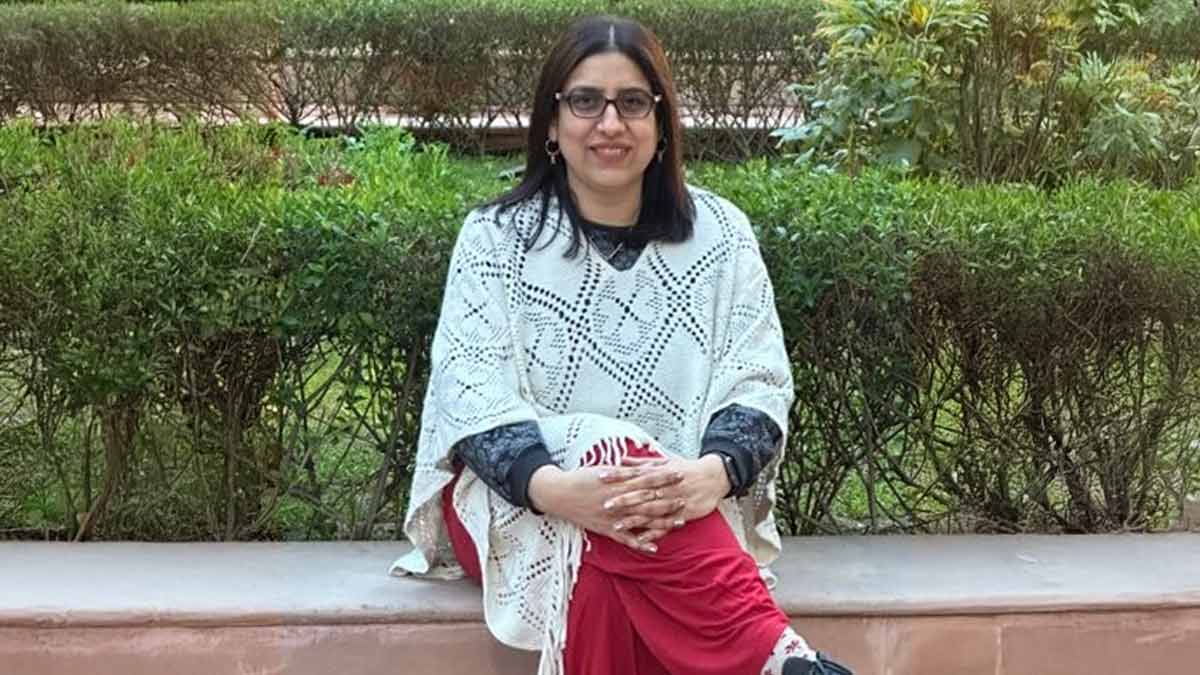
Dr. Pandey’s passing comes at a time when India faces complex economic challenges, from managing inflation and fiscal deficits to navigating global uncertainties. Colleagues noted that her voice will be deeply missed in ongoing policy debates, particularly as India charts its path toward sustainable and inclusive growth. Her commitment to rigorous analysis and open dialogue set a standard for the entire community.
Dr. Radhika Pandey is survived by her husband, two children, and her parents. Her family has requested privacy as they mourn her loss, but have expressed gratitude for the outpouring of support from friends, colleagues, and well-wishers. Those close to her remember her as a loving mother, devoted spouse, and a person of immense warmth and integrity.
Even in her absence, Dr. Pandey’s work will continue to shape India’s economic policy landscape. Her research papers, policy briefs, and teaching materials remain valuable resources for students, academics, and policymakers. Several initiatives she championed—such as the promotion of gender-sensitive budgeting and the strengthening of fiscal frameworks—are expected to guide reforms in the years to come.
Institutions and colleagues are already discussing ways to honor her legacy, including the establishment of research fellowships and awards in her name to encourage young economists to pursue impactful policy research.
Dr. Pandey’s passing also serves as a reminder of the importance of health awareness, especially among professionals who often neglect their well-being in the pursuit of excellence. Her battle with chronic liver disease and her determination to continue working through her illness have inspired many to prioritize health and seek timely medical care.
Radhika Pandey’s passing has prompted a wave of reflection within India’s academic and policy-making communities about the critical role she played in shaping the nation’s economic discourse. Her research was not only rigorous but also deeply relevant, often addressing the most pressing challenges facing the Indian economy. Whether it was her analysis of inflation trends, her insights into fiscal federalism, or her work on digital payments and financial inclusion, Dr. Pandey consistently brought clarity and depth to complex issues. Her ability to translate academic findings into actionable policy recommendations made her a sought-after voice in government circles and a trusted advisor to many policymakers.
Colleagues recall Dr. Pandey’s remarkable work ethic and her unwavering dedication to public service. Even during her illness, she remained actively involved in research projects, policy consultations, and mentoring young economists. Her resilience and commitment inspired those around her to strive for excellence, regardless of personal hardships. Many remember her as a generous collaborator who valued teamwork and fostered a spirit of intellectual curiosity and mutual respect within her professional circles.
The void left by Dr. Pandey’s absence is particularly acute for her students and mentees, who saw in her not just a teacher but a mentor and role model. She was known for her approachability and her willingness to invest time in nurturing the next generation of economists. Through workshops, lectures, and informal discussions, she encouraged critical thinking and ethical research practices. Many of her students have gone on to distinguished careers in academia, government, and the private sector, carrying forward her legacy of excellence and integrity.
As India bids farewell to one of its brightest minds, the greatest tribute to Dr. Radhika Pandey will be a renewed commitment to the values she embodied: intellectual rigor, ethical conduct, and a passion for public service. Her life’s work will continue to inspire future generations of economists, policymakers, and citizens to strive for a more just, inclusive, and prosperous India.
Beyond her professional achievements, Dr. Pandey was admired for her warmth, humility, and empathy. Friends and colleagues speak of her ability to connect with people from all walks of life, her infectious enthusiasm for learning, and her genuine concern for the well-being of others. She was a strong advocate for gender equality, not only in her research but also in her everyday interactions, championing the cause of women in economics and public policy.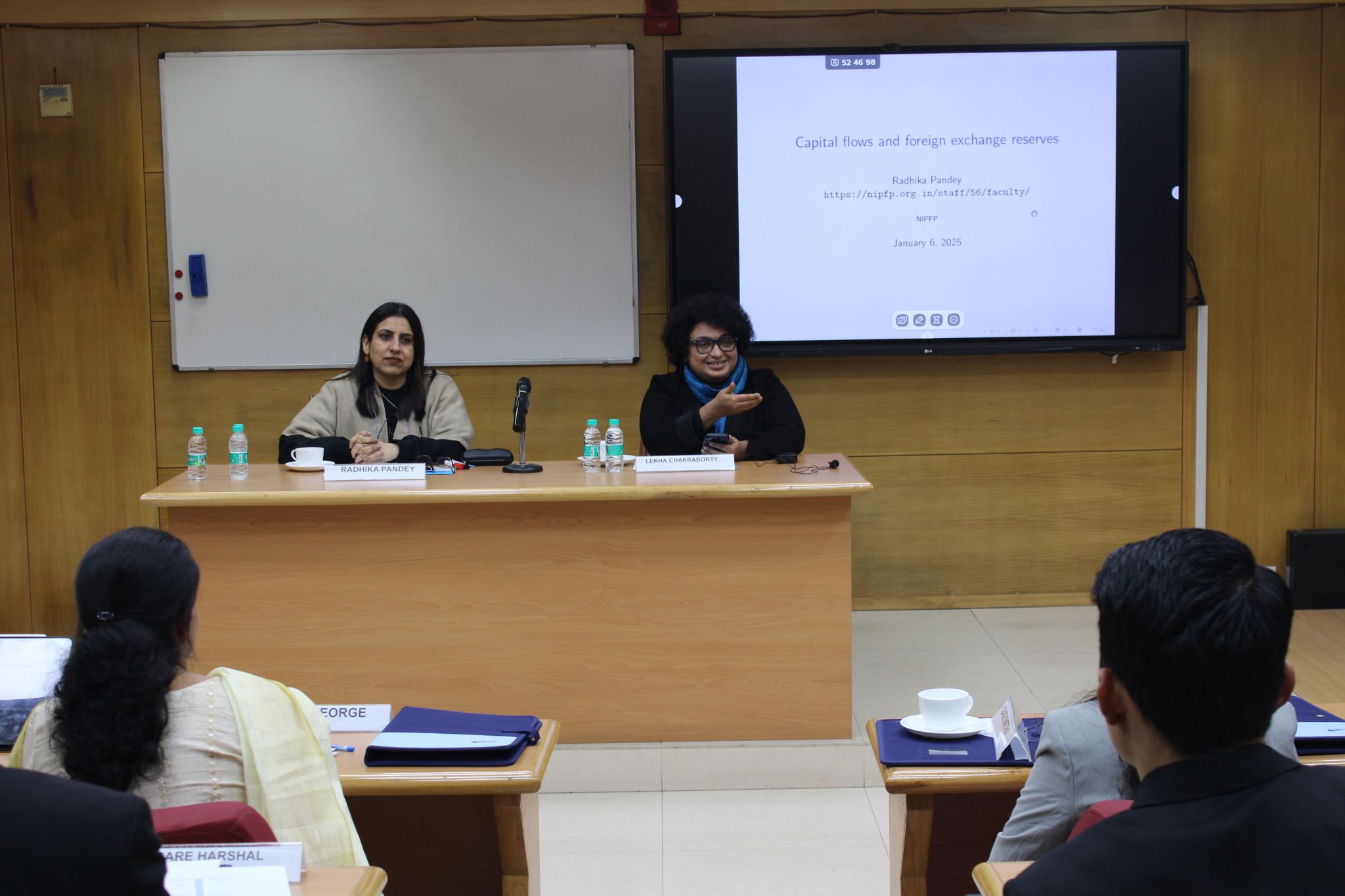
As tributes continue to pour in from across India and abroad, there is a growing consensus that Dr. Pandey’s legacy will endure through the countless lives she touched and the policies she helped shape. Institutions are already considering ways to honor her memory, from annual lectures and research grants to scholarships for women in economics. These initiatives aim to ensure that her passion for knowledge, her commitment to public service, and her vision for an inclusive and resilient Indian economy continue to inspire future generations.
In the end, Dr. Radhika Pandey’s life stands as a testament to the power of intellect, compassion, and perseverance. Her journey from a young scholar in Lucknow to one of India’s most respected economists is a source of pride and inspiration for the entire nation. As India grapples with new economic challenges, her work and her example will remain a guiding light, reminding all who follow in her footsteps that meaningful change is possible through dedication, empathy, and an unwavering pursuit of the public good.
Follow: Radhika Pandey

Mumbai: The Indian stock market ended Monday, June 30, 2025 trading session on a mixed note, with Nifty 50 falling 124 points (–0.48%) to close at 25,513.80, dragged down by financials and banking stocks. In contrast, Nifty Next 50 managed to close in the green, adding 240.70 points (+0.35%) at 68,953.10.
Nifty Fin Service took the sharpest dip, losing 168.40 points (–0.62%) to close at 27,175.65, followed by Nifty Bank, which dropped 125.35 points (–0.22%) to settle at 57,318.55.
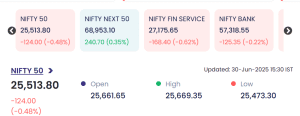 Day’s Range: High of 25,669.35 – Low of 25,473.30
 Despite overall weakness in key indices, select smallcap and midcap counters surged significantly, led by INNOVANA and SHEMAROO, showcasing strong investor interest.
| Symbol | LTP | Change | % Change | Volume (Lakhs) | Value (₹ Cr) |
|---|---|---|---|---|---|
| CAPTRU-RE | 0.05 | +0.01 | 25.00% | 4.11 | 0.00 |
| INNOVANA | 619.90 | +103.30 | 20.00% | 0.73 | 3.89 |
| SHEMAROO | 152.20 | +25.36 | 19.99% | 7.31 | 10.88 |
| TNTELE | 13.22 | +2.20 | 19.96% | 7.87 | 1.00 |
| DANGEE | 5.29 | +0.88 | 19.95% | 5.72 | 0.30 |
 Pressure was evident in the chemical and engineering counters, as SIGACHI and RAJOOENG witnessed steep falls, alongside REMSONSIND and GATECHDVR.
| Symbol | LTP | Change | % Change | Volume (Lakhs) | Value (₹ Cr) |
|---|---|---|---|---|---|
| SIGACHI | 48.95 | –6.17 | –11.19% | 318.94 | 158.19 |
| GATECHDVR | 0.81 | –0.09 | –10.00% | 91.03 | 0.74 |
| RAJOOENG | 109.56 | –11.26 | –9.32% | 16.20 | 18.13 |
| BEARDSELL | 26.98 | –2.03 | –7.00% | 3.73 | 1.02 |
| REMSONSIND | 137.00 | –10.20 | –6.93% | 40.93 | 59.83 |
The trading session on June 30 closed with mixed cues. Broader market strength came from smallcap resilience, but blue-chip and banking counters faced selling pressure. Financial sector underperformance weighed down benchmarks, while select stocks delivered double-digit gains, supported by low float and high-volume speculative interest.
Traders remain cautious amid global volatility and FII outflows, with earnings season ahead likely to dictate upcoming trends.
For real time stock Updates, visit NSE website.
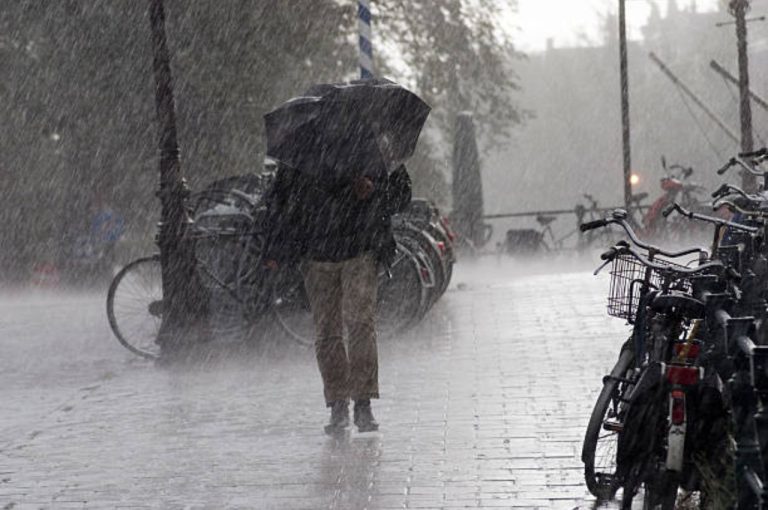
As the monsoon deepens its grip on eastern India, Kolkata Monsoon 2025 enters a defining phase with a week marked by steady showers, fluctuating temperatures, and rising humidity. While the rain has brought relief from the punishing heat of May and early June, it has also led to waterlogging, health concerns, and renewed worries about long-term climate trends.

The India Meteorological Department (IMD) has issued regular bulletins warning of moderate to heavy rainfall in Kolkata and adjoining districts. Daily precipitation between June 22 and 28 has ranged from 10 mm to 45 mm, punctuated by spells of thunder and lightning.
| Date | Rainfall (mm) | Maximum Temp (°C) | Humidity (%) | Weather Highlights |
|---|---|---|---|---|
| June 22 | 12 mm | 34.0 | 84 | Intermittent drizzle |
| June 23 | 27 mm | 32.5 | 88 | Cloudy, evening storm |
| June 24 | 18 mm | 33.0 | 82 | Patchy rain |
| June 25 | 45 mm | 31.2 | 91 | Heavy early morning rain |
| June 26 | 20 mm (forecast) | 32.0 (forecast) | 85 | Moderate rain expected |
📄 IMD Kolkata Regional Forecast

While the rainfall has brought down the mercury marginally, humidity has remained a pressing concern. Pedestrians, traffic constables, and outdoor workers continue to grapple with a “wet heat” phenomenon, where the sweat-induced discomfort becomes overwhelming despite moderate temperatures.
“The rain is helpful, but it’s not cool enough. I feel sticky all day,” said Moumita Dutta, a college student from Jadavpur.
Despite urban inconveniences, environmentalists are cautiously optimistic. The city’s depleted ponds and aquifers are slowly refilling, and the return of migratory birds to Rabindra Sarobar has been noted.
Key benefits:
Beyond the city, the rains have been a lifeline for paddy cultivators in Bengal’s rural belts. Districts like Howrah, Hooghly, and Murshidabad report successful sowing thanks to early monsoon moisture.
A spokesperson from the West Bengal Agriculture Department noted:
“The timely arrival of monsoon ensures that aman paddy cultivation stays on track. Farmers have resumed sowing, and water reservoirs are filling steadily.”
📄 Department of Agriculture, West Bengal
Climatologists warn that while this week’s rainfall may seem like a return to “normal,” the larger picture remains worrying:
According to a recent IMD report, 2025 is trending as the 4th warmest year globally so far, underscoring how even rainfall may not offset global warming’s impacts.
“I love the monsoon, but I’m scared of stepping out in knee-deep water,”
— Ratan Saha, Behala resident.
“This is the best time to enjoy tea and pakoras, but our lane is like a river after 10 minutes of rain,”
— Arpita Roy, homemaker, Lake Town.
“I now keep an extra pair of shoes and socks in my bag,”
— Bidyut Mondal, delivery executive.
| For Commuters | For Parents | For Everyone |
|---|---|---|
| Keep umbrellas and ponchos ready | Avoid letting kids play in puddles | Use mosquito repellents |
| Use Google Maps to avoid flooded routes | Ensure vaccines for flu and dengue | Avoid street food |
| Keep backup shoes in office/school | Dress children in full-sleeve cottons | Drink boiled water |
Despite the challenges, monsoon brings romance, nostalgia, and creativity alive in Kolkata.
As Kolkata’s monsoon 2025 enters full swing, it continues to be a season of contrasts—wet pavements and warm chai, heavy skies and hopeful farmers, floods and floral blossoms. The weather, as ever, is a mirror of the city’s spirit: unpredictable, passionate, and enduring.
Whether you’re stuck in a traffic jam or watching the downpour from a college canteen, the monsoon is Kolkata’s oldest romance—and its most demanding season.
Also read: Home | Channel 6 Network – Latest News, Breaking Updates: Politics, Business, Tech & More
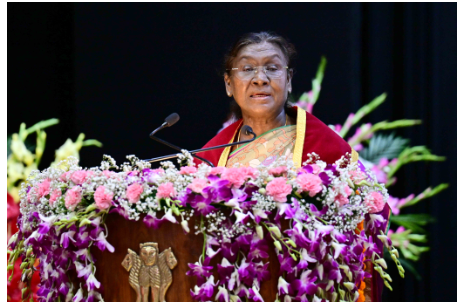
Bareilly: On June 30, 2025, the President of India, Smt Droupadi Murmu, graced the convocation ceremony of the Indian Veterinary Research Institute (IVRI) in Bareilly, Uttar Pradesh. Addressing faculty, researchers, and graduating students, the President highlighted the critical role veterinarians play in a holistic and sustainable future, placing animal welfare at the heart of development.
President Murmu began her address by underlining India’s ancient cultural ethos, rooted in the principle of ‘Ishavasyam Idam Sarvam’—the belief that the divine resides in every living being. She reflected on how Indian mythology and spiritual traditions portray sages and gods communicating with animals, establishing a deep-rooted philosophy of coexistence, compassion, and stewardship of nature.
Stressing the urgent need to protect biodiversity, the President reminded the gathering that numerous species are either extinct or nearing extinction. She asserted that the health of the planet is intricately linked to the well-being of animals and ecosystems.
Citing lessons from the COVID-19 pandemic, she warned against the dangers of a consumption-driven lifestyle. She noted that such models have damaged not only human health but also that of animals and the broader environment, reiterating the necessity for a conscious, sustainable, and inclusive approach to progress.
President Murmu strongly advocated for the ‘One Health’ framework, a globally growing concept that integrates human health, animal health, plant health, and environmental well-being. She emphasized the need for veterinary institutions like IVRI to play a central role in the prevention and control of zoonotic diseases, which emerge at the intersection of humans and animals.
She noted that animal welfare is no longer just a veterinary concern, but a shared responsibility vital for sustainable development and global health security.
Recognizing the rapid evolution of science and technology, President Murmu highlighted the transformative potential of technology in veterinary medicine. She encouraged the use of:
These tools, she said, could revolutionize diagnosis, treatment, breeding, and nutritional management, making animal care more effective and accessible across India.
She urged IVRI and similar institutions to prioritize low-cost, indigenous solutions, especially in nutrition and medication, to ensure minimal side effects for animals, humans, and the environment.
President Murmu praised the graduates of IVRI for choosing to serve “innocent and voiceless” animals. She urged them to always remain compassionate and to reflect on their commitment whenever faced with difficult choices in life and career.
She also called upon young veterinary professionals to become entrepreneurs and establish start-ups in animal science, thus creating employment opportunities and contributing to India’s growing rural economy.
The President concluded her address by emphasizing that compassionate action, scientific innovation, and indigenous wisdom are the pillars upon which India’s veterinary future must stand. She expressed hope that the students of IVRI would emerge not just as veterinarians, but as custodians of animal welfare and agents of sustainable change.
With this visionary address, President Murmu reaffirmed the essential link between veterinary science and India’s broader developmental journey, urging a collective commitment to the health of all life forms and the planet.
For more details, check press release on PIB website.
For more real-time updates, visit Channel 6 Network.
Kolkata Law Student Gang Rape Case: In a chilling case that has shaken Kolkata’s academic and legal communities, a young woman studying law in a prominent city college was allegedly gang-raped by multiple individuals, including former student union members. The case has prompted public outrage and drawn strong reactions from legal experts, human rights bodies, and political leaders alike.
As the investigation progresses, authorities are zeroing in on DNA evidence, call records, and surveillance footage to establish the sequence of events and bring justice to the survivor. The Kolkata law student gang rape case has once again highlighted the urgent need for campus safety reforms and stricter checks on student political groups.

According to police reports, the survivor—a 21-year-old student at a south Kolkata law college—was attacked at an off-campus private location on June 17. She alleged that she was lured under false pretenses by acquaintances who later assaulted her. Initial reports suggest the use of physical violence, including a hockey stick used to threaten and subdue the victim.

Investigators have now:
The West Bengal Forensic Science Laboratory (WBFSL) is handling the DNA cross-matching process, which will be pivotal in corroborating the survivor’s account.
West Bengal State Forensic Science Laboratory (WBFSL)
Kolkata Police Cyber Cell is analyzing:
Officials are also working with mobile network providers to triangulate GPS data of the accused during the reported time of the incident.
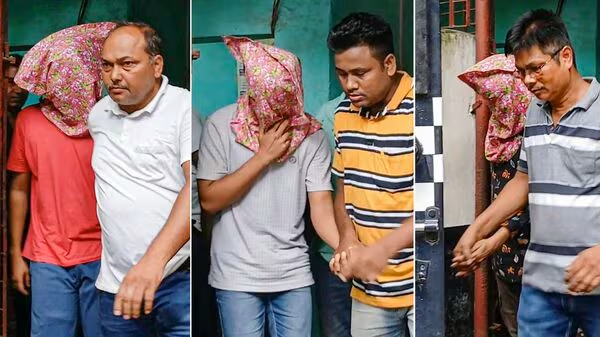
So far, four individuals have been arrested, including:
Charges filed under:
Their judicial custody has been extended pending further investigation.
Chief Minister Mamata Banerjee condemned the incident, urging the police to act swiftly and ensure no political protection for the accused. In a statement, she said:
“There will be zero tolerance towards anyone who commits such crimes. It doesn’t matter which political party they belong to.”
Opposition leaders from BJP and Congress have criticized the state’s handling of student politics and demanded judicial oversight.
Legal experts and professors from across West Bengal have joined in calling for:
A PIL (Public Interest Litigation) was filed at the Calcutta High Court demanding campus safety audits in all affiliated law colleges.
Over 500 students from various law colleges marched to Lalbazar Police Headquarters last week, holding banners that read:
A student from Hazra Law College said:
“We study law to uphold justice, not to be silent victims of it.”
The college principal confirmed that:
Despite this, the college faces criticism for allegedly ignoring earlier complaints of harassment involving the same individuals.
| Date | Event |
|---|---|
| June 17 | Survivor lured and assaulted |
| June 18 | Complaint filed; medical exam conducted |
| June 19 | FIR registered; police raid and arrests made |
| June 20–23 | Seizure of forensic evidence and call records |
| June 24 | DNA samples sent to lab; preliminary CCTV review begins |
| June 25 | Public protest by students and legal community |
The NCW has taken suo-motu cognizance of the matter and demanded an urgent report from the West Bengal Director General of Police.
National Commission for Women (NCW)
Chairperson Rekha Sharma stated:
“The fact that the accused were known to the survivor and allegedly used political influence is deeply disturbing. We urge speedy justice.”
This case is a glaring reminder that campuses, especially law institutions, are not immune from gendered violence.
Reform recommendations include:
The Kolkata law student gang rape case is not just a legal matter—it is a call to conscience for educational institutions, law enforcement, and society at large. The survivor’s bravery in speaking out must now be matched by an equally resolute pursuit of justice. Until institutional systems are strengthened, cases like these will continue to haunt the very campuses where rights are taught.
Also read: Home | Channel 6 Network – Latest News, Breaking Updates: Politics, Business, Tech & More
Channel 6 Network (C6N) is redefining digital media with captivating news and entertainment content. We combine timely reporting, expert commentary, and innovative formats to bring audiences the latest stories from the world of politics, business, and lifestyle.
© 2026 Channel6Network.com is a division of Parashakti Ventures Private Limited. All Rights Reserved.