A thrilling new journey begins with The Nice Guy Lee Dong Wook in the lead
The Nice Guy Lee Dong Wook is already building buzz ahead of its official premiere on July 18. The upcoming romance-thriller series starring Lee Dong Wook and Lee Sung Kyung promises to deliver an emotional rollercoaster with noir themes, gritty family drama, and a love story born out of chaos. The teaser reveals a layered narrative, highlighting the inner struggle of a gangster’s heir who dares to dream of a life rooted in literature and love.
In the newly released trailers by JTBC, fans saw three sides of Seok Cheol Lee Dong Wook’s character. The noir version showed him bloody and bandaged, a fighter weathered by years of conflict. The literary version revealed a softer, thoughtful man quoting Hemingway and clinging to hope. The third teaser merged the two worlds, giving us a complex lead who walks the fine line between violence and vulnerability. These glimpses suggest a powerful transformation is coming for viewers to witness.
The Nice Guy Lee Dong Wook reveals a tale of love, pain, and second chances
At the heart of the story is Park Seok Cheol, the eldest grandson of a third-generation gangster family. Despite growing up around crime, his heart belongs to a different world a world of books, dreams, and honest living. Once an aspiring novelist inspired by the likes of Hemingway, Seok Cheol found himself trapped in the violent path laid out for him. But everything changes when he crosses paths again with his first love, Kang Mi Young, played by Lee Sung Kyung.
Kang Mi Young is a spirited young woman with dreams of becoming a singer. Her passion becomes a mirror to Seok Cheol’s suppressed desires. Their connection sparks a journey of healing, rebellion, and redemption. As she reminds him of the kind-hearted dreamer he used to be, Seok Cheol finds the courage to choose a life outside of his family’s shadow.
Gritty visuals and emotional stills tease what’s to come
The official stills from the drama hint at just how emotionally charged this series will be. One image shows Seok Cheol bruised, leaning against a subway window with an expression of silent agony. Another captures a rare smile on his face, perhaps symbolizing the fragile hope that’s slowly returning to his life. These contrasting moments add depth to a story that blends heartbreak, danger, and the promise of a better future.
The use of noir visuals dark lighting, minimal color, raw close-ups adds weight to the narrative. It’s clear that The Nice Guy Lee Dong Wook is not just another love story. It’s about breaking generational patterns, chasing long-lost dreams, and facing life’s toughest decisions head-on.
The Nice Guy Lee Dong Wook confirms release details and format
The Nice Guy Lee Dong Wook is scheduled to air on JTBC starting July 18, with episodes released every Friday until August 29. The show will feature 14 episodes in total. While the official OTT platform is yet to be confirmed, global fans can expect updates soon. Given the strong fan base for both lead actors and the buzz surrounding this drama, a wide digital release is likely.
This marks Lee Dong Wook’s return to the romance genre after years of action and fantasy roles. He expressed his excitement to work under director Song Hae Sung and writer Kim Woon Kyung, saying that their experience and vision were key reasons for his involvement. His decision to dive into a heartfelt story filled with pain and tenderness has already elevated audience expectations.
Conclusion:
The Nice Guy Lee Dong Wook is not just another K-drama it’s a powerful story about identity, family, and redemption. With its gripping trailers, emotionally rich characters, and a premiere date just around the corner, it has all the makings of a summer hit. As Lee Dong Wook takes on one of his most challenging roles yet, fans can’t wait to see how Seok Cheol’s story unfolds and whether love can really lead someone out of darkness.
Japanese Adult Star’s Clarification Shakes Up Ju Haknyeon Scandal
Japanese porn star Asuka Kirara has made headlines in South Korea and Japan following her alleged involvement with K-pop idol Ju Haknyeon of THE BOYZ. The issue exploded after Ju Haknyeon was abruptly removed from his group, with his agency citing media controversies and potential scandalous affiliations. The situation took a dramatic turn when the adult film actress issued a public statement refuting claims of prostitution, adding fuel to an already intense debate.
The controversy comes at a time when idol culture is under increasing scrutiny, and the appearance of figures like Asuka Kirara in mainstream K-pop narratives is stirring strong reactions across online communities. What complicates the issue even more is the timing, coinciding with the sleeper coache trend where unexpected influencers and personalities collide with popular fandoms.
Japanese Adult Star Denies All Prostitution Allegations
On June 20, Asuka Kirara addressed the allegations directly via her social media account on X .
In her statement, she said, “There are a lot of speculations going around, but the Shūkan Bunshun article hasn’t come out yet. Please don’t spread false information. I have never once in my life engaged in paid sex acts (prostitution) in private.”
Kirara (Japanese Adult Star) explained that she was photographed at a bar in Tokyo where Ju Haknyeon was also present on May 30. According to her, it was another guest who sold the photo to the press, not a scandal arranged for monetary gain. She emphasized that the scene was being misconstrued and that her name was being dragged into a damaging narrative.
Ju Haknyeon Responds with Legal Action
Just a day before Asuka’s statement, Ju Haknyeon had released a handwritten note to fans, asserting that he was unfairly removed from THE BOYZ. His agency, One Hundred, had confirmed that they would continue as a 10-member group, citing Haknyeon’s alleged misconduct. However, Ju claimed the termination was one-sided and without justification.
He stated, “If there is evidence of prostitution, please disclose it to me immediately.” He emphasized that his presence at the Tokyo gathering was casual and innocent. (Japanese Adult Star) Further, he shared his intention to pursue both criminal and civil litigation against the agency and media outlets that had published or promoted what he called “false stories.”
The scandal is shedding light on deeper issues within K-pop’s culture from the suffocating image management of idols to the growing clash between traditional fandom expectations and evolving entertainment boundaries.
Asuka’s presence at a gathering that included a major K-pop star wasn’t illegal, yet it was treated by the public and the industry as taboo. Fans and commentators argue this points to a deeper issue of how male and female public figures are policed differently, especially within Korea’s rigid entertainment standards.
A Shift in Public Sentiment?
While initial reactions were harsh, public sentiment is beginning to shift. Some fans are questioning why idols are punished for their associations and private life choices, especially when no legal wrongdoing is proven. Others, however, feel betrayed by the optics and potential damage to group reputations.
International fans, in particular, are expressing sympathy for both Ju Haknyeon and Asuka Kirara (Japanese Adult Star) . They argue that the adult entertainment industry should not automatically discredit someone’s character or deny them association with mainstream celebrities.
As the situation unfolds, both Ju Haknyeon and Asuka Kirara are standing firm. The former seeks justice through legal routes, while the latter works to clear her name in the face of aggressive media narratives. The intersection of a Japanese audlt star with a K-pop scandal might have shocked fans initially, but it also reflects the evolving complexities of modern celebrity culture in Asia. With the rise of phenomena like Sleeper Coache, fans may need to brace for more such unexpected, but telling, cultural crossovers.
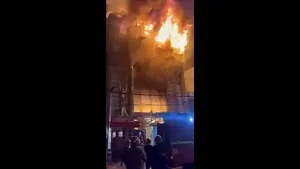
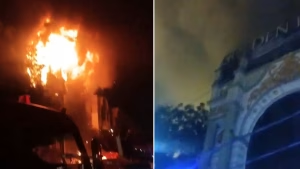
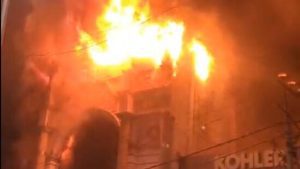
New Delhi – A devastating Fire at West Delhi Banquet facility has created an emergency situation in the Moti Nagar area, with authorities confirming that two individuals may still be trapped inside the burning structure. The Fire at West Delhi Banquet hall, identified as the Golden Royale Banquet Hall, erupted on Monday evening around 8:30 PM on the main Najafgarh Road in the Industrial Area of Moti Nagar.
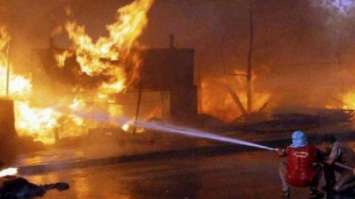
This major Fire at West Delhi Banquet venue prompted an immediate large-scale response from the Delhi Fire Services, with over 18 fire tenders dispatched to combat the rapidly spreading flames that consumed multiple floors of the multi-storey building.
Immediate Emergency Response to Fire at West Delhi Banquet Hall
The Fire at West Delhi Banquet facility was first reported to Delhi Fire Services at 8:47 PM by alert commuters who witnessed flames engulfing the entire structure. Atul Garg, director of Delhi Fire Services, confirmed the severity of the situation, stating that they received information about a major Fire at West Delhi Banquet hall that had spread across the entire building. The emergency response team immediately recognized the magnitude of this Fire at West Delhi Banquet incident and deployed substantial resources to contain the blaze.
The rapid deployment of over 18 fire tenders demonstrates the serious nature of this Fire at West Delhi Banquet emergency. Delhi Fire Services personnel worked tirelessly to prevent the flames from spreading to adjacent buildings in the densely populated Industrial Area of Moti Nagar. Eyewitness videos captured from the roadside revealed the intensity of the Fire at West Delhi Banquet hall, showing thick plumes of smoke rising dramatically from the burning structure as flames consumed multiple floors simultaneously.
The professional response to this Fire at West Delhi Banquet incident showcased the preparedness and efficiency of Delhi’s emergency services. Fire officers coordinated rescue operations while simultaneously working to contain the blaze, ensuring that the Fire at West Delhi Banquet hall would not cause additional casualties or property damage in the surrounding area.
Rescue Operations and Current Status of Fire at West Delhi Banquet Incident
During the intense firefighting efforts to control the Fire at West Delhi Banquet hall, several staff members were successfully rescued early in the operation. Fire officers on the ground reported that the Fire at West Delhi Banquet venue was largely brought under control by 10:30 PM, approximately two hours after the initial outbreak. However, officials emphasized that the blaze was not completely extinguished at that time, requiring continued monitoring and suppression efforts.
A senior fire officer explained the ongoing challenges with this Fire at West Delhi Banquet emergency, noting that complete extinguishment must be achieved before rescue teams can safely enter the building to conduct thorough search operations. The officer confirmed suspicions that one or two people may still be trapped inside following the Fire at West Delhi Banquet incident, though this information has not been definitively confirmed due to safety concerns preventing immediate access to all areas of the building.
The complexity of the Fire at West Delhi Banquet hall rescue operation stems from the multi-storey nature of the building and the extent of damage caused by the flames. Emergency responders must ensure structural integrity before conducting comprehensive searches, making the Fire at West Delhi Banquet incident a prolonged emergency response situation requiring careful coordination between multiple agencies.
Investigation into Causes of Fire at West Delhi Banquet Hall Incident
Authorities have launched a comprehensive investigation into the Fire at West Delhi Banquet hall to determine the exact cause of this devastating incident. The investigation will examine multiple factors that could have contributed to the Fire at West Delhi Banquet emergency, including electrical systems, kitchen equipment, and other potential ignition sources within the banquet facility.
Delhi Fire Services officials are conducting a thorough review of the building’s fire safety compliance as part of the Fire at West Delhi Banquet investigation. They are specifically checking whether the Golden Royale Banquet Hall possessed a valid fire safety certificate at the time of the incident. This aspect of the Fire at West Delhi Banquet inquiry will help determine if proper safety protocols were in place and whether any regulatory violations contributed to the severity of the blaze.
The investigation team will also examine the building’s evacuation procedures, emergency exits, and fire suppression systems to understand how the Fire at West Delhi Banquet hall was able to spread so rapidly across multiple floors. These findings will be crucial for preventing similar incidents in other commercial establishments throughout the region.
Police Involvement and Owner Tracing Efforts
Law enforcement agencies have joined the response to the Fire at West Delhi Banquet incident, working to locate and interview the banquet hall’s owner for crucial information about building occupancy and layout. Police involvement in this Fire at West Delhi Banquet case is essential for obtaining detailed information about possible occupants at the time of the incident and understanding the building’s structural characteristics.
The owner’s cooperation is vital for the Blaze at West Delhi Banquet investigation, as they can provide important details about staff schedules, guest bookings, and building modifications that might affect rescue operations. Police are also gathering information about the banquet hall’s operational history and any previous safety incidents that might be relevant to understanding this Fire at West Delhi Banquet emergency.
Authorities need comprehensive building plans and occupancy information to ensure that all potentially trapped individuals are located and rescued safely from the Blaze at West Delhi Banquet site. The owner’s testimony will also be crucial for insurance claims and potential legal proceedings stemming from this Fire at West Delhi Banquet incident.
Impact on Local Community and Traffic
The Blaze at West Delhi Banquet hall has significantly impacted the surrounding Moti Nagar community, with residents and businesses in the Industrial Area experiencing disruptions due to emergency response activities. The location of this Blaze at West Delhi Banquet incident on the main Najafgarh Road has caused traffic diversions and road closures, affecting commuters and local commerce.
Local authorities are working to minimize community disruption while ensuring adequate access for emergency vehicles responding to the Blaze at West Delhi Banquet emergency. The incident has raised awareness about fire safety in commercial establishments throughout the area, prompting discussions about prevention measures and emergency preparedness.
Ongoing Monitoring and Safety Measures
Emergency services continue monitoring the Blaze at West Delhi Banquet site to prevent rekindling and ensure complete extinguishment of all remaining hot spots. The incident serves as a stark reminder of the importance of fire safety compliance in commercial buildings, particularly in densely populated urban areas like Moti Nagar.
This Blaze at West Delhi Banquet case will likely prompt enhanced fire safety inspections of similar establishments throughout Delhi, ensuring that proper preventive measures are in place to protect public safety and prevent future tragedies.
New Delhi: India is now the third-largest automobile market globally, surpassing Japan and closing in on Germany and the U.S. in terms of volume. With a growing middle class, rising disposable incomes, and an increasing appetite for personal mobility, the country represents a massive opportunity for global automakers.
However, European car manufacturers like Renault, Volkswagen, and Skoda — despite their early presence and premium reputation — are struggling to maintain market share, especially against aggressive rivals from Japan, South Korea, and local players like Tata and Mahindra.
📉 The Numbers Tell the Story
Renault India, once a success story with models like the Duster and Kwid, has seen a sharp decline in market share, currently hovering below 2%.
Volkswagen and Skoda, operating under the VW Group umbrella, have barely crossed a combined 1.5% market share despite launching India-specific models under the India 2.0 strategy.
In contrast, brands like Hyundai, Maruti Suzuki, Tata Motors, and Mahindra continue to dominate, offering models better aligned with Indian buyer expectations.
🛑 Key Challenges Holding Back European Automakers
1. Lack of a Strong Compact SUV Portfolio
Compact SUVs have emerged as the most dominant segment in India, combining road presence, fuel efficiency, and urban practicality.
While Tata offers the Nexon and Punch, and Hyundai has the Creta and Venue, European brands have failed to consistently deliver segment winners.
Renault’s Duster, once a leader, has aged out with no significant successor.
VW Taigun and Skoda Kushaq, although well-built, are perceived as expensive compared to their rivals.
2. High GST and Import Duties
Vehicles with larger engines and premium positioning attract up to 50% GST, making many European offerings uncompetitive on price.
CKD (Completely Knocked Down) kits and CBU (Completely Built-Up) imports are taxed heavily — a major deterrent for brands not manufacturing locally at scale.
3. Weak Dealer Network and After-Sales Service
Japanese and Korean carmakers have robust pan-India dealership and service networks, while European brands often have a patchy or metro-focused presence.
Parts availability and higher maintenance costs further affect brand perception.
4. Slow Transition to EVs and Alternative Fuels
India is pushing for electrification via schemes like FAME II, and domestic brands are adapting faster.
Tata Motors leads the EV race, while MG and Mahindra are gaining ground.
European brands have few EVs tailored to India’s price-sensitive market, and most of their electric offerings are premium imports.
5. Lack of Localization
Volkswagen and Skoda’s India 2.0 plan focused on increasing localization to reduce costs, but even their localized MQB-A0-IN platform-based vehicles remain relatively expensive.
Renault, once aggressive with low-cost engineering, has been slow to refresh its line-up or scale localization further.
💬 Changing Indian Buyer Preferences
The new Indian car buyer is:
Value-driven but tech-hungry, preferring connected infotainment systems, ADAS (Advanced Driver Assistance Systems), and fuel-efficient engines.
Swayed by design, road presence, and after-sales service — areas where domestic brands have rapidly caught up or outpaced European rivals.
Increasingly open to EVs and hybrids, especially in metro cities — a segment where European brands lag behind Japanese and Korean counterparts.
⚙️ What Can European Brands Do to Regain Ground?
Launch India-specific models with strong feature lists and fuel-efficient engines.
Expand dealership and service networks beyond metro cities.
Aggressively invest in EV and hybrid platforms tailored to Indian needs.
Price products competitively by maximizing localization and reducing dependence on imports.
Partner with Indian OEMs or tech firms to better understand local tastes and build cost-effective solutions.
🚀 The Road Ahead: Adapt or Fade
The Indian car market is dynamic, fast-evolving, and increasingly dominated by brands that understand local consumer psychology. European carmakers still enjoy a reputation for quality and safety, but without agility, affordability, and localization, they risk becoming niche players in one of the world’s largest automotive markets.
If Renault, Volkswagen, and Skoda want to thrive in India again, they will need to go beyond legacy and embrace India-centric innovation — fast.
As India’s automobile market shifts rapidly toward compact SUVs and greener mobility, European carmakers must localize, innovate, and adapt swiftly — or risk becoming irrelevant in one of the world’s fastest-growing auto landscapes.
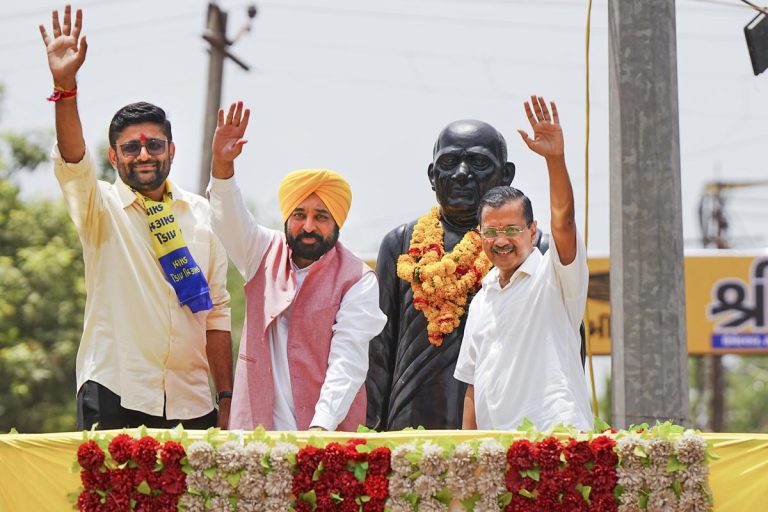
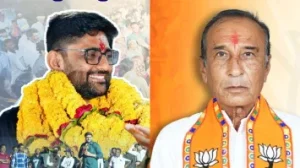
Gujarat – The Gujarat Assembly Bypolls Result delivered a mixed outcome for major political parties, with the Aam Aadmi Party achieving a significant breakthrough in Visavadar while the Bharatiya Janata Party successfully defended its Kadi constituency. The Gujarat Assembly Bypolls Result, announced on Monday following vote counting that concluded around 1:30 PM, showcased contrasting fortunes for the competing parties across these two crucial constituencies.
This Gujarat Assembly Bypolls Result marks a notable political development in the western state, where AAP managed to reclaim the Visavadar seat despite BJP’s extensive campaigning efforts.
AAP’s Historic Victory in Visavadar Constituency
The Gujarat Assembly Bypolls Result in Visavadar constituency delivered a resounding victory for AAP’s Gopal Italia, who defeated BJP candidate Kirit Patel by an impressive margin of 17,554 votes. This Gujarat Assembly Bypolls Result represents a significant political achievement for the former Gujarat AAP president, who secured 75,942 votes against Patel’s 58,388 votes after 21 rounds of counting concluded.
The Gujarat Assembly Bypolls Result in Visavadar is particularly noteworthy because it breaks BJP’s 18-year electoral drought in this Junagadh district constituency. Despite BJP leaders expressing confidence about ending their losing streak that began after their last victory in 2007, the Gujarat Assembly Bypolls Result favored AAP’s strategic positioning and local connect.
Italia’s victory in the Gujarat Assembly Bypolls Result demonstrates AAP’s growing influence in Gujarat politics, especially in constituencies where the party previously held representation. The substantial winning margin in this Gujarat Assembly Bypolls Result indicates strong voter support for AAP’s policies and Italia’s personal appeal among the electorate.
The voter turnout for Visavadar in the Gujarat Assembly Bypolls Result stood at 56.89 percent, reflecting moderate but significant participation in this crucial electoral contest. This Gujarat Assembly Bypolls Result reinforces AAP’s position as a formidable political force capable of challenging established parties in Gujarat.
BJP’s Commanding Performance in Kadi Constituency
The Gujarat Assembly Bypolls Result in Kadi constituency showcased BJP’s organizational strength and electoral dominance, with Rajendra Chavda securing a massive victory margin of 39,452 votes over Congress candidate Ramesh Chavda. This Gujarat Assembly Bypolls Result in the Scheduled Caste reserved seat of Mehsana district demonstrates BJP’s continued appeal among diverse voter segments.
Rajendra Chavda’s impressive tally of 99,742 votes in the Gujarat Assembly Bypolls Result completely overshadowed former Congress MLA Ramesh Chavda’s 60,290 votes after 22 rounds of counting. This commanding performance in the Gujarat Assembly Bypolls Result reflects BJP’s effective campaign strategy and strong local organization in the constituency.
The Gujarat Assembly Bypolls Result in Kadi becomes even more significant considering the constituency’s political history, where Ramesh Chavda had previously won in 2012 before losing to BJP’s Karsan Solanki in 2017. The current Gujarat Assembly Bypolls Result indicates BJP’s successful consolidation of its voter base following Solanki’s death in February 2024.
The voter participation rate of 57.90 percent in Kadi for the Gujarat Assembly Bypolls Result was marginally higher than Visavadar, suggesting strong electoral engagement among the constituency’s diverse population. This Gujarat Assembly Bypolls Result reinforces BJP’s dominance in traditional strongholds while highlighting the party’s ability to maintain voter loyalty.
Congress Faces Double Disappointment in Gujarat Assembly Bypolls Result
The Gujarat Assembly Bypolls Result proved disappointing for the Congress party, which failed to secure victory in either constituency despite fielding experienced candidates. In Visavadar, Congress candidate Nitin Ranpariya could not make a significant impact on the Gujarat Assembly Bypolls Result, finishing third in the three-way contest.
The Gujarat Assembly Bypolls Result in Kadi was particularly disheartening for Congress, as former MLA Ramesh Chavda, despite his previous electoral success in 2012, suffered a crushing defeat by over 39,000 votes. This Gujarat Assembly Bypolls Result highlights Congress’s continued struggles in Gujarat, where the party has been reduced to minimal representation in the state assembly.
The poor performance in the Gujarat Assembly Bypolls Result reflects Congress’s organizational challenges and diminishing influence in Gujarat politics. The party’s inability to capitalize on local issues or present compelling alternatives contributed to this adverse Gujarat Assembly Bypolls Result across both constituencies.
Historical Context and Political Significance
The Gujarat Assembly Elections Result carries substantial political significance considering the circumstances that necessitated these elections. The Visavadar seat became vacant in December 2023 after AAP legislator Bhupendra Bhayani resigned and joined the ruling BJP, making this Gujarat Assembly Elections Result a direct test of voter sentiment regarding such political defections.
In the 2022 assembly elections, AAP’s Bhayani had defeated BJP’s Harshad Ribadiya by 7,063 votes, making the current Gujarat Assembly Elections Result margin of 17,554 votes even more impressive for Italia’s victory. This Gujarat Assembly Elections Result suggests that voters rewarded AAP for its consistency and rejected the defection politics.
The Kadi constituency’s vacancy following BJP MLA Karsan Solanki’s death in February 2024 provided the context for the second Gujarat Assembly Elections Result. The commanding victory margin demonstrates BJP’s ability to retain seats even after the loss of popular local leaders.
Impact on Gujarat Assembly Composition
The Gujarat Assembly Elections Result has minimal impact on the overall composition of the 182-member state assembly, where BJP continues to maintain overwhelming dominance. Following this Gujarat Assembly Elections Result, the party positions stand as: BJP 162 seats, Congress 12 seats, and AAP 5 seats, with one seat held by Samajwadi Party and two by independents.
Despite BJP losing Visavadar in the Gujarat Assembly Elections Result, the party’s legislative strength remains virtually unchallenged. However, AAP’s victory in this Gujarat Assembly Elections Result provides the party with renewed momentum and validates its strategy of focusing on specific constituencies where it can build strong local connections.
Electoral Process and Voter Participation
The Gujarat Assembly Elections Result emerged from elections held on June 19, 2025, with counting beginning at 8 AM on Monday. The comprehensive counting process for the Gujarat Assembly Elections Result involved 21 rounds in Visavadar and 22 rounds in Kadi, ensuring accurate representation of voter preferences.
Both constituencies in the Gujarat Assembly Elections Result witnessed three-way contests, with BJP, Congress, and AAP fielding candidates in each seat. The moderate voter turnout figures of 56.89% in Visavadar and 57.90% in Kadi reflect typical participation rates for by-elections, though lower than general election turnouts.
The Gujarat Assembly Elections Result demonstrates the continuing evolution of the state’s political landscape, where AAP has established itself as a credible alternative in select constituencies while BJP maintains its overall dominance across Gujarat’s diverse electoral geography.
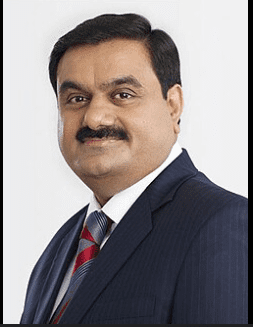
Mumbai: Adani Airports Holdings Ltd (AAHL), a key subsidiary of the Adani Group, has successfully raised $1 billion in project finance to strengthen and expand operations at Mumbai International Airport Ltd (MIAL) — one of India’s busiest and most strategically vital aviation hubs. This significant financial move reaffirms global investor confidence in India’s infrastructure story and positions Adani as a dominant force in the global airport ecosystem.
This funding comes at a time when India’s aviation sector is witnessing exponential growth, driven by rising domestic and international travel demand. The funds are expected to give a major push to the Mumbai airport’s infrastructure development, capacity enhancement, and modernization initiatives — all while improving operational efficiency and passenger experience.
💼 Structuring the $1 Billion Raise
The capital infusion was achieved through the issuance of $750 million in senior unsecured notes, due in July 2029, with a green shoe option of an additional $250 million, taking the total to a potential $1 billion. This marks a historic milestone as India’s first investment-grade private sector issuance in the airport sector.
The funding round was led by Apollo Global Management, a US-based private equity giant, with participation from prominent institutional investors such as BlackRock and Standard Chartered. The sheer scale and the quality of the investors involved speak volumes about the credibility and long-term vision of the Adani Group’s airport business.
✈ Mumbai Airport: The Jewel in the Crown
Chhatrapati Shivaji Maharaj International Airport (CSMIA) in Mumbai is India’s second busiest airport and a crucial gateway for both domestic and international flyers. The airport has been a key contributor to the Adani Group’s growing aviation portfolio. In FY25 alone, CSMIA handled over 52 million passengers, accounting for over half of Adani Airports’ total international traffic.
This fresh round of capital will be instrumental in modernising terminal infrastructure, expanding cargo capacity, enhancing passenger services, and preparing for future growth. The plan includes terminal reconfiguration, advanced automation systems, sustainability-focused upgrades, and an enhanced retail and hospitality experience. By 2029, the airport aims to handle 65 million passengers annually.
📊 Adani Airports Growing Dominance
AAHL currently operates eight airports across India: Mumbai, Ahmedabad, Lucknow, Mangaluru, Jaipur, Thiruvananthapuram, Guwahati, and the under-construction Navi Mumbai International Airport. In FY25, Adani Airports recorded an all-time high of 94 million passengers, making it one of the largest private airport operators globally by passenger volume. Furthermore, its airports handled over 33% of India’s air cargo, underlining its pivotal role in the logistics ecosystem.
With its strong portfolio and forward-looking vision, AAHL is not just expanding operations — it’s reshaping the aviation landscape in India by introducing smart infrastructure, digital innovation, and sustainability-focused design across its assets.
🧱 Infrastructure Push and Capex Vision
The $1 billion raised is part of a larger $100 billion capex plan announced by Adani Group Chairman Gautam Adani, aimed at driving growth across the conglomerate’s core verticals — energy, transportation, digital, and infrastructure. A substantial portion of this capital will be directed toward airport development, including the upcoming Navi Mumbai International Airport, slated to become one of the largest greenfield airports in Asia upon completion.
Navi Mumbai Airport is expected to commence operations soon with an initial capacity of 20 million passengers annually, and a long-term expansion potential of up to 90 million passengers. This greenfield project complements Mumbai Airport and is intended to ease congestion and offer a world-class aviation hub in the western region.
📈 IPO on the Horizon
As part of its long-term vision, Adani Group has announced plans to launch an IPO for Adani Airports Holdings Ltd by March 2027. The public listing is expected to unlock significant value, attract global investors, and provide capital for future expansions. The listing will also bring greater transparency and allow retail and institutional investors to participate in India’s aviation infrastructure story.
Industry experts view the proposed IPO as a strategic move to monetise the rapidly appreciating value of airport assets and to further institutionalise governance and operations.
🌱 Sustainability at the Forefront
Adani Airports is also actively pursuing sustainability goals, including net-zero carbon emissions by 2029 across all its airport operations. This includes the integration of solar energy, water conservation systems, electric ground transportation, and energy-efficient terminal buildings. The $1 billion fundraise will directly support these sustainability initiatives as part of the airport’s broader ESG (Environmental, Social, and Governance) commitment.
🧭 Strategic Outlook: From National to Global
The Adani Group’s airport business is now transitioning from being a national infrastructure player to a global-scale operator. Its portfolio covers critical regions, including Tier-1 cities, high-tourism states, and major economic corridors. The successful fundraising signals that Adani has the financial backing, operational expertise, and strategic clarity to become one of the world’s largest private airport developers and operators in the coming years.
As global air travel rebounds, India’s aviation market is poised to become the third-largest in the world by 2030, and Adani Airports is positioning itself to lead that growth — not just by managing traffic but by redefining passenger experience, sustainability, and digital integration.
✅ Conclusion: A Bold Step Toward the Skies
The $1 billion project financing round is not just a financial milestone — it’s a strategic inflection point. It enables Adani Airports to transform Mumbai’s aviation infrastructure, gear up for the next wave of passenger growth, and establish a springboard for global expansion.
With an eye on an IPO, aggressive capex, and unparalleled investor trust, Adani Airports is on a skyward trajectory, setting a benchmark for private infrastructure development in India and beyond.
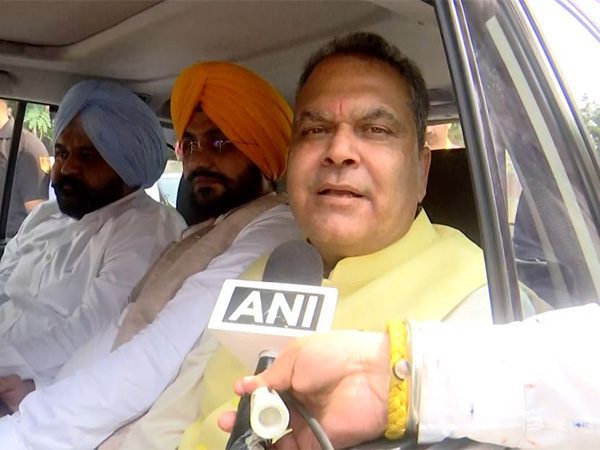
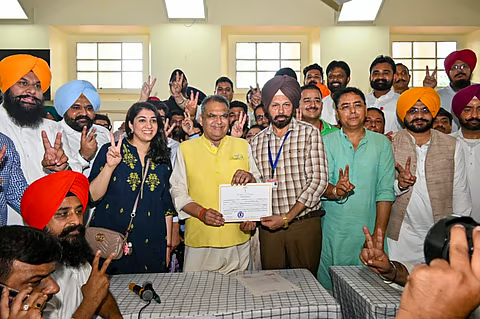
Ludhiana, Punjab – The Ludhiana West Assembly Election Result has delivered a significant victory for the Aam Aadmi Party, with Rajya Sabha member Sanjeev Arora defeating Congress candidate Bharat Bhushan Ashu by a commanding margin of 10,637 votes. This Ludhiana West Assembly Election Result marks a crucial win for AAP as it retains the seat in what was widely considered a bellwether for the upcoming 2027 Punjab assembly elections.
The Ludhiana West Assembly Election Result demonstrates AAP’s continued strength in urban Punjab constituencies, with Arora securing 35,179 votes against Ashu’s 24,542 votes in this high-stakes bypoll.
AAP Maintains Dominance in Ludhiana West Assembly Election Result
The Ludhiana West Assembly Election Result showcased AAP’s organizational strength and strategic campaigning effectiveness. Arora established an early lead from the initial counting rounds and maintained his advantage throughout all 14 rounds of vote counting. The Ludhiana West Assembly Election Result reflects improved performance for AAP, with the party increasing its vote share from 34.46% in 2022 to 39.02% in this bypoll.
Chief Minister Bhagwant Mann celebrated the Ludhiana West Assembly Election Result on social media, expressing gratitude to voters and party workers. The victory margin in the Ludhiana West Assembly Election Result indicates strong public approval for AAP’s governance in Punjab. This Ludhiana West Assembly Election Result comes after intensive campaigning led by party leaders including Arvind Kejriwal and Mann himself.
The strategic selection of Sanjeev Arora as the AAP candidate proved crucial for this Ludhiana West Assembly Election Result. As an industrialist and sitting Rajya Sabha member, Arora brought credibility and extensive outreach capabilities to the campaign, ultimately delivering this positive Ludhiana West Assembly Election Result for the party.
Congress Suffers Setback in Ludhiana West Assembly Election Result
The Ludhiana West Assembly Election Result represents a disappointing outcome for Congress, with former minister Bharat Bhushan Ashu failing to reclaim the seat for his party. Despite Ashu’s previous victories in 2012 and 2017, the Ludhiana West Assembly Election Result shows a decline in Congress support, with the party’s vote share dropping from 28.06% to 27.22%.
Internal divisions within Punjab Congress significantly impacted the Ludhiana West Assembly Election Result. The visible rift between Punjab Pradesh Congress Committee chief Raja Warring and candidate Ashu undermined the party’s campaign effectiveness. Warring’s absence from key campaign events highlighted these internal conflicts that contributed to the adverse Ludhiana West Assembly Election Result for Congress.
The Ludhiana West Assembly Election Result indicates that Ashu’s recent legal clearance in a corruption case was insufficient to restore voter confidence. This Ludhiana West Assembly Election Result suggests that Congress’s traditional voter base in the constituency has considerably eroded, presenting challenges for future electoral contests.
BJP’s Third Place Finish in Ludhiana West Assembly Election Result
The Ludhiana West Assembly Election Result placed BJP in third position, with debutant candidate Jiwan Gupta securing 20,323 votes representing 22.54% of the vote share. Despite extensive campaigning by prominent BJP leaders including Union ministers Hardeep Singh Puri and Anurag Thakur, the party could not capitalize on its Lok Sabha election momentum in this Ludhiana West Assembly Election Result.
The BJP’s performance in the Ludhiana West Assembly Election Result fell short of expectations, considering the party had secured over 45,000 votes from this segment during the previous year’s parliamentary elections. The Ludhiana Assembly Election Result shows a slight decrease in BJP’s vote share from 23.95% in 2022 to 22.54%, indicating the party’s struggle to convert Lok Sabha success into assembly victories.
High-profile campaigning by Delhi BJP chief Rekha Gupta, Haryana Chief Minister Nayab Singh Saini, and Punjab BJP president Sunil Jakhar could not improve the Ludhiana West Assembly Election Result for the party. The involvement of Union minister Ravneet Singh Bittu, who had contested Ludhiana parliamentary seat, also failed to significantly impact the Ludhiana Assembly Election Result.
SAD’s Continued Decline Reflected in Ludhiana West Assembly Election Result
The Ludhiana Assembly Election Result confirmed Shiromani Akali Dal’s ongoing struggles in urban Punjab constituencies. SAD candidate Parupkar Singh Ghumman finished fourth with only 8,203 votes, representing 9.1% of the total vote share. While this Ludhiana Assembly Election Result showed slight improvement from 8.58% in 2022, it remains far below the party’s historical performance levels.
The SAD’s campaign efforts, including visits by party president Sukhbir Singh Badal and senior leader Bikram Singh Majithia, failed to significantly impact the Ludhiana Assembly Election Result. The party’s inability to connect with Ludhiana’s urban electorate is clearly demonstrated in this Ludhiana Assembly Election Result.
Despite protest rallies and extensive campaigning, the Ludhiana Assembly Election Result indicates that SAD continues to lose relevance in Punjab’s urban political landscape. This Ludhiana Assembly Election Result reinforces the party’s declining influence since its electoral debacle in recent years.
Low Voter Turnout Characterizes Ludhiana West Assembly Election Result
The Ludhiana Assembly Election Result was achieved with historically low voter participation of just 51.33%, marking the lowest turnout since 2002. This reduced participation rate in the Ludhiana Assembly Election Result reflects political fatigue and voter disenchantment in the constituency. The turnout for this Ludhiana Assembly Election Result was significantly lower than the 64.29% recorded in 2022 when AAP’s Gurpreet Gogi had won the seat.
Weather conditions and political disillusionment contributed to the low participation rates that characterized the Ludhiana Assembly Election Result. The constituency’s highest-ever turnout was 69.66% in 2012, making the current Ludhiana Assembly Election Result turnout particularly noteworthy for its decline.
Political Implications of Ludhiana West Assembly Election Result
The Ludhiana Assembly Election Result carries significant implications for Punjab’s political landscape ahead of the 2027 assembly elections. This victory strengthens AAP’s position as the dominant force in urban Punjab constituencies, as demonstrated by the Ludhiana Assembly Election Result.
Opposition claims suggest that the bypoll was strategically engineered to facilitate Arvind Kejriwal’s potential entry into Rajya Sabha through Arora’s expected resignation. The Ludhiana Assembly Election Result now creates this possibility, with Arora’s elevation to Punjab cabinet minister position anticipated.
The Ludhiana Assembly Election Result represents AAP’s second victory in this constituency since its creation in 1977, with the party having previously won in 2022. This Ludhiana Assembly Election Result reinforces AAP’s growing influence in Punjab’s urban electoral politics and sets the stage for future political developments in the state.
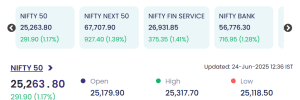
Mumbai: On 24 June 2025, the Indian equity market witnessed a strong rebound, with the benchmark Nifty 50 index jumping 291.90 points (1.17%) to close at 25,263.80, supported by a surge in financials, banks, and midcap counters. Positive global cues, easing geopolitical concerns, and robust sectoral participation drove sentiment higher.
Opening: 25,179.90
Day’s High: 25,317.70
Day’s Low: 25,118.50
The rally was broad-based, with Nifty Next 50, Nifty Financial Services, and Nifty Bank all closing over 1% higher.
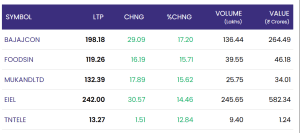
Several midcaps saw exceptional gains, with BAJAJCON, EIEL, and MUKANDLTD leading the charts on the back of strong volumes and sector-specific triggers.
Symbol
LTP
Change
% Change
Volume (Lakhs)
Value (₹ Cr)
EIEL
242.00
+30.57
+14.46%
245.65
582.34
BAJAJCON
198.18
+29.09
+17.20%
136.44
264.49
MUKANDLTD
132.39
+17.89
+15.62%
25.75
34.01
FOODSIN
119.26
+16.19
+15.71%
39.55
46.18
TNTELE
13.27
+1.51
+12.84%
9.40
1.24
Highlights:
EIEL topped the turnover table among gainers, registering ₹582.34 crore in trading value.
BAJAJCON surged 17% amid reports of improved FMCG demand and a bullish outlook in rural markets.
FOODSIN and MUKANDLTD saw renewed investor interest on improving earnings outlook.
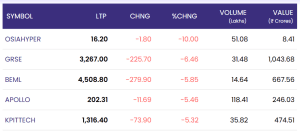
📉 Top Losers of the Day
Despite the upbeat mood, some stocks came under pressure due to profit booking and valuation concerns, especially in defense and auto ancillary segments.
Symbol
LTP
Change
% Change
Volume (Lakhs)
Value (₹ Cr)
OSIAHYPER
16.20
-1.80
-10.00%
51.08
8.41
GRSE
3,267.00
-225.70
-6.46%
31.48
1,043.68
BEML
4,508.80
-279.90
-5.85%
14.64
667.56
APOLLO
202.31
-11.69
-5.46%
118.41
246.03
KPITTECH
1,316.40
-73.90
-5.32%
35.82
474.51
Notable Points:
GRSE saw a steep correction after recent highs; heavy volumes indicate institutional profit booking.
BEML and KPITTECH also corrected following concerns over stretched valuations.
OSIAHYPER declined 10%, continuing its volatile trend from previous sessions.
🔍 Market Sentiment Drivers
Key reasons behind the day’s rally:
Cooling of global crude oil prices, easing inflation concerns
FII buying support, as seen in increased turnover across large caps
Optimism around upcoming earnings season in Q2
Improved global sentiment after the US Fed signaled a more dovish stance
June 24 marked a decisive comeback for Indian equity markets after a volatile previous week. Strong buying interest in financials, industrials, and consumer goods indicates renewed risk appetite among investors. While select pockets witnessed profit-taking, the broader mood remains upbeat heading into the final week of June.
Market participants are expected to track upcoming macro data releases, foreign fund flows, and Q2 pre-earnings outlooks for further cues.
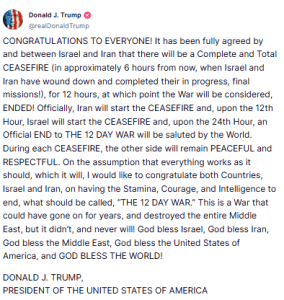
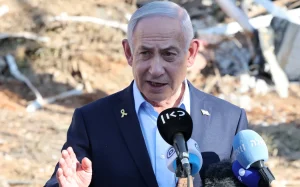
New Delhi – The credibility of Iran Israel Ceasefire Claims came under intense scrutiny following a deadly missile attack that killed four people in Beersheba on Tuesday morning. The Iranian missile strike on a residential building in southern Israel occurred just hours after President Donald Trump announced a ceasefire agreement between the two nations.
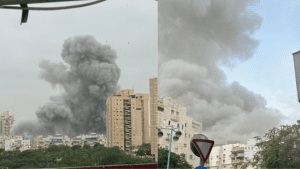
The Iran Israel Ceasefire Claims have been met with skepticism as multiple rounds of Iranian missile barrages continued to target Israeli territory even after the supposed agreement was announced. Emergency services confirmed the recovery of four bodies from the residential building that sustained a direct hit from an Iranian missile, raising serious questions about the effectiveness and timing of the Iran Israel Ceasefire Claims.
Four Casualties Confirmed in Beersheba Residential Attack
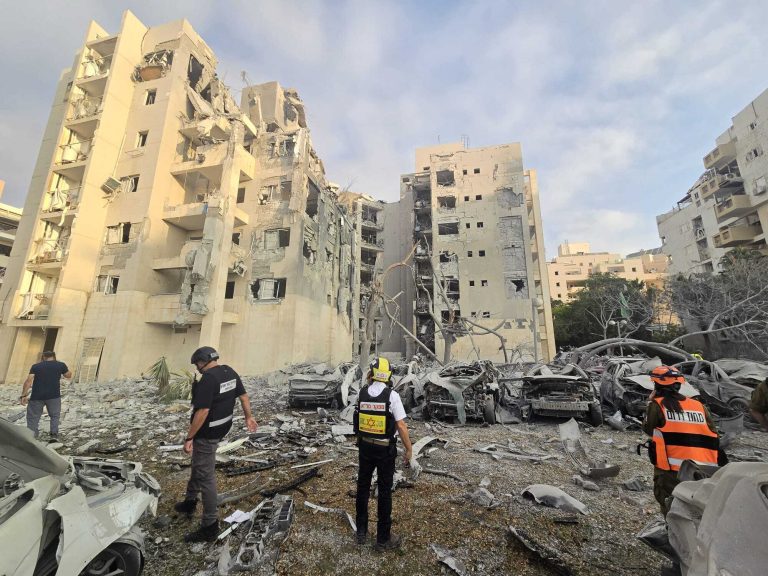
Israeli firefighters recovered four bodies from a residential building in Beersheba that was struck by an Iranian missile during the early morning hours. The deadly attack on Israel’s largest southern city occurred despite ongoing Iran Israel Ceasefire Claims that were supposed to halt hostilities between the two nations. Emergency services reported that several people were also injured in the missile strike, which caused significant damage to the residential structure.
The Iran Israel Ceasefire Claims appeared ineffective as the missile impact demonstrated Iran’s continued military operations against Israeli civilian targets. Beersheba, being a major population center in southern Israel, represents a significant escalation in targeting civilian infrastructure. Initial reports suggest the Iranian regime may have deliberately targeted populated areas, contradicting the spirit of any Iran Israel Ceasefire Claims.
The attack on Beersheba comes amid a broader pattern of Iranian missile strikes that have continued despite diplomatic efforts to establish peace. Local authorities have been coordinating evacuation and rescue operations while questioning the viability of the Iran Israel Ceasefire Claims given the ongoing violence. The residential nature of the target has raised concerns about Iran’s commitment to protecting civilian populations during any potential ceasefire negotiations.
Timeline of Iran Israel Ceasefire Claims and Continued Attacks
President Trump announced the Iran Israel Ceasefire Claims in the early hours of Tuesday, stating that both nations had agreed to halt military operations. However, the effectiveness of these Iran Israel Ceasefire Claims was immediately challenged when Iranian forces launched multiple missile barrages against Israeli targets. The Iranian Foreign Ministry had earlier indicated that attacks would cease at 4 AM local time, but subsequent events contradicted these Iran Israel Ceasefire Claims.
Israeli Defense Forces reported at least six rounds of Iranian missile attacks following the ceasefire announcement, undermining confidence in the Iran Israel Ceasefire Claims. The continued hostilities suggest that either the ceasefire terms were not clearly understood by both parties, or that one or both sides were not fully committed to the Iran Israel Ceasefire Claims as announced.
The sequence of events began with Trump’s announcement, followed by Iranian statements about halting attacks, and then the devastating missile strike on Beersheba. This timeline raises fundamental questions about the coordination and implementation of the Iran Israel Ceasefire Claims. Israeli officials have expressed cautious optimism about the ceasefire while maintaining that the agreement would only remain valid if both sides adhered to its terms.
International Response to Iran Israel Ceasefire Claims
The international community has been closely monitoring the Iran Israel Ceasefire Claims amid ongoing reports of continued military actions by both sides. President Trump’s role in mediating the Iran Israel Ceasefire Claims represents a significant diplomatic intervention in one of the region’s most volatile conflicts. However, the continued missile attacks have raised questions about the enforceability of such agreements.
Regional allies and international observers have expressed mixed reactions to the Iran Israel Ceasefire Claims, with many calling for immediate verification mechanisms to ensure compliance. The United States, having announced the ceasefire, now faces the challenge of ensuring both parties honor the Iran Israel Ceasefire Claims despite the continued violence.
Qatar has been mentioned as a potential mediator in implementing the Iran Israel Ceasefire Claims, given its diplomatic relationships with both nations. The Gulf state’s involvement could provide the necessary neutral ground for monitoring and enforcing the terms of any lasting agreement between Iran and Israel.
Military Actions Preceding Iran Israel Ceasefire Claims
The Iran Israel Ceasefire Claims came after a significant escalation in military actions between the two nations over recent weeks. Iranian forces had launched retaliatory attacks against U.S. military bases in Qatar and Iraq, responding to American strikes on Iranian nuclear facilities at Isfahan, Natanz, and Fordow. These pre-ceasefire military exchanges created the context for the current Iran Israel Ceasefire Claims.
The United States conducted successful strikes against three Iranian nuclear sites, with President Trump describing the operations as achieving significant damage to Iran’s nuclear infrastructure. These actions directly preceded the Iran-Israel Ceasefire Claims and may have created the conditions necessary for Iran to agree to the proposed ceasefire terms.
Israeli military operations against Iranian positions had intensified in the days leading up to the Iran-Israel Ceasefire Claims, with multiple waves of airstrikes targeting Iranian military infrastructure. The escalating conflict had drawn international concern about the potential for a broader regional war, making the Iran Israel Ceasefire Claims particularly significant for regional stability.
Current Status of Iran-Israel Ceasefire Claims
As of Tuesday afternoon, the status of the Iran-Israel Ceasefire Claims remains uncertain following the fatal Beersheba attack. Israeli Prime Minister Benjamin Netanyahu’s office has indicated agreement with Trump’s ceasefire proposal, but official confirmation is still awaited. The Iran-Israel Ceasefire Claims face their first major test with the continued missile attacks challenging their credibility.
Iranian officials have provided contradictory statements about their commitment to the Iran-Israel Ceasefire Claims, with some indicating adherence to the agreement while military operations continue. The Iranian Foreign Minister’s cryptic social media statements about halting attacks “until the last minute” before 4 AM have added confusion to the Iran Israel Ceasefire Claims.
Verification of the Iran-Israel Ceasefire Claims will require immediate cessation of all military activities by both parties, something that has not yet been achieved given the ongoing missile attacks. International monitors may need to be deployed to ensure compliance with the terms of any agreement.
Conclusion: Uncertainty Surrounds Iran Israel Ceasefire Claims
ediate challenges following the deadly Beersheba attack that killed four civilians. Despite high-level diplomatic announcements, the continued violence raises fundamental questions about the viability and implementation of the proposed agreement between these longtime adversaries.
New Delhi – In a groundbreaking administrative reform that promises to revolutionize the business landscape in the national capital, Delhi Police NoC not required has become the new reality for seven major commercial categories. This historic decision represents a significant departure from decades-old bureaucratic practices that had created substantial barriers for entrepreneurs and business owners seeking to establish commercial operations in Delhi.
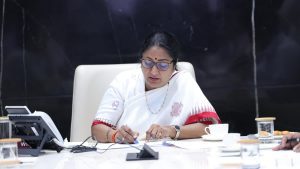
Chief Minister Rekha Gupta announced this transformative policy change at a press conference on Monday, describing the reform as “historic” and emphasizing its potential to streamline business operations while allowing law enforcement to focus on their core responsibilities. The announcement that Delhi Police NoC not required for these specific business categories marks a watershed moment in Delhi’s approach to regulatory governance and ease of doing business.
The reform follows a directive issued on June 19 by Lieutenant Governor VK Saxena, which formally eliminated the mandatory Delhi Police licensing clearance requirement. This decision means that Delhi Police NoC not required for hotels, guest houses, restaurants, swimming pools, discotheques, video game parlours, amusement parks, and auditoriums represents a fundamental shift in how commercial establishments will operate in the capital.
Comprehensive Business Categories Affected
The scope of businesses where Delhi Police NoC not required encompasses a diverse range of commercial establishments that form the backbone of Delhi’s hospitality and entertainment sectors. Hotels and guest houses, which have traditionally faced the most complex licensing procedures, will now benefit from simplified approval processes without the need for police clearance.
Restaurants, which constitute a significant portion of Delhi’s commercial landscape, will find that Delhi Police NoC not required eliminates one of the most challenging aspects of their licensing journey. Swimming pools, both standalone facilities and those attached to hotels and clubs, will no longer need to navigate the complex police approval process that often delayed their operational timelines.
Entertainment venues such as discotheques and video game parlours, where Delhi Police NoC not required represents a particularly significant change, will benefit from reduced regulatory burden. These establishments had previously faced extensive scrutiny regarding law and order implications, making the police clearance one of the most difficult approvals to obtain.
Amusement parks and auditoriums complete the list of categories where Delhi Police NoC not required will transform the business establishment process. These venues, which often serve large numbers of visitors, had previously required extensive police evaluation regarding crowd control and security measures.
Massive Impact on Business Community
Chief Minister Gupta emphasized that the decision ensuring Delhi Police NoC not required would benefit approximately 25,000 establishments and over 1.5 to 2 million workers across the capital. This massive scale of impact demonstrates the far-reaching consequences of regulatory reform and its potential to transform the business environment.
The announcement that Delhi Police NoC not required represents what Gupta described as “a win for both ease of doing business and strengthening law and order.” This dual benefit approach recognizes that simplifying business processes while allowing police to focus on core duties like crime prevention, women’s safety, and public order serves the broader public interest.
For over four decades, businesses in categories where Delhi Police NoC not required is now the standard had been required to obtain dual licensing – one from municipal bodies and another from Delhi Police. This duplication created unnecessary bureaucratic burden, increased costs, and extended timelines for business establishment.
Elimination of Bureaucratic Duplication
The historic nature of this reform becomes clear when considering that Delhi Police NoC not required eliminates a licensing requirement that had been in place for more than 40 years. The previous system required entrepreneurs to navigate multiple approval processes, with police clearance often proving to be the most challenging and time-consuming component.
Chief Minister Gupta explained that the new system where Delhi Police NoC not required would be “streamlined, cost-effective and time-saving,” supported by a single-window clearance platform designed to ensure transparency and faster approvals. This technological integration represents a modern approach to regulatory governance that leverages digital platforms to improve efficiency.
The reform aligns with Union Home Minister Amit Shah’s position that police should not be encumbered with non-core administrative tasks like business licensing. Since policing in Delhi falls under Union home ministry jurisdiction, this policy change reflects broader central government priorities regarding police role optimization.
Statistical Evidence of Reform Necessity
The data supporting the decision that Delhi Police NoC not required reveals the extent of challenges faced by businesses under the previous system. According to Municipal Corporation of Delhi data, Delhi Police had the highest rejection rate among all departments involved in trade licensing processes, with a staggering 71.1% rejection rate.
Between October 2019 and the reform announcement, Delhi Police received 51,858 applications for licenses related to establishments where Delhi Police NoC not required is now the standard. Of these applications, 36,903 were rejected, with only 13,354 receiving approval. This rejection rate far exceeded other regulatory bodies involved in the licensing process.
In contrast, Delhi Fire Services, which will continue its role even though Delhi Police NoC not required, maintained a rejection rate of only 11.5% during the same period. The Delhi Pollution Control Committee rejected 35.3% of applications, while the Municipal Corporation of Delhi had a rejection rate of approximately 50%.
Police Perspective on Regulatory Change
Delhi Police defended their previous scrutiny levels, explaining that their assessment process involved more than 30 parameters, including criminal background checks, law and order implications, traffic feasibility, CCTV installation requirements, and licensing considerations for liquor and health trade establishments.
A senior licensing unit officer emphasized that police evaluation went beyond standard safety norms, stating that “law and order is a major concern” in their assessment process. However, the reform recognizing that Delhi Police NoC not required allows the force to redirect resources toward core policing functions while maintaining public safety through other mechanisms.
The police had previously flagged several hotels and guest houses for failing to verify guests and becoming hubs of illegal activity. In 2022, the Joint Commissioner of Police had even requested booking platforms to delist properties that failed to meet security standards. The reform ensuring Delhi Police NoC not required will require alternative approaches to address these legitimate security concerns.
Political and Industry Response
Delhi Mayor Raja Iqbal Singh welcomed the change, emphasizing that Delhi Police NoC not required would ease the burden on business owners significantly. He stated that entrepreneurs would now be able to focus on running their businesses instead of chasing documents, with the single-window system making health trade license acquisition from MCD much simpler.
Standing Committee Chairperson Satya Sharma described the reform as ending “Inspector Raj,” ensuring that business owners would no longer be at the mercy of multiple officials. This perspective highlights how Delhi Police NoC not required addresses concerns about regulatory harassment and bureaucratic inefficiency.
Industry associations responded enthusiastically to the announcement. K. Syama Raju, president of the Federation of Hotel & Restaurant Associations of India, described the step as particularly beneficial for an industry still recovering from economic disruptions. The decision that Delhi Police NoC not required would help reduce compliance burdens, encourage entrepreneurship, and boost investor confidence.
Implementation and Future Implications
The implementation of Delhi Police NoC not required for the seven specified business categories will be supported by enhanced single-window clearance mechanisms designed to maintain regulatory oversight while improving efficiency. This technological integration ensures that the elimination of police clearance requirements doesn’t compromise other important regulatory functions.
The reform represents a model that other states might consider adopting, as suggested by industry leaders who hope this approach will spread beyond Delhi. The success of Delhi Police NoC not required could influence similar regulatory reforms across India, potentially transforming how businesses interact with government approval processes nationwide.
This historic change demonstrates how targeted regulatory reform can simultaneously improve business climate while allowing government agencies to focus on their core functions, creating a win-win scenario for economic development and public administration efficiency.











 Several midcaps saw exceptional gains, with BAJAJCON, EIEL, and MUKANDLTD leading the charts on the back of strong volumes and sector-specific triggers.