Friday, March 6, 2026
Home Blog Page 69

4 Cops Arrested Theft: Shocking Mumbai Police Corruption Case Exposed

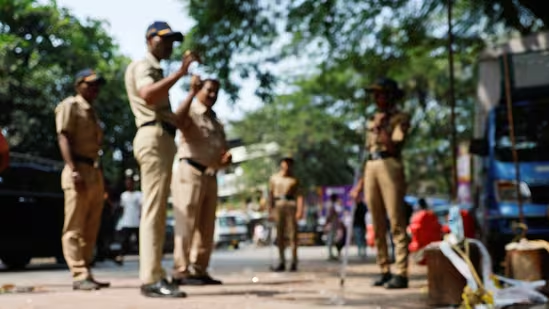
Maharashtra – Four Mumbai police officers have been taken into custody after an internal investigation substantiated allegations that cops arrested theft involving cash and gold jewellery during a raid on suspected Bangladeshi nationals allegedly residing illegally in the city, marking a significant case of police misconduct within the Anti-Terrorism Cell unit.

Identity of Accused Officers

The cops arrested theft case involves assistant police inspector Vijay Sutar and three constables identified as Yogesh Khandge, Nemane, and Petkar. All four accused officers were attached to the RCF police station’s Anti-Terrorism Cell unit, a specialized division responsible for handling sensitive security operations and investigations related to potential terrorist activities.

The arrest of these officers represents a serious breach of public trust, as members of the Anti-Terrorism Cell are expected to maintain the highest standards of professional conduct given the sensitive nature of their duties. The fact that cops arrested theft includes a senior officer at the assistant police inspector rank adds gravity to the misconduct allegations.

Details of the Alleged Theft Incident

According to police officials, the incident that led to cops arrested theft occurred approximately one month ago during a coordinated drive against suspected illegal Bangladeshi nationals alleged to be living in Mumbai without valid documentation. During one such operation, the police team raided the residence of an alleged Bangladeshi woman, where the theft purportedly took place.

The social worker who filed the complaint stated that the police team entered the house and took away cash and gold jewellery without proper procedure or documentation. This complaint became the foundation for the internal inquiry that ultimately resulted in cops arrested theft on serious corruption charges.

The timing of the theft during an official operation targeting suspected illegal immigrants raises questions about oversight mechanisms during such sensitive raids. The incident highlights vulnerabilities in the system that allowed officers to allegedly exploit their authority for personal gain while conducting operations meant to uphold law and order.

Social Worker’s Complaint Triggers Investigation

The case leading to cops arrested theft began when a social worker lodged a formal complaint with senior police officials detailing the alleged misconduct during the raid. The complaint provided specific information about the theft of cash and gold jewellery, prompting authorities to take the allegations seriously given the reputation implications for the police department.

Also Read: Voter List Issues Will Be Resolved, EPIC Cards to Be Issued Within 15 Days: Maharashtra Chief Electoral Officer

Social workers often serve as bridges between vulnerable communities and law enforcement, making their complaints particularly significant. In this instance, the social worker’s willingness to come forward proved crucial in initiating the investigation that resulted in cops arrested theft and potential prosecution of the accused officers.

Preliminary Inquiry and Evidence Collection

Following receipt of the allegations, senior police officers ordered a comprehensive preliminary inquiry into the matter. Investigators undertook a thorough examination of the sequence of events surrounding the raid, meticulously recorded statements from relevant parties, and examined all available material evidence to determine the veracity of the theft allegations.

The investigation team’s diligence in reviewing evidence proved critical in establishing grounds for cops arrested theft. Investigators found the complaint to be genuine and substantiated by available evidence, leading to the registration of a First Information Report against the four policemen under relevant legal provisions late Sunday night.

The systematic approach to the internal inquiry demonstrates the department’s commitment to accountability, ensuring that the investigation leading to cops arrested theft was conducted with appropriate rigor and adherence to procedural requirements.

Registration of FIR and Custody

Once the preliminary inquiry established merit in the complaint, an FIR was formally registered against the four accused officers under applicable legal provisions. The registration of the FIR represented a crucial procedural step that transformed the internal investigation into a criminal case, enabling formal prosecution of the cops arrested theft charges.

Immediately following the case registration, all four accused officers were taken into custody. The swift action in arresting the officers demonstrates the seriousness with which senior police officials viewed the allegations and their determination to maintain departmental integrity despite the involvement of their own personnel.

Ongoing Investigation and Questioning

The cops arrested theft case remains under active investigation, with the accused officers currently in police custody undergoing questioning. Investigators are working to establish the complete sequence of events, determine the exact value of stolen items, identify any additional victims, and ascertain whether other officers may have been involved in similar misconduct.

Officials indicated that the questioning process aims to gather comprehensive information about the theft, the officers’ motivations, and whether this represents an isolated incident or part of a broader pattern of corruption within the unit. The investigation seeks to ensure that all aspects of the cops arrested theft case are thoroughly examined before formal charges are filed.

Implications for Police Accountability

This case of cops arrested theft underscores the importance of robust internal accountability mechanisms within police departments. The incident demonstrates that complaints against officers, even those in specialized units like the Anti-Terrorism Cell, will be investigated seriously and appropriate action taken when misconduct is substantiated.

The successful resolution of this complaint may encourage other victims of police misconduct to come forward, knowing that the system can deliver justice even when the accused are law enforcement officers themselves.

Animation Gaming Jobs: Delhi’s Bold Policy to Transform Creative Industry

New Delhi – The Delhi government is developing a comprehensive policy framework designed to establish the national capital as a creative job hub by significantly boosting animation gaming jobs opportunities across the animation, visual effects, gaming, and comics sector, marking a major initiative to transform Delhi’s creative economy landscape.

Policy Development and Public Consultation Process

According to government officials, the Tourism Department of the Delhi government is currently finalizing a draft policy specifically focused on creating more animation gaming jobs in the capital. The department plans to place this draft in the public domain to gather feedback from stakeholders, industry professionals, and citizens before presenting it to the Delhi cabinet for formal approval.

This consultative approach ensures that the policy addressing animation gaming jobs incorporates perspectives from all relevant parties, including creators, studios, educational institutions, and technology experts. The public feedback mechanism will help identify gaps and opportunities that can make Delhi’s policy for animation gaming jobs more effective and comprehensive than similar initiatives in other states.

Chief Minister’s Vision for Creative Job Capital

Chief Minister Rekha Gupta articulated her vision for expanding animation gaming jobs during her Republic Day address at Chhatrasal Stadium on Sunday. She outlined ambitious plans to establish a dedicated centre supporting the industry’s growth and preventing talent exodus from Delhi.

“The creative talent of Delhi will no longer have to go outside. Delhi will emerge as a creative job capital. We will attract foreign studios to the city,” Gupta declared, emphasizing her government’s commitment to creating sustainable animation gaming jobs within the capital. She announced plans to establish a regional centre of the National Centre of Excellence for Animation, Visual Effects, Gaming, Comics and Extended Reality (AVGC-XR) in Delhi, complementing the main centre being established in Mumbai.

National Framework and Regional Centre

In September 2024, the Union cabinet approved the establishment of a national centre of excellence for AVGC-XR in Mumbai as a not-for-profit company. This national initiative aims to elevate India’s position in the global creative industry while generating thousands of animation gaming jobs across the country.

An official privy to the development revealed that the Delhi government will formally approach the Central government to establish a regional centre in the national capital. This regional centre will focus specifically on creating animation gaming jobs for Delhi’s creative workforce while serving as a catalyst for attracting major studios and production houses to the city.

Learning from Maharashtra’s Policy Model

The Delhi government is carefully studying Maharashtra’s AVGC-XR policy, which was approved by the state cabinet last year, to identify best practices that can enhance animation gaming jobs creation in Delhi. The Maharashtra policy proposes establishing and supporting AVGC-XR parks, clusters, studios, virtual production facilities, testing labs, and shared infrastructure across the state, including Tier 2 and Tier 3 cities.

Officials indicated that subsidies for the sector are being actively considered as part of Delhi’s strategy to make animation gaming jobs more accessible and attractive. The government recognizes that financial incentives can play a crucial role in encouraging entrepreneurs and established studios to invest in Delhi’s creative economy.

Comprehensive Support for Animation Gaming Jobs

The policy under preparation aims to address multiple dimensions of supporting animation gaming jobs in Delhi. Key focus areas include skill development programs, infrastructure support facilities, and encouraging collaboration between industry and academia to ensure a steady pipeline of qualified professionals for animation gaming jobs.

Government officials explained that the policy will facilitate access to bank loans at lower interest rates specifically for creators working in the animation and gaming sectors. This financial support mechanism is designed to reduce barriers to entry for aspiring entrepreneurs seeking to create animation gaming jobs through their own studios and ventures.

Additionally, the government plans to provide physical space where creators can develop their ideas and projects, addressing one of the most significant challenges facing those seeking to establish animation gaming jobs: the high cost of workspace in Delhi.

Pre-Policy AVGC Summit

Before finalizing the policy framework for animation gaming jobs, the government plans to host an AVGC Summit that will bring together industry stakeholders, creators, educators, and policymakers. This summit will serve as a platform to understand the community’s expectations, challenges, and suggestions regarding the policy’s provisions for creating and sustaining animation gaming jobs in Delhi.

The summit will enable direct dialogue between policymakers and industry professionals, ensuring that the final policy document addresses real-world challenges facing those seeking to create or access animation gaming jobs in the capital.

Strategic Objectives and Expected Outcomes

The policy’s overarching objectives center on retaining creative talent within Delhi, attracting foreign studios to establish operations in the city, and supporting creators through subsidies and shared facilities. By providing comprehensive support infrastructure for animation gaming jobs, Delhi aims to position itself as India’s premier destination for creative industries.

Officials expressed confidence that this multi-faceted approach combining skill development, financial support, infrastructure provision, and industry collaboration will successfully transform Delhi into a creative job capital, generating thousands of high-quality animation gaming jobs while preventing the brain drain that currently sees Delhi’s creative talent migrating to other cities and countries.

T20 World Cup: India’s Revolutionary Ultra-Attacking Batting Strategy Unveiled

0

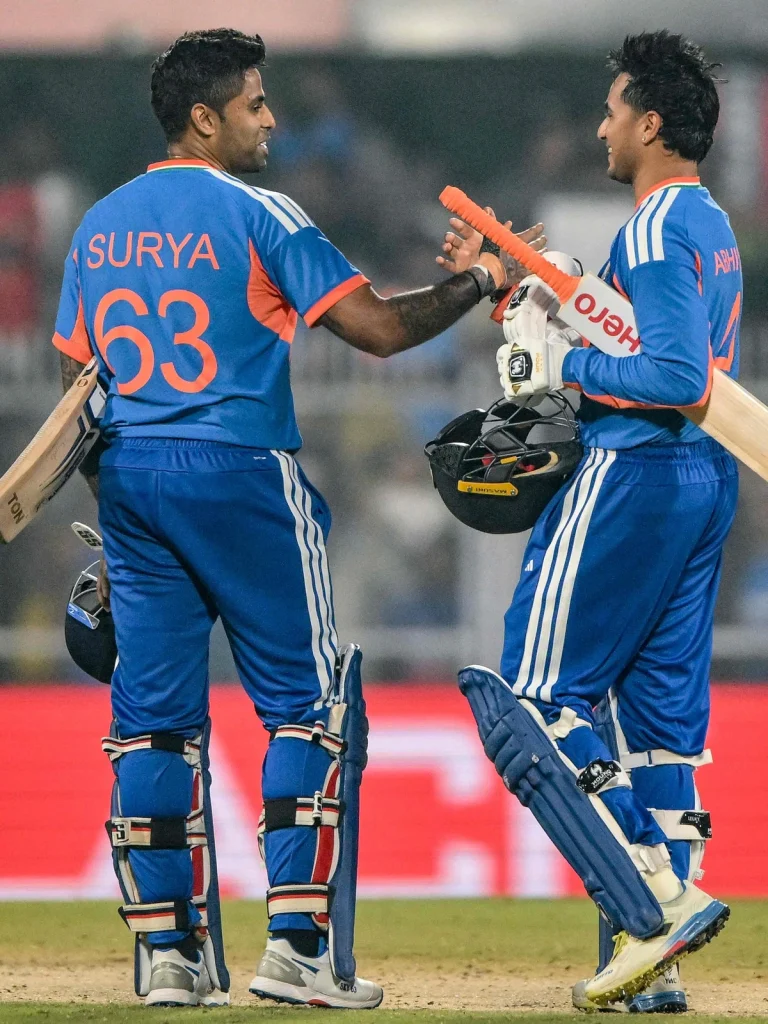
New Delhi – India has unveiled a revolutionary ultra-attacking batting philosophy ahead of the T20 World Cup title defence, with recent performances against New Zealand showcasing a bold strategic shift that prioritizes maximum aggression during Powerplay overs to establish psychological dominance over opponents.

Unprecedented Aggression in Recent Victories

India’s innings on Sunday demonstrated the extraordinary nature of this new approach toward the T20 World Cup preparation: a fifty achieved in just 19 balls, 94 runs accumulated by the end of the Powerplay, and 155 runs at the halfway stage to script an insane victory. The team completed the chase with 10 overs to spare, not even pausing for a drinks break. This wasn’t recreational cricket but rather a calculated demolition orchestrated by Abhishek Sharma, Ishan Kishan, and captain Suryakumar Yadav.

Days ahead of hosting the T20 World Cup at home, India is displaying dizzying levels of fantastical batting that promises to redefine tournament expectations. The team isn’t merely pushing boundaries; they’re kicking down doors before opposition bowlers can even attempt defensive strategies.

Abhishek Sharma’s Fearless Approach

Abhishek Sharma has emerged as the primary architect of this aggressive T20 World Cup strategy, embodying a batting philosophy that rejects half measures entirely. He doesn’t believe in cautious prods or sussing out conditions off his first delivery. In Raipur, a clean flick off his legs led to a first-ball dismissal, yet he remained undeterred. In Guwahati, he backed out of his stumps and picked a length ball over deep midwicket for a six off the opening delivery.

His 20-ball 68 not out in the third T20I exemplified this hostile takeover approach. Remarkably, Abhishek’s fastest fifty now stands just two balls away from Yuvraj Singh’s legendary 12-ball record from 2007. When asked about potentially breaking this milestone before the T20 World Cup, Abhishek responded modestly: “That’s more than impossible for anyone. But still, you never know. Any batsman could do it because I think all the batters have been batting really well in this series.”

Factory Reset of Traditional T20 Batting

Traditional T20 World Cup strategies have always followed a basic template: openers laying foundations, middle-order batters accelerating, and finishers supplying fireworks. What India is implementing now represents a complete factory reset of this conventional approach. The Powerplay has ceased being a phase to manage risk and has transformed into a weapon to impose fear upon opposing teams.

Abhishek warned against complacency despite these spectacular starts. “It’s not easy to do it every time,” he acknowledged. “But I think it’s all about mental as well as the atmosphere you get around your dressing room.” This mental framework appears crucial to India’s T20 World Cup preparations.

Strategic Intelligence Behind the Aggression

Crucially, this ultra-attacking T20 World Cup strategy isn’t simply mindless hitting. Abhishek has demonstrated that fearlessness and intelligence can coexist effectively. He will step down the track on the first ball but also take singles when boundaries aren’t available. He swings hard but rarely blindly. This balance makes his batting influential rather than merely entertaining, providing a sustainable model for T20 World Cup success.

Without being extravagant in shot selection, Abhishek is recalibrating T20 batting rhythm. When he’s at the crease, opposition teams feel rushed, captains burn through plans prematurely, nervous energy escalates, and bowlers abandon lengths they’ve trusted for years. New Zealand’s body language reflected this pressure: Raipur remained competitive, but Guwahati became a rout the visitors couldn’t wait to conclude.

Captain’s Endorsement of New Philosophy

Captain Suryakumar Yadav emphatically endorsed this approach for the T20 World Cup title defence. “This is the brand of cricket which we want to play, irrespective of whether we are batting first or chasing,” he stated. “Of course, for example, if we are 20/3 or 40/4 tomorrow, we know how to bat. But if you want to play a different brand of cricket, then I think this is the best way going forward.”

Significantly, India was 6/2 in Raipur, yet this made no discernible difference to their batting approach, demonstrating commitment to their T20 World Cup strategy regardless of circumstances.

Collective Effort and Momentum Building

The last two victories have underscored India’s evolved philosophy for the T20 World Cup: runs scored early carry greater value than runs accumulated later. Hitting opponents hardest during the Powerplay leaves them dazed and scrambling for options as momentum compounds every over until matches become one-way traffic.

While Abhishek dominates headlines, Ishan Kishan in Raipur and Suryakumar Yadav’s consistent finishing behind the scenes contribute equally to this strategy. Different players keep stepping up, creating collective unpredictability that opponents cannot strategize against effectively.

Simplified Batting for Middle and Lower Order

This T20 World Cup strategy has simplified batting for India’s entire lineup. Middle-order batters walk in with cushions instead of facing cliff edges. Finishers play with freedom rather than desperation. One batter’s intent has converted aggression from impulse into sound, reliable strategy.

As the T20 World Cup approaches, India’s revolutionary batting philosophy promises to challenge conventional tournament wisdom, potentially establishing new standards for aggressive cricket that future teams will attempt to emulate.

Republican Party: Chris Madel’s Shocking Exit From Minnesota Governor Race

Washington D.C. – Minneapolis lawyer Chris Madel has announced his withdrawal from the Minnesota gubernatorial race and raised serious questions about his continued membership in the Republican party following the deaths of two protesters at the hands of federal immigration authorities, marking a dramatic shift in his political stance and campaign trajectory.

Madel’s Republican Party Dilemma

Chris Madel, who previously represented the immigration agent responsible for the fatal shooting of Renee Good, declared in a video message shared on social media that he cannot endorse the national Republican party’s approach toward Minnesota citizens. “I cannot endorse the national Republicans’ stated retribution on the citizens of our state, nor can I consider myself a member of a party that would engage in such actions,” Madel stated emphatically.

While Madel’s statement strongly questioned his affiliation with the Republican party, he notably did not explicitly confirm whether he has officially resigned his membership. This ambiguity has left political observers speculating about his future political alignment and whether he will formally sever ties with the Republican party or attempt to work for change from within.

Background of the Republican Party Candidate

Madel, who has not previously held any elected position, initiated his candidacy for the Republican party gubernatorial nomination in December, positioning himself as a political outsider and a staunch advocate for law enforcement. His campaign resonated with certain constituencies, earning him the endorsement of the Police Officers Federation of Minneapolis, a significant achievement for someone entering the Republican party primary field.

Also Read: Deportation Push: Trump Administration Defends Controversial Immigration Policy

As one of nearly a dozen candidates competing in the Republican party primary for governor of Minnesota, Madel had carved out a distinct identity based on his law enforcement advocacy and outsider status. His background as a Minneapolis-based lawyer provided him with credibility on legal and public safety issues that were central to his Republican party campaign platform.

Controversial Legal Representation

Madel attracted considerable attention earlier this month for providing legal counsel to Jonathan Ross, the Immigration and Customs Enforcement agent who shot 37-year-old Renee Good from Minneapolis on January 7. This representation placed Madel at the center of controversy surrounding federal immigration enforcement operations, a position that would ultimately influence his decision regarding the Republican party and his gubernatorial campaign.

His willingness to represent the ICE agent initially aligned with his Republican party credentials as a law enforcement advocate. However, subsequent events and the escalation of federal operations in Minnesota prompted a fundamental reassessment of his political positioning within the Republican party framework.

Criticism of Operation Metro Surge

In his video statement posted on social media platform X, Madel delivered sharp criticism of federal immigration enforcement operations that appear to conflict with traditional Republican party stances on law and order. “Operation Metro Surge has expanded far beyond its stated focus on true public safety threat,” Madel declared, highlighting his growing concerns about federal overreach.

Madel specifically condemned the climate of fear created among United States citizens, particularly people of color, who now feel compelled to carry documentation proving their citizenship. “United States citizens, particularly those of color, live in fear. United States citizens are carrying papers to prove their citizenship. That’s wrong,” he stated, taking a position that diverges from hardline Republican party immigration enforcement advocates.

Racial Profiling Allegations

The former Republican party gubernatorial candidate stated that an excessive number of US citizens in Minnesota have been apprehended by ICE “due to their skin color,” making a direct accusation of racial profiling in federal enforcement operations. He further criticized the Department of Homeland Security’s practice of entering residences without criminal warrants, raising constitutional concerns.

“Driving while Hispanic is not a crime,” Madel remarked pointedly. “Nor is driving while Asian.” These statements represent a significant departure from typical Republican party rhetoric on immigration enforcement and suggest a fundamental disagreement with how the national Republican party is handling immigration policy implementation.

Catalyst for Withdrawal

Madel’s dramatic exit from the Republican gubernatorial race came just two days after federal agents fatally shot Alex Pretti, an intensive care nurse at the Minneapolis VA Medical Center who was demonstrating against immigration policies. This second death of a protester in Minnesota proved to be the decisive factor in Madel’s decision to withdraw from the Republican party primary contest.

The shooting of Pretti, following the earlier death of Renee Good, created an untenable political situation for Madel, who found himself unable to reconcile his law enforcement advocacy with the actions being taken by federal authorities. His statement suggests that he views these incidents as representing a broader Republican party approach that he can no longer support.

Political Implications

Madel’s withdrawal from the Republican gubernatorial race and his questioning of party membership reflects deeper tensions within the Republican over immigration enforcement methods, federal authority, and civil liberties. His decision may influence other Republicans who are uncomfortable with aggressive immigration enforcement tactics while remaining committed to border security and public safety principles.

Deportation Push: Trump Administration Defends Controversial Immigration Policy

Washington D.C. – The White House has issued a forceful defense of President Donald Trump’s deportation push following the fatal shooting of a Minnesota nurse by federal immigration officers, stating that the administration remains committed to removing violent criminal illegal aliens despite growing criticism and public outcry over enforcement tactics.

White House Statement on Deportation Push

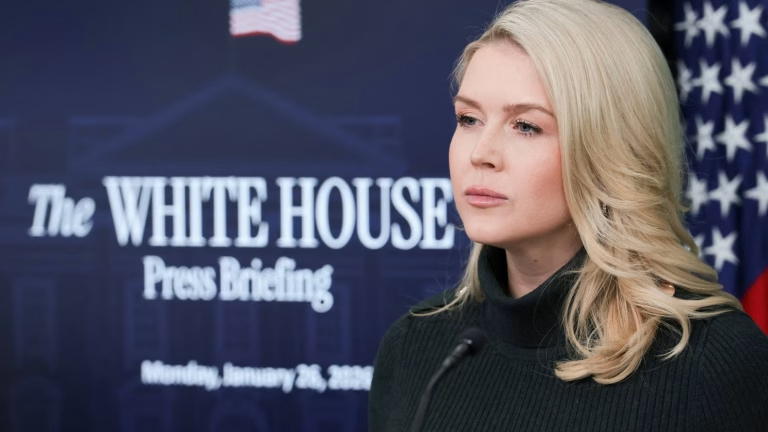
White House press secretary Karoline Leavitt affirmed that President Trump does not want to see people getting hurt or killed on American streets while simultaneously defending the controversial deportation push that has resulted in heightened tensions across the country. Speaking to reporters on Monday, Leavitt emphasized that the Trump-led administration “will never back down from his promise to deport violent criminal illegal aliens and make America safe again, and he welcomes all cooperation in that effort.”

The statement came in response to the killing of 37-year-old nurse Alex Pretti by federal immigration officers in Minnesota on Saturday. This tragic incident has sparked intense debate about the methods and consequences of the administration’s aggressive deportation push, with critics questioning whether enforcement tactics have become too dangerous for American citizens.

Minnesota Shooting Incident Details

The fatal shooting of Alex Pretti represents the second death of a US citizen in Minnesota related to immigration enforcement operations. Previously, 37-year-old Renee Nicole Good was fatally shot by an Immigration and Customs Enforcement agent in Minneapolis on January 7, raising serious concerns about the safety implications of the intensified deportation push.

The Trump administration initially alleged that immigration agents had fired at Pretti in self-defense after he approached them with a handgun during the enforcement operation. However, video footage from the scene, verified by news agencies, contradicted this official account, adding another layer of controversy to the deportation push implementation.

Also Read: EU India Trade Deal Sparks Controversy: Bessent’s Shocking Russian Oil Claims

The video footage purportedly showed Pretti holding a phone rather than a gun as agents wrestled him to the ground. The footage further revealed officers removing a firearm stored near his waistband only after he was subdued. Pretti was a licensed gun owner, a fact that has intensified debates about second amendment rights intersecting with the aggressive deportation push.

White House Blames Democrat Leadership

Press Secretary Leavitt placed responsibility for the tragic outcome squarely on Democrat leaders in Minnesota, arguing that their opposition to the deportation push created dangerous circumstances. “Let’s be clear about the circumstances which led to that moment on Saturday. This tragedy occurred as a result of a deliberate and hostile resistance by Democrat leaders in Minnesota for weeks,” Leavitt stated during her briefing.

Democrat leaders have consistently opposed the deployment of immigration agents to Minnesota, characterizing the deportation push as a lawless invasion that puts public safety at risk. Their resistance has created significant friction between state and federal authorities over immigration enforcement priorities and methodologies.

Call for Cooperation on Deportation Push

Despite the controversy, Leavitt urged Democrat leaders to cooperate with the federal deportation push by turning over illegal immigrants who are currently in prison, as well as those with active warrants or known criminal histories, to federal authorities for immediate deportation. The White House maintains that such cooperation is essential for public safety and effective immigration enforcement.

The administration’s deportation push focuses particularly on individuals with criminal records, though critics argue that enforcement operations have been conducted with insufficient regard for public safety and constitutional protections. The call for cooperation represents an attempt to streamline the deportation push while reducing confrontational encounters between federal agents and local communities.

Political Divide Over Immigration Enforcement

The deportation push has become a flashpoint in the ongoing political divide over immigration policy in the United States. While the Trump administration characterizes the deportation push as fulfilling a campaign promise to make America safer by removing dangerous individuals, opponents view the aggressive tactics as disproportionate and threatening to community safety.

Democrat leaders continue to resist what they describe as federal overreach, arguing that the deportation push creates more problems than it solves. They contend that the presence of armed federal agents conducting enforcement operations in local communities generates fear, disrupts families, and has now resulted in multiple American deaths.

Administration’s Unwavering Stance

The White House has made clear that despite criticism and tragic incidents, the deportation push will continue unabated. Press Secretary Leavitt’s statements emphasized that President Trump views the deportation push as a non-negotiable element of his administration’s domestic policy agenda focused on law enforcement and border security.

The administration maintains that the deportation push targets violent criminals and individuals who pose threats to public safety, framing the policy as protective rather than punitive. However, incidents like the Minnesota shootings have raised questions about whether current implementation methods adequately balance enforcement objectives with public safety considerations.

Future of Immigration Enforcement

As the deportation push continues, the tension between federal immigration enforcement and state-level resistance appears likely to intensify. The Minnesota incidents have galvanized opposition while simultaneously hardening the administration’s resolve to pursue its immigration agenda, setting the stage for continued conflict over the scope, methods, and consequences of federal immigration enforcement operations across the United States.

Indian Ethnic Wear: Ursula von der Leyen’s Stunning Republic Day Look

New Delhi – European Commission President Ursula von der Leyen captivated observers at India’s 77th Republic Day celebrations by embracing Indian ethnic wear that perfectly blended traditional craftsmanship with contemporary sophistication, making a powerful statement of cultural appreciation and diplomatic elegance on the global stage.

Distinguished Chief Guests at Republic Day 2026

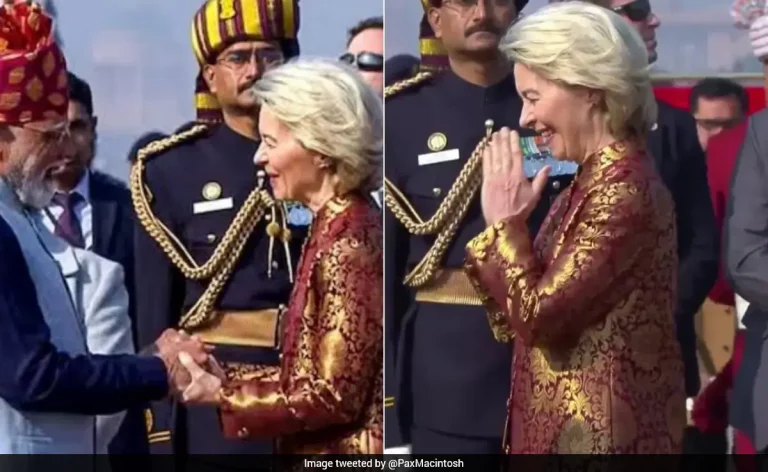
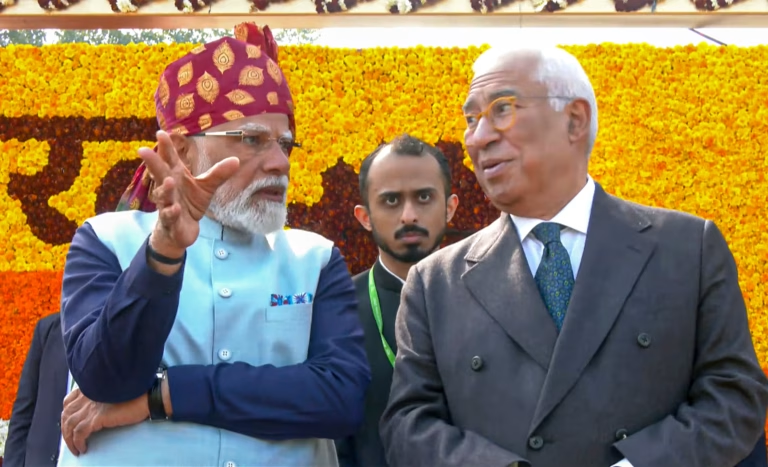
India welcomed two prominent European leaders as chief guests during the 77th Republic Day celebrations in 2026. President of the European Commission Ursula von der Leyen and President of the European Council António Luís Santos da Costa arrived on a state visit to India from January 25 to 27. On the morning of January 26, both dignitaries appeared on Kartavya Path alongside President of India Droupadi Murmu to witness the grand Republic Day parade, with von der Leyen’s choice of Indian ethnic wear becoming a highlight of the ceremonial occasion.

While Santos da Costa maintained a traditional diplomatic appearance with a dark, sharp-cut suit appropriate for the cold winter morning, it was von der Leyen who elevated her fashion choices to honor the significance of the occasion through her selection of Indian ethnic wear.

The Exquisite Indian Ethnic Wear Ensemble

Von der Leyen’s attire demonstrated a masterclass in Indo-European fusion fashion. She selected a sophisticated, high-collared jacket that showcased the finest elements of Indian ethnic wear traditions. The garment featured rich brocade work with metallic gold embroidery set against a deep maroon base, creating a striking visual impact that honored Indian textile heritage while maintaining contemporary elegance.

The material of this Indian ethnic wear piece appeared to be Benarasi silk, a fabric that stands synonymous with Indian heritage and craftsmanship. Benarasi silk, originating from the ancient city of Varanasi, represents centuries of weaving tradition and is considered one of the finest textiles in Indian ethnic wear collections. The choice of this particular fabric demonstrated von der Leyen’s understanding and appreciation of India’s rich textile legacy.

Also Read: EU India Trade Deal Sparks Controversy: Bessent’s Shocking Russian Oil Claims

Intricate Zari Work and Craftsmanship

The star element of von der Leyen’s Indian ethnic wear was undoubtedly the intricate Zari work that adorned the entire jacket. Zari refers to threads of gold or silver woven into fabric, a traditional embellishment technique that has defined Indian ethnic wear for generations. The ornate, raised patterns showcased classic Indian floral motifs set in a dense, regal texture that covered the entire piece.

This elaborate Zari work represented hours of skilled craftsmanship by Indian artisans, with each thread carefully woven to create the three-dimensional effect characteristic of premium Indian ethnic wear. The metallic gold threading caught the light beautifully during the outdoor parade, creating a luminous effect that enhanced the ceremonial atmosphere of the Republic Day celebrations.

Styling and Presentation

The European Commission President’s approach to wearing Indian ethnic wear demonstrated sophisticated fashion sensibility. The ornate jacket was thoughtfully paired with white trousers, a styling choice that allowed the bold texture and intricate detailing of the Indian ethnic wear to remain the undisputed focal point of the ensemble. This pairing created a balanced look that was neither overwhelming nor understated.

Von der Leyen kept accessories minimal, recognizing that the Indian ethnic wear itself provided sufficient visual interest. She opted for sophisticated gold stud earrings that complemented the metallic gold Zari work without competing for attention. This restrained approach to accessorizing allowed the craftsmanship of the Indian ethnic wear to speak for itself while maintaining diplomatic elegance appropriate for the state occasion.

Fashion Diplomacy and Cultural Appreciation

The selection of Indian ethnic wear by such a prominent international leader carries significant diplomatic symbolism. Von der Leyen’s choice to embrace traditional Indian craftsmanship during the Republic Day celebrations demonstrated respect for Indian culture and served as a gesture of goodwill between the European Union and India. Fashion diplomacy, particularly the wearing of host country attire by visiting dignitaries, has long been recognized as a meaningful form of cultural exchange.

By choosing authentic Indian ethnic wear featuring traditional techniques like Benarasi silk weaving and Zari embroidery, von der Leyen highlighted the importance of preserving traditional crafts while showcasing their contemporary relevance on the world stage. Her ensemble became a talking point that transcended mere fashion, representing the strengthening ties between India and the European Union.

European Union Military Presence

The diplomatic significance of the occasion extended beyond fashion. The presence of the European Union contingent in the Republic Day parade alongside India’s armed forces added substantial diplomatic weight to the 2026 celebrations. Colonel Frederik Simon Spruijt led the EU military representation on board a ceremonial Gypsy, acting on behalf of the Director General of the European Union Military Staff, Michiel van der Laan.

Von der Leyen’s choice of Indian ethnic wear, combined with this military representation, symbolized the deepening partnership between India and the European Union across multiple dimensions—cultural, economic, and strategic—marking the 77th Republic Day as a milestone in Indo-European relations.

Slum Development Projects: Delhi CM Launches Big Rs.327 Crore Initiative

New Delhi – Delhi Chief Minister Rekha Gupta marked the 77th Republic Day by launching comprehensive slum development projects valued at ₹327 crore, signaling her government’s commitment to transforming living conditions in the capital’s jhuggi-jhopri clusters through targeted infrastructure improvements and basic amenities.

Major Investment in Civic Infrastructure

The slum development projects announced on Monday focus primarily on establishing essential civic infrastructure within JJ clusters across Delhi. The initiative encompasses the construction of public convenience complexes and cement concrete roads and lanes designed to provide dignified living conditions for residents of informal settlements. Government officials revealed that of the approved ₹327 crore allocation, works amounting to ₹144 crore have already been awarded to contractors and are currently underway.

The chief minister unfurled the national flag at the Mukhyamantri Jan Seva Sadan during Republic Day celebrations before announcing these slum development projects. She paid homage to the architects of the Constitution and freedom fighters, emphasizing that January 26 represents not merely a date but a symbol of India’s self-respect, democratic consciousness, and complete sovereignty.

Comprehensive Budget Allocation for JJ Development

Beyond the Republic Day announcement, Gupta disclosed that the Delhi government has earmarked a dedicated budget of ₹700 crore specifically for JJ development. This substantial allocation demonstrates the administration’s prioritization of slum development projects as a core governance objective. The comprehensive budget covers work related to basic amenities, housing, health, sanitation, and social welfare initiatives, all being fast-tracked for implementation.

“It is my government’s objective to ensure that the benefits of development reach the last mile of society,” the chief minister stated, underscoring her administration’s inclusive approach to urban development. The slum development projects are being implemented with urgency, with several initiatives inaugurated specifically on Republic Day to mark the occasion with tangible action.

Essential Amenities Under the Development Plan

A comprehensive plan has been prepared under these slum development projects to ensure essential infrastructure reaches JJ areas. The blueprint includes construction of drains, roads, toilets, parks, and settlement development centres aimed at liberating residents from inhumane living conditions. These works have been prioritized and are being implemented at an accelerated pace to deliver rapid improvements.

The slum development projects also encompass the establishment of Atal Canteens, Ayushman Arogya Mandirs, and dedicated health and nutrition services. Gupta emphasized that these facilities, which were previously unavailable specifically for JJ residents, are now being systematically rolled out across slum clusters to ensure equitable access to basic services.

Personal Engagement with Slum Residents

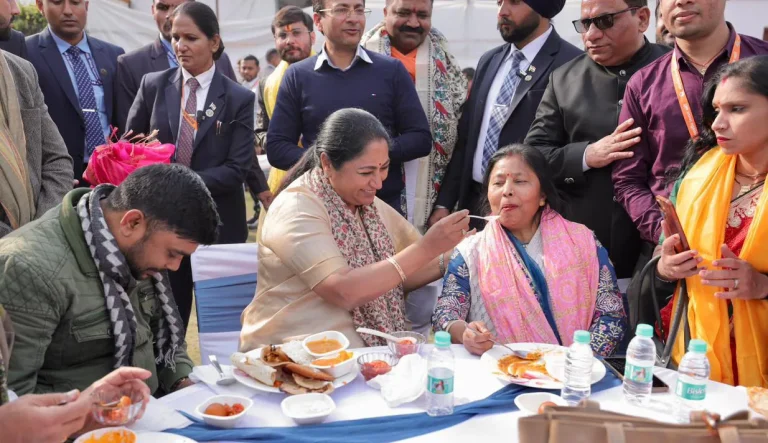
Demonstrating hands-on leadership, Chief Minister Gupta shared a meal with slum dwellers at her residence following the inauguration of the slum development projects. During this interaction, she held detailed discussions on the issues and requirements facing JJ residents, assuring them of her government’s complete dedication to improving their quality of life.

“Sharing a meal with JJ residents at my residence and inaugurating projects for them was particularly inspiring for the government,” Gupta remarked, highlighting the personal connection she seeks to establish with beneficiaries of these slum development projects.

Recognition of Slum Dwellers’ Contribution

The chief minister acknowledged the significant role that slum cluster residents have played in Delhi’s development, recognizing that workers living in these settlements have contributed substantially to the city’s growth. This recognition formed the philosophical foundation for prioritizing slum development projects within her government’s agenda.

Gupta wrote on social media that the Republic Day occasion “inspires us to further strengthen our commitment to the ideals of the Constitution, our duties, and the cause of nation-building.” She recalled that after Independence on August 15, 1947, India adopted its Constitution on January 26, 1950, declaring itself a nation of the people, by the people, and for the people.

Political Context and Criticism of Previous Administration

While announcing the slum development projects, Gupta launched sharp criticism against the former Aam Aadmi Party government, accusing the previous administration of treating JJ dwellers merely as a vote bank. She alleged that the earlier government had consistently created an atmosphere of fear among slum residents and failed to provide basic civic amenities despite making substantial promises.

The chief minister specifically criticized former Chief Minister Arvind Kejriwal, referencing allegations about lavish spending while ordinary citizens struggled. She asserted that her government considers the struggles of ordinary citizens as its own and remains devoted to serving them continuously.

Implementation Timeline and Future Plans

The slum development projects are being executed on a fast-track basis, with government officials monitoring progress closely. The ₹144 crore worth of projects already under construction represent the first phase of a larger transformation agenda for Delhi’s JJ clusters. The remaining projects from the ₹327 crore allocation will be progressively awarded and implemented in coming months, ensuring sustained momentum in improving slum living conditions across the capital.

Coldest Republic Day: Delhi Records Freezing Temperatures After 5 Years

0

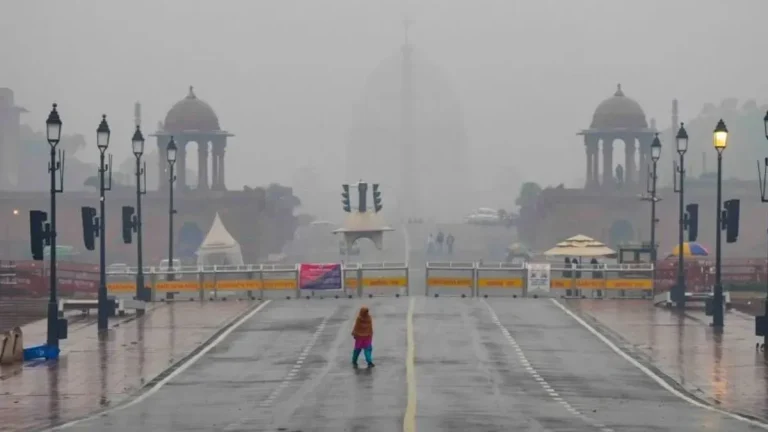
New Delhi – Delhi experienced its coldest Republic Day in five years on Monday as mercury plummeted across the capital, with some areas recording temperatures as low as 3.6°C. The sharp temperature drop brought isolated cold wave conditions to the national capital while simultaneously causing air quality to deteriorate to the “poor” category.

Record-Breaking Cold Grips the Capital

The capital recorded its coldest Republic Day since 2021, when temperatures had fallen to 2.1°C. On Monday, Safdarjung, the weather station considered representative of Delhi’s overall climate, logged a minimum temperature of 4.2°C, which was four degrees below the normal seasonal average. This marked a significant decline from Sunday’s 6.6°C and Saturday’s 7.6°C readings.

Ayanagar in southwest Delhi experienced even more severe conditions, recording the lowest temperature at 3.6°C, which was 5.4°C below normal. Meanwhile, North Delhi’s Ridge area registered 5.3°C, also five degrees below the seasonal average. The coldest Republic Day conditions were felt across multiple monitoring stations, confirming the widespread nature of the cold wave.

Causes Behind the Temperature Plunge

Officials attributed the sharp dip in minimum temperature to clear skies and sustained icy northwesterly winds that persisted throughout the weekend. These meteorological conditions created ideal circumstances for the coldest Republic Day temperatures in half a decade. The absence of cloud cover allowed heat to escape rapidly from the surface, while the continuous flow of cold winds from the northwest further intensified the chill.

According to meteorological experts, the India Meteorological Department defines a cold wave when the minimum temperature falls below 10°C and is at least 4.5°C below normal, or when the actual minimum temperature drops to 4°C or lower. At least two weather stations in Delhi met this criterion on Monday, officially qualifying the conditions as a cold wave.

Air Quality Deterioration Breaks Moderate Streak

While Delhi shivered through its coldest Republic Day, the capital’s air quality simultaneously took a turn for the worse. The 24-hour average air quality index stood at 241 at 4pm on Monday, compared with 153 at the same time on Sunday, according to Central Pollution Control Board data. This deterioration snapped a rare two-day streak of “moderate” air quality in January, with Sunday’s reading marking Delhi’s lowest AQI for January in four years.

The CPCB classifies air quality as “moderate” when AQI ranges between 101 and 200, while “poor” falls between 201 and 300. The spike in pollution levels coincided with the coldest Republic Day conditions, as weakening wind speeds during the day reduced pollutant dispersion.

Western Disturbance to Bring Relief

Wind speeds weakened during Monday due to the approach of a western disturbance, which meteorologists predict will raise temperatures and bring light rain to the city on Tuesday. The India Meteorological Department has issued a yellow alert for Delhi-NCR, forecasting one to two spells of light rain accompanied by gusty winds of up to 40 kilometers per hour.

“An intense western disturbance is likely to cause light to moderate rainfall and snowfall at many places over the western Himalayan region on January 27 and 28, with isolated heavy rain or snow and hailstorms expected,” the IMD stated in its national bulletin. Officials indicated that this weather system is likely to help keep air quality in check, with fresh snowfall expected in higher reaches.

Temperature Forecast and Expected Changes

According to IMD forecasts, Delhi’s minimum temperature is expected to hover between 8°C and 10°C on Tuesday, while the maximum is likely to range between 18°C and 20°C. This represents a significant warming trend compared to the coldest Republic Day readings.

Meteorological experts explained that when a western disturbance approaches, it causes a change in wind direction to warmer easterly winds. Overcast skies also lead to a rise in minimum temperature and a dip in maximum temperature. However, with fresh snowfall expected through this western disturbance, minimum temperatures across the plains are likely to dip again from January 29.

Ground Frost and Regional Impact

Similar cold conditions prevailed across the National Capital Region, with isolated pockets recording ground frost during the coldest Republic Day morning. Gurugram recorded a minimum temperature of 4.2°C, one degree below normal. Residents in south Delhi’s Sainik Farms reported significant frost accumulation, with local weather stations recording temperatures as low as 2.3°C.

Meanwhile, forecasts by the Centre’s Air Quality Early Warning System for Delhi indicated that air quality is likely to improve following Tuesday’s rainfall. “Delhi’s AQI is likely to be in the ‘moderate’ category from January 27 to 28. It is likely to be in the ‘poor’ category on January 29,” the system’s bulletin stated, offering hope for cleaner air after the coldest Republic Day in five years.

India EU Trade Deal: Powerful Message Against Global Protectionism

New Delhi – European Council President Antonio Costa has emphasized that the India EU trade deal represents a powerful statement against rising global protectionism and serves as a crucial stabilizer in an increasingly turbulent geo-economic landscape marked by unpredictability in international commerce.

India and EU as Global Stability Providers

Speaking in an exclusive interview, Costa highlighted that India and the European Union can jointly function as “strong providers of stability, protectability and reliability” on the global stage. The European Council President emphasized the critical importance of protecting the rules-based international order during a period characterized by growing geo-economic turbulence and trade uncertainty.

Costa, who served as chief guest at India’s Republic Day celebrations alongside European Commission President Ursula von der Leyen, will participate in the India-EU Summit scheduled for Tuesday. The summit is expected to witness the historic conclusion of negotiations for the India EU trade deal, marking a significant milestone in bilateral relations between the two democratic powers.

Strategic Significance of the India EU Trade Deal

The India EU trade deal carries profound geopolitical implications beyond its economic dimensions. Costa articulated that the agreement functions as “a very important geopolitical stabiliser and a showcase of how it’s possible to protect international rules-based trade.” This statement comes against the backdrop of significant disruption caused by protectionist trade policies adopted by various nations.

“Our trade agreement, I think, is a very important geopolitical stabiliser,” Costa stated, emphasizing how the India EU trade deal demonstrates commitment to multilateral cooperation rather than unilateral tariff measures. The European Council President, who traces his ancestral roots to Goa, stressed that in today’s multipolar world, closer partnership between the EU and India is essential for maintaining international stability.

Countering Global Protectionism Through Partnership

The India EU trade deal sends an “important political message to the world that India and the EU believe more in trade agreements than in tariffs,” Costa explained. This message resonates particularly strongly at a time when protectionism is rising globally and several countries have opted to increase tariffs rather than pursue cooperative trade frameworks.

Also Read: EU India Trade Deal Sparks Controversy: Bessent’s Shocking Russian Oil Claims

The agreement stands in stark contrast to recent trade policies implemented by the United States under Donald Trump, which have imposed punishing tariffs on multiple countries, including India. The US has levied 50 percent tariffs on Indian exports since late August, significantly impacting sectors such as textiles and jewellery.

Economic Impact and Trade Statistics

The European Union currently holds the position of India’s largest trading partner, with bilateral trade in goods valued at €120 billion in 2024, representing 11.5 percent of India’s total trade volume. Trade in services between the two regions reached €59.7 billion in 2023, demonstrating the depth of economic engagement.

Foreign direct investment figures further illustrate the strength of economic ties. The EU’s share of foreign direct investment stock in India reached €140.1 billion in 2023, showing substantial growth from €82.3 billion recorded in 2019. These statistics underscore the expanding economic relationship that the India EU trade deal aims to formalize and enhance.

Implementation Timeline and Expected Benefits

Once the India EU trade deal is formally signed and ratified by the European Parliament, a process anticipated to require at least one year, the agreement is expected to significantly expand bilateral trade. The deal could provide crucial relief to Indian exports, particularly in textiles and jewellery sectors that have been adversely affected by the 50 percent US tariffs implemented since late August.

The summit will also witness the finalization of a Security and Defence Partnership and a framework agreement designed to facilitate mobility for Indian students and professionals seeking opportunities in Europe.

Security and Defence Cooperation

Beyond trade, Costa emphasized the growing importance of security and defence cooperation between India and the EU. This collaboration is crucial for preserving security in the Indo-Pacific region and ensuring free and open commerce between the Indo-Pacific and Atlantic regions.

“We are working together with India in Operation Aspides and this has been very important to security in the Indo-Pacific and to preserve free and open trade between the Indo-Pacific and the Atlantic through the Mediterranean and the Red Sea,” Costa explained. The Security and Defence Partnership will build upon existing cooperation in cyber security, counter-terrorism, and maritime security domains.

Broader Geopolitical Context

The India EU trade deal emerges at a particularly significant moment in global affairs. Europe is recovering from recent tensions, including US President Trump’s controversial comments regarding Greenland and European NATO contributions. Meanwhile, India and the United States are separately negotiating a bilateral trade agreement despite current tariff disputes.

The India EU trade deal represents a strategic choice by both parties to pursue multilateral cooperation and rules-based trade rather than protectionist measures, positioning their partnership as a model for international commerce in an era of increasing economic nationalism.

EU India Trade Deal Sparks Controversy: Bessent’s Shocking Russian Oil Claims

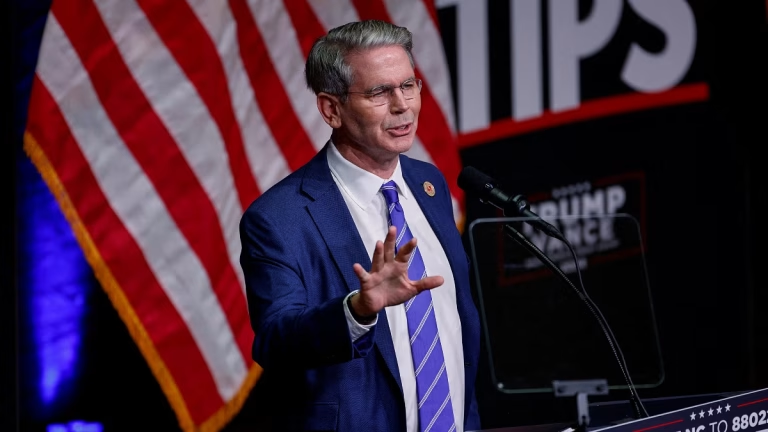
Washington D.C. – The finalization of the EU India trade deal has triggered intense scrutiny from US Treasury Secretary Scott Bessent, who has launched scathing criticism alleging that the agreement indirectly finances the Russia-Ukraine conflict through Russian oil trade arrangements.

Bessent’s Explosive Allegations Against the EU India Trade Deal

US Treasury Secretary Scott Bessent has openly criticized the recently finalized EU India trade deal, claiming that European nations are inadvertently funding a war against themselves. Speaking in a Sunday interview, Bessent expressed frustration that just as the United States imposed 25 percent tariffs on India for purchasing Russian oil, European leaders signed a trade agreement with the country.

“Just to be clear again, the Russian oil goes into India, the refined products come out, and the Europeans buy the refined products. They are financing the war against themselves,” Bessent stated, outlining his theory on how the EU India trade deal facilitates this arrangement.

Understanding the Russian Oil Connection

Bessent’s theory centers on a specific trade mechanism involving Russian crude oil. According to his explanation, India imports Russian oil, refines it into various petroleum products, and then exports these refined products to European markets. The Treasury Secretary argues this circular arrangement means Europeans are indirectly purchasing Russian oil despite sanctions, thereby providing Moscow with revenue during the ongoing Ukraine conflict.

The Trump administration has taken a hardline stance on this issue, imposing a total of 50 percent tariffs on India—including 25 percent specifically targeting the Russian oil trade relationship. Bessent emphasized that under Trump’s leadership, the administration aims to eventually end the Russia-Ukraine war, suggesting these tariffs are part of a broader strategic approach.

The Historic EU India Trade Deal Takes Shape

Despite American opposition, India and the European Union moved forward with their trade agreement, which was declared “finalized for legal scrubbing of the text” in New Delhi. The formal announcement of the concluded negotiations is scheduled for January 27, marking a significant milestone in economic cooperation between the two regions.

European Commission President Ursula von der Leyen, who attended India’s 77th Republic Day celebrations as chief guest, described the EU India trade deal as the “mother of all deals.” This characterization underscores the agreement’s potential economic significance for both parties.

The trade negotiations that culminated in this agreement actually began in 2007, making the finalization a nearly two-decade-long diplomatic achievement. The timing proves particularly strategic, as both India and Europe seek to counter the disruption caused by US tariff policies under the Trump administration.

Also Read: Pakistan Board of Peace: Sharif Faces Explosive Backlash Over Trump’s Gaza Initiative

Republican Opposition to Trump’s Tariff Strategy

Internal disagreement within the Republican Party has emerged regarding Trump’s approach to the EU India trade deal and related tariff policies. Senator Ted Cruz reportedly attempted to persuade President Trump against imposing widespread tariffs, warning of severe political consequences.

According to leaked audio recordings of Cruz’s phone calls with donors, the Senator cautioned Trump: “You’re going to lose the House, you’re going to lose the Senate, you’re going to spend the next two years being impeached every single week.” Cruz suggested it was the White House itself blocking potential compromises with India.

Trump initially imposed 25 percent tariffs on India in 2025, which were subsequently doubled to 50 percent months later in August, citing Delhi’s trade relationship with Moscow as justification.

Canada Joins India in Responding to US Pressure

The EU India trade deal reflects a broader pattern of nations realigning their trade relationships in response to Trump’s aggressive tariff policies. Canada, under Prime Minister Mark Carney, is undertaking a significant foreign policy recalibration by pivoting toward India as a primary strategic and economic partner.

Ottawa faces a 35 percent tariff on Canadian goods, with threats of a potential 100 percent tariff if Canada is perceived as facilitating Chinese exports. To protect its sovereignty and avoid being treated as a “51st state,” Canada is working to double its non-US exports within ten years.

Both Canada and India currently face high US tariffs, accelerating their push for a Comprehensive Economic Partnership Agreement (CEPA) targeting $50 billion in bilateral trade by 2030. Prime Minister Carney is expected to visit India in March to sign deals focused on uranium, energy, minerals, and artificial intelligence.

Strategic Implications for Global Trade

The EU India trade deal represents more than just an economic agreement—it symbolizes a strategic realignment in global trade patterns. For India, the agreement provides access to European markets while diversifying away from US dependence. For Europe, it offers an alternative to American economic dominance and access to a massive growing economy.

Bessent’s criticism highlights the complex geopolitical tensions underlying modern trade agreements, where economic partnerships intersect with security concerns and strategic rivalries. As nations navigate these competing interests, the EU India trade deal stands as a significant example of how countries are reshaping their economic alliances in response to changing global dynamics and protectionist trade policies.